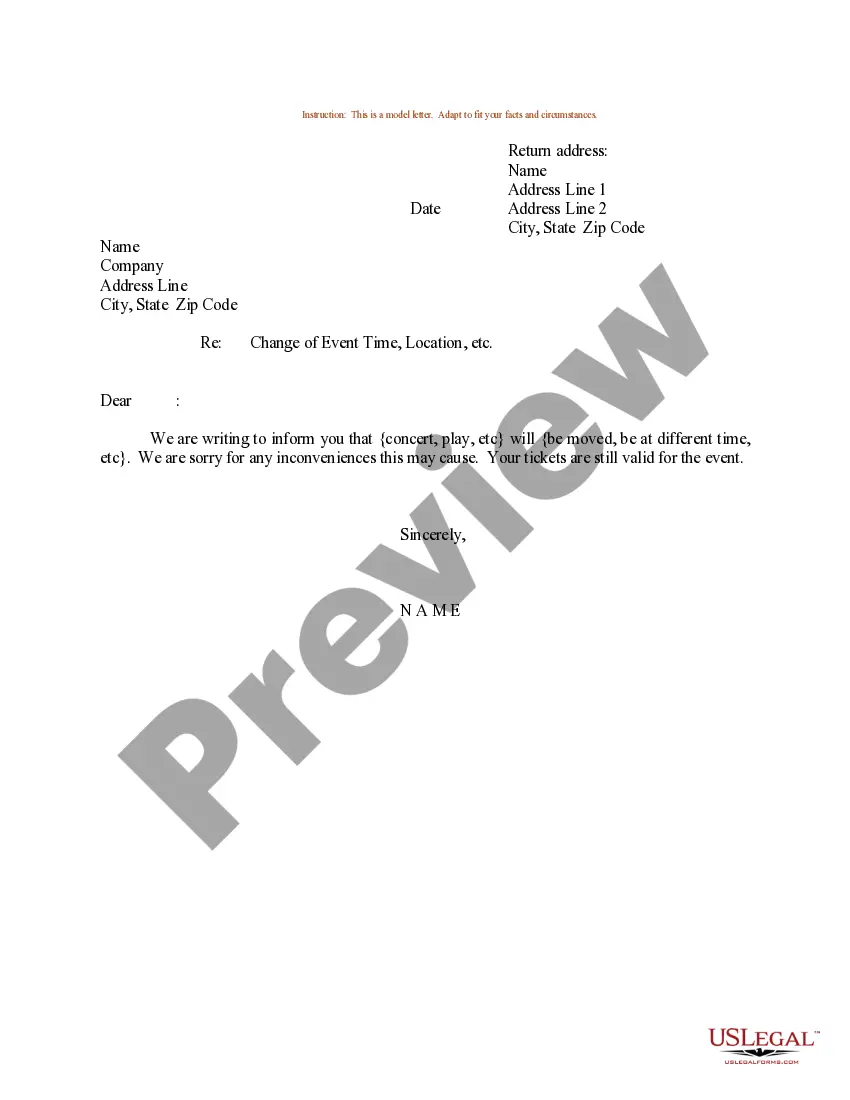
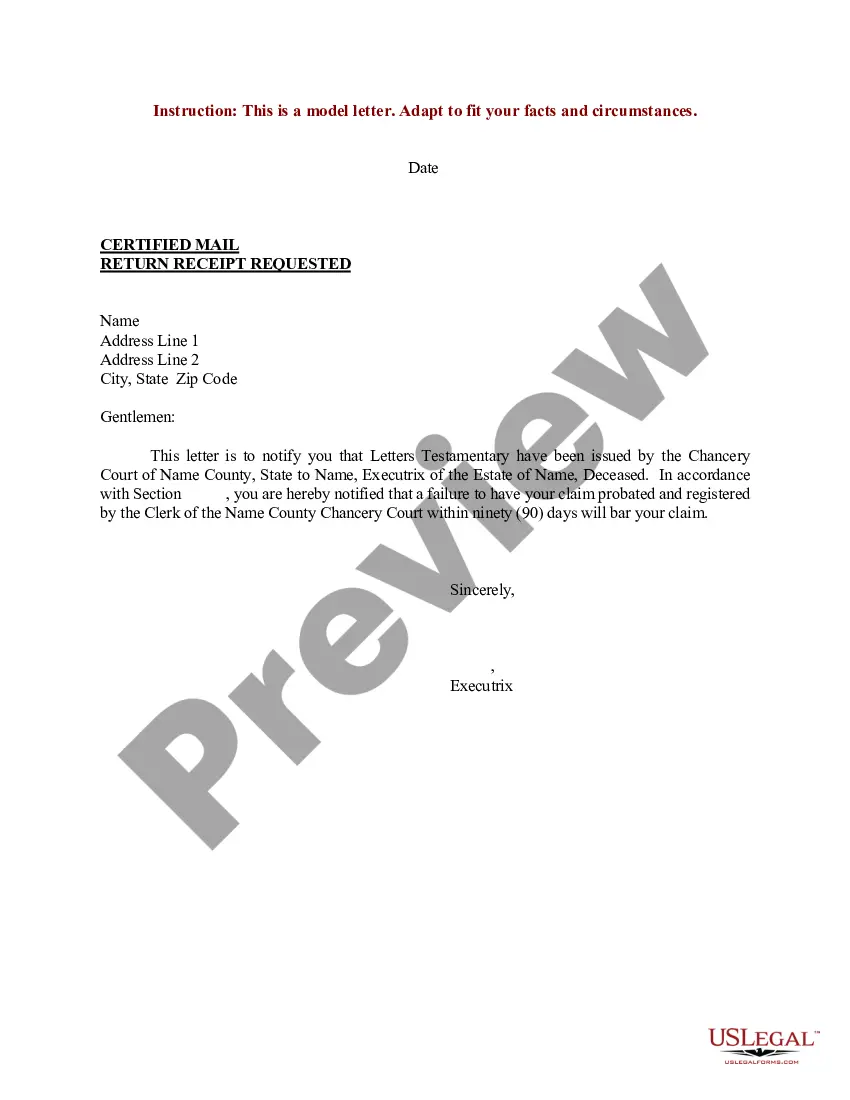
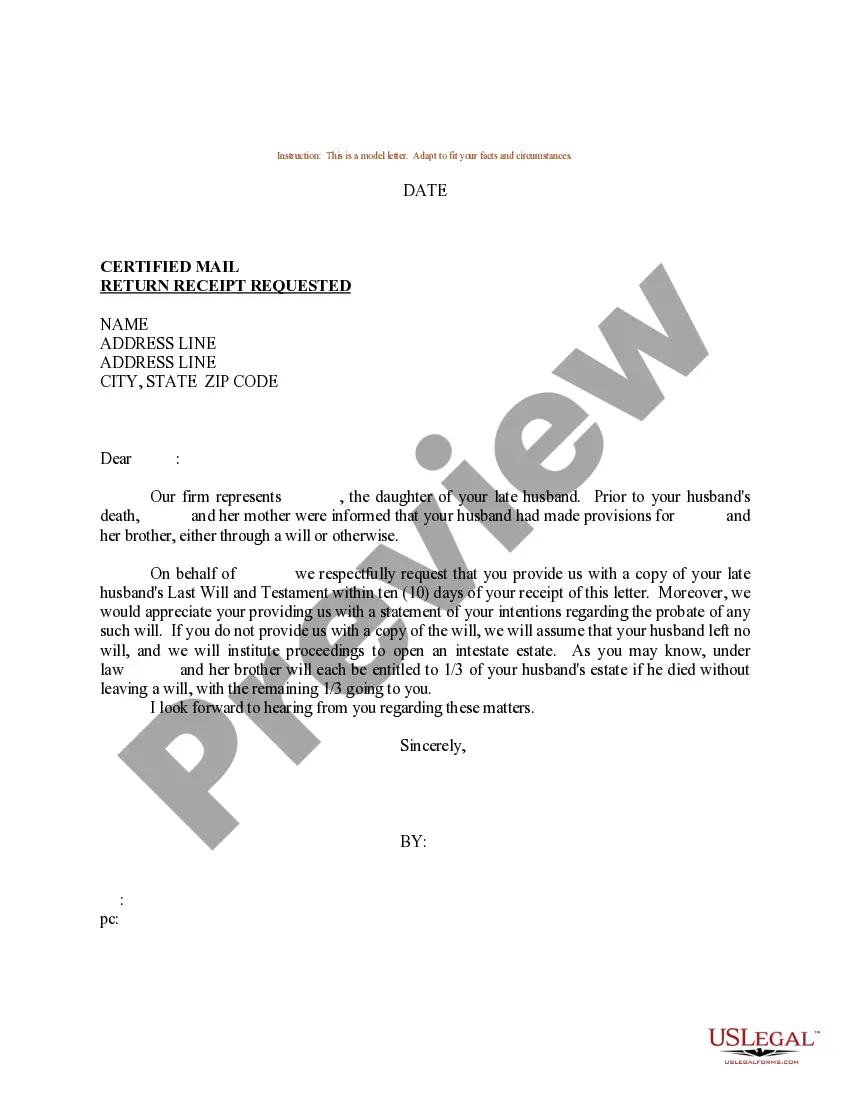
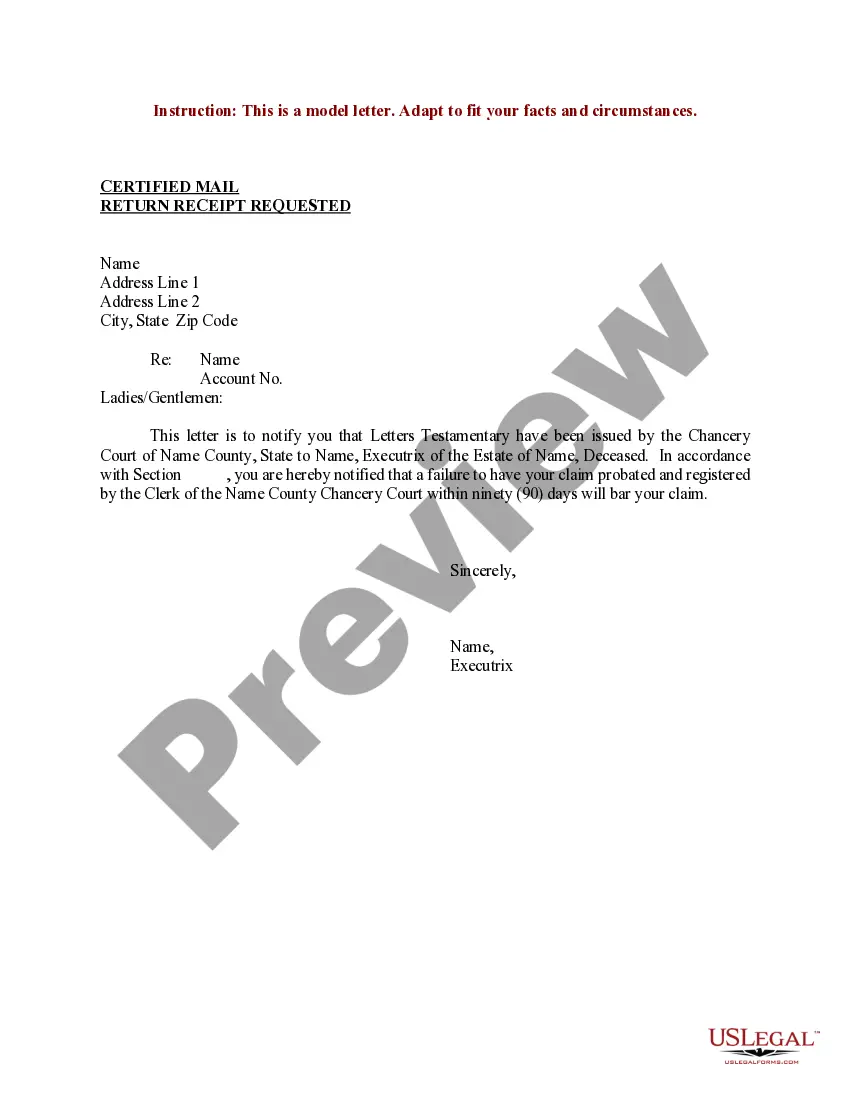
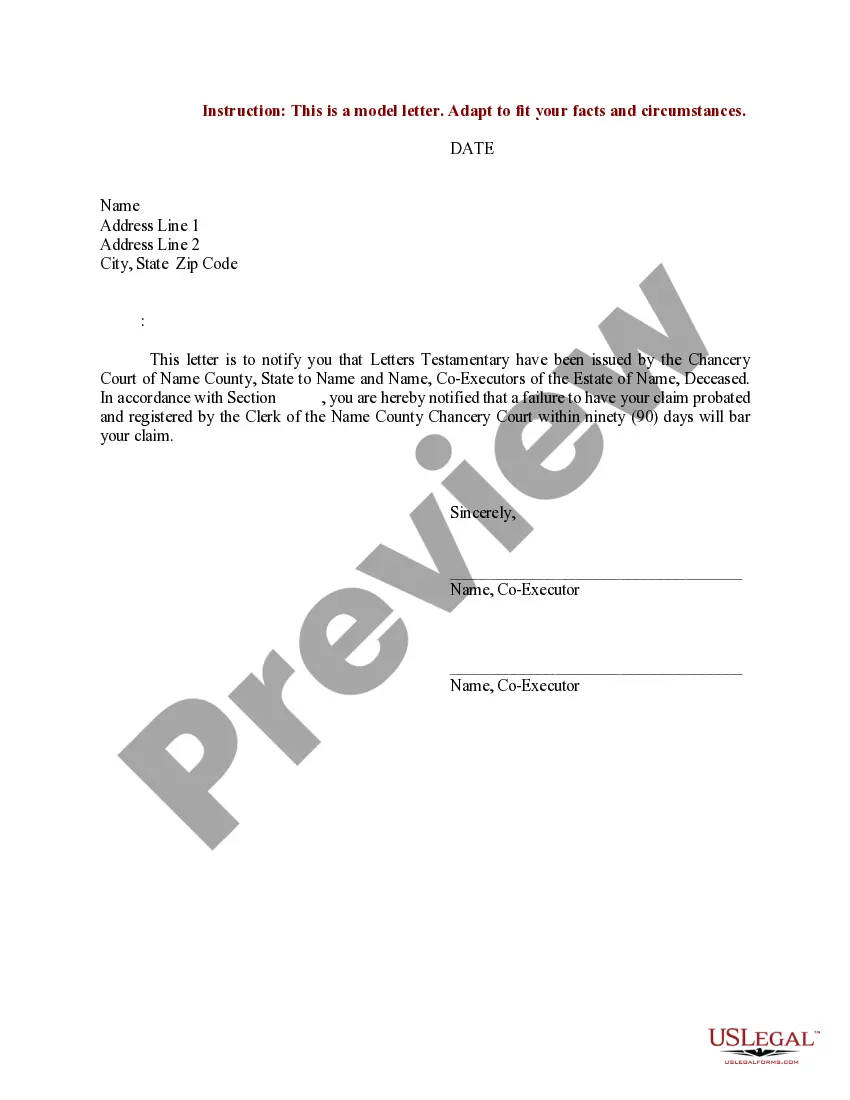
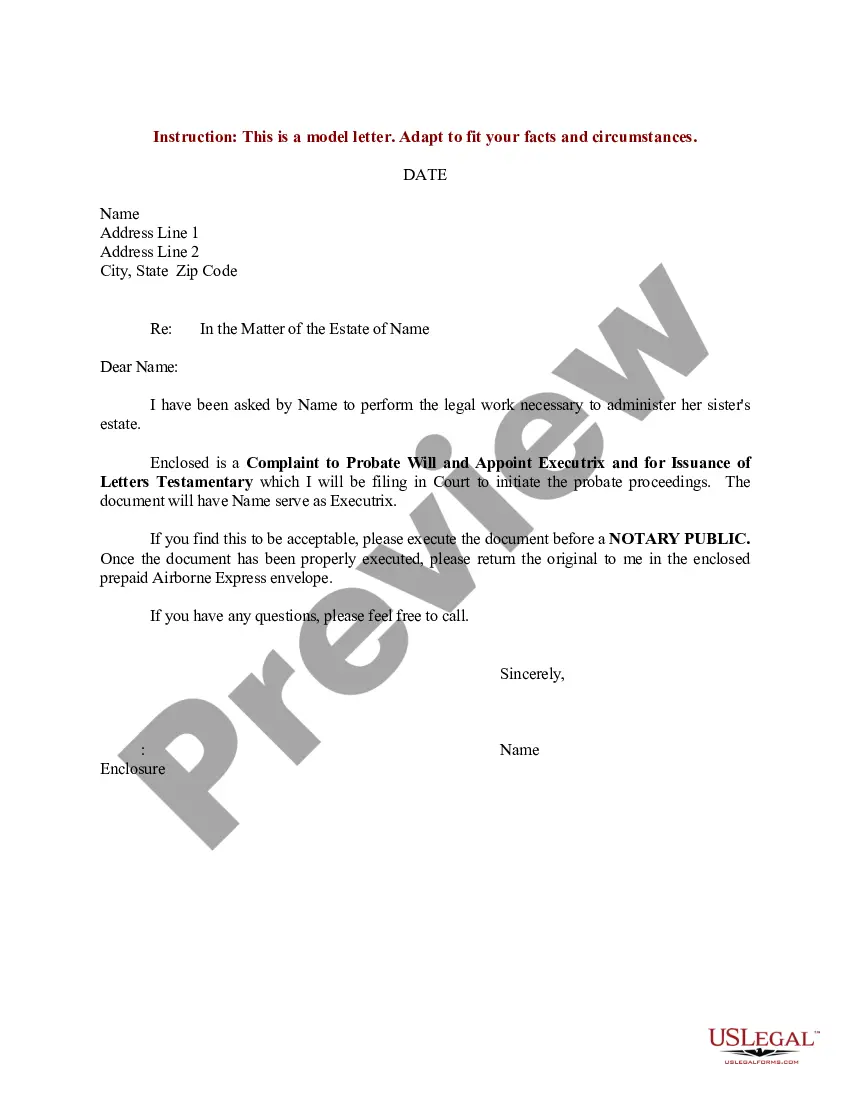
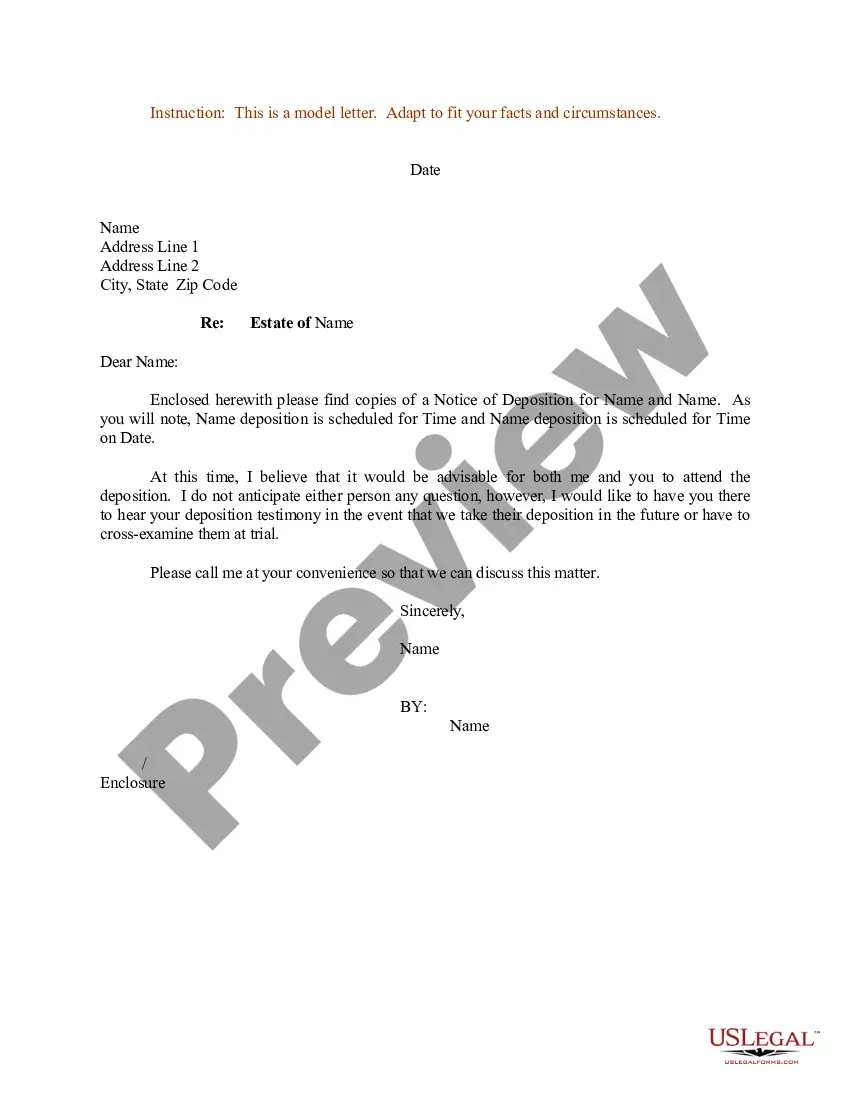
South Carolina Sample Letter for Sample Letters Testamentary
Description
Get your form ready online
Our built-in tools help you complete, sign, share, and store your documents in one place.
Make edits, fill in missing information, and update formatting in US Legal Forms—just like you would in MS Word.
Download a copy, print it, send it by email, or mail it via USPS—whatever works best for your next step.
Sign and collect signatures with our SignNow integration. Send to multiple recipients, set reminders, and more. Go Premium to unlock E-Sign.
If this form requires notarization, complete it online through a secure video call—no need to meet a notary in person or wait for an appointment.
We protect your documents and personal data by following strict security and privacy standards.

Make edits, fill in missing information, and update formatting in US Legal Forms—just like you would in MS Word.

Download a copy, print it, send it by email, or mail it via USPS—whatever works best for your next step.

Sign and collect signatures with our SignNow integration. Send to multiple recipients, set reminders, and more. Go Premium to unlock E-Sign.

If this form requires notarization, complete it online through a secure video call—no need to meet a notary in person or wait for an appointment.

We protect your documents and personal data by following strict security and privacy standards.
Looking for another form?





How to fill out Sample Letter For Sample Letters Testamentary?
It is possible to spend hrs on-line searching for the authorized document design that fits the federal and state needs you want. US Legal Forms gives thousands of authorized varieties which can be analyzed by specialists. You can actually download or print the South Carolina Sample Letter for Sample Letters Testamentary from my service.
If you currently have a US Legal Forms accounts, you are able to log in and click on the Down load key. Next, you are able to full, modify, print, or indicator the South Carolina Sample Letter for Sample Letters Testamentary. Every authorized document design you get is your own forever. To have yet another version for any bought develop, visit the My Forms tab and click on the corresponding key.
If you use the US Legal Forms site the first time, adhere to the basic directions under:
- Initial, ensure that you have selected the best document design for your region/town of your choice. Read the develop description to ensure you have picked out the proper develop. If readily available, make use of the Review key to appear with the document design as well.
- If you want to discover yet another model in the develop, make use of the Look for field to obtain the design that meets your requirements and needs.
- Upon having located the design you would like, click on Acquire now to proceed.
- Select the rates program you would like, enter your references, and sign up for a merchant account on US Legal Forms.
- Comprehensive the deal. You can use your bank card or PayPal accounts to cover the authorized develop.
- Select the structure in the document and download it in your product.
- Make adjustments in your document if required. It is possible to full, modify and indicator and print South Carolina Sample Letter for Sample Letters Testamentary.
Down load and print thousands of document layouts making use of the US Legal Forms site, which offers the most important selection of authorized varieties. Use professional and status-particular layouts to handle your organization or personal needs.
Form popularity
FAQ
A Letter of Testamentary?sometimes called a "Letter of Administration" or "Letter of Representation"?is a document granted by a local court. The document simply states that you are the legal executor for a particular estate and that you have the ability to act as such.
In South Carolina, you can use an Affidavit if an estate value is less than $25,000. You must wait 30 days after the death, and a probate judge will need to approve it. There is also potential to use a summary probate procedure, which is a possibility when an estate value is less than $25,000.
A Letter of Testamentary?sometimes called a "Letter of Administration" or "Letter of Representation"?is a document granted by a local court. The document simply states that you are the legal executor for a particular estate and that you have the ability to act as such.
Testamentary trust example ing to the trust terms you laid out, after your death, your best friend will manage the trust funds and make decisions in your child's best interest until they reach the age of 25. At that point, the trust will terminate, and your child will receive the money.
Testamentary trust example ing to the trust terms you laid out, after your death, your best friend will manage the trust funds and make decisions in your child's best interest until they reach the age of 25. At that point, the trust will terminate, and your child will receive the money.
Filing Will and Probatings - The South Carolina ( SC ) Probate Code of Laws requires that the Last Will and Testament be delivered to the Probate Court within 30 days of the decedent's death.
A Letter of Testamentary is a document granted to the Executor of an estate by the probate court. This document gives the Executor the authority he or she will need to formally act on behalf of the decedent. It gives the right to handle financial and other affairs related to closing out the estate.
While there is no specific deadline for this in South Carolina law, it is generally best to do so within a month to prevent unnecessary delays in the probate process.