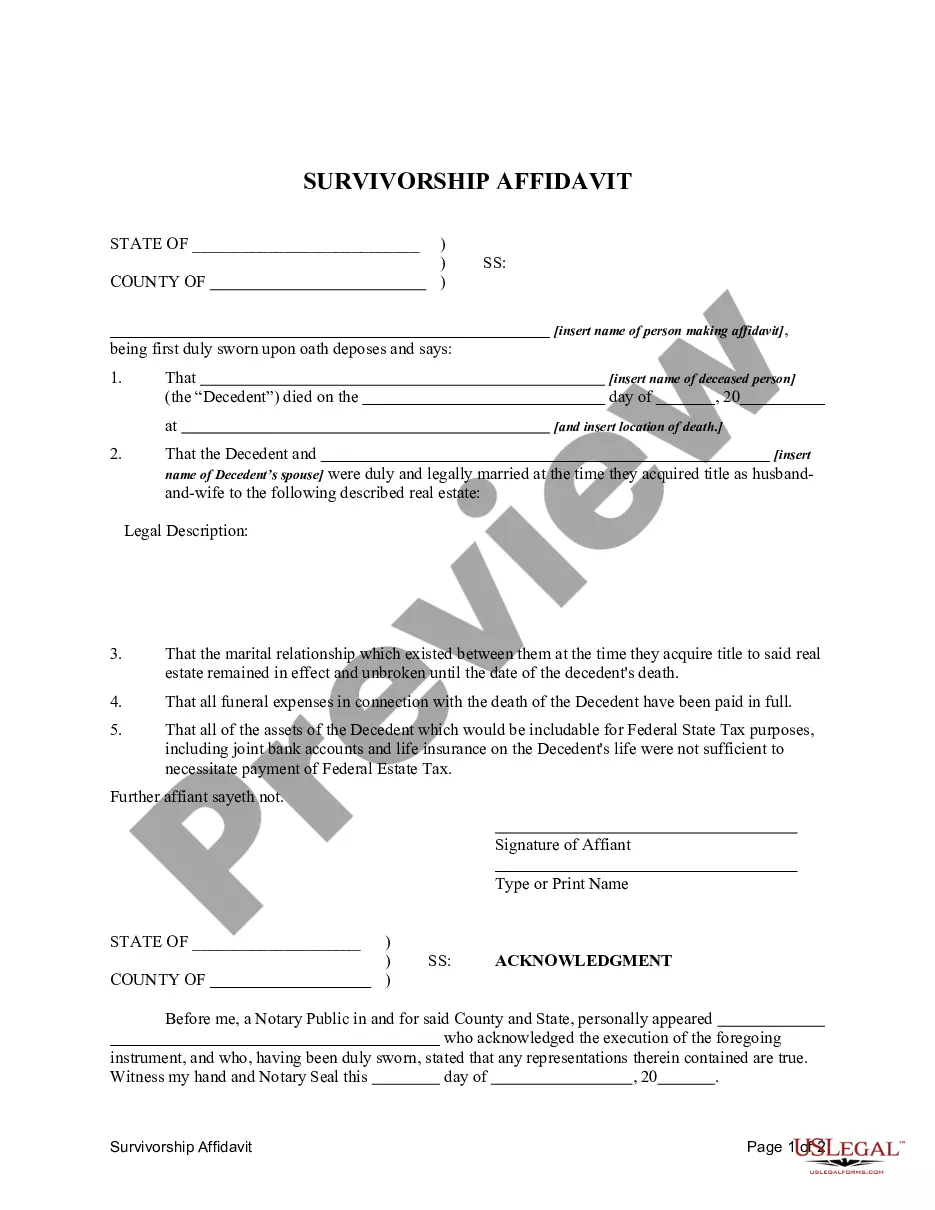
This form is an Affidavit of Domicile. This form provides that the affiant upon oath and affirmation of belief and personal knowledge verifies the address of the decedent at the time of death. The form must be signed in the presence of a notary public.
South Carolina Affidavit of Domicile
342 downloads
Description
Free preview
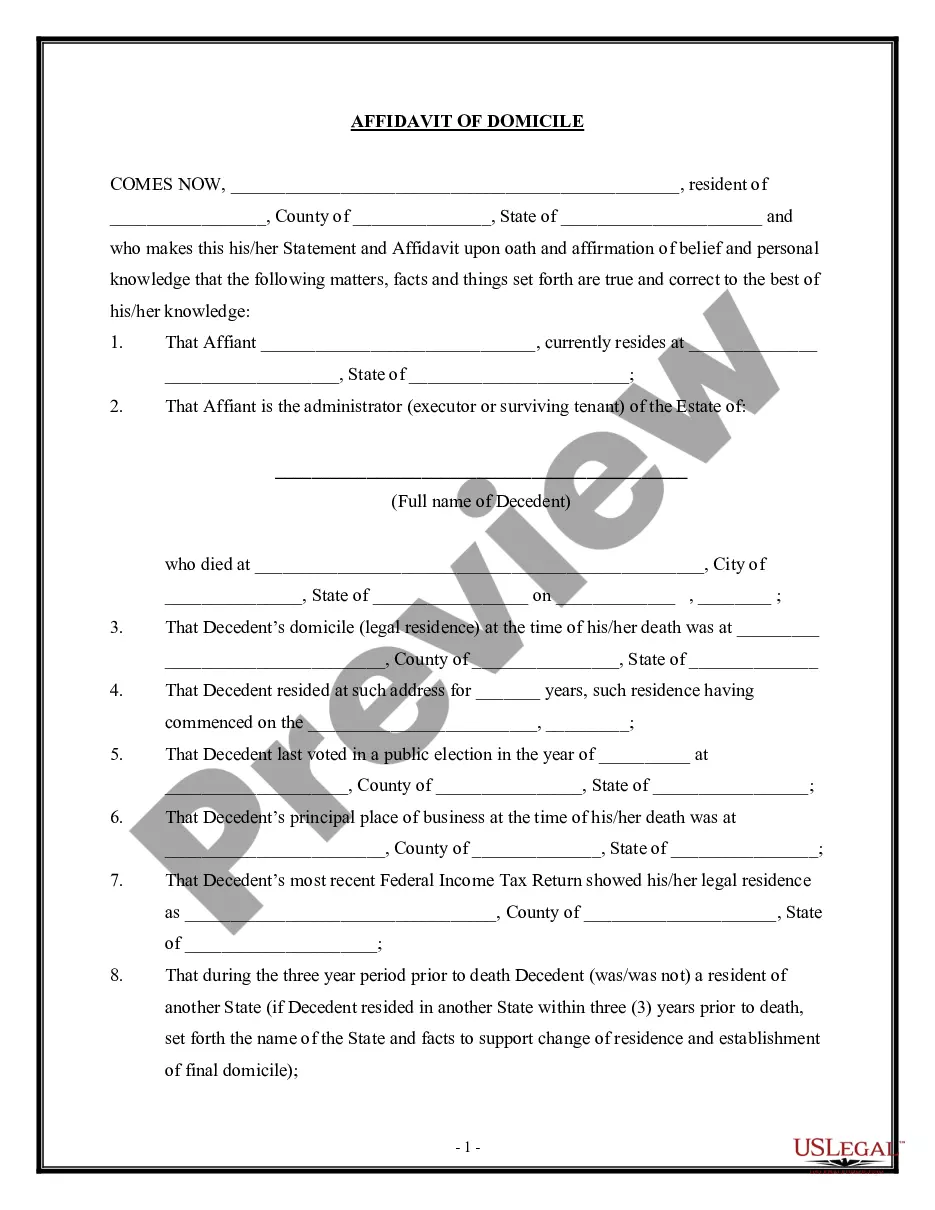
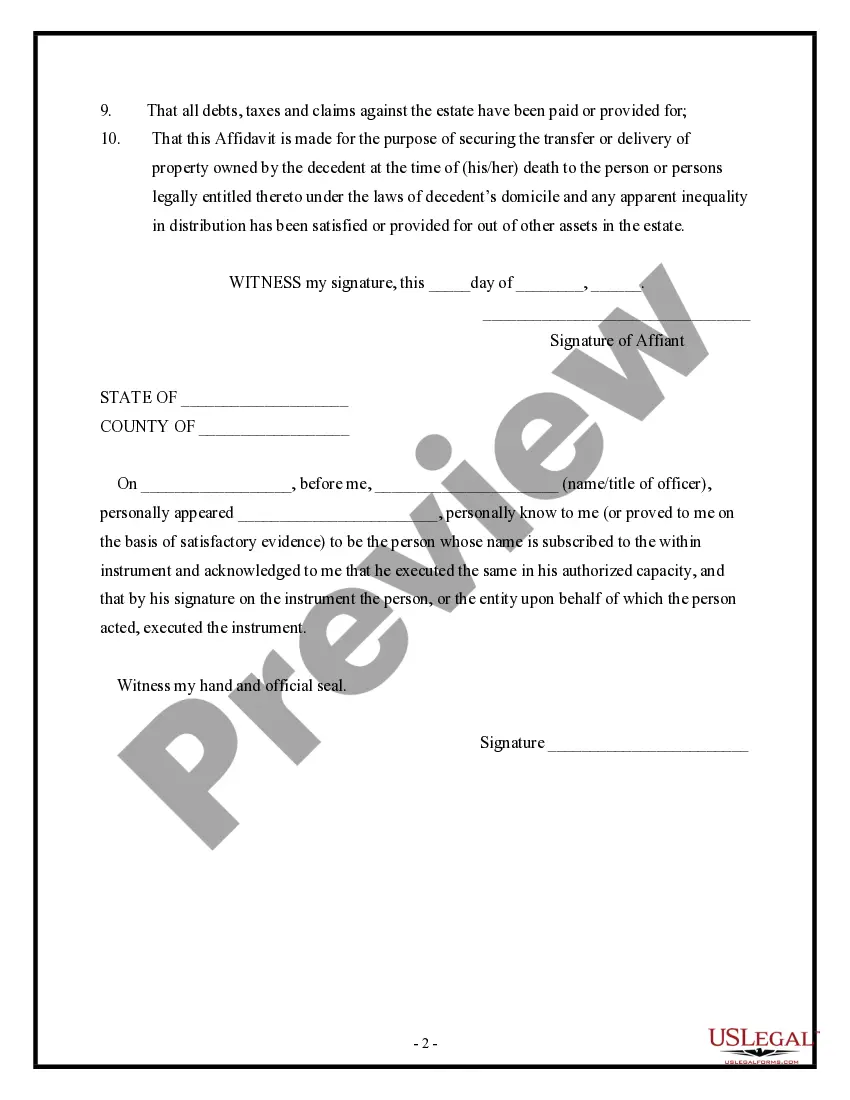

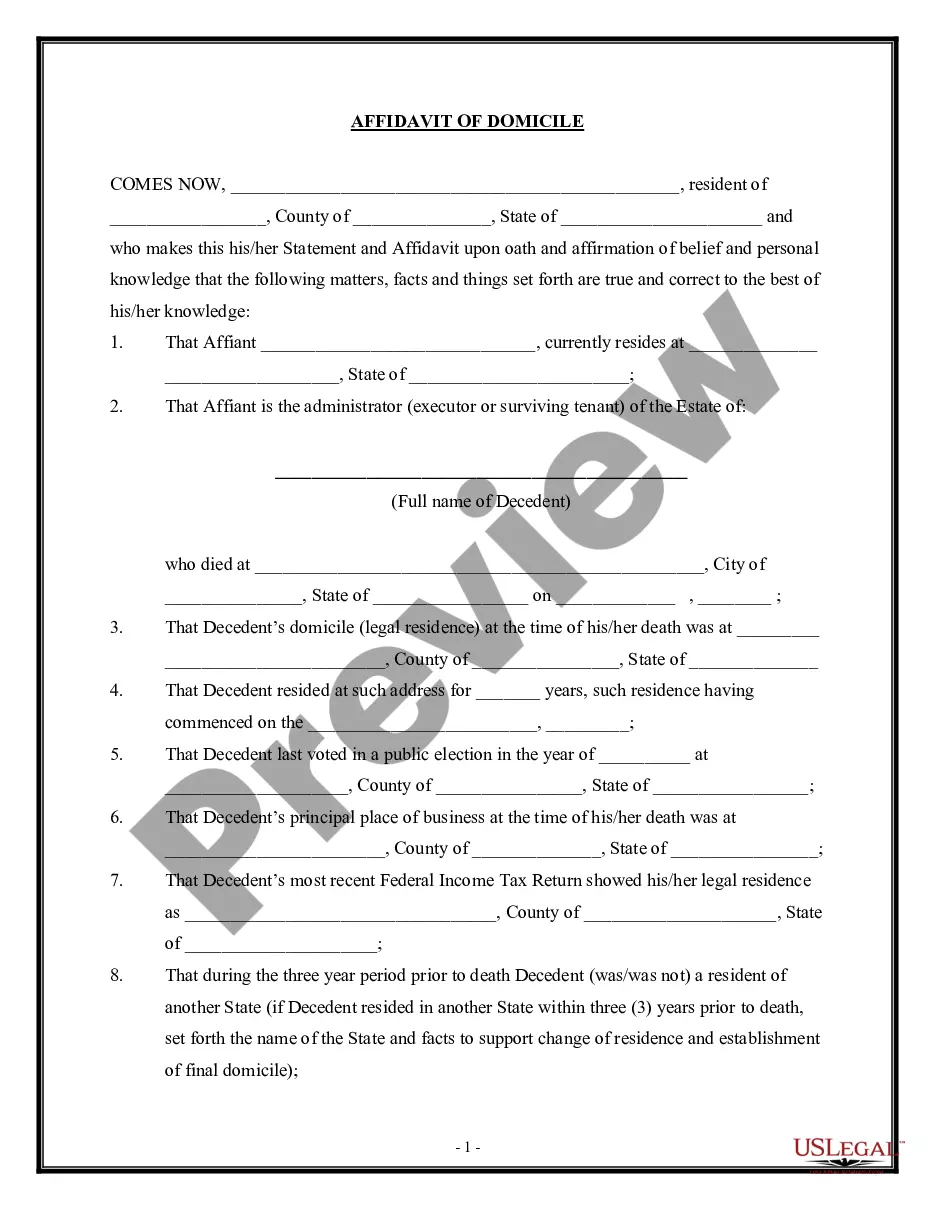
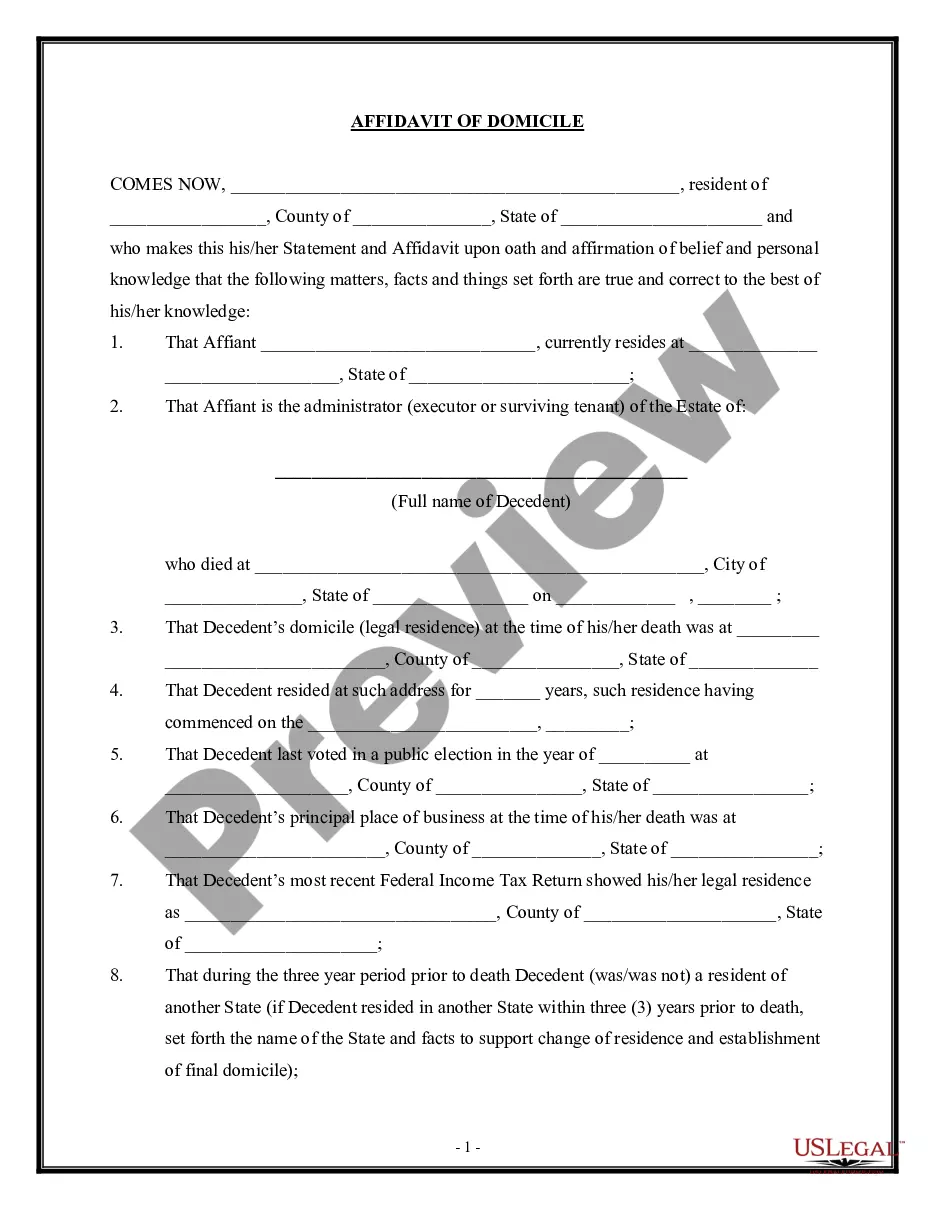
Get your form ready online
Our built-in tools help you complete, sign, share, and store your documents in one place.
Built-in online Word editor
Make edits, fill in missing information, and update formatting in US Legal Forms—just like you would in MS Word.
Export easily
Download a copy, print it, send it by email, or mail it via USPS—whatever works best for your next step.
E-sign your document
Sign and collect signatures with our SignNow integration. Send to multiple recipients, set reminders, and more. Go Premium to unlock E-Sign.
Notarize online 24/7
If this form requires notarization, complete it online through a secure video call—no need to meet a notary in person or wait for an appointment.
Store your document securely
We protect your documents and personal data by following strict security and privacy standards.

Make edits, fill in missing information, and update formatting in US Legal Forms—just like you would in MS Word.

Download a copy, print it, send it by email, or mail it via USPS—whatever works best for your next step.

Sign and collect signatures with our SignNow integration. Send to multiple recipients, set reminders, and more. Go Premium to unlock E-Sign.

If this form requires notarization, complete it online through a secure video call—no need to meet a notary in person or wait for an appointment.

We protect your documents and personal data by following strict security and privacy standards.
Looking for another form?
How to fill out Affidavit Of Domicile?
It is possible to spend hrs on the Internet looking for the legal papers template that suits the state and federal specifications you need. US Legal Forms offers a large number of legal varieties which can be reviewed by specialists. You can actually download or print out the South Carolina Affidavit of Domicile from the assistance.
If you currently have a US Legal Forms bank account, you are able to log in and click on the Down load button. Next, you are able to full, modify, print out, or indication the South Carolina Affidavit of Domicile. Every single legal papers template you buy is yours permanently. To get one more duplicate for any obtained form, go to the My Forms tab and click on the corresponding button.
If you use the US Legal Forms website the very first time, adhere to the simple guidelines listed below:
- Initial, be sure that you have chosen the right papers template for your area/town of your choice. See the form information to ensure you have selected the appropriate form. If available, make use of the Preview button to check through the papers template at the same time.
- In order to locate one more edition in the form, make use of the Search discipline to discover the template that suits you and specifications.
- Upon having found the template you need, simply click Purchase now to move forward.
- Choose the pricing strategy you need, enter your references, and sign up for an account on US Legal Forms.
- Total the deal. You may use your credit card or PayPal bank account to fund the legal form.
- Choose the formatting in the papers and download it in your gadget.
- Make alterations in your papers if required. It is possible to full, modify and indication and print out South Carolina Affidavit of Domicile.
Down load and print out a large number of papers web templates making use of the US Legal Forms site, that offers the greatest selection of legal varieties. Use expert and express-specific web templates to tackle your organization or specific demands.
Form popularity
FAQ
A Personal Representative is under a duty to settle and distribute the estate of the decedent in ance with the terms of any probated and effective Will and the South Carolina Probate Code, as expeditiously and efficiently as is consistent with the best interests of the estate.
Home » Do You Need Probate For Small Estates In South Carolina? In South Carolina, probate for small estates is required. A small estate is considered to be an estate that is valued at $25,000 or less in assets and no real property.
How to File (4 steps) Wait Thirty (30) Days. No Personal Representative. Complete Forms. File With Court.
How would you rate your free form? Updated September 13, 2023. A South Carolina small estate affidavit is a document that is used to claim property from a deceased person's estate. It can only be used for estates that are worth less than $25,000.
In South Carolina, probate for small estates is required. A small estate is considered to be an estate that is valued at $25,000 or less in assets and no real property. If those two conditions are met for a small estate, a case will have to be filed with the probate court.
In South Carolina, you can use an Affidavit if an estate value is less than $25,000. You must wait 30 days after the death, and a probate judge will need to approve it. There is also potential to use a summary probate procedure, which is a possibility when an estate value is less than $25,000.
Under South Carolina statute, where as estate is valued at less than $25,000, an interested party may, thirty (30) days after the death of the decedent, issue a small estate affidavit to collect any debts owed to the decedent.
One way to avoid probate in South Carolina is by using a transfer-on-death (TOD) deed for real estate. This allows the property to be transferred to the beneficiary upon the owner's death, bypassing the probate process.