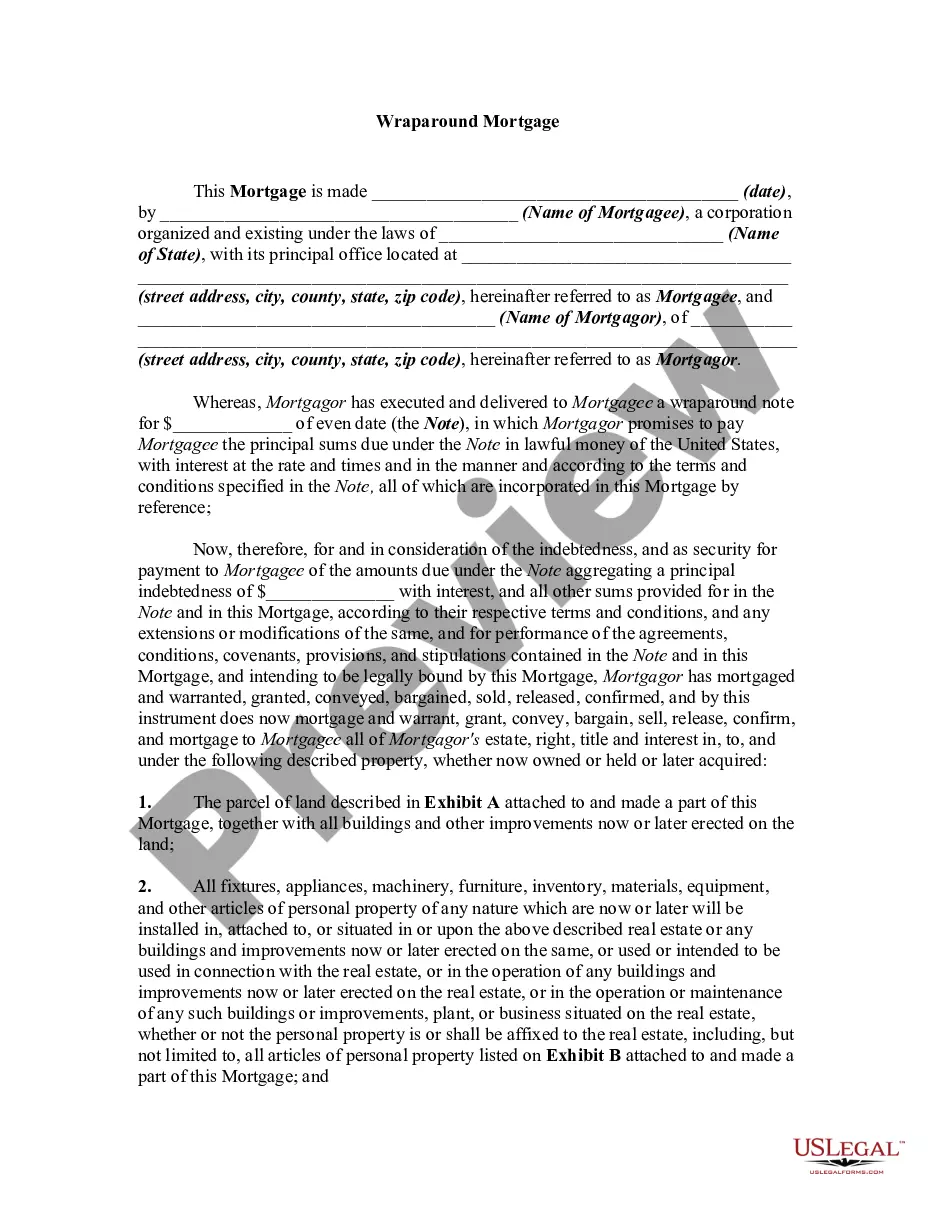
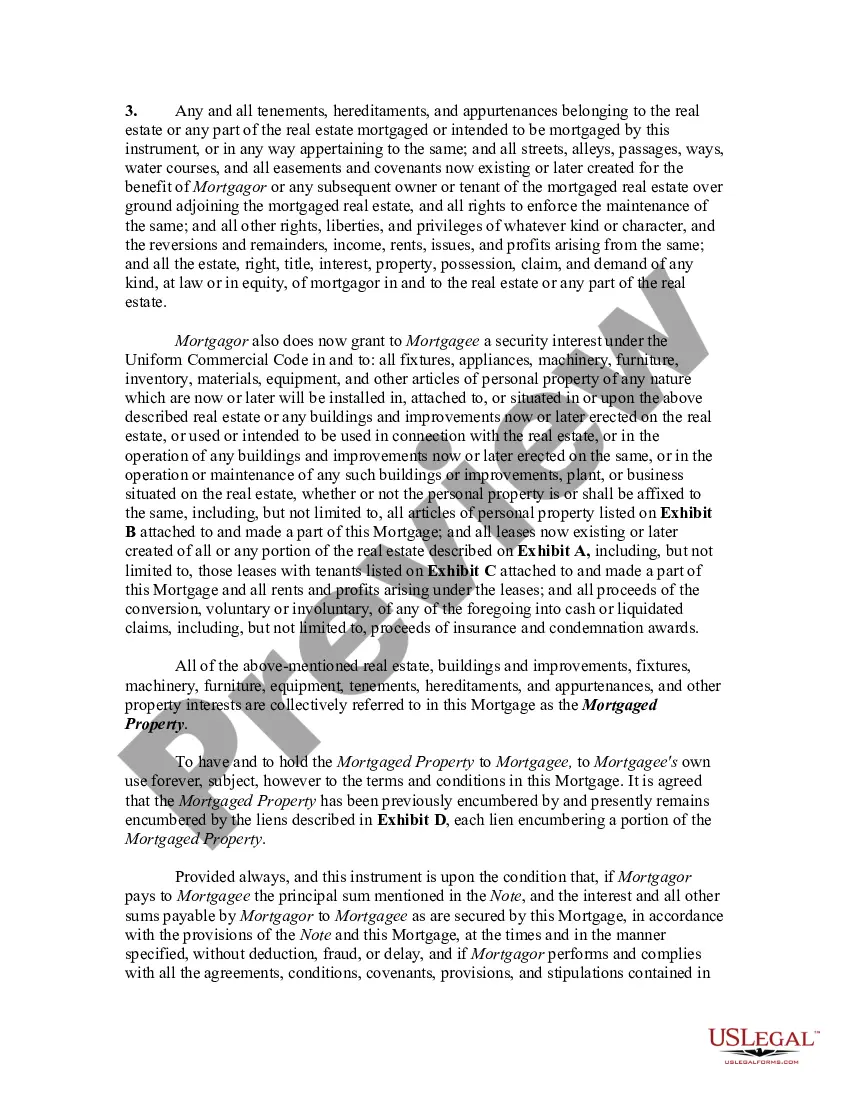
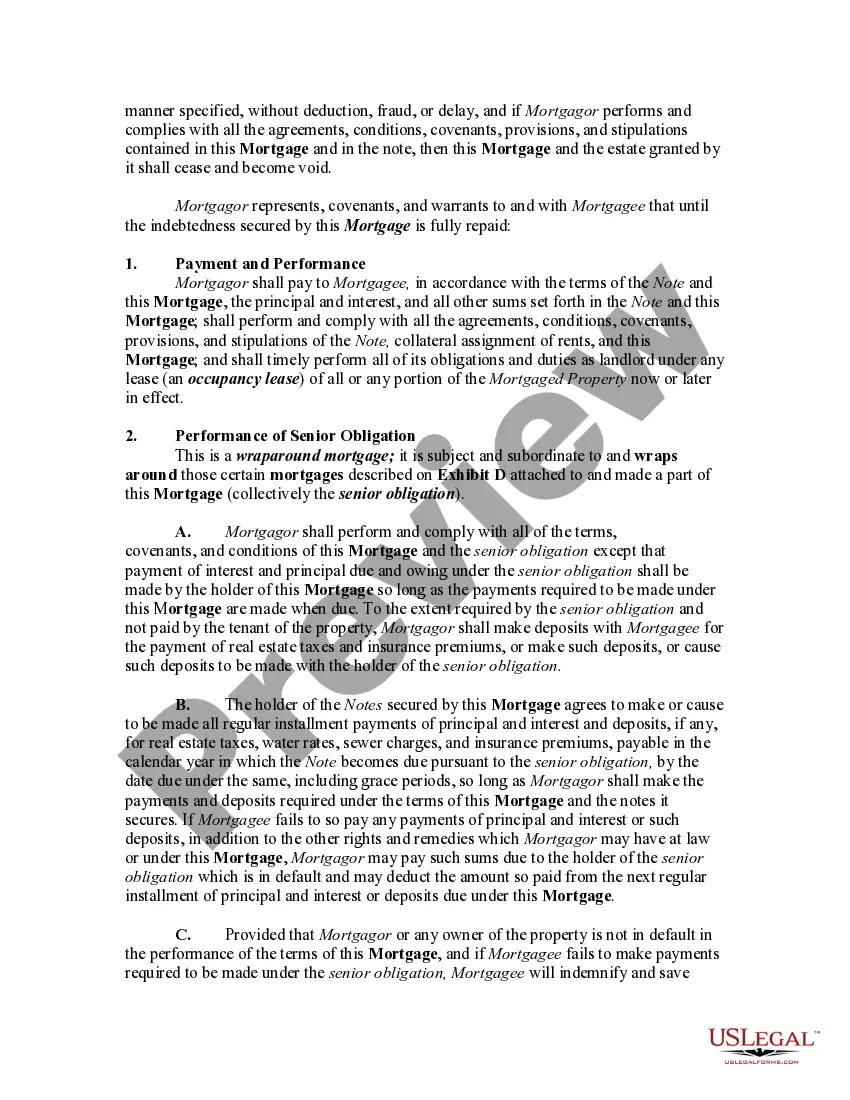
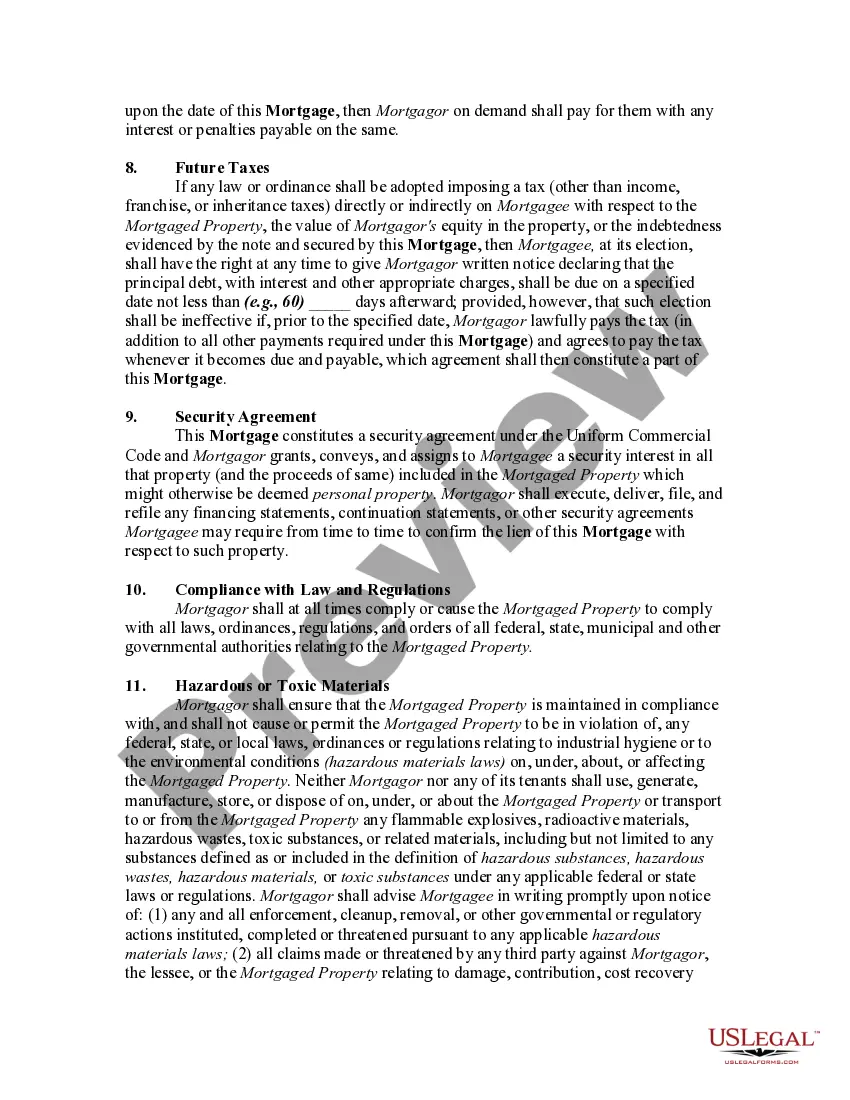
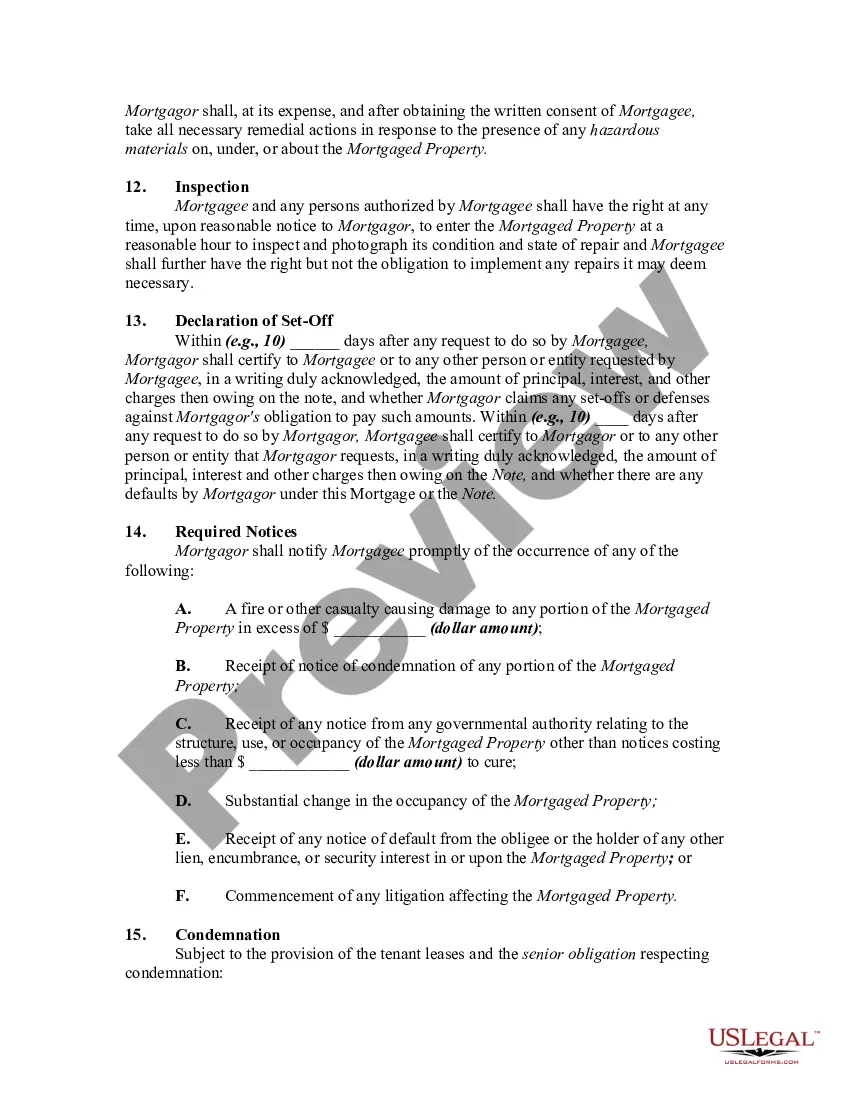
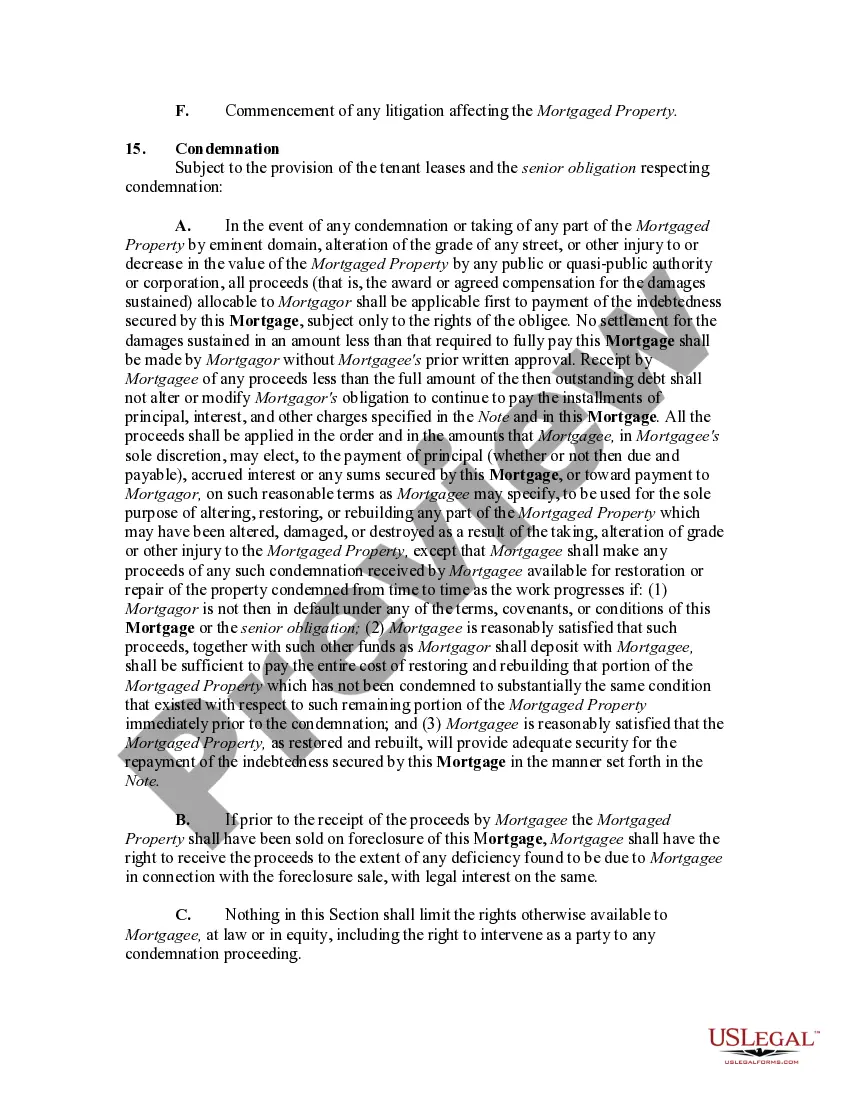
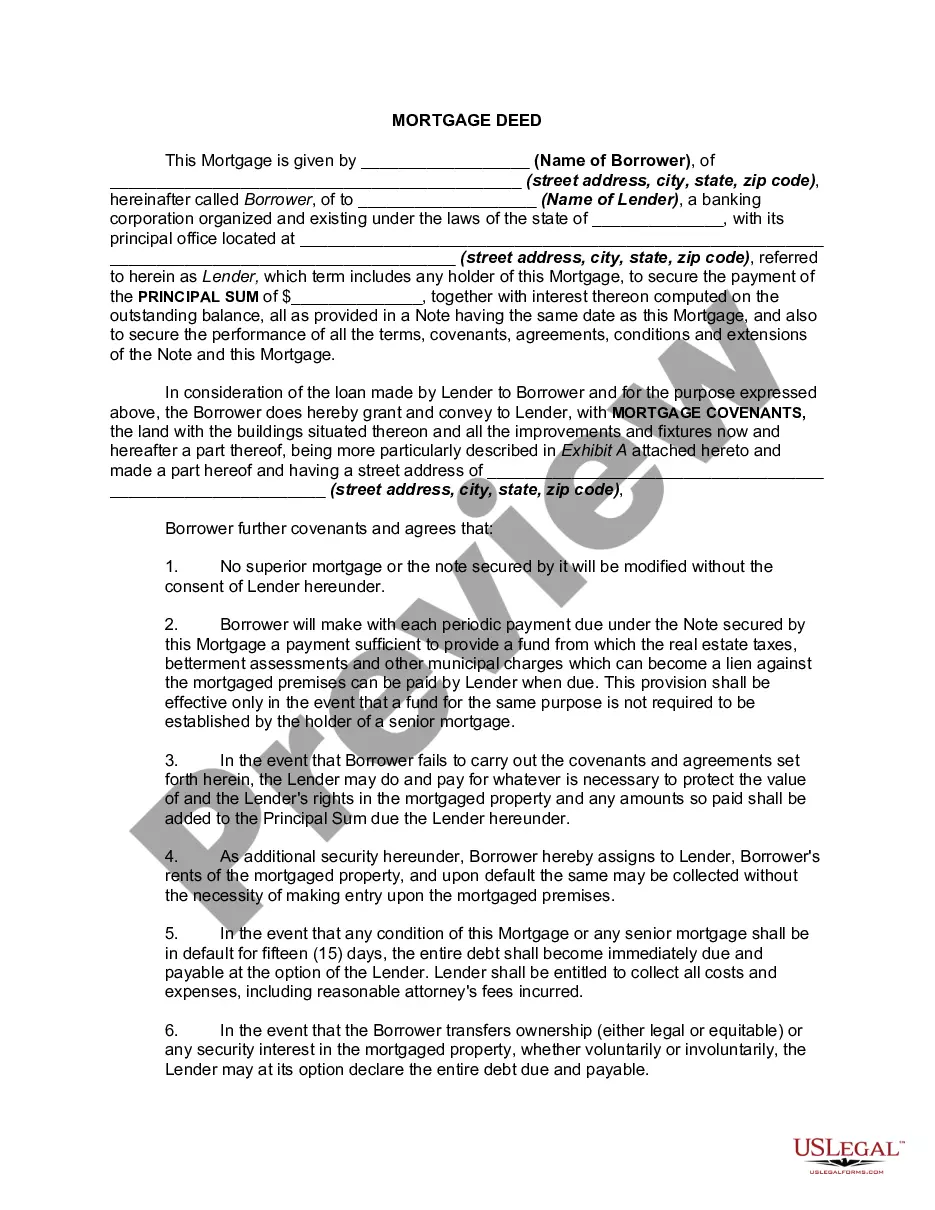
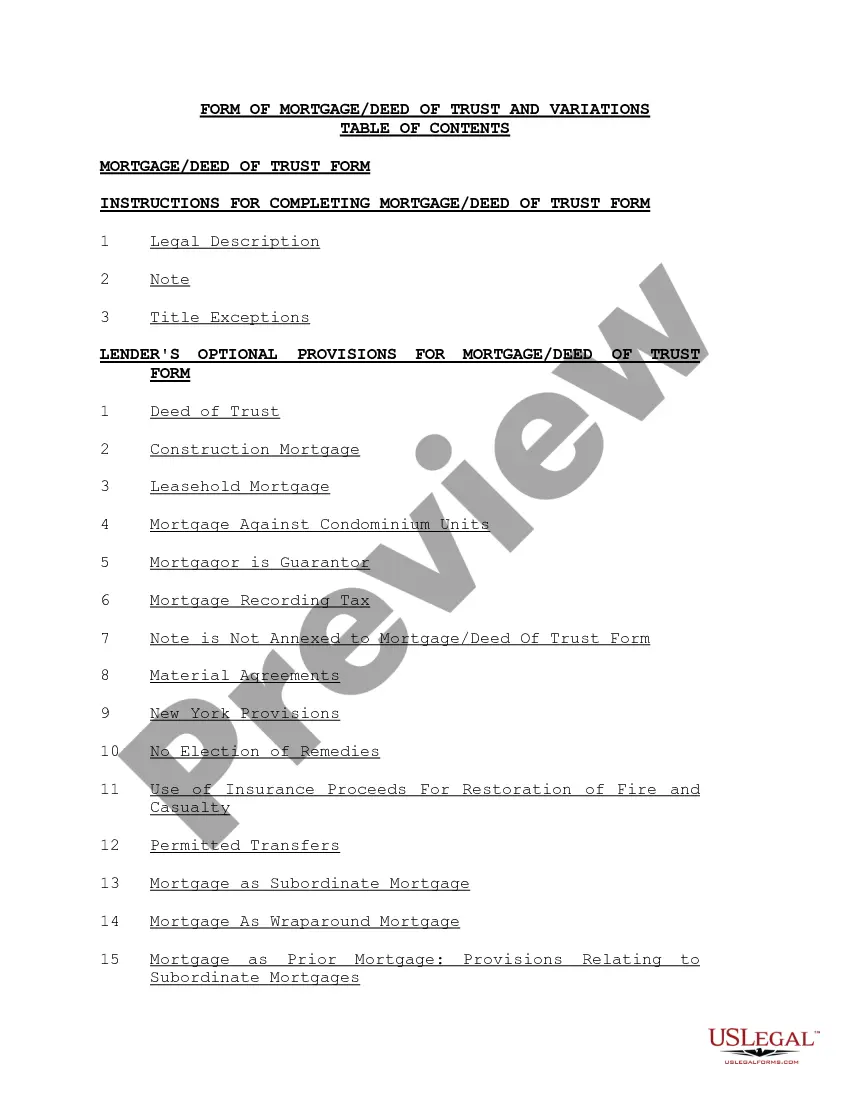
A wraparound mortgage is a junior encumbrance that is ordinarily made when property will support additional financing, and the mortgagor does not want to prepay a favorable existing mortgage obligation but needs additional cash, or where the existing obligation precludes prepayment or contains an excessive prepayment penalty. In such an instrument, the wraparound beneficiary charges interest on the entire amount of the wraparound loan and agrees to make the principal and interest payments on the existing prior encumbrance as it collects principal and interest payments from the mortgagor.
South Carolina Wraparound Mortgage
State:
Multi-State
Control #:
US-01438BG
Format:
Word;
Rich Text
Instant download
Description
Free preview
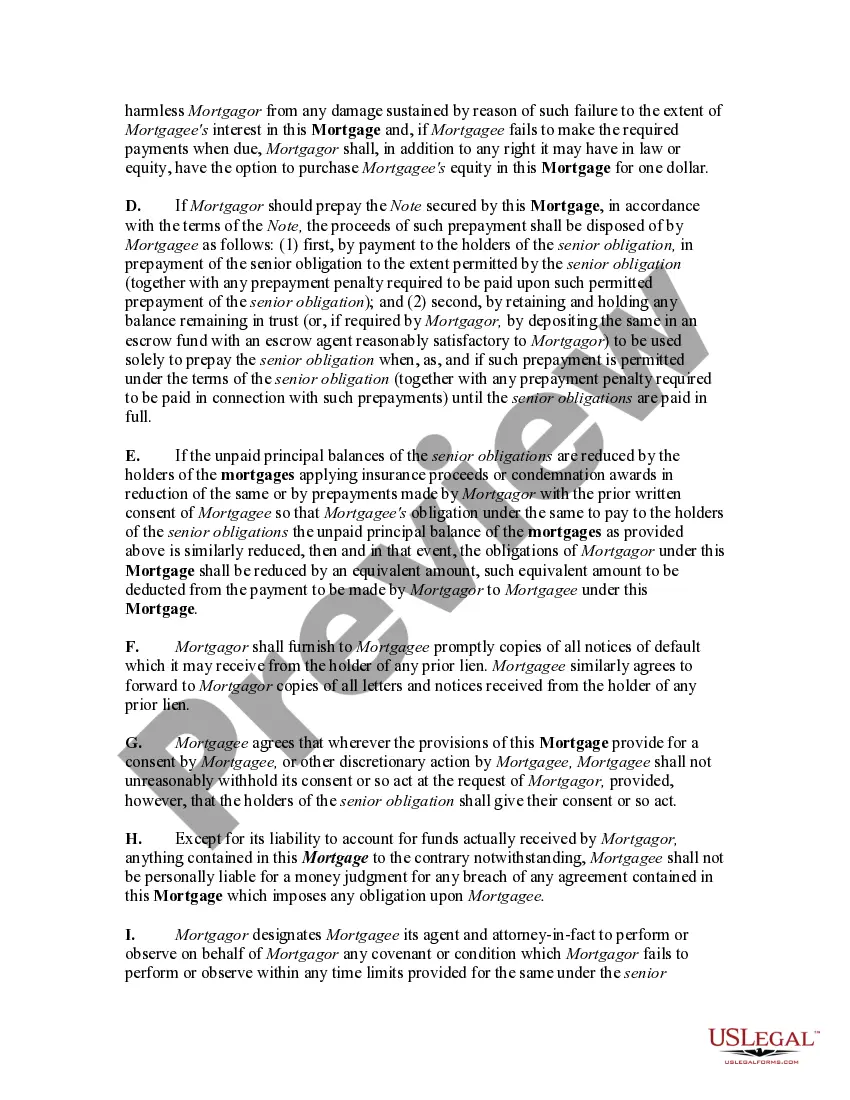
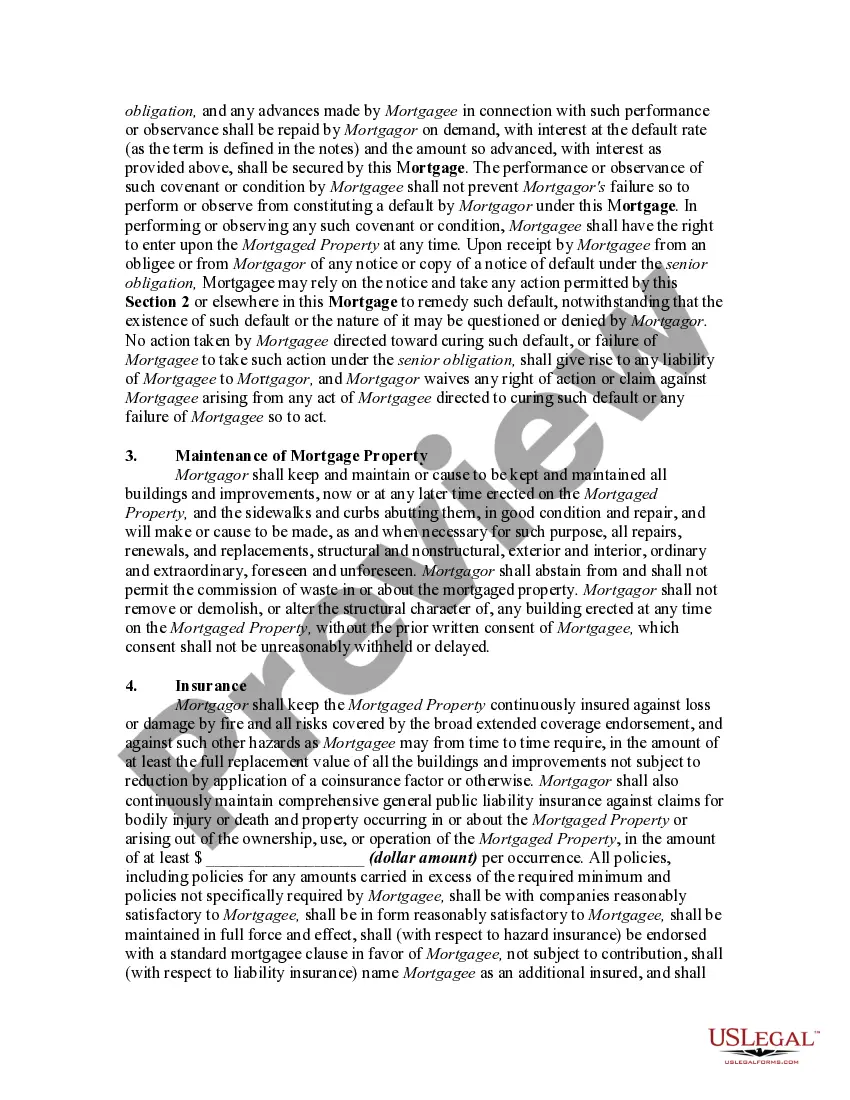
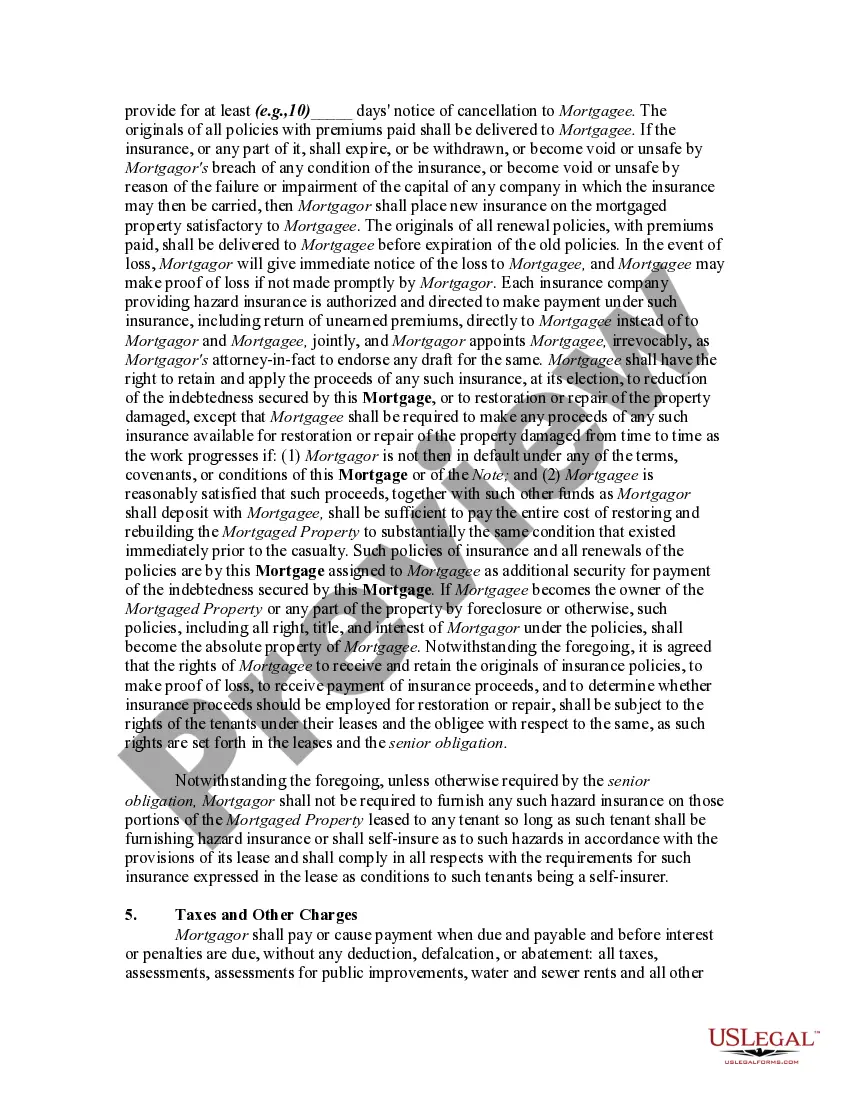
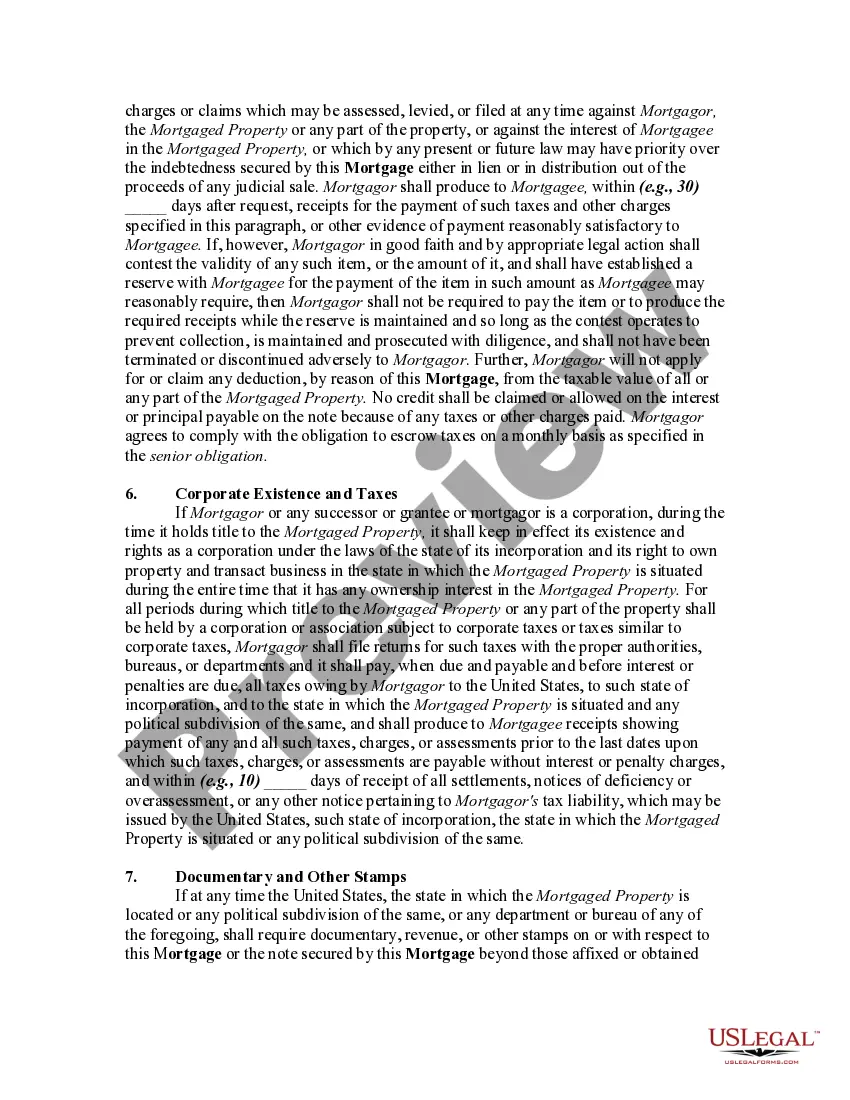

Get your form ready online
Our built-in tools help you complete, sign, share, and store your documents in one place.
Built-in online Word editor
Make edits, fill in missing information, and update formatting in US Legal Forms—just like you would in MS Word.
Export easily
Download a copy, print it, send it by email, or mail it via USPS—whatever works best for your next step.
E-sign your document
Sign and collect signatures with our SignNow integration. Send to multiple recipients, set reminders, and more. Go Premium to unlock E-Sign.
Notarize online 24/7
If this form requires notarization, complete it online through a secure video call—no need to meet a notary in person or wait for an appointment.
Store your document securely
We protect your documents and personal data by following strict security and privacy standards.

Make edits, fill in missing information, and update formatting in US Legal Forms—just like you would in MS Word.

Download a copy, print it, send it by email, or mail it via USPS—whatever works best for your next step.

Sign and collect signatures with our SignNow integration. Send to multiple recipients, set reminders, and more. Go Premium to unlock E-Sign.

If this form requires notarization, complete it online through a secure video call—no need to meet a notary in person or wait for an appointment.

We protect your documents and personal data by following strict security and privacy standards.
Looking for another form?






How to fill out Wraparound Mortgage?
Are you presently in a condition where you require documents for potential business or particular purposes almost every day.
There is a multitude of legal document templates accessible online, but locating ones you can rely on is challenging.
US Legal Forms offers thousands of form templates, including the South Carolina Wraparound Mortgage, which can be tailored to satisfy federal and state requirements.
When you find the correct form, click on Purchase now.
Select the pricing plan you prefer, fill in the required information to create your account, and pay for the order using your PayPal or Visa or Mastercard.
- If you are already familiar with the US Legal Forms website and have an account, simply Log In.
- Then, you can download the South Carolina Wraparound Mortgage template.
- If you do not possess an account and wish to start using US Legal Forms, follow these steps.
- Obtain the form you need and ensure it is for the correct area/state.
- Utilize the Preview button to review the form.
- Read the description to ensure you have selected the appropriate form.
- If the form is not what you are looking for, use the Lookup field to find the form that suits your requirements.
Form popularity
FAQ
1 Depending on the wording in the loan documents, the title may immediately transfer to the new owner or it may remain with the seller until the satisfaction of the loan. Since the wraparound is a junior mortgage, any superior, or senior, claims will have priority.
Under a wrap, a seller accepts a secured promissory note from the buyer for the amount due on the underlying mortgage plus an amount up to the remaining purchase money balance. The new purchaser makes monthly payments to the seller, who is then responsible for making the payments to the underlying mortgagee(s).
In a wraparound mortgage situation, the buyer gets their mortgage from the seller, who wraps it into their existing mortgage on the home. The buyer becomes the owner of the home and makes their mortgage payment, with interest, to the seller.
A wraparound mortgage (also called a mortgage wrap) is a special form of seller financing. It provides property sellers and buyers with an alternative to the traditional property sale.
?If the seller doesn't pay the existing mortgage, the original lender can still foreclose on the house,? says Massieh. This means that even in cases where the buyer upholds their end of the arrangement, making payments on time, the deal could backfire.
After a wrap transaction, there are two separate and independent sets of payment obligations. The buyer becomes obligated to the seller on the new wrapped note, which is secured by a mortgage wrap deed of trust; and the seller remains obligated on the first-lien/wrapped note until it is paid and released.
A wraparound mortgage is a unique form of seller financing in which the seller keeps their mortgage and extends a loan to the buyer. The buyer pays the seller each month and the seller uses that money to pay their own mortgage. For this to be a (legal) option, the seller must have an assumable mortgage.
If the seller still has an existing mortgage, especially one that's still relatively high, the original lender must agree to this secondary loan. Most lenders require the loan to be paid in full once the home is sold and changes ownership. This would prevent the wraparound mortgage from even happening.