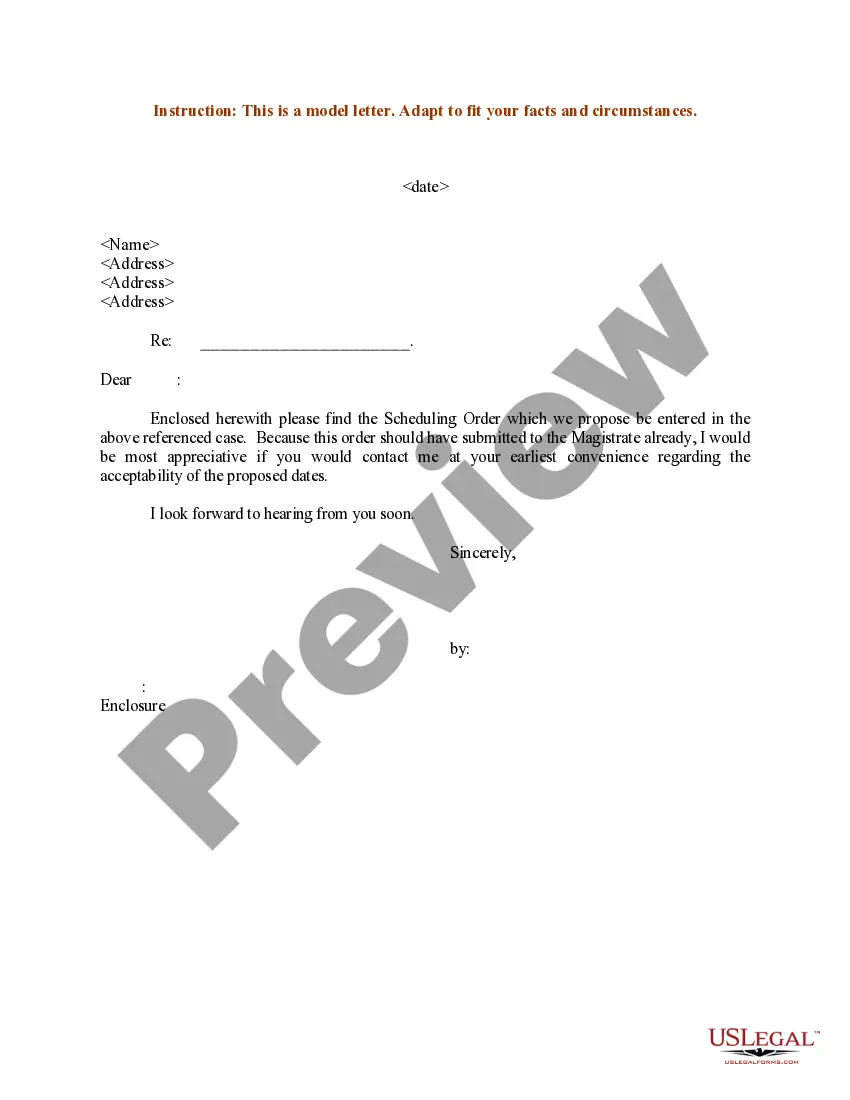
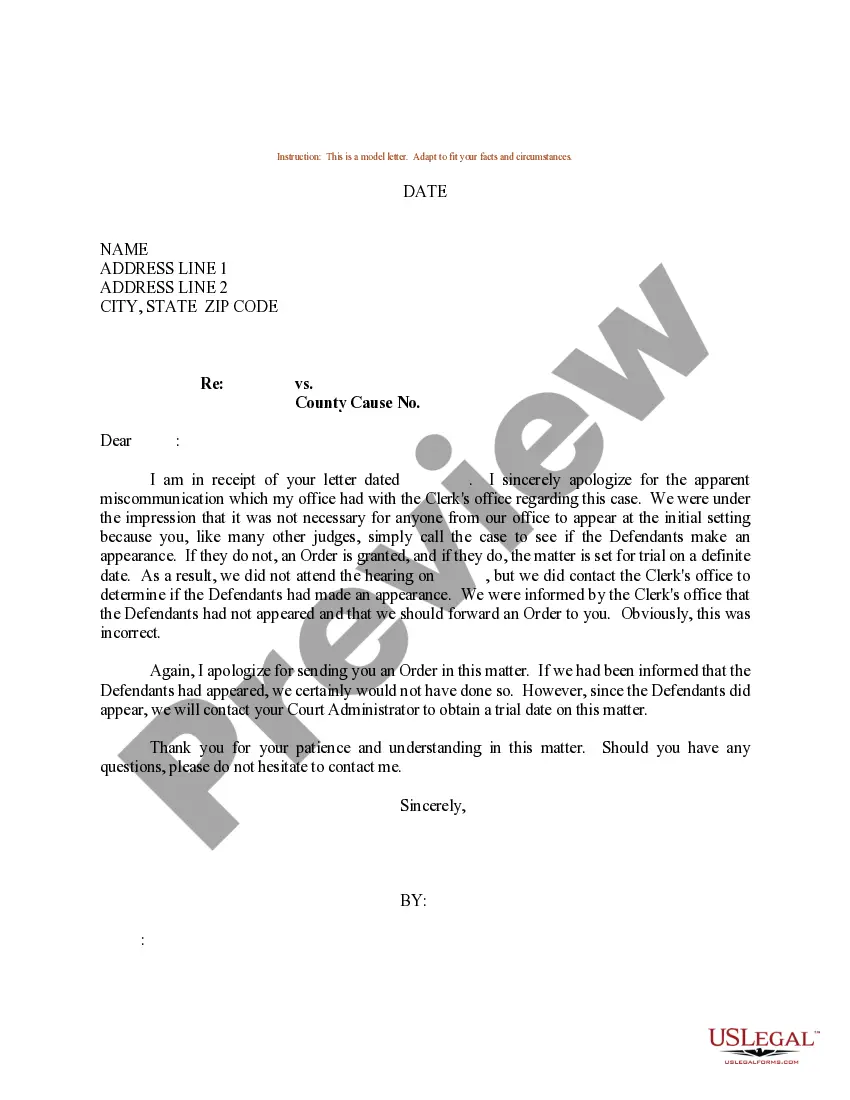
South Carolina Sample Letter for Scheduling Order
Description
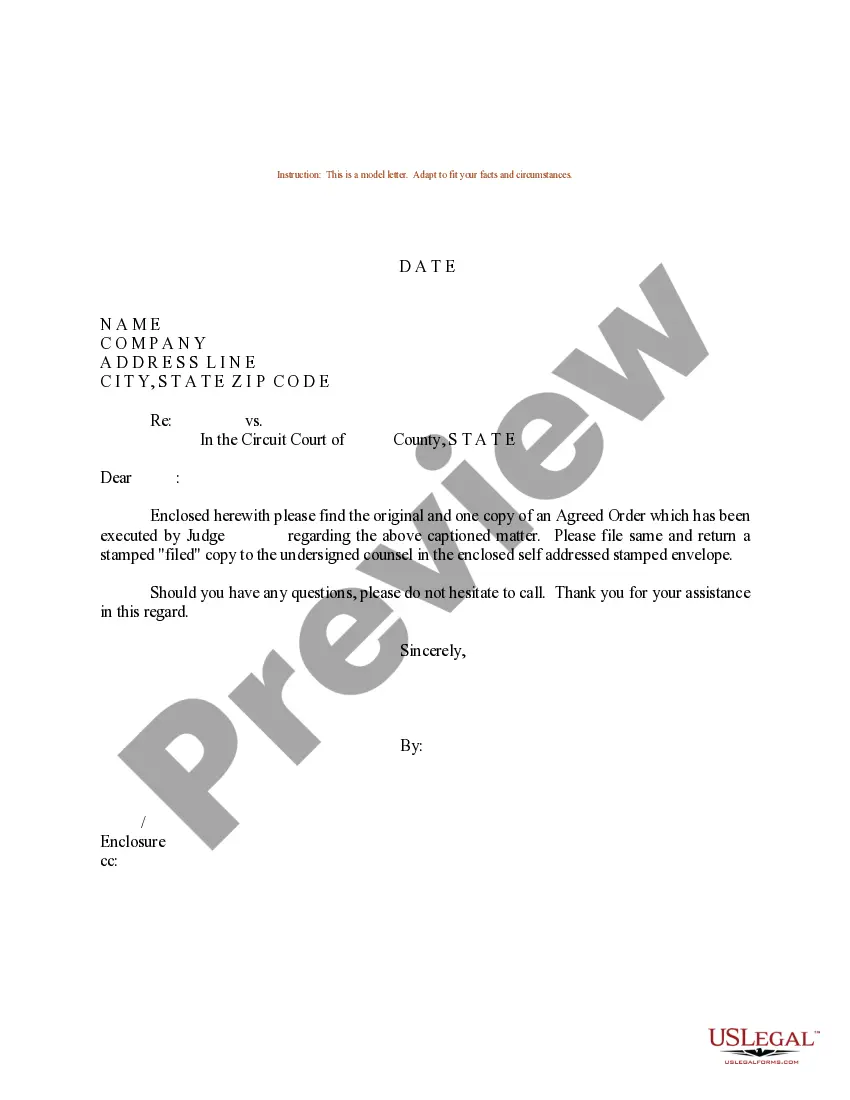
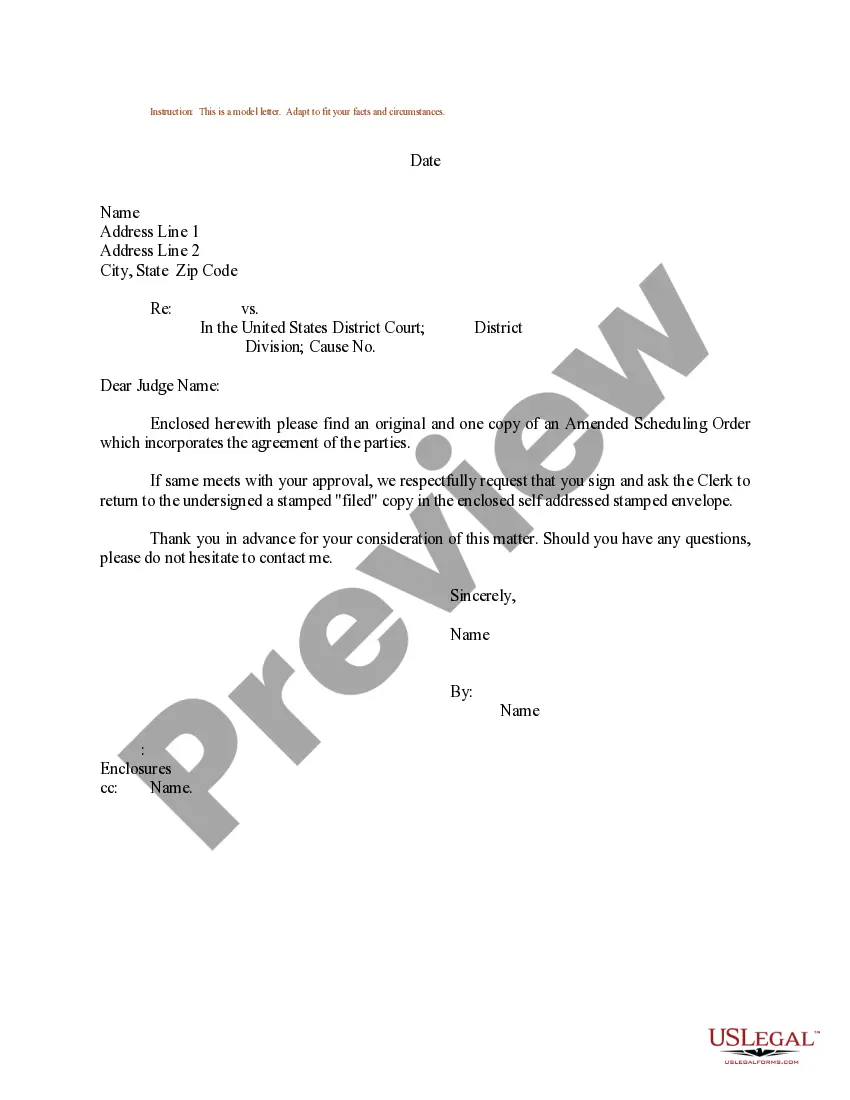
Get your form ready online
Our built-in tools help you complete, sign, share, and store your documents in one place.
Make edits, fill in missing information, and update formatting in US Legal Forms—just like you would in MS Word.
Download a copy, print it, send it by email, or mail it via USPS—whatever works best for your next step.
Sign and collect signatures with our SignNow integration. Send to multiple recipients, set reminders, and more. Go Premium to unlock E-Sign.
If this form requires notarization, complete it online through a secure video call—no need to meet a notary in person or wait for an appointment.
We protect your documents and personal data by following strict security and privacy standards.

Make edits, fill in missing information, and update formatting in US Legal Forms—just like you would in MS Word.

Download a copy, print it, send it by email, or mail it via USPS—whatever works best for your next step.

Sign and collect signatures with our SignNow integration. Send to multiple recipients, set reminders, and more. Go Premium to unlock E-Sign.

If this form requires notarization, complete it online through a secure video call—no need to meet a notary in person or wait for an appointment.

We protect your documents and personal data by following strict security and privacy standards.
Looking for another form?


How to fill out Sample Letter For Scheduling Order?
Are you in a situation where you require documents for potential business or specific purposes nearly every day.
There are numerous legal document templates available online, but obtaining forms you can trust is challenging.
US Legal Forms offers thousands of document templates, such as the South Carolina Sample Letter for Scheduling Order, that are designed to meet both state and federal regulations.
Once you have the correct document, click on Buy now.
Choose the pricing plan you require, enter the necessary details to create your account, and pay for the order using your PayPal or credit card. Select a convenient document format and download your copy. Access all the document templates you have purchased in the My documents menu. You can download another copy of the South Carolina Sample Letter for Scheduling Order anytime, if necessary. Click the desired form to download or print the document template. Use US Legal Forms, the most comprehensive collection of legal forms, to save time and prevent mistakes. The service provides professionally crafted legal document templates that can be utilized for various purposes. Create an account on US Legal Forms and start making your life a bit easier.
- If you are already familiar with the US Legal Forms website and have a merchant account, simply Log In.
- Then, you can download the South Carolina Sample Letter for Scheduling Order template.
- If you do not have an account and wish to start using US Legal Forms, follow these steps.
- Select the document you need and ensure it is for the correct city/county.
- Use the Review button to evaluate the form.
- Check the description to ensure you have selected the right document.
- If the document is not what you are looking for, use the Search area to find the form that fits your needs.
Form popularity
FAQ
Texas Rules of Civil Procedure Rule 190 identifies the three levels of discovery. In most cases, discovery level 2 (Rule 190.3) governs the timing of discovery. After initial disclosures, you can serve requests for discovery until 30 days before the date set for trial, or the date set by the court.
The scheduling order will usually set a deadline when discovery must be completed, and can prohibit discovery outside the timeframe set forth in the scheduling order. Similarly, many scheduling orders require each side to provide copies of exhibits to the other side in advance of trial.
A scheduling order is a court order designed to manage the flow of a case from the date it is entered through the beginning of trial. The court may enter the order on its own motion, or either party may seek one by motion.
Every case filed in Texas state court requires the plaintiff to choose a discovery plan: Level One, which applies only for cases where the plaintiff seeks less than $100,000 in damages; Level Two, which applies by default to all other cases and has its own specific set of deadlines; and Level Three, which allows the ...
(3) Requests for admissions. Each party may serve no more than 25 requests for admissions. Requests for admissions may be used only to address jurisdictional facts or the genuineness of any documents served with the request. (4) Requests for disclosure.
The court, after considering the joint attorney conference report and after reviewing the case file, enters this case specific order which controls disposition of this action pending further order of the court. The following actions shall be completed by the date indicated.