South Carolina Complaint to Quiet Title by Person Claiming Adverse Possession - Squatters Rights

State:
Multi-State
Control #:
US-00938BG
Format:
Word; 
Rich Text
907 downloads

Description

Title to land can be acquired by holding it adversely to the true owner for a certain period of time. In such a case, the person in possession gains title by adverse possession. The person in possession automatically becomes the owner of the property even though the person had no lawful claim to the land. In order to acquire title in this manner, possession must be actual, visible, exclusive, and continuous for a certain period of time.


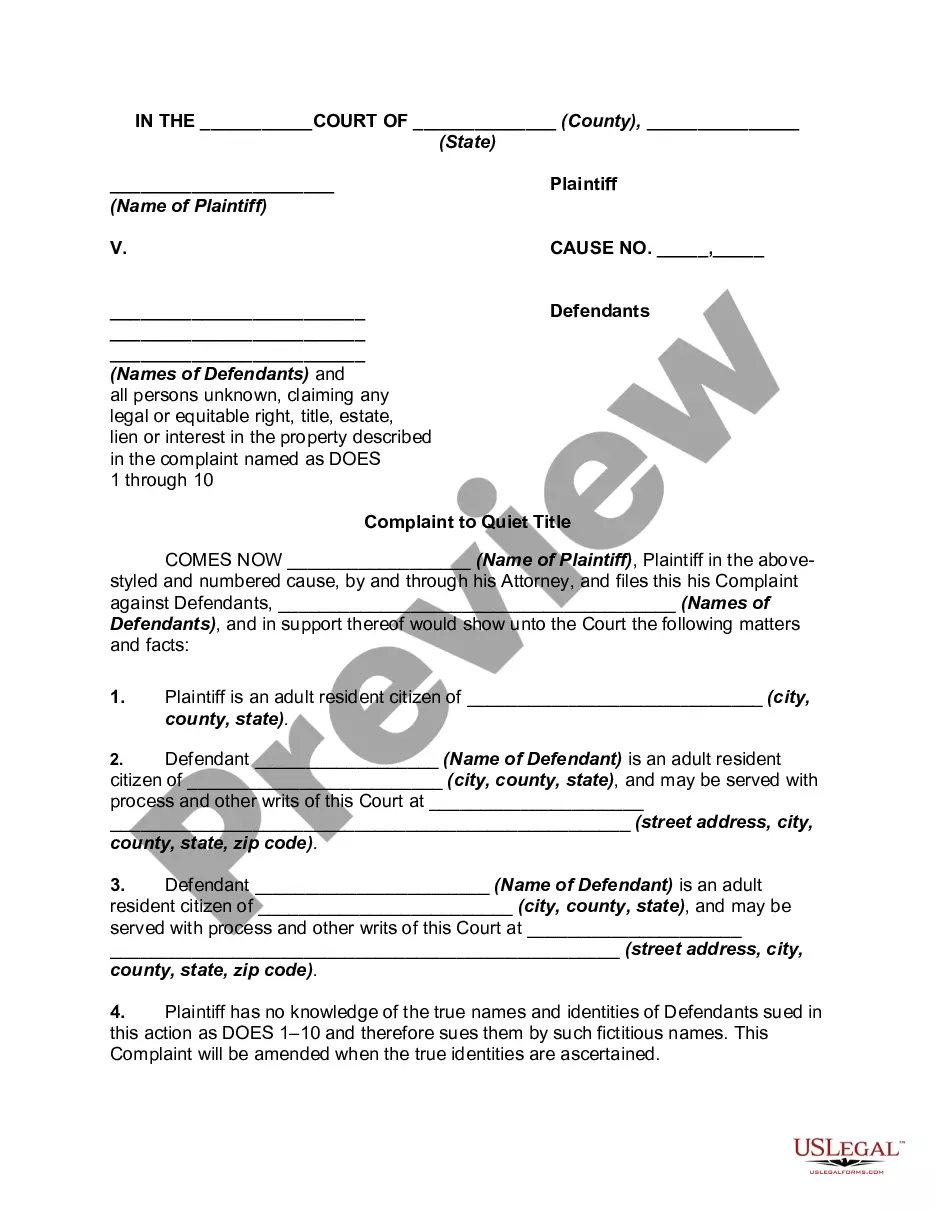
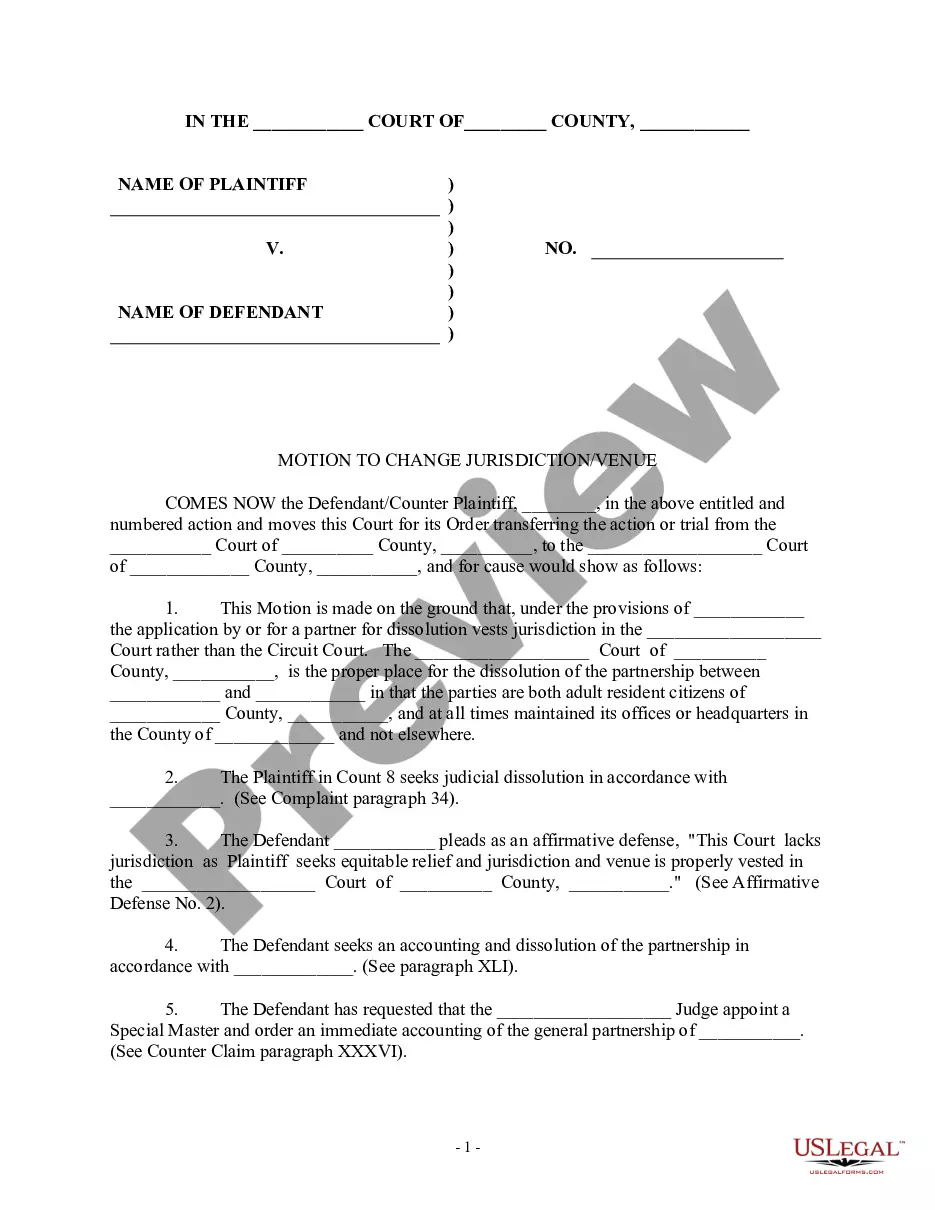
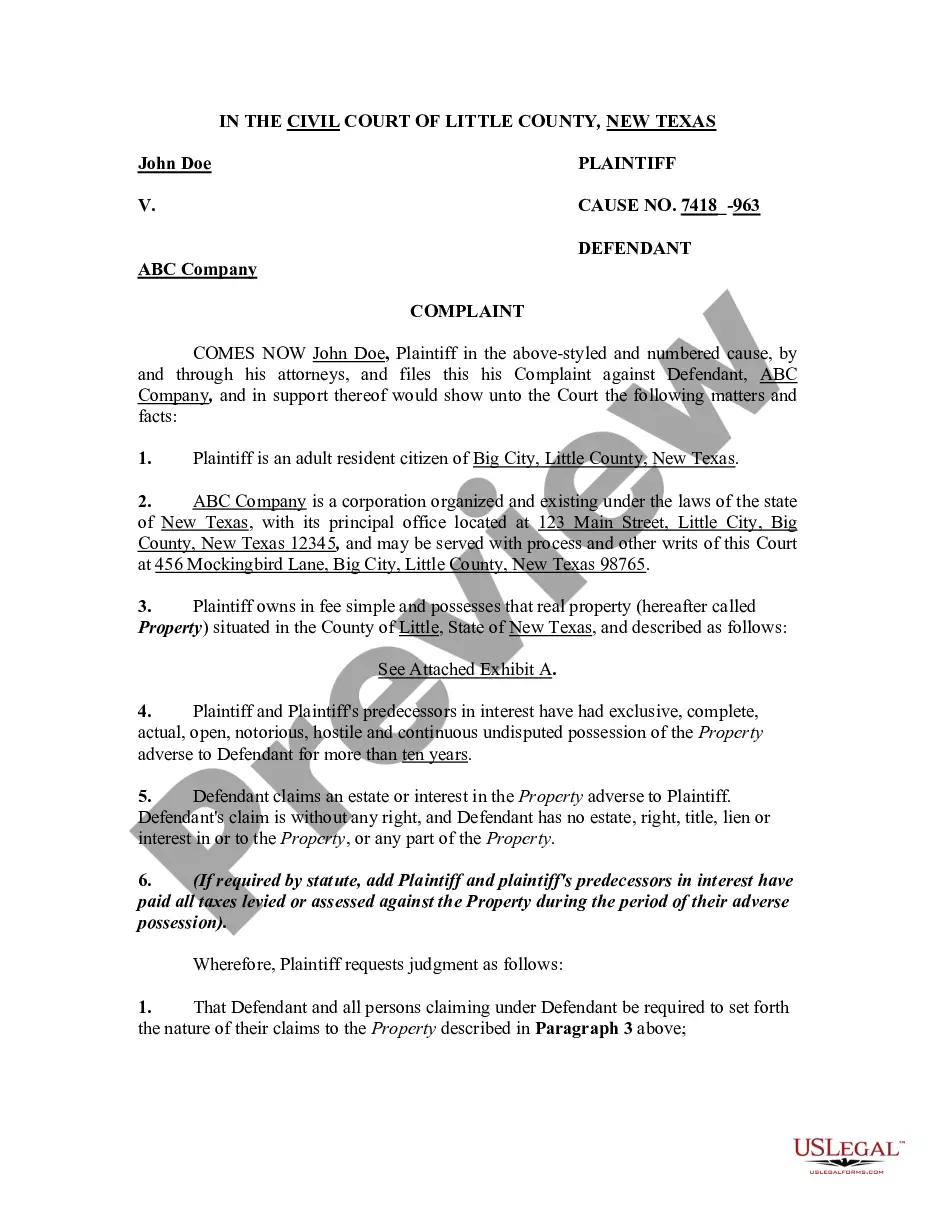
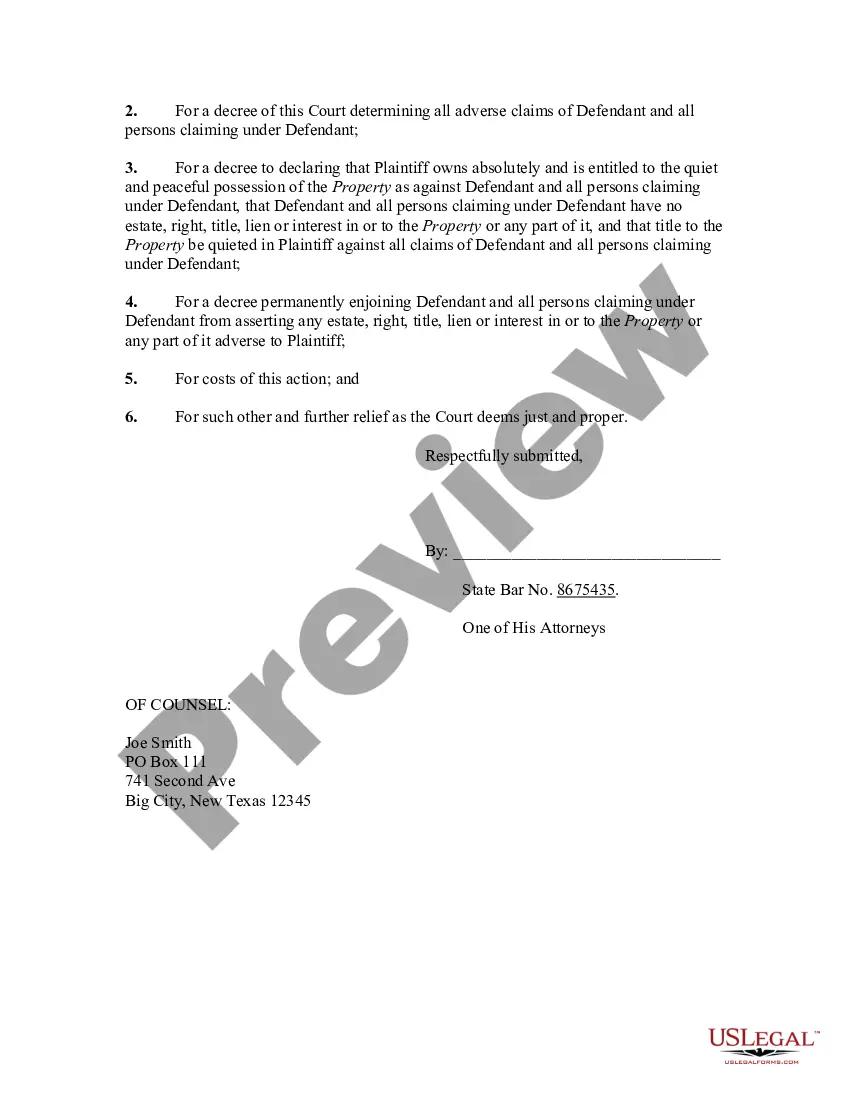
This form is a generic example of a complaint to quiet title by a person claiming adverse possession. This form may be referred to when preparing such a pleading for your particular state, although such a complaint must be tailored to the law of the state where the action is to be filed.
Free preview
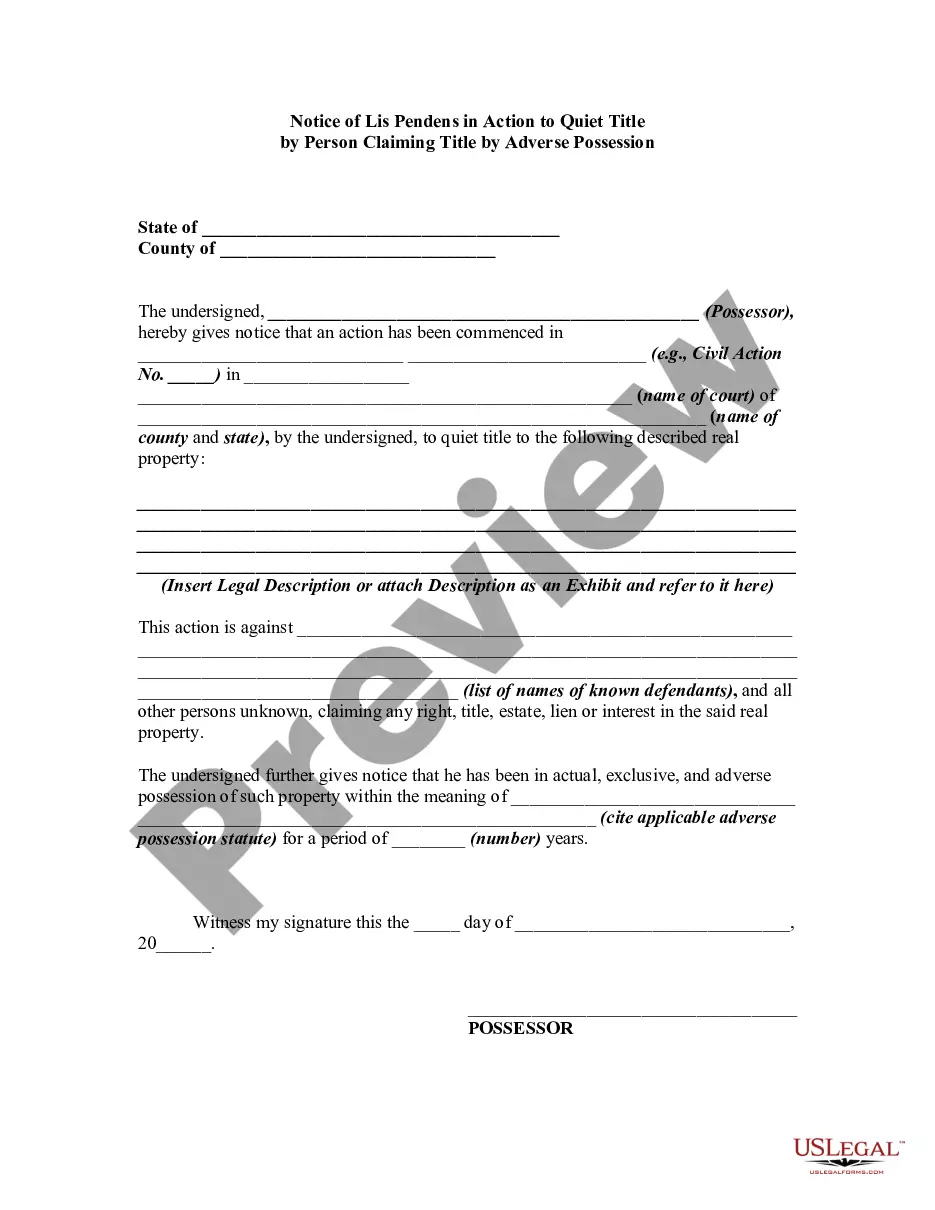
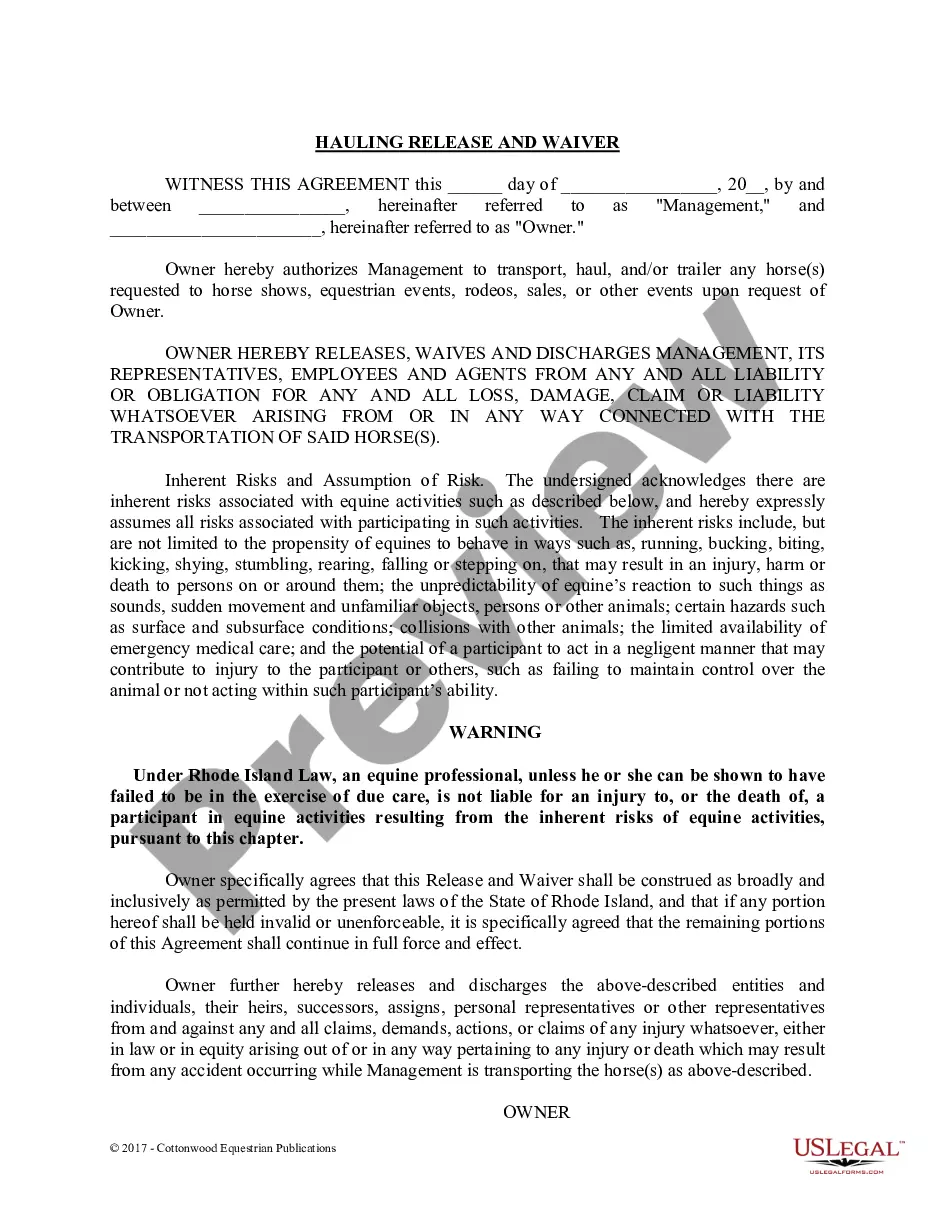
  • Preview Complaint to Quiet Title by Person Claiming Adverse Possession - Squatters Rights
  • Preview Complaint to Quiet Title by Person Claiming Adverse Possession - Squatters Rights

Get your form ready online

Our built-in tools help you complete, sign, share, and store your documents in one place.

Built-in online Word editor

Make edits, fill in missing information, and update formatting in US Legal Forms—just like you would in MS Word.

Export easily

Download a copy, print it, send it by email, or mail it via USPS—whatever works best for your next step.

E-sign your document

Sign and collect signatures with our SignNow integration. Send to multiple recipients, set reminders, and more. Go Premium to unlock E-Sign.

Notarize online 24/7

If this form requires notarization, complete it online through a secure video call—no need to meet a notary in person or wait for an appointment.

Store your document securely

We protect your documents and personal data by following strict security and privacy standards.

Form selector

Make edits, fill in missing information, and update formatting in US Legal Forms—just like you would in MS Word.

Form selector

Download a copy, print it, send it by email, or mail it via USPS—whatever works best for your next step.

Form selector

Sign and collect signatures with our SignNow integration. Send to multiple recipients, set reminders, and more. Go Premium to unlock E-Sign.

Form selector

If this form requires notarization, complete it online through a secure video call—no need to meet a notary in person or wait for an appointment.

Form selector

We protect your documents and personal data by following strict security and privacy standards.

Looking for another form?

This field is required
Ohio
Select state

How to fill out Complaint To Quiet Title By Person Claiming Adverse Possession - Squatters Rights?

Finding the correct valid document format can be a challenge. Of course, there are numerous templates available online, but how can you acquire the valid form you require? Use the US Legal Forms website.

The platform provides thousands of templates, such as the South Carolina Complaint to Quiet Title by Person Claiming Adverse Possession - Squatters Rights, which can be utilized for both business and personal purposes. All of the forms are verified by experts and comply with federal and state regulations.

If you are already registered, Log In to your account and click the Obtain button to access the South Carolina Complaint to Quiet Title by Person Claiming Adverse Possession - Squatters Rights. Use your account to browse through the legal forms you have previously purchased. Go to the My documents section of your account and download another copy of the document you need.

Complete, edit, print, and sign the obtained South Carolina Complaint to Quiet Title by Person Claiming Adverse Possession - Squatters Rights. US Legal Forms is the largest repository of legal forms where you can find numerous document templates. Use the service to acquire professionally crafted documents that adhere to state requirements.

  1. If you are a new user of US Legal Forms, here are simple steps you can follow.
  2. First, ensure you have selected the correct form for your locality/region. You can preview the form using the Preview button and review the form description to confirm it is suitable for you.
  3. If the form does not meet your requirements, use the Search field to find the appropriate form.
  4. Once you are confident that the form is acceptable, click on the Buy now button to obtain the form.
  5. Select the payment plan you need and enter the required information. Create your account and pay for the transaction using your PayPal account or credit card.
  6. Choose the document format and download the legal document format to your device.

Form popularity

FAQ

Acting quickly is the best way to fight an adverse possession claim. Negotiate permission in writing: You may be willing to allow the use of the property. If so, having a written document helps prove you allowed specific use and could help fight an adverse possession claim.

The term ?quiet title? generally refers to any lawsuit that attempts to confirm ownership, fix a title error, or settle an ownership dispute. The end result of a quiet title lawsuit is a court order clarifying or confirming who owns the subject property. In other words, a quiet title fixes the chain of title.

Adverse possession is one possible theory of ownership that might be asserted within a quiet title action. Adverse possession is one of the only ways to obtain ownership of property other than deed or inheritance.

If the defendants don't respond within a certain period of time, a quiet title is awarded. Adverse possession: Commonly referred to as ?squatters' rights,? adverse possession involves someone openly taking up residence in a property for their use that they don't have legal right to.

A squatter may gain adverse possession of the property through involuntary transfer. A property owner who does not use or inspect their property for several years could lose the title to another person who makes a claim to the land, takes possession of the land, and uses the land.

Identify and mark your property boundaries. Inspect your land regularly for signs of trespassers. You may want to use ?no trespassing? signs and block entrances with gates. Although many states will not find a ?no trespassing? sign sufficient to prevent an adverse possession claim, it's a good way to deter trespassers.

Easement and boundary disputes: Besides property ownership, quiet title actions can settle other title disputes, such as property access and legal boundaries. For example, someone can claim a right to access your property if you share a driveway or they have to drive across a portion of your land to get to their home.

South Carolina law protects a squatter's rights, but that doesn't mean they can take ownership of your property. Besides proving notorious possession, they must meet other requirements to win an adverse possession case.

Trusted and secure by over 3 million people of the world’s leading companies

South Carolina Complaint to Quiet Title by Person Claiming Adverse Possession - Squatters Rights