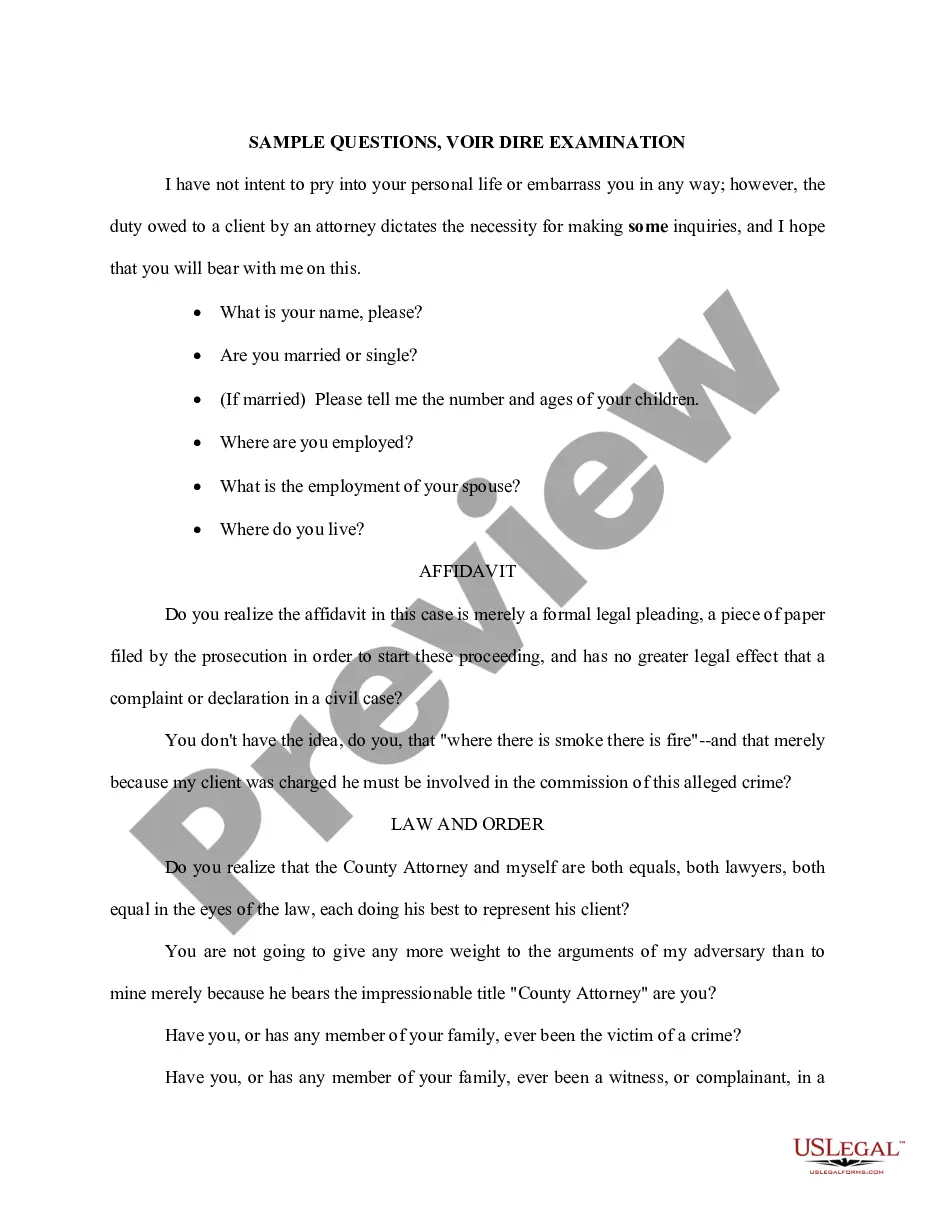
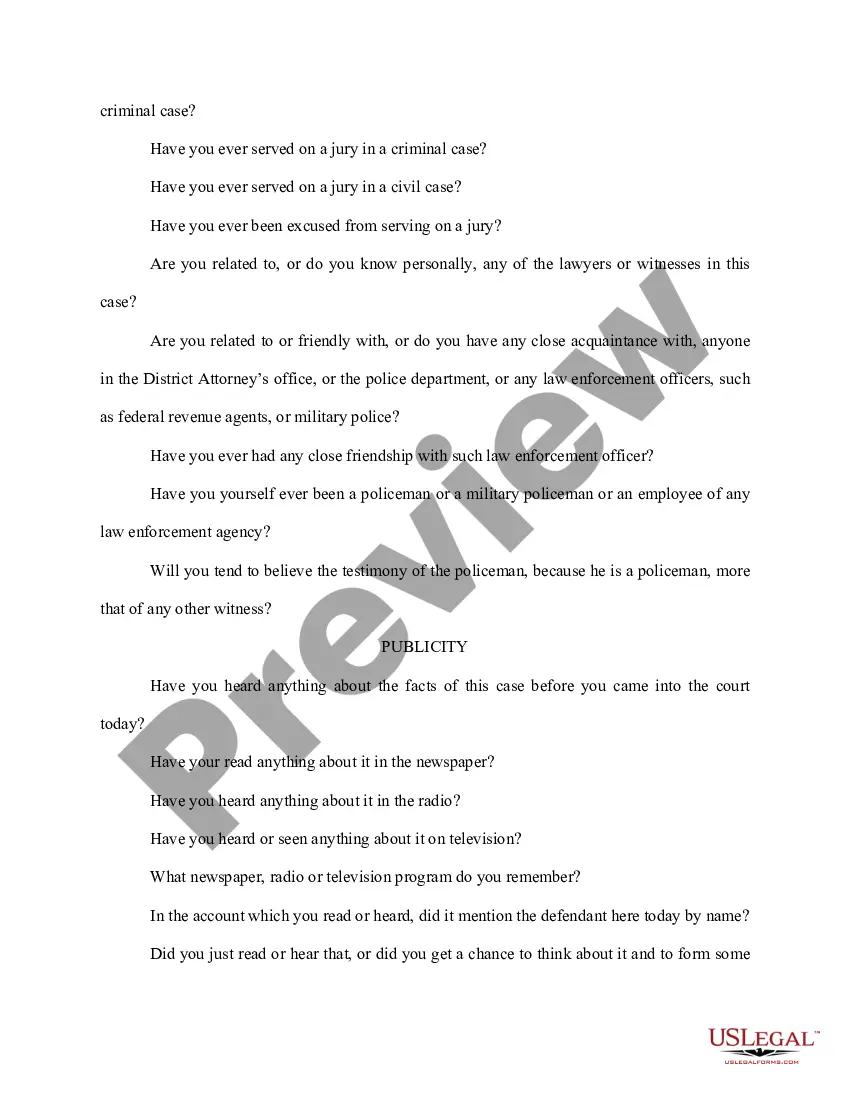
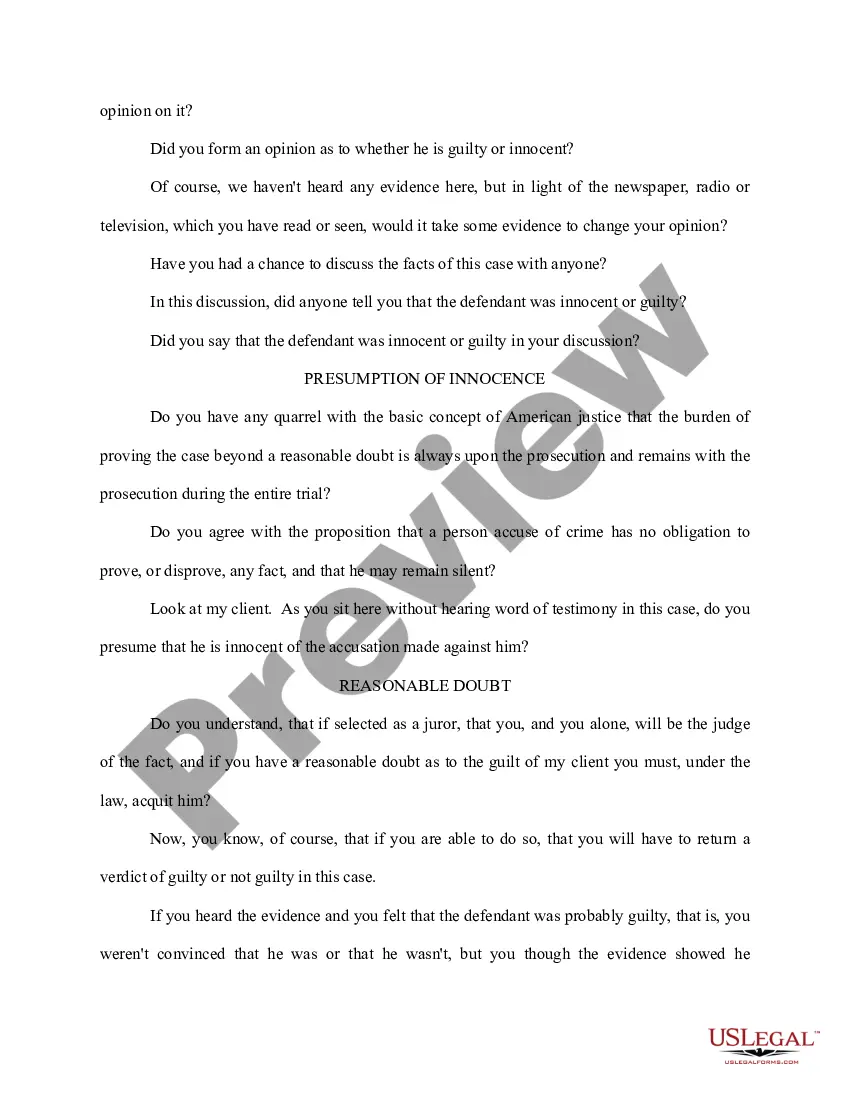
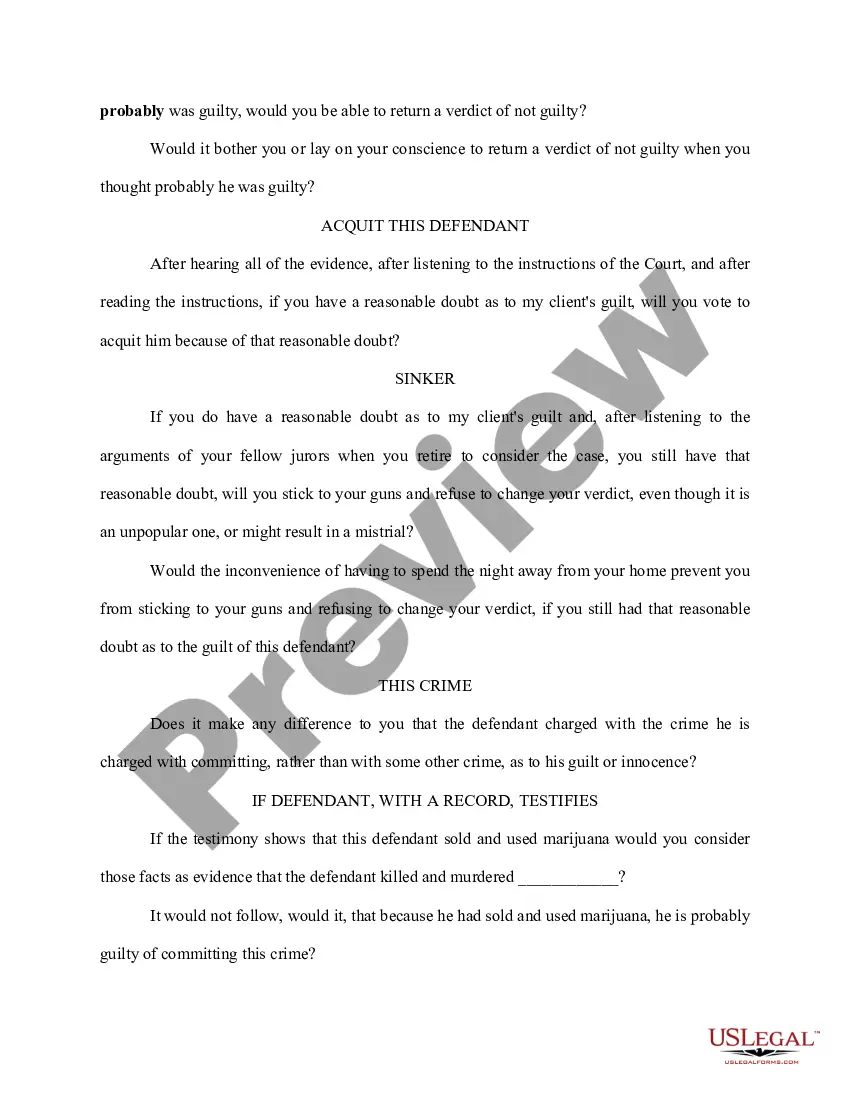
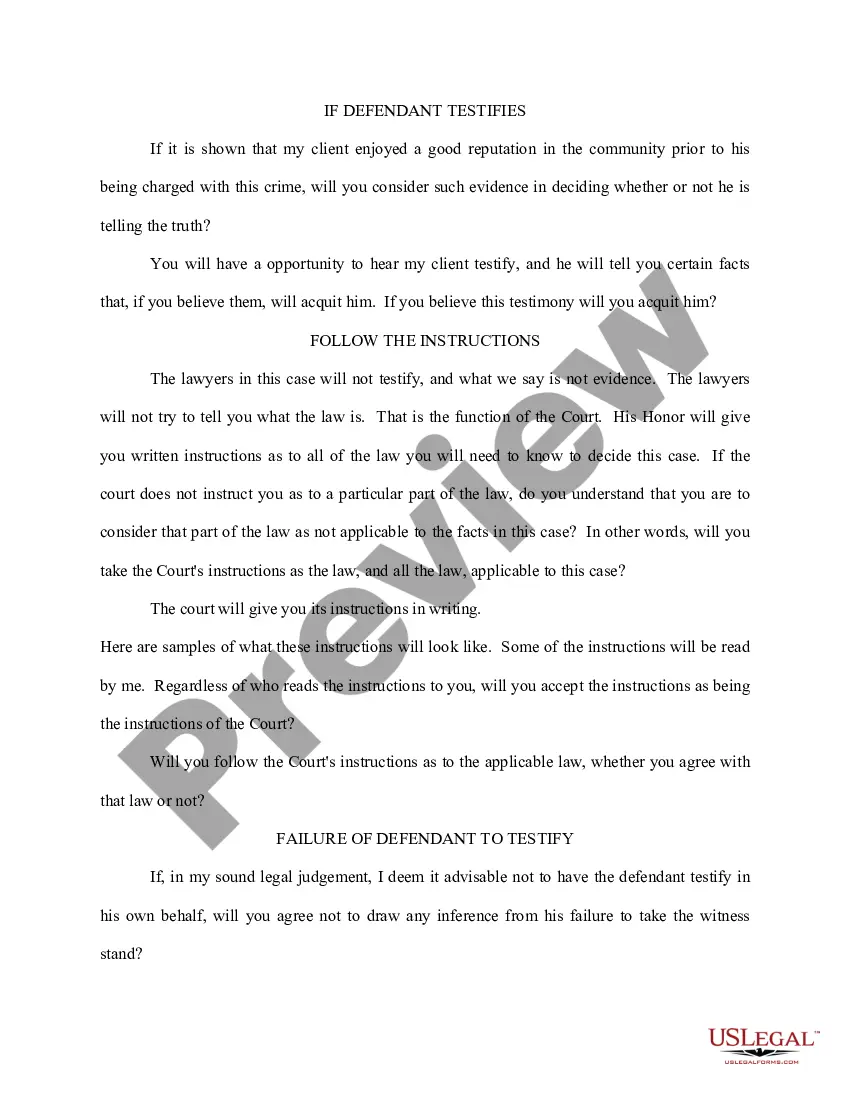
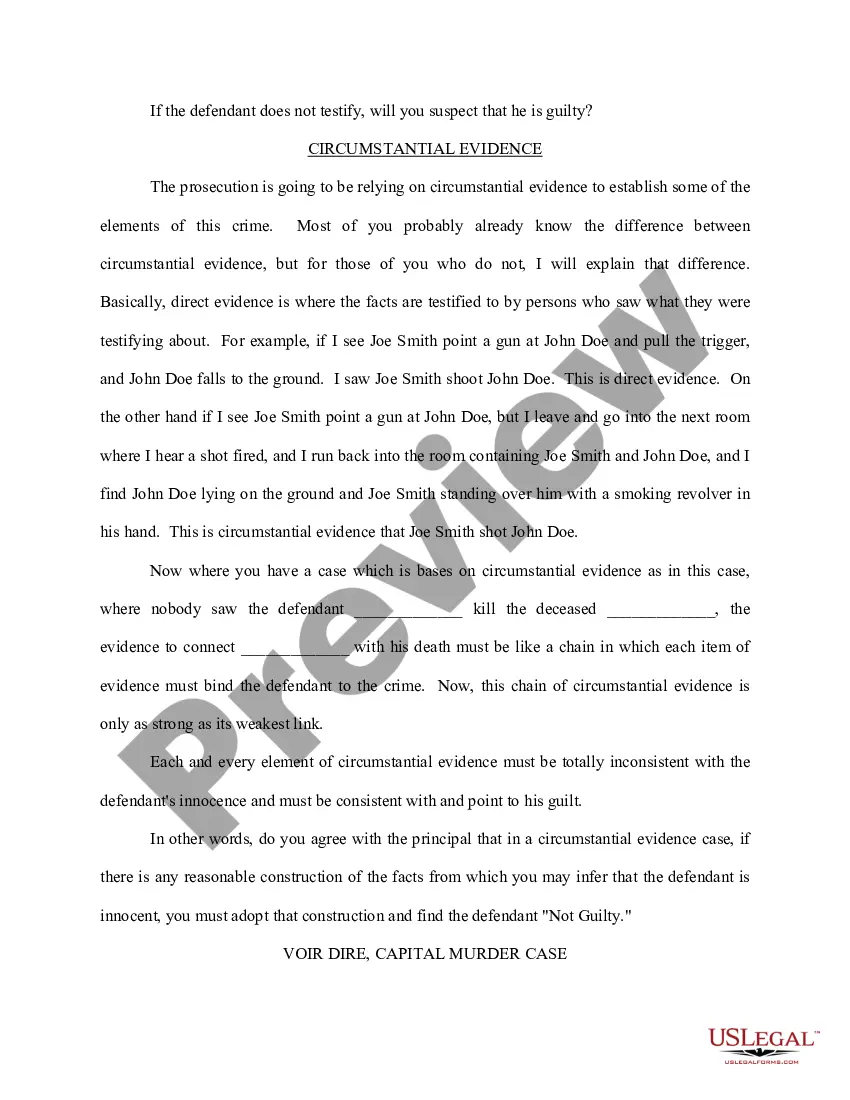
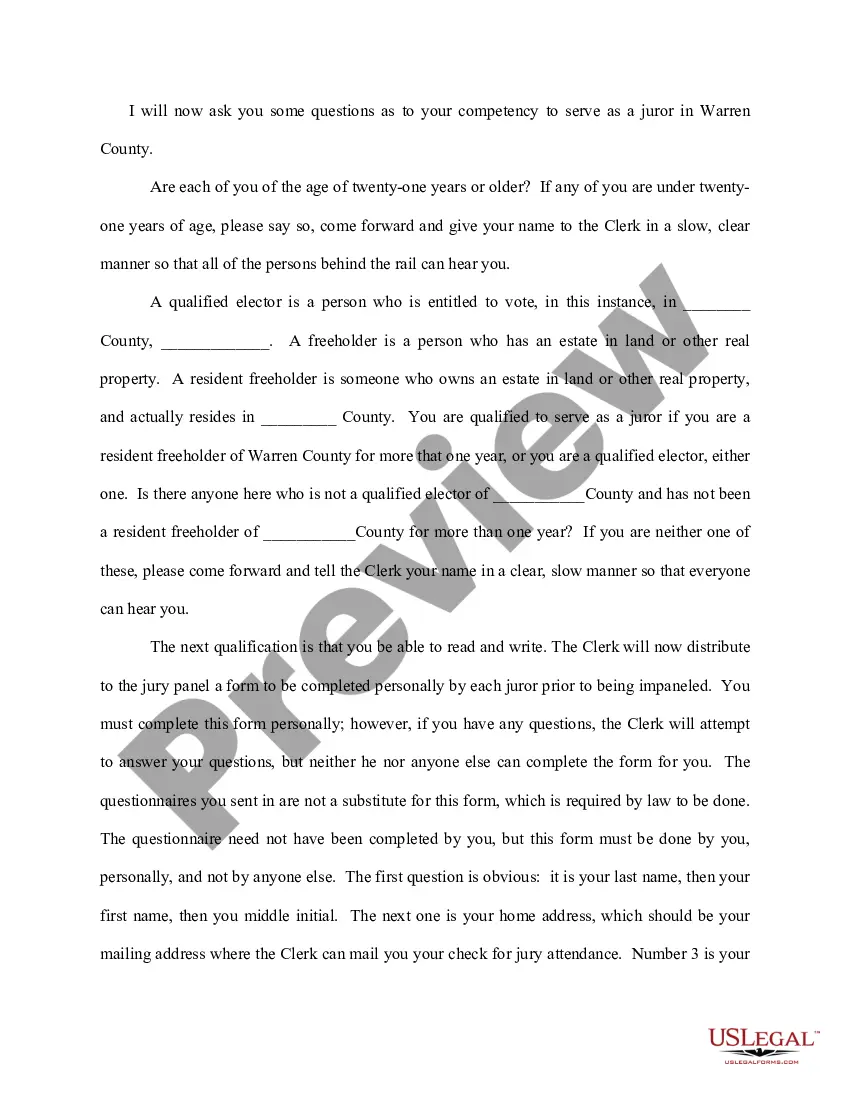
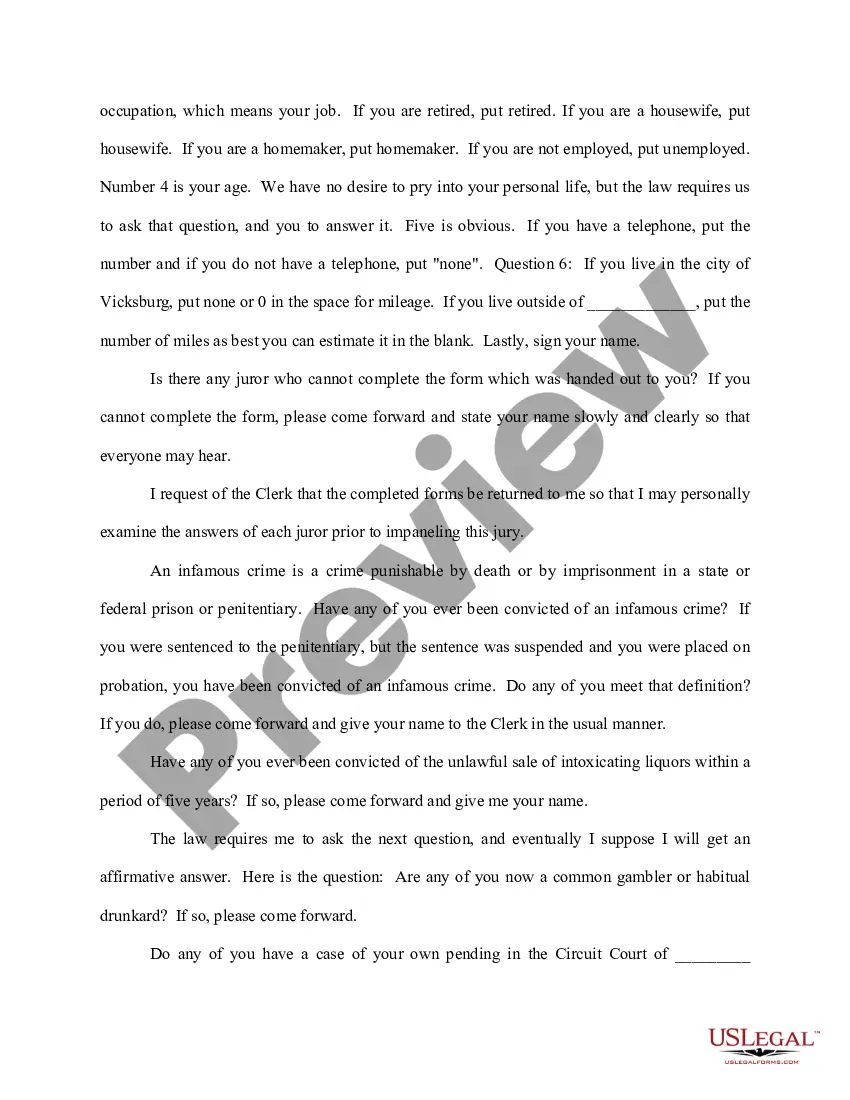
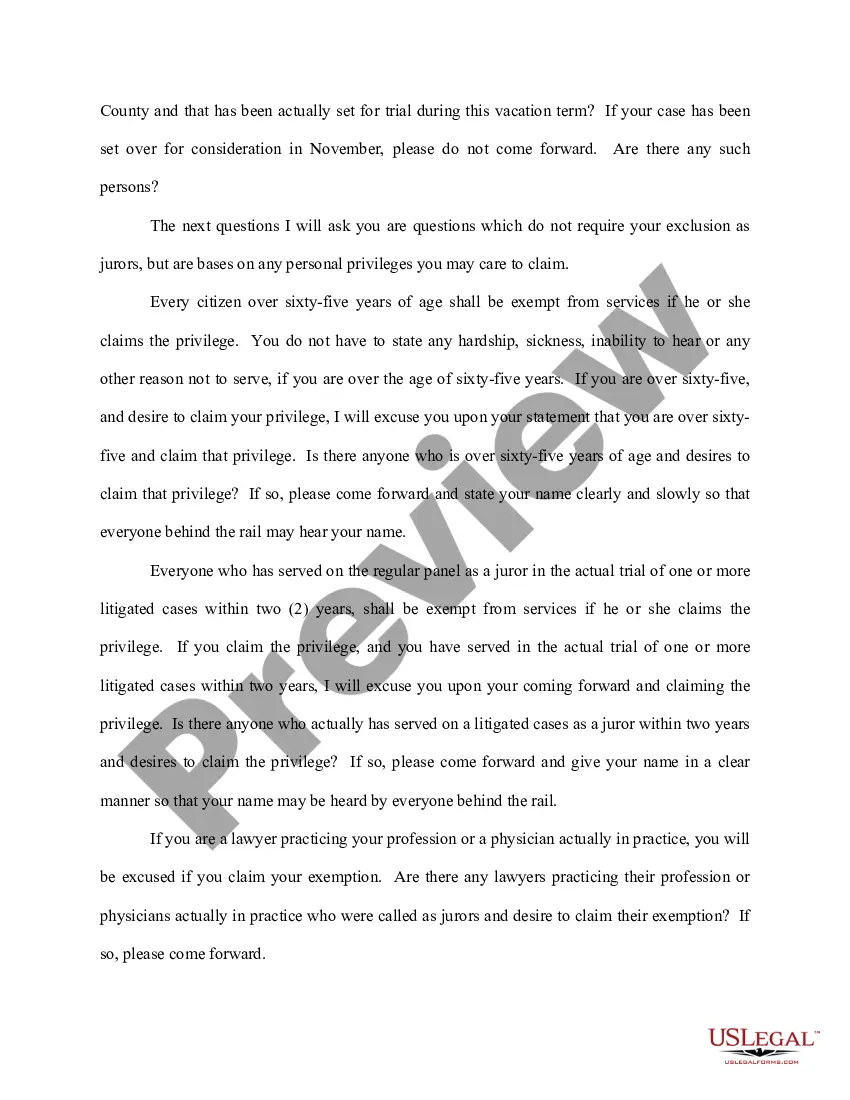
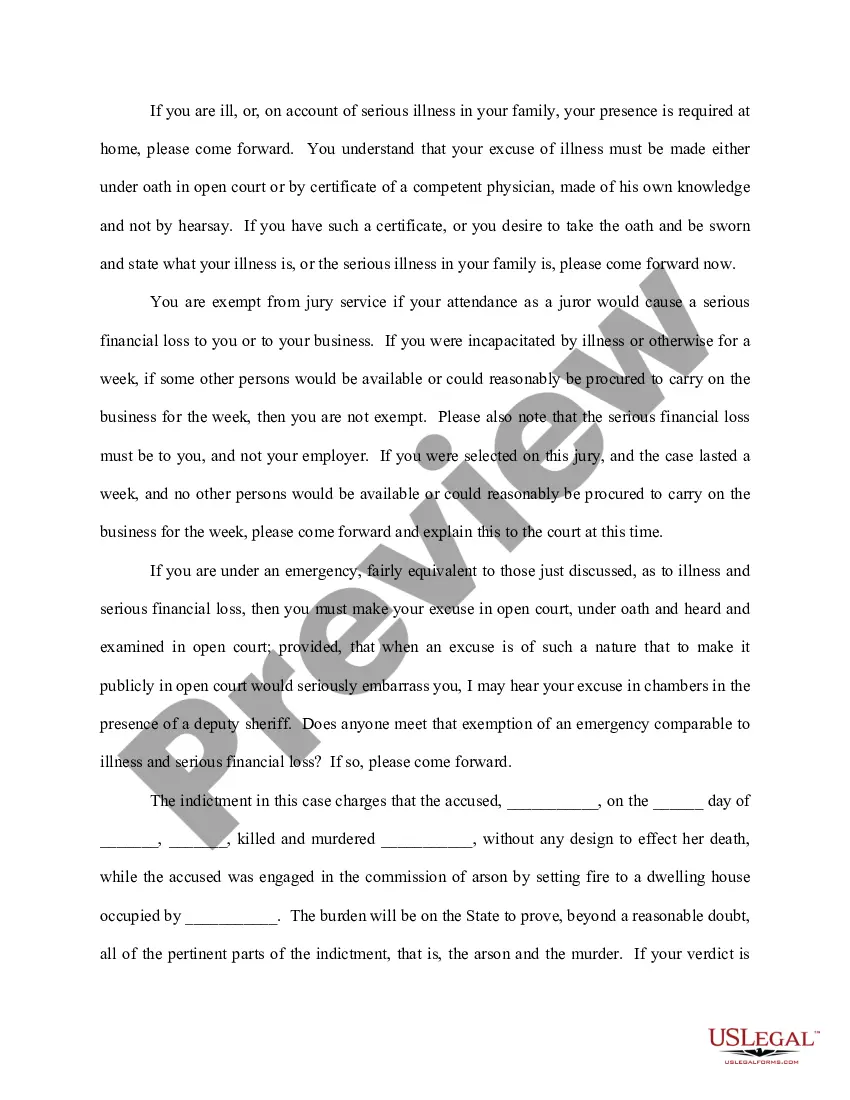
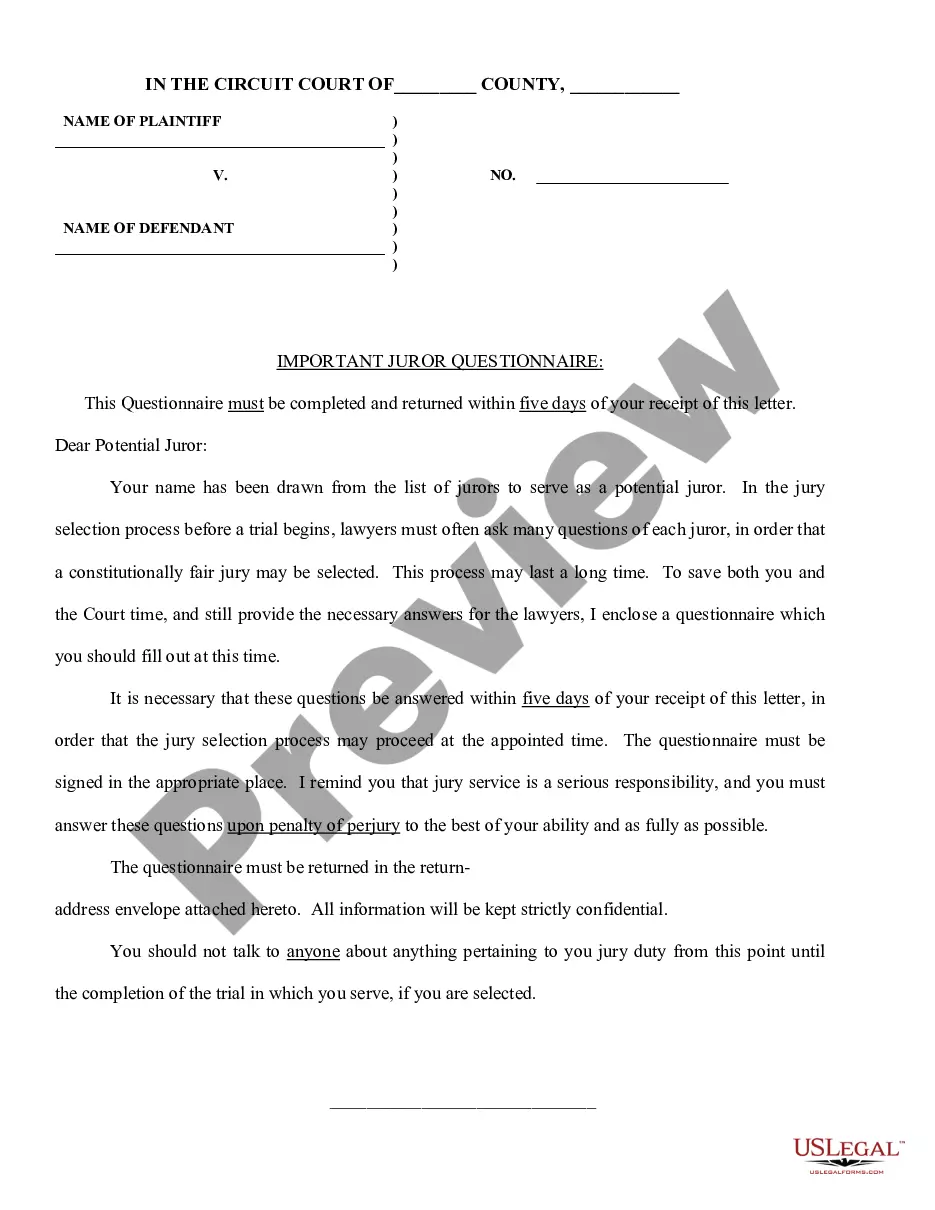
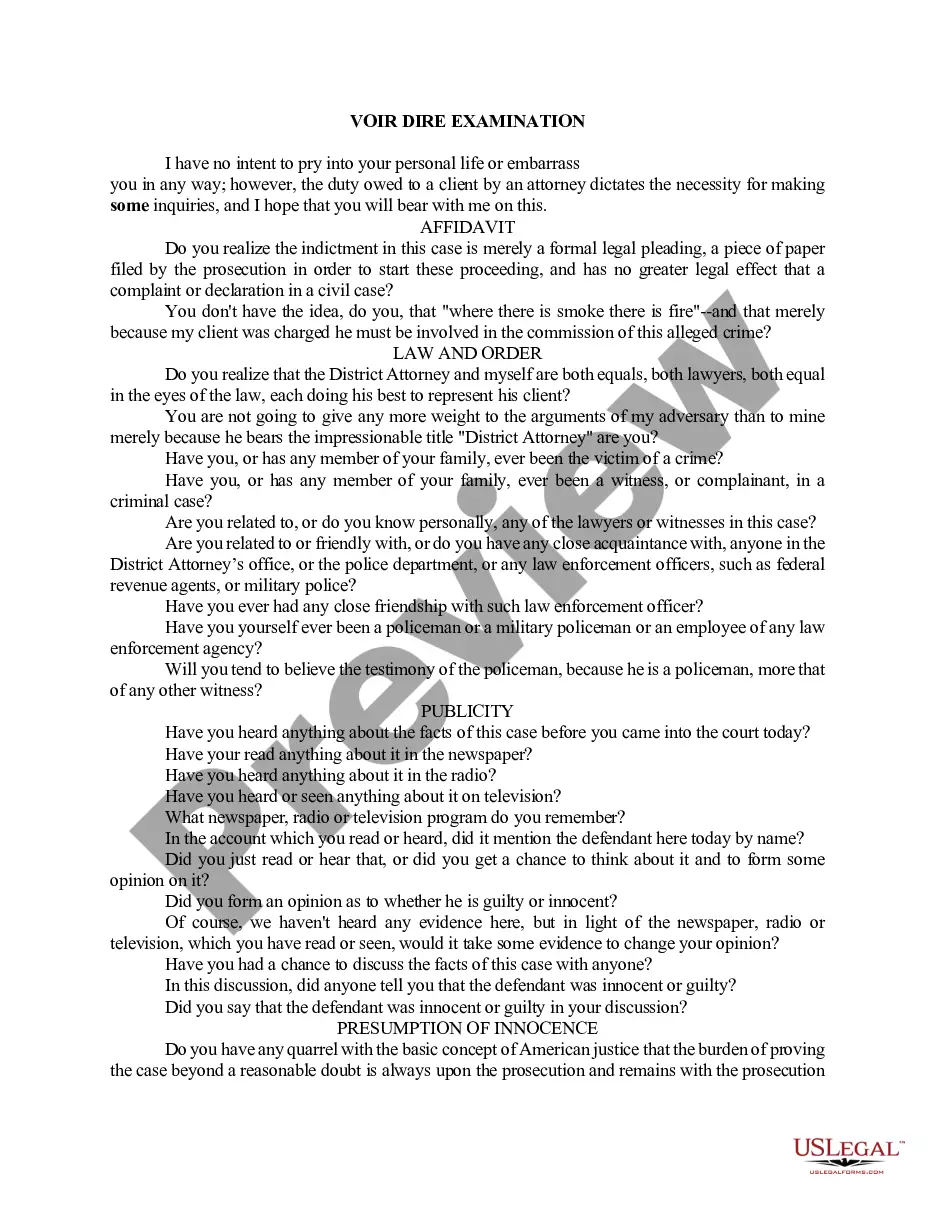
South Carolina Sample Questions, Voir Dire Examination
Description

Get your form ready online
Our built-in tools help you complete, sign, share, and store your documents in one place.
Make edits, fill in missing information, and update formatting in US Legal Forms—just like you would in MS Word.
Download a copy, print it, send it by email, or mail it via USPS—whatever works best for your next step.
Sign and collect signatures with our SignNow integration. Send to multiple recipients, set reminders, and more. Go Premium to unlock E-Sign.
If this form requires notarization, complete it online through a secure video call—no need to meet a notary in person or wait for an appointment.
We protect your documents and personal data by following strict security and privacy standards.

Make edits, fill in missing information, and update formatting in US Legal Forms—just like you would in MS Word.

Download a copy, print it, send it by email, or mail it via USPS—whatever works best for your next step.

Sign and collect signatures with our SignNow integration. Send to multiple recipients, set reminders, and more. Go Premium to unlock E-Sign.

If this form requires notarization, complete it online through a secure video call—no need to meet a notary in person or wait for an appointment.

We protect your documents and personal data by following strict security and privacy standards.
Looking for another form?

How to fill out Sample Questions, Voir Dire Examination?
US Legal Forms - one of the largest repositories of legal documents in the USA - provides a selection of legal document templates that you can download or print. By utilizing the website, you can discover thousands of forms for business and personal purposes, categorized by types, states, or keywords. You can find the most recent versions of forms such as the South Carolina Sample Questions, Voir Dire Examination within moments.
If you already have a subscription, Log In and download South Carolina Sample Questions, Voir Dire Examination from the US Legal Forms library. The Download button will be visible on every form you view. You have access to all previously obtained forms in the My documents section of your account.
If you are using US Legal Forms for the first time, here are simple instructions to help you get started: Ensure you have selected the correct form for your city/region. Click the Review button to examine the form's content. Check the form summary to confirm that you have chosen the right form. If the form does not meet your needs, utilize the Search area at the top of the screen to find the one that does. If you are satisfied with the form, confirm your choice by clicking the Buy now button. Then, select the payment plan you prefer and provide your details to register for an account. Process the transaction. Use a Visa or Mastercard or PayPal account to complete the transaction. Choose the format and download the form to your device. Make adjustments. Fill out, modify, and print and sign the acquired South Carolina Sample Questions, Voir Dire Examination. Each template you add to your account does not have an expiration date and is yours permanently. Therefore, if you wish to download or print another copy, simply navigate to the My documents section and click on the form you need. Access the South Carolina Sample Questions, Voir Dire Examination with US Legal Forms, the most extensive library of legal document templates. Utilize numerous professional and state-specific templates that cater to your business or personal needs and requirements.
Discover a vast collection of legal forms tailored for various needs at US Legal Forms, ensuring you find exactly what you're looking for.
Access a wealth of resources and templates designed to simplify your documentation process, whether for personal or business use.
- US Legal Forms.
- legal documents.
- document templates.
- business purposes.
- personal purposes.
- subscription.
Form popularity
FAQ
The questioning process, called the voir dire, is designed to permit the attorneys to become acquainted with the prospective jurors and to determine whether a juror can serve fairly and impartially in the case.
The judge and attorneys ask the potential jurors questions, general or related to the specific case before them, to determine their suitability to serve on the jury. This process is called voir dire, which typically results in some prospective jurors being excused, based on their answers, from serving in that trial.
As a general matter, questions during the voir dire process tend to be very general, such as asking about marriage, children, education, whether you know any of the people involved in the trial, etc. Thus, most of these questions are ones that just about everyone can answer publicly.
Voir Dire and Jury Selection gather information about individual prospective jurors regarding their potential to be fair-minded and impartial, and to apply the law as instructed; educate the jury about the parties' respective theories of the case; develop a rapport with, and earn the trust and respect of, the jury;
During voir dire the lawyers may ask the judge to excuse a juror from sitting on the case. This is called "challenging a juror". There are two types of challenges: a challenge for cause and a peremptory challenge.
Do you think there are too many, too few or about the right number of lawsuits? What is a ?frivolous lawsuit?? How can you determine what is a ?real? case and what is a ?frivolous? case? Do you think some people file ?frivolous lawsuits?? Why or why not?
Often, jurors will be asked to state the neighborhood or area they live in, their profession, whether they have children, are married, and so on. This kind of information helps the judge and lawyers get a feel for the potential jurors, and might even inform an attorney's decision to use a challenge on someone.