Arizona Voir Dire Examination
Description
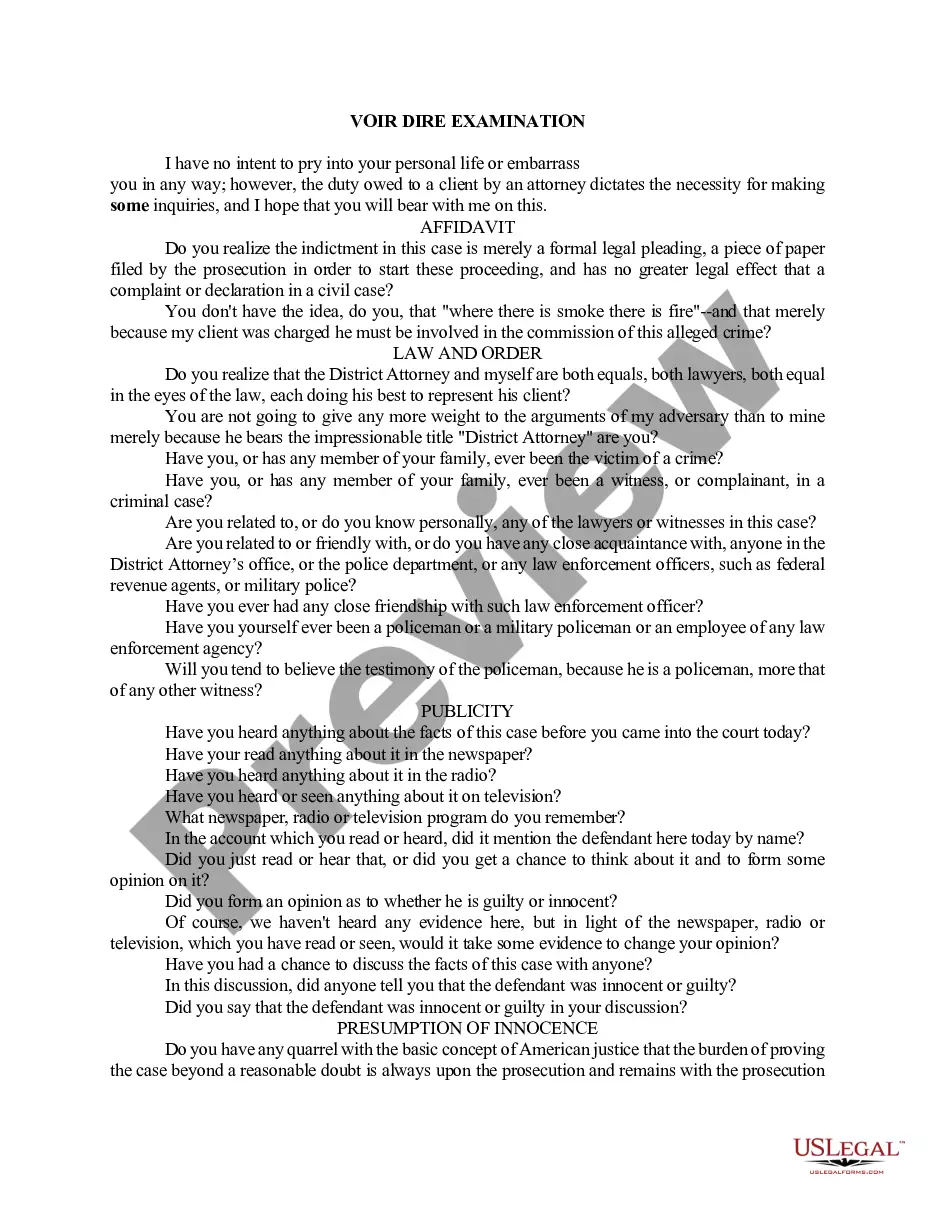
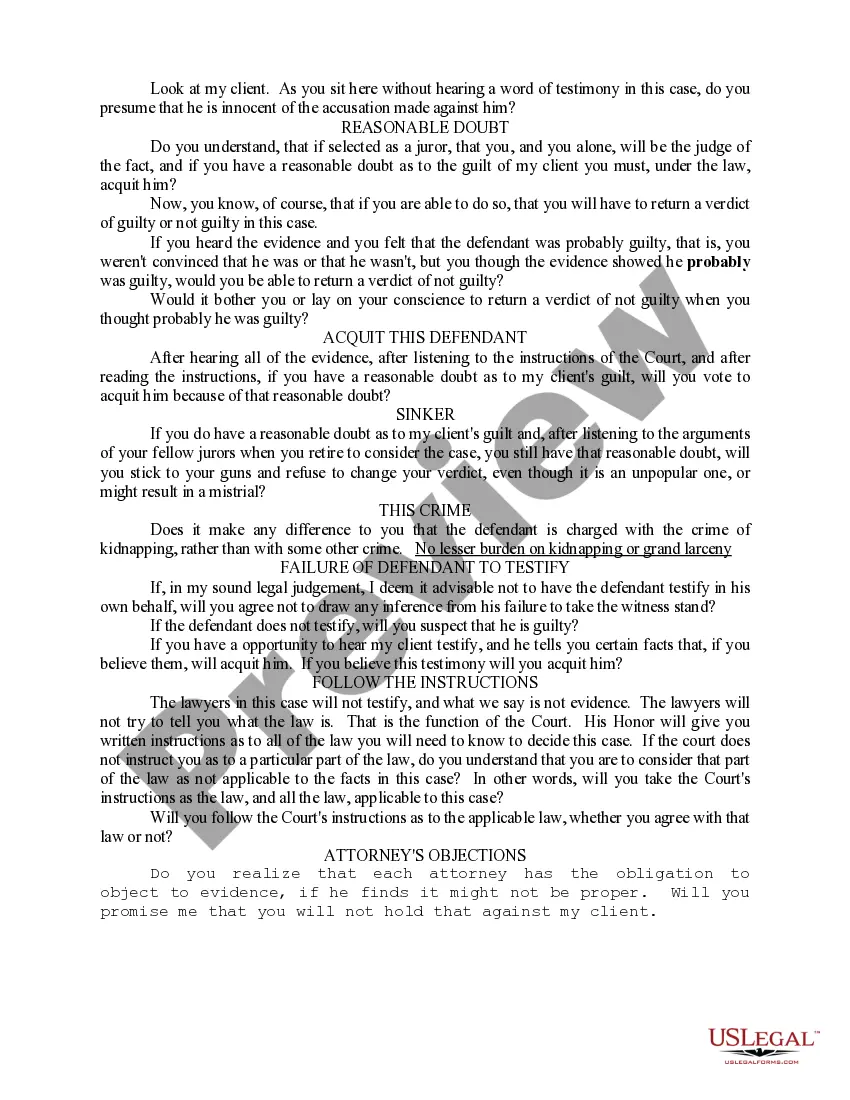
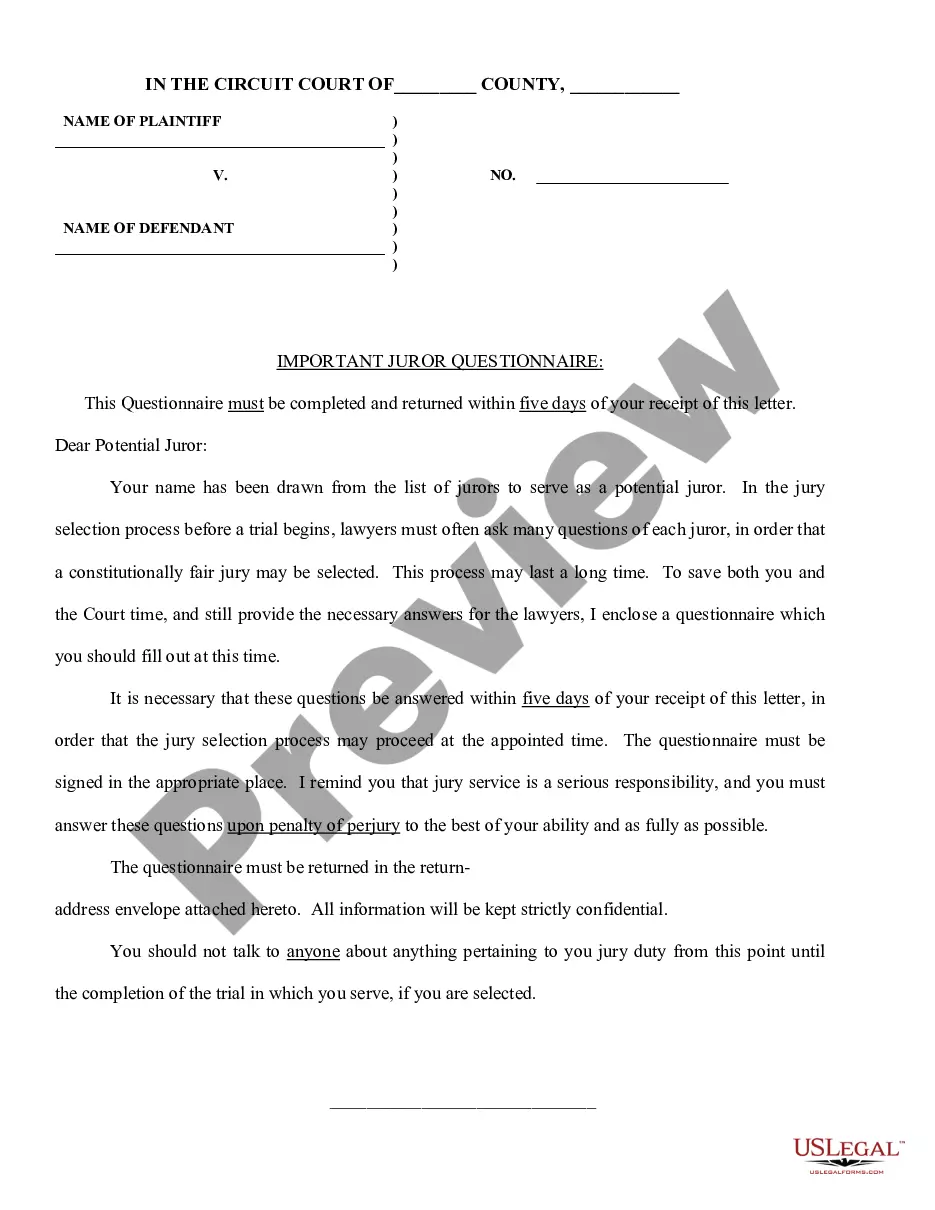
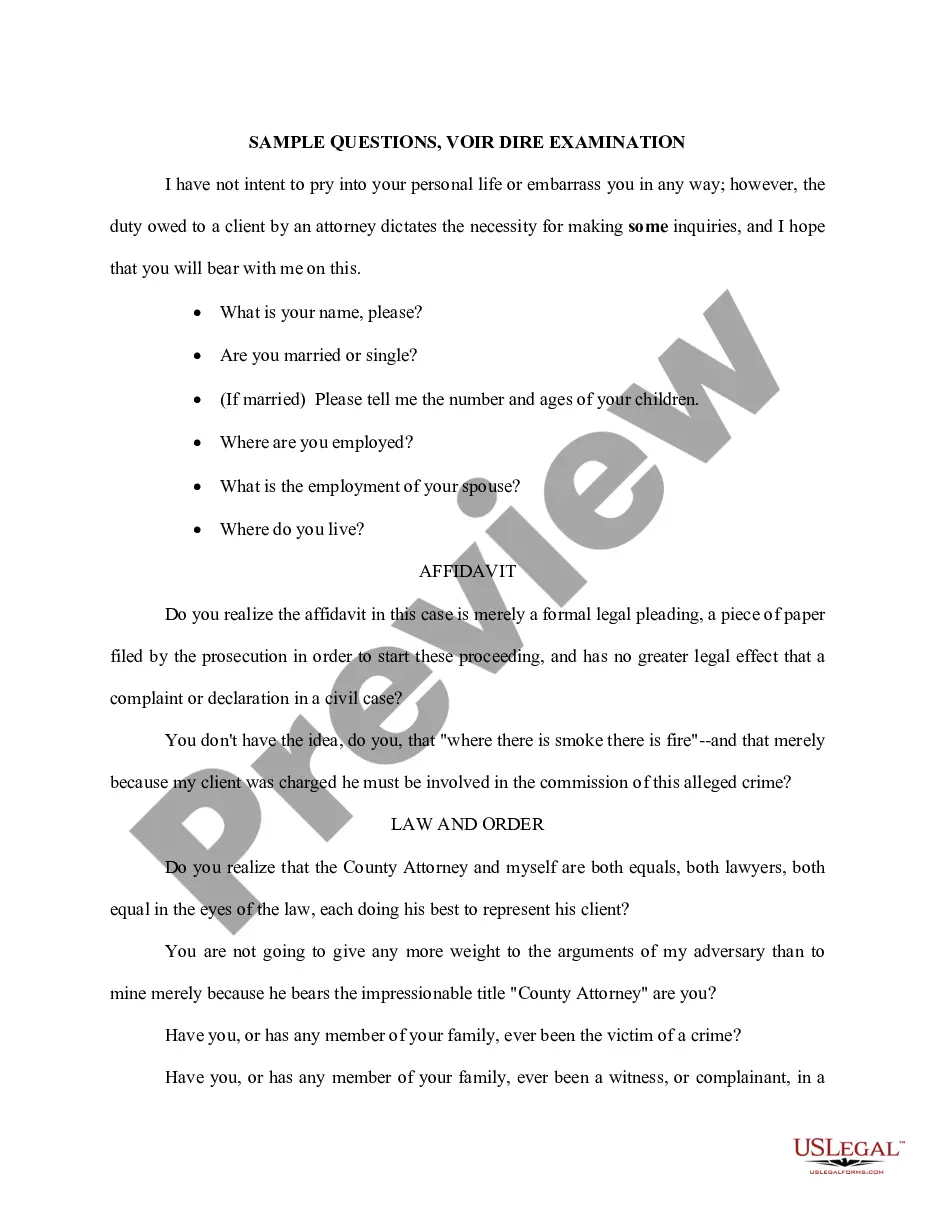
Get your form ready online
Our built-in tools help you complete, sign, share, and store your documents in one place.
Make edits, fill in missing information, and update formatting in US Legal Forms—just like you would in MS Word.
Download a copy, print it, send it by email, or mail it via USPS—whatever works best for your next step.
Sign and collect signatures with our SignNow integration. Send to multiple recipients, set reminders, and more. Go Premium to unlock E-Sign.
If this form requires notarization, complete it online through a secure video call—no need to meet a notary in person or wait for an appointment.
We protect your documents and personal data by following strict security and privacy standards.

Make edits, fill in missing information, and update formatting in US Legal Forms—just like you would in MS Word.

Download a copy, print it, send it by email, or mail it via USPS—whatever works best for your next step.

Sign and collect signatures with our SignNow integration. Send to multiple recipients, set reminders, and more. Go Premium to unlock E-Sign.

If this form requires notarization, complete it online through a secure video call—no need to meet a notary in person or wait for an appointment.

We protect your documents and personal data by following strict security and privacy standards.
Looking for another form?
How to fill out Voir Dire Examination?
US Legal Forms - one of the largest collections of legal templates in the United States - offers a variety of legal document formats that you can download or print. By using the website, you can access thousands of forms for business and personal use, organized by categories, states, or keywords. You can obtain the latest versions of forms such as the Arizona Voir Dire Examination in just moments.
If you have an account, Log In and download the Arizona Voir Dire Examination from your US Legal Forms library. The Download button will appear on every form you view. You can access all previously downloaded forms from the My documents section of your profile.
To use US Legal Forms for the first time, here are simple instructions to help you get started: Ensure you have selected the correct form for your city/county. Click the Review button to examine the form's content. Check the form summary to confirm that you have chosen the correct form. If the form does not meet your requirements, utilize the Search area at the top of the screen to find the one that does. If you are satisfied with the form, confirm your choice by clicking the Download now button. Then, select the pricing plan you desire and provide your information to register for an account. Process the transaction. Use your credit card or PayPal account to complete the transaction. Choose the format and download the form to your device. Make modifications. Complete, edit, print, and sign the downloaded Arizona Voir Dire Examination. Each format you added to your account has no expiration date and is yours indefinitely. Therefore, if you need to download or print another copy, simply go to the My documents section and click on the form you need.
Obtain access to the Arizona Voir Dire Examination with US Legal Forms, the most comprehensive collection of legal document templates. Take advantage of thousands of professional and state-specific templates that fulfill your business or personal requirements and standards.
- Access the Arizona Voir Dire Examination with US Legal Forms, the most extensive collection of legal document formats.
- Utilize thousands of professional and state-specific templates that meet your business or personal needs and requirements.
- Download or print forms as needed.
- Manage your forms easily from your account.
- Ensure compliance with local regulations by selecting the correct forms.
- Enjoy long-term ownership of downloaded forms.
Form popularity
FAQ
The judge and attorneys ask the potential jurors questions, general or related to the specific case before them, to determine their suitability to serve on the jury. This process is called voir dire, which typically results in some prospective jurors being excused, based on their answers, from serving in that trial.
The process of selecting a jury is known as voir dire. During voir dire, a panel of people will be questioned by both sides about their background, beliefs, and biases. The jury will be selected from this larger panel.
The list of names that is used to call people for jury service is created by combining the County's voter registration list and Arizona Department of Transportation records. Names are randomly selected from that master list by a computer program.
Voir dire is a process where lawyers ask potential jurors questions to see if they're able to be impartial. Peremptory strikes are a tool that lawyers can use to remove a particular person from consideration as a juror.
The Importance of Voir Dire For both the defense and prosecution, voir dire constitutes a very important part of a jury trial. Effective voir dire can work to identify jurors who can be fair and impartial, rather than unfair and biased regarding a particular party or the entire criminal justice system.
Jury selection is the process of summoning, questioning and selecting jurors to serve on a jury for a particular trial. Generally, courts will first mail jury summons to people randomly selected from compiled lists of registered voters and people with drives licenses.
French for "to speak the truth." The process through which potential jurors from the venire are questioned by either the judge or a lawyer to determine their suitability for jury service. Also the preliminary questioning of witnesses (especially experts) to determine their competence to testify.
The judge and attorneys ask the potential jurors questions, general or related to the specific case before them, to determine their suitability to serve on the jury. This process is called voir dire, which typically results in some prospective jurors being excused, based on their answers, from serving in that trial.