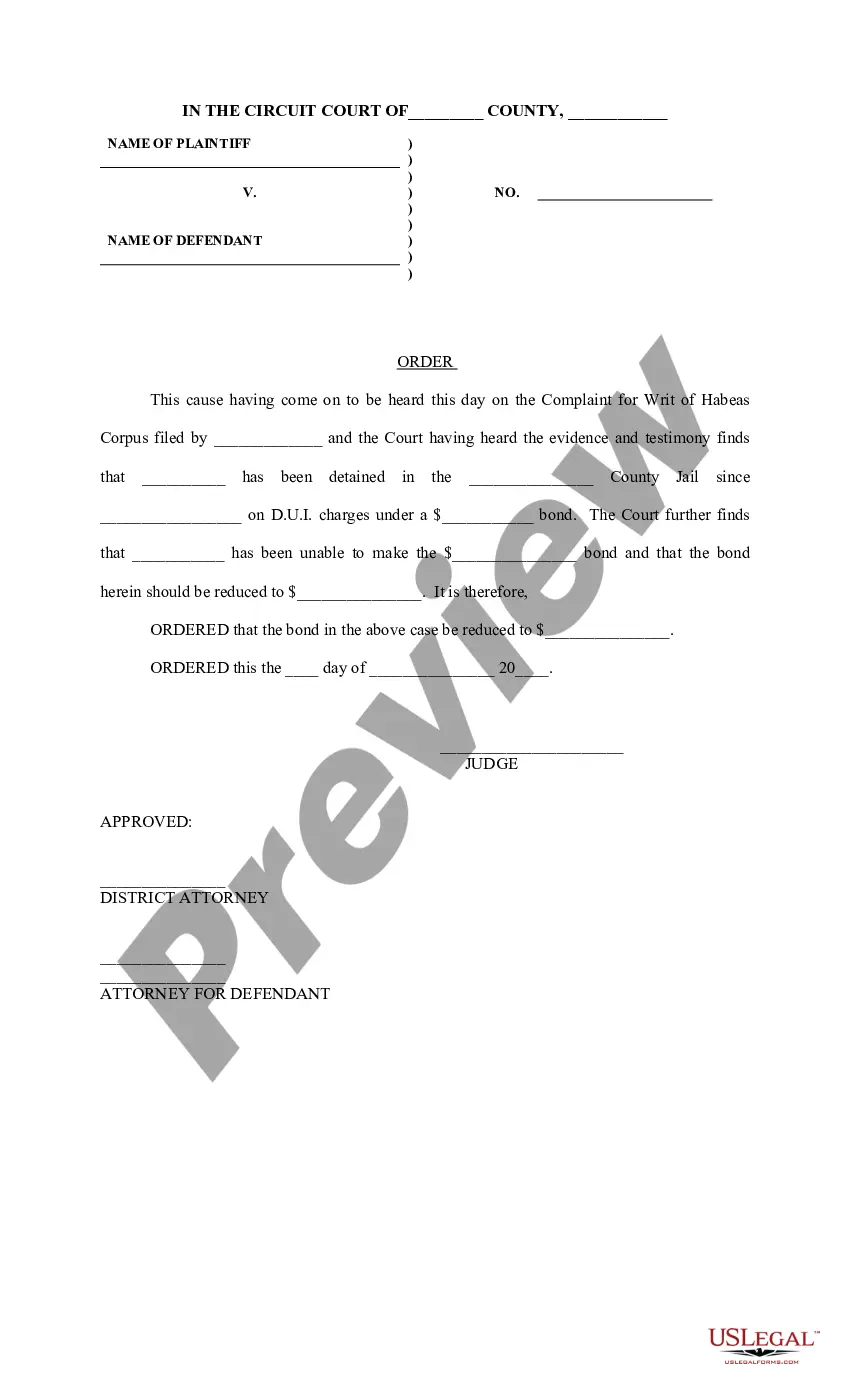
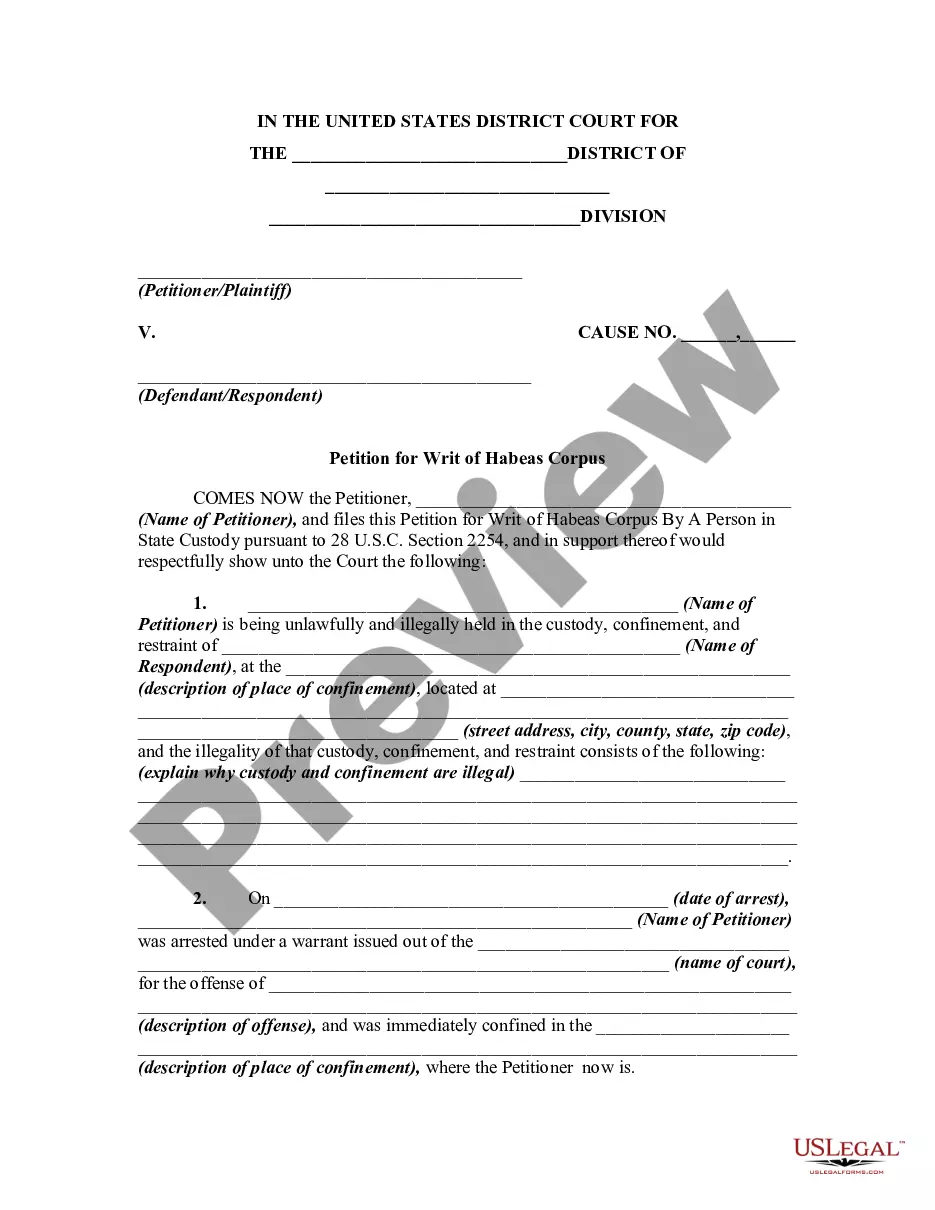
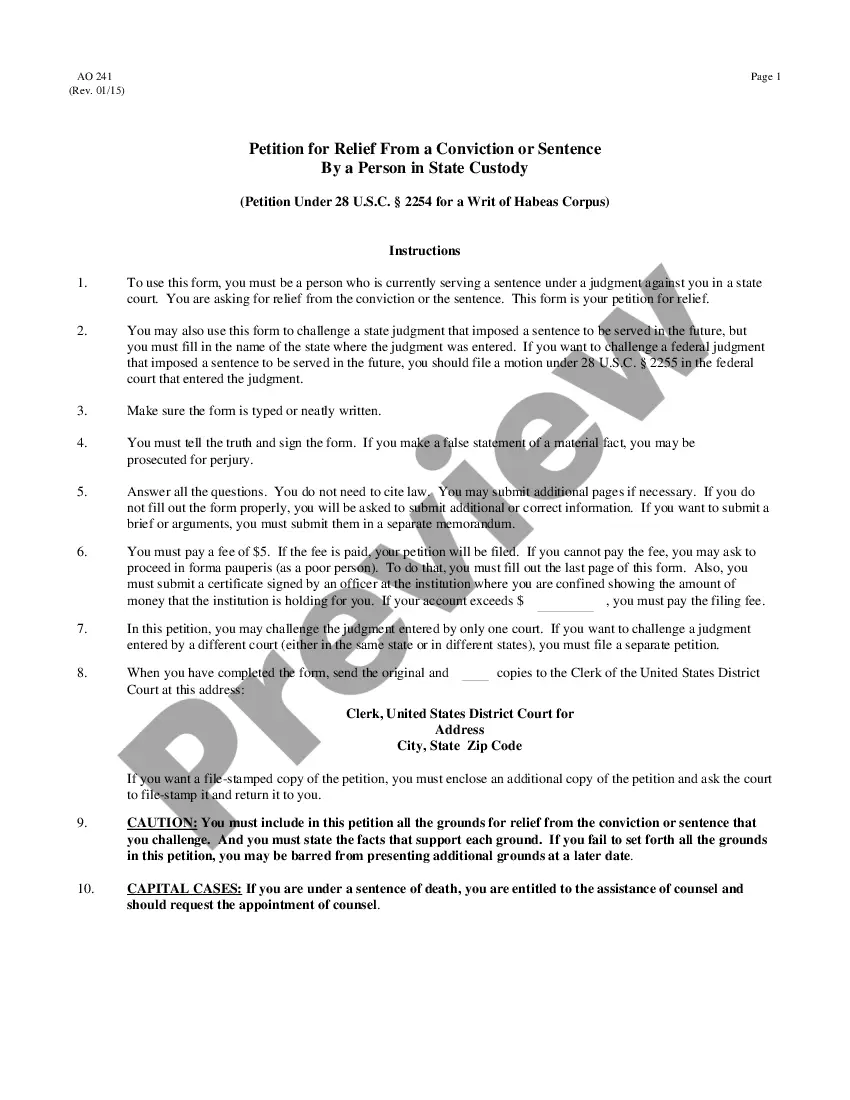
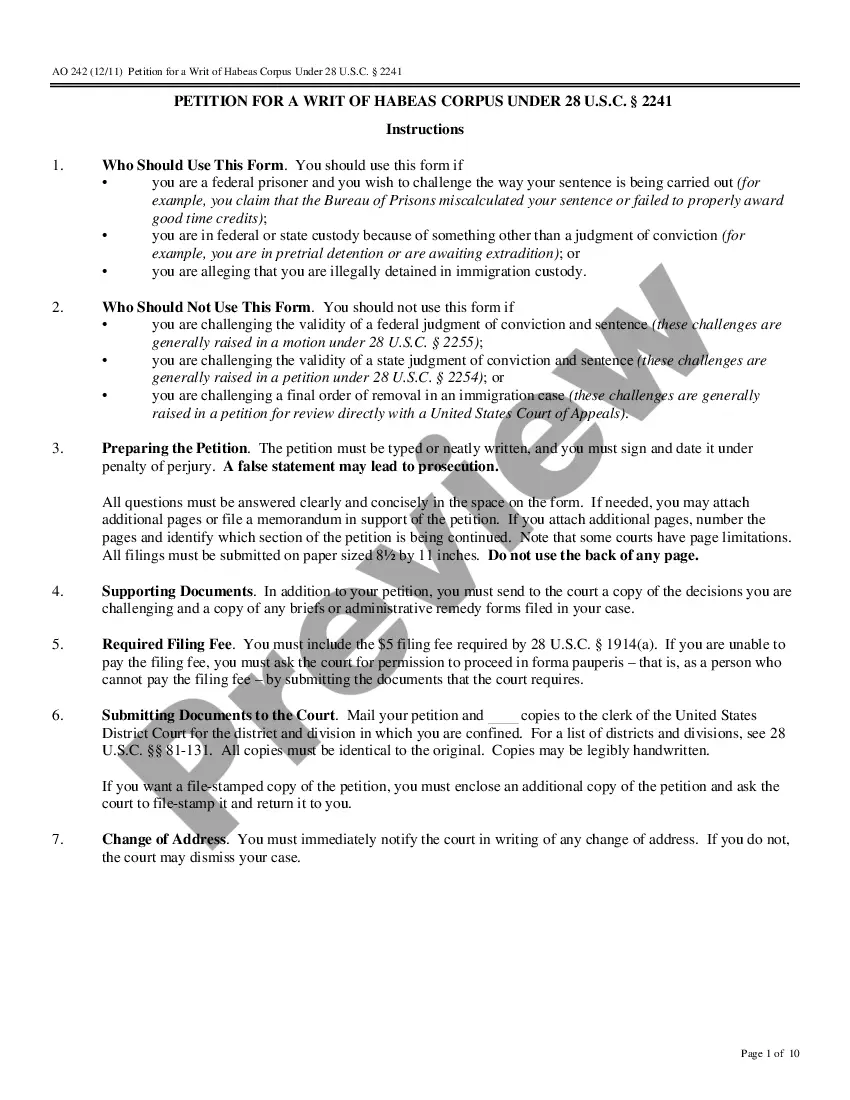
South Carolina Complaint for Writ of Habeas Corpus
Description

Get your form ready online
Our built-in tools help you complete, sign, share, and store your documents in one place.
Make edits, fill in missing information, and update formatting in US Legal Forms—just like you would in MS Word.
Download a copy, print it, send it by email, or mail it via USPS—whatever works best for your next step.
Sign and collect signatures with our SignNow integration. Send to multiple recipients, set reminders, and more. Go Premium to unlock E-Sign.
If this form requires notarization, complete it online through a secure video call—no need to meet a notary in person or wait for an appointment.
We protect your documents and personal data by following strict security and privacy standards.

Make edits, fill in missing information, and update formatting in US Legal Forms—just like you would in MS Word.

Download a copy, print it, send it by email, or mail it via USPS—whatever works best for your next step.

Sign and collect signatures with our SignNow integration. Send to multiple recipients, set reminders, and more. Go Premium to unlock E-Sign.

If this form requires notarization, complete it online through a secure video call—no need to meet a notary in person or wait for an appointment.

We protect your documents and personal data by following strict security and privacy standards.
Looking for another form?
How to fill out Complaint For Writ Of Habeas Corpus?
US Legal Forms - one of the most prominent collections of official documents in the United States - offers a vast selection of legal document templates that you can download or print. By using the website, you can access thousands of forms for business and personal purposes, organized by categories, states, or keywords. You can find the most recent types of forms such as the South Carolina Complaint for Writ of Habeas Corpus in moments.
If you have an account, Log In and download the South Carolina Complaint for Writ of Habeas Corpus from your US Legal Forms library. The Download button will appear on every form you view. You have access to all previously downloaded forms in the My documents section of your profile.
If you're using US Legal Forms for the first time, here are simple instructions to get started: Ensure you have selected the correct form for your city/state. Click the Preview button to review the form’s content. Check the form details to confirm you have chosen the right one.
Each template you add to your account has no expiration date and is yours permanently. Therefore, if you want to download or print another copy, simply navigate to the My documents section and click on the form you need.
Access the South Carolina Complaint for Writ of Habeas Corpus with US Legal Forms, the most extensive library of official document templates. Utilize thousands of professional and state-specific templates that meet your business or personal requirements and specifications.
- If the form does not meet your needs, use the Search box at the top of the screen to find one that does.
- If you are satisfied with the form, confirm your choice by clicking the Buy now button.
- Then, choose the pricing plan you prefer and provide your details to register for an account.
- Process the payment. Use your credit card or PayPal account to complete the transaction.
- Select the format and download the form to your device.
- Make edits. Fill out, modify, print, and sign the downloaded South Carolina Complaint for Writ of Habeas Corpus.
Form popularity
FAQ
Generally, a habeas petition must allege: (1) the identity of the petitioner and the location of his custody; (2) the court order which led to the petitioner's restraint; (3) an illegal restraint on the petitioner's liberty; (4) why the petition is being filed in the appellate court; (5) there is no plain, speedy, and ...
You will file a Habeas Corpus petition in California if you are arguing that your conviction violated a state law, or that a California law is unconstitutional.
Detainees and prisoners could file habeas corpus if they felt they were being detained under false pretenses, if there were mistakes with arrest paperwork, or the arresting officer arrested them because of evidence that was planted.
Common arguments for granting a habeas corpus petition include: You had incompetent legal counsel or a competent attorney was not provided. ... You were convicted under an unconstitutional law; You were convicted under a law that has since been changed, so what you did is no longer considered a crime;
When Is Habeas Corpus Relief Available in South Carolina? A person incarcerated in federal prison following a criminal conviction who believes that actions undertaken by people involved in their trial or sentencing violated the U.S. Constitution may have grounds to petition for a writ of habeas corpus.
Arguments that Can Overturn Convictions. A Writ of Habeas Corpus usually addresses claims of ineffective assistance of counsel, prosecutorial misconduct, newly discovered evidence, jury misconduct, and claims of actual innocence.
Generally, a habeas petition must allege: (1) the identity of the petitioner and the location of his custody; (2) the court order which led to the petitioner's restraint; (3) an illegal restraint on the petitioner's liberty; (4) why the petition is being filed in the appellate court; (5) there is no plain, speedy, and ...
The petitioner, typically through an attorney, files a writ of habeas corpus to the relevant court, usually the California Superior Court, and the arguments as to why the petitioner has been illegally detained.
