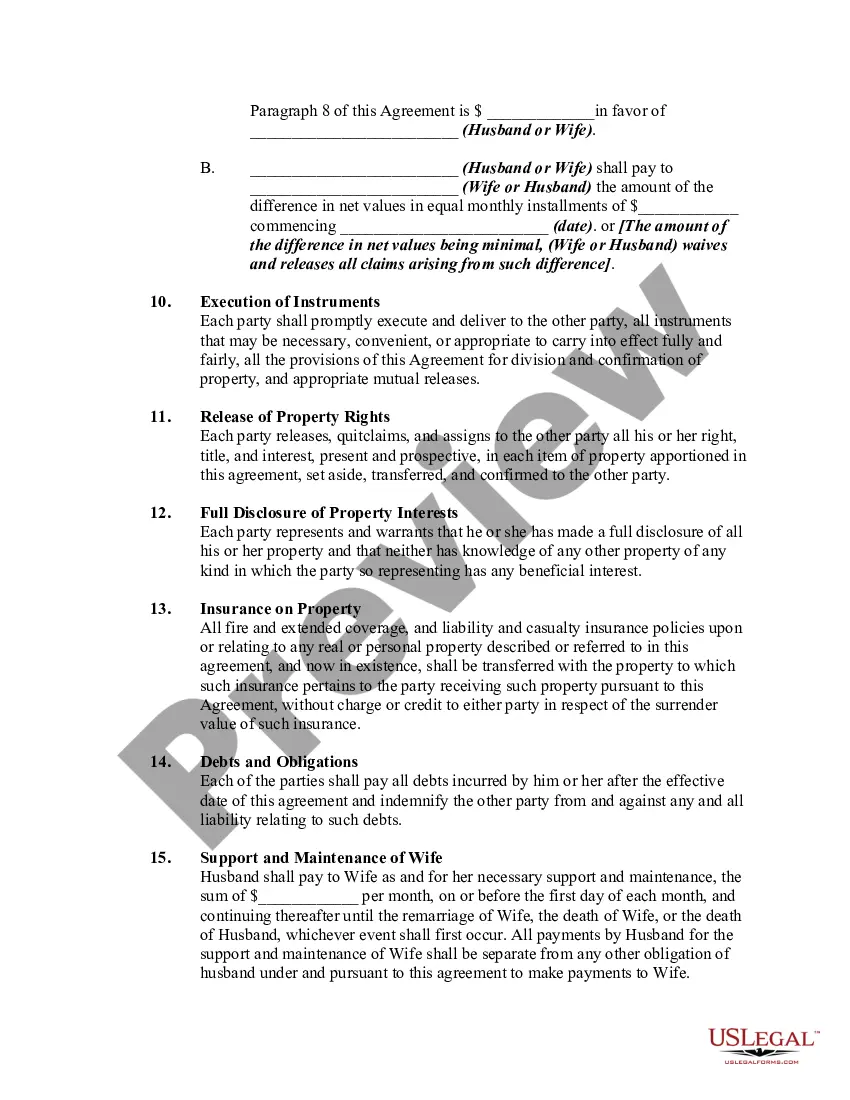
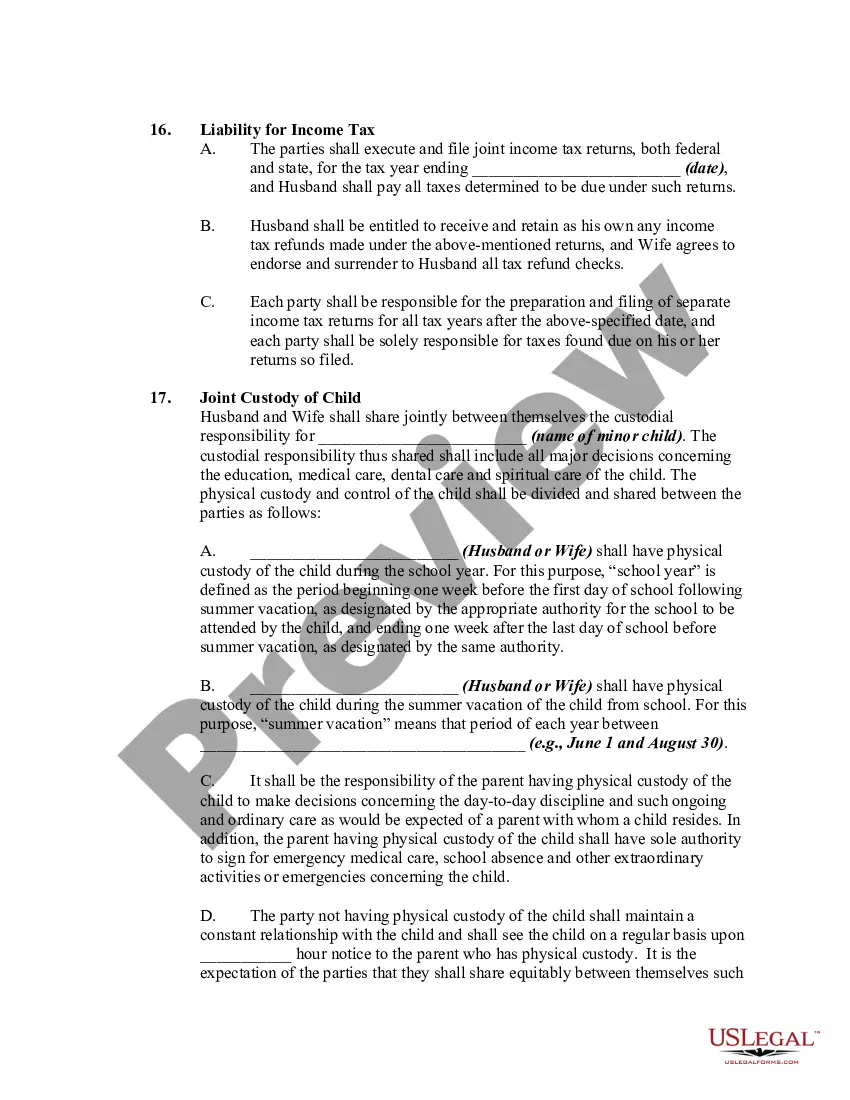
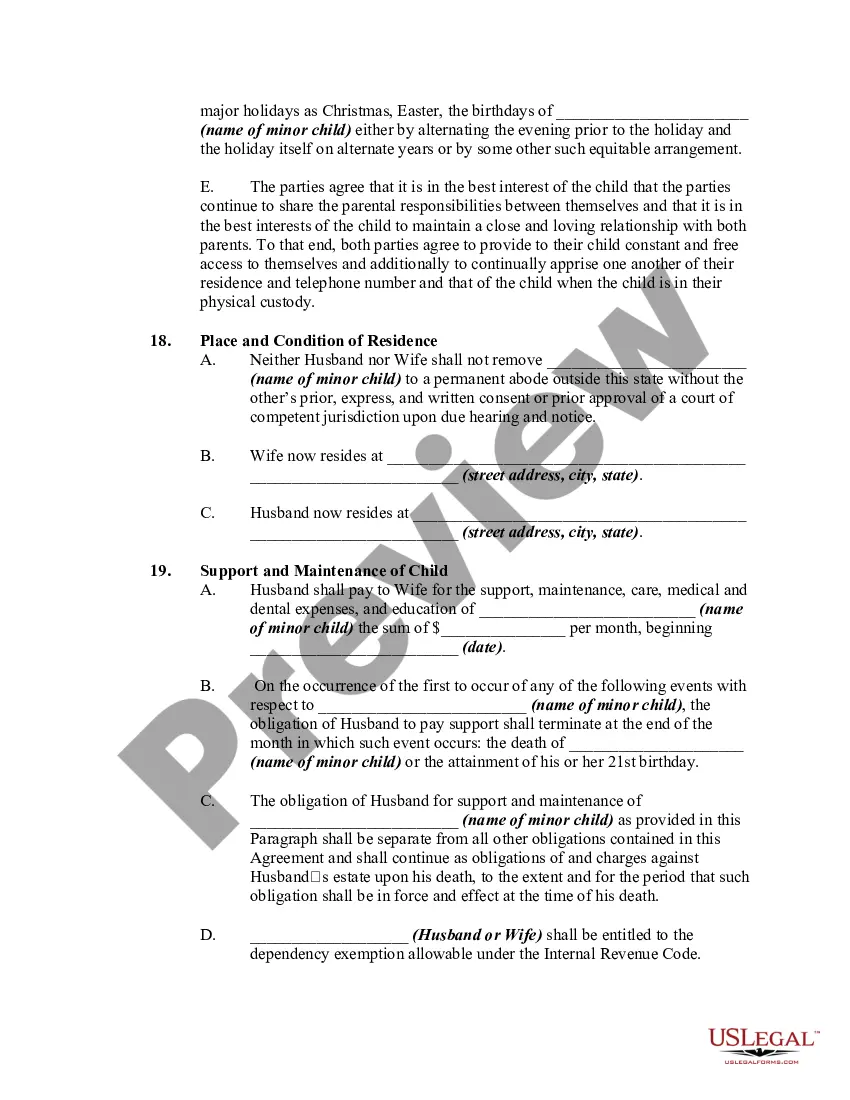
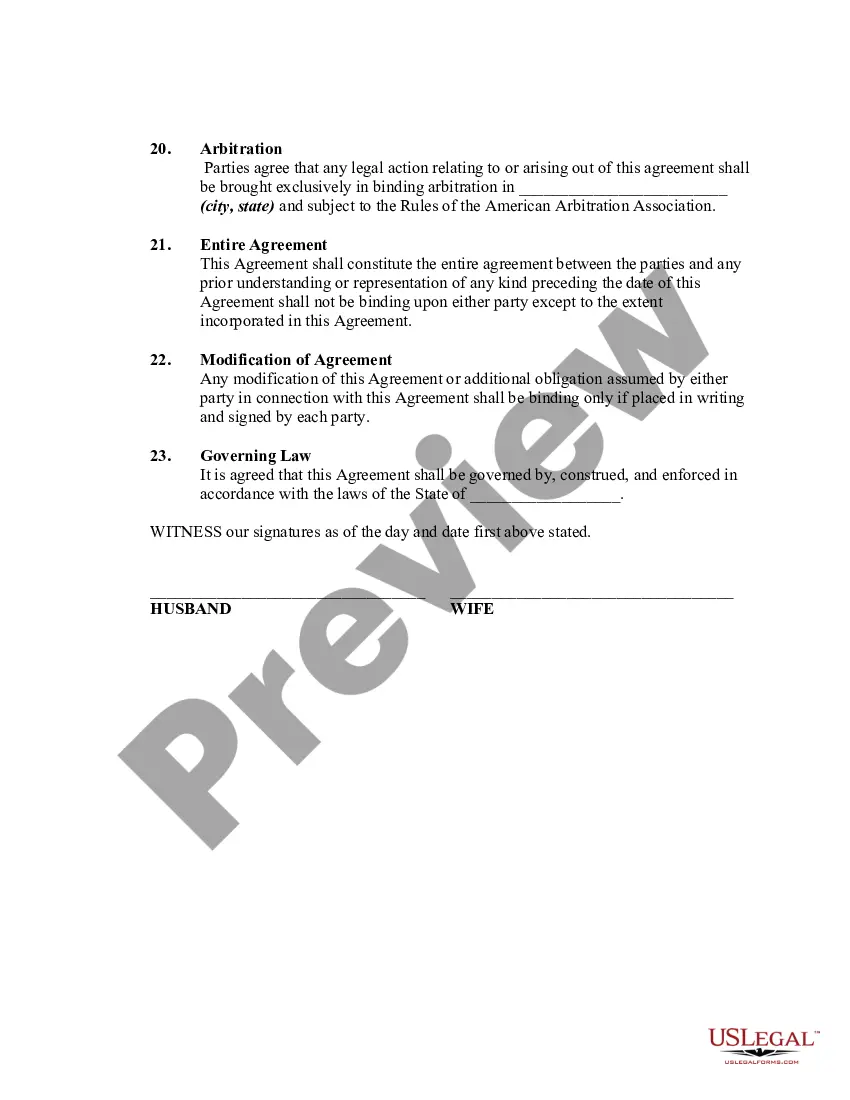
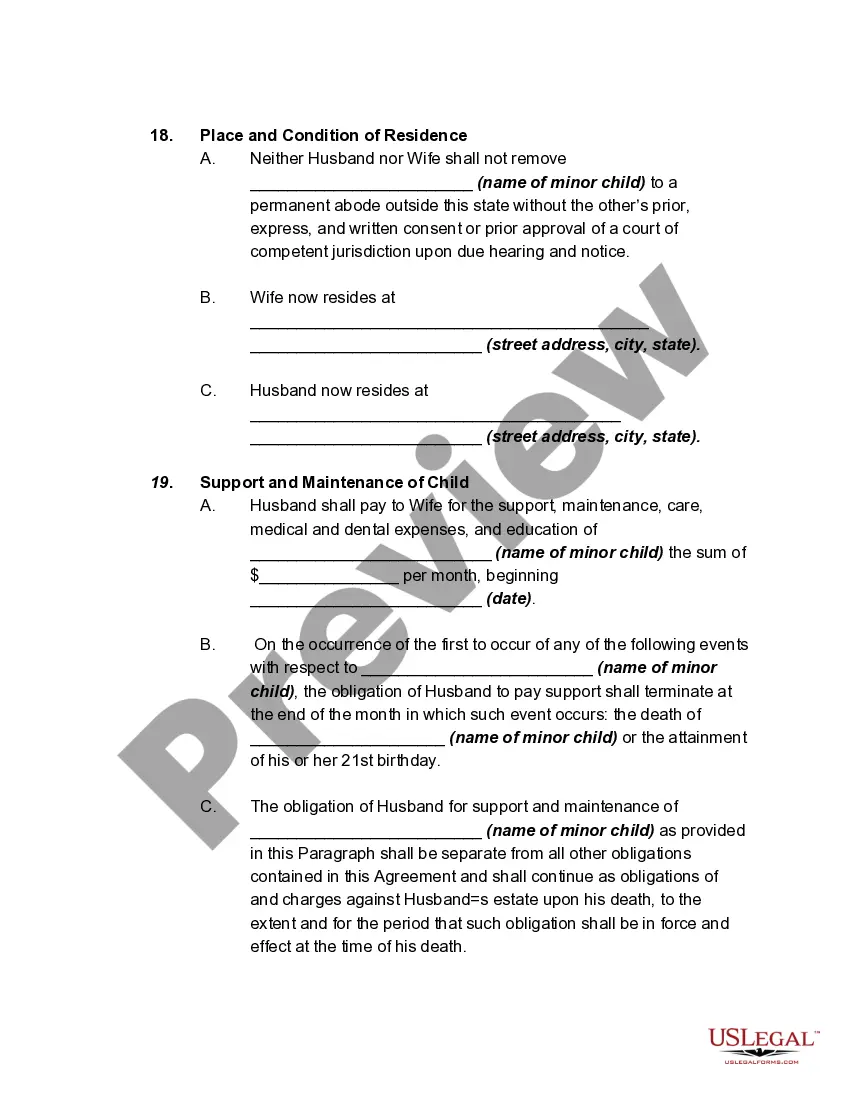
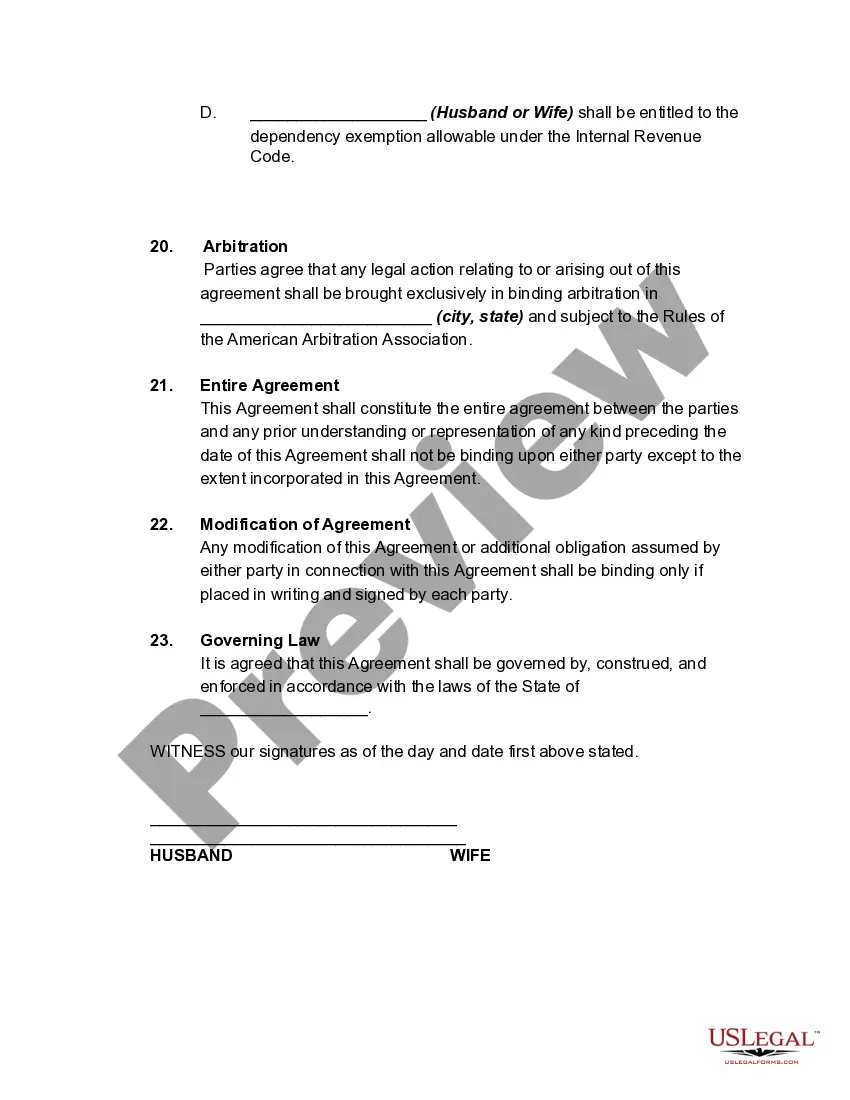
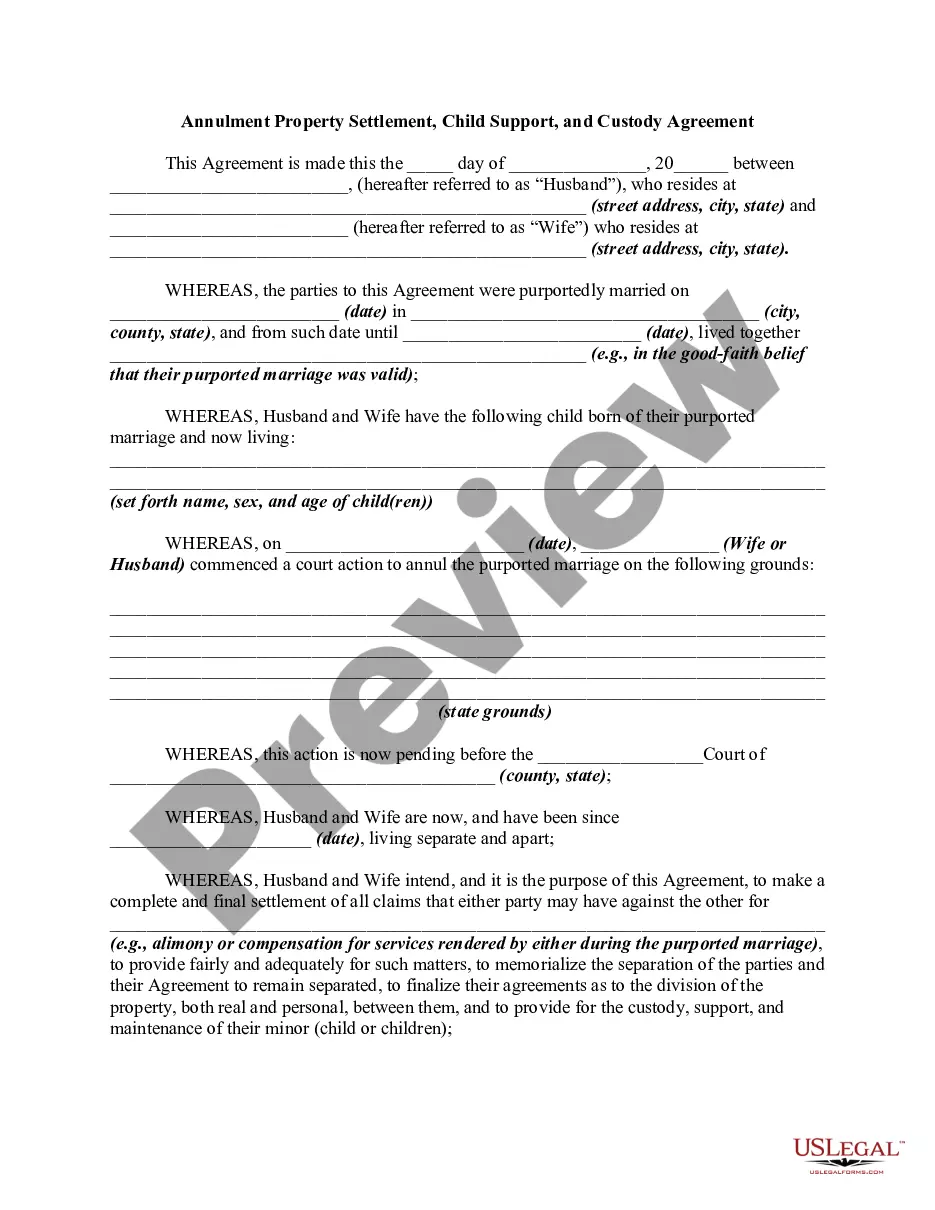
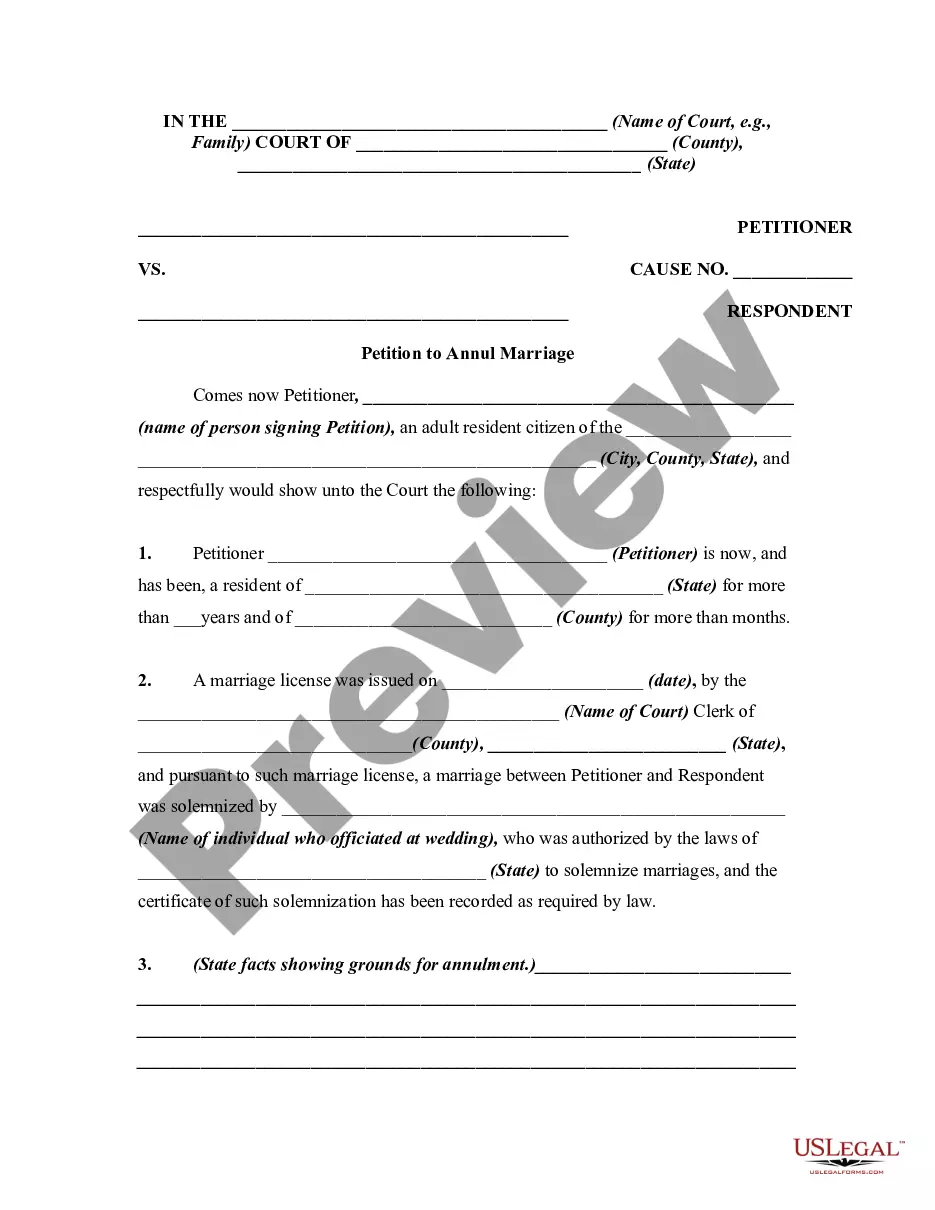
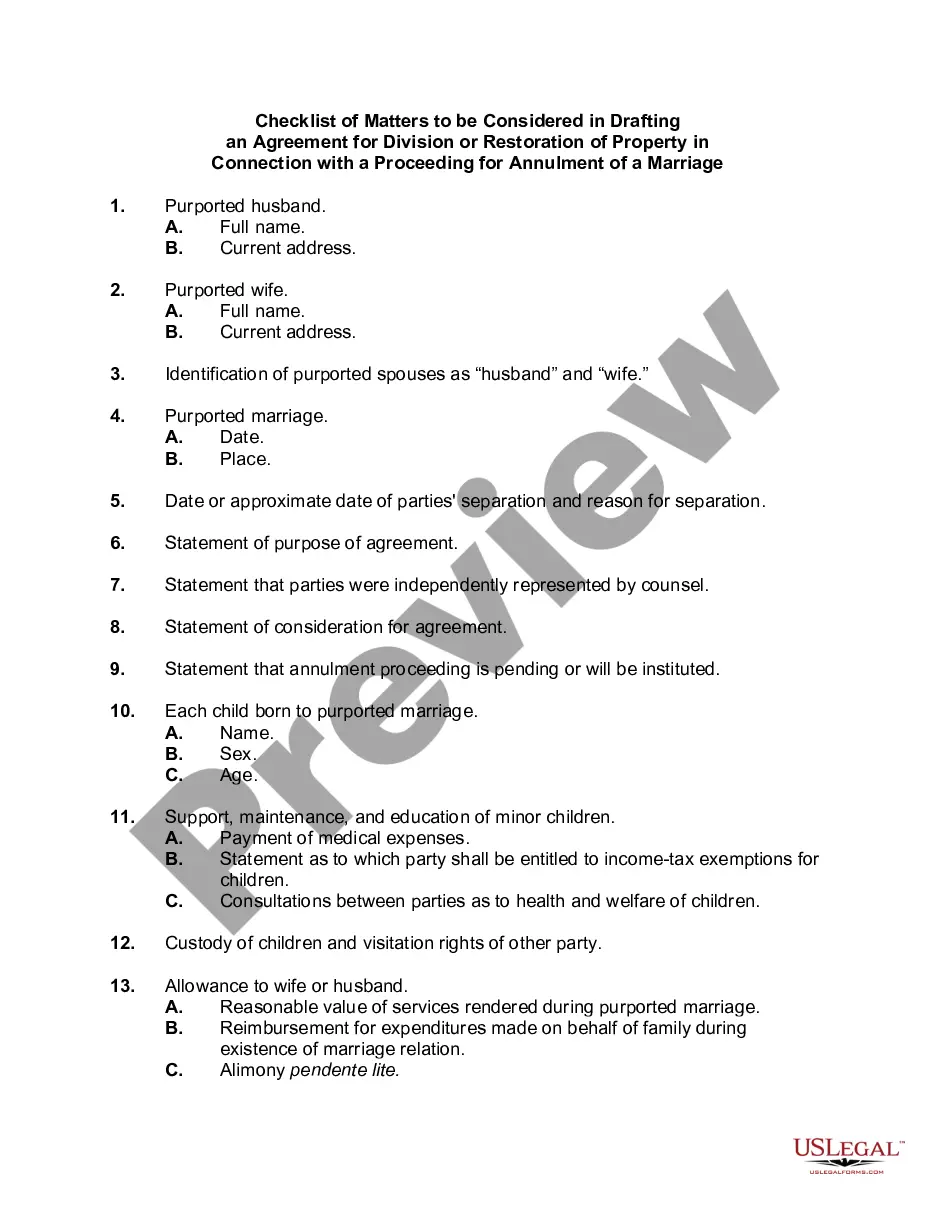
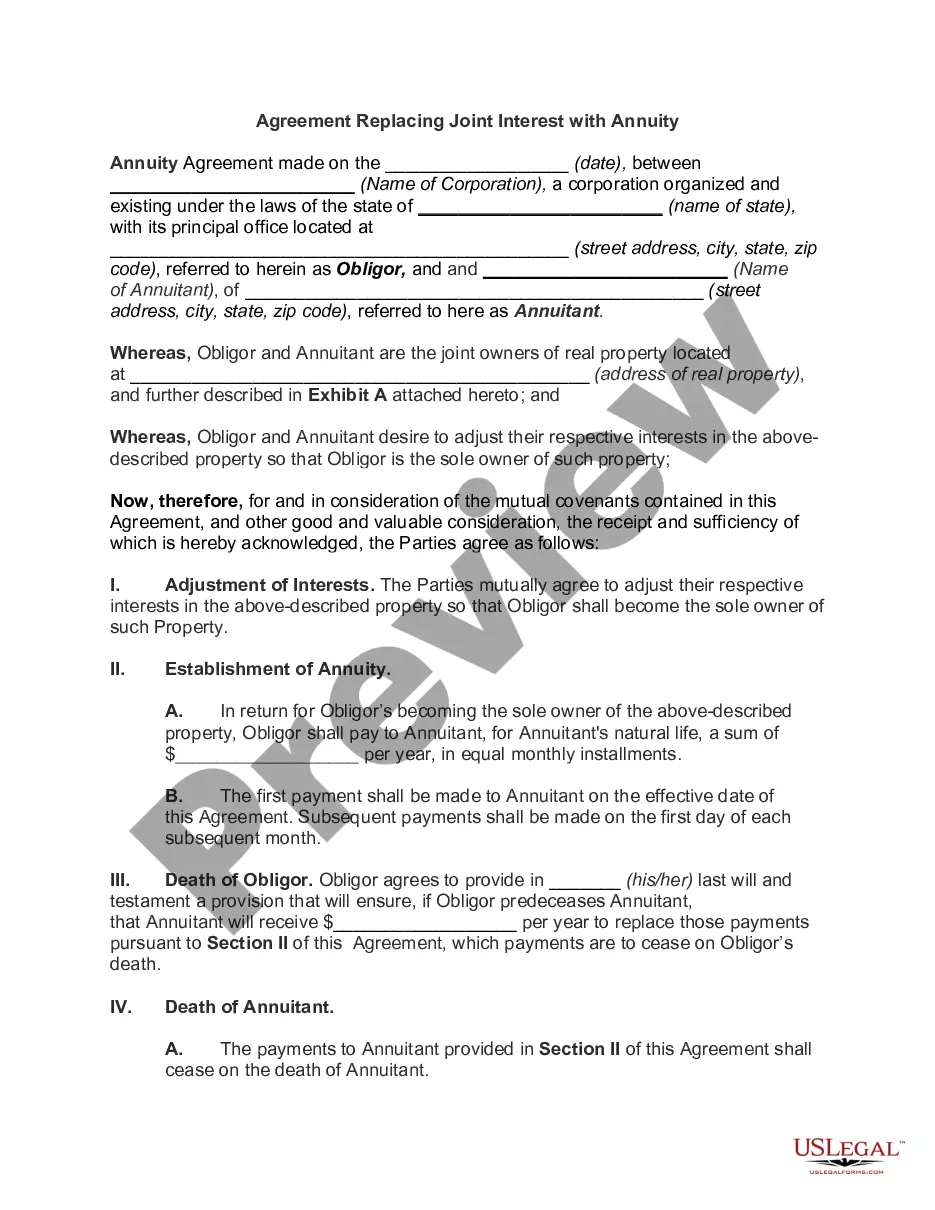
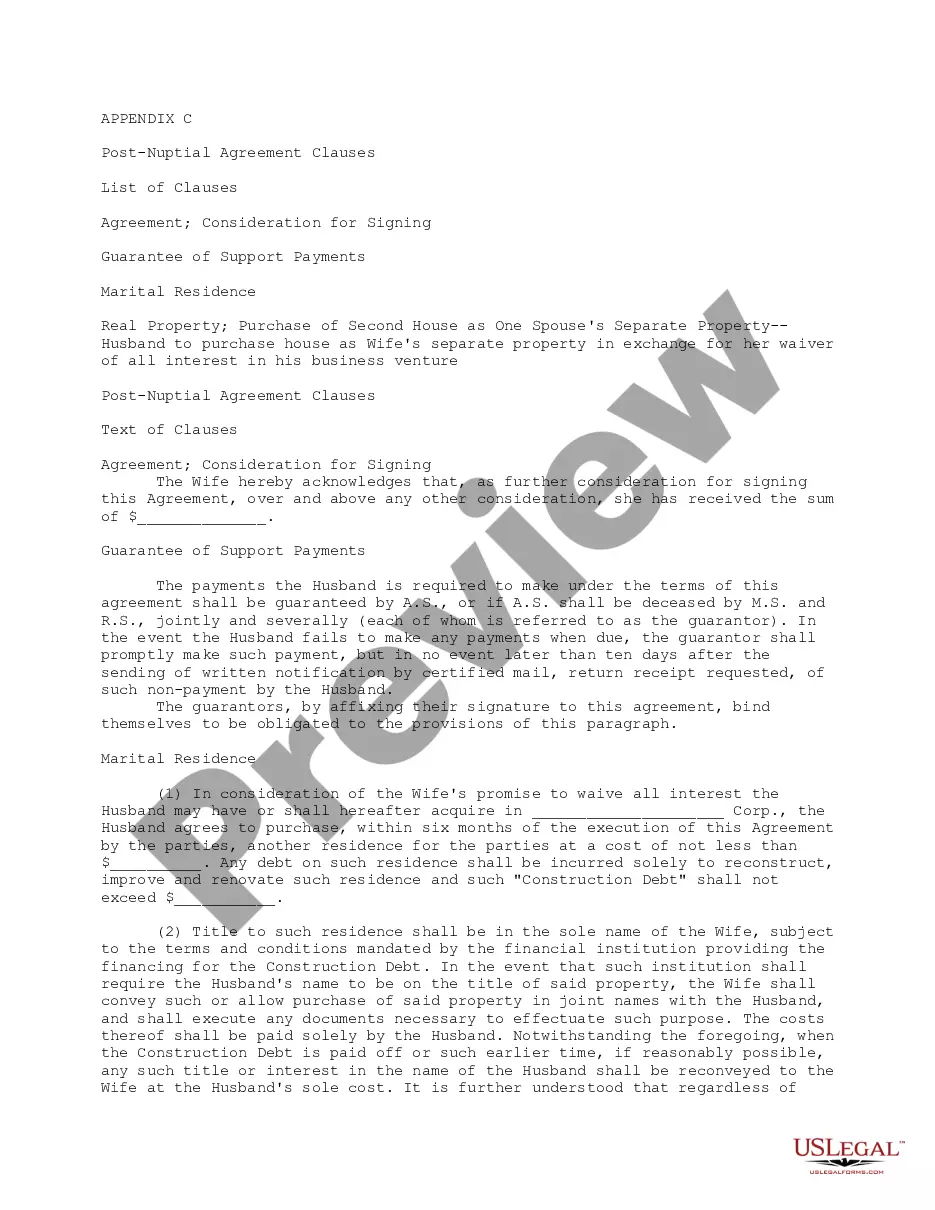
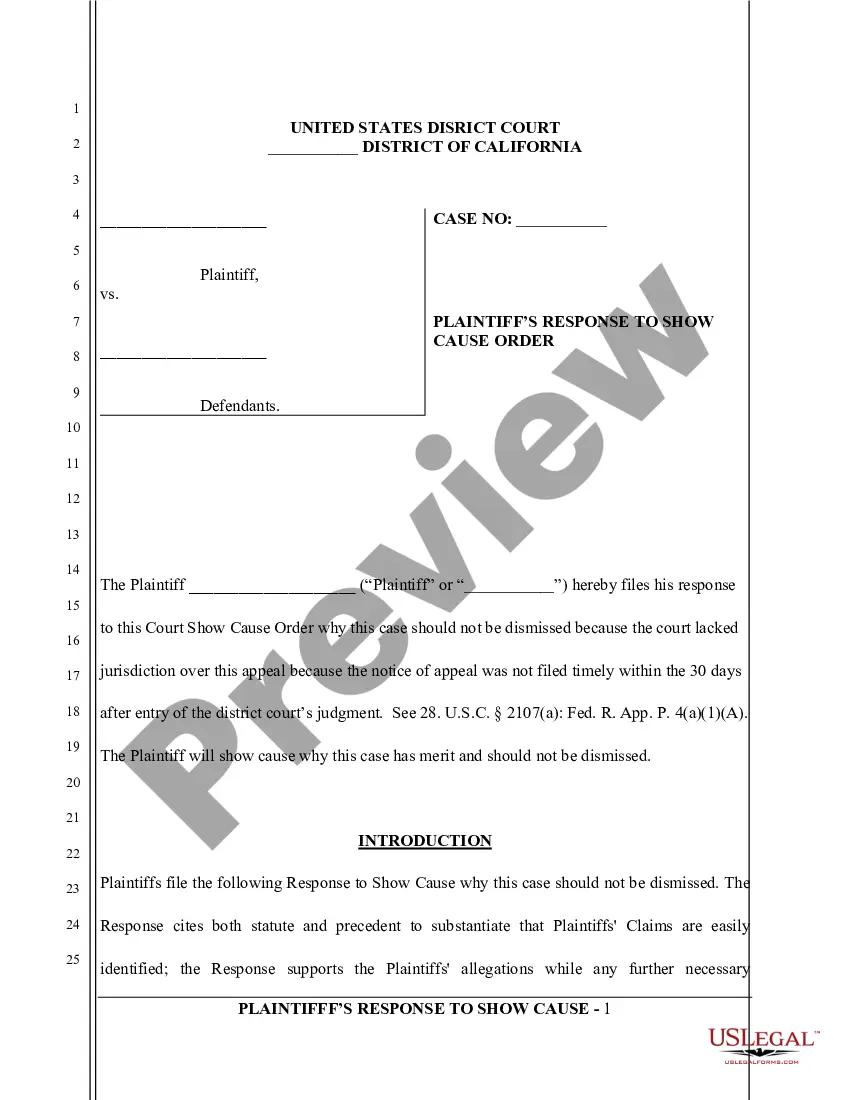
The following form is a Property Settlement and Joint Custody Agreement.
South Carolina Annulment Property Settlement and Joint Custody Agreement
140 downloads
Description
Free preview
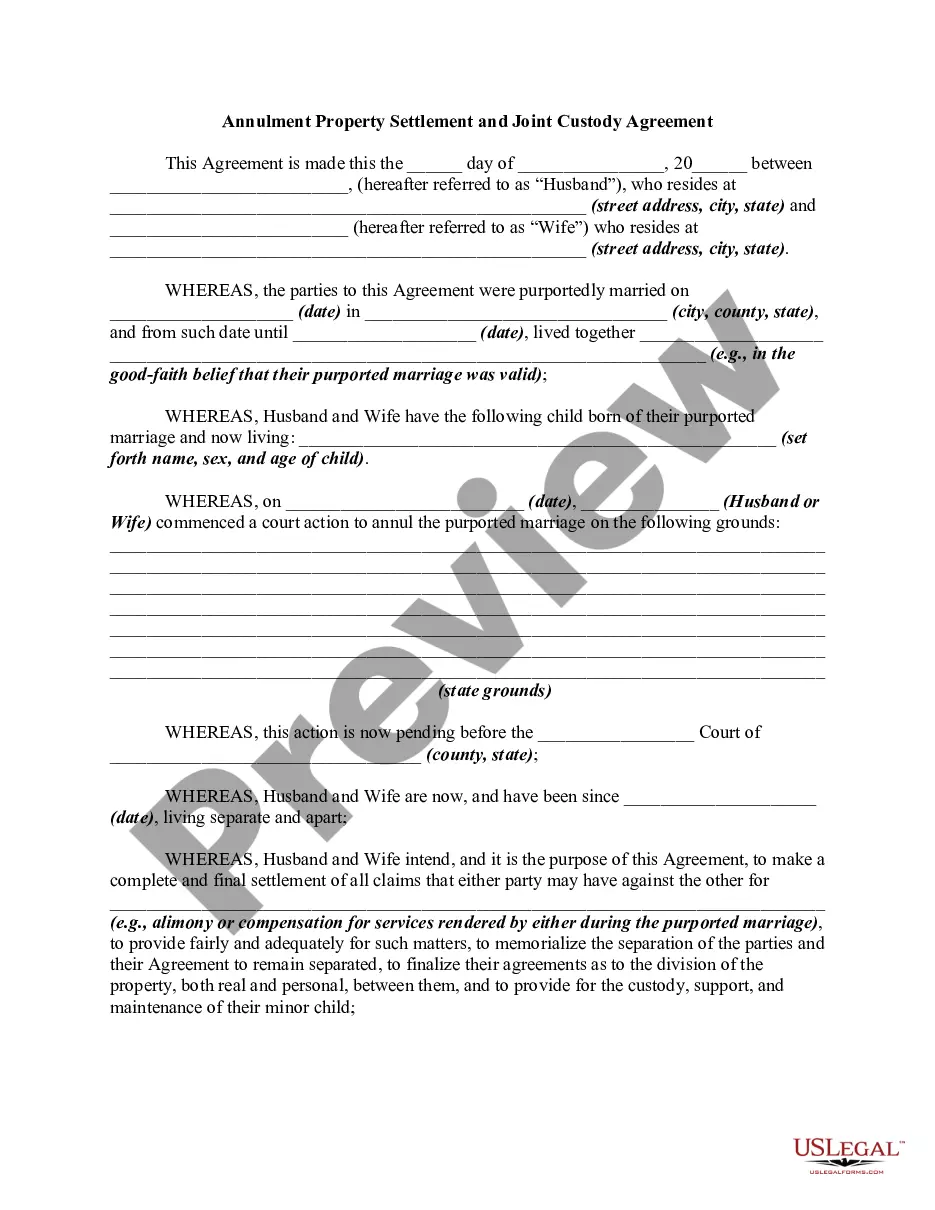
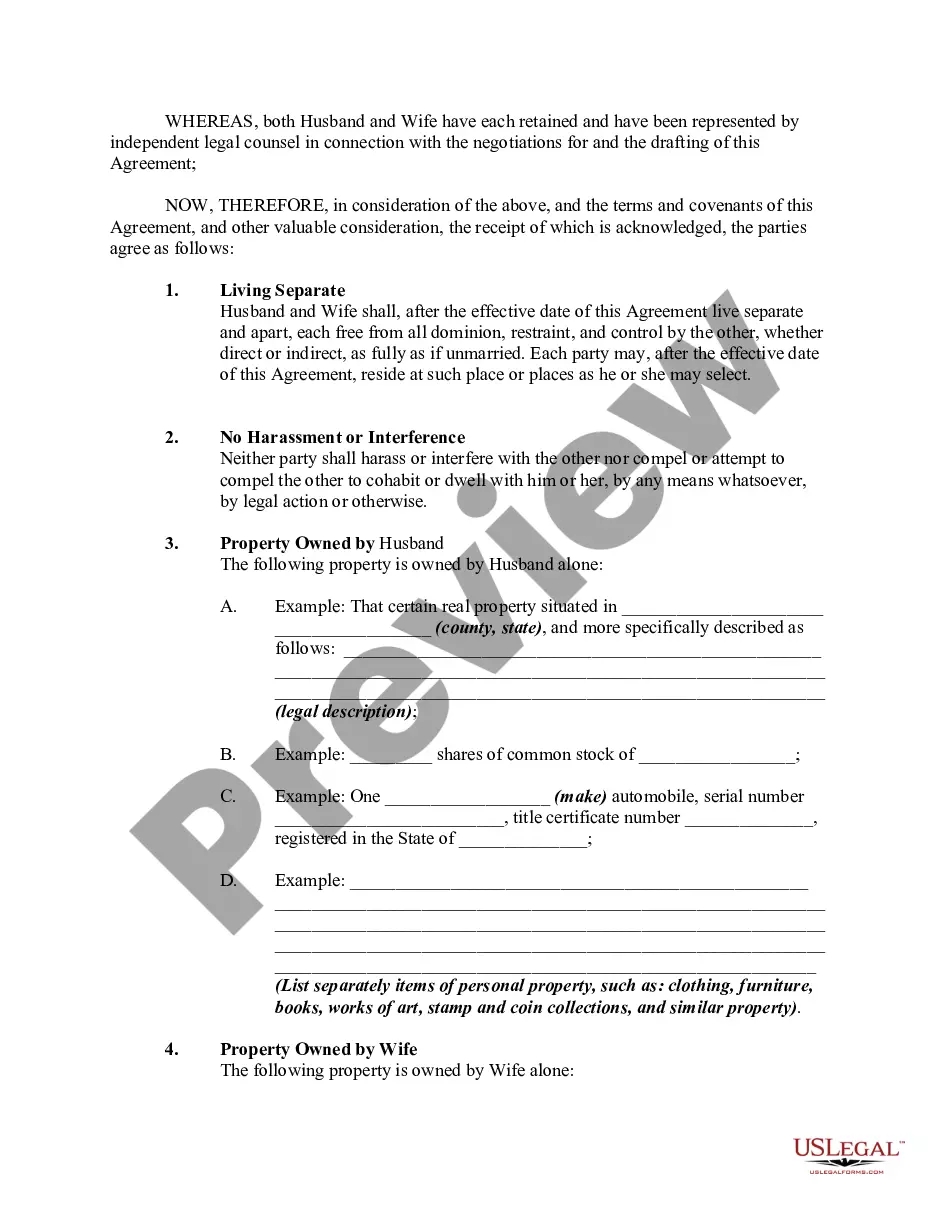
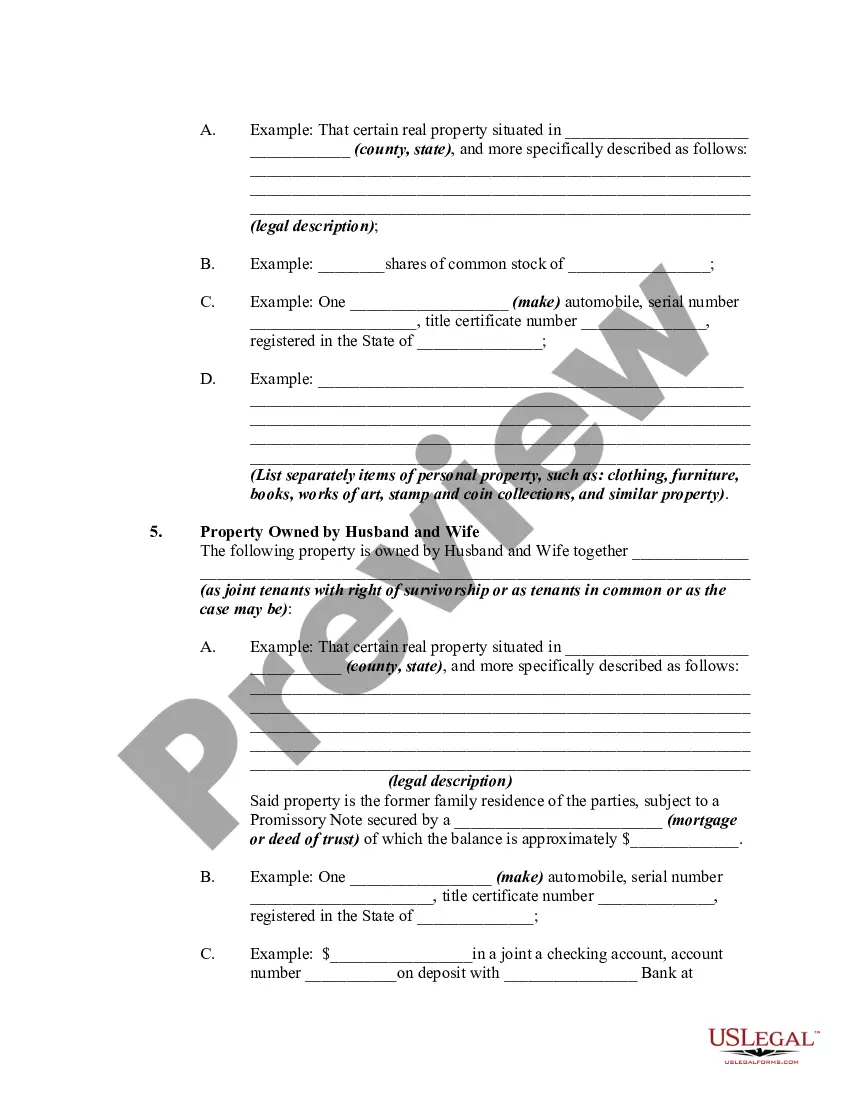
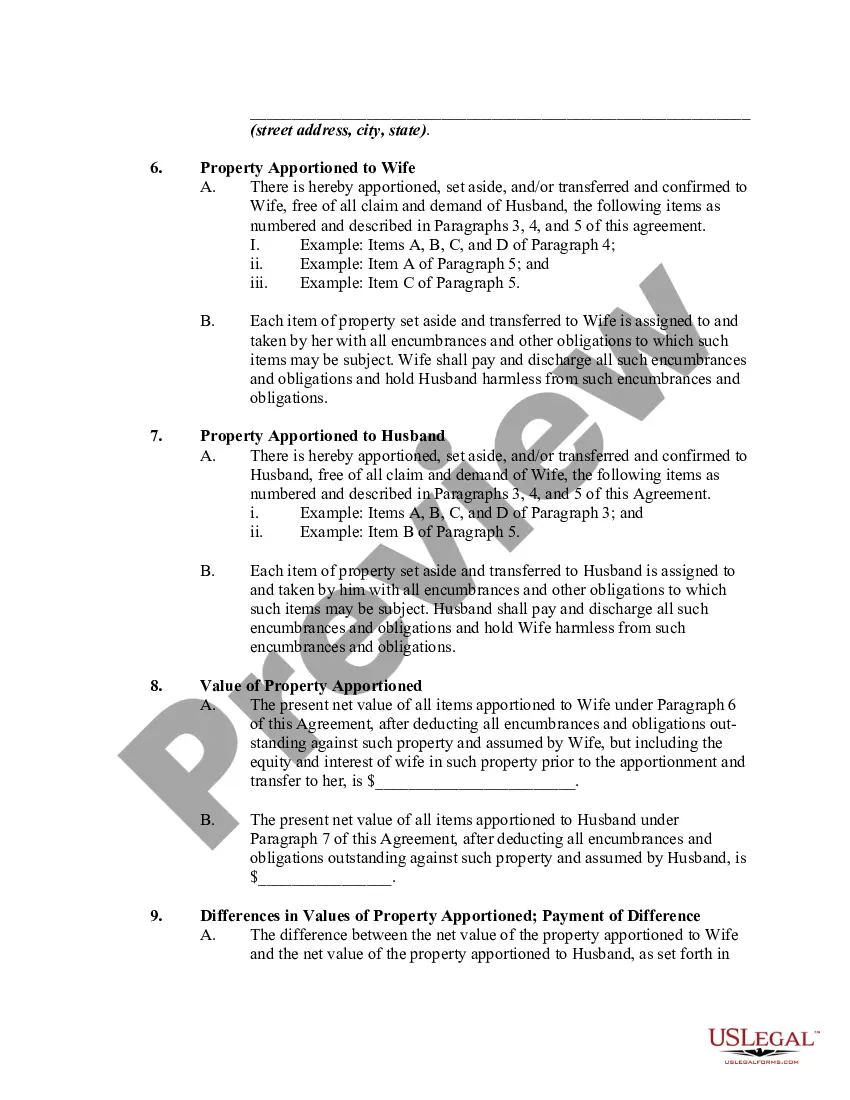
Get your form ready online
Our built-in tools help you complete, sign, share, and store your documents in one place.
Built-in online Word editor
Make edits, fill in missing information, and update formatting in US Legal Forms—just like you would in MS Word.
Export easily
Download a copy, print it, send it by email, or mail it via USPS—whatever works best for your next step.
E-sign your document
Sign and collect signatures with our SignNow integration. Send to multiple recipients, set reminders, and more. Go Premium to unlock E-Sign.
Notarize online 24/7
If this form requires notarization, complete it online through a secure video call—no need to meet a notary in person or wait for an appointment.
Store your document securely
We protect your documents and personal data by following strict security and privacy standards.

Make edits, fill in missing information, and update formatting in US Legal Forms—just like you would in MS Word.

Download a copy, print it, send it by email, or mail it via USPS—whatever works best for your next step.

Sign and collect signatures with our SignNow integration. Send to multiple recipients, set reminders, and more. Go Premium to unlock E-Sign.

If this form requires notarization, complete it online through a secure video call—no need to meet a notary in person or wait for an appointment.

We protect your documents and personal data by following strict security and privacy standards.
Looking for another form?

How to fill out Annulment Property Settlement And Joint Custody Agreement?
Locating the correct sanctioned document template could pose challenges. Naturally, numerous templates are accessible online, but how can you secure the sanctioned version you require? Utilize the US Legal Forms website. The service offers a vast array of templates, including the South Carolina Annulment Property Settlement and Joint Custody Agreement, that you can utilize for commercial and personal purposes. Each of the forms are verified by experts and comply with federal and state regulations.
If you are already registered, Log In to your account and click the Download button to access the South Carolina Annulment Property Settlement and Joint Custody Agreement. Use your account to search through the legal forms you may have obtained previously. Visit the My documents section of your account and retrieve another copy of the document you need.
If you are a new user of US Legal Forms, here are simple instructions for you to follow: First, ensure you have selected the correct form for your city/region. You may view the document using the Preview button and read the form summary to confirm this is indeed suitable for you. If the form does not meet your requirements, use the Search field to find the appropriate document. Once you are confident that the form is correct, click the Purchase now button to obtain the form. Choose the pricing plan you prefer and enter the necessary information. Create your account and complete your purchase using your PayPal account or credit card. Select the file format and download the legal document template to your device. Finally, complete, edit, print, and sign the acquired South Carolina Annulment Property Settlement and Joint Custody Agreement.
Leverage the platform to access expertly designed paperwork that adheres to legal requirements.
- US Legal Forms is the largest repository of legal forms.
- You can find a variety of document templates.
- Utilize the service to obtain professionally crafted documents.
- That comply with state regulations.
- Access a wide selection of legal templates.
- Ensure your documents are valid and reliable.
Form popularity
FAQ
The first step to qualifying for annulment is to meet one of the legal grounds for annulment. These must be per the marriage annulment laws in South Carolina. To qualify, you must be able to prove insanity, fraud, mental incapacity, coercion, affiliation, or bigamy on the part of your spouse.
There is no ?legal separation? in South Carolina. You are still married to your spouse until the judge signs your divorce decree.
Some people in South Carolina who are going through a divorce would like to start the process of buying a new house before the divorce is finished. This is possible, but it takes some extra paperwork, and there are some financial risks that need to be taken into account.
In North and South Carolina, separation agreements are legally binding?but this does not mean that they are set in stone. In both states, separation agreements can be modified after they have been signed. For changes to be considered valid and enforceable, they must be made in writing.
South Carolina does not recognize ?legal separation.? Instead, the South Carolina Family Courts issue Orders of Separate Maintenance and Support, which provide specific details regarding parties' child custody, visitation, and support arrangements, as well as maintaining marital assets and paying marital debts, until ...
South Carolina is an equitable division state; that is, the Family Court Judge hears the evidence from both spouses and then determines what he or she thinks is a fair and equitable division of marital property. The Judge considers a number of factors in making the decision.
In South Carolina, however, courts do not recognize legal separations. South Carolina couples are either legally married or unmarried, with no in-between. When spouses separate in South Carolina, it only means that they are living apart from one another in different homes.
In South Carolina, non-marital property remains in the hands of the spouse who owned it before or during the marriage. The most common types of property divided at divorce are real property like the family home, personal property like jewelry, and intangible property like income, dividends, and benefits.