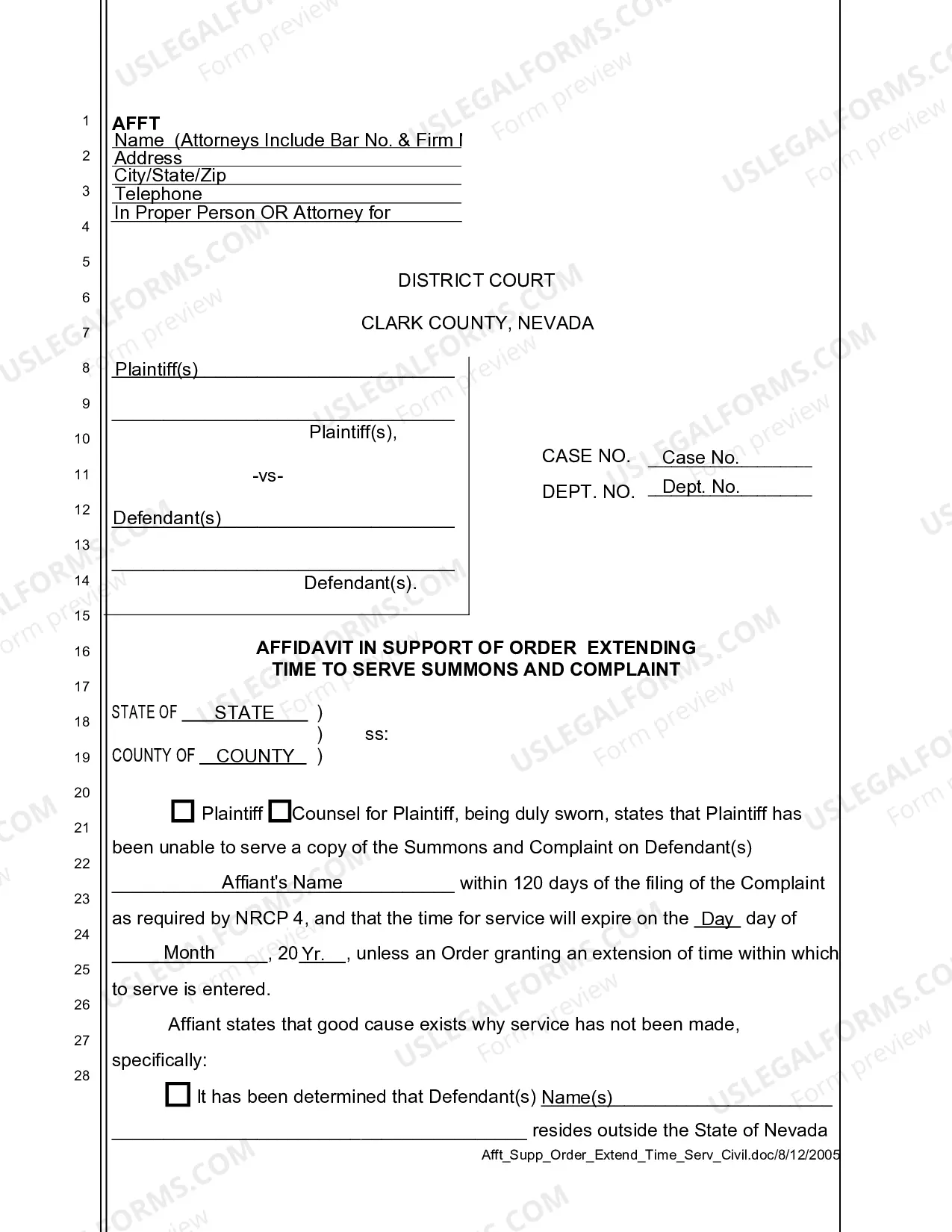
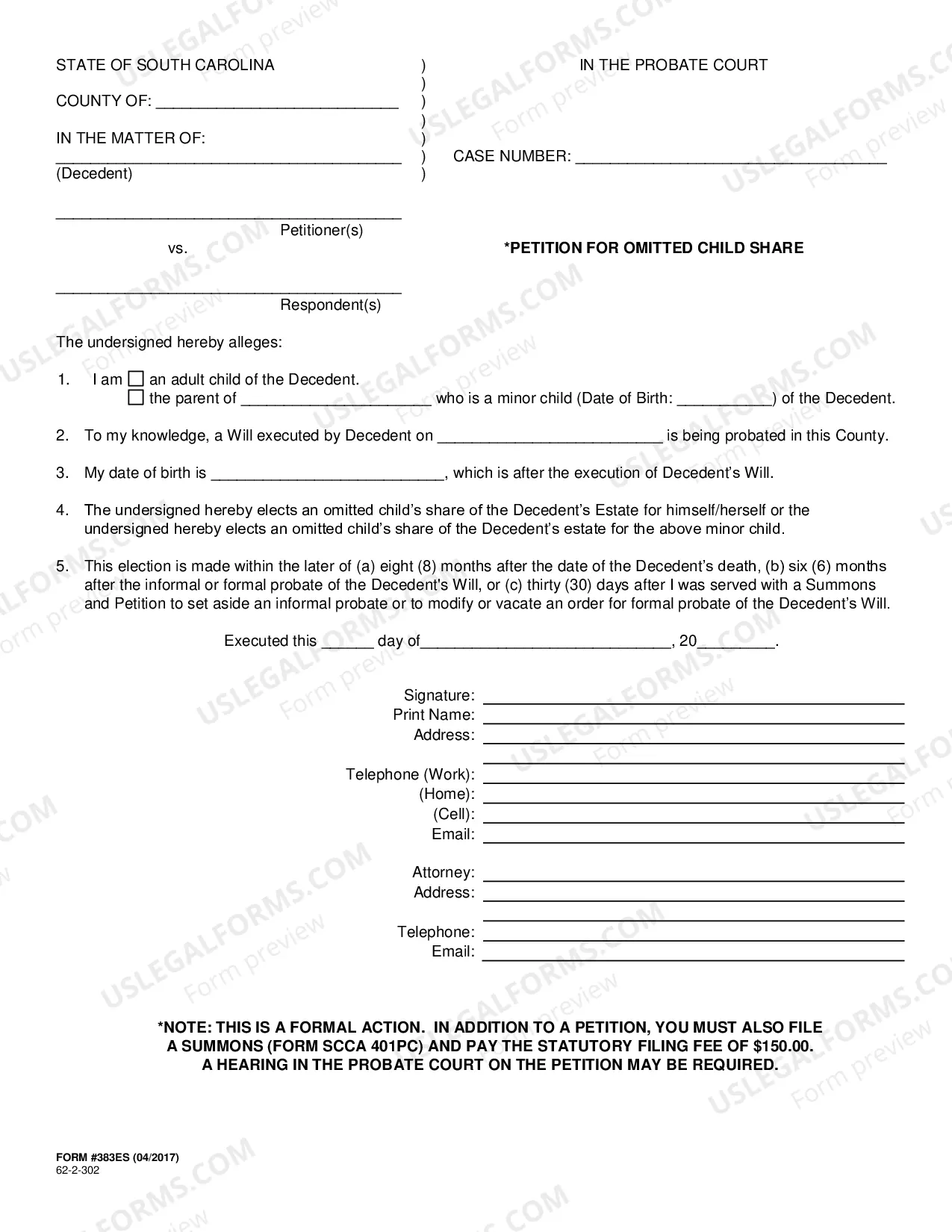
South Carolina Petition for Omitted Child
Description
Get your form ready online
Our built-in tools help you complete, sign, share, and store your documents in one place.
Make edits, fill in missing information, and update formatting in US Legal Forms—just like you would in MS Word.
Download a copy, print it, send it by email, or mail it via USPS—whatever works best for your next step.
Sign and collect signatures with our SignNow integration. Send to multiple recipients, set reminders, and more. Go Premium to unlock E-Sign.
If this form requires notarization, complete it online through a secure video call—no need to meet a notary in person or wait for an appointment.
We protect your documents and personal data by following strict security and privacy standards.

Make edits, fill in missing information, and update formatting in US Legal Forms—just like you would in MS Word.

Download a copy, print it, send it by email, or mail it via USPS—whatever works best for your next step.

Sign and collect signatures with our SignNow integration. Send to multiple recipients, set reminders, and more. Go Premium to unlock E-Sign.

If this form requires notarization, complete it online through a secure video call—no need to meet a notary in person or wait for an appointment.

We protect your documents and personal data by following strict security and privacy standards.
Looking for another form?






How to fill out South Carolina Petition For Omitted Child?
US Legal Forms is the most easy and affordable way to find appropriate formal templates. It’s the most extensive online library of business and personal legal documentation drafted and verified by lawyers. Here, you can find printable and fillable templates that comply with national and local regulations - just like your South Carolina Petition for Omitted Child.
Obtaining your template requires only a few simple steps. Users that already have an account with a valid subscription only need to log in to the web service and download the document on their device. Afterwards, they can find it in their profile in the My Forms tab.
And here’s how you can get a properly drafted South Carolina Petition for Omitted Child if you are using US Legal Forms for the first time:
- Read the form description or preview the document to make certain you’ve found the one meeting your requirements, or locate another one using the search tab above.
- Click Buy now when you’re certain about its compatibility with all the requirements, and select the subscription plan you like most.
- Register for an account with our service, log in, and purchase your subscription using PayPal or you credit card.
- Select the preferred file format for your South Carolina Petition for Omitted Child and download it on your device with the appropriate button.
Once you save a template, you can reaccess it anytime - just find it in your profile, re-download it for printing and manual fill-out or import it to an online editor to fill it out and sign more efficiently.
Take advantage of US Legal Forms, your reputable assistant in obtaining the corresponding formal documentation. Give it a try!
Form popularity
FAQ
Any executor, devisee, legatee, guardian, attorney, or other person who fails to deliver to the judge of the probate court having jurisdiction to admit it to probate any last will and testament, including any codicil or codicils thereto, upon conviction must be punished as for a misdemeanor.
In South Carolina, you can make a living trust to avoid probate for virtually any asset you own?real estate, bank accounts, vehicles, and so on. You need to create a trust document (it's similar to a will), naming someone to take over as trustee after your death (called a successor trustee).
SECTION 62-2-101. Intestate estate. Any part of the estate of a decedent not effectively disposed of by his will passes to his heirs as prescribed in the following sections of this Code.
Petition to Determine Heirs If more than ten (10) years have passed since the decedents' death, the Court is required by state law to hold a hearing to determine who the heirs of the decedent were at the time of their death.
If you are unmarried and die intestate in South Carolina and have children, your children will inherit your estate in equal shares. If the deceased has no children but has living parents, their estate will pass on to their parents. If parents are no longer living, the estate then goes to siblings.
If you die without a will, which is referred to as dying intestate, the people who inherit your property are determined ing to South Carolina intestacy law and are your next of kin. If you die survived by a spouse, but have no children, your spouse inherits 100% of your estate.
There are generally a number of types of living heirs entitled to inherit from a decedent, including: the spouse of the decedent; biological and adopted children, and their descendants; parents of the decedent; siblings of the decedent, and if they have died, their descendants (the decedent's nieces and nephews); and
Who Is Considered an Heir? Children are considered to be heirs and are the most common example. If no children are living, then a person's grandchildren are considered to be heirs. If a person has no children or grandchildren, then the next closest living relative would be considered an heir.