South Carolina Timber Sales Agreement
Overview of this form
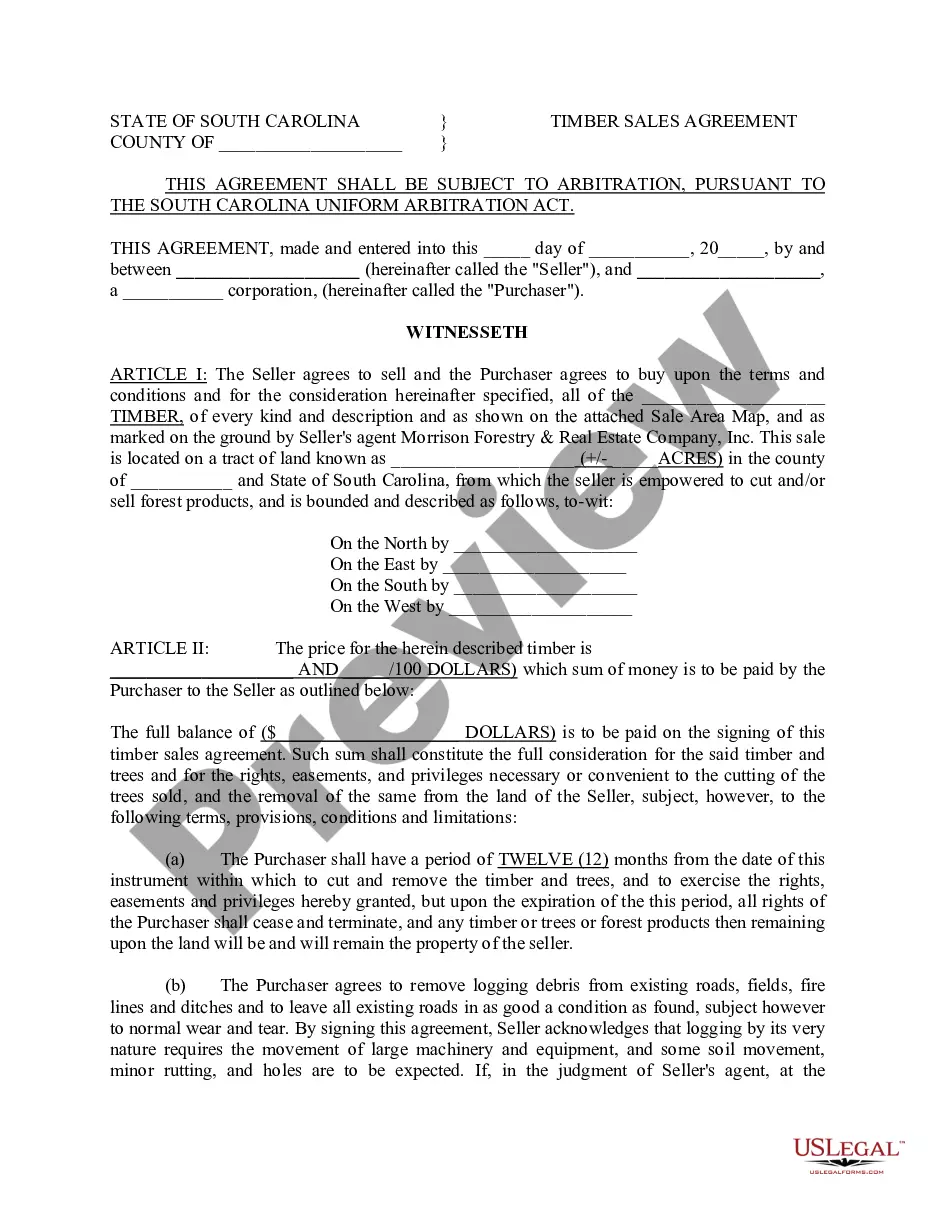
The Timber Sales Agreement is a legal contract where the seller sells specific timber to the buyer. This form specifies the terms under which the buyer can cut and remove the designated timber from the seller's property. It includes rights of ingress and egress, ensuring that both parties are clear on their obligations and rights throughout the sales and logging process. This agreement is essential for legally binding timber transactions and differs from general sales contracts by focusing specifically on forest products and logging operations.
Main sections of this form
- Names and details of the seller and purchaser.
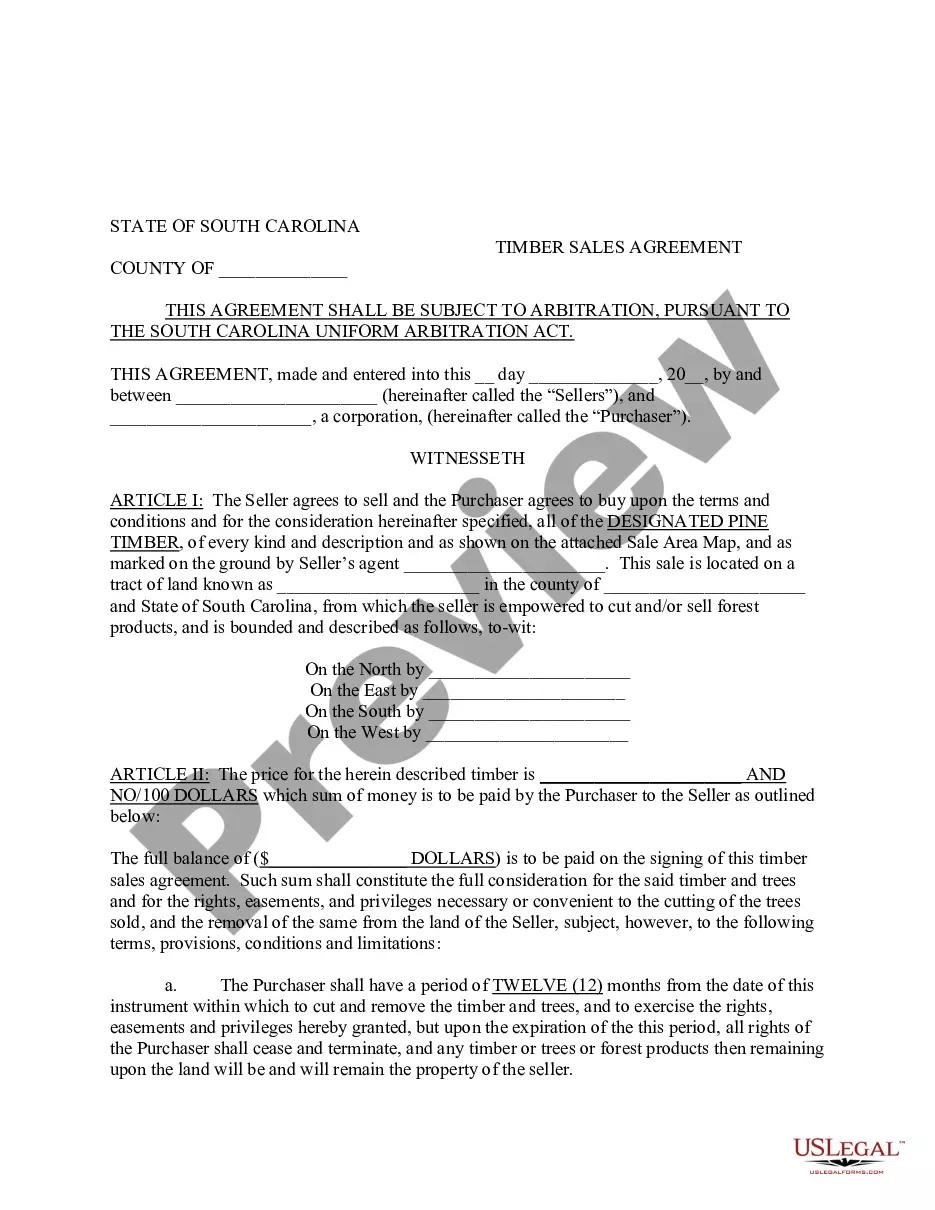
- Specific timber for sale, including location and boundaries.
- Purchase price and payment terms.
- Timeline for cutting and removing timber.
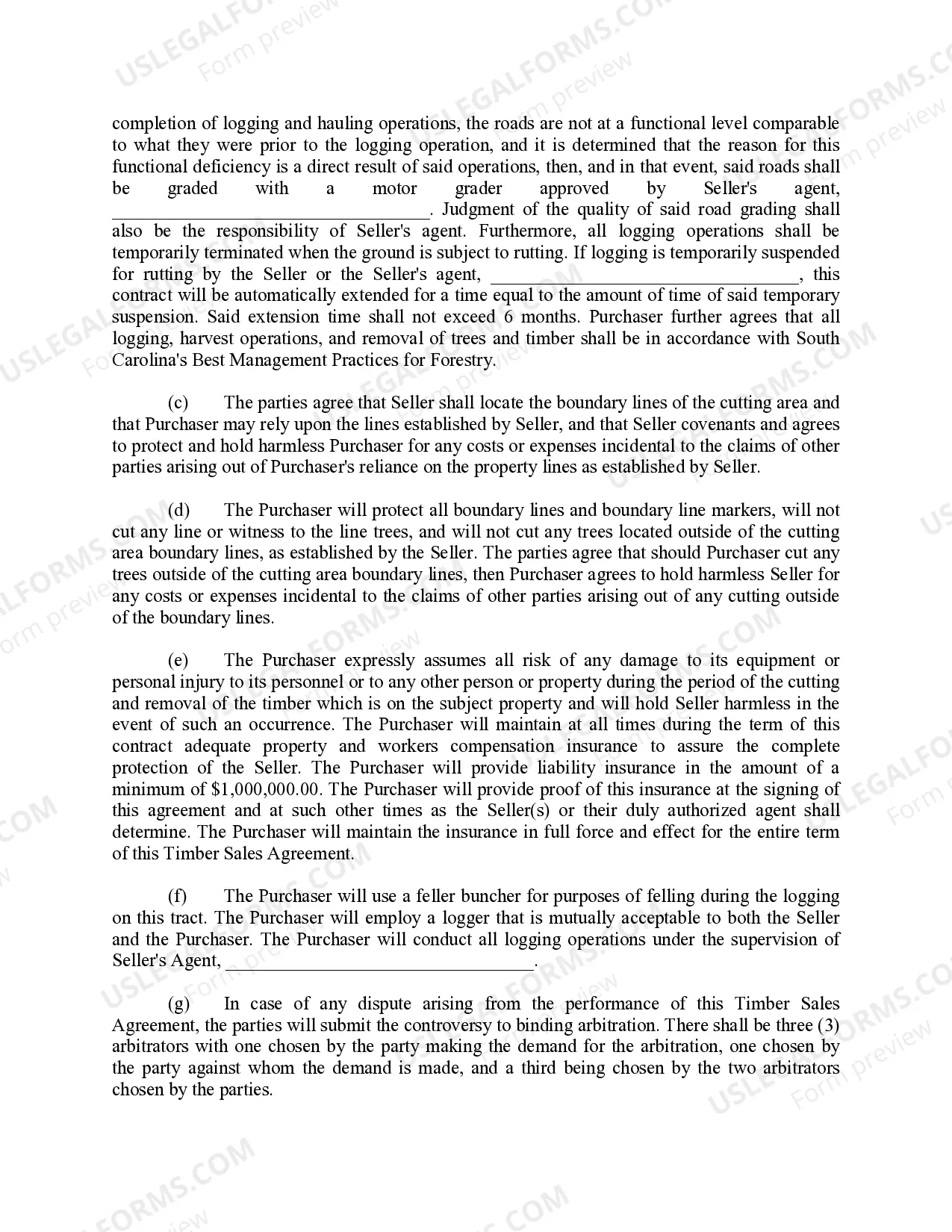
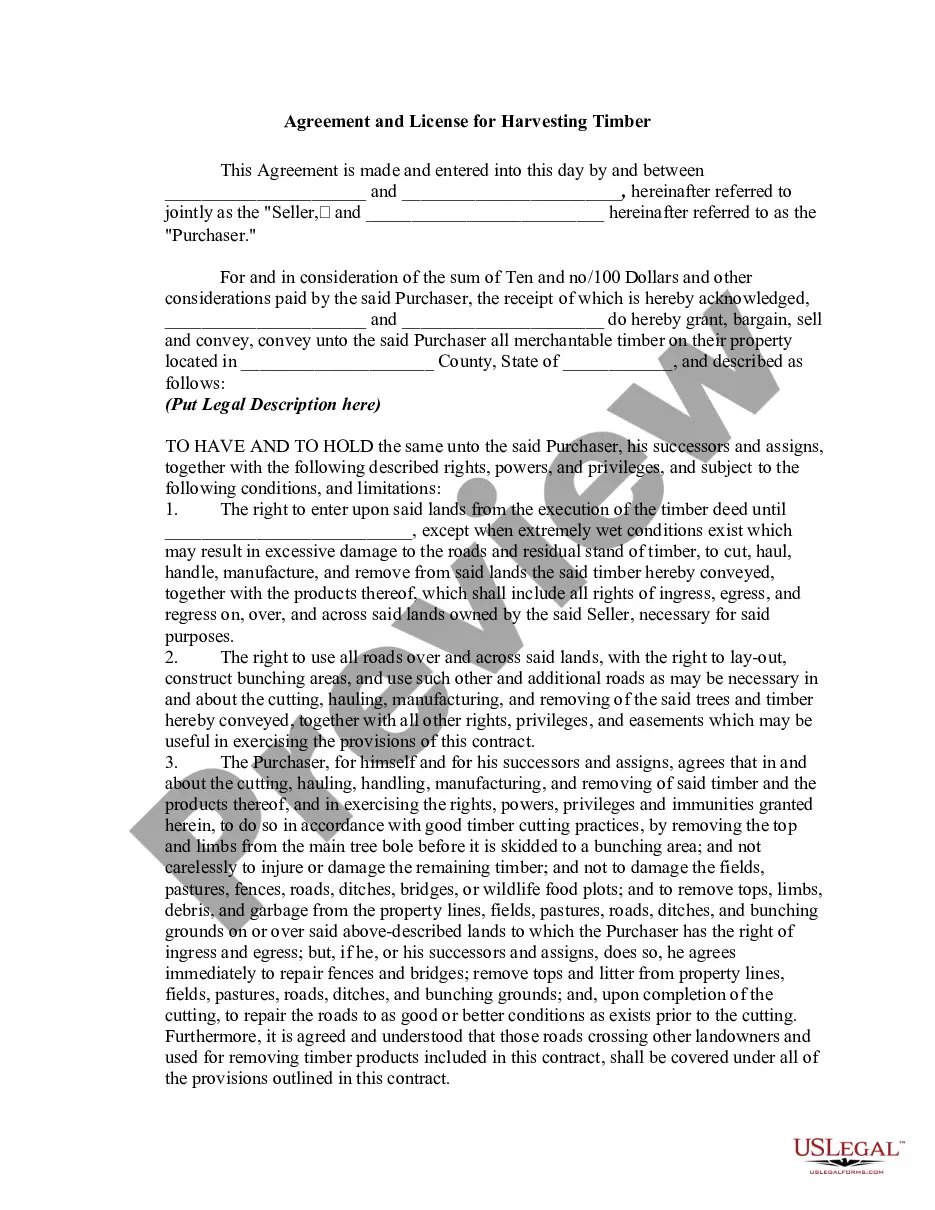
- Responsibilities regarding logging debris and road conditions.
- Provisions for insurance and risk management.
- Dispute resolution and arbitration clause.
Situations where this form applies
This form should be used when a landowner (seller) wishes to sell timber from their property to a buyer who intends to log that timber. It is ideal for situations where the seller wants to ensure that the buyer follows specific guidelines for logging and timber removal while having their rights protected. Such conditions may arise in rural counties, forests, or large private properties where timber sales are part of land management or profit-generating strategies.
Who can use this document
This Timber Sales Agreement is suitable for:
- Landowners looking to sell timber for commercial logging.
- Timber buyers or logging companies seeking to acquire timber legally.
- Forestry professionals involved in land management.
- Contractors responsible for logging operations on behalf of either party.
Instructions for completing this form
- Identify and enter the names and relevant details of both the seller and purchaser.
- Specify the type and amount of timber being sold, along with its location.
- Complete the section outlining the purchase price and payment terms.
- Set a clear date for when the timber must be cut and removed.
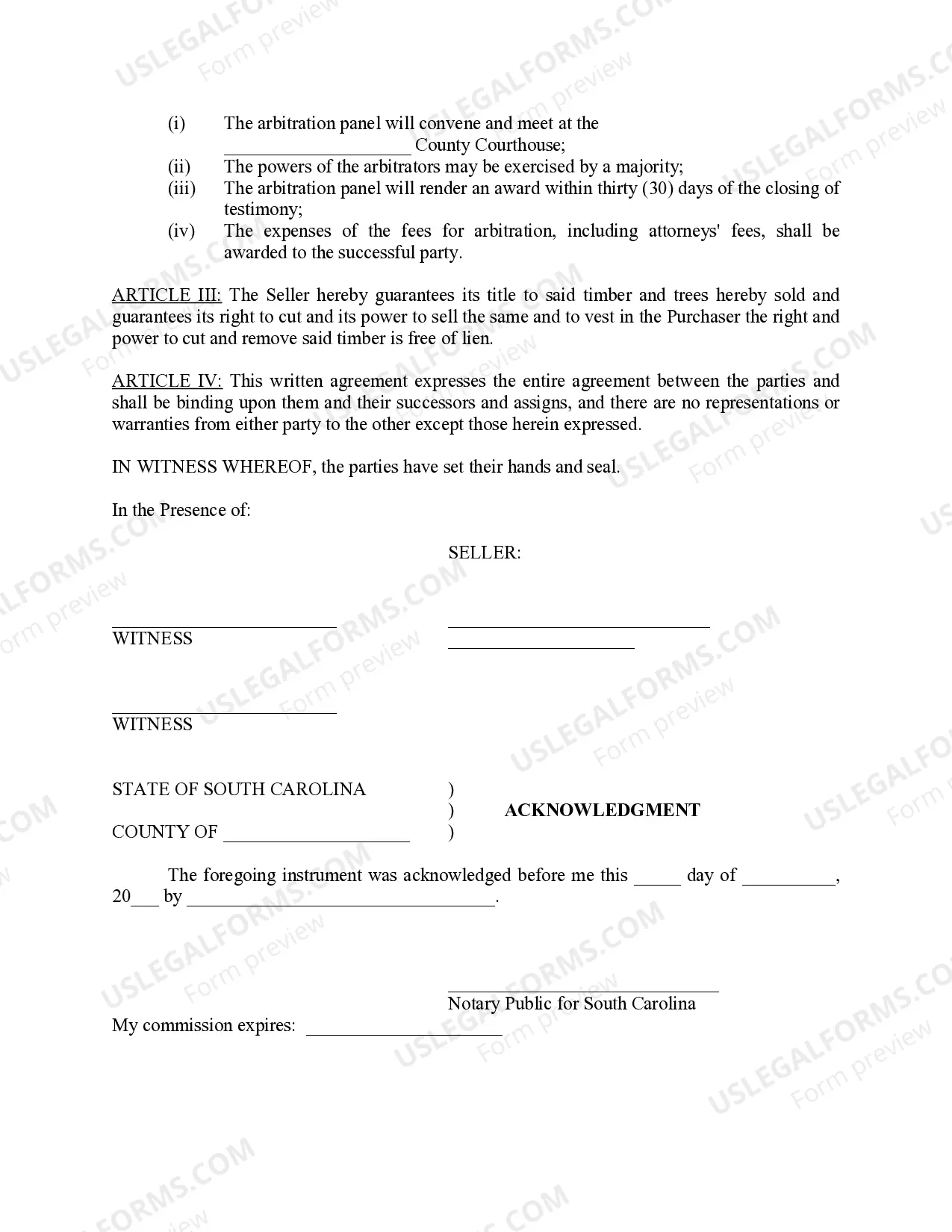
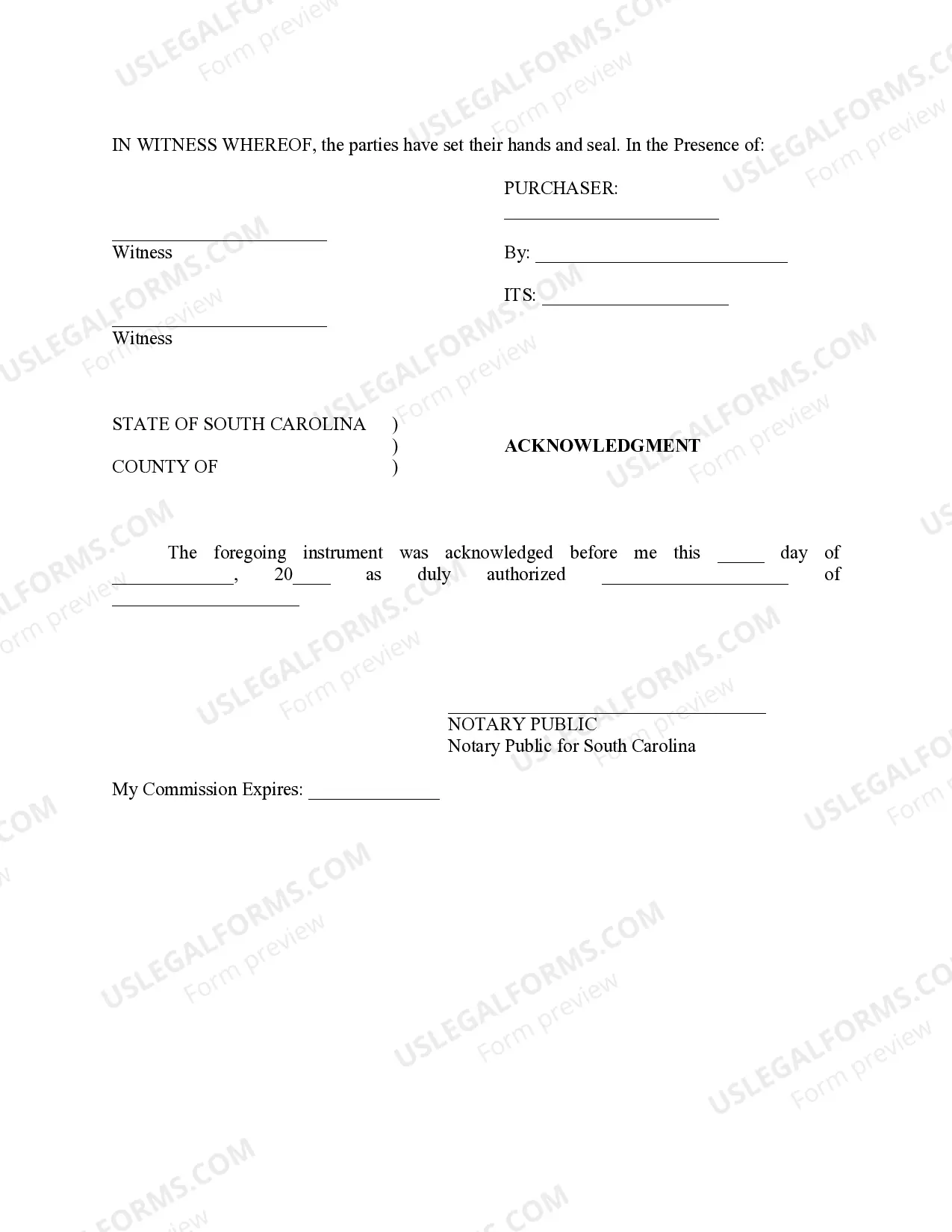
- Ensure that both parties sign the agreement in the presence of witnesses and a notary public.
Is notarization required?
Yes, this form must be notarized to be legally valid. It's essential for both parties to sign the agreement in the presence of a notary public to ensure its enforceability and adherence to South Carolina laws surrounding timber sales contracts.
Get your form ready online
Our built-in tools help you complete, sign, share, and store your documents in one place.
Make edits, fill in missing information, and update formatting in US Legal Forms—just like you would in MS Word.
Download a copy, print it, send it by email, or mail it via USPS—whatever works best for your next step.
Sign and collect signatures with our SignNow integration. Send to multiple recipients, set reminders, and more. Go Premium to unlock E-Sign.
If this form requires notarization, complete it online through a secure video call—no need to meet a notary in person or wait for an appointment.
We protect your documents and personal data by following strict security and privacy standards.

Make edits, fill in missing information, and update formatting in US Legal Forms—just like you would in MS Word.

Download a copy, print it, send it by email, or mail it via USPS—whatever works best for your next step.

Sign and collect signatures with our SignNow integration. Send to multiple recipients, set reminders, and more. Go Premium to unlock E-Sign.

If this form requires notarization, complete it online through a secure video call—no need to meet a notary in person or wait for an appointment.

We protect your documents and personal data by following strict security and privacy standards.
Common mistakes
- Failing to clearly specify the boundaries of the timber cut area.
- Neglecting to include payment terms or timelines.
- Inadequate insurance provisions leading to liability issues.
- Not having the agreement notarized or improperly executed.
Benefits of using this form online
- Convenient access allows for quick completion and adjustments.
- Downloadable format enables easy printing and sharing.
- Forms are drafted by licensed attorneys for legal reliability.
- Streamlined process helps minimize legal risks and errors.
Main things to remember
- The Timber Sales Agreement facilitates a legal transaction for timber sales, protecting both seller and purchaser.
- Clear specifications regarding timber boundaries, payment, and logging practices are crucial.
- Notarization of the agreement is necessary to ensure its legal validity in South Carolina.
Looking for another form?


Form popularity
FAQ
The Timber Harvesting Plan (THP) is the environmental review documents submitted by landowners to CAL FIRE outlining what timber he or she wants to harvest, how it will be harvested, and the steps that will be taken to prevent damage to the environment.
Stumpage is the price a private firm pays for the right to harvest timber from a given land base. It is paid to the current owner of the land. Historically, the price was determined on a basis of the number of trees harvested, or per stump.
Logging companies rarely have the specialized equipment, not to mention proper insurances, to remove trees from an Urban setting. But even if they did, the cost associated with hauling equipment to a location and removing the bulk of an entire tree including its top is usually far greater than the value of the tree.
Depending on the type of trees and the market when the timber is sold, you could earn $500 to $2000 per acre (at $1500, you would be looking at $60 per year in income if you were to annualize it over 25 years).
The value of this tree would be $195.00 for an average of $866.00 per thousand board feet. A fourteen inch Red Oak with a grade 3 rating would be worth $12.00 for an average price per thousand board feet of $265.00.