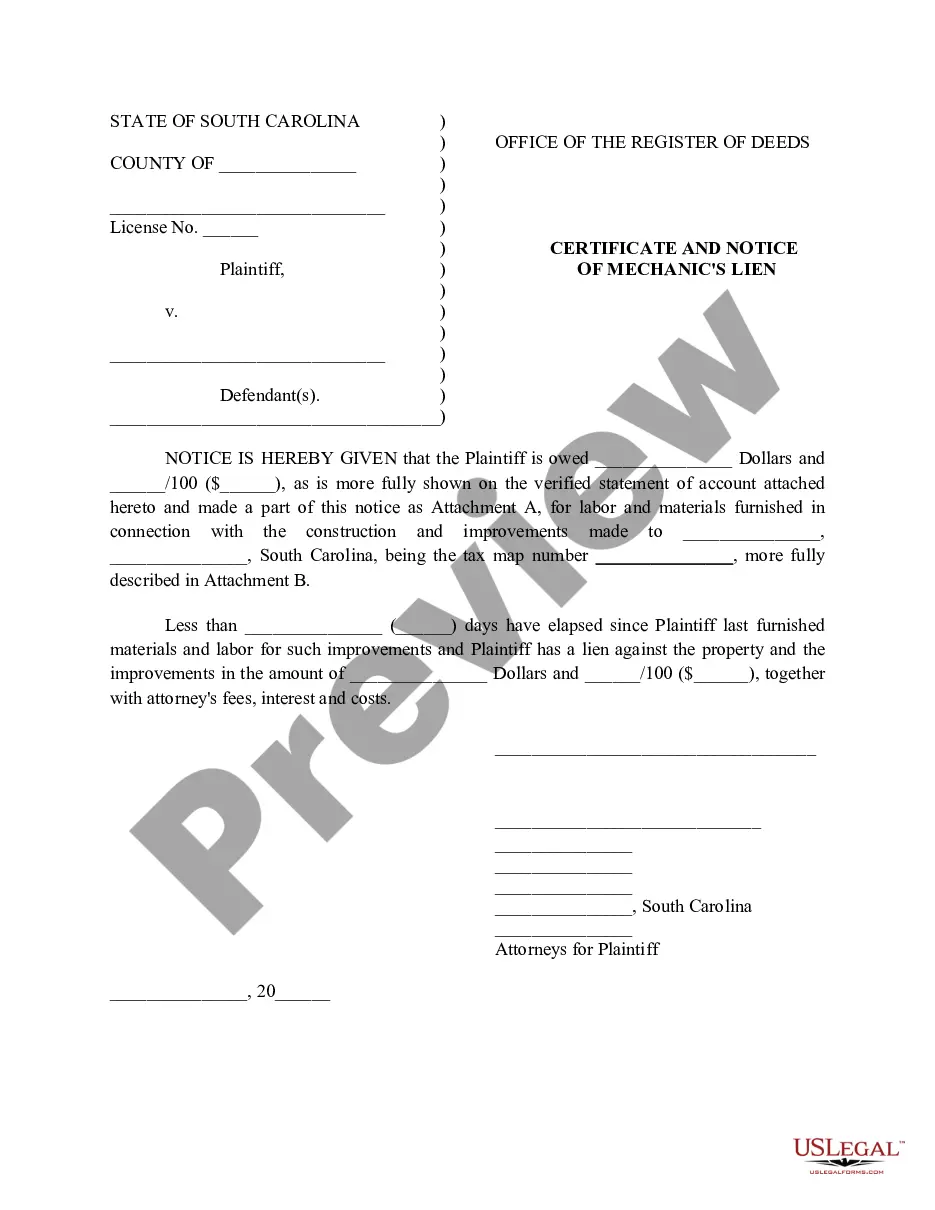
South Carolina Certificate and Notice of Mechanic's Lien
Understanding this form
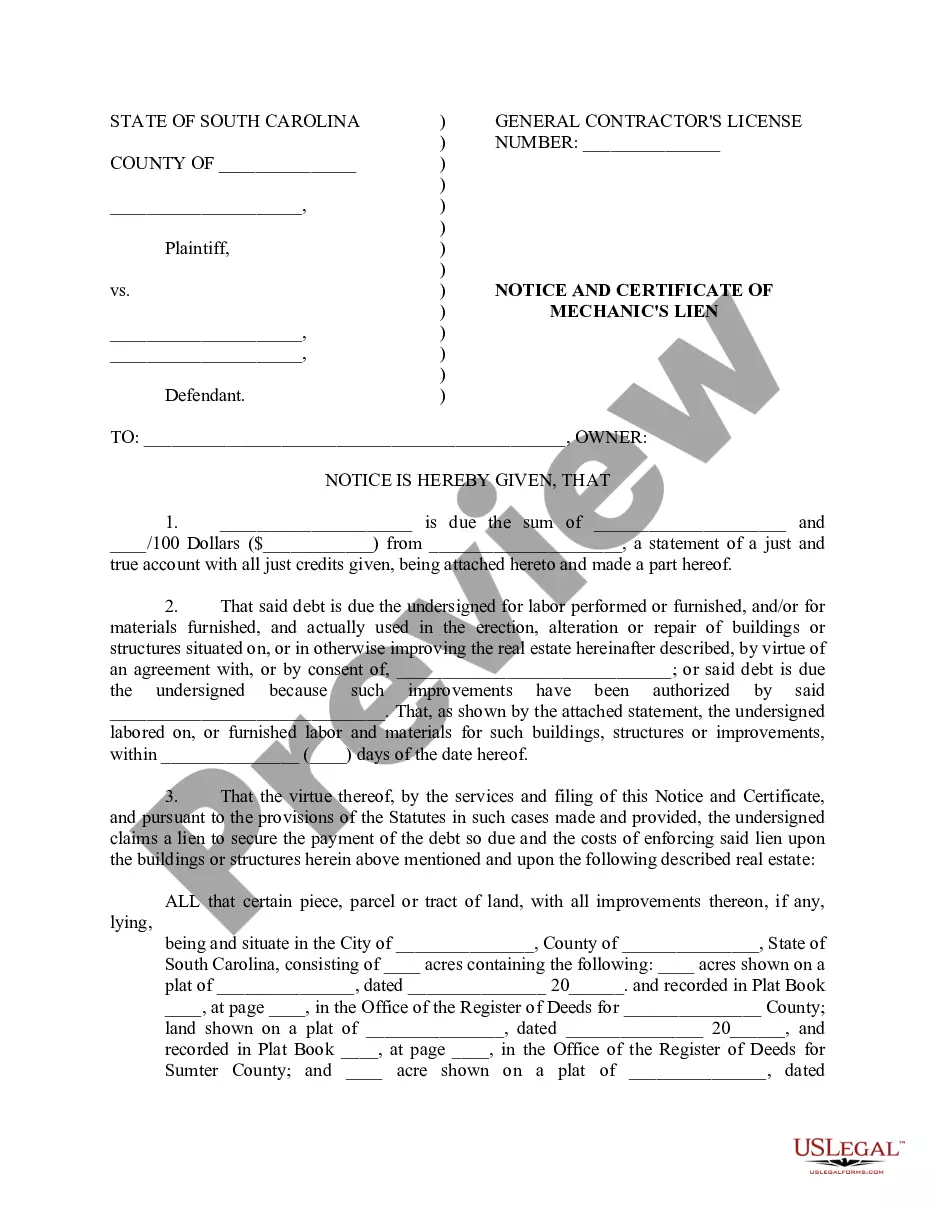
The Certificate and Notice of Mechanic's Lien is a legal document used by contractors and laborers in South Carolina to formally notify property owners that a lien has been placed on a property due to unpaid labor or materials. This form is essential for asserting a claim against a property in connection with construction or improvement projects. It serves as an important tool for safeguarding the rights of those who provide work and materials in the construction industry.
Main sections of this form
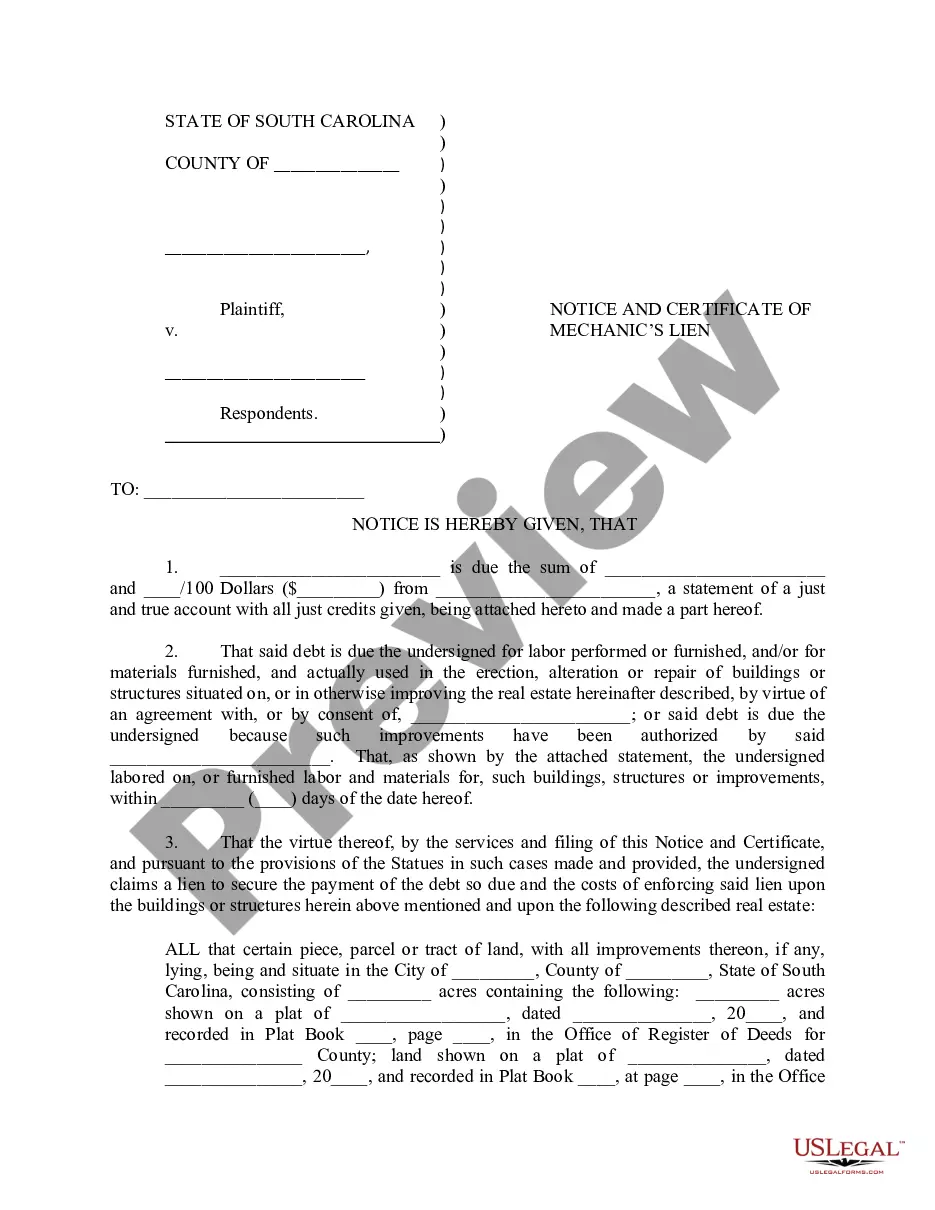
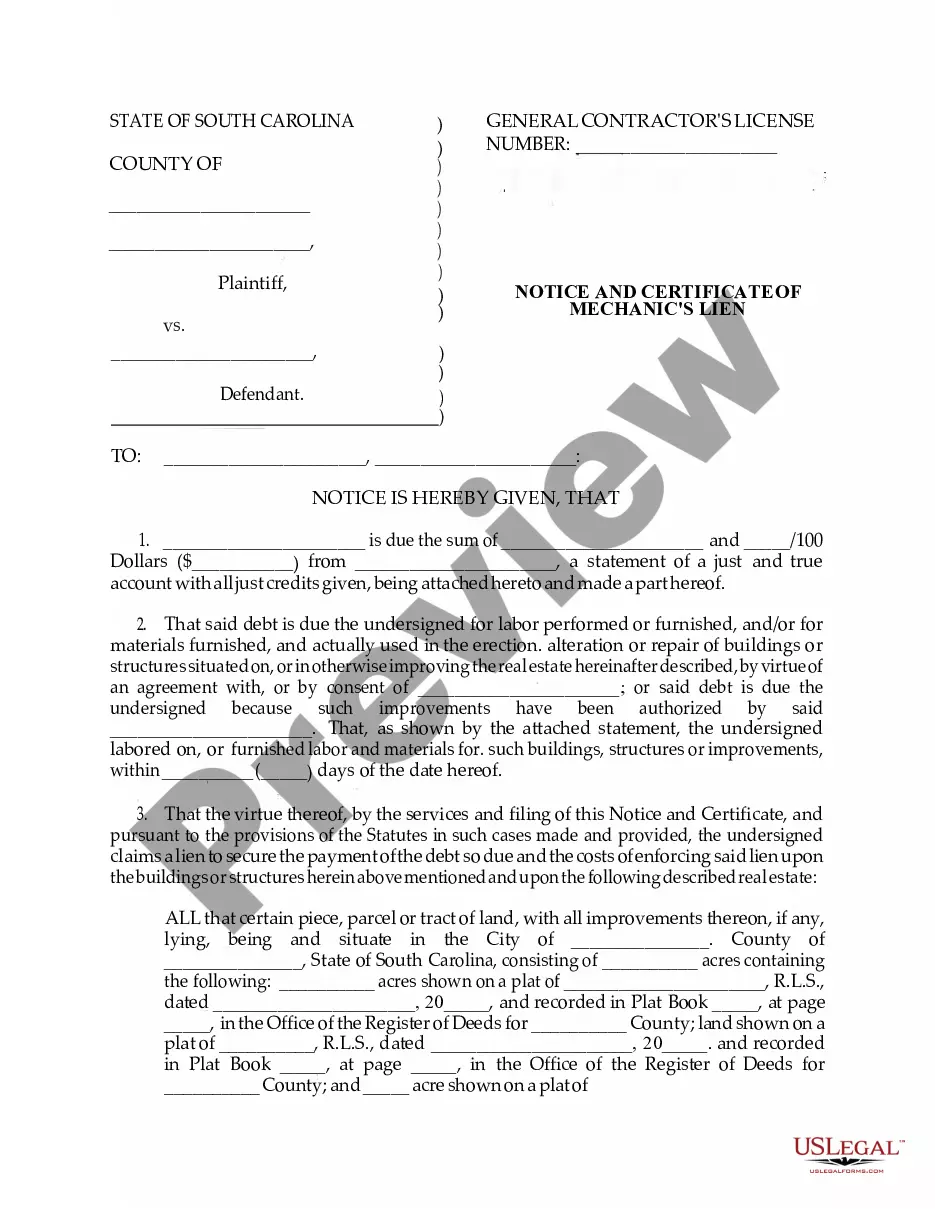
- The name of the plaintiff (contractor or laborer) and defendant (property owner).
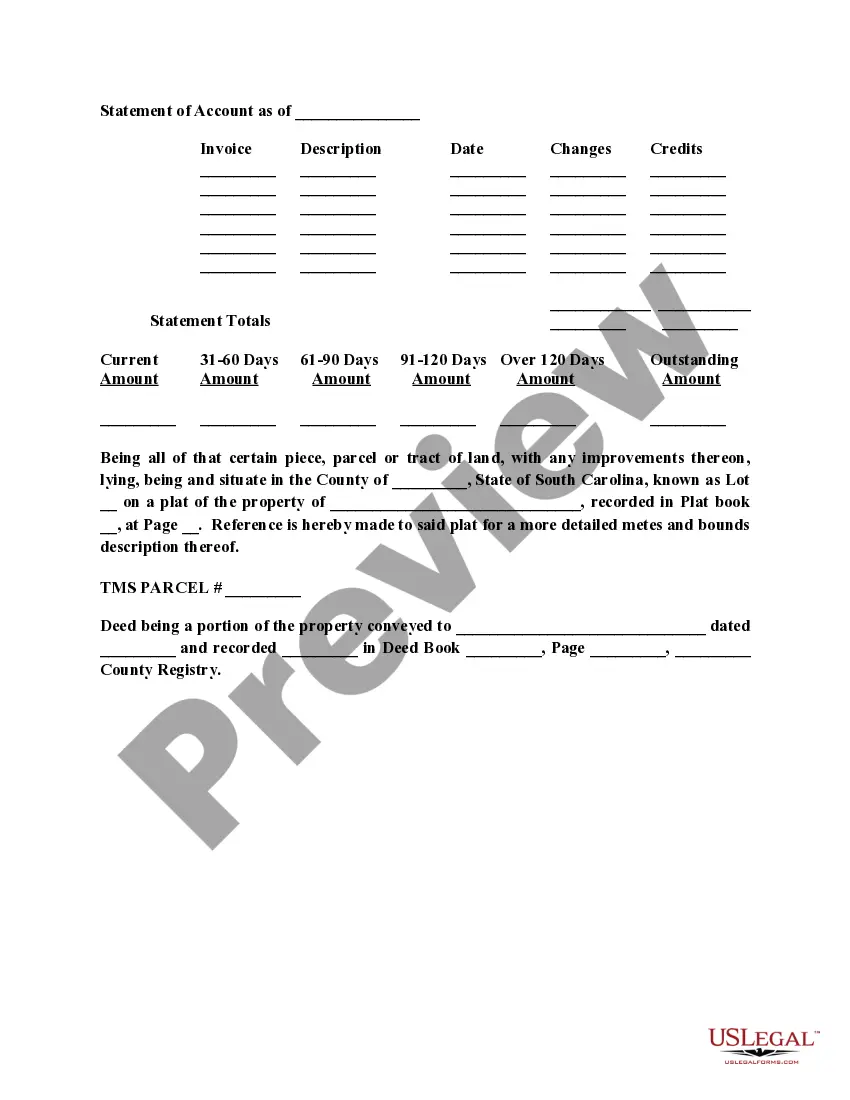
- The amount owed, including a detailed statement of account.
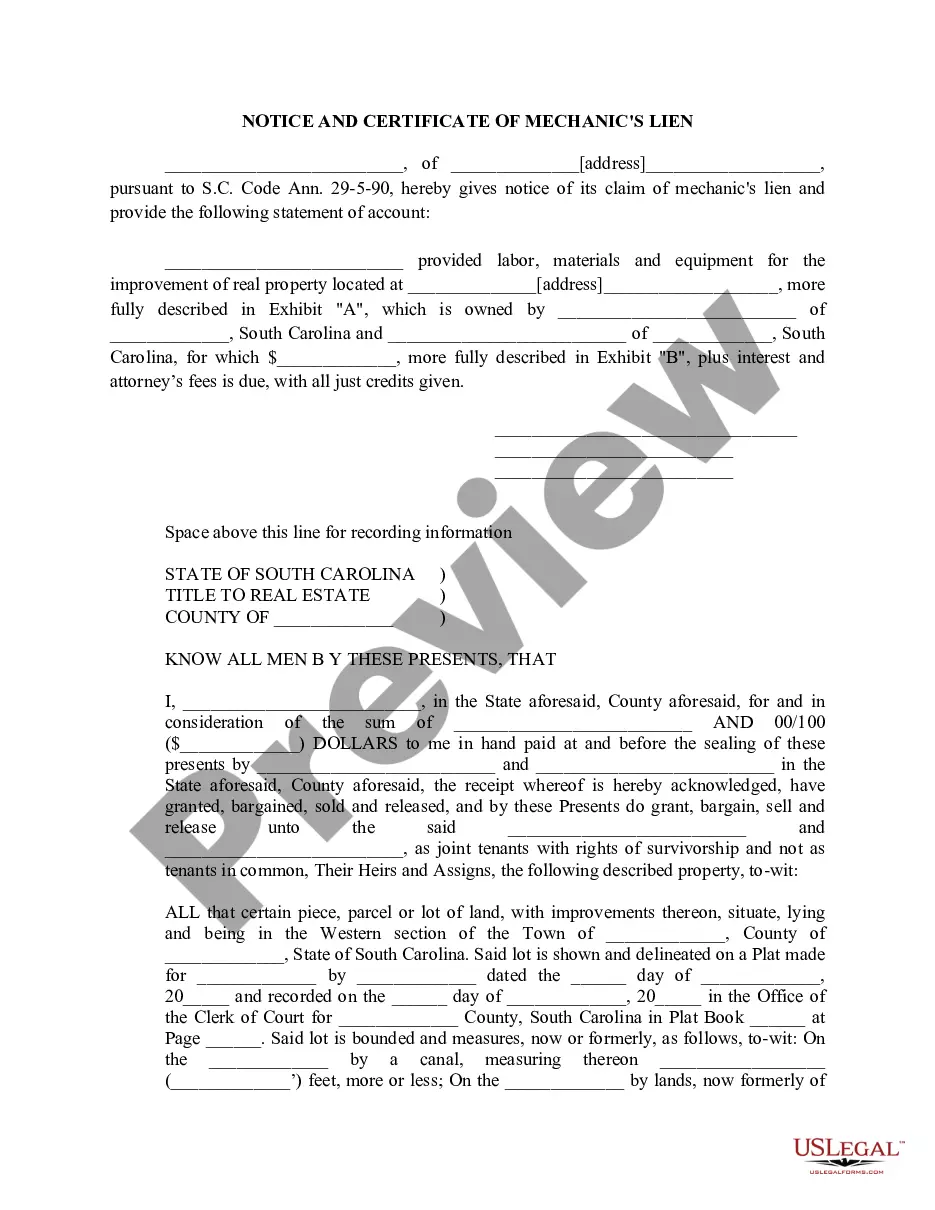
- A description of the property where the lien is placed, including its tax map number.
- The date when the last labor or materials were provided.
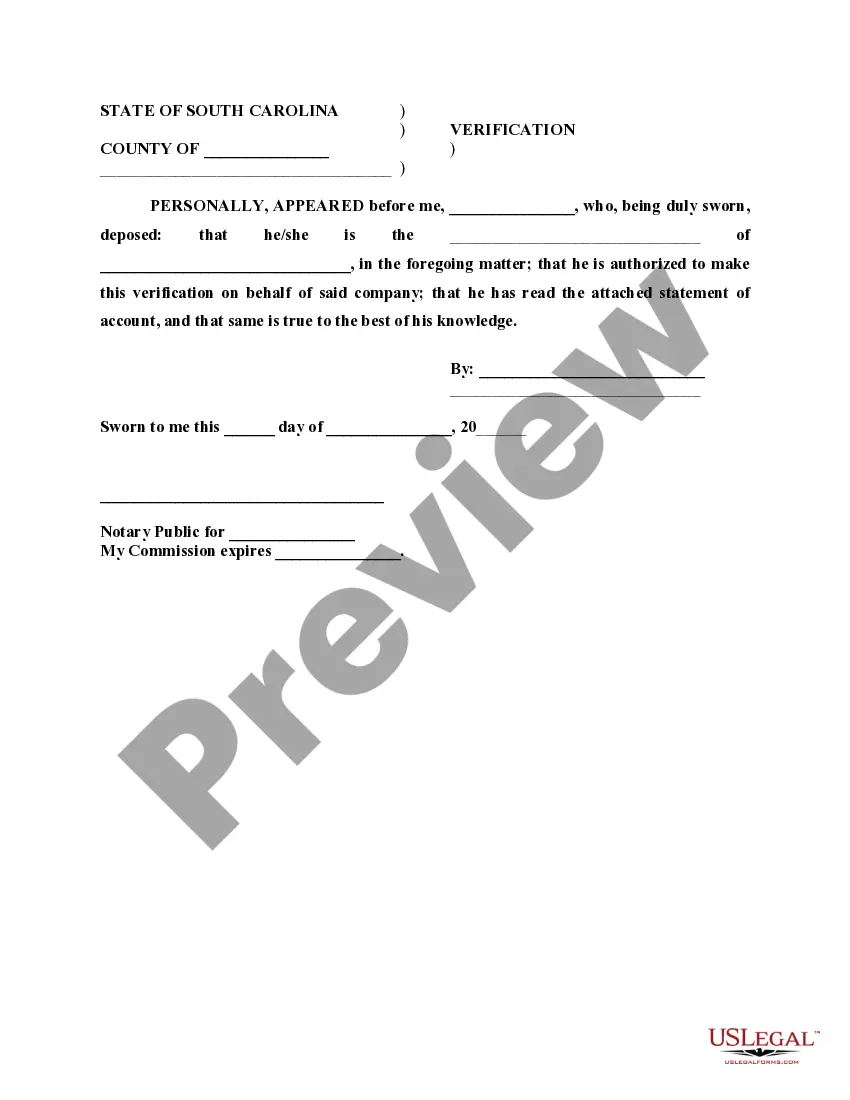
- Verification by a notary public confirming the claims made in the notice.
When this form is needed
This form should be used when a contractor, subcontractor, or laborer has not been compensated for their work or materials provided for a construction project. It is crucial to file this notice within a specific time frame after the last service or delivery to ensure that the lien is enforceable.
Who this form is for
- Contractors who have provided labor or services on a construction project.
- Subcontractors or material suppliers who have not been paid for their contributions.
- Any laborer seeking to claim a lien on a property for unpaid work.
How to complete this form
- Identify the parties involved, including the contractor and property owner.
- Enter the amount owed for services and materials.
- Provide a detailed description of the property and its tax map number.
- Add the date of the last provided labor or materials.
- Sign the document in front of a notary public and obtain their stamp.
Notarization guidance
Yes, this form must be notarized to be legally valid. You can utilize US Legal Forms' integrated online notarization service, which offers secure video calls and legal equivalence, allowing you to complete this process without traveling.
Get your form ready online
Our built-in tools help you complete, sign, share, and store your documents in one place.
Make edits, fill in missing information, and update formatting in US Legal Forms—just like you would in MS Word.
Download a copy, print it, send it by email, or mail it via USPS—whatever works best for your next step.
Sign and collect signatures with our SignNow integration. Send to multiple recipients, set reminders, and more. Go Premium to unlock E-Sign.
If this form requires notarization, complete it online through a secure video call—no need to meet a notary in person or wait for an appointment.
We protect your documents and personal data by following strict security and privacy standards.

Make edits, fill in missing information, and update formatting in US Legal Forms—just like you would in MS Word.

Download a copy, print it, send it by email, or mail it via USPS—whatever works best for your next step.

Sign and collect signatures with our SignNow integration. Send to multiple recipients, set reminders, and more. Go Premium to unlock E-Sign.

If this form requires notarization, complete it online through a secure video call—no need to meet a notary in person or wait for an appointment.

We protect your documents and personal data by following strict security and privacy standards.
Mistakes to watch out for
- Failing to properly fill out the property description.
- Missing the deadline for filing the lien after the last work was completed.
- Not including the required verification by a notary public.
Benefits of completing this form online
- Convenience of downloading the form and completing it at your own pace.
- Editable templates that can be customized to fit your specific situation.
- Reliable access to professionally drafted legal forms by licensed attorneys.
Looking for another form?
Form popularity
FAQ
Subject to some exceptions, a lien for materials, services, or wages may be registered any time up to 45 days from the day the last materials, services, or wages were provided, or since the contract was abandoned. After those 45 days elapse, the lien expires.
In South Carolina, a claimant who has filed a mechanics lien will have 6 months from the last day on which the claimant furnished labor and/or materials to the project to enforce their lien.
To perfect a mechanic's lien, the contractor, subcontractor, or supplier must file a notice of mechanic's lien with the Register of Deeds or Clerk of Court of the county where the real property is located and serve the property owner with notice and a copy of the lien within 90 days of the completion of the work. S.C.
To perfect a mechanic's lien, the contractor, subcontractor, or supplier must file a notice of mechanic's lien with the Register of Deeds or Clerk of Court of the county where the real property is located and serve the property owner with notice and a copy of the lien within 90 days of the completion of the work. S.C.
A South Carolina mechanics' lien claim must be filed within 90 days after completion of the contractors work. A lawsuit to foreclose upon the South Carolina construction lien must be brought no later than 6 months after the claimant ceases to furnish labor or materials.
Even though these states may permit project participants to secure lien rights and claim a mechanics lien even without a written contract, it is generally best practice to have a signed written contract for work provided.
Mechanic's liens create a cloud on title, meaning that they appear in public property records. Liens are sometimes said to travel with the land, meaning that anyone who buys your house would take the property subject to the contractor's lien (or, more likely, demand that you pay it off first).