South Carolina TRANSMITTING DEFENSE INFORMATION
Understanding this form
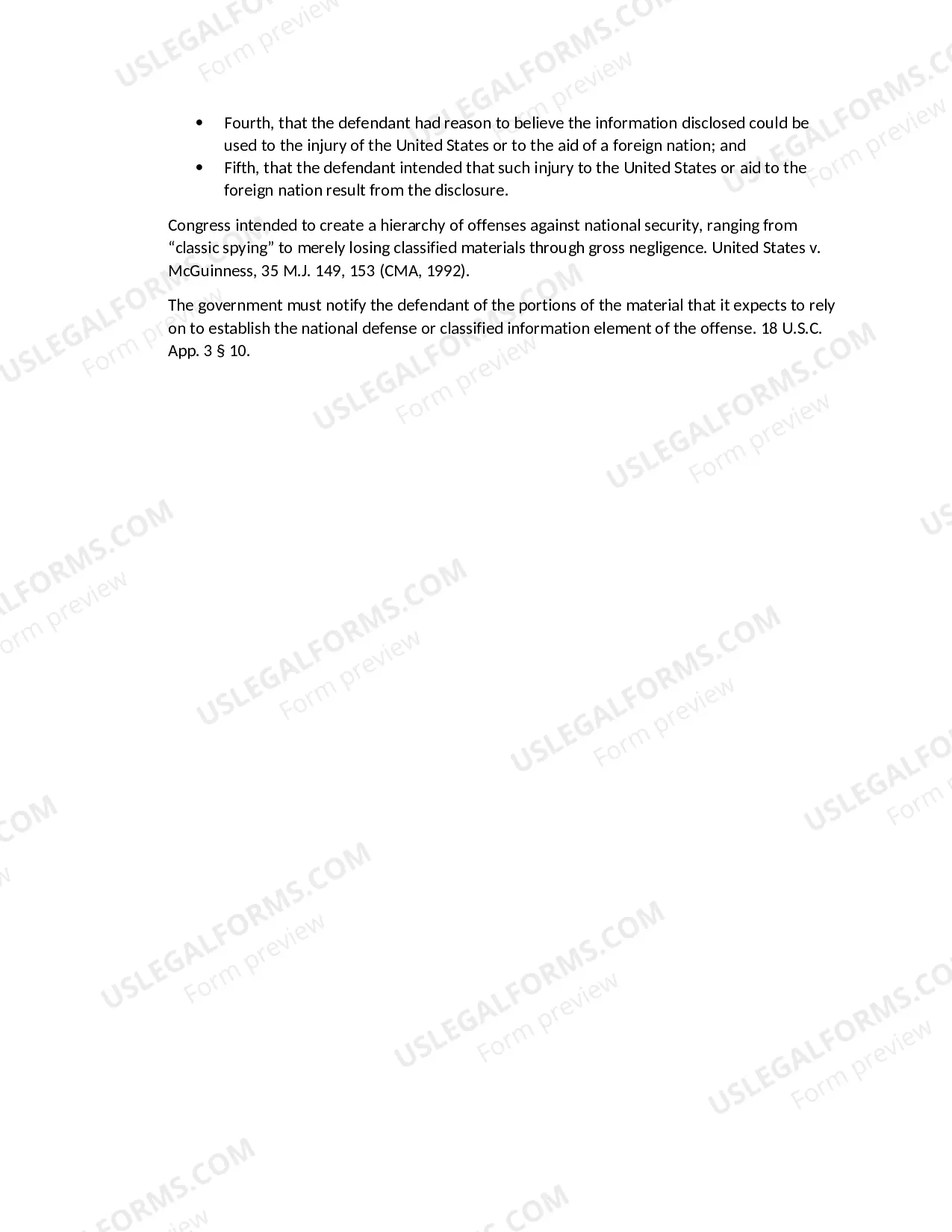
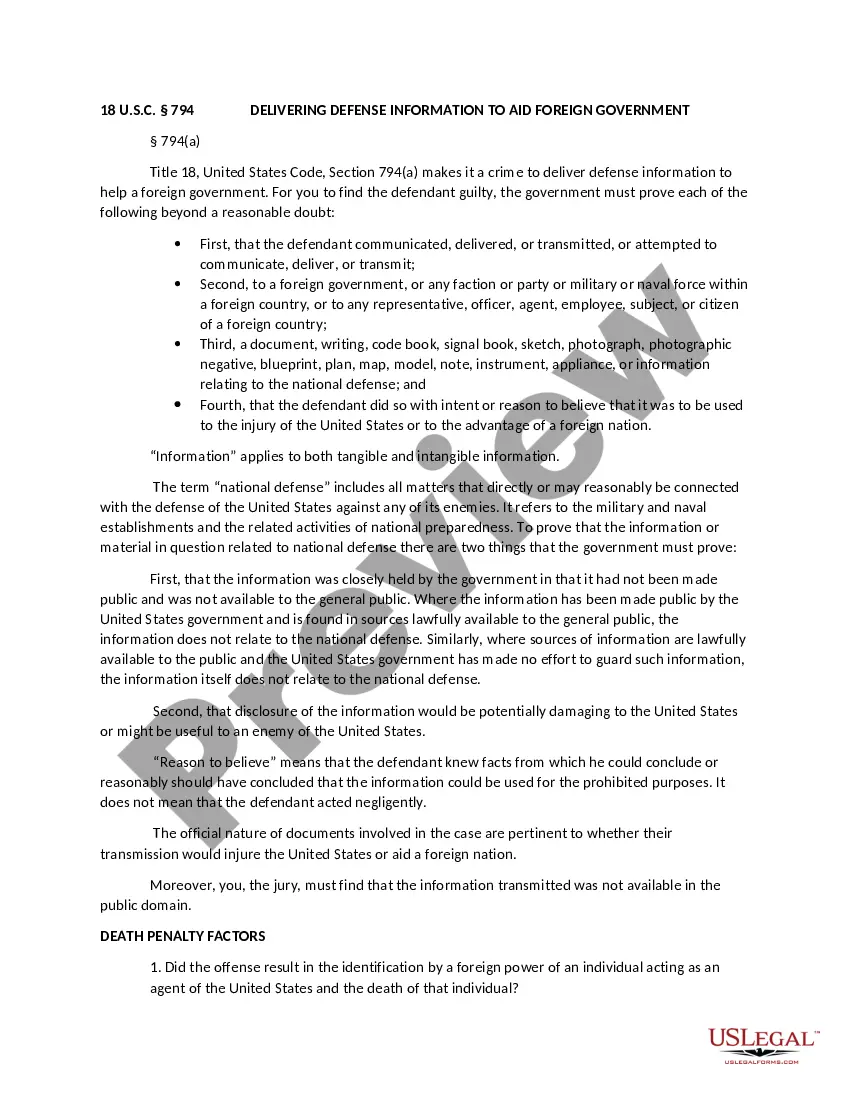
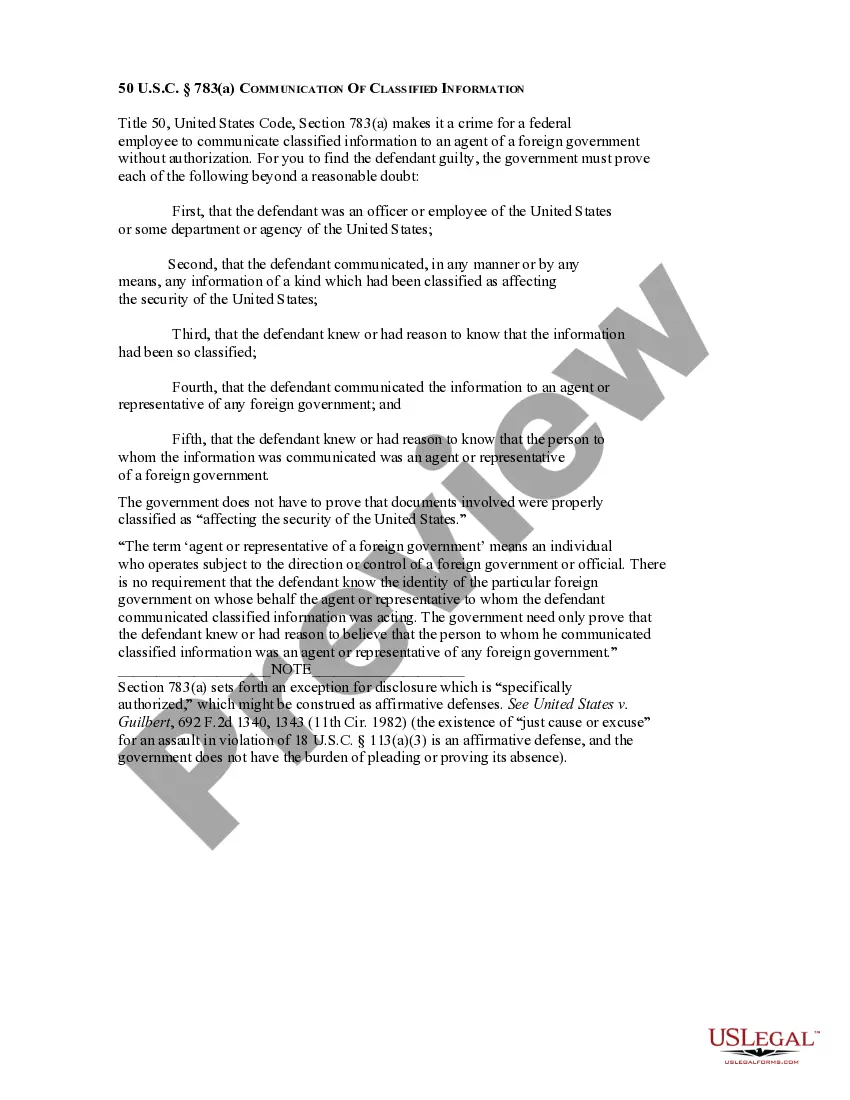
The Transmitting Defense Information form is designed for use in federal criminal cases in the United States, specifically pertaining to violations of national security laws under Title 18, United States Code, Section 793. This form aids in understanding the legal framework surrounding the unauthorized transmission, receipt, or mishandling of defense information that could harm national security or benefit foreign nations.
Main sections of this form
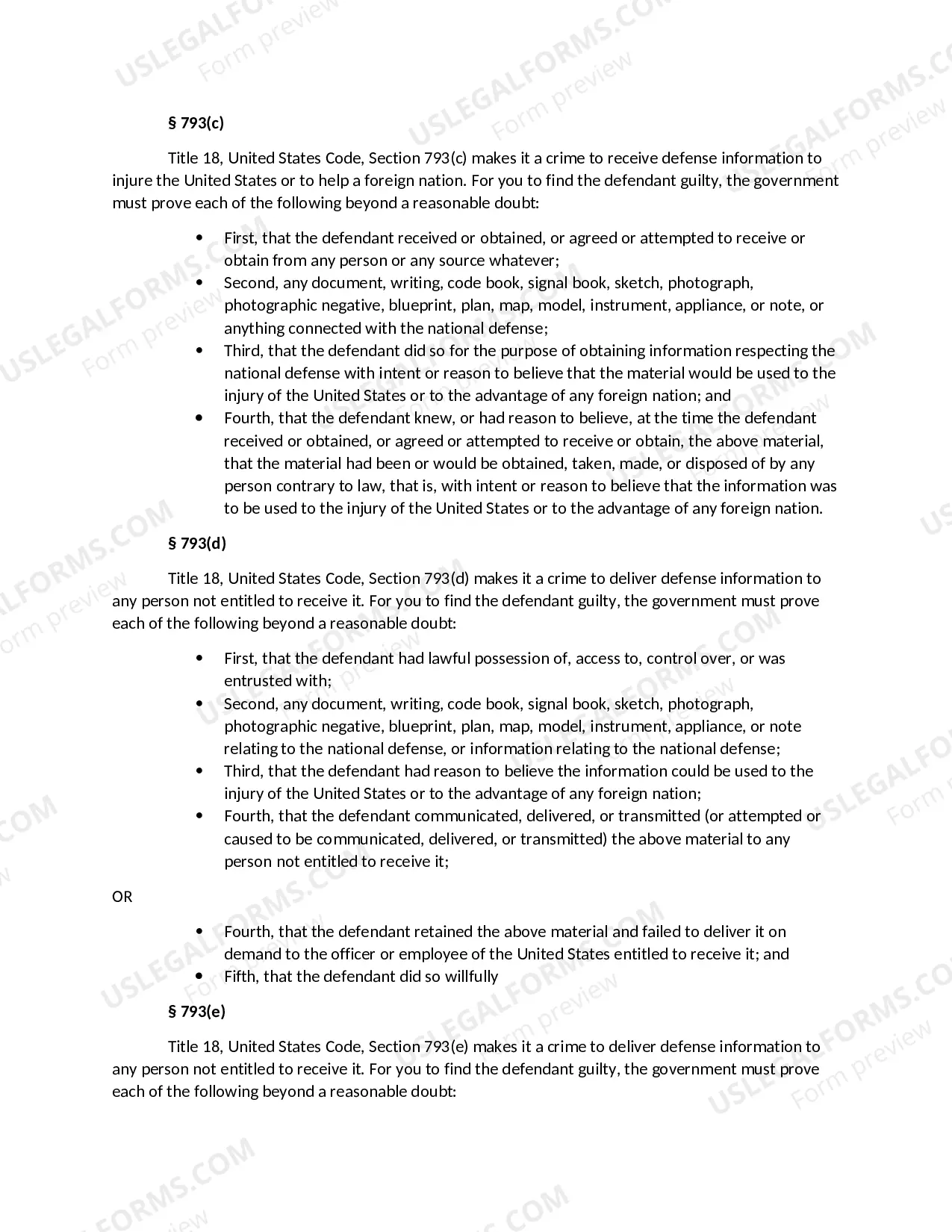
- Definition of defense information involved in national security.
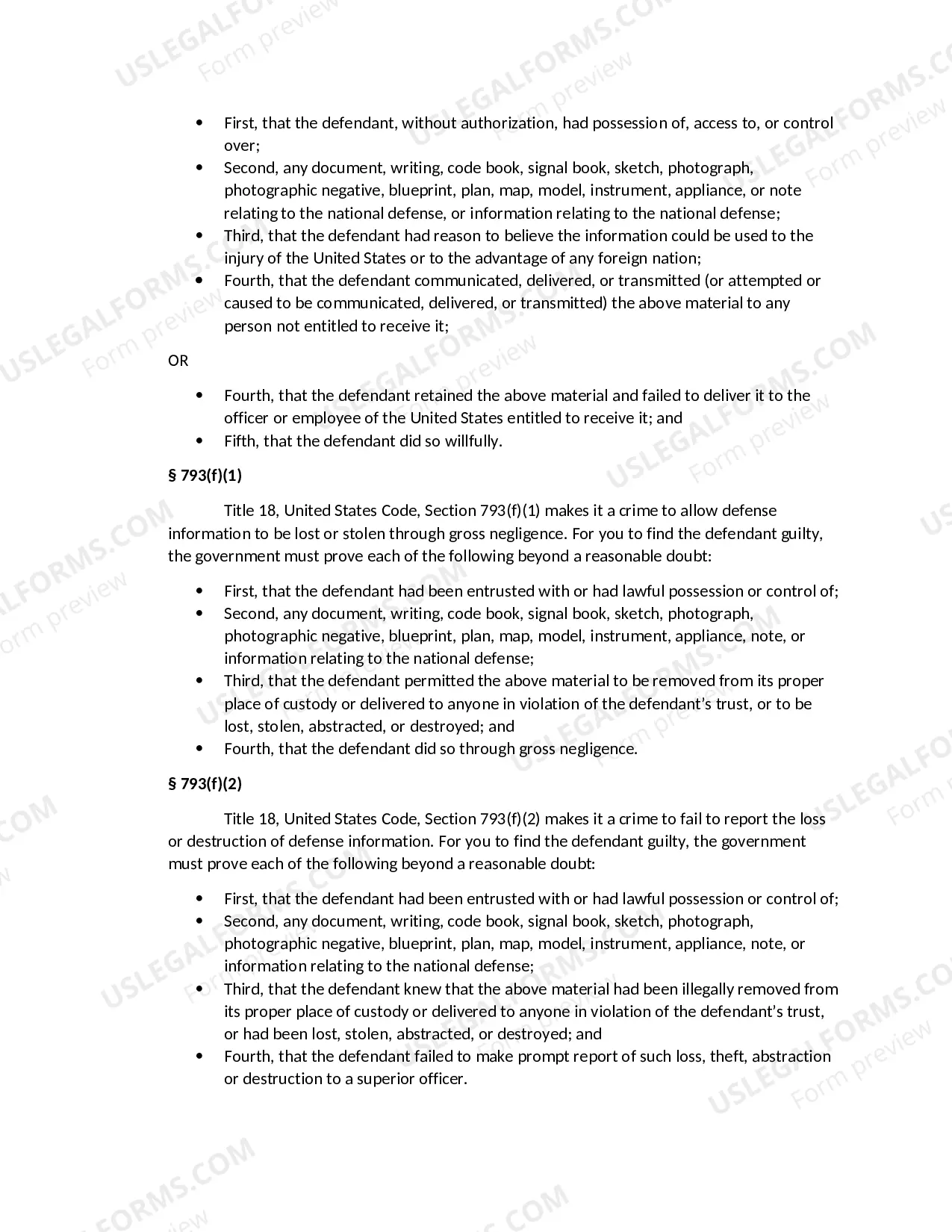
- Elements needed to prove guilt for each subsection of Section 793.
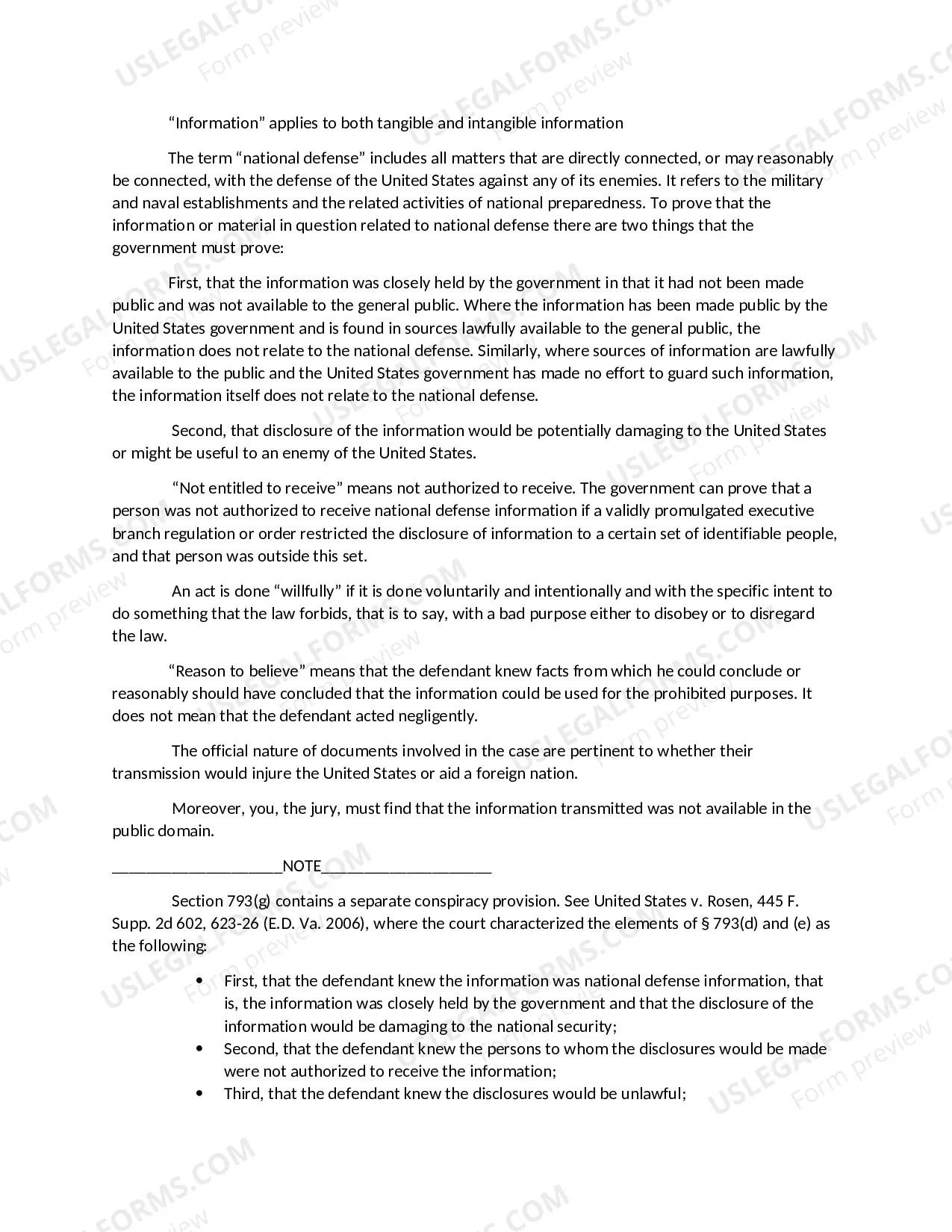
- Clarification of what constitutes willfulness and gross negligence.
- Guidelines on how the information must be closely held or damaging to qualify as national defense information.
- Responsibilities regarding the handling and reporting of such information.

Common use cases
This form is essential for legal professionals dealing with cases where a defendant is accused of mishandling defense information. It applies in situations involving unauthorized disclosure, receiving classified information, or failing to report the loss of such information, potentially harming U.S. national security.
Who should use this form
- Defense attorneys representing clients accused of violating national security laws.
- Prosecutors handling cases related to mishandling of defense information.
- Legal scholars studying criminal law related to national security.
How to complete this form
- Identify the involved parties and their legal representation.
- Gather all relevant information regarding the defense materials in question.
- Specify the circumstances in which the defense information was obtained or mishandled.
- Provide detailed descriptions of the actions taken regarding the transmission or retention of the information.
- Ensure all fields are filled accurately, reflecting the legal standards required for prosecution or defense.
Does this form need to be notarized?
Notarization is not commonly needed for this form. However, certain documents or local rules may make it necessary. Our notarization service, powered by Notarize, allows you to finalize it securely online anytime, day or night.
Get your form ready online
Our built-in tools help you complete, sign, share, and store your documents in one place.
Make edits, fill in missing information, and update formatting in US Legal Forms—just like you would in MS Word.
Download a copy, print it, send it by email, or mail it via USPS—whatever works best for your next step.
Sign and collect signatures with our SignNow integration. Send to multiple recipients, set reminders, and more. Go Premium to unlock E-Sign.
If this form requires notarization, complete it online through a secure video call—no need to meet a notary in person or wait for an appointment.
We protect your documents and personal data by following strict security and privacy standards.

Make edits, fill in missing information, and update formatting in US Legal Forms—just like you would in MS Word.

Download a copy, print it, send it by email, or mail it via USPS—whatever works best for your next step.

Sign and collect signatures with our SignNow integration. Send to multiple recipients, set reminders, and more. Go Premium to unlock E-Sign.

If this form requires notarization, complete it online through a secure video call—no need to meet a notary in person or wait for an appointment.

We protect your documents and personal data by following strict security and privacy standards.
Common mistakes to avoid
- Failing to clearly define the scope of the defense information involved.
- Omitting key details on the defendant's knowledge or intent regarding the information.
- Inaccurately completing sections regarding the potential harm to national security.
Why use this form online
- Convenient access to legal documents that can be downloaded and filled out at any time.
- Editable formats that allow for easy customization based on specific case details.
- Peace of mind knowing that the forms are drafted by licensed attorneys to ensure compliance with legal standards.
Legal use & context
- This form is integral for understanding the legal implications of handling national defense information.
- It provides a structured approach for prosecutors and defense attorneys in related cases.
- The accuracy of the information provided is crucial for the enforceability of any legal proceedings.
Main things to remember
- The Transmitting Defense Information form ensures legal compliance in national security cases.
- Accurate documentation is vital for protecting the rights of the accused and upholding national security laws.
- Utilizing this form can aid both sides of a legal case in clearly presenting their arguments.
Looking for another form?
Form popularity
FAQ
SECTION 17-25-322. Restitution to crime victim by person convicted of crime; hearing; determination of method, manner, and amount; entry of order.
PURSUANT TO SECTION 16-25-125 OF THE SOUTH CAROLINA CODE OF LAWS, IT IS UNLAWFUL FOR A PERSON WHO HAS BEEN CHARGED WITH OR CONVICTED OF CRIMINAL DOMESTIC VIOLENCE OR CRIMINAL DOMESTIC VIOLENCE OF A HIGH AND AGGRAVATED NATURE, WHO IS SUBJECT TO AN ORDER OF PROTECTION, OR WHO IS SUBJECT TO A RESTRAINING ORDER, TO ENTER
South Carolina Code 17-25-65 allows the State to seek a reduction in a defendant's sentence where they haveprovidedsubstantial assistance to the State. Judges do not make the law, rather they apply the laws enacted by the GeneralAssembly.
Disclosing recordings Disclosing the contents of an oral, telephone or electronic conversation obtained through illegal recording is a felony. S.C. Code § 17-30-20.
(1) "Physical abuse" means inflicting physical injury upon a child or encouraging or facilitating the infliction of physical injury upon a child by any person including, but not limited to, a person responsible for the child's welfare, as defined in Section 63-7-20.
182, Section 1, rewrote the section. SECTION 16-17-425. Student threats. (A) It is unlawful for a student of a school or college in this State to make threats to take the life of or to inflict bodily harm upon another by using any form of communication whatsoever.
SECTION 16-25-20. Acts prohibited; penalties. (2) offer or attempt to cause physical harm or injury to a person's own household member with apparent present ability under circumstances reasonably creating fear of imminent peril.
Under South Carolina Code Annotated 16-17-530, the crime of public disorderly conduct is defined as behavior that is outside the bounds of behavior expected of citizens in public areas.