South Carolina BREAKING INTO INTERSTATE FACILITIES
What is this form?
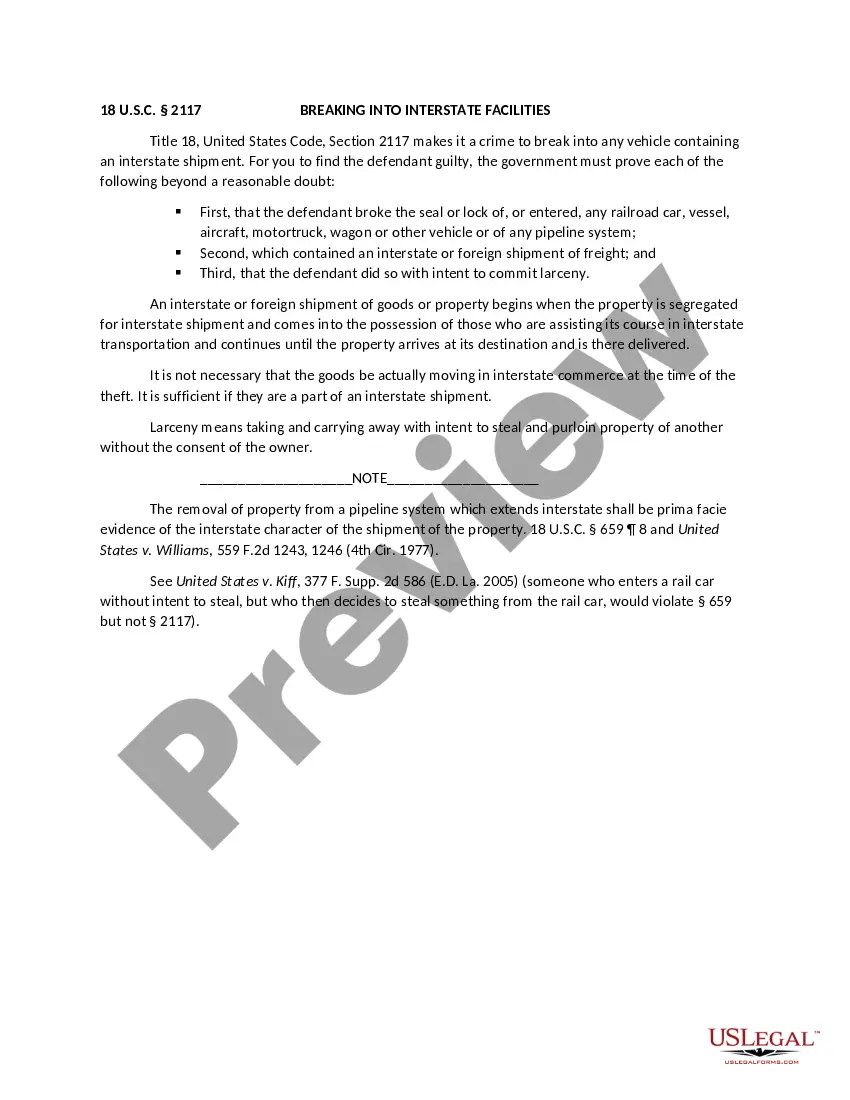
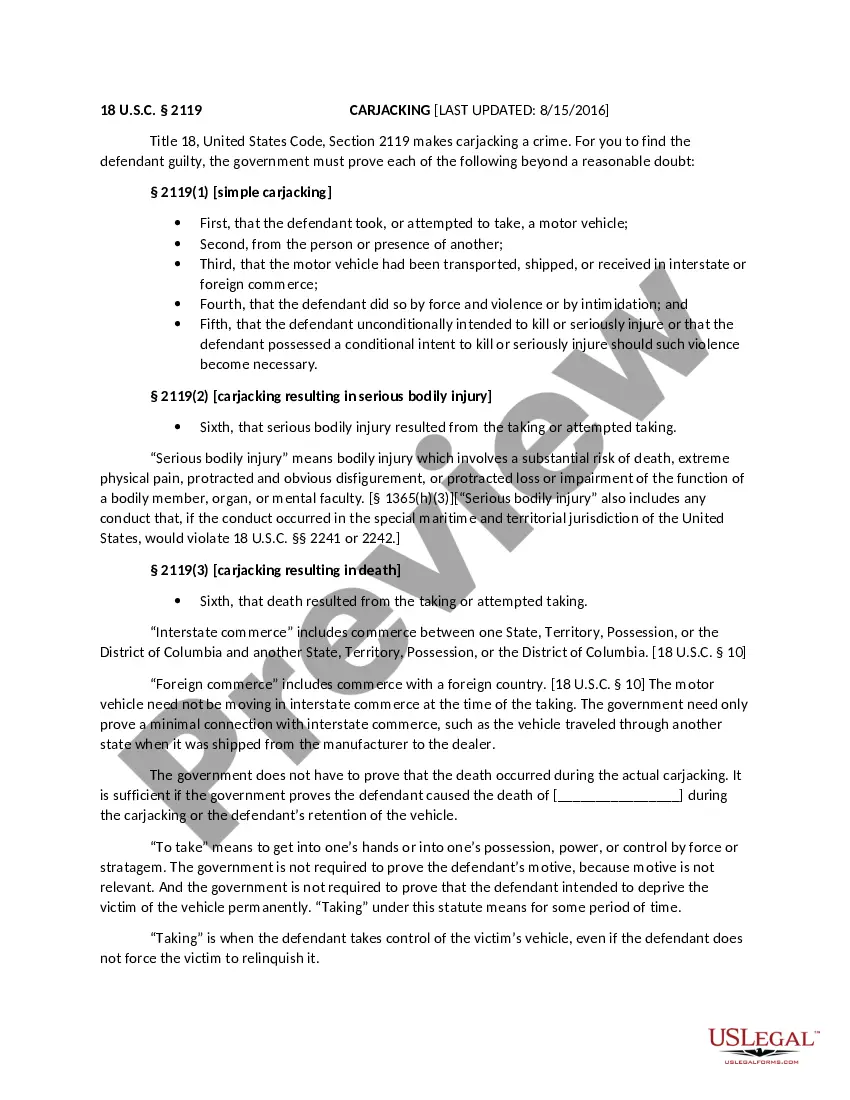
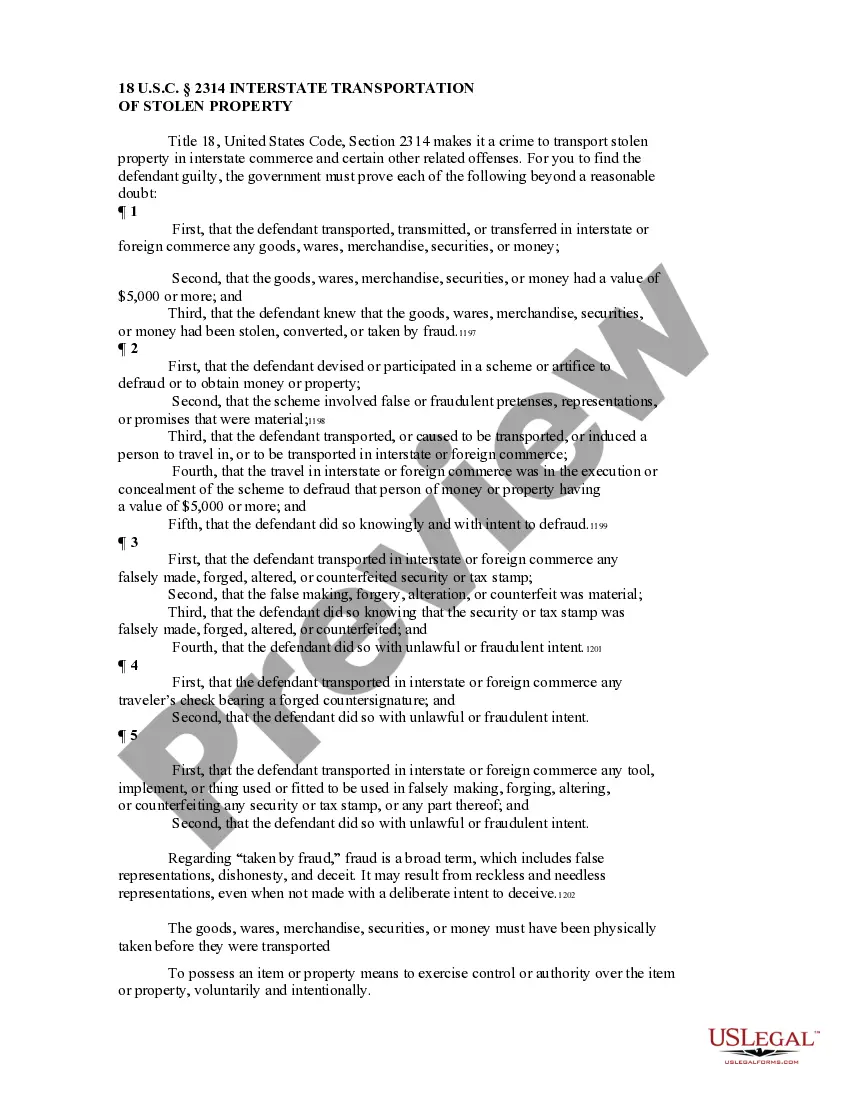
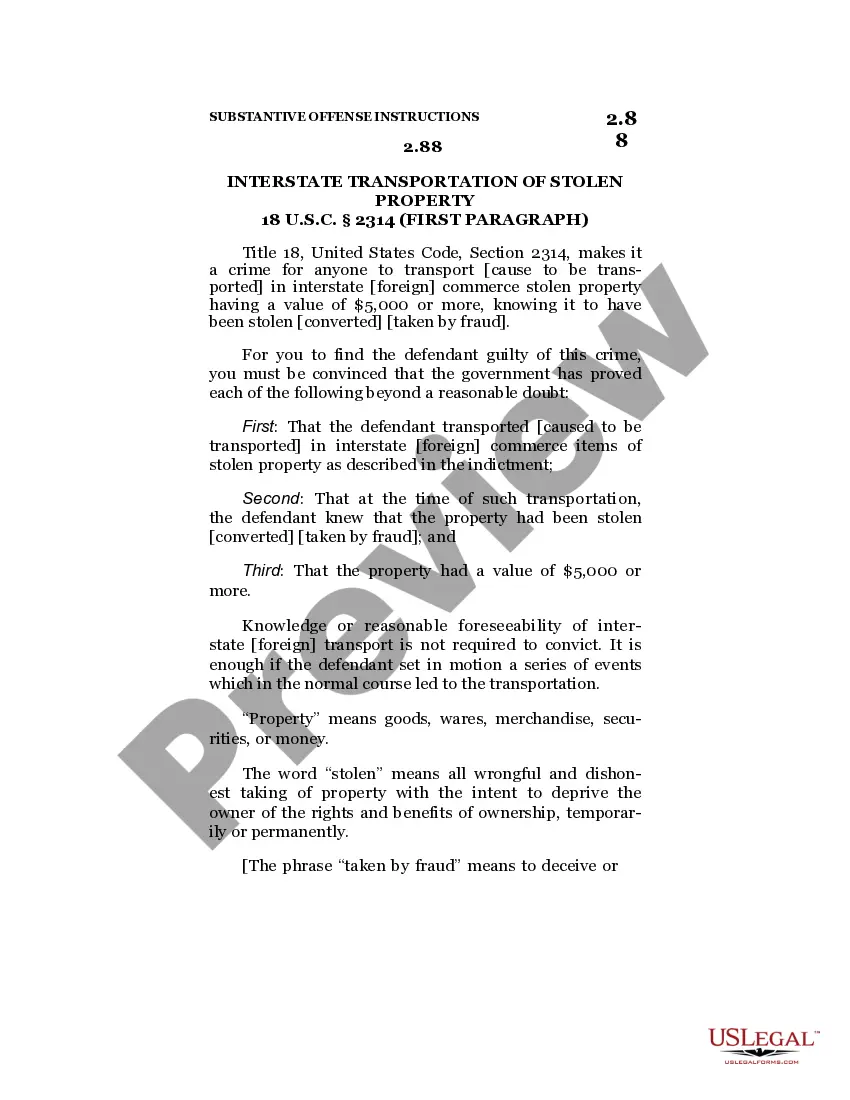
This form provides the official pattern jury instructions specific to the crime of breaking into interstate facilities. It outlines the legal standards necessary for a conviction under Title 18, United States Code, Section 2117. This form is particularly used in federal criminal cases in the District Court of South Carolina and serves to educate jurors on the elements required to find a defendant guilty of this offense.
Form components explained
- Definition of the crime of breaking into interstate facilities.
- Three essential elements the government must prove for a conviction.
- Clarification on the definition of interstate shipment and larceny.
- Information regarding the prima facie evidence concerning pipeline systems.
Common use cases
This form is used during criminal trials where the defendant is accused of breaking into a vehicle or system involved in interstate transportation. It guides jurors in understanding the legal requirements for establishing guilt in cases of larceny committed against goods in transit across state lines.
Who needs this form
- Jurors serving on federal criminal cases related to interstate facility break-ins.
- Prosecutors presenting evidence against defendants accused of this crime.
- Defense attorneys preparing to challenge the government's case.
Instructions for completing this form
- Review the key elements of the offense as defined in the instructions.
- Ensure that the evidence presented meets the burden of proof required for each element.
- Understand the definitions of terms like larceny and interstate shipment that are essential for the case.
- Use these instructions to guide jurors in deliberation following the presentation of evidence.
Does this document require notarization?
In most cases, this form does not require notarization. However, some jurisdictions or signing circumstances might. US Legal Forms offers online notarization powered by Notarize, accessible 24/7 for a quick, remote process.
Get your form ready online
Our built-in tools help you complete, sign, share, and store your documents in one place.
Make edits, fill in missing information, and update formatting in US Legal Forms—just like you would in MS Word.
Download a copy, print it, send it by email, or mail it via USPS—whatever works best for your next step.
Sign and collect signatures with our SignNow integration. Send to multiple recipients, set reminders, and more. Go Premium to unlock E-Sign.
If this form requires notarization, complete it online through a secure video call—no need to meet a notary in person or wait for an appointment.
We protect your documents and personal data by following strict security and privacy standards.

Make edits, fill in missing information, and update formatting in US Legal Forms—just like you would in MS Word.

Download a copy, print it, send it by email, or mail it via USPS—whatever works best for your next step.

Sign and collect signatures with our SignNow integration. Send to multiple recipients, set reminders, and more. Go Premium to unlock E-Sign.

If this form requires notarization, complete it online through a secure video call—no need to meet a notary in person or wait for an appointment.

We protect your documents and personal data by following strict security and privacy standards.
Mistakes to watch out for
- Failing to recognize that the goods do not need to be actively moving for the crime to occur.
- Misunderstanding the intent required for larceny as defined by law.
- Ignoring the prima facie evidence regarding interstate transportation in the context of pipeline systems.
Why complete this form online
- Convenient access to legally vetted templates that are easy to download and use.
- Editability to tailor the document according to specific case needs.
- Reliability in providing up-to-date legal information related to federal criminal cases.
Legal use & context
- This form is legally binding when accurately completed and utilized in appropriate criminal proceedings.
- Understanding the elements outlined can aid in ensuring fair trials and appropriate juror understanding.
Looking for another form?




Form popularity
FAQ
Under Section 16-7-150 of the South Carolina Code of Laws, both slander and libel are considered to stem out of malicious intent to injure a person's character or reputation. If a person is found guilty of slander or libel, they could face fines up to five thousand dollars, and face imprisonment up to a year.
Title 16 - Crimes and Offenses. Chapter 17 - OFFENSES AGAINST PUBLIC POLICY. Section 16-17-510 - Enticing enrolled child from attendance in school.
South Carolina Code Annotated 16-17-530: Public Disorderly Conduct (Misdemeanor) Under South Carolina Code Annotated 16-17-530, the crime of public disorderly conduct is defined as behavior that is outside the bounds of behavior expected of citizens in public areas.
It is unlawful for a person to assault or intimidate a citizen, discharge a citizen from employment or occupation, or eject a citizen from a rented house, land, or other property because of political opinions or the exercise of political rights and privileges guaranteed to every citizen by the Constitution and laws of
The SC 56-5-1538 statute further states that all motor vehicles passing through emergency scenes are required to obey and not interfere with the duties of emergency personnel. Drivers approaching emergency scenes are required to: Keep vehicle under control. Proceed with due caution.
SECTION 16-17-500. Sale or purchase of tobacco products or alternative nicotine products for minors; proof of age; location of vending machines; penalties; smoking cessation programs.
Section 16-17-735 - Persons impersonating officials or law enforcement officers; persons falsely asserting authority of law; offenses; punishment. (2) denies or impedes another in the exercise or enjoyment of any right, privilege, power, or immunity.
This for of Breaking and Entering is a Class H felony and carries up to 15 months in prison for first time offenders, but can be increased substantially based on the circumstances of your case. If you have been charged, it is in your best interest to consult a criminal defense lawyer immediately.