In landlord-tenant law, default refers to the failure of a tenant to timely pay rent due. In anticipation of such an occurence, landlords commonly require a new tenant to pay a security deposit, which may be used to remedy defaults in payment of rent and other monetary obligations under the rental agreement. In general, the landlord is required to give the tenant notice of the default before bringing eviction proceedings or applying security deposit proceeds to the payment in default. The fixing of a definite default date for payment of rent can be critical if it becomes necessary to evict a tenant for a default in the payment of rent. Landlords often require a background and/or reference check on prospective tenants in an attempt to minimize defaults in rent payments.
South Carolina Letter from Landlord to Tenant as Notice of Default on Commercial Lease
Description
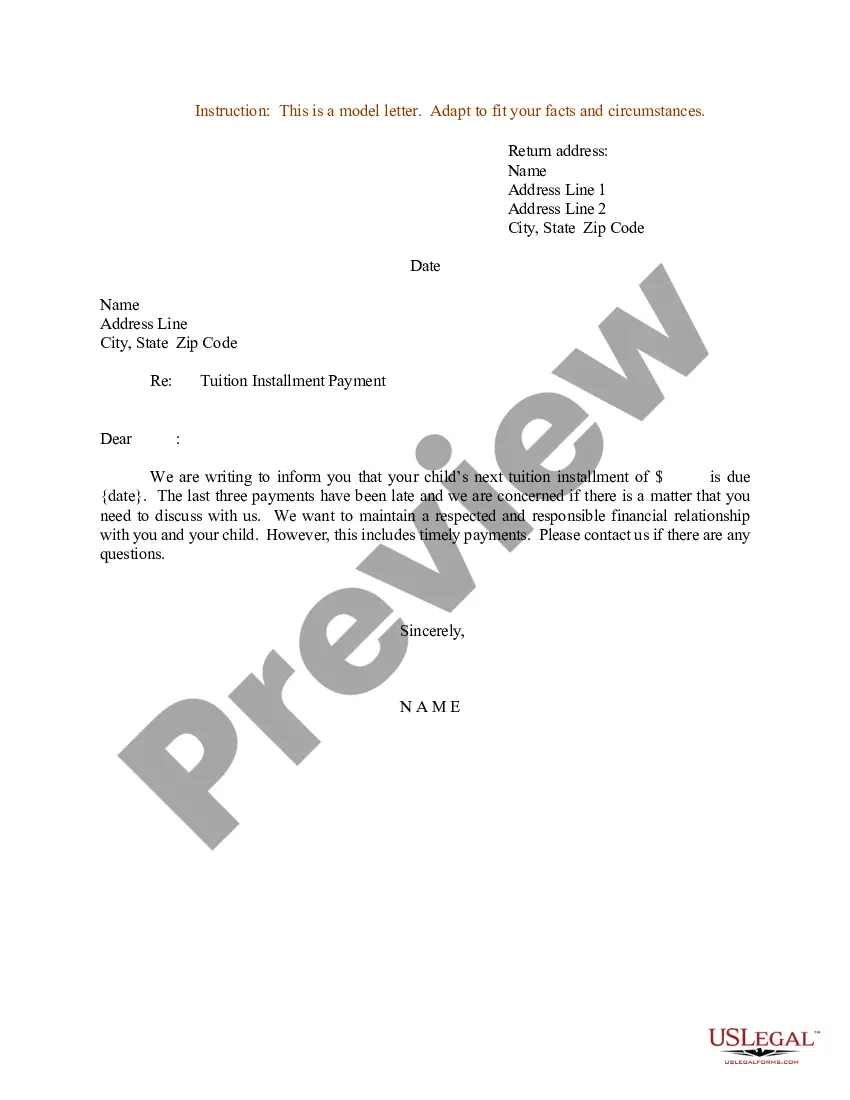
How to fill out South Carolina Letter From Landlord To Tenant As Notice Of Default On Commercial Lease?
Creating papers isn't the most simple task, especially for people who almost never work with legal papers. That's why we recommend making use of accurate South Carolina Letter from Landlord to Tenant as Notice of Default on Commercial Lease templates made by professional attorneys. It gives you the ability to eliminate troubles when in court or dealing with formal institutions. Find the samples you want on our website for top-quality forms and accurate explanations.
If you’re a user with a US Legal Forms subscription, just log in your account. When you are in, the Download button will automatically appear on the template page. After accessing the sample, it’ll be saved in the My Forms menu.
Customers with no an activated subscription can easily create an account. Use this short step-by-step guide to get the South Carolina Letter from Landlord to Tenant as Notice of Default on Commercial Lease:
- Be sure that the sample you found is eligible for use in the state it’s needed in.
- Confirm the file. Make use of the Preview option or read its description (if readily available).
- Buy Now if this form is the thing you need or use the Search field to get a different one.
- Choose a convenient subscription and create your account.
- Use your PayPal or credit card to pay for the service.
- Download your document in a preferred format.
After finishing these easy actions, you are able to fill out the sample in an appropriate editor. Double-check completed information and consider requesting a lawyer to review your South Carolina Letter from Landlord to Tenant as Notice of Default on Commercial Lease for correctness. With US Legal Forms, everything becomes much simpler. Try it out now!
Form popularity
FAQ
For example, the lease may provide that in case of default, the landlord can recover late fees and interest. If the lease is a net lease, it may provide for the landlord to recover such things as property taxes, insurance, utilities, maintenance and repairs.
Dear your landlord or property manager's name, I am writing to inform you I will be vacating my rental unit on date you intend to vacate. This letter meets the 30-day notice requirement outlined in my lease agreement.
Explain the Situation Tell your tenant in straightforward terms what the problem is, and explain that they cannot stay on the property any longer. Describe the Consequences Calmly explain that they will be evicted with necessary court orders if they remain on the property.
Paying the remainder of the rent still owed on the lease in full; Paying a specified amount of liquidated damages as outlined in the contract terms; Paying an additional amount of punitive damages, dependent on local state laws; and/or.
Dear (Name of landlord or manager), This letter constitutes my written (number of days' notice that you need to give based on your lease agreement)-day notice that I will be moving out of my apartment on (date), the end of my current lease. I am leaving because (new job, rent increase, etc.)
A break-early fee is a lump sum payment. The amount of the break-early fee will vary greatly depending upon the commercial tenant's specific circumstances. In exchange for the break-early fee, the landlord will agree to release the commercial tenant from all of its obligations under the commercial lease.
If you're an assured tenant or a protected tenant Your landlord will have to give you notice if they want you to leave. They have to give the reasons why they want to evict you - for example, if you have rent arrears or you've damaged the property. Your landlord will have to go to court and get a court order.
A lease is automatically void when it is against the law, such as a lease for an illegal purpose. In other circumstances, like fraud or duress, a lease can be declared void at the request of one party but not the other.
