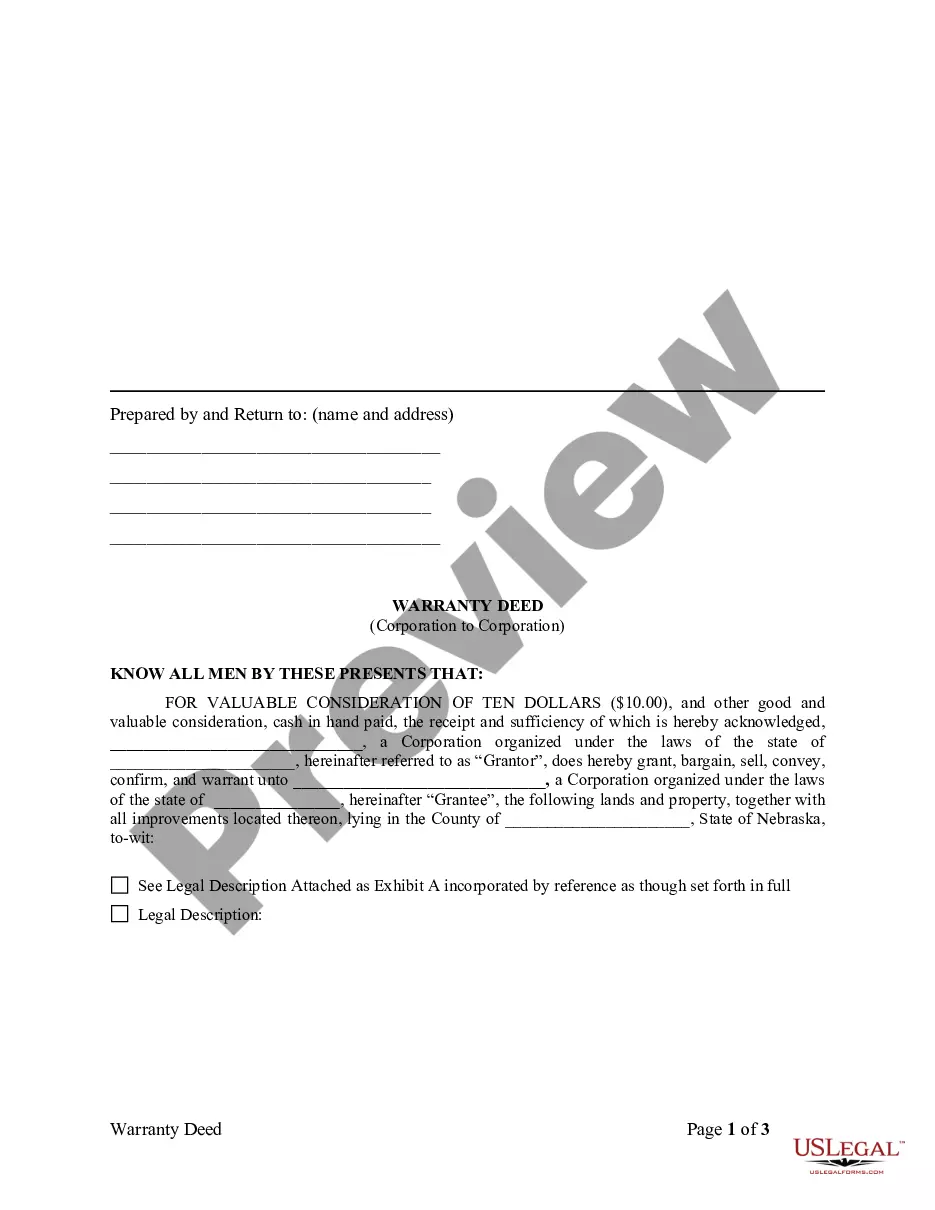
South Carolina Environmental Compliance and Indemnification Undertaking
About this form
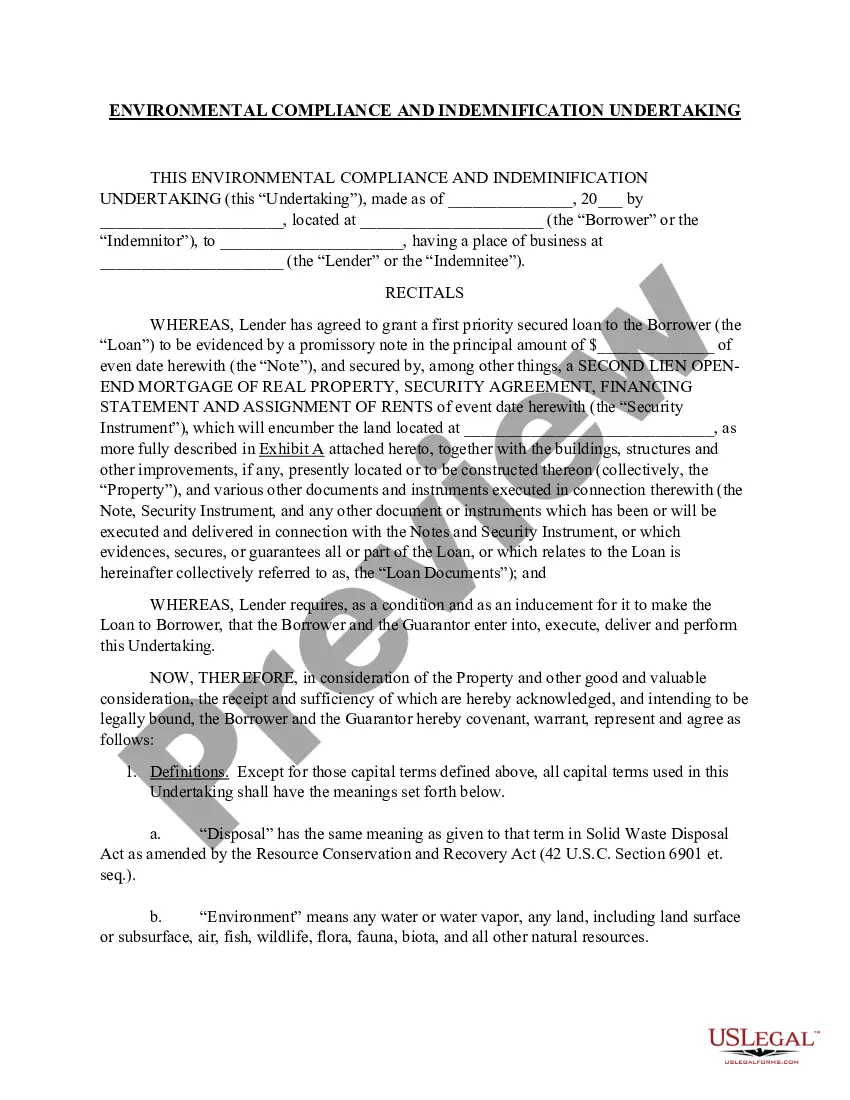
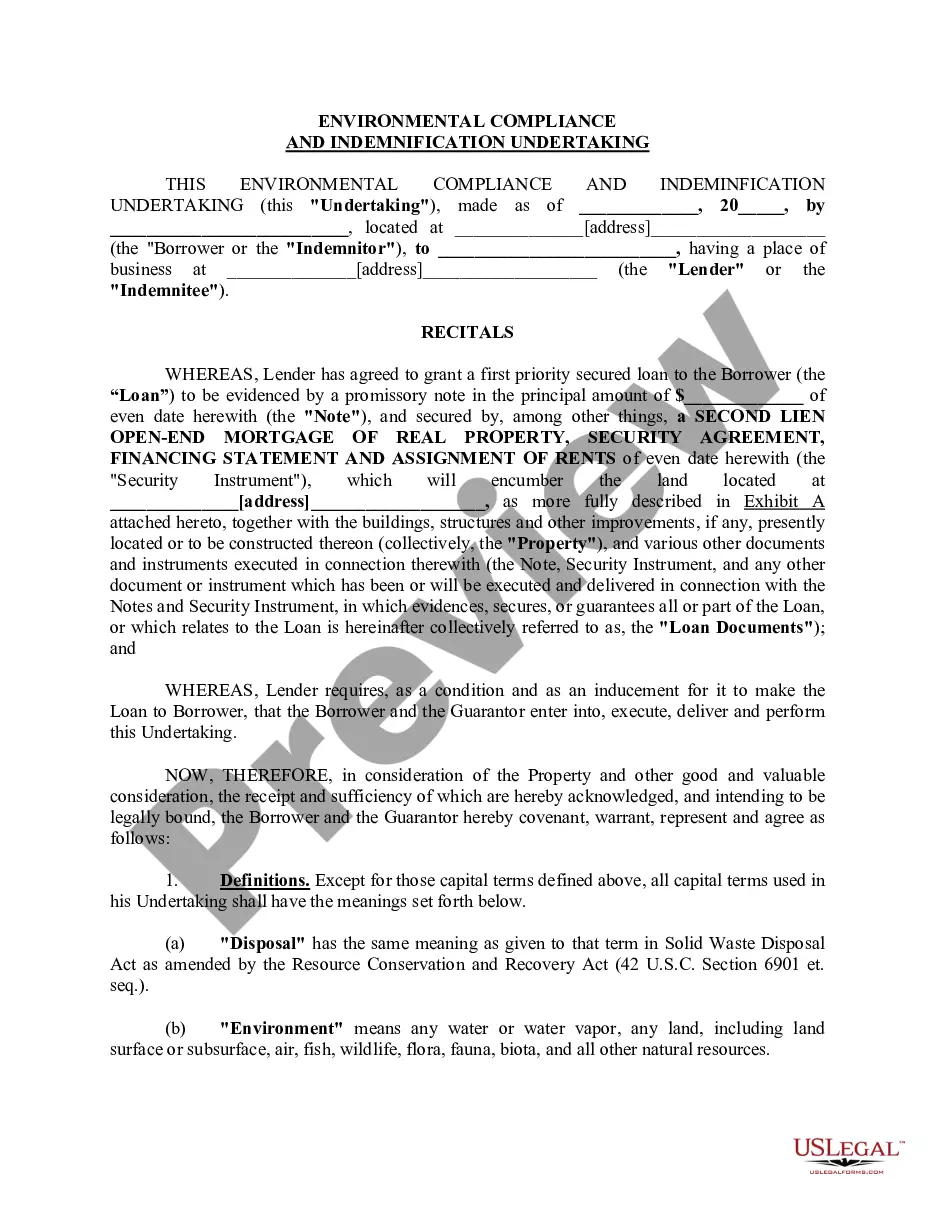
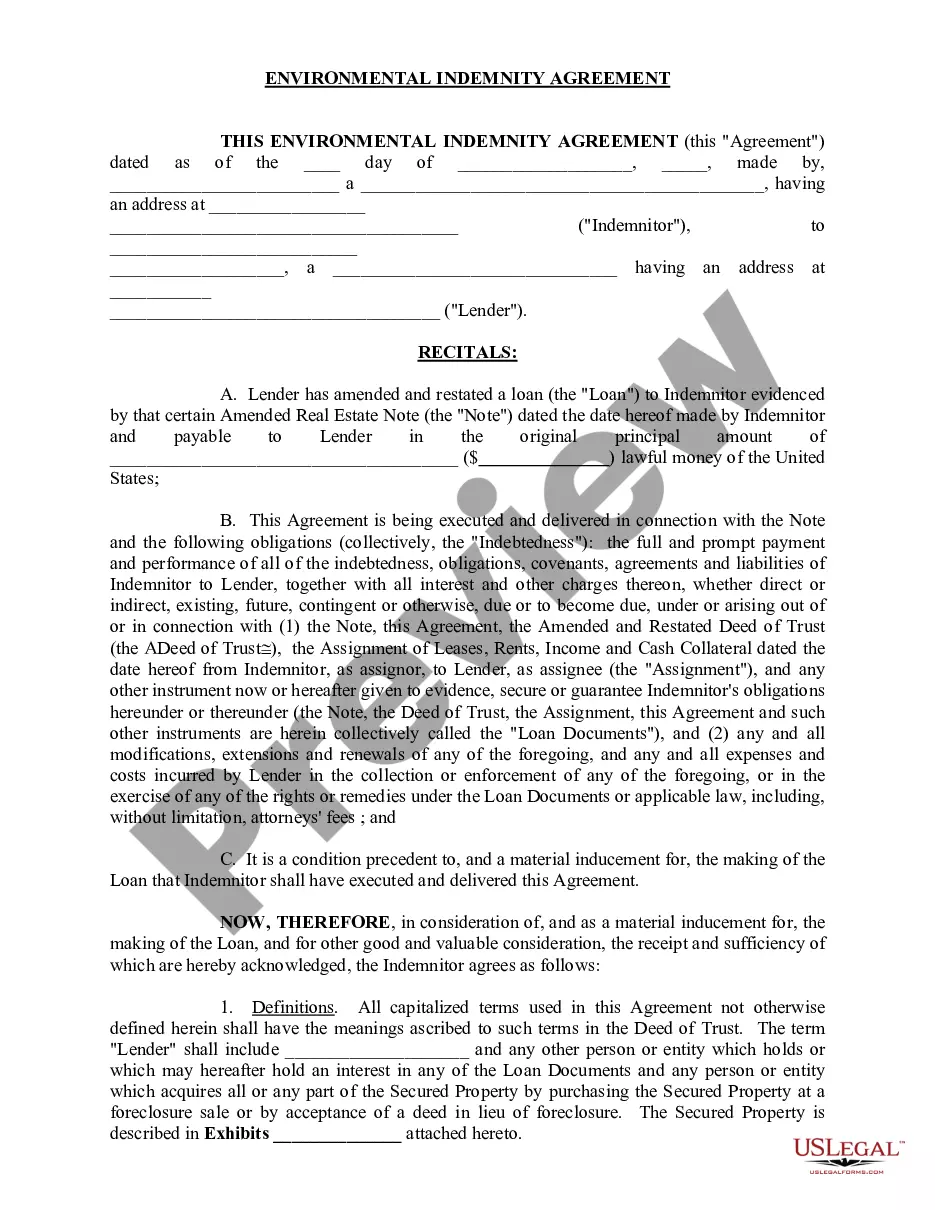
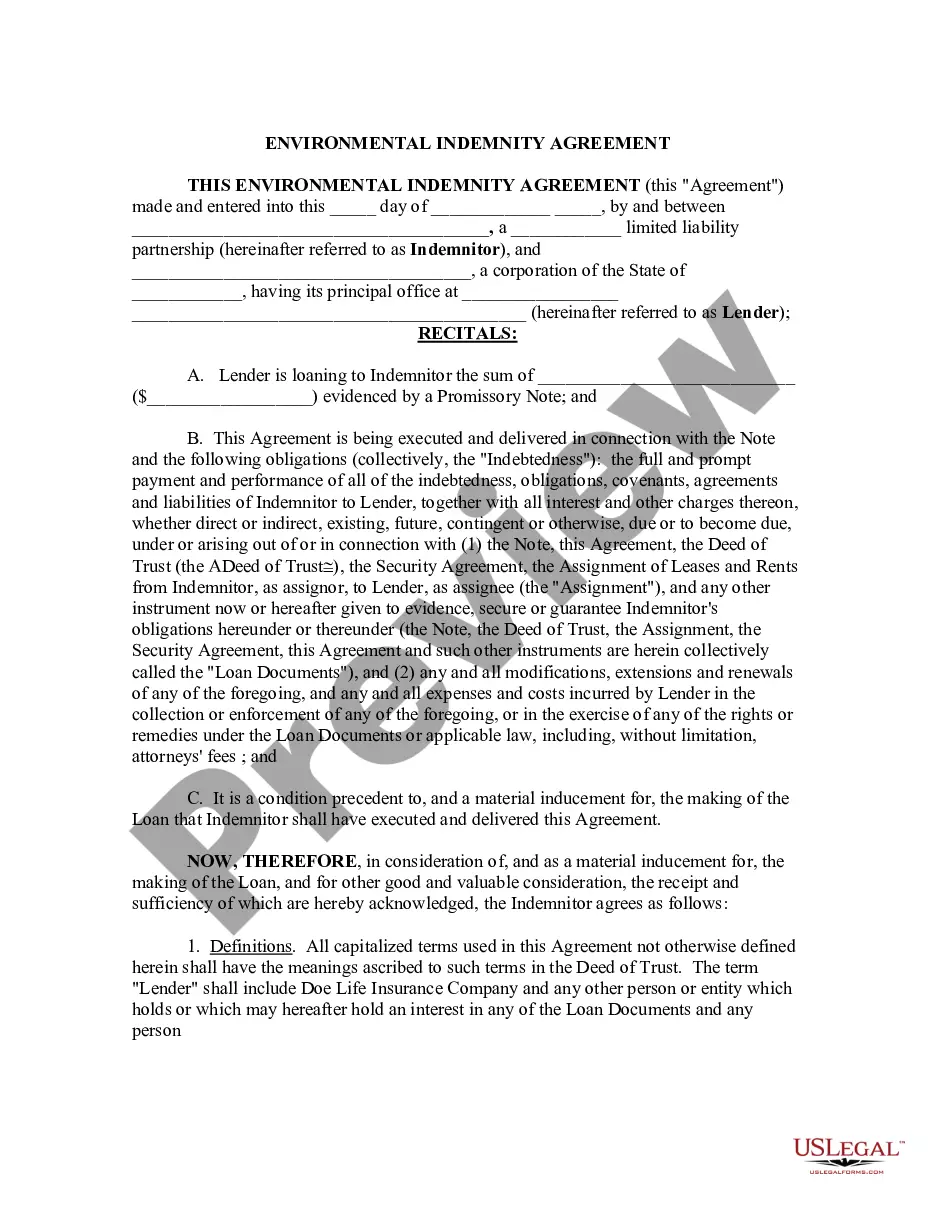
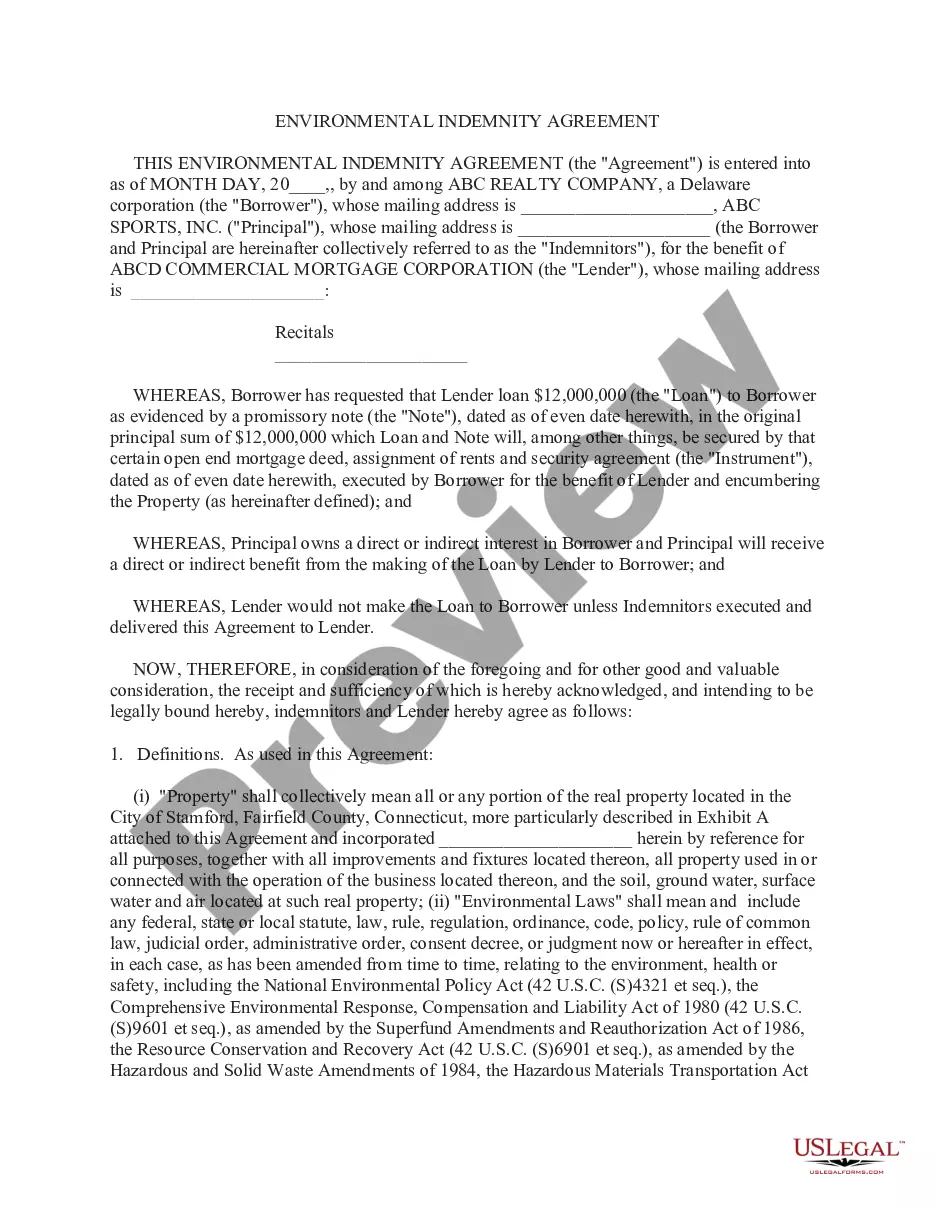
The Environmental Compliance and Indemnification Undertaking is a legal document that outlines an agreement between a borrower and a lender regarding environmental responsibilities and liabilities. This form is particularly important for securing loans tied to real estate, as it ensures that the borrower is accountable for any environmental issues related to the property. In contrast to other loan agreements, this undertaking explicitly addresses environmental compliance and indemnification, which protects the lender from potential liabilities arising from hazardous substances or violations of environmental laws.
Key components of this form
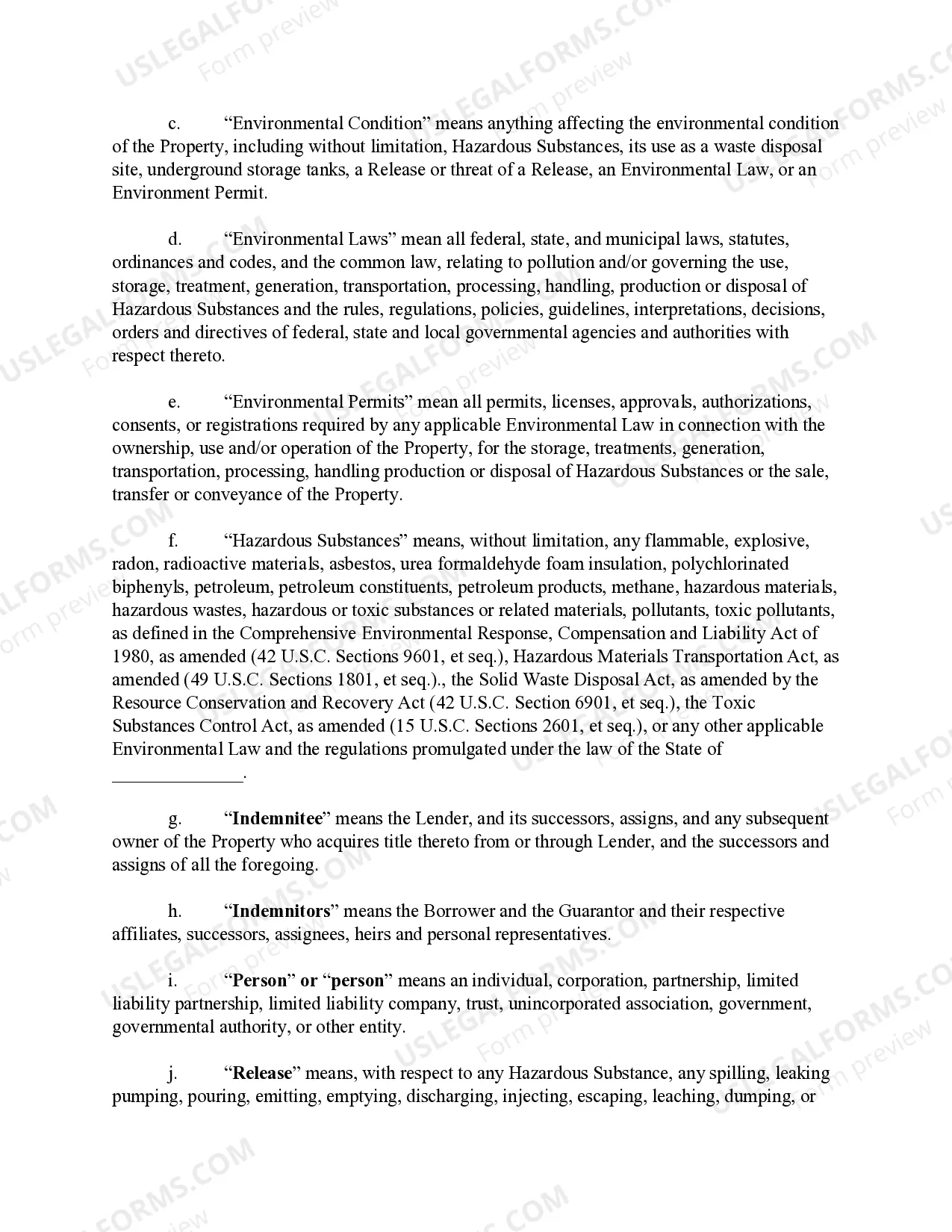
- Definitions of key terms such as "Hazardous Substances" and "Environmental Laws."
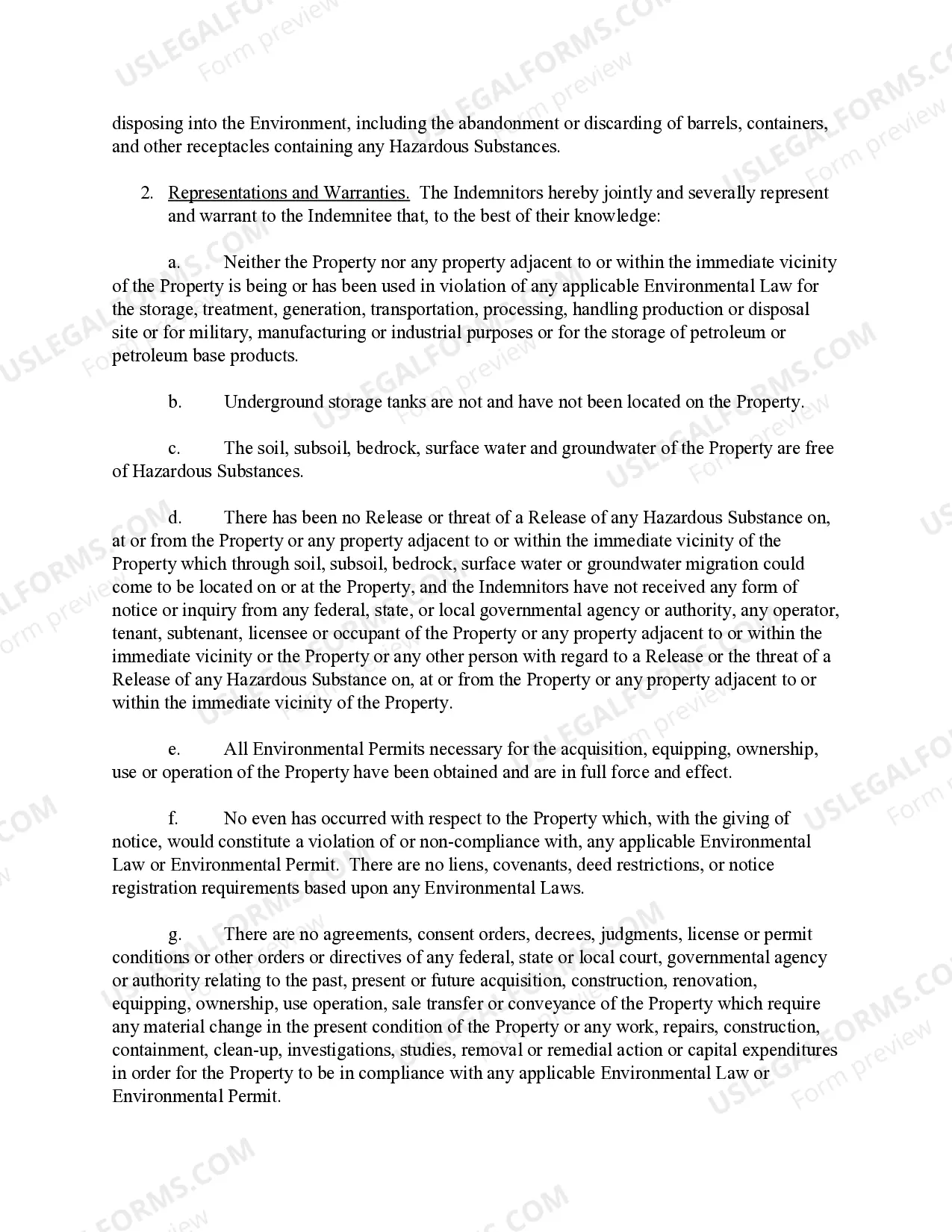
- Representations and warranties by the borrower regarding the property's compliance with environmental laws.
- Covenants where the borrower agrees to maintain the property in accordance with environmental regulations.
- Indemnification clauses to protect the lender from environmental claims and liabilities.
- Provisions outlining the responsibilities of the borrower in the event of a release of hazardous substances.
- Governing law and jurisdiction details for any legal disputes arising from the agreement.



Common use cases
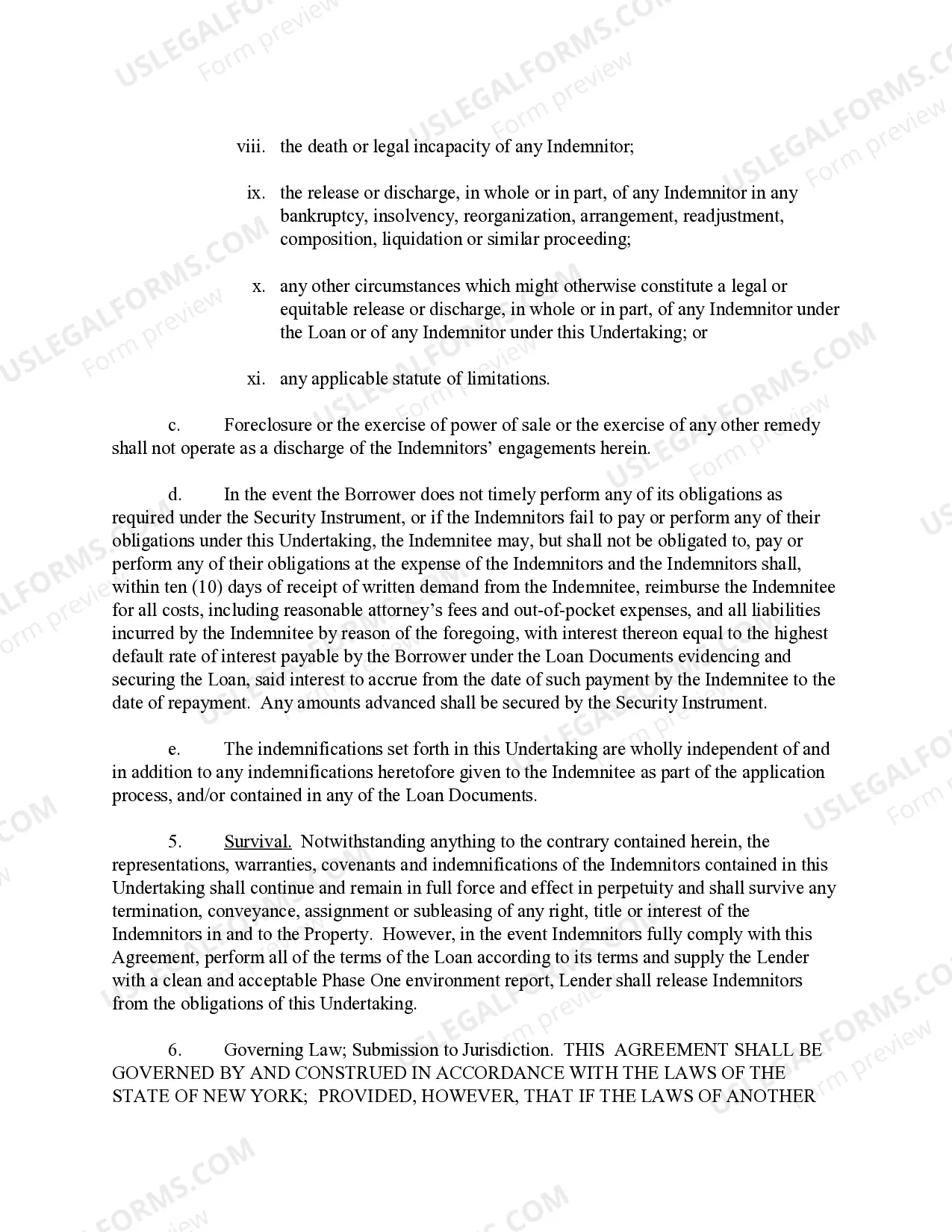
This form should be used in scenarios where a borrower is seeking a secured loan for real estate property, particularly when there may be concerns about environmental conditions. It is crucial for lenders to ensure that borrowers take responsibility for any environmental issues that could affect the property's value and legal compliance. Using this form helps to clarify responsibilities and mitigate risks associated with hazardous substances or environmental regulations.
Who should use this form
- Borrowers seeking to secure loans against real estate property.
- Lenders providing loans that involve properties with potential environmental risks.
- Guarantors who are backing the borrower's obligations regarding environmental compliance.
- Real estate developers or entities involved in transactions with environmental concerns.
Completing this form step by step
- Identify the parties involved, including the borrower and lender, and enter their names and addresses.
- Specify the loan amount and any relevant details about the security instrument used for the loan.
- Provide comprehensive details regarding the property in question, including its location and description.
- Fill in the definitions section, ensuring you understand the terms related to environmental laws and liabilities.
- Review and sign the form, ensuring all parties acknowledge their roles and responsibilities.
Does this document require notarization?
This form does not typically require notarization unless specified by local law. It is recommended to check with legal counsel or local regulations to ensure compliance with any additional requirements that may apply in your jurisdiction.
Get your form ready online
Our built-in tools help you complete, sign, share, and store your documents in one place.
Make edits, fill in missing information, and update formatting in US Legal Forms—just like you would in MS Word.
Download a copy, print it, send it by email, or mail it via USPS—whatever works best for your next step.
Sign and collect signatures with our SignNow integration. Send to multiple recipients, set reminders, and more. Go Premium to unlock E-Sign.
If this form requires notarization, complete it online through a secure video call—no need to meet a notary in person or wait for an appointment.
We protect your documents and personal data by following strict security and privacy standards.

Make edits, fill in missing information, and update formatting in US Legal Forms—just like you would in MS Word.

Download a copy, print it, send it by email, or mail it via USPS—whatever works best for your next step.

Sign and collect signatures with our SignNow integration. Send to multiple recipients, set reminders, and more. Go Premium to unlock E-Sign.

If this form requires notarization, complete it online through a secure video call—no need to meet a notary in person or wait for an appointment.

We protect your documents and personal data by following strict security and privacy standards.
Mistakes to watch out for
- Failing to accurately define key terms related to environmental compliance.
- Not providing complete details about the property being used as collateral.
- Omitting required signatures from all parties involved in the agreement.
- Assuming that state-specific regulations do not apply to the undertaking.
- Neglecting to keep copies of the completed form for personal records.
Why use this form online
- Convenience of accessing and completing the form at any time without the need for in-person visits.
- Editability allows users to save their progress and return to the form whenever needed.
- Increased reliability through the use of professionally drafted templates ensuring legal compliance.
- Quick download options enable immediate use after completion.
- Support and guidance are readily available throughout the form-filling process.
Looking for another form?









Form popularity
FAQ
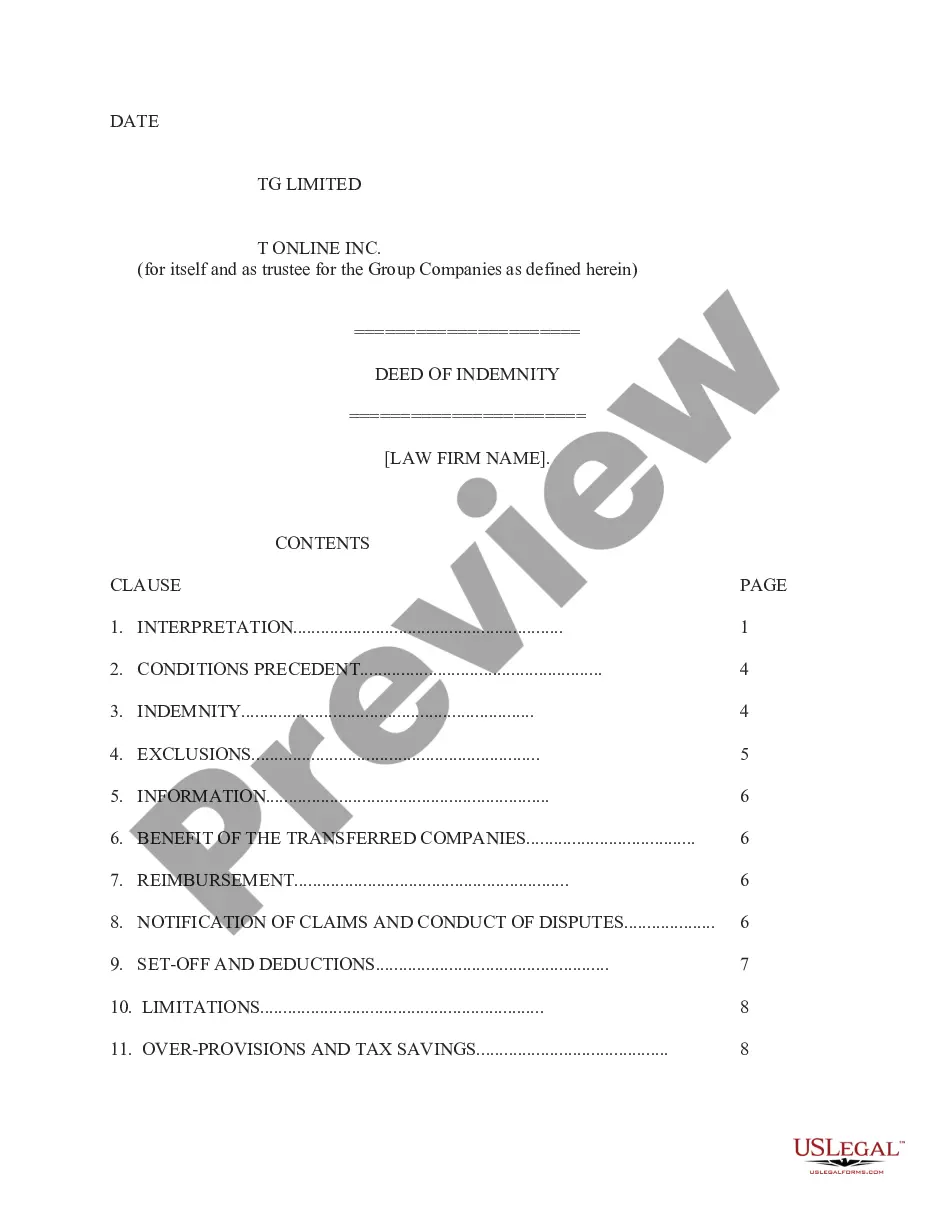
Indemnity is compensation paid by one party to another to cover damages, injury or losses.An example of an indemnity would be an insurance contract, where the insurer agrees to compensate for any damages that the entity protected by the insurer experiences.
Company/Business/Individual Name shall fully indemnify, hold harmless and defend _______ and its directors, officers, employees, agents, stockholders and Affiliates from and against all claims, demands, actions, suits, damages, liabilities, losses, settlements, judgments, costs and expenses (including but not
Building Blocks of an Indemnification Clause. Typical indemnification provisions will be long sentences with many clauses, legal-sounding words, and long lists of specific details. Insurance Implications and Other Contractual Matters. Other Technical Elements of an Indemnification Provision. Takeaway.
It's still your business decision whether you sign them or not, but you should do so only where it is a critical contract that you have no way of modifying or negotiating changes. In contrast, the best kind of Indemnity Agreement is commonly called a Mutual Indemnity Agreement or a Mutual Hold Harmless Provision.