South Carolina Excavator Contract for Contractor
Understanding this form
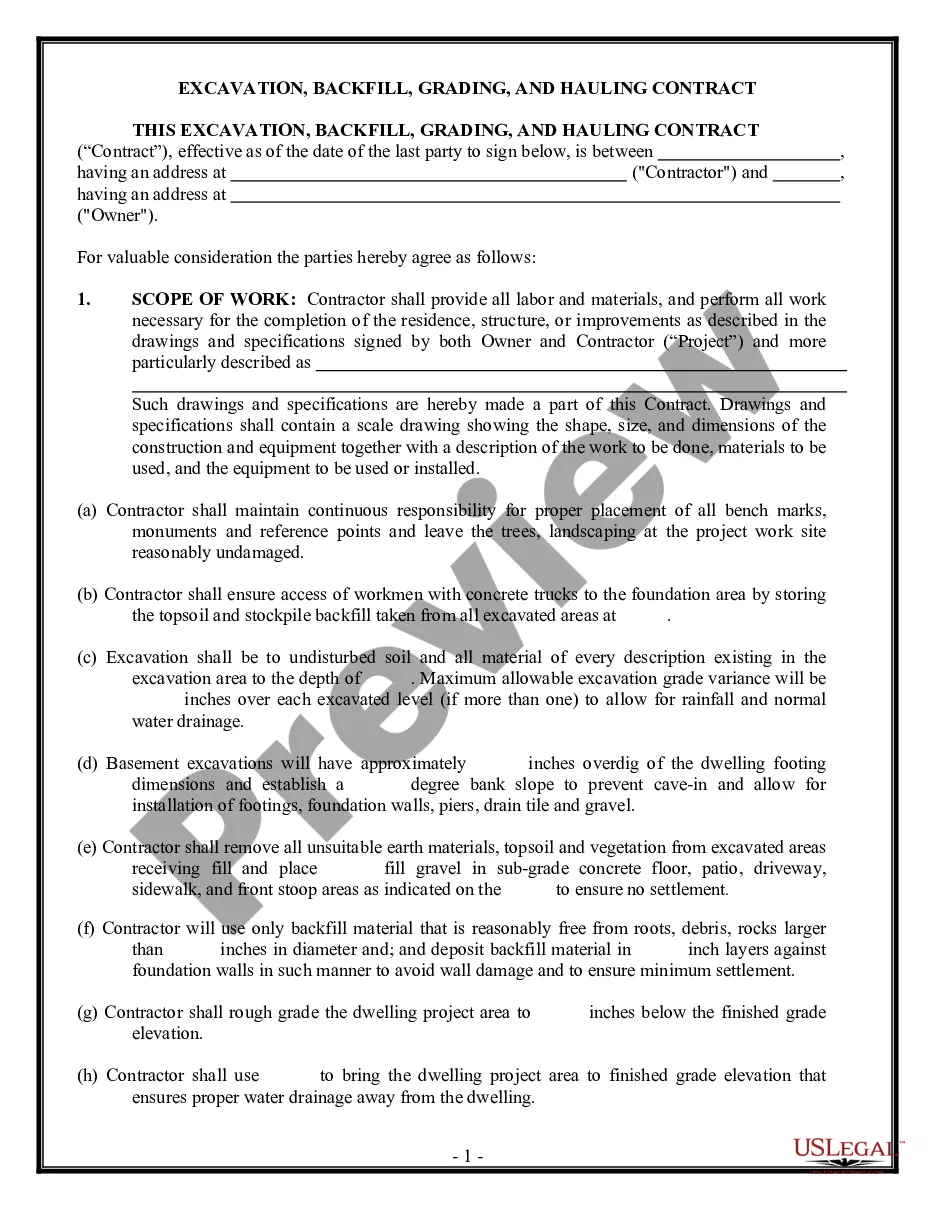
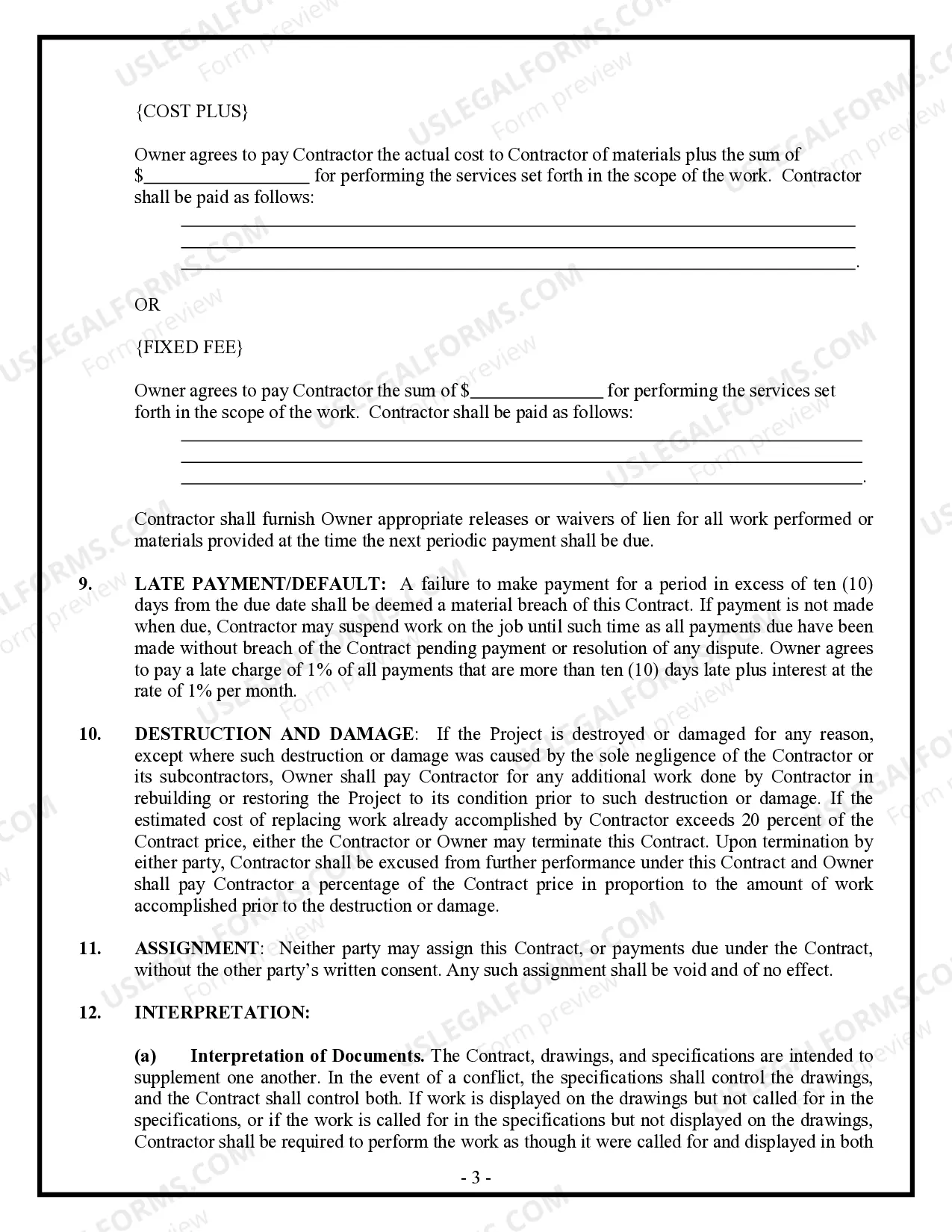
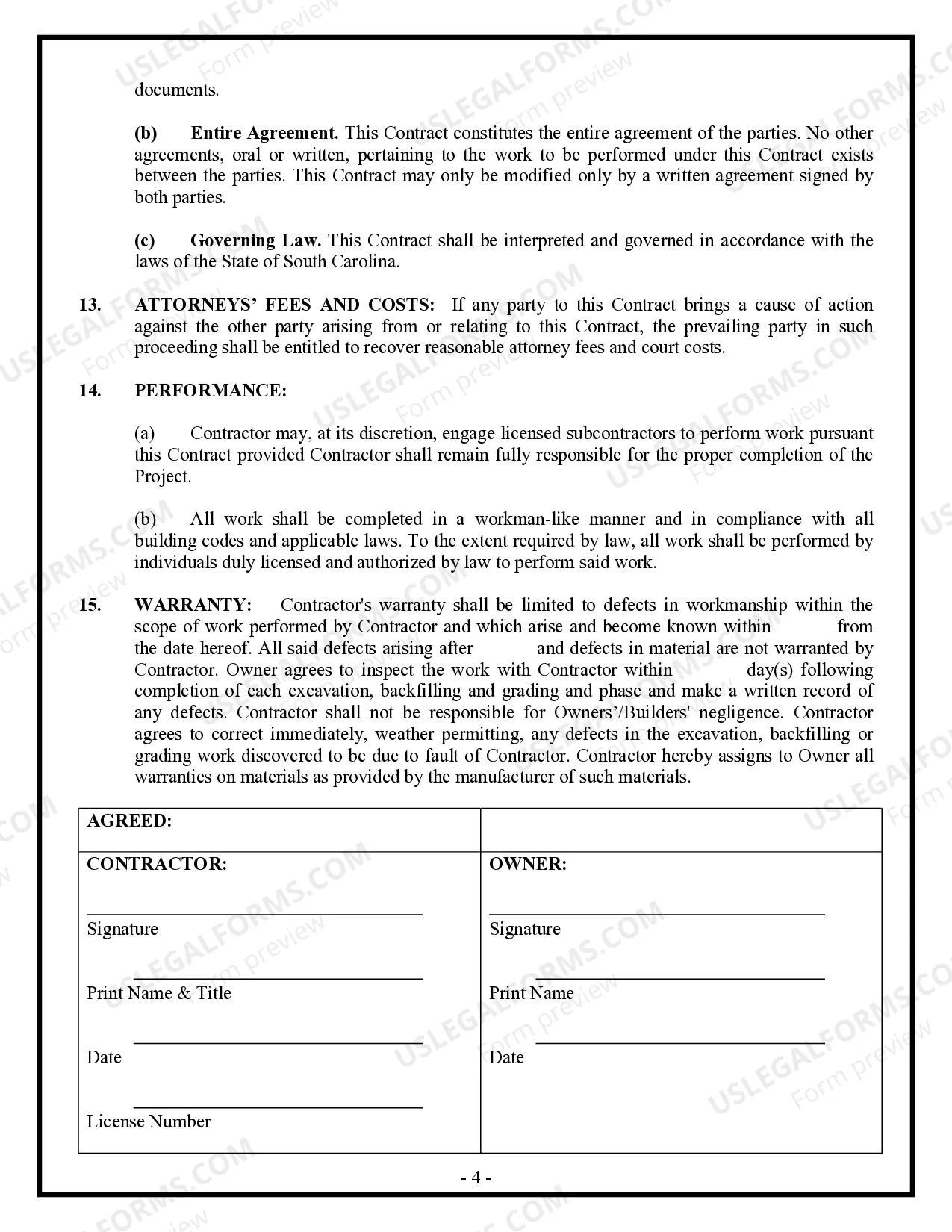
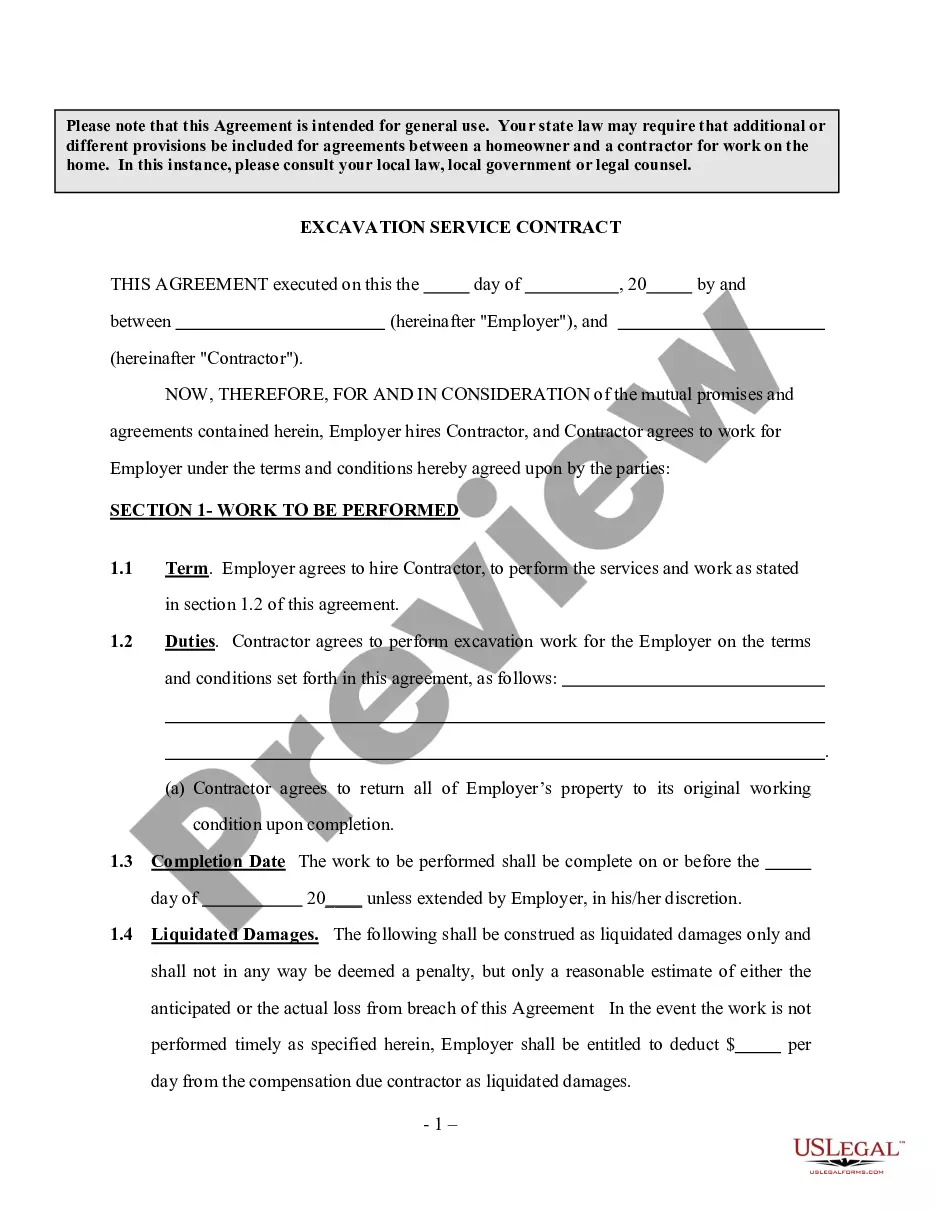
The Excavator Contract for Contractor is a legally binding document designed to formalize the agreement between excavator contractors and property owners. This contract outlines essential terms, including payment arrangements, project scope, insurance requirements, and responsibilities of both parties. It is tailored to comply with the legal standards of South Carolina, ensuring that users follow relevant state laws while engaging in excavating projects.
Key parts of this document
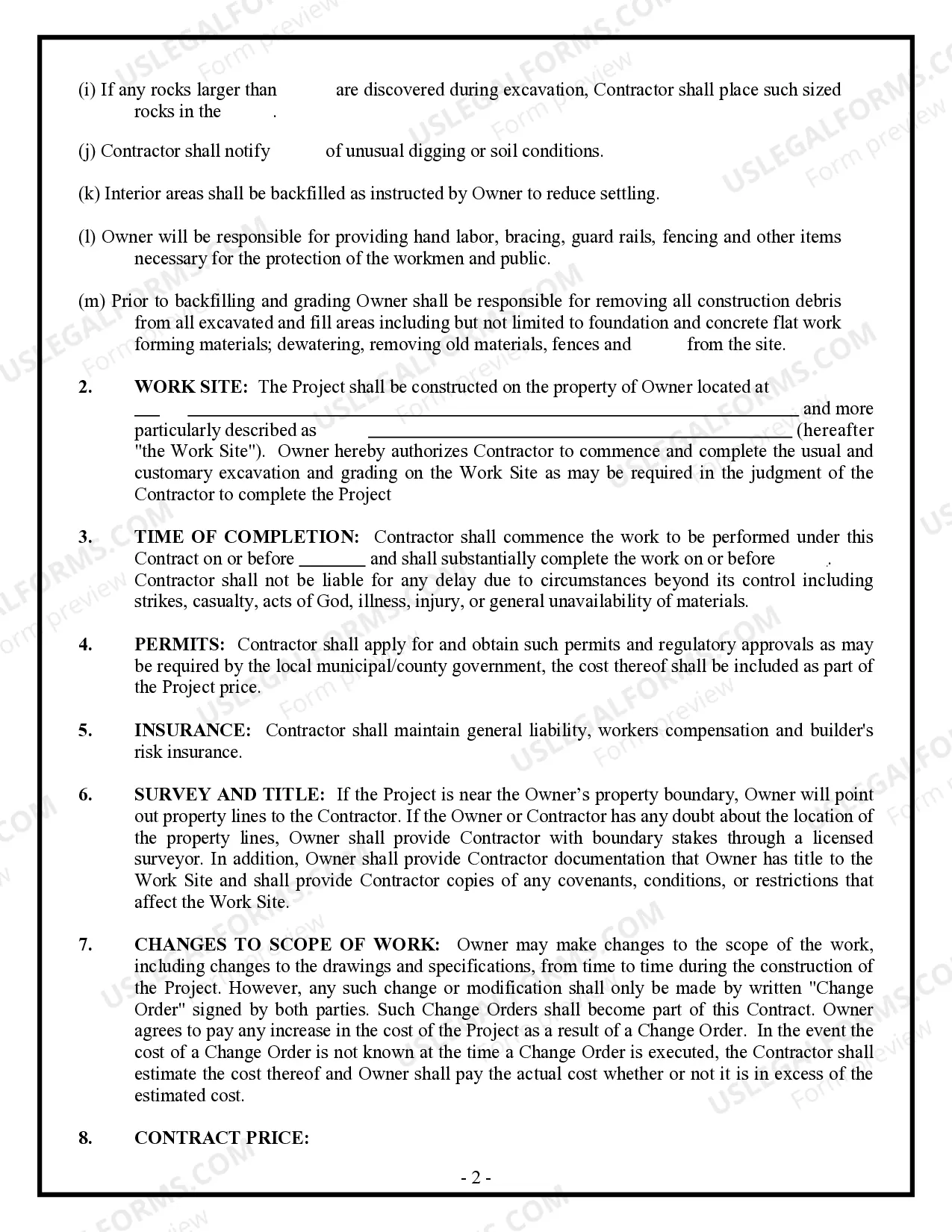
- Responsibility of the owner for hand labor, guard rails, and other protective measures
- Permits required for local municipal approval, included in project costs
- Contractor's obligation to maintain various types of insurance, including general liability
- Requirements for surveying property lines if the project is near boundaries
- Provisions for making changes to the scope of work through written change orders


When to use this form
This form is necessary when a property owner intends to hire an excavator contractor for specific projects, such as grading, trenching, or site preparation. It is particularly useful when there are varying payment arrangements, like cost-plus or fixed fees, and when clear responsibilities are needed for both parties throughout the project lifecycle.
Who should use this form
This contract is suitable for:
- Property owners looking to hire excavator contractors for construction projects
- Excavator contractors wishing to establish clear terms of work with clients
- Real estate developers managing excavation projects that require detailed agreements
How to prepare this document
- Identify the parties involved, including the property owner and the excavator contractor.
- Specify the project details, including the scope of work and payment terms.
- Enter the required permits and insurance information as provided by the contractor.
- Include any additional terms related to changes in the project scope with clear provisions for change orders.
- Sign and date the contract to finalize the agreement between the parties.
Is notarization required?
In most cases, this form does not require notarization. However, some jurisdictions or signing circumstances might. US Legal Forms offers online notarization powered by Notarize, accessible 24/7 for a quick, remote process.
Get your form ready online
Our built-in tools help you complete, sign, share, and store your documents in one place.
Make edits, fill in missing information, and update formatting in US Legal Forms—just like you would in MS Word.
Download a copy, print it, send it by email, or mail it via USPS—whatever works best for your next step.
Sign and collect signatures with our SignNow integration. Send to multiple recipients, set reminders, and more. Go Premium to unlock E-Sign.
If this form requires notarization, complete it online through a secure video call—no need to meet a notary in person or wait for an appointment.
We protect your documents and personal data by following strict security and privacy standards.

Make edits, fill in missing information, and update formatting in US Legal Forms—just like you would in MS Word.

Download a copy, print it, send it by email, or mail it via USPS—whatever works best for your next step.

Sign and collect signatures with our SignNow integration. Send to multiple recipients, set reminders, and more. Go Premium to unlock E-Sign.

If this form requires notarization, complete it online through a secure video call—no need to meet a notary in person or wait for an appointment.

We protect your documents and personal data by following strict security and privacy standards.
Common mistakes
- Failing to clearly define the scope of work, leading to misunderstandings later.
- Not securing necessary permits before commencing the work.
- Neglecting to include provisions for change orders, which can result in disputes over project costs.
Benefits of using this form online
- Easy access: Download and use the form instantly without needing to visit a legal office.
- Editability: Customize the contract to meet specific project needs prior to signing.
- Compliance: Ensure the contract meets South Carolina laws, reducing the risk of legal issues.
Looking for another form?

Form popularity
FAQ
FILE A WRITTEN APPLICATION. First things first! SUBMIT A CERTIFIED CHECK. SUBMIT AN AFFIDAVIT. PASS THE EXAM. PAY THE LICENSE FEE.
SC Regulation 117-314.2 states: Building materials when purchased by builders, contractors, or landowners for use in adding to, repairing or altering real property are subject to either the sales or use tax at the time of purchase by such builder, contractor, or landowner.
Per South Carolina state law, a general handyman does not need a license to perform basic repair and maintenance tasks for homeowners. However, one does need to register with the South Carolina Department of Labor, Licensing and Regulation.
A handyman, under the classification of Residential Specialty Contractor, does not need a license to work in South Carolina. However, you will need to register with the South Carolina Department of Labor, Licensing and Regulation.
SC Regulation 117-174.191 reads: (a) When repairs require only service or services with the use of an inconsequential amount of materials, the amount received is not subject to tax.
FILE A WRITTEN APPLICATION. First things first! SUBMIT A CERTIFIED CHECK. SUBMIT AN AFFIDAVIT. PASS THE EXAM. PAY THE LICENSE FEE.
A certified contractor passed the state licensing examination. Certified contractors can work anywhere within the state in which they are licensed. A registered contractor is registered by a local county or municipality and receives a certificate of competency from the Electrical Contractors' Licensing Board.
In South Carolina, the South Carolina Department of Labor, Licensing and Regulations is responsible for the licensing of all contractors. General, mechanical, specialty and manufactured housing contractors must be licensed in order to work in the state.