Rhode Island Last Will and Testament for other Persons
What is this form?
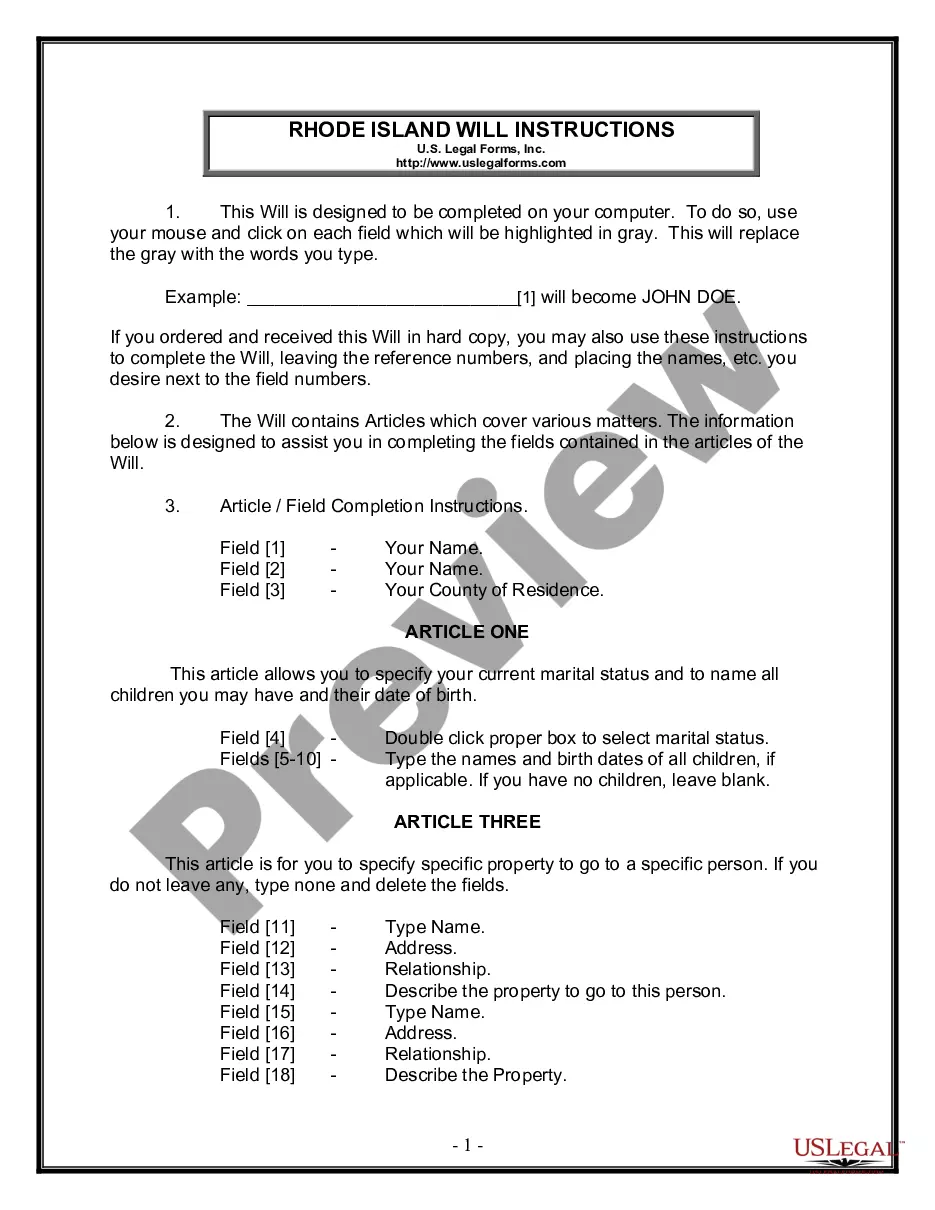
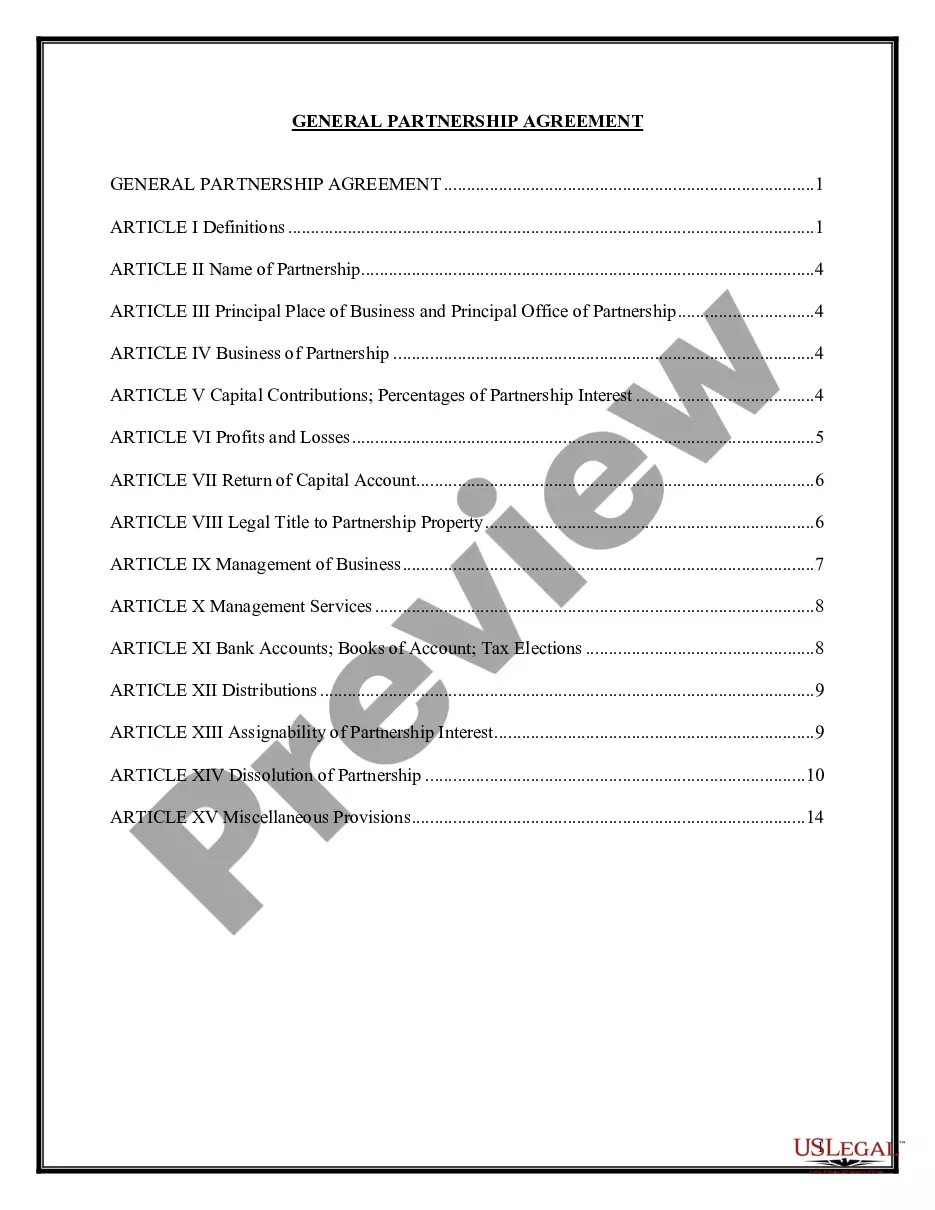
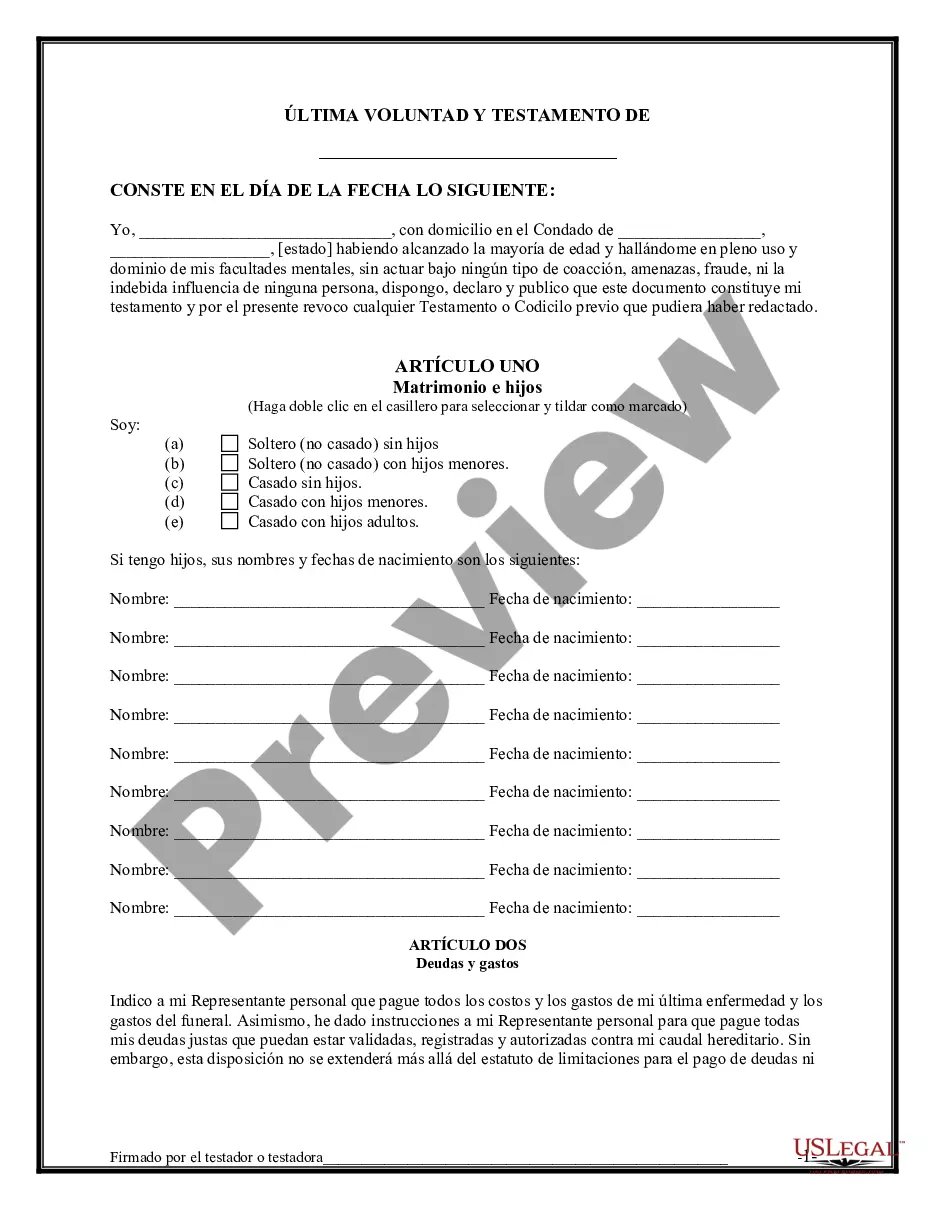
The Last Will and Testament for Other Persons is a legal document designed to specify the distribution of your assets after death. This form outlines who will inherit your property, appoints executors, and can include provisions for guardianship of minor children. It serves as a tailored alternative for those who cannot find an existing will template, and is specifically designed for residents of Rhode Island.
What’s included in this form
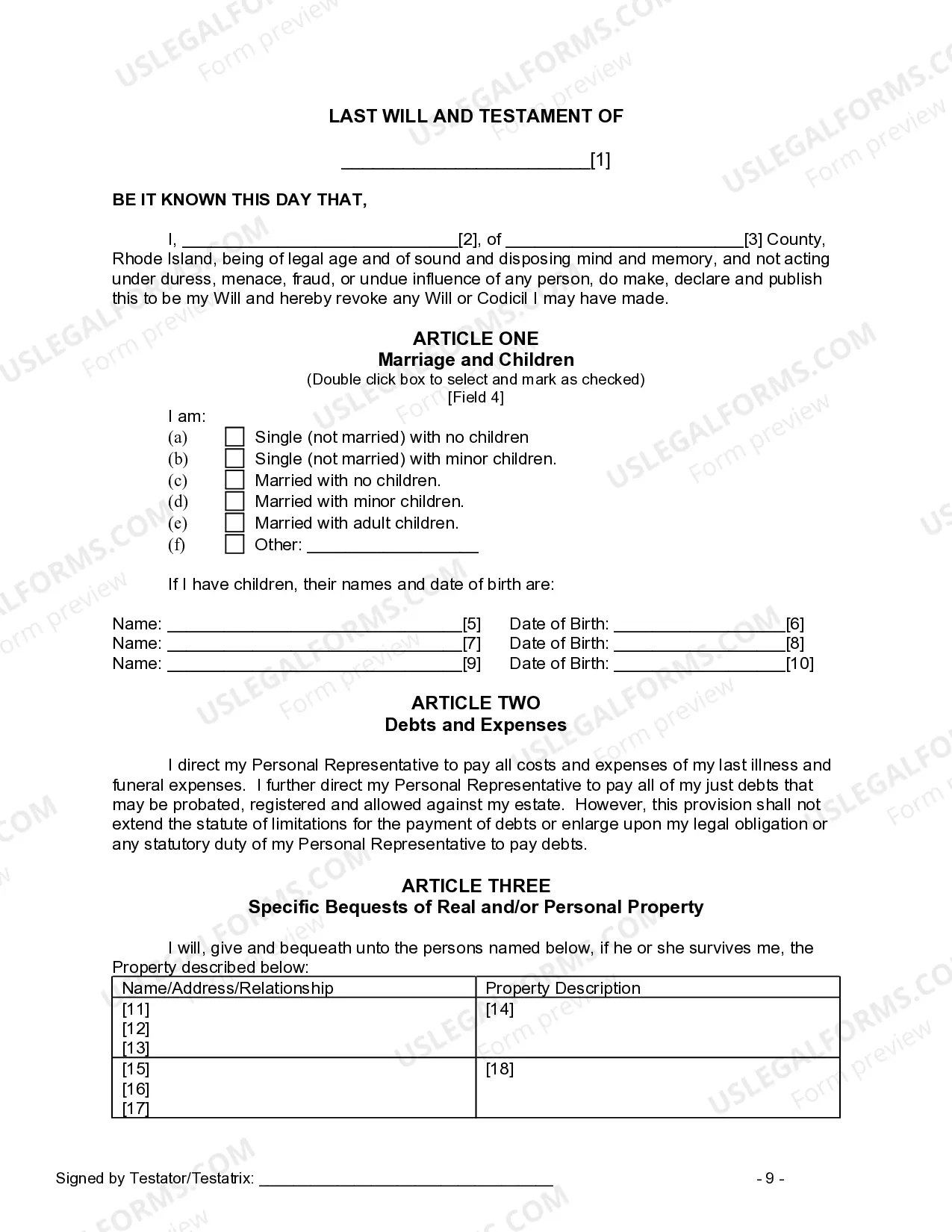
- Your name and residence information
- Marital status and details of children
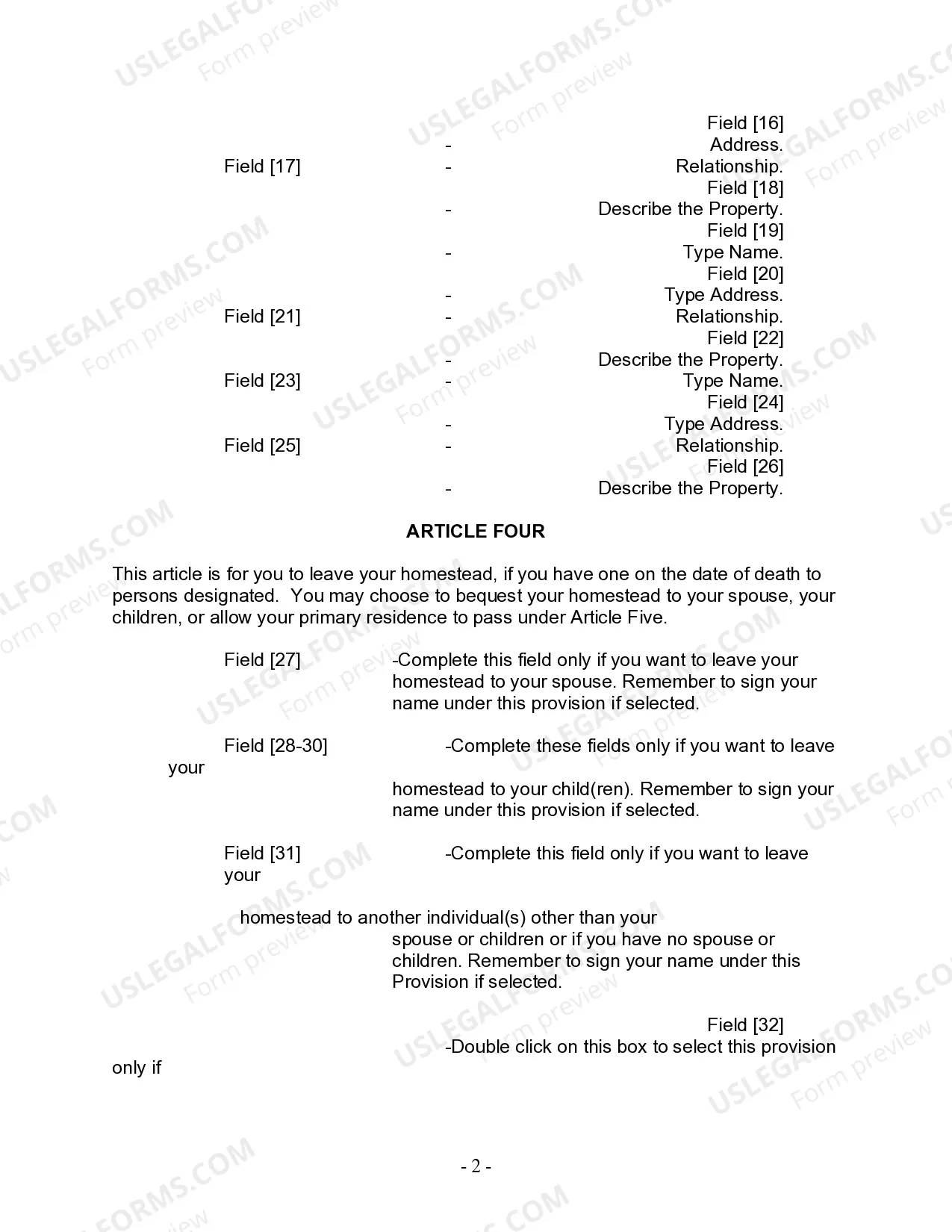
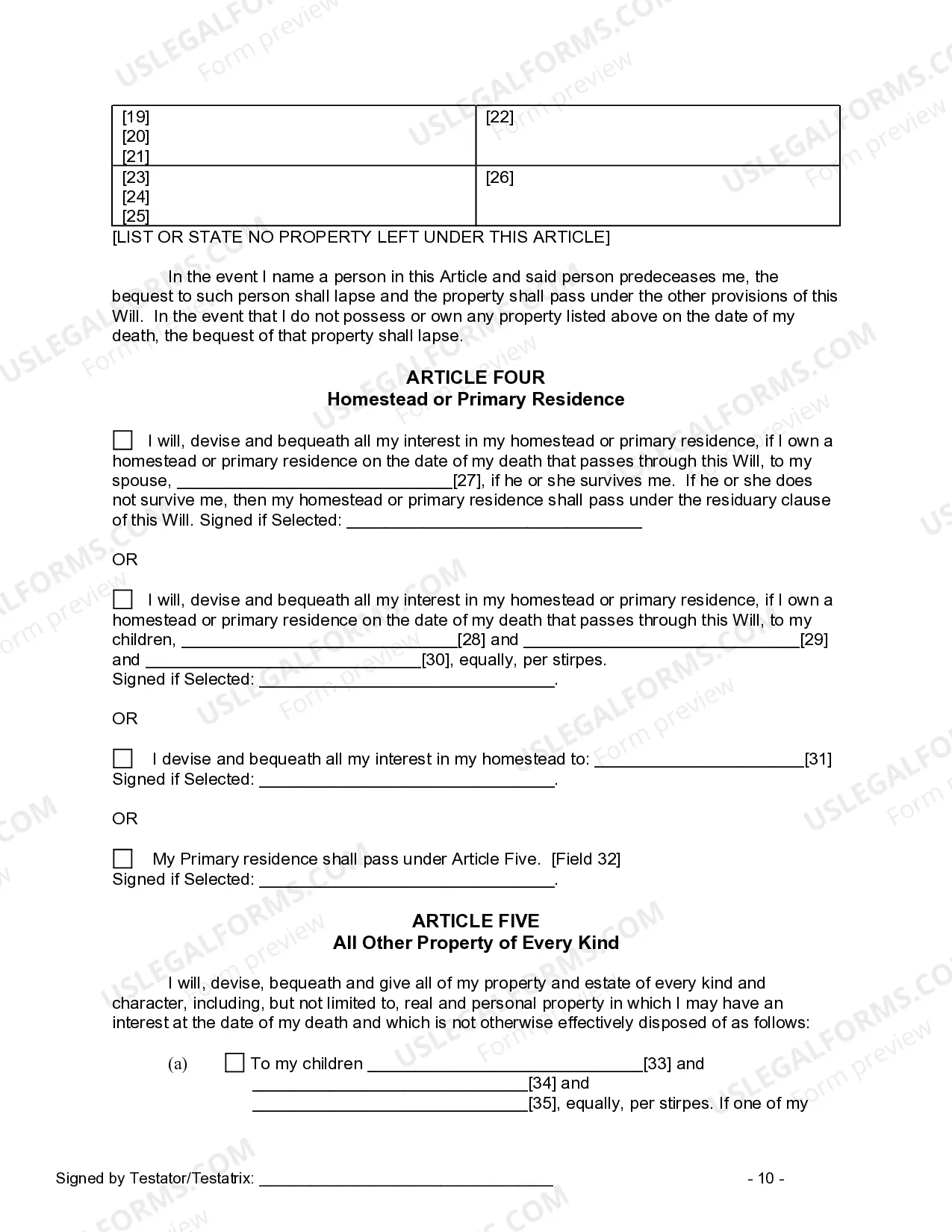
- Specific bequests of property to named individuals
- Instructions for disposing of your primary residence
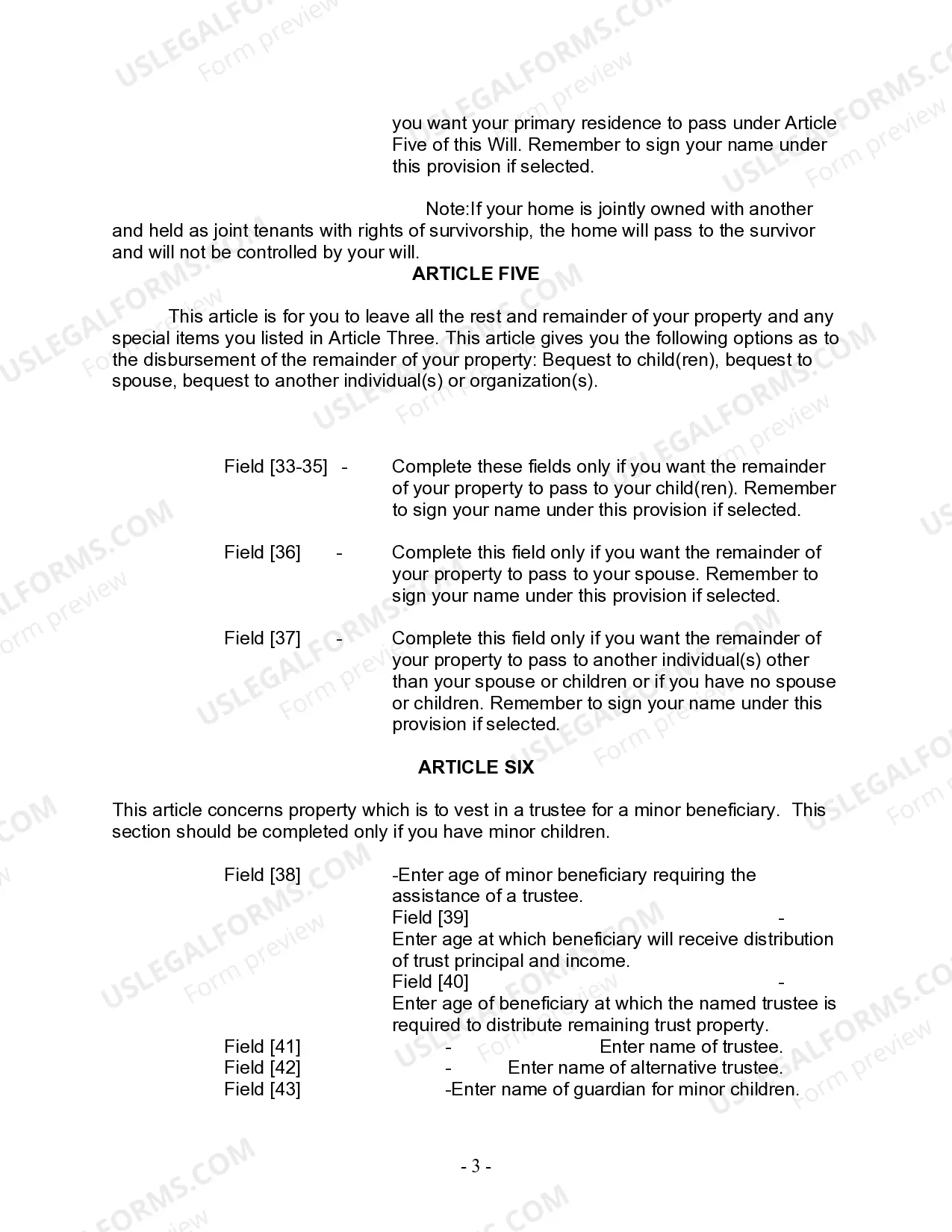
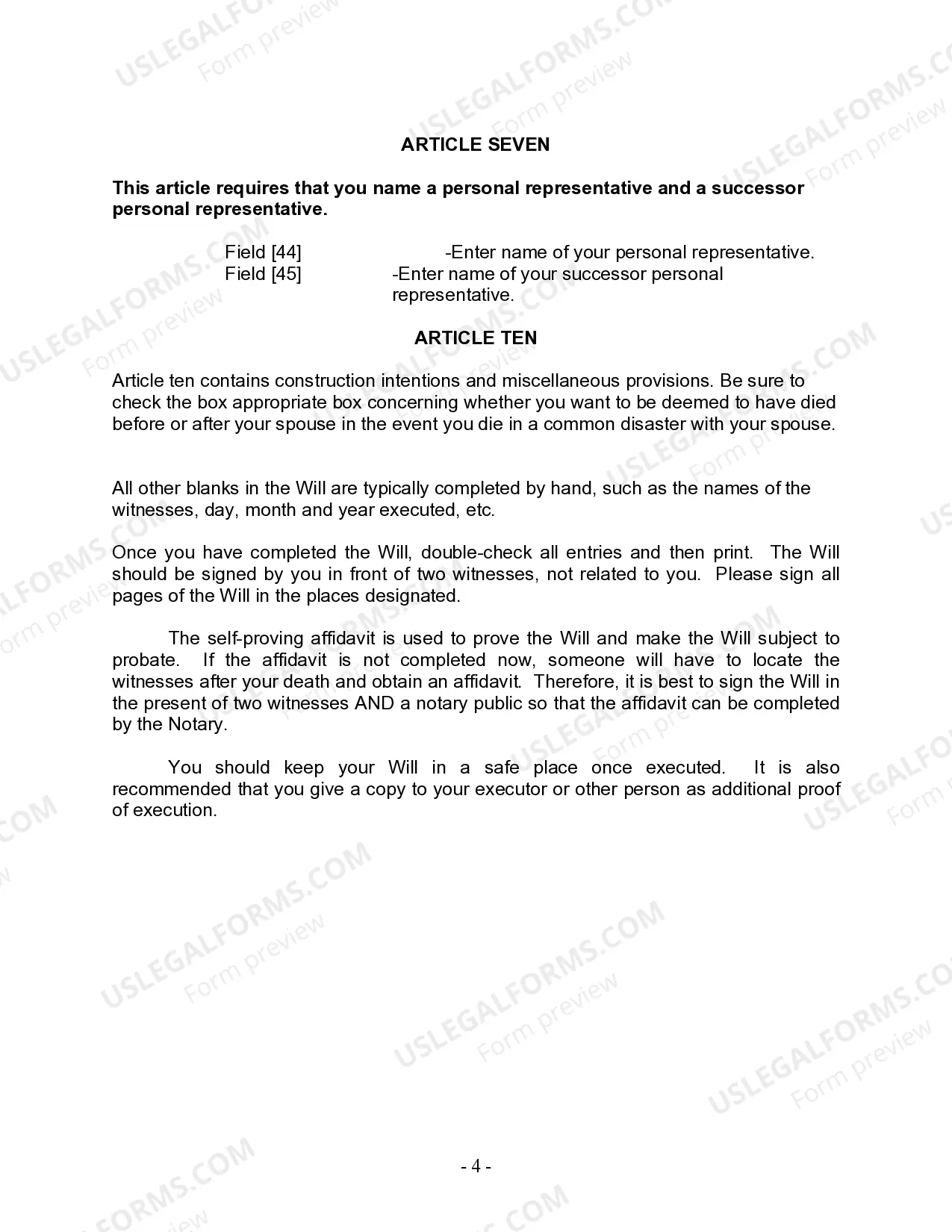
- Appointment of a personal representative
- Provisions for minor beneficiaries, including trust management







When to use this document
This form is ideal for individuals looking to establish a clear plan for their estate distribution. You may need this document if you want to ensure that your wishes are known regarding asset distribution, particularly if you have minor children or specific items you wish to leave to certain people. Additionally, use this form if you reside in Rhode Island and want a straightforward, computer-completable will.
Who should use this form
- Individuals aged eighteen or older who wish to create a will
- Residents of Rhode Island needing a formal estate plan
- Persons with specific property or beneficiaries in mind
- Parents of minor children who need to designate guardians or trustees
Instructions for completing this form
- Begin by entering your name and county of residence.
- Specify your marital status and the names and birth dates of any children.
- Detail any specific property you wish to bequeath to individuals.
- Designate who will manage your estate and any trusts for minor beneficiaries.
- Sign the document in front of two witnesses and ensure they also sign the will.
Notarization guidance
To make this form legally binding, it must be notarized. Our online notarization service, powered by Notarize, lets you verify and sign documents remotely through an encrypted video session.
Get your form ready online
Our built-in tools help you complete, sign, share, and store your documents in one place.
Make edits, fill in missing information, and update formatting in US Legal Forms—just like you would in MS Word.
Download a copy, print it, send it by email, or mail it via USPS—whatever works best for your next step.
Sign and collect signatures with our SignNow integration. Send to multiple recipients, set reminders, and more. Go Premium to unlock E-Sign.
If this form requires notarization, complete it online through a secure video call—no need to meet a notary in person or wait for an appointment.
We protect your documents and personal data by following strict security and privacy standards.

Make edits, fill in missing information, and update formatting in US Legal Forms—just like you would in MS Word.

Download a copy, print it, send it by email, or mail it via USPS—whatever works best for your next step.

Sign and collect signatures with our SignNow integration. Send to multiple recipients, set reminders, and more. Go Premium to unlock E-Sign.

If this form requires notarization, complete it online through a secure video call—no need to meet a notary in person or wait for an appointment.

We protect your documents and personal data by following strict security and privacy standards.
Avoid these common issues
- Failing to have the will signed by witnesses, making it invalid.
- Not specifying alternate beneficiaries if primary ones predecease you.
- Leaving properties or assets undesignated, which may lead to complications.
- Overlooking the importance of appointing a trustworthy personal representative.
Advantages of online completion
- Convenience of completing the form from home at your own pace.
- Editability allows for easy updates as circumstances change.
- Secure download ensures you have immediate access to required documents.
- Legal language is already compliant with state requirements, reducing the risk of errors.
Looking for another form?
Form popularity
FAQ
Note that once a will is probated, it is available to the public and anyone can read it.
A handwritten will is also known as a holographic will in California. Under California Probate Code Section 6111, a handwritten will may be valid in California if the signature and material provisions of the will are in the handwriting of the person making the will.
The short answer is generally yes. When a will is properly executed in accordance with the requirements established under state law, it should be regarded as a valid and executable will in a different state.
Age: The testator must be at least 18 years old. Capacity: The testator must be of sane mind. Signature: The will must be signed by the testator or by someone else in the testator's name in his presence, by his express direction.
While your will should still be valid in the new state, there may be differences in the new state's laws that may make certain provisions of the will invalid. In addition, moving is a good excuse to consult an attorney to make sure your estate plan in general is up to date.
Stepping through our service on behalf of somebody else is perfectly legal, and in many cases is the most practical approach to getting a high quality, well drafted Will for people who are unable to use the more traditional Will writing approaches.
A properly drafted will that you have executed under the laws of one state will generally be valid under the laws of any other state.Estate planning documents must be updated periodically to account for changes in your life circumstances as well as changes in the law.
You can read, type, print, and staple at the will maker's direction. But you must not decide or even weigh in on the terms of the will. Do not sway the will maker in any way; you must be a neutral actor. Also, do not not use your own handwriting to fill in a fill-in-the-blanks will.
You may find that the will was signed in a different state from the one in which the person was living at the time of death. This shouldn't be a problem. Generally, if the will was valid under the laws of the state where it was signed, the new state will accept it as valid.