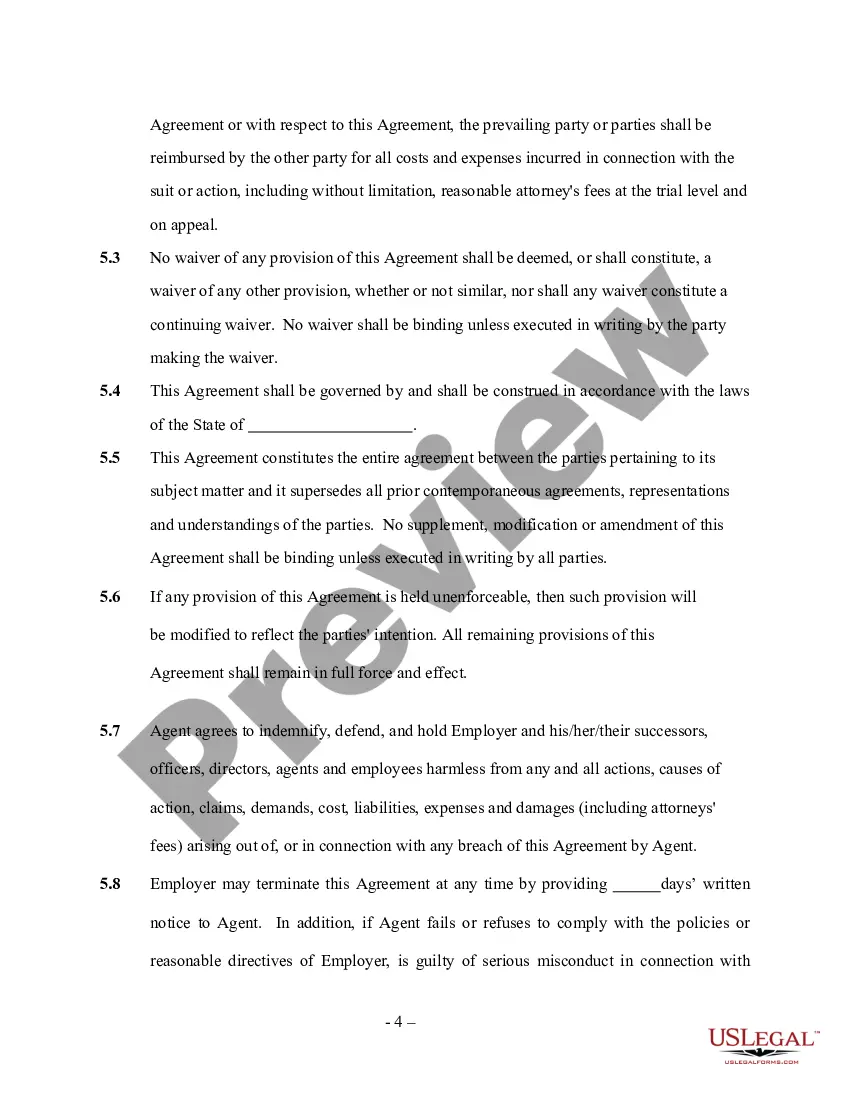
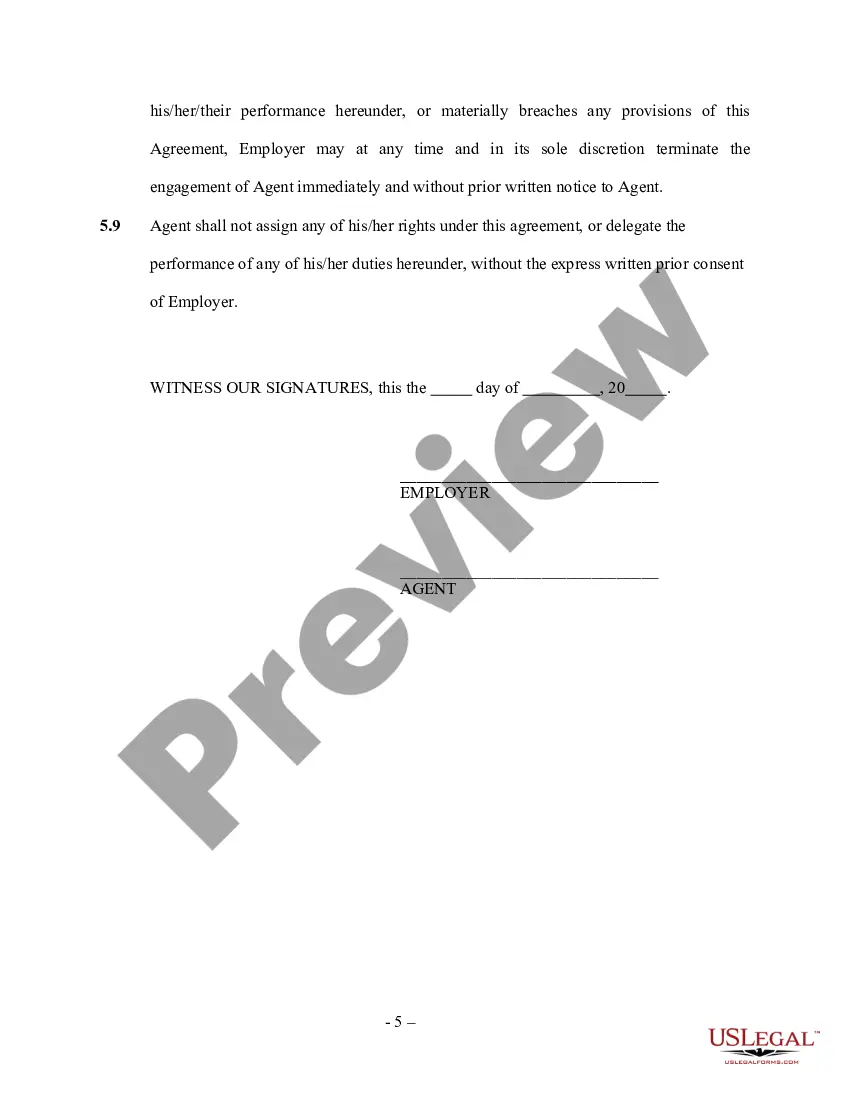
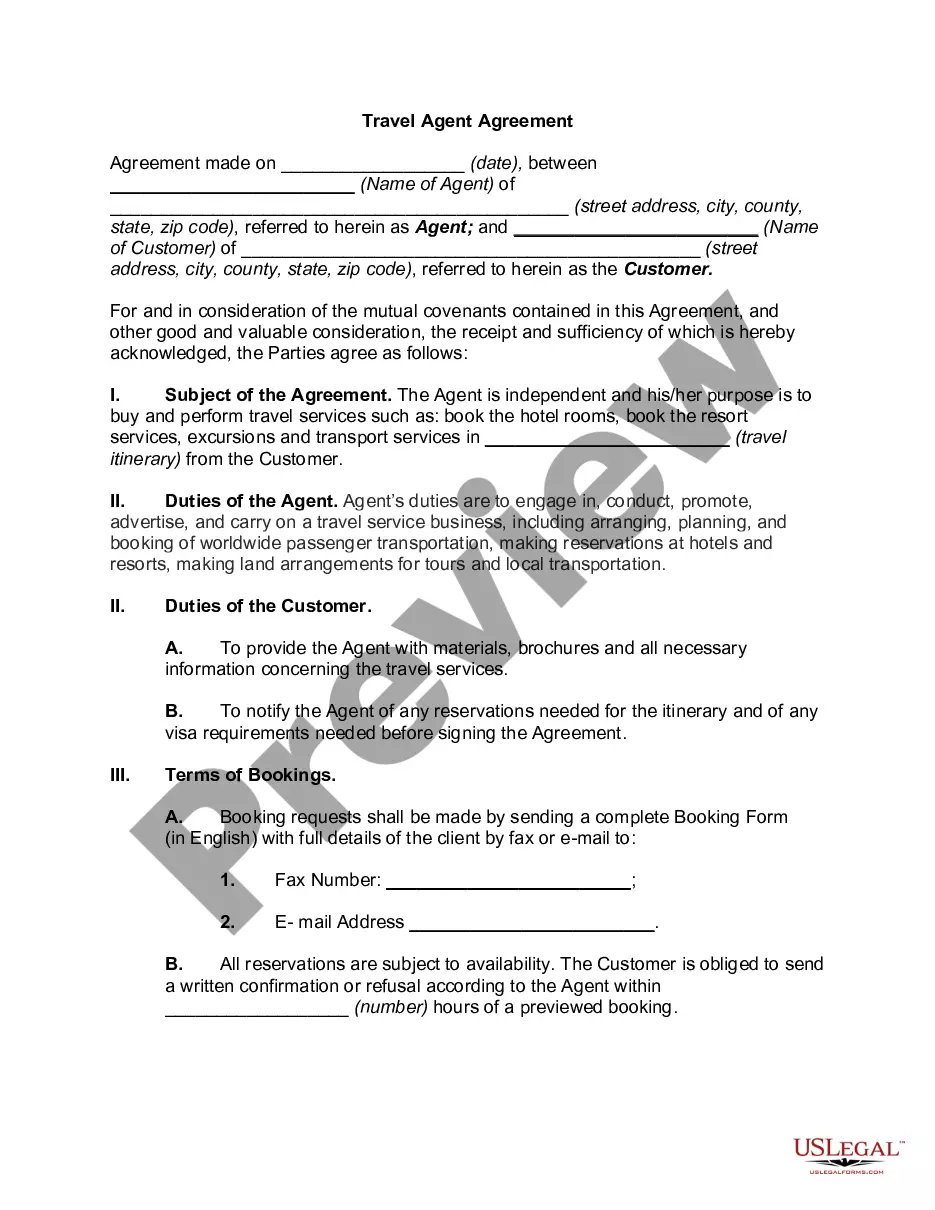
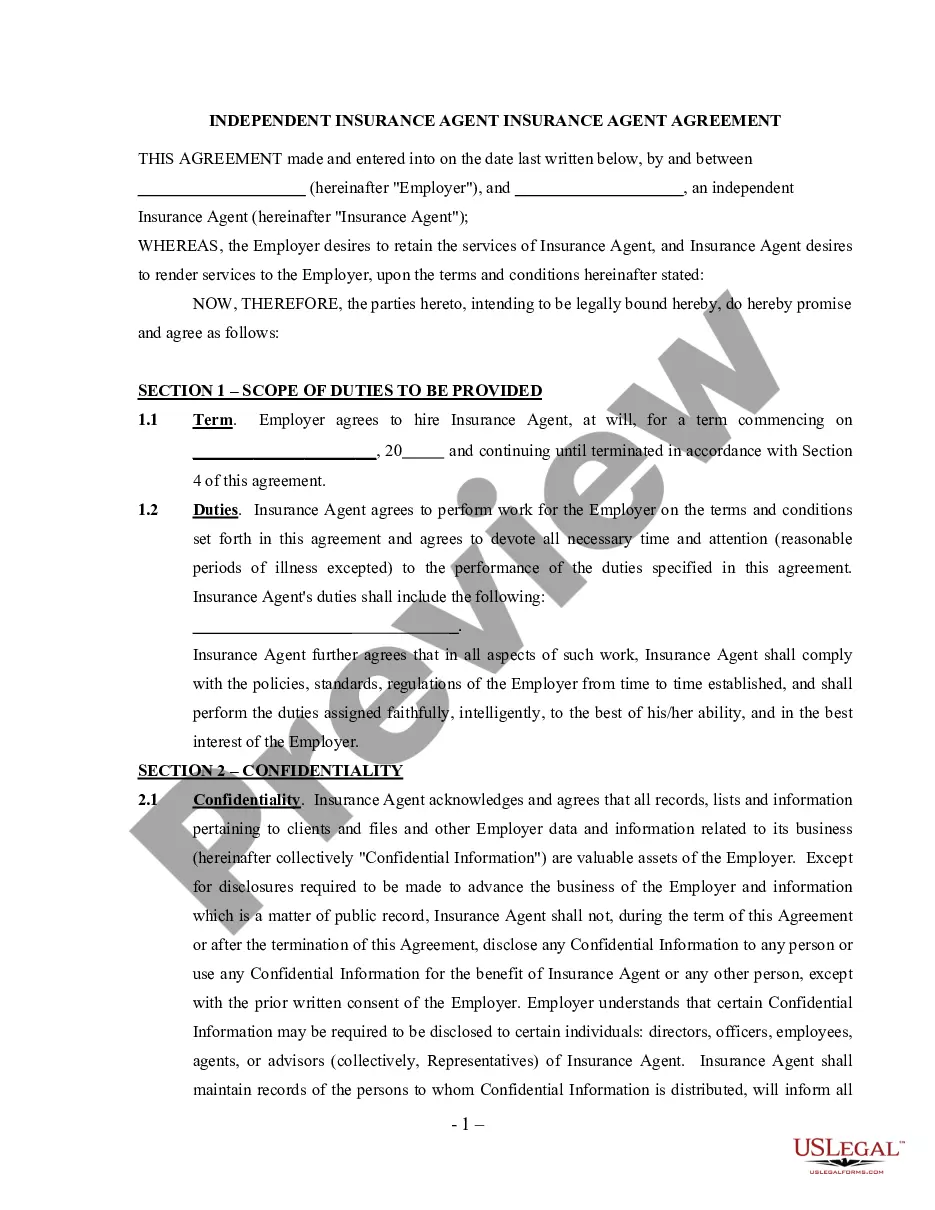
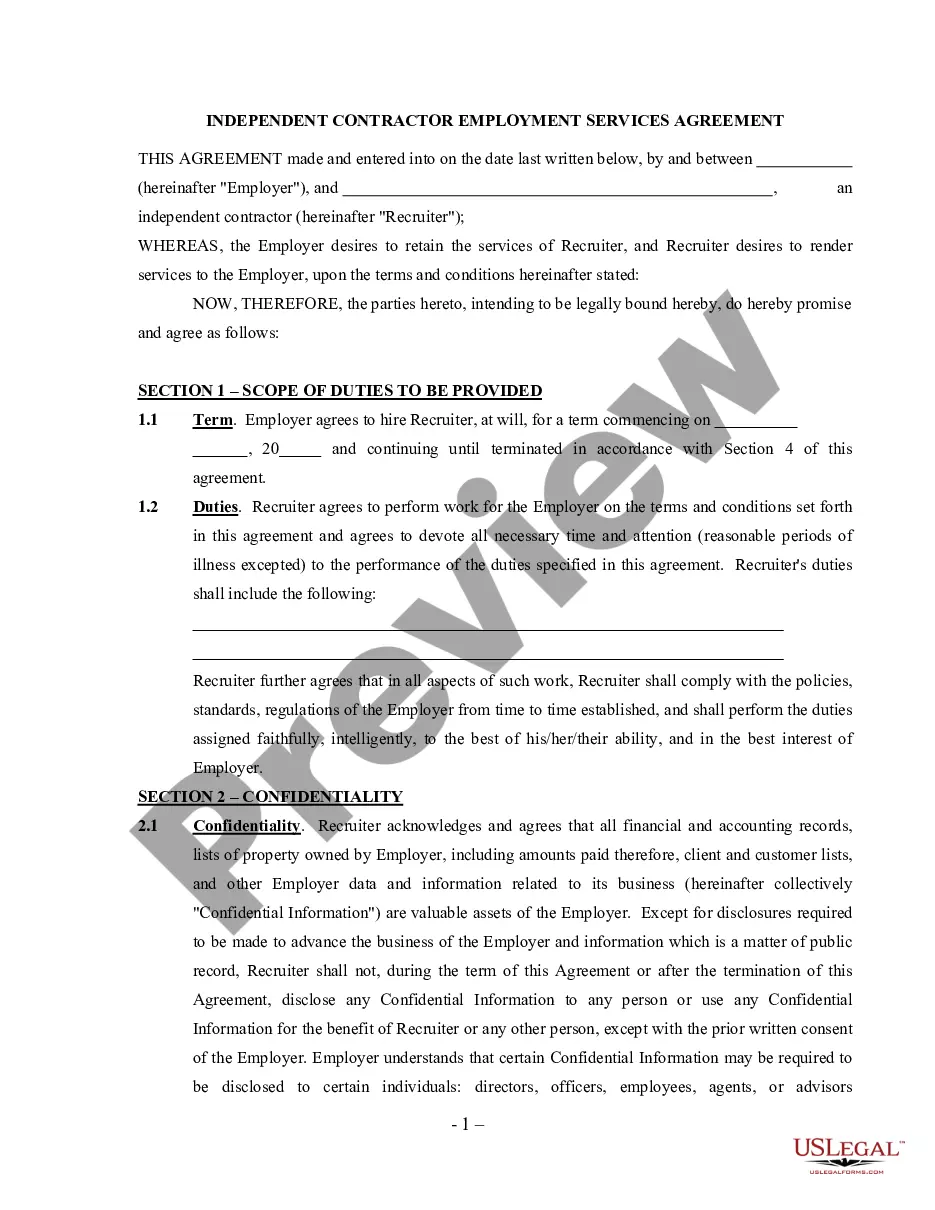
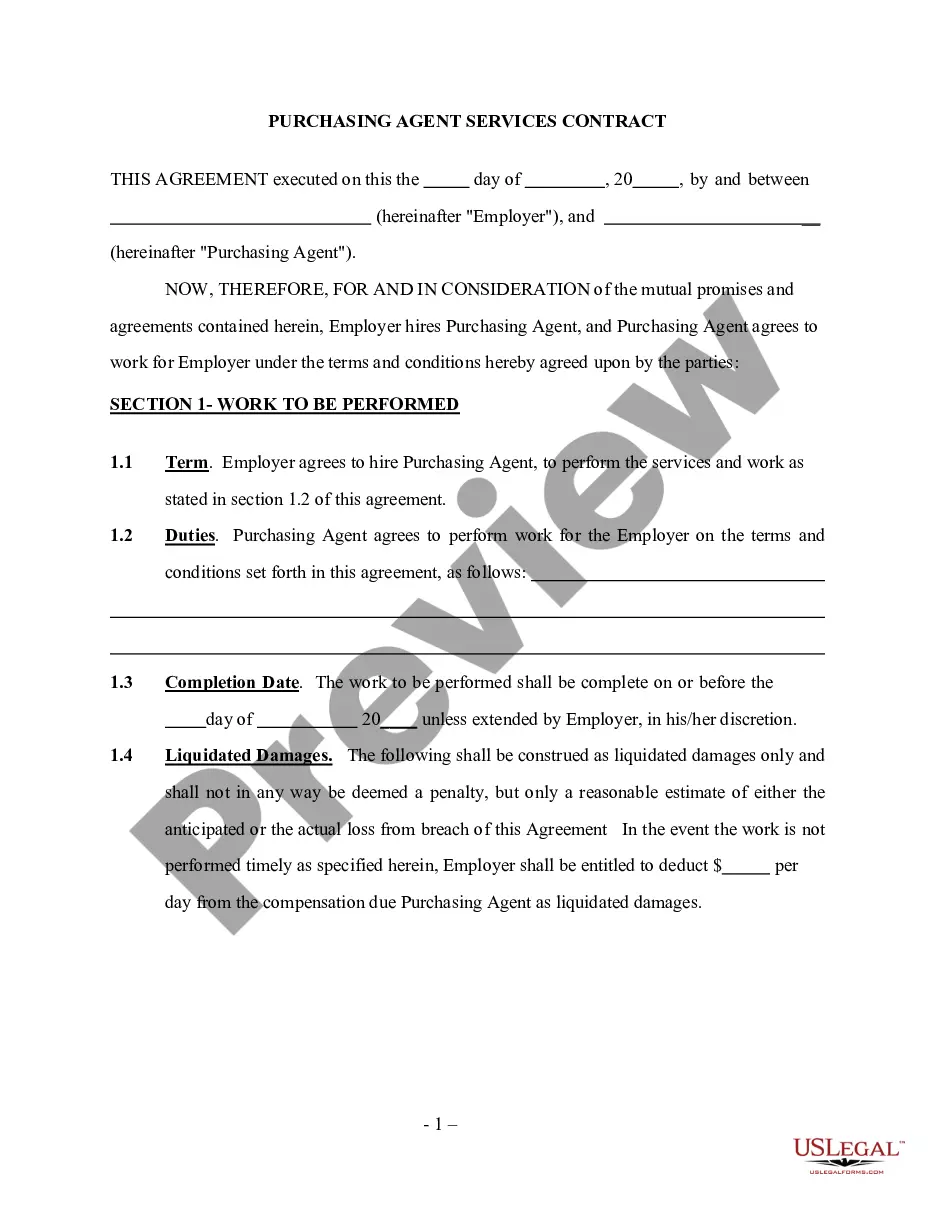
Travel Agency hires travel agent as an independent contractor to provide travel services to Travel Agency customers. Agents may not bind Travel Agency outside the scope of the contract.
Rhode Island Self-Employed Travel Agent Employment Contract
State:
Multi-State
Control #:
US-INDC-68
Format:
Word;
Rich Text
Instant download
Description
Free preview
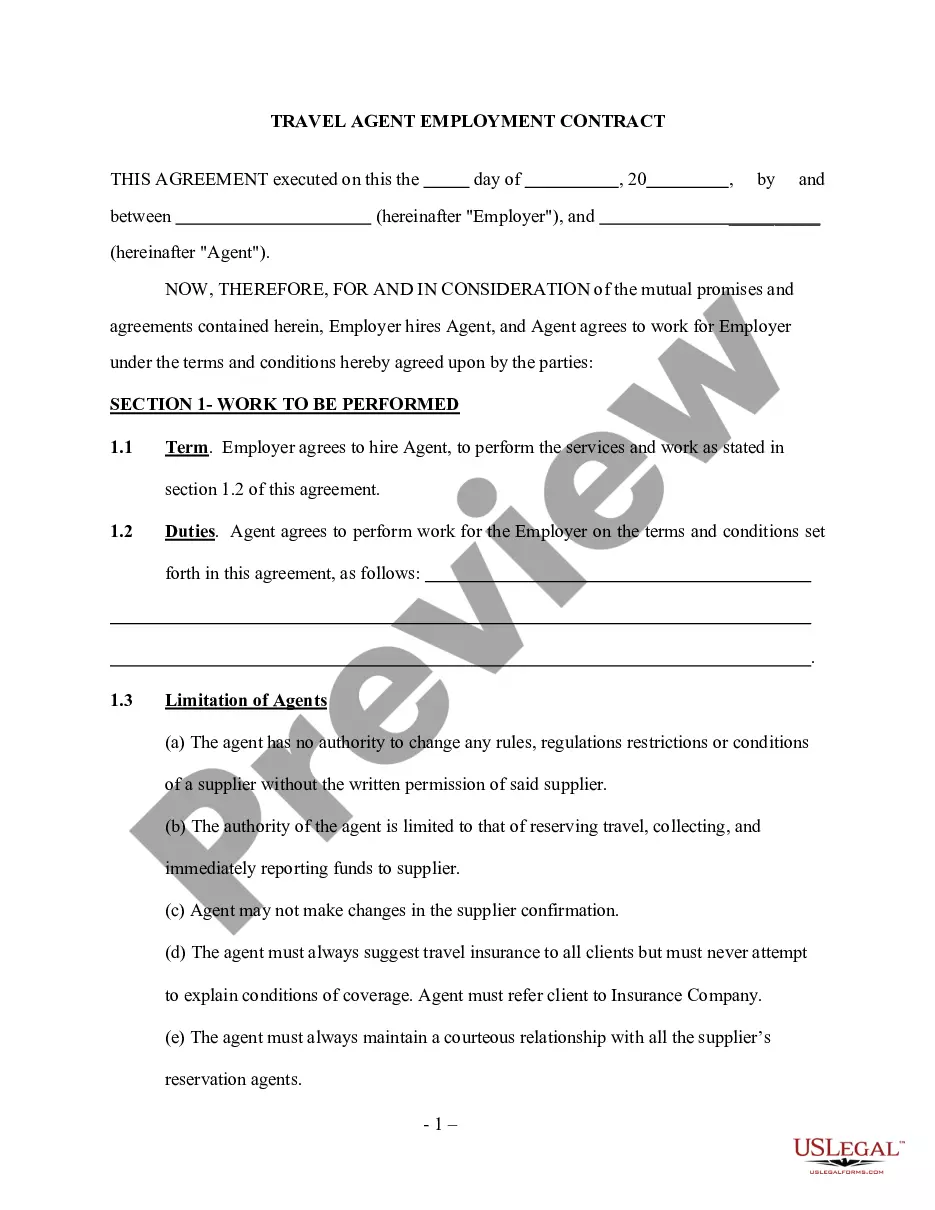
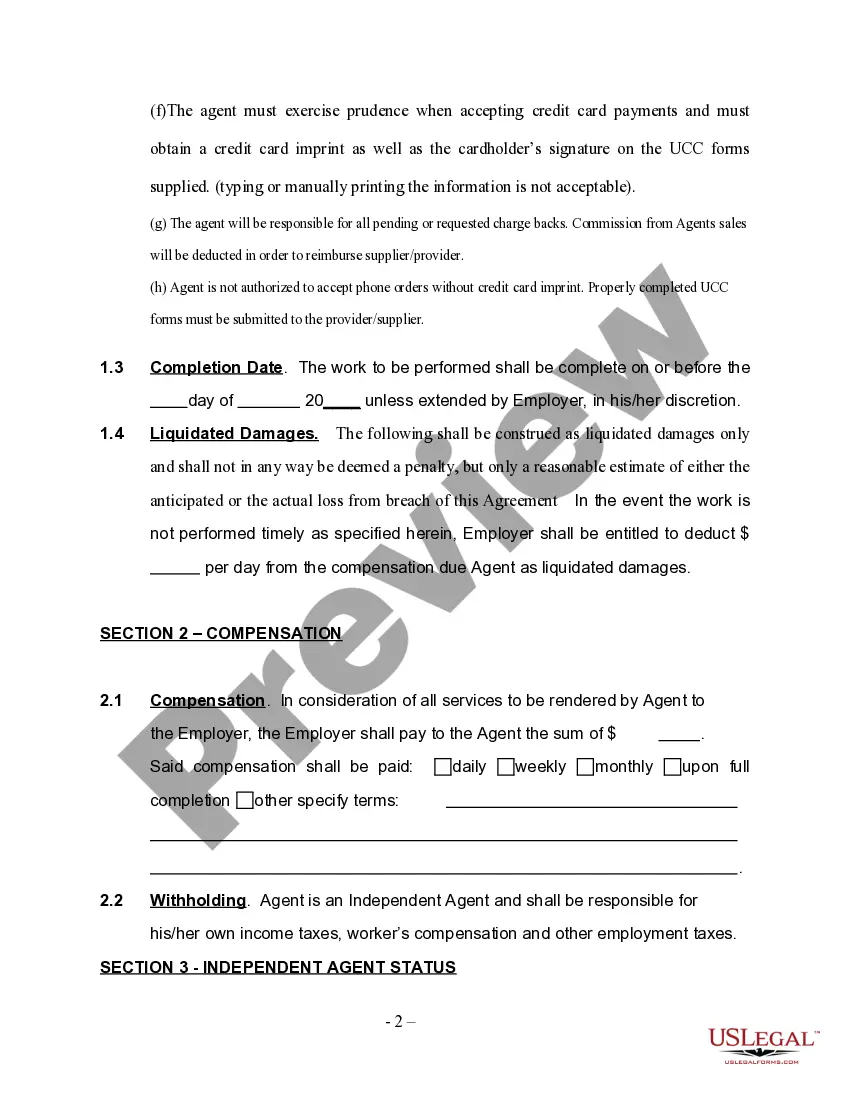
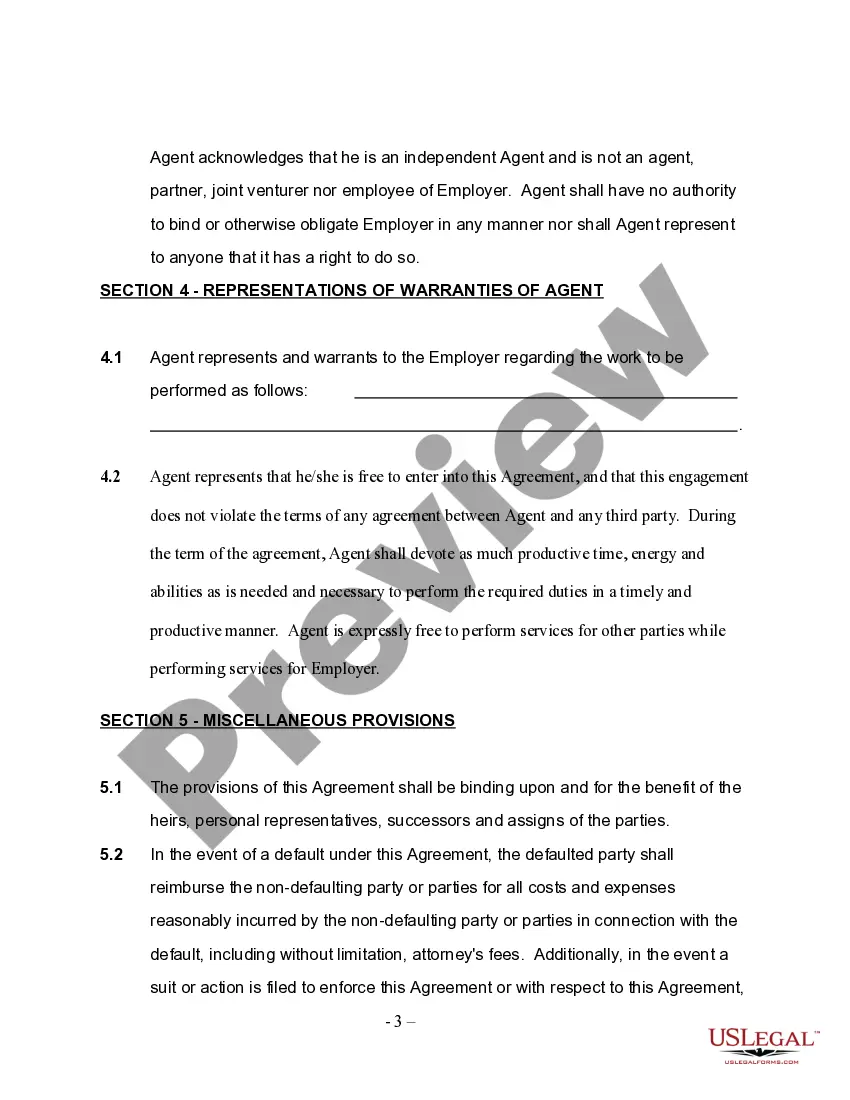
How to fill out Self-Employed Travel Agent Employment Contract?
You might spend hours online looking for the correct document template that fulfills the state and federal requirements you need.
US Legal Forms provides a wide variety of legal forms that are reviewed by professionals.
You can easily download or print the Rhode Island Self-Employed Travel Agent Employment Contract from the platform.
- If you already have a US Legal Forms account, you can Log In and click the Download button.
- Then, you can complete, edit, print, or sign the Rhode Island Self-Employed Travel Agent Employment Contract.
- Every legal document template you purchase is yours permanently.
- To obtain another copy of the purchased form, go to the My documents tab and click the corresponding button.
- If you're using the US Legal Forms website for the first time, follow the simple instructions below.
- First, ensure that you have selected the correct document template for the area/city you choose.
- Check the form description to confirm you have selected the right form.
- If available, use the Review button to look through the document template as well.
- If you want to find another version of the form, use the Research section to locate the template that suits your needs.
- Once you've found the template you desire, click Acquire now to proceed.
- Select the pricing plan you want, enter your credentials, and register for your account on US Legal Forms.
- Complete the transaction. You can use your credit card or PayPal account to purchase the legal form.
- Find the format of the document and download it to your system.
- Make adjustments to your document if needed.
- You may complete, modify, sign, and print the Rhode Island Self-Employed Travel Agent Employment Contract.
- Download and print numerous document templates using the US Legal Forms site, which offers the largest collection of legal forms.
- Utilize professional and state-specific templates to address your business or personal needs.
Form popularity
FAQ
Writing a contract for freelance work involves outlining the project scope, payment terms, and deadlines. It's important to include details about deliverables, revisions, and cancellation policies. A clear contract protects both the freelancer and the client. Using a resource like USLegalForms can simplify the process and help you create a comprehensive Rhode Island Self-Employed Travel Agent Employment Contract.
Yes, many travel agents are classified as 1099 employees, meaning they work as independent contractors. This classification allows them to enjoy flexibility in their work, but it also means they must manage their own taxes. Understanding this status is essential for financial planning and compliance. A well-drafted Rhode Island Self-Employed Travel Agent Employment Contract can provide clarity on your employment status.
Independent contractor travel agents can earn varying amounts based on their experience and clientele. On average, they can make anywhere from $30,000 to $80,000 annually, but top agents may earn significantly more. Their income often includes commissions from bookings and service fees. Establishing a solid Rhode Island Self-Employed Travel Agent Employment Contract can help define payment structures and expectations.
Yes, many travel agents operate as self-employed individuals. This status allows agents to manage their own business, set their hours, and choose clients. However, self-employment also requires agents to handle their own taxes and business expenses. If you're considering this path, a Rhode Island Self-Employed Travel Agent Employment Contract can help clarify your responsibilities.
Not all realtors are 1099 employees. Many realtors operate as independent contractors and receive a 1099 form for tax purposes. However, some real estate agents may be classified as W-2 employees, depending on their agreement with their brokerage. Understanding your classification is crucial for having a clear Rhode Island Self-Employed Travel Agent Employment Contract.
Rhode Island law mandates that on-call employees must be compensated for their time, even if they are not actively working. This applies to individuals under a Rhode Island Self-Employed Travel Agent Employment Contract, as you may need to be available for client inquiries or emergencies. Understanding these regulations can help you ensure proper payment for your availability. For more detailed guidance, consider using resources like USLegalForms to access templates and insights related to your employment terms.
In Rhode Island, the statute of limitations for breach of contract is generally ten years. This means you have ten years to file a lawsuit after the breach occurs. For those navigating a Rhode Island Self-Employed Travel Agent Employment Contract, it is crucial to understand this timeline to protect your rights. If you believe a breach has occurred, consider consulting with a legal expert to ensure your interests are safeguarded.
An independent contractor operates their own business and provides services to clients under a contract. In contrast, an agent typically represents another party, often in a specific industry, and acts on their behalf. When you use a Rhode Island Self-Employed Travel Agent Employment Contract, it clearly defines your role as a contractor or agent, ensuring you understand your rights and responsibilities. This distinction is crucial for tax purposes and liability.
Choosing between being an LLC or an independent contractor depends on your business needs. An LLC can offer personal liability protection and potential tax advantages, while operating as an independent contractor may provide more straightforward tax reporting. Evaluate your situation carefully, and a Rhode Island Self-Employed Travel Agent Employment Contract can help you navigate these choices while securing your business relationships.
To become an independent contractor in Rhode Island, start by defining your services and identifying your target market. Next, set up your business structure, which may include registering a trade name or forming an LLC. Finally, consider using a Rhode Island Self-Employed Travel Agent Employment Contract to establish clear agreements with your clients, ensuring smooth operations and legal protections.