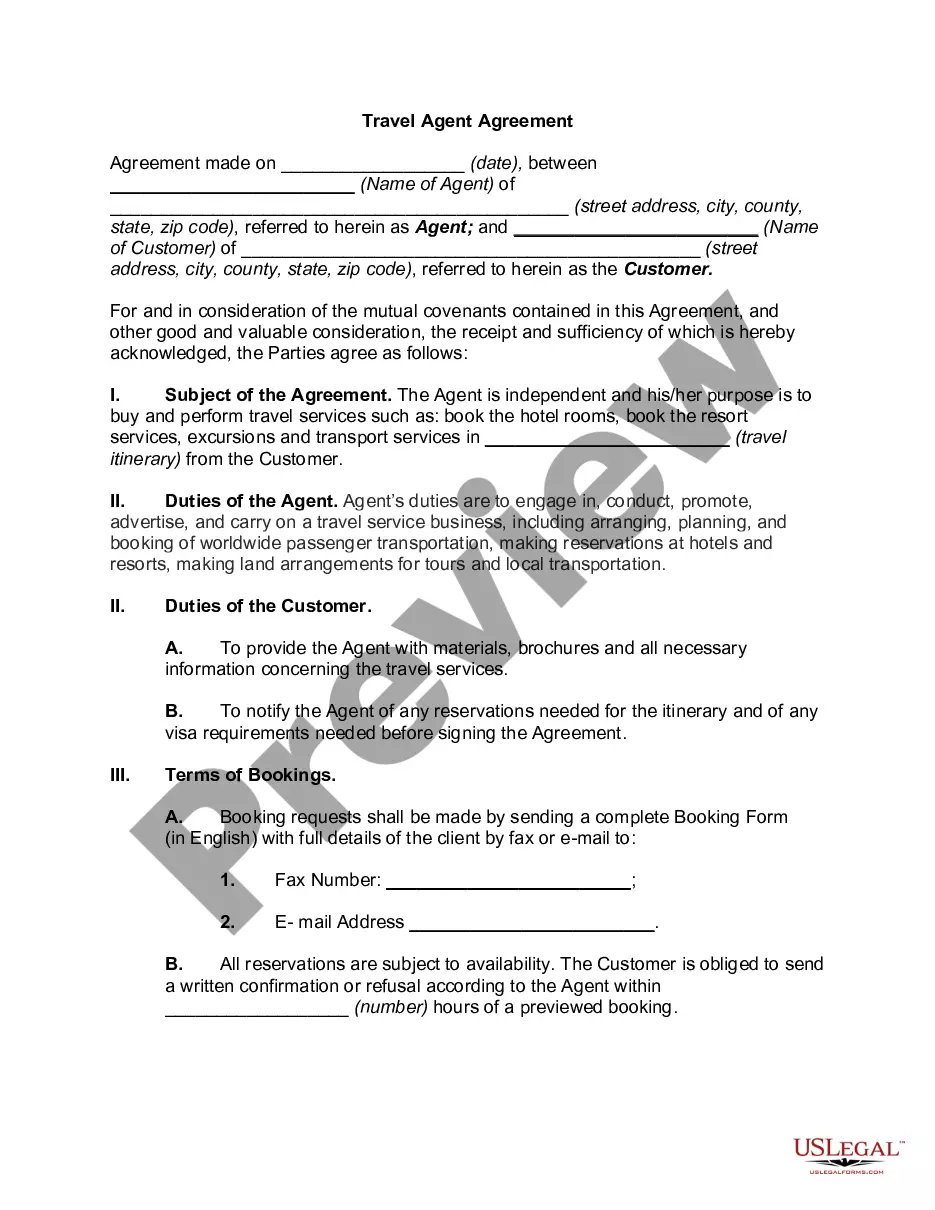
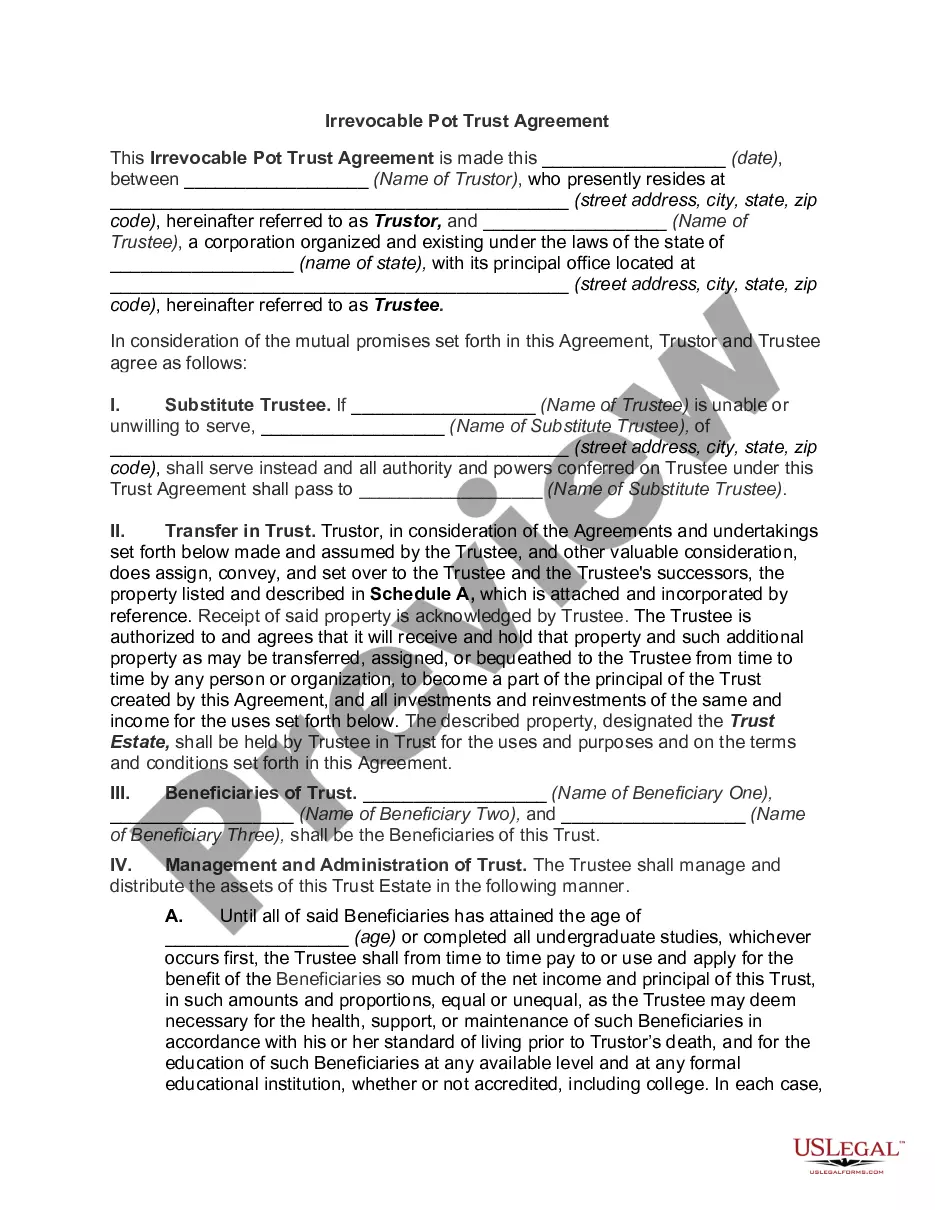
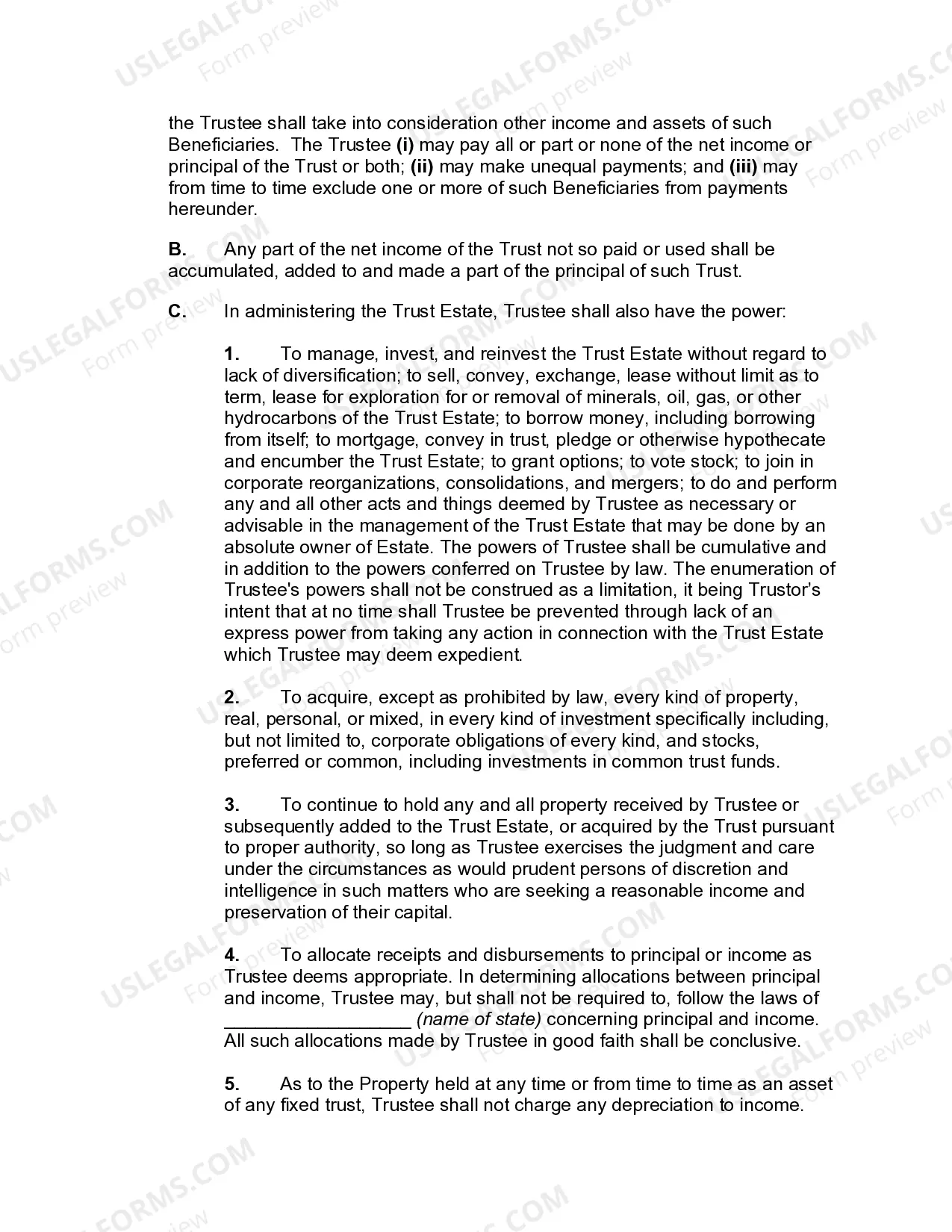
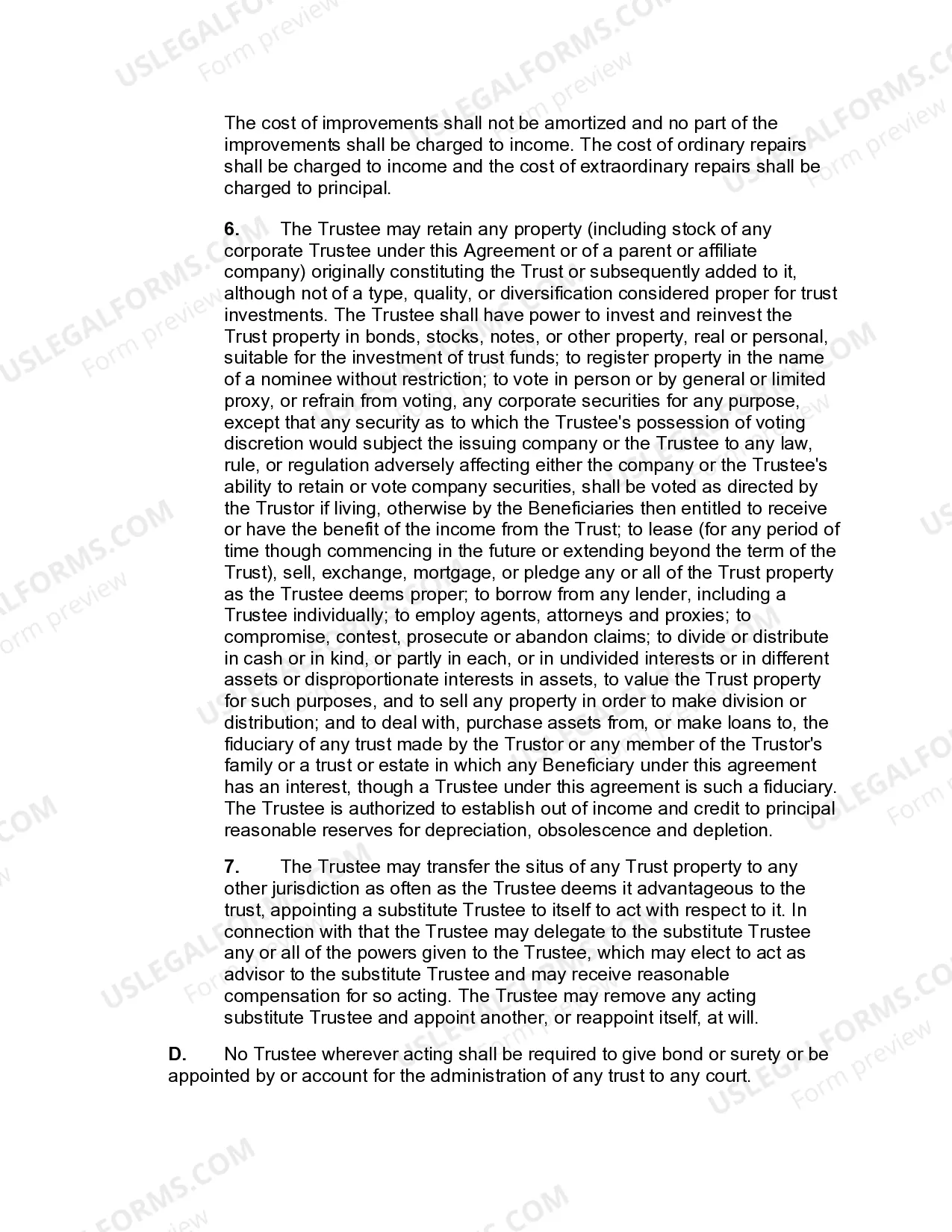
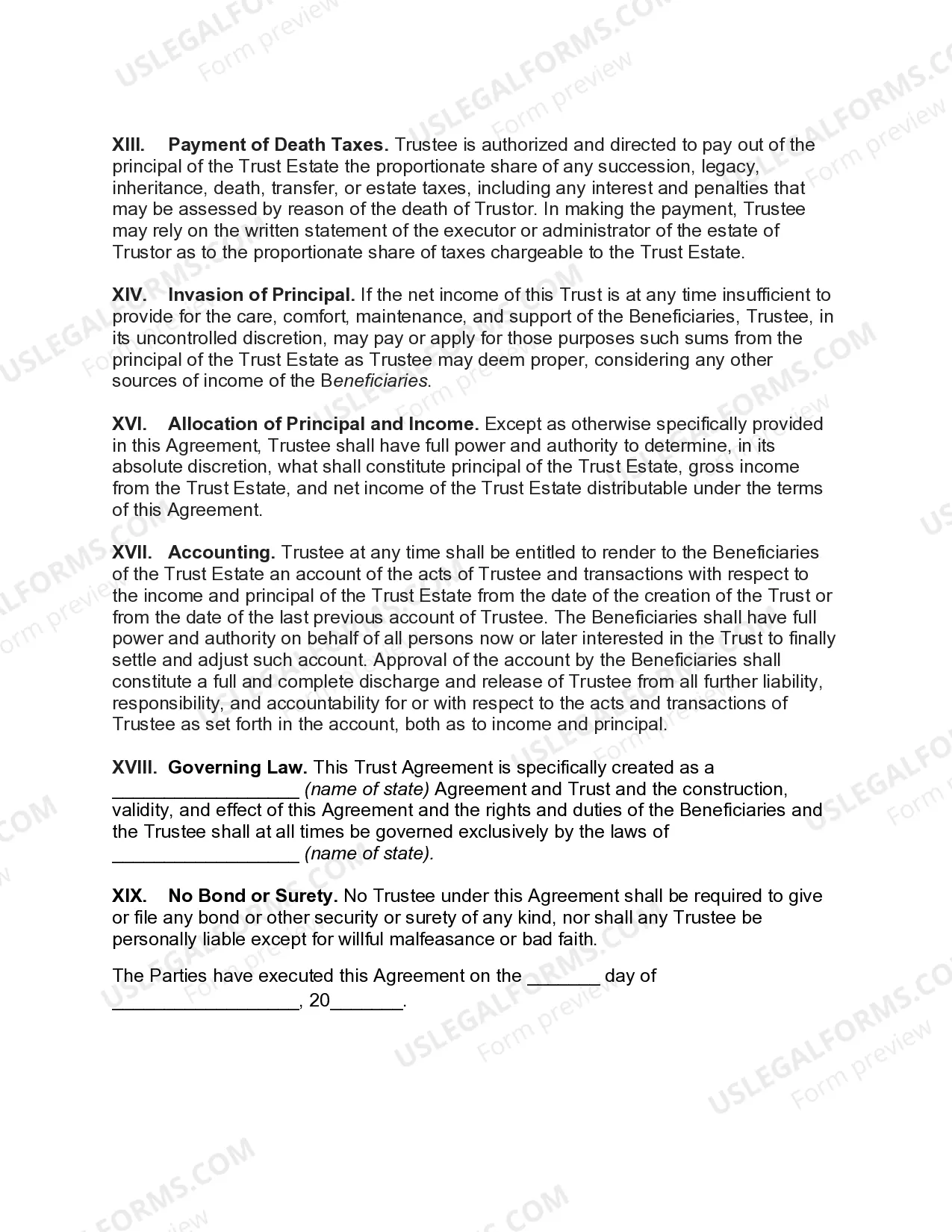
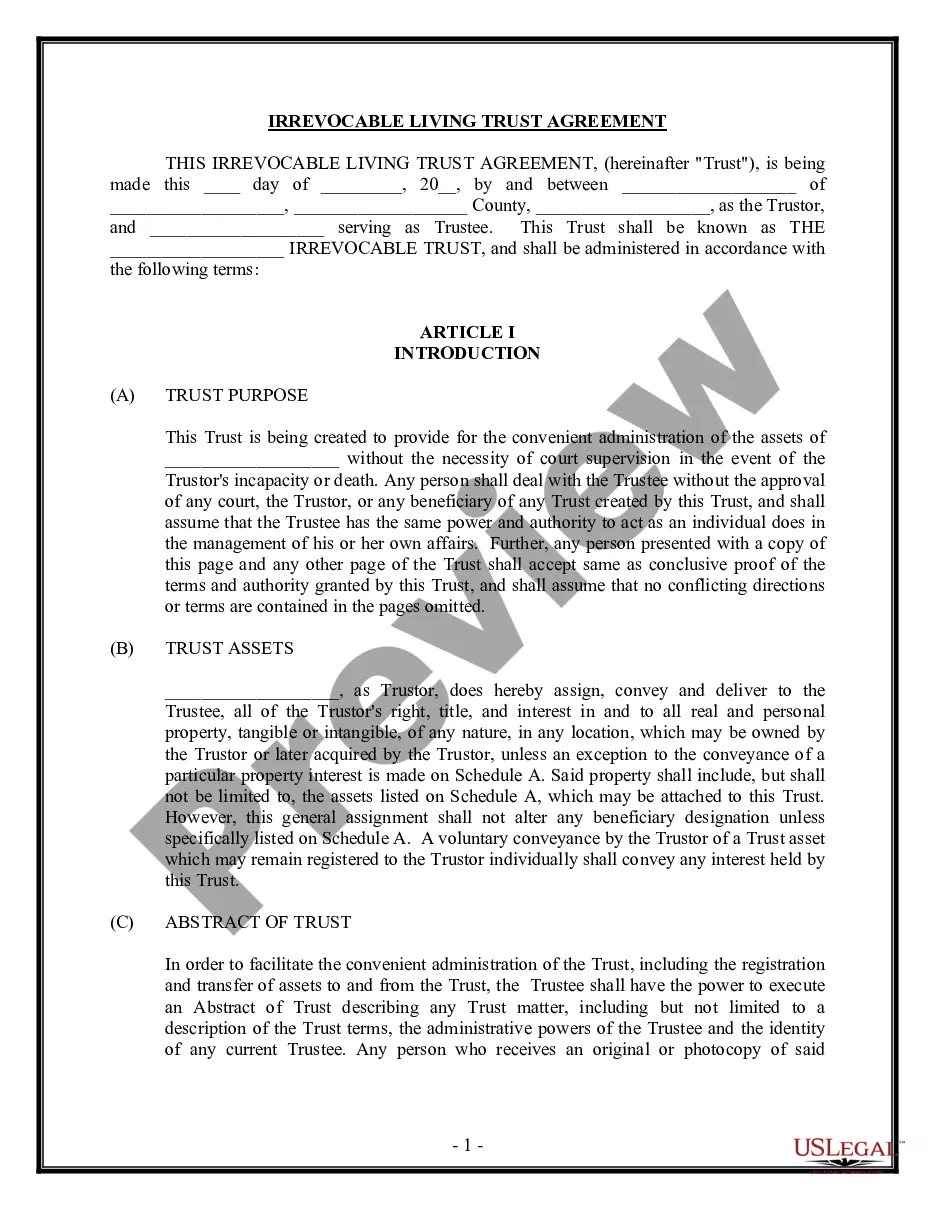
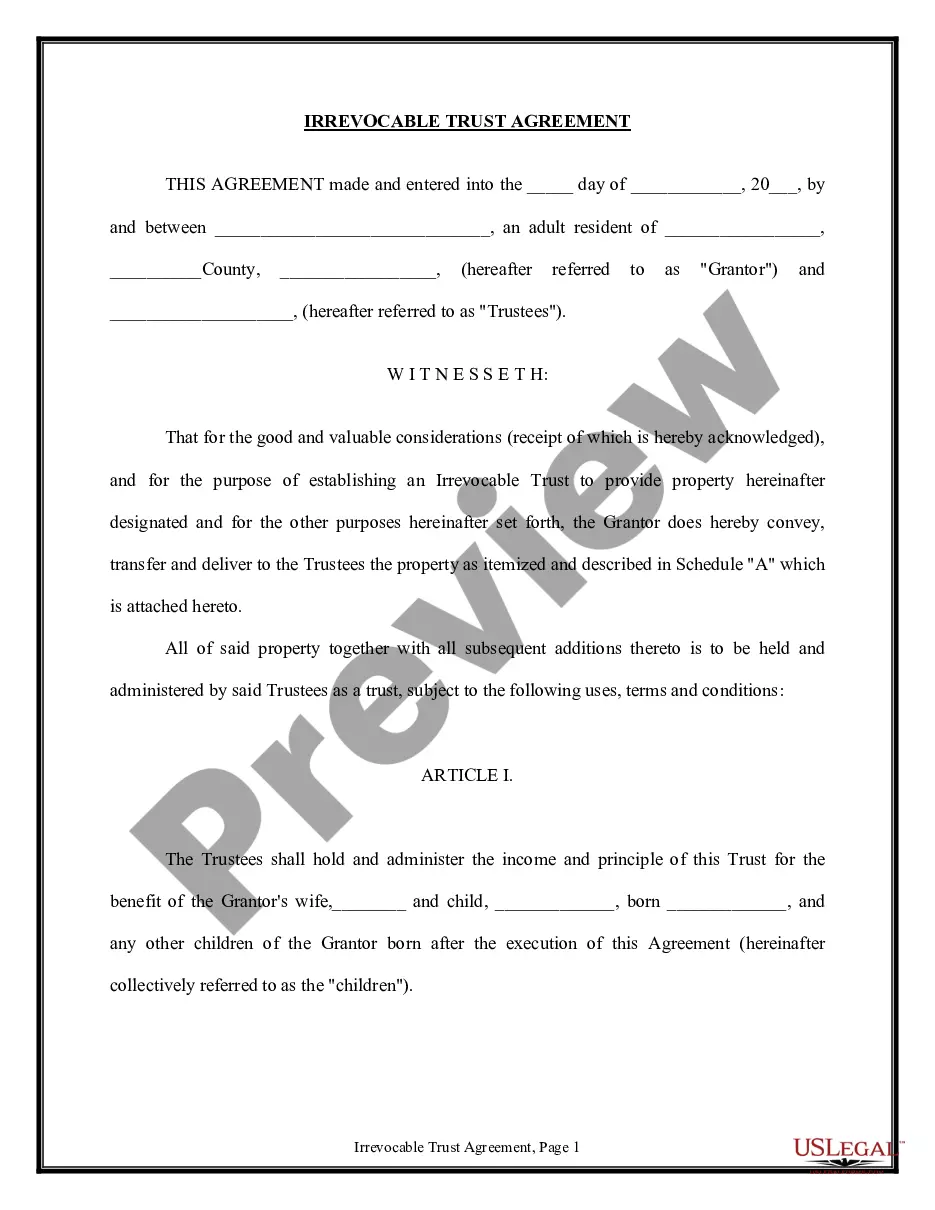
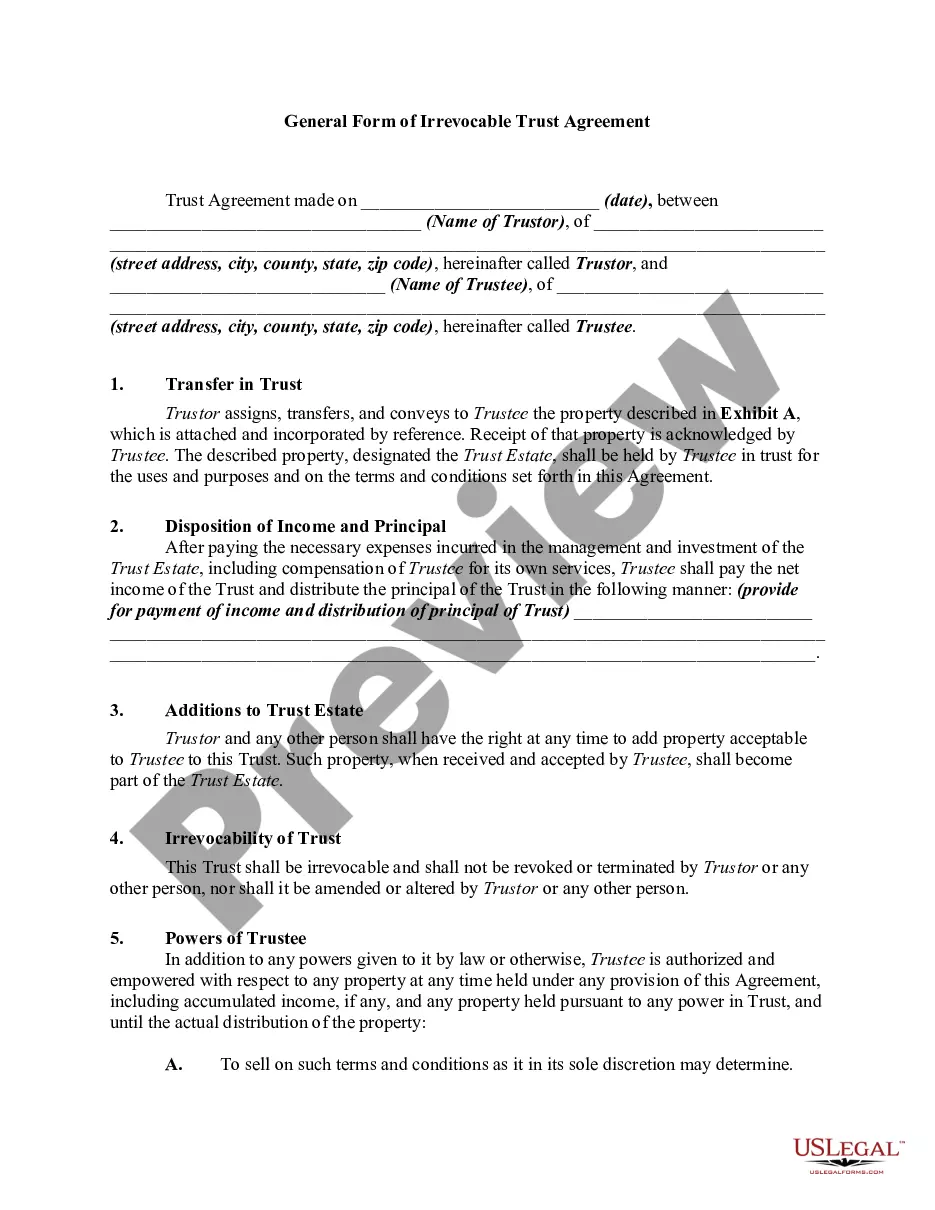
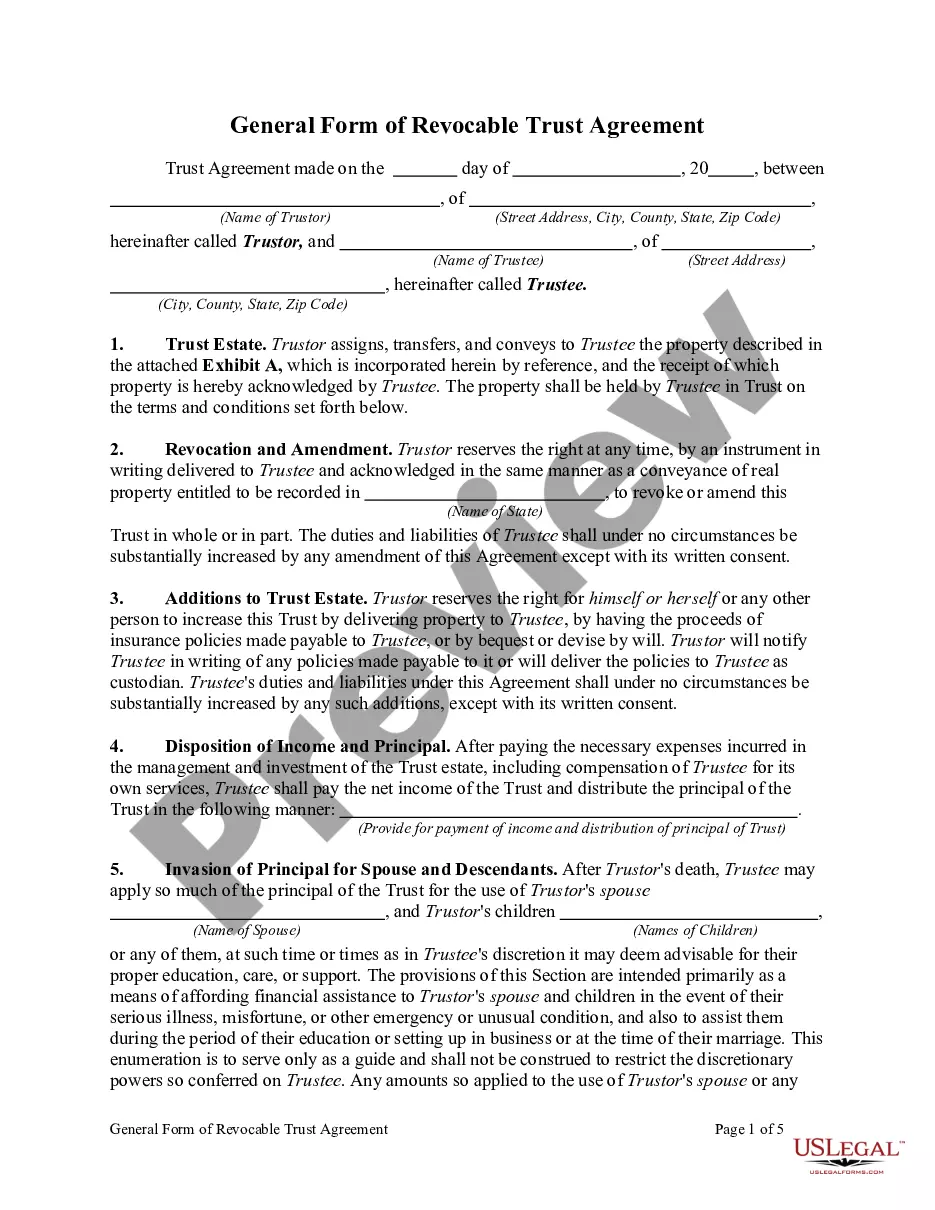
An irrevocable trust is a trust that cannot be modified or terminated without the permission of the beneficiary. In most states, a trust will be deemed irrevocable unless the Trustor specifies otherwise. Once the Trustor has transferred assets into the trust, s/he has no rights of ownership to the assets and the trust. Irrevocable trusts are preferred because it removes all incidents of ownership, thereby effectively removing the trust's assets from the grantor's taxable estate. The Trustor is also relieved of the tax liability on the income generated by the assets. This is the opposite of a "revocable trust", which allows the Trustor to modify the trust.
A Pot Trust is a trust set up for more than one beneficiary, typically children. The purpose of a Pot Trust is to keep the funds in one pot until a later event. For example, at the death of the parents, the assets may be kept in one pot until all the children have graduated from college or reached age 21.
Rhode Island Irrevocable Pot Trust Agreement
Instant download
Description
Free preview



Get your form ready online
Our built-in tools help you complete, sign, share, and store your documents in one place.
Built-in online Word editor
Make edits, fill in missing information, and update formatting in US Legal Forms—just like you would in MS Word.
Export easily
Download a copy, print it, send it by email, or mail it via USPS—whatever works best for your next step.
E-sign your document
Sign and collect signatures with our SignNow integration. Send to multiple recipients, set reminders, and more. Go Premium to unlock E-Sign.
Notarize online 24/7
If this form requires notarization, complete it online through a secure video call—no need to meet a notary in person or wait for an appointment.
Store your document securely
We protect your documents and personal data by following strict security and privacy standards.

Make edits, fill in missing information, and update formatting in US Legal Forms—just like you would in MS Word.

Download a copy, print it, send it by email, or mail it via USPS—whatever works best for your next step.

Sign and collect signatures with our SignNow integration. Send to multiple recipients, set reminders, and more. Go Premium to unlock E-Sign.

If this form requires notarization, complete it online through a secure video call—no need to meet a notary in person or wait for an appointment.

We protect your documents and personal data by following strict security and privacy standards.
Looking for another form?

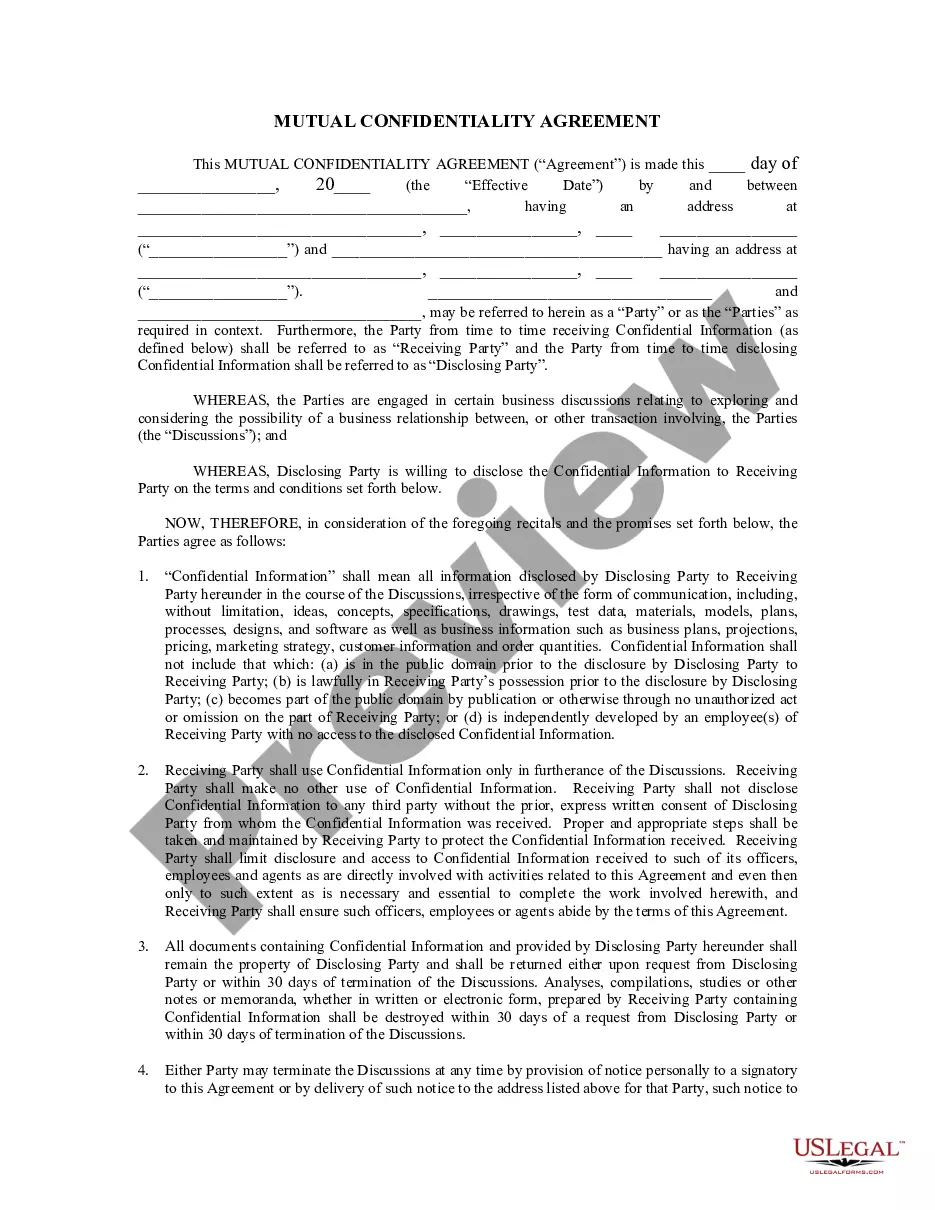
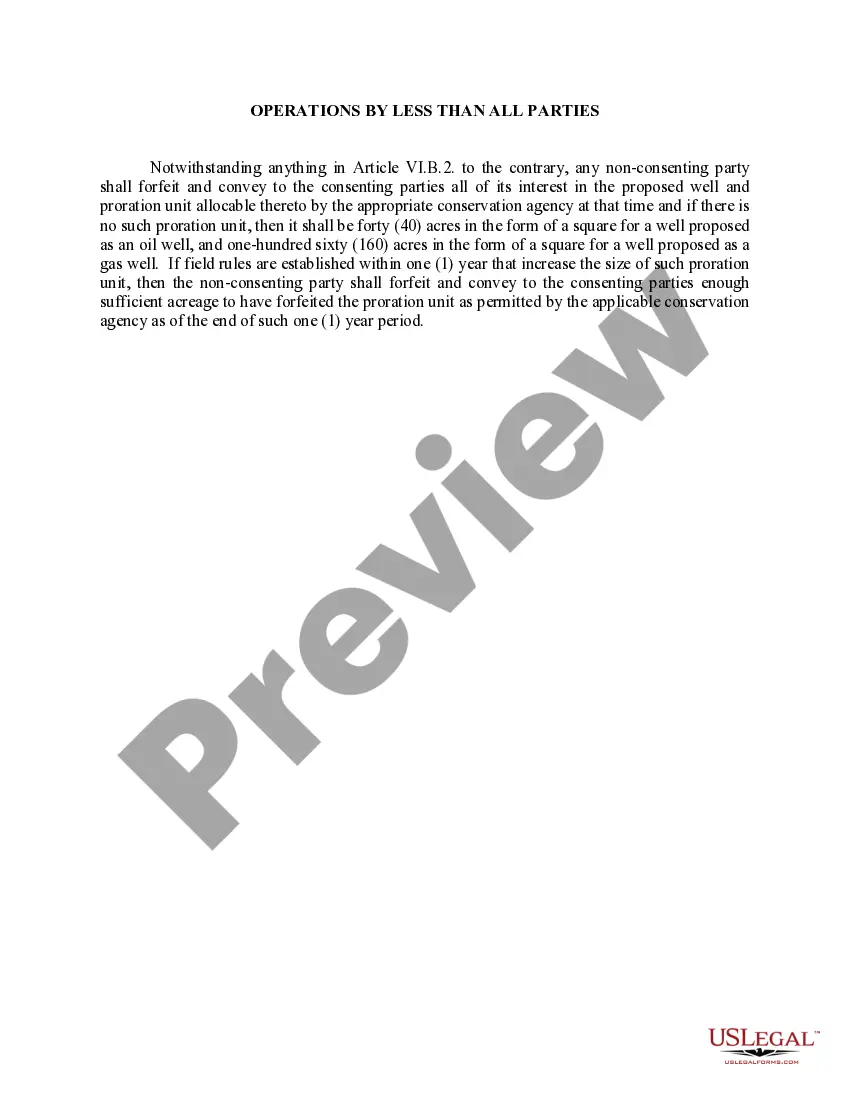

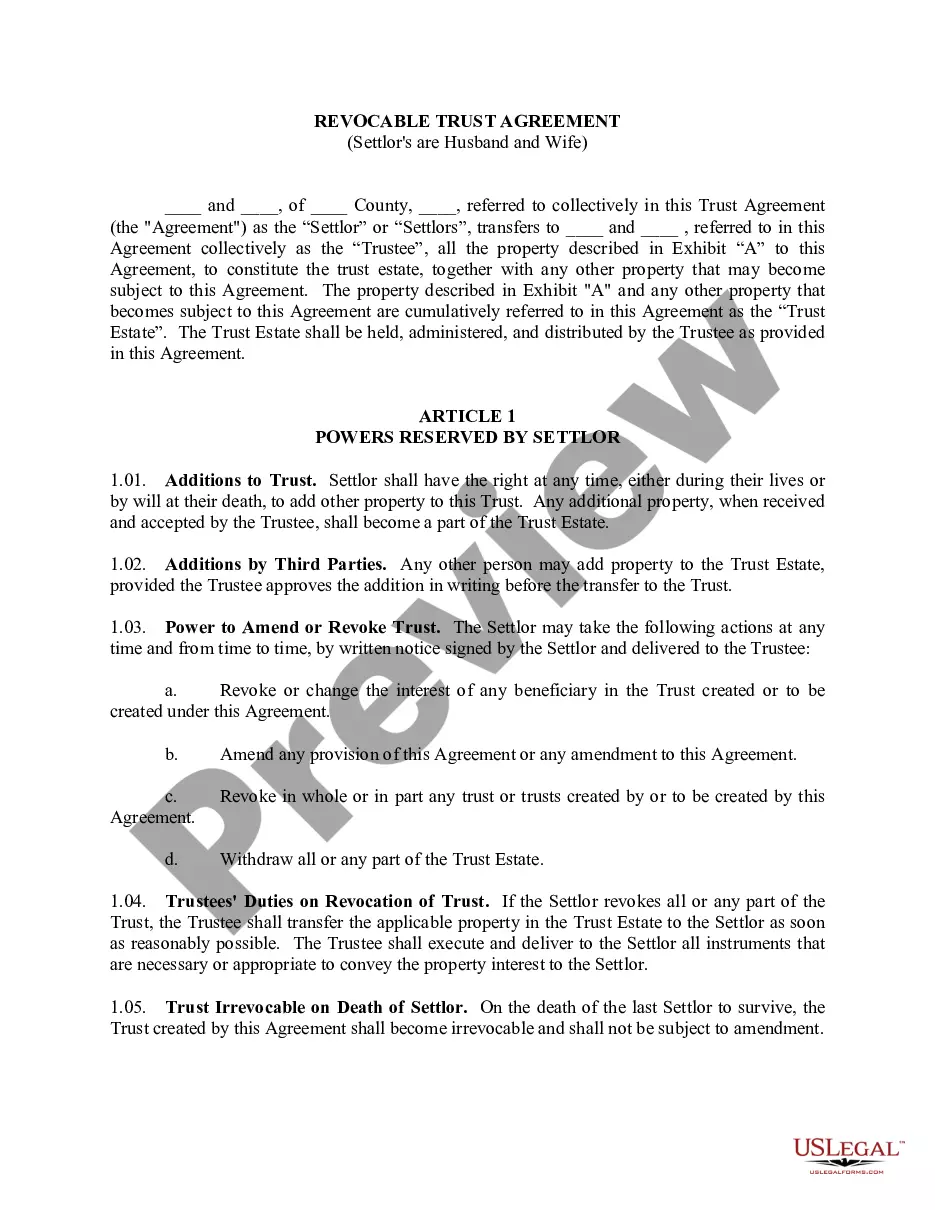
How to fill out Irrevocable Pot Trust Agreement?
US Legal Forms - one of the largest repositories of legal documents in the United States - provides a diverse selection of legal document templates that you can download or print.
By using the website, you will have access to thousands of forms for business and personal purposes, organized by categories, states, or keywords. You can find the most recent versions of documents like the Rhode Island Irrevocable Pot Trust Agreement in just a few minutes.
If you already possess a monthly subscription, Log In and download the Rhode Island Irrevocable Pot Trust Agreement from the US Legal Forms library. The Download button will be visible on every document you view. You can access all previously acquired forms in the My documents section of your account.
Make modifications. Complete, edit, print, and sign the received Rhode Island Irrevocable Pot Trust Agreement.
Every template you add to your account has no expiration date and is yours forever. Therefore, if you wish to download or print another copy, simply navigate to the My documents section and click on the form you need. Access the Rhode Island Irrevocable Pot Trust Agreement with US Legal Forms, the most extensive library of legal document templates. Utilize thousands of professional and state-specific templates that cater to your business or personal requirements.
- If you are using US Legal Forms for the first time, here are some simple steps to help you get started.
- Ensure that you have selected the correct form for your area/state. Click the Preview button to review the form's contents. Check the form outline to make sure you have chosen the right one.
- If the form does not meet your needs, use the Search bar at the top of the screen to locate one that does.
- Once you are satisfied with the form, confirm your choice by clicking the Get now button. Then, select the pricing plan that suits you and provide your details to register for an account.
- Process the payment. Utilize your credit card or PayPal account to complete the transaction.
- Choose the format and download the form to your system.
Form popularity
FAQ
Under an irrevocable trust, legal ownership of the trust is held by a trustee. At the same time, the grantor gives up certain rights to the trust.
The trust belongs to all the beneficiaries. If the person selling property in an irrevocable trust uses the trust's money for his own needs in any way or transfers trust money to himself, he is considered by the law to be taking everyone's money, not just his own.
After the grantor of an irrevocable trust dies, the trust continues to exist until the successor trustee distributes all the assets. The successor trustee is also responsible for managing the assets left to a minor, with the assets going into the child's sub-trust.
The grantor of an irrevocable trust with the following characteristics could be considered the equity owner of the trust: (1) The trust was a grantor trust for federal tax purposes. The grantor was the sole funding source of the trust.
A revocable trust and living trust are separate terms that describe the same thing: a trust in which the terms can be changed at any time. An irrevocable trust describes a trust that cannot be modified after it is created without the beneficiaries' consent.
Under California's Rule Against Perpetuities, an interest in an irrevocable trust must vest or terminate either within 21 years after the death of the last potential beneficiary who was alive when the trust was created or within 90 years after the trust was created.
Irrevocable Trusts Generally, a trustee is the only person allowed to withdraw money from an irrevocable trust. But just as we mentioned earlier, the trustee must follow the rules of the legal document and can only take out income or principal when it's in the best interest of the trust.
The only three times you might want to consider creating an irrevocable trust is when you want to (1) minimize estate taxes, (2) become eligible for government programs, or (3) protect your assets from your creditors.
If you would like to create a living trust in Rhode Island, you must prepare a written trust document and sign it before a notary public. The trust is not functional until you take the final step of transferring ownership of assets into it. A living trust can be an important part of estate planning.