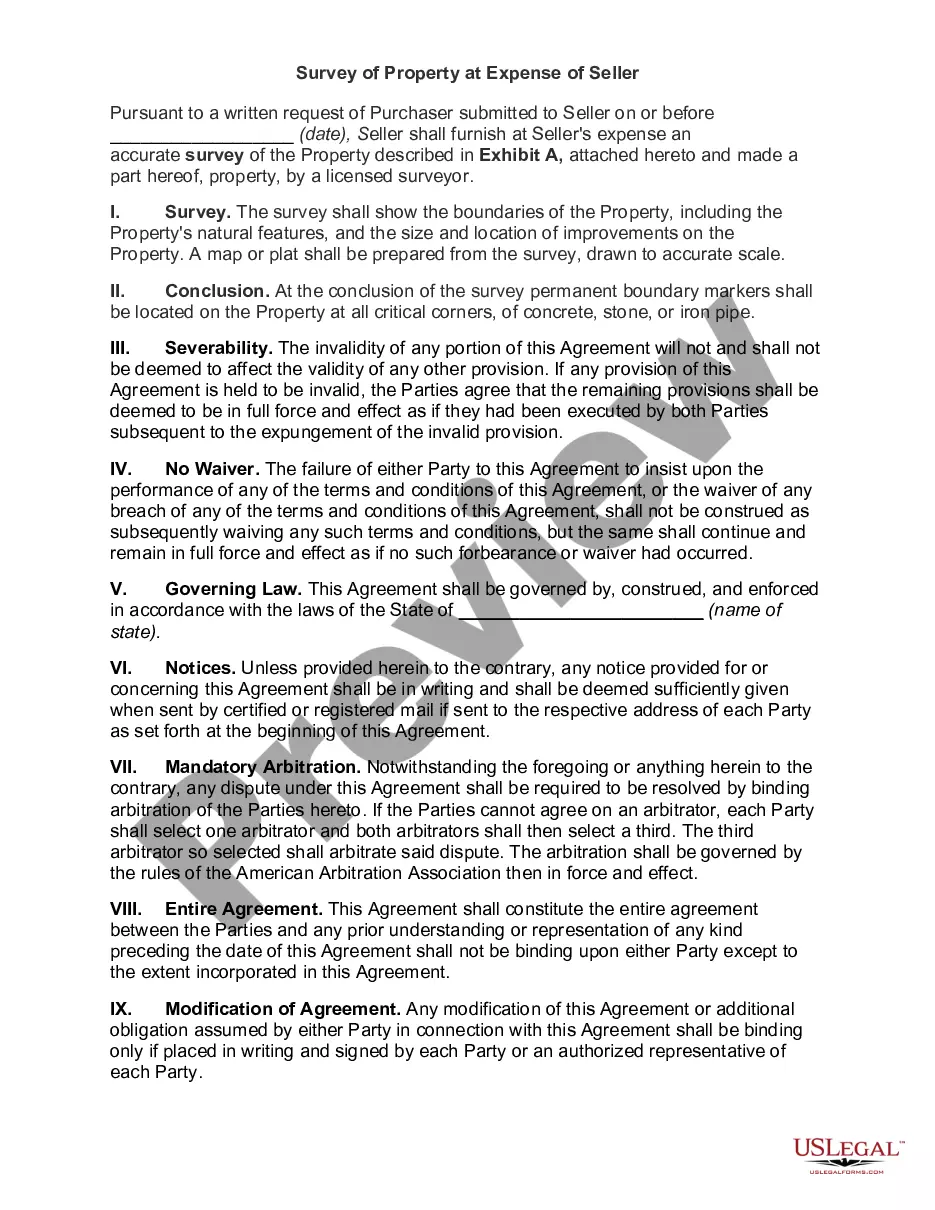
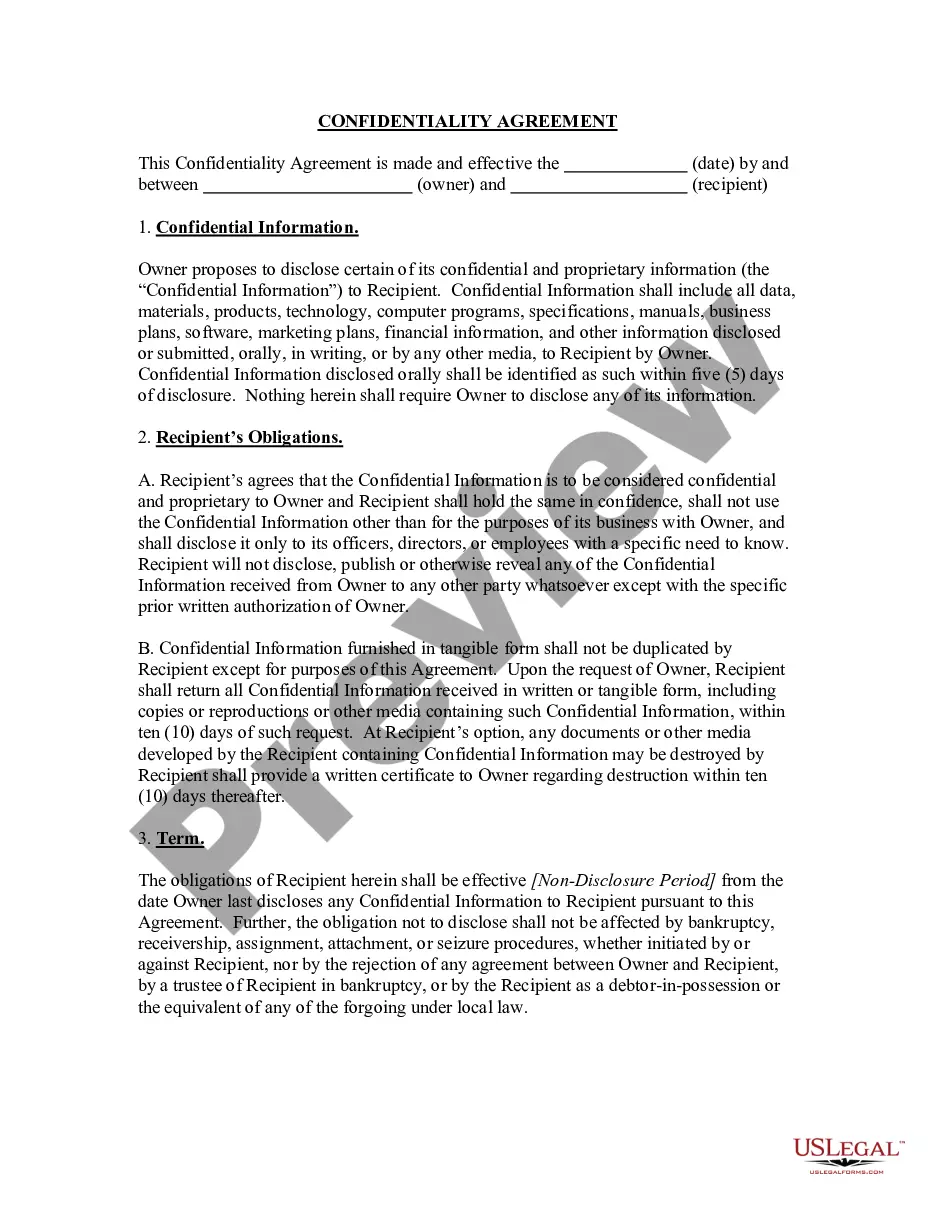
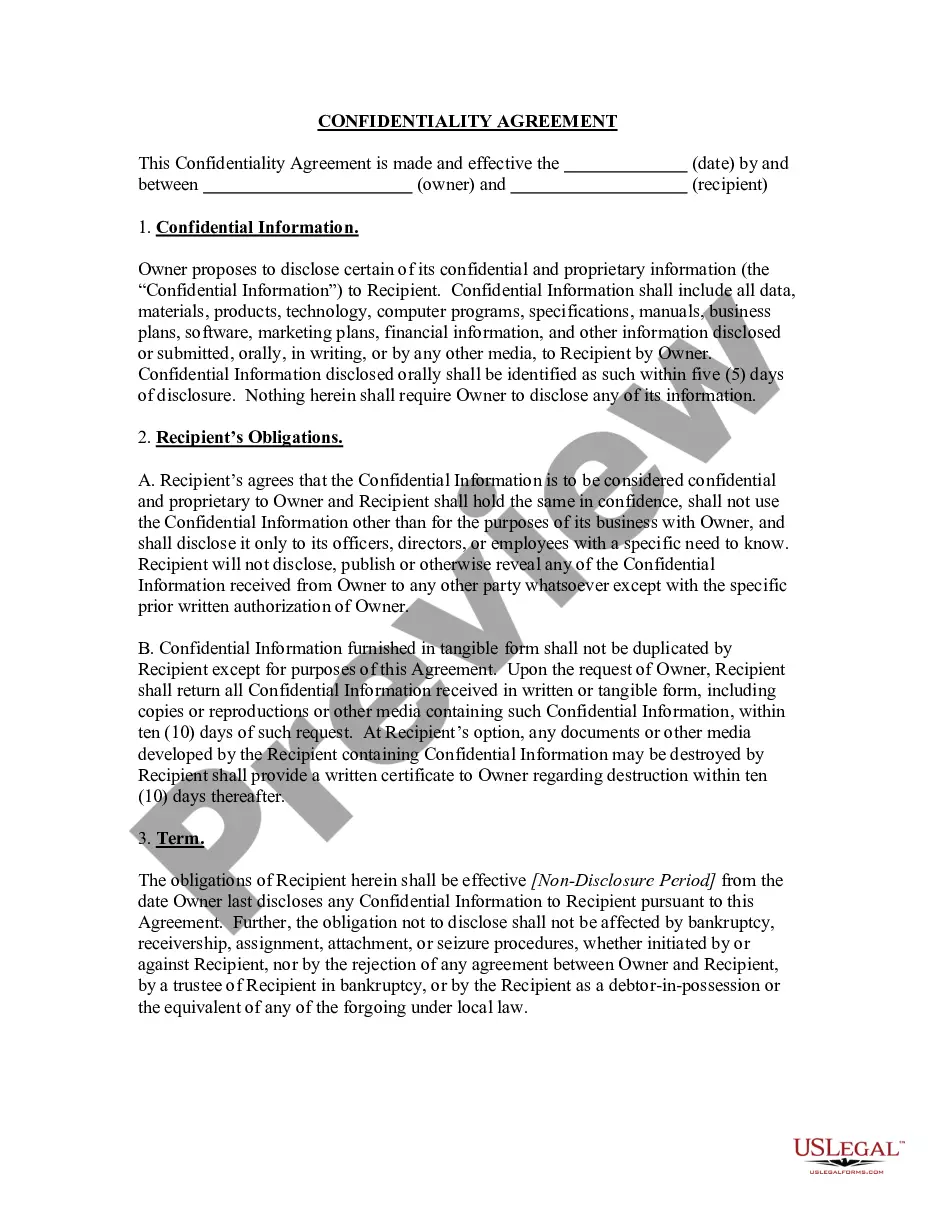
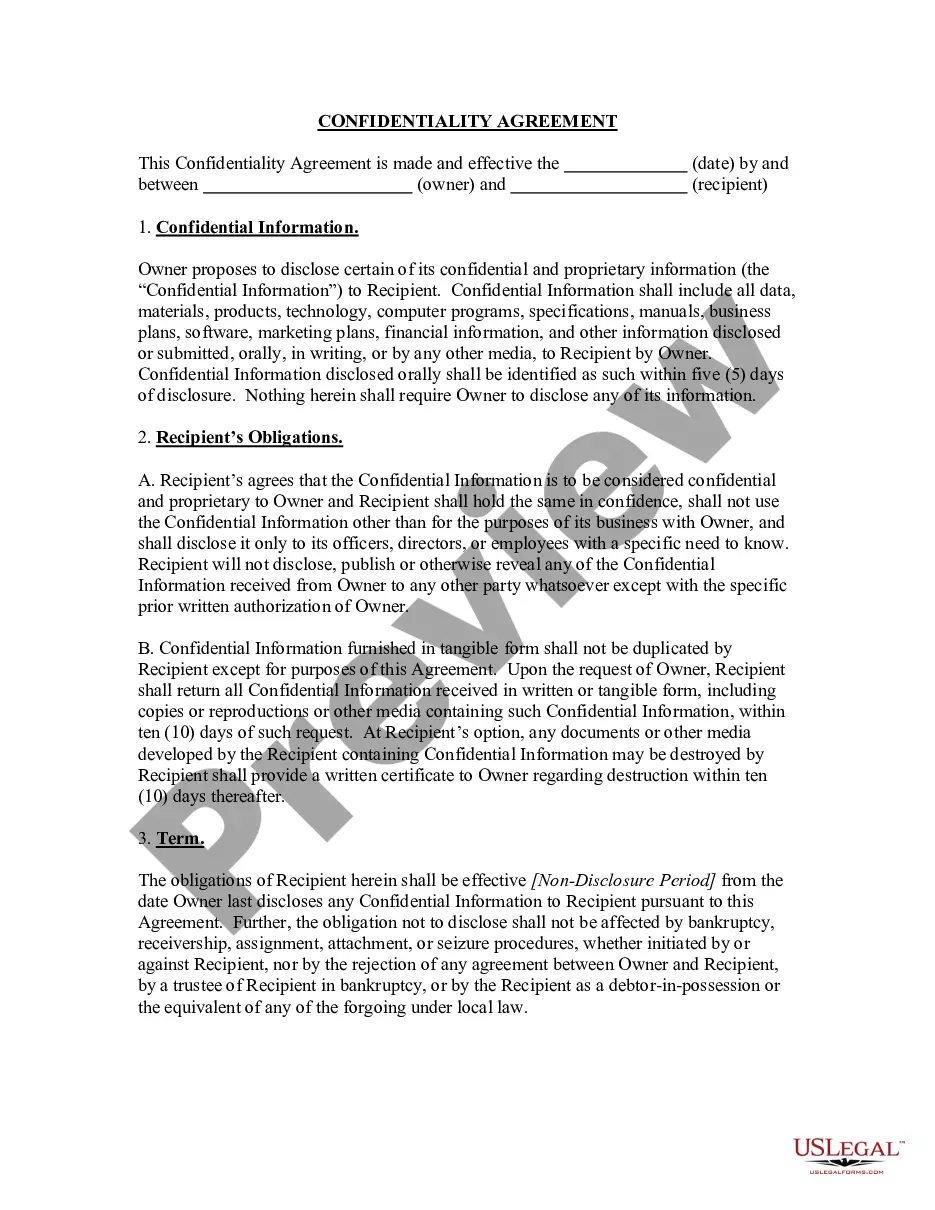
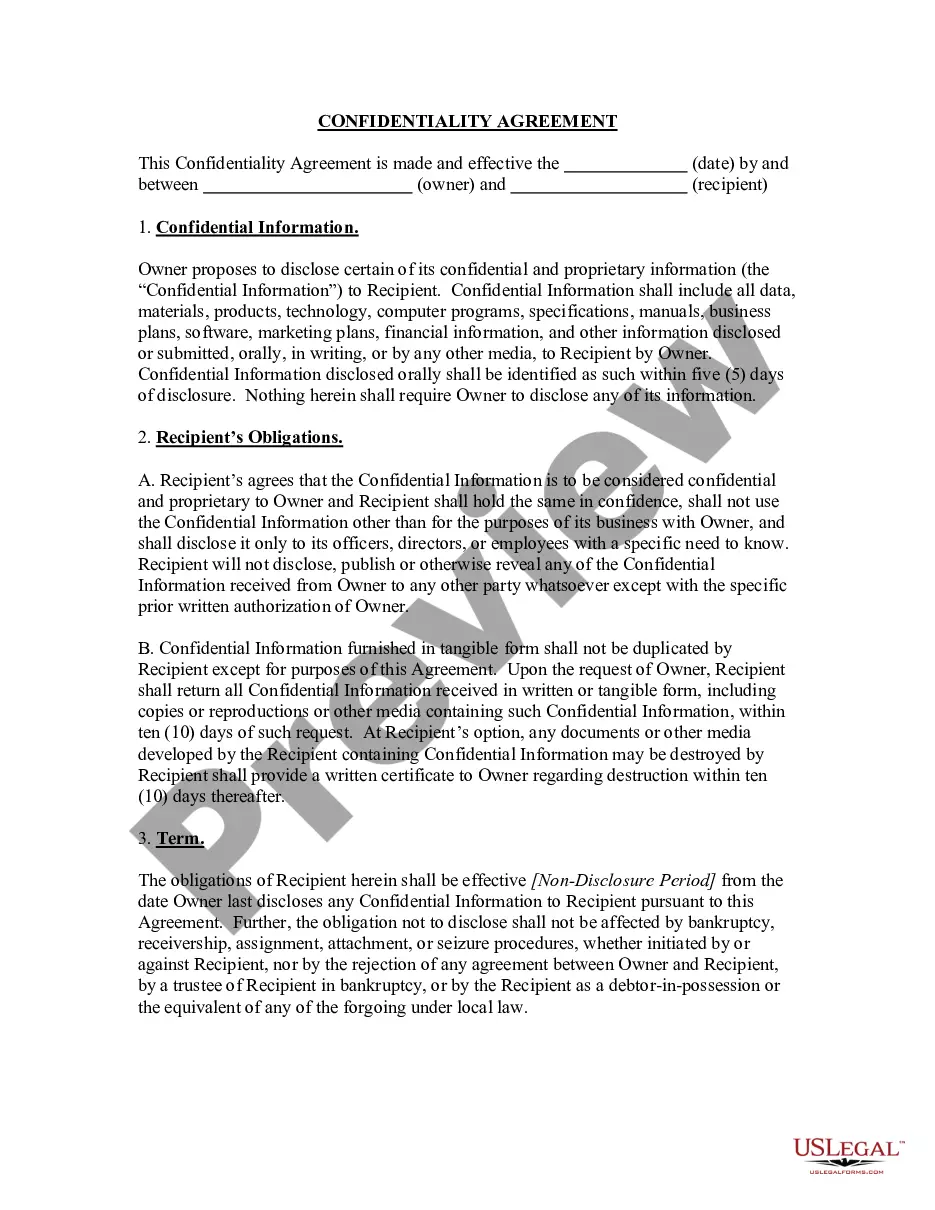
Rhode Island Customer Confidentiality Agreement
Description
Get your form ready online
Our built-in tools help you complete, sign, share, and store your documents in one place.
Make edits, fill in missing information, and update formatting in US Legal Forms—just like you would in MS Word.
Download a copy, print it, send it by email, or mail it via USPS—whatever works best for your next step.
Sign and collect signatures with our SignNow integration. Send to multiple recipients, set reminders, and more. Go Premium to unlock E-Sign.
If this form requires notarization, complete it online through a secure video call—no need to meet a notary in person or wait for an appointment.
We protect your documents and personal data by following strict security and privacy standards.

Make edits, fill in missing information, and update formatting in US Legal Forms—just like you would in MS Word.

Download a copy, print it, send it by email, or mail it via USPS—whatever works best for your next step.

Sign and collect signatures with our SignNow integration. Send to multiple recipients, set reminders, and more. Go Premium to unlock E-Sign.

If this form requires notarization, complete it online through a secure video call—no need to meet a notary in person or wait for an appointment.

We protect your documents and personal data by following strict security and privacy standards.
Looking for another form?


How to fill out Customer Confidentiality Agreement?
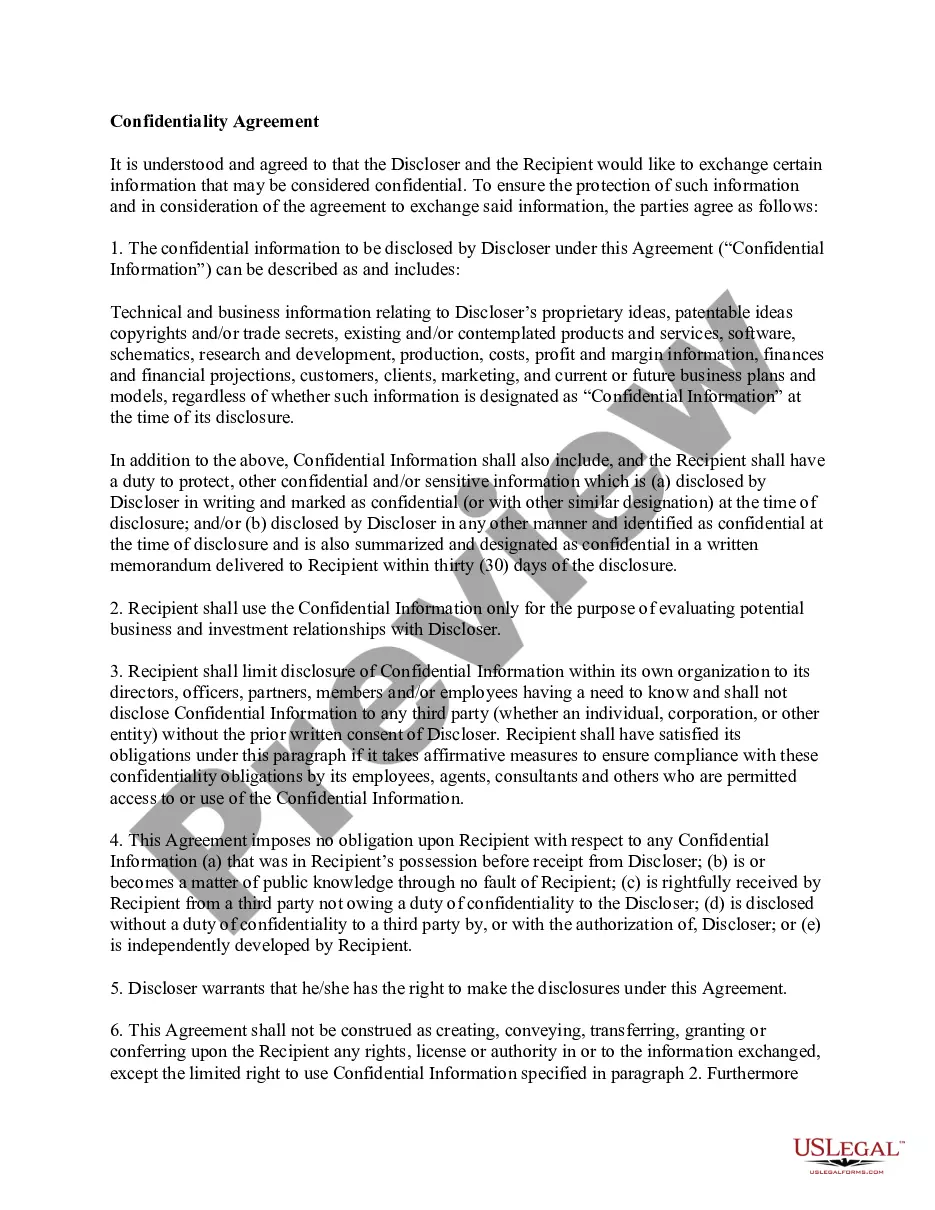
US Legal Forms - one of the most essential collections of legal documents in the United States - provides a vast selection of legal paper templates that you can download or create. Utilizing the site, you can access a multitude of forms for business and personal purposes, organized by categories, states, or keywords. You can find the latest versions of forms such as the Rhode Island Client Confidentiality Agreement in just a few moments.
If you are already a member, Log In and download the Rhode Island Client Confidentiality Agreement from the US Legal Forms catalog. The Download button will be visible for each form you view. You can access all previously saved forms in the My documents section of your account.
To use US Legal Forms for the first time, here are simple instructions to get you started: Ensure you have selected the correct form for the city/state. Click the Preview button to examine the form’s content. Check the form description to confirm that you have chosen the suitable form. If the form does not meet your needs, use the Search box at the top of the screen to find one that does. Once satisfied with the form, confirm your selection by clicking the Buy now button. Then, choose the pricing plan you prefer and provide your details to create an account.
Gain access to the Rhode Island Client Confidentiality Agreement with US Legal Forms, one of the most extensive collections of legal document templates. Utilize a wide array of professional and state-specific templates that meet your business or personal needs and requirements.
- Complete the transaction. Use a credit card or PayPal account to finalize the purchase.
- Select the format and download the form to your device.
- Make adjustments. Fill out, modify, print, and sign the saved Rhode Island Client Confidentiality Agreement.
- Every template you added to your account has no expiration date and is yours permanently.
- If you wish to download or create another copy, just go to the My documents section and click on the form you desire.
Form popularity
FAQ
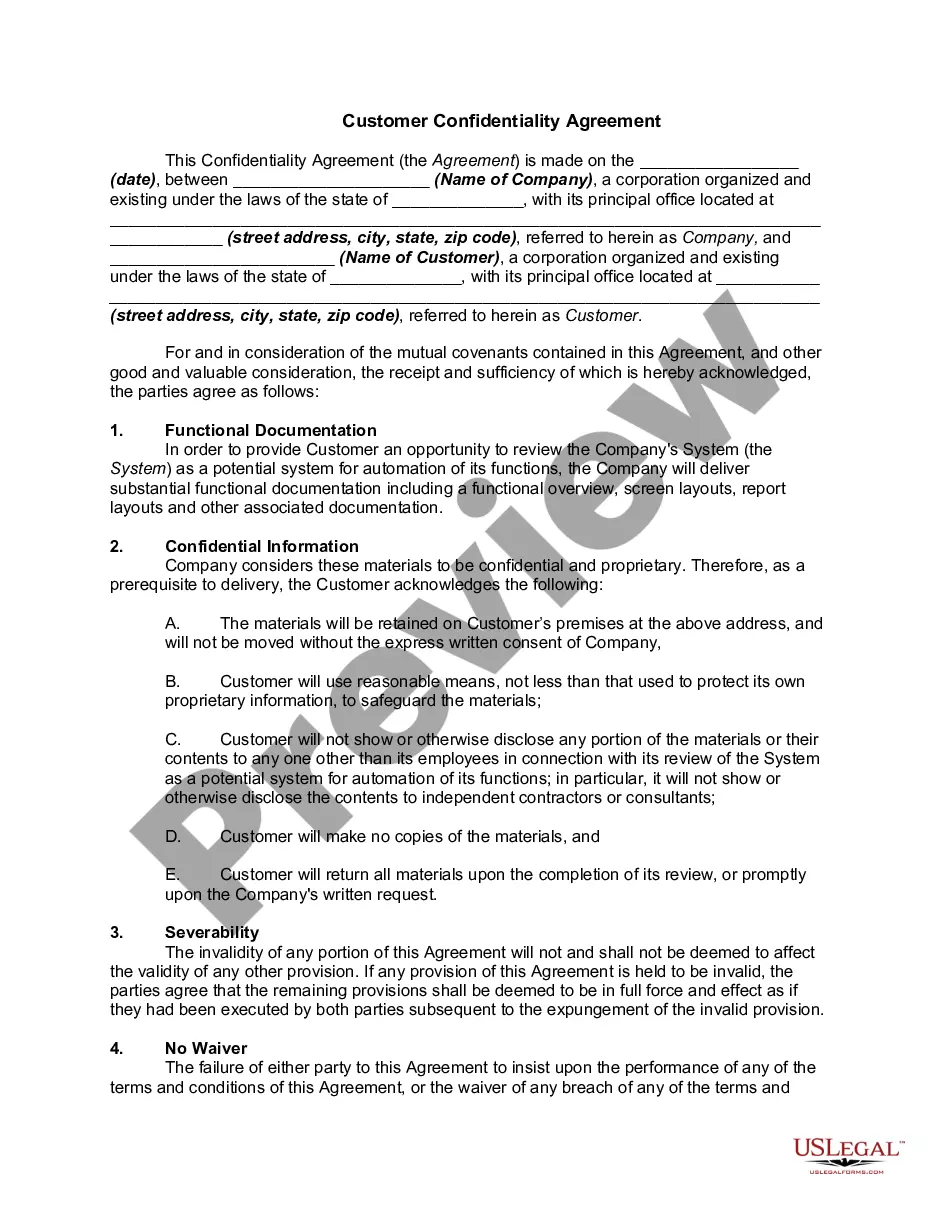
To fill in an NDA, start by writing the date and fully identifying the parties involved. Clearly outline what constitutes confidential information in the context of the Rhode Island Customer Confidentiality Agreement. Include provisions for handling violations and define the duration of the agreement. Lastly, ensure that both parties sign the NDA to validate the agreement.
Filling out a confidentiality and non-disclosure agreement requires careful attention to detail. Begin with the names of both parties and the effective date. Then, list the specific types of information that will be kept confidential in accordance with the Rhode Island Customer Confidentiality Agreement. Finally, include terms regarding the length of confidentiality and the consequences in case of a breach.
To fill out an NDA example effectively, start by providing the date and the names of all parties involved. Next, describe the confidential information that will be protected under the Rhode Island Customer Confidentiality Agreement. Be sure to specify the obligations of both parties and detail the duration of the agreement. Lastly, both parties should sign and date the document.
Writing a simple confidentiality statement involves clearly stating that the information shared is confidential. Begin with a declaration, such as 'The parties agree to maintain the confidentiality of all shared information.' Ensure that the statement aligns with the terms outlined in the Rhode Island Customer Confidentiality Agreement, making it clear what information is covered and the responsibilities of the parties involved.
Filling out an employee non-disclosure agreement is straightforward. Start by entering your company's name and the employee's name at the top. Then, specify the confidential information covered by the Rhode Island Customer Confidentiality Agreement. It's important to clarify the duration of the confidentiality obligation and include a section on the consequences of violating the agreement.
A confidentiality agreement, also known as a non-disclosure agreement (NDA), protects sensitive information shared between parties. For instance, a Rhode Island Customer Confidentiality Agreement might be used between a company and its vendors to ensure that proprietary information remains confidential. This type of agreement outlines the obligations of both parties to keep information private, outlining the consequences of any breach.
The choice between a Non-Disclosure Agreement (NDA) and a Confidentiality Agreement (CDA) depends on the specific needs of the parties involved. An NDA is often broader and can be used across various scenarios, while a CDA, like the Rhode Island Customer Confidentiality Agreement, focuses more explicitly on the relationship between a client and service provider. Evaluating your situation and consulting a legal expert can help you make the best choice.
CDA stands for Confidentiality Agreement, a document that outlines the obligations to protect sensitive information shared between parties. In the context of business relationships, a CDA can be crucial in reinforcing trust and ensuring that proprietary information remains secure. The Rhode Island Customer Confidentiality Agreement is an example of a CDA that helps businesses navigate their confidentiality needs effectively.
A client confidentiality agreement is a legal contract designed to protect sensitive information shared between a service provider and their client. It outlines the obligations of both parties regarding the handling of confidential information. This type of agreement is essential in establishing trust, especially when drafting a Rhode Island Customer Confidentiality Agreement. It ensures that both parties understand their responsibilities, promoting a secure business relationship.
While both Non-Disclosure Agreements (NDAs) and Confidentiality Agreements (CDAs) serve to protect confidential information, they have different focuses. An NDA typically prevents one party from disclosing information to outsiders, whereas a CDA emphasizes the confidentiality of information shared between clients, like in the Rhode Island Customer Confidentiality Agreement. Choosing the right type of agreement is crucial for safeguarding your interests.