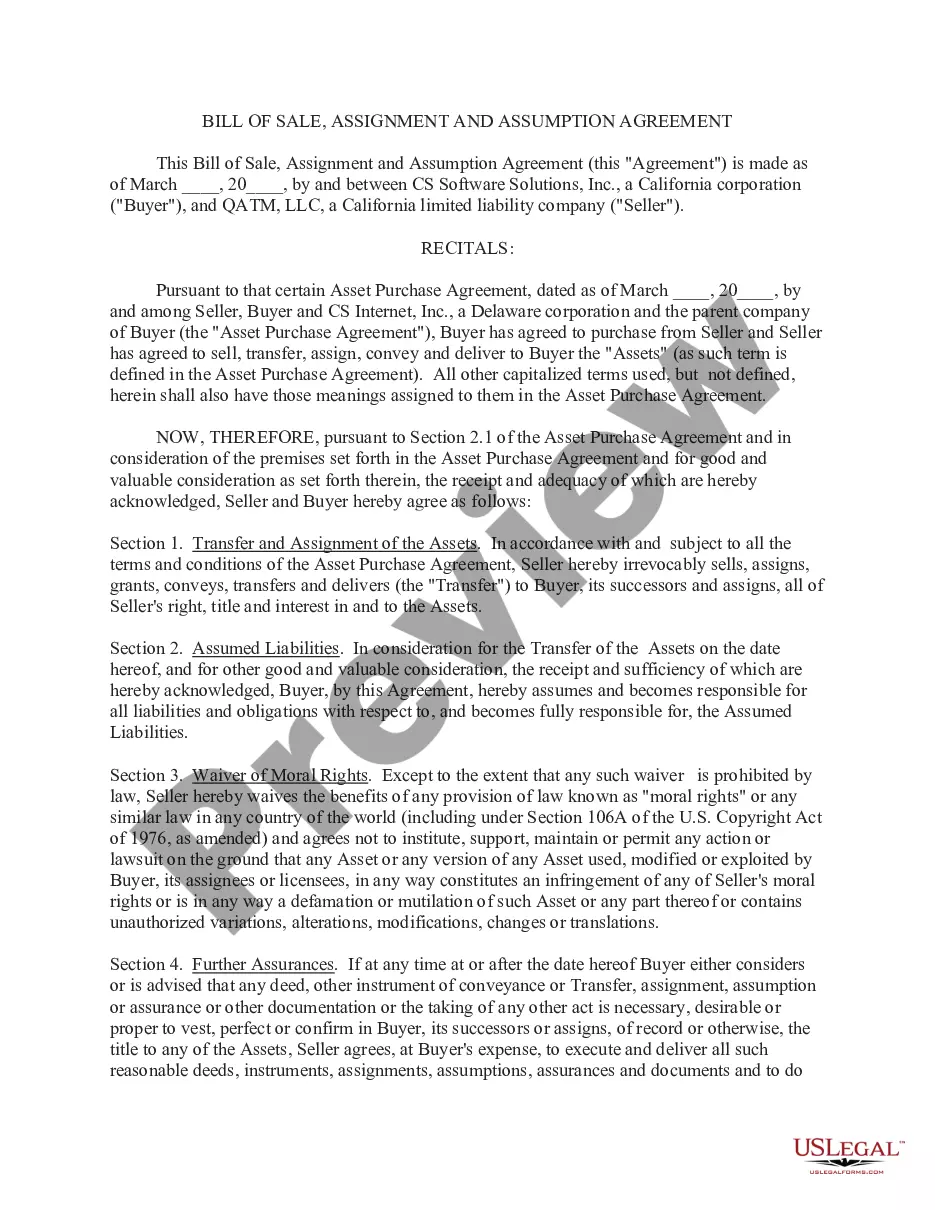
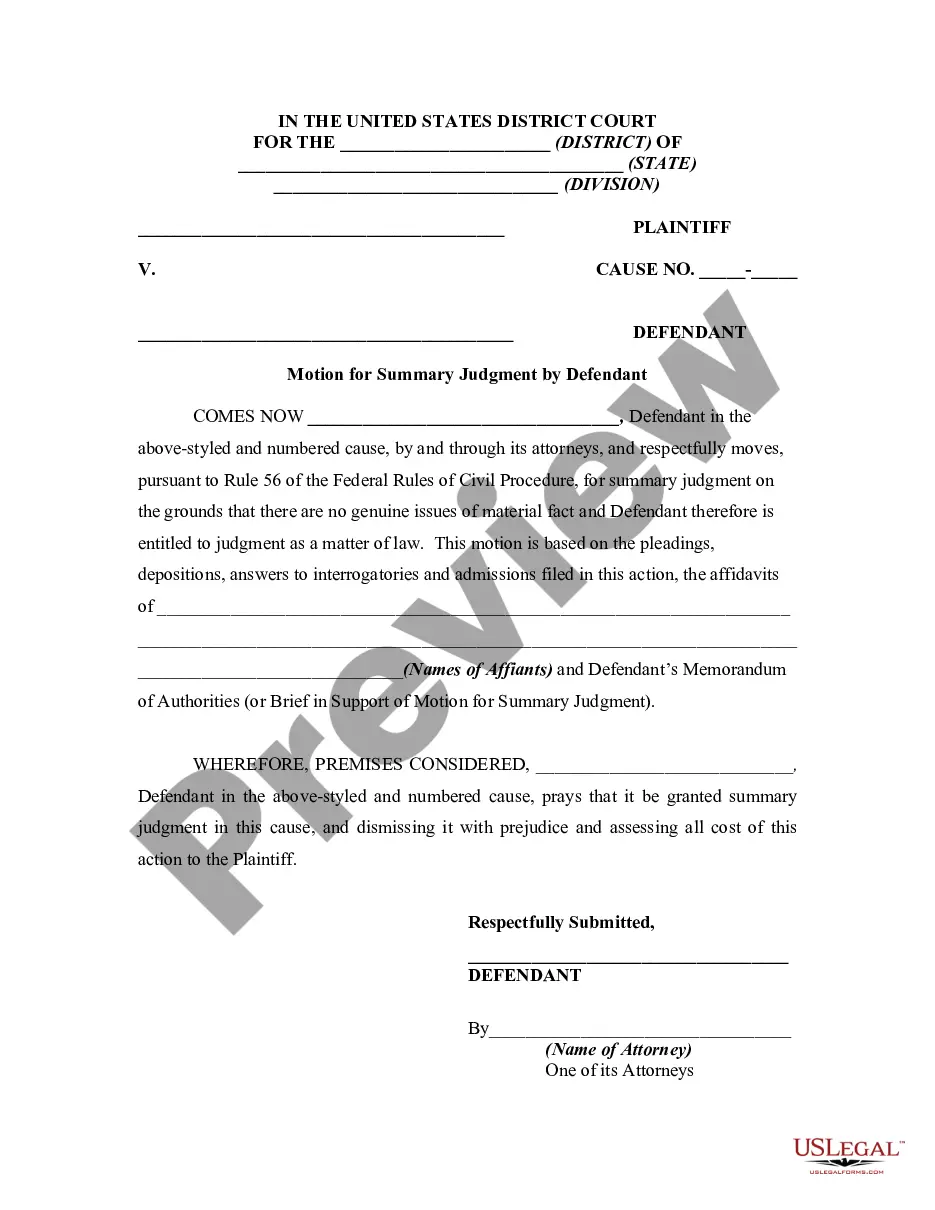
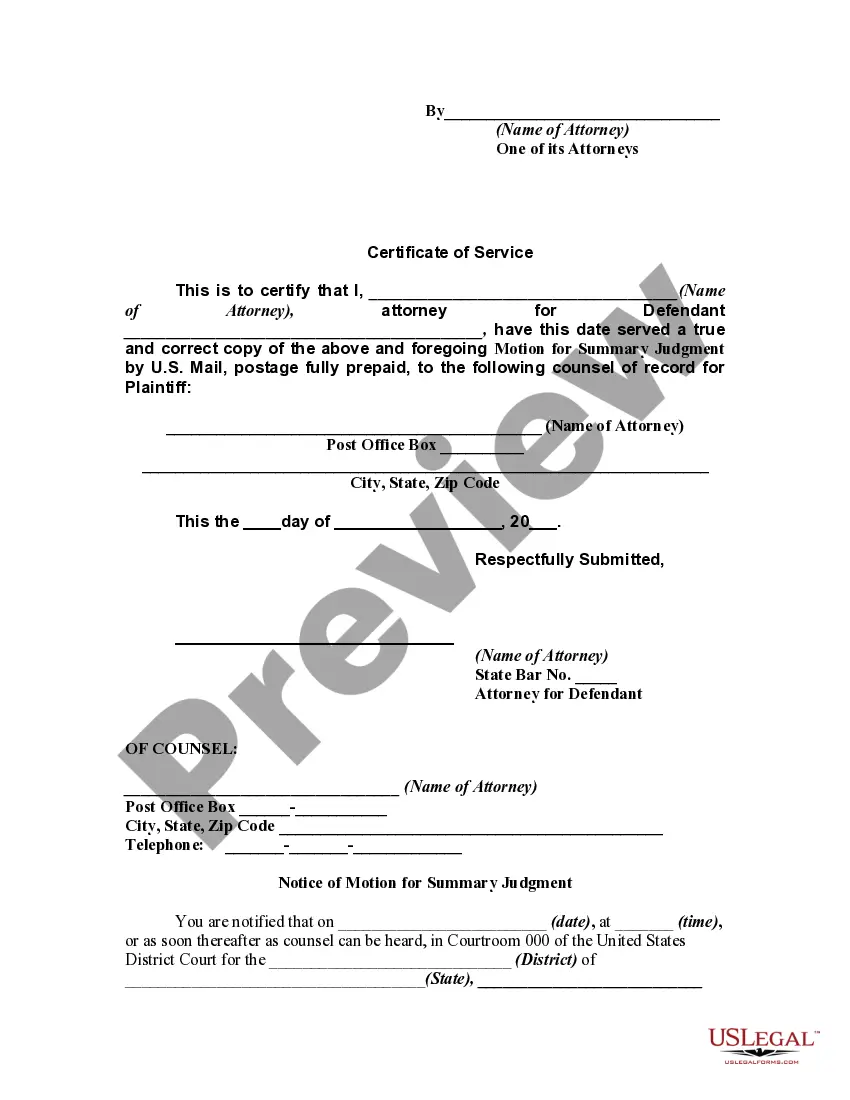
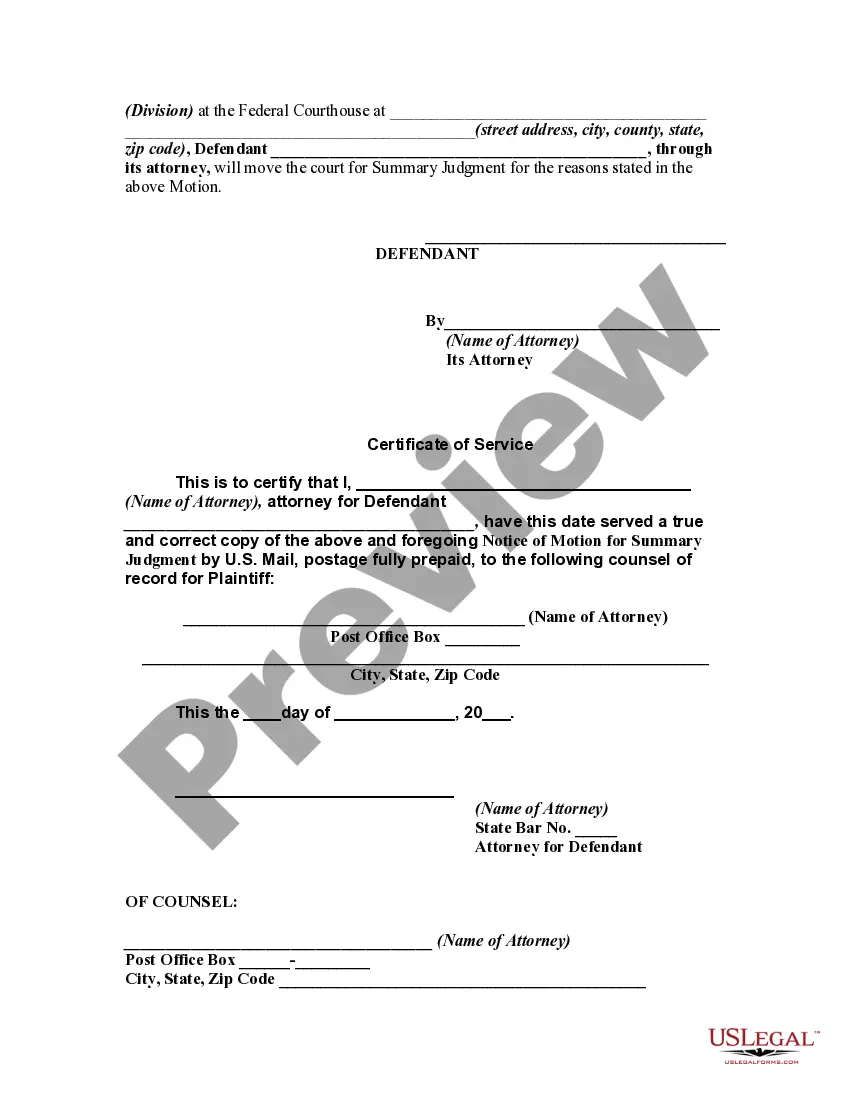
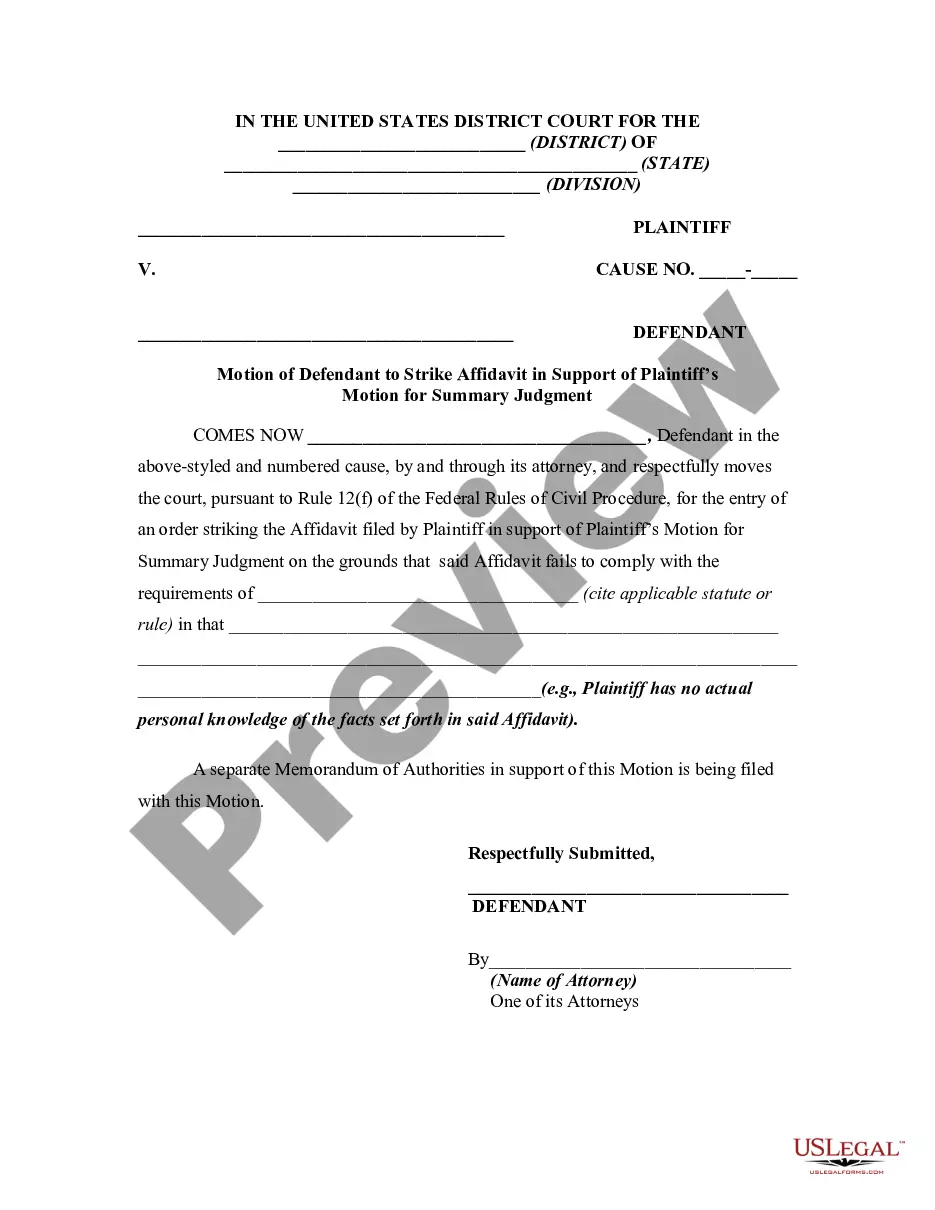
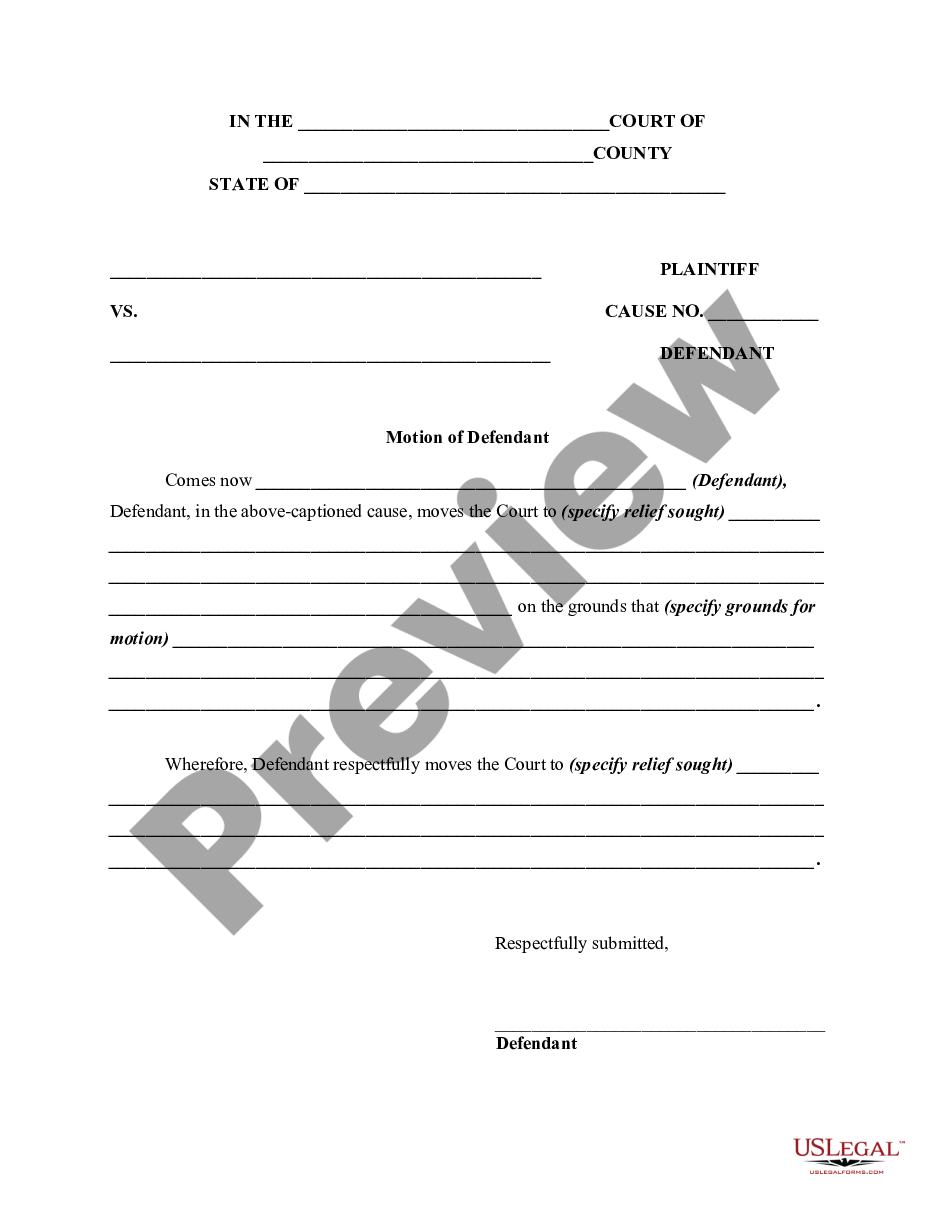
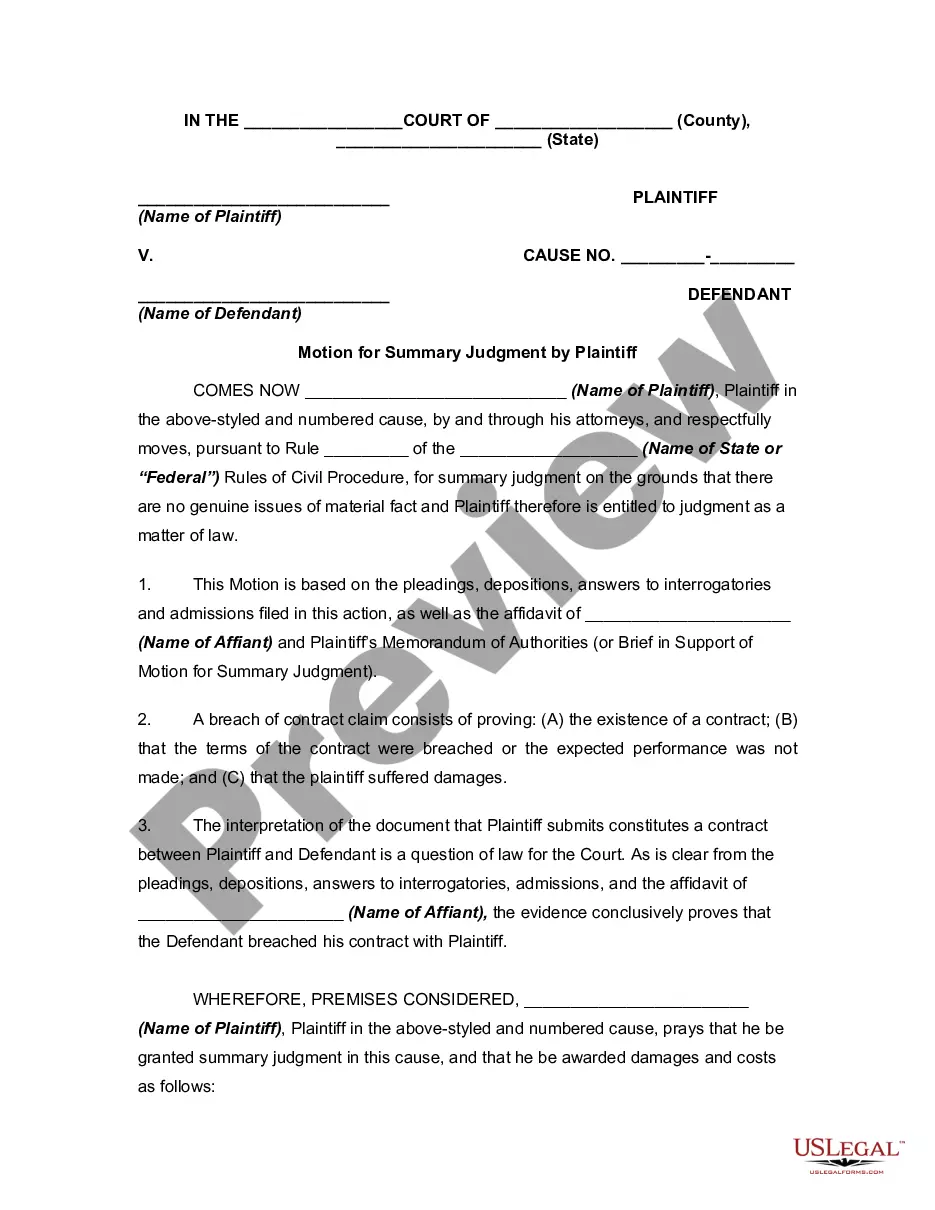
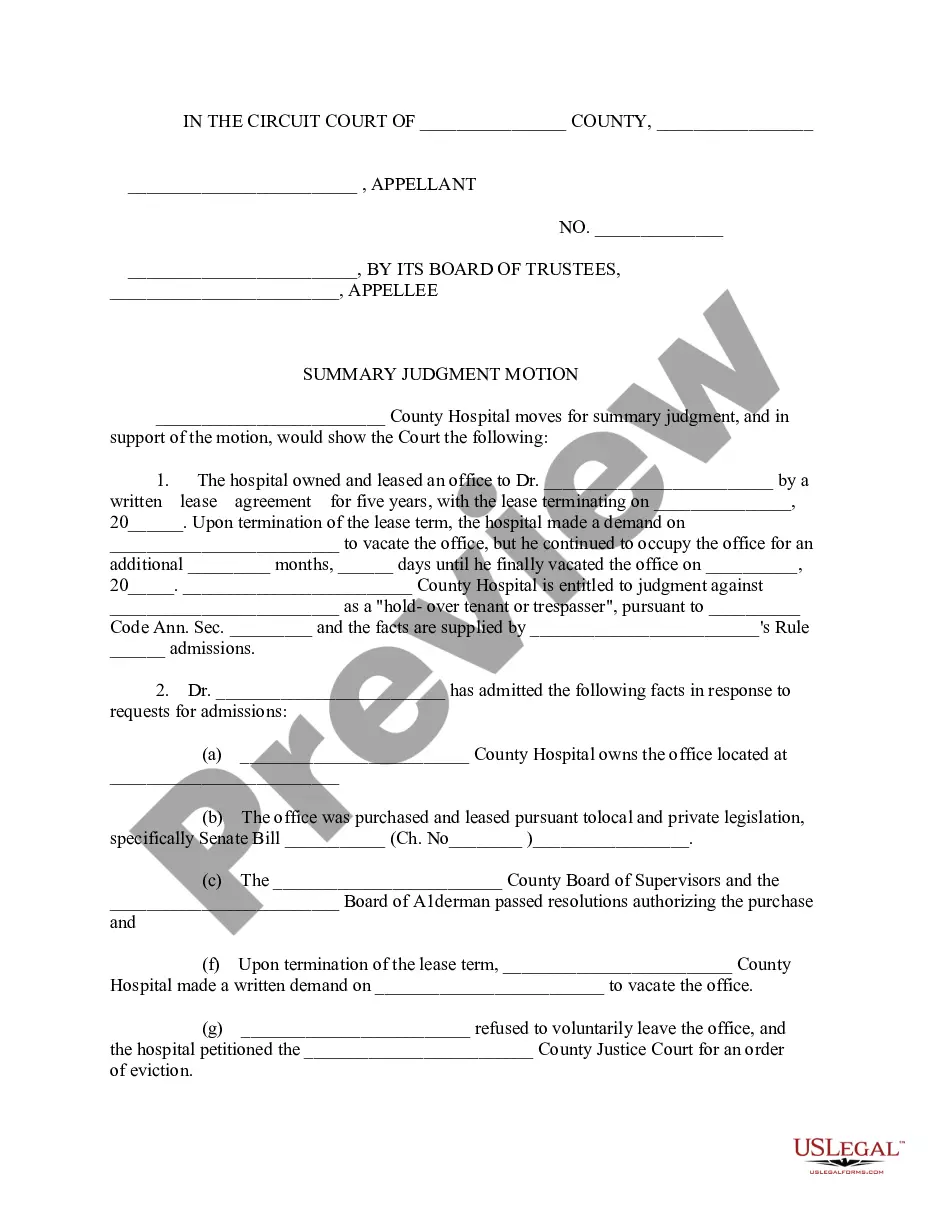
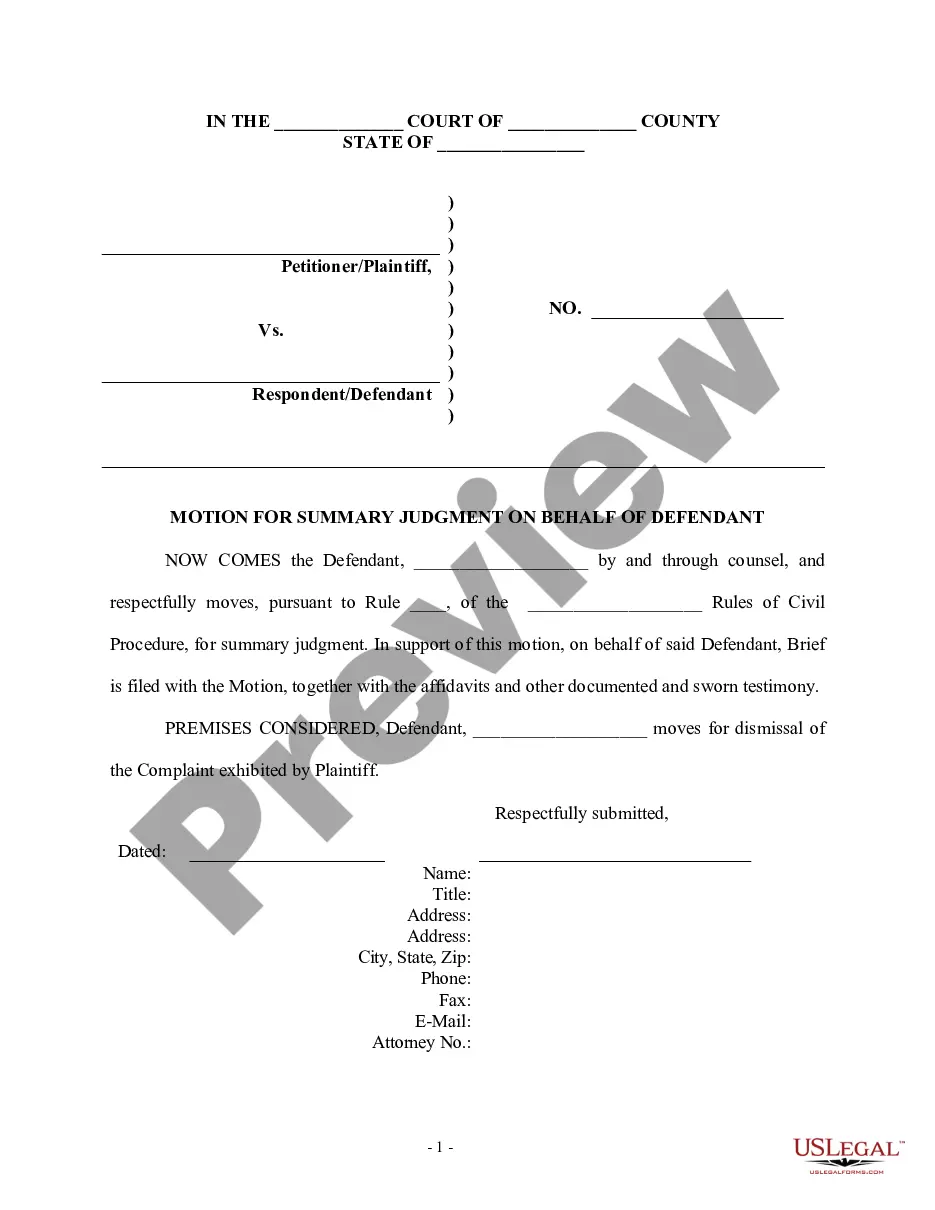
This form is a generic motion for summary judgment. The motion adopts the "notice pleadings" format of the Federal Rules of Civil Procedure, which have been adopted by most states in one form or another.
Puerto Rico Motion for Summary Judgment by Defendant with Notice of Motion
Category:
State:
Multi-State
Control #:
US-00920BG
Format:
Word;
Rich Text
Instant download
Description
Free preview

Get your form ready online
Our built-in tools help you complete, sign, share, and store your documents in one place.
Built-in online Word editor
Make edits, fill in missing information, and update formatting in US Legal Forms—just like you would in MS Word.
Export easily
Download a copy, print it, send it by email, or mail it via USPS—whatever works best for your next step.
E-sign your document
Sign and collect signatures with our SignNow integration. Send to multiple recipients, set reminders, and more. Go Premium to unlock E-Sign.
Notarize online 24/7
If this form requires notarization, complete it online through a secure video call—no need to meet a notary in person or wait for an appointment.
Store your document securely
We protect your documents and personal data by following strict security and privacy standards.

Make edits, fill in missing information, and update formatting in US Legal Forms—just like you would in MS Word.

Download a copy, print it, send it by email, or mail it via USPS—whatever works best for your next step.

Sign and collect signatures with our SignNow integration. Send to multiple recipients, set reminders, and more. Go Premium to unlock E-Sign.

If this form requires notarization, complete it online through a secure video call—no need to meet a notary in person or wait for an appointment.

We protect your documents and personal data by following strict security and privacy standards.
Looking for another form?



How to fill out Motion For Summary Judgment By Defendant With Notice Of Motion?
If you want to total, download, or print legitimate file templates, utilize US Legal Forms, the largest selection of legal forms available online.
Take advantage of the site’s user-friendly and efficient search to find the documents you need.
A range of templates for business and personal purposes are organized by categories and states, or keywords.
Step 4. Once you have found the form you need, click the Get now button. Choose the payment plan you prefer and enter your details to register for the account.
Step 5. Complete the transaction. You can use your credit card or PayPal account to finalize the purchase.
- Use US Legal Forms to obtain the Puerto Rico Motion for Summary Judgment by Defendant with Notice of Motion in just a few clicks.
- If you are already a US Legal Forms user, Log In to your account and click the Acquire button to obtain the Puerto Rico Motion for Summary Judgment by Defendant with Notice of Motion.
- You can also access forms you previously acquired in the My documents tab of your account.
- If this is your first time using US Legal Forms, follow the instructions below.
- Step 1. Make sure you have selected the form for the correct city/state.
- Step 2. Use the Review option to examine the form’s contents. Don’t forget to read the description.
- Step 3. If you are not satisfied with the form, use the Search box at the top of the screen to find other versions in the legal form style.
Form popularity
FAQ
Judges may grant partial summary judgment. For example, a judge might rule on some factual issues, but leave others for trial. Alternately, a judge might grant summary judgment regarding liability, but still hold a trial to determine damages.
While a summary judgment motion is not a substitute for trial, it is a tool that allows courts to weed out cases that do not need a trial to be resolved. It also allows the court to simplify and streamline the case so that trial is more efficient and focused on the areas of actual dispute.
Despite the final ruling, the losing party can still ask the court to reconsider the ruling or grant a new trial. If desired, they can appeal the summary judgment to a higher court for review. However, keep in mind that strict time limits apply to these appeals procedures.
What Is a Summary Judgment Motion? A motion for summary judgment is when a litigant in a case, either the plaintiff or the defendant, asks the court to end the case without holding a trial.
The court shall grant summary judgment if the movant shows that there is no genuine dispute as to any material fact and the movant is entitled to judgment as a matter of law. The court should state on the record the reasons for granting or denying the motion.
It's a final decision by a judge and is designed to resolve a lawsuit before going to court. One party in a case is entitled to judgment by the law, and summary judgment is used in cases where there's no dispute about the facts.
The chance of success in these cases is less than 10% [1]. Another study found that summary judgment is mostly granted in Title VII cases, for example, cases involving equal pay or employment discrimination [2]. When it comes to federal cases, summary judgments are filed in 17% of total cases.