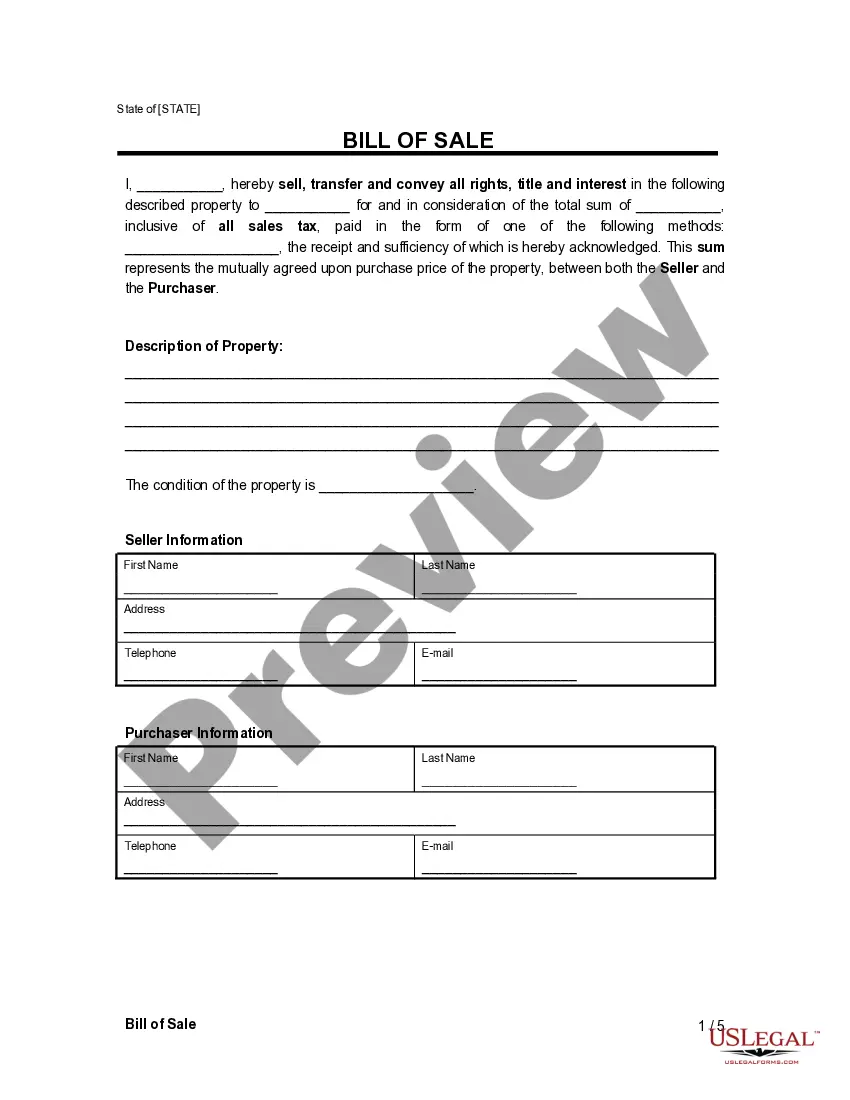
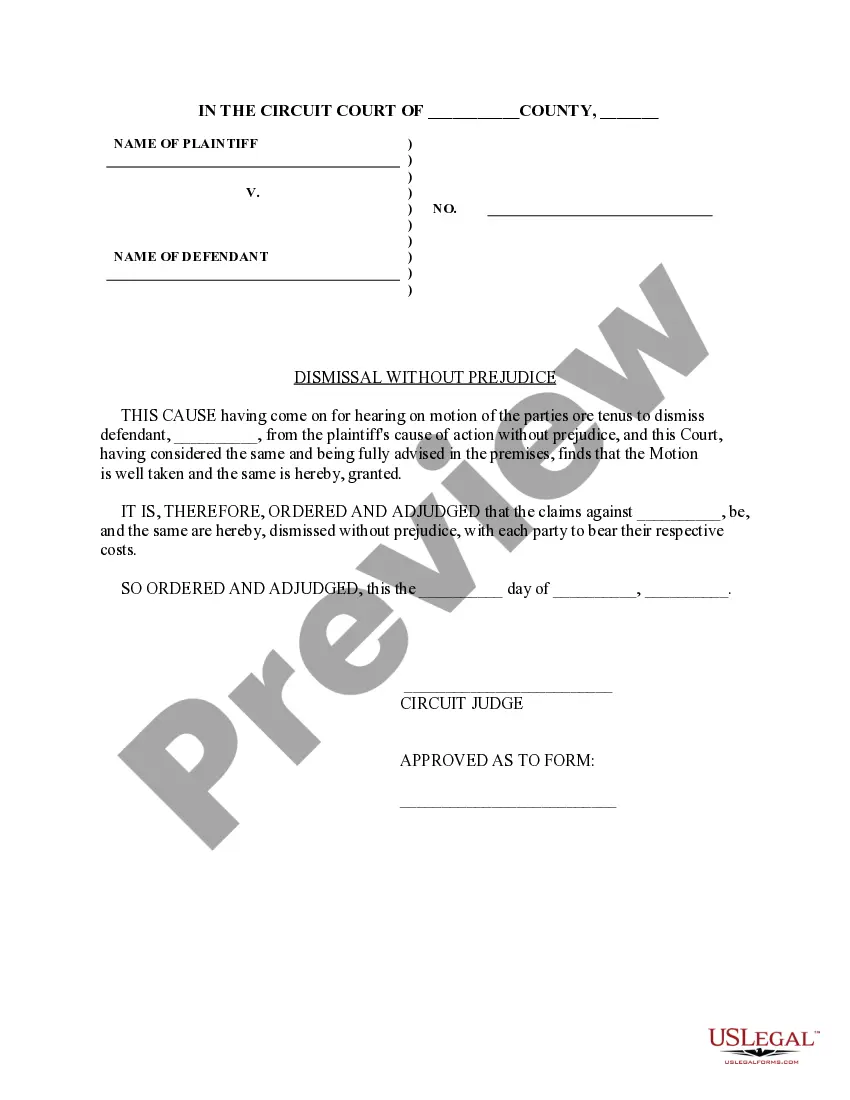
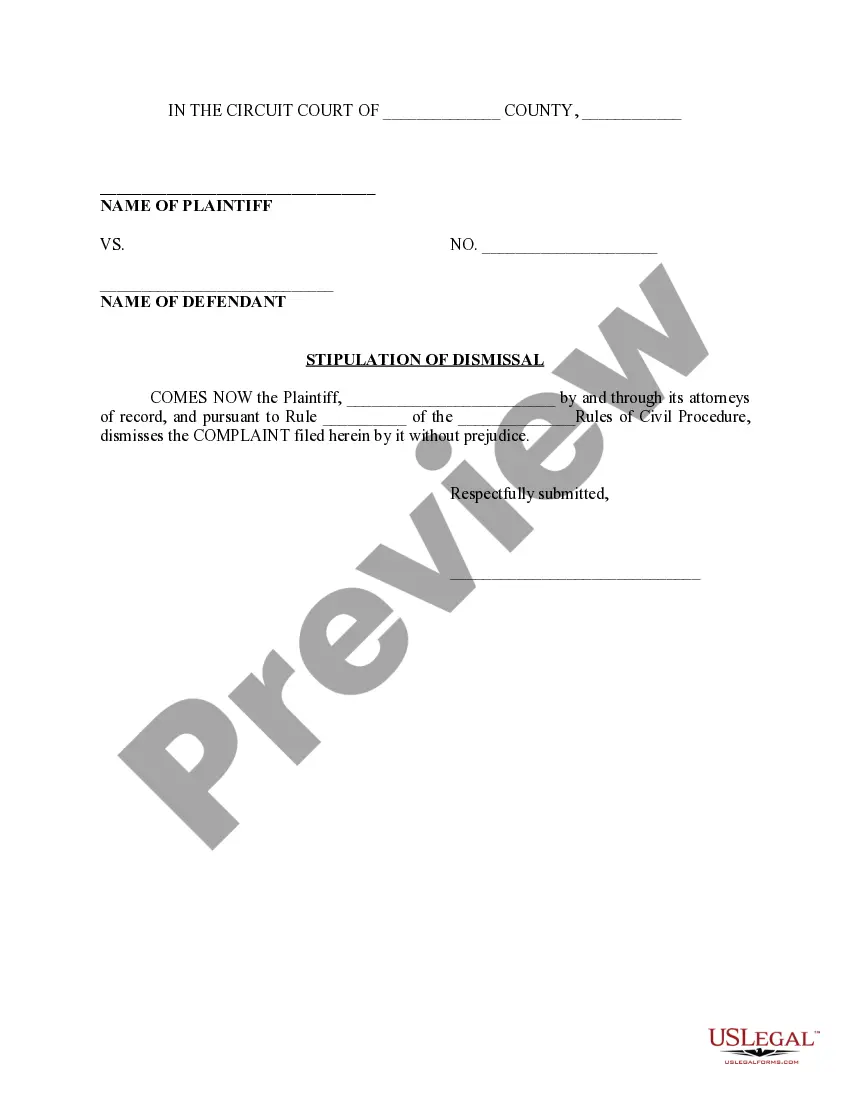
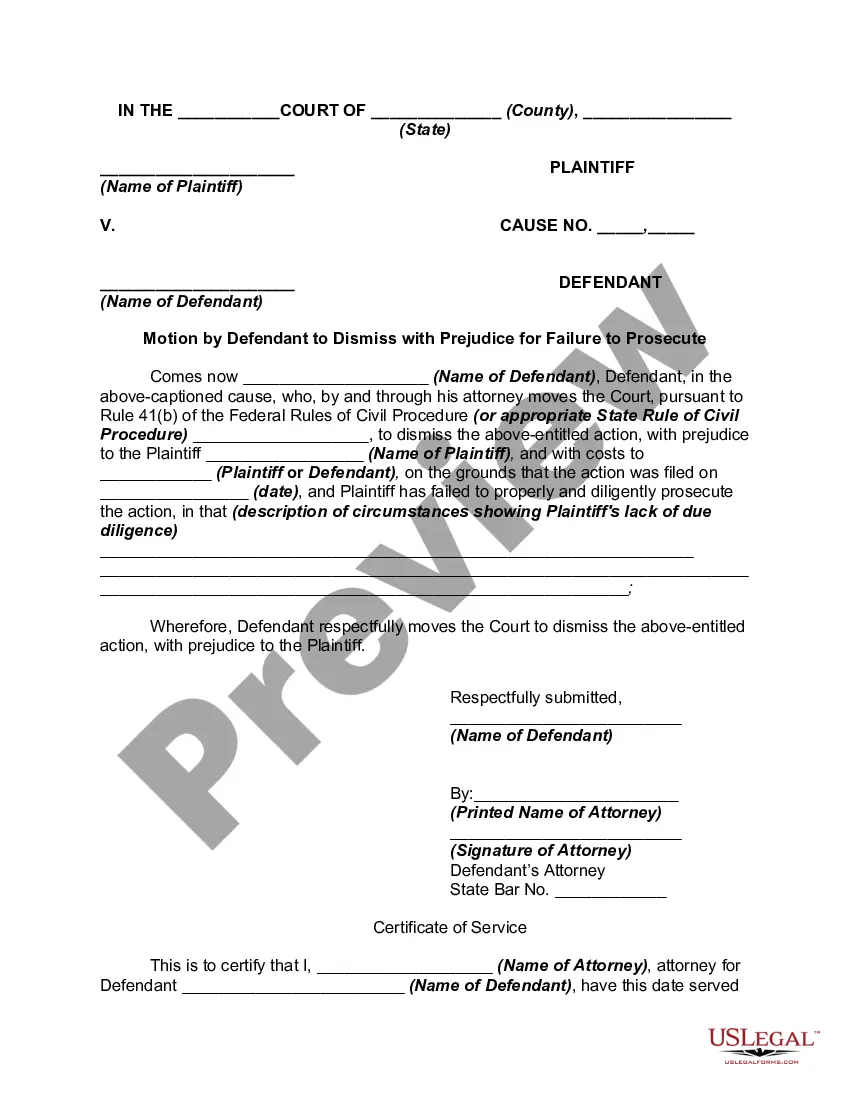
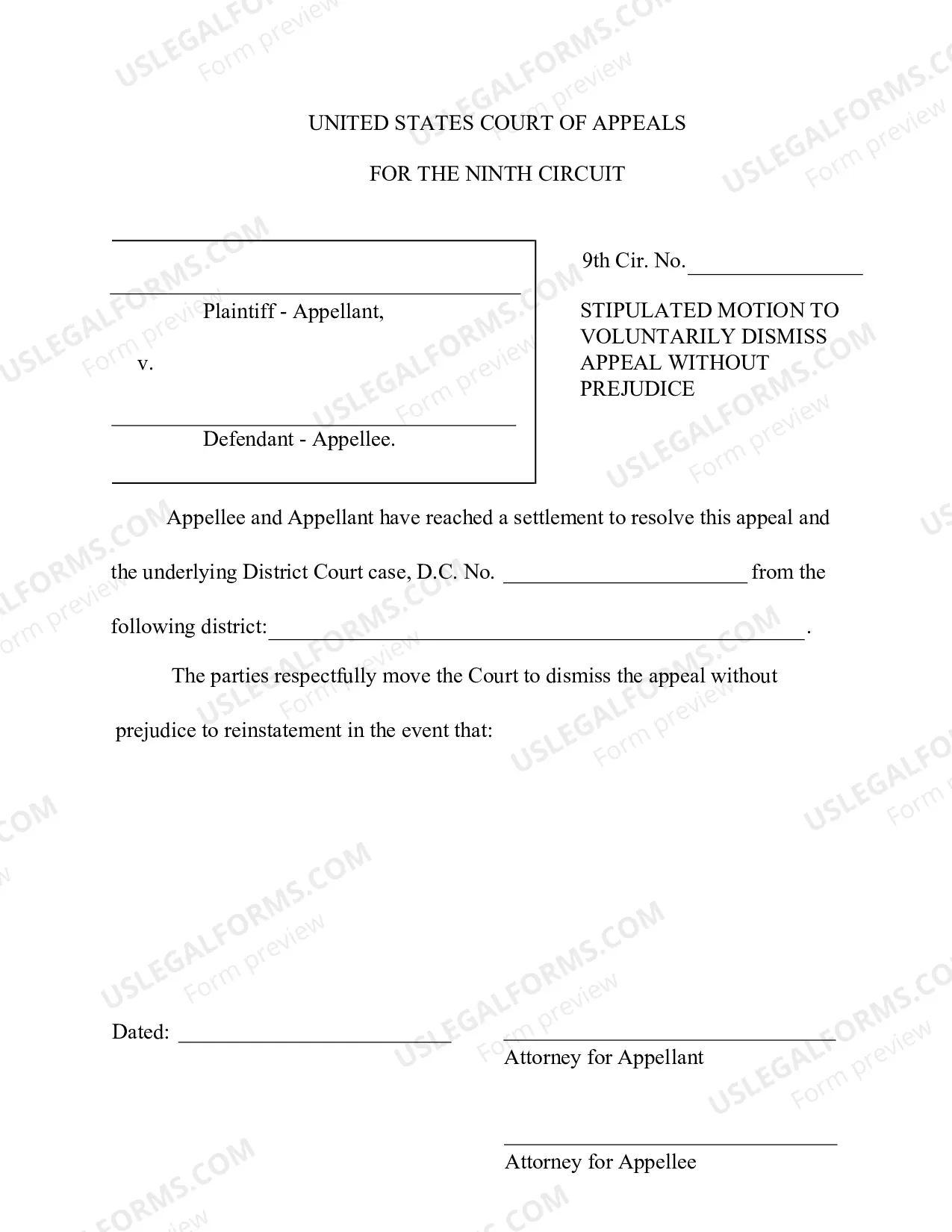
Puerto Rico Dismissal Without Prejudice
Description
Get your form ready online
Our built-in tools help you complete, sign, share, and store your documents in one place.
Make edits, fill in missing information, and update formatting in US Legal Forms—just like you would in MS Word.
Download a copy, print it, send it by email, or mail it via USPS—whatever works best for your next step.
Sign and collect signatures with our SignNow integration. Send to multiple recipients, set reminders, and more. Go Premium to unlock E-Sign.
If this form requires notarization, complete it online through a secure video call—no need to meet a notary in person or wait for an appointment.
We protect your documents and personal data by following strict security and privacy standards.

Make edits, fill in missing information, and update formatting in US Legal Forms—just like you would in MS Word.

Download a copy, print it, send it by email, or mail it via USPS—whatever works best for your next step.

Sign and collect signatures with our SignNow integration. Send to multiple recipients, set reminders, and more. Go Premium to unlock E-Sign.

If this form requires notarization, complete it online through a secure video call—no need to meet a notary in person or wait for an appointment.

We protect your documents and personal data by following strict security and privacy standards.
Looking for another form?
How to fill out Dismissal Without Prejudice?
You can spend hours online looking for the legal document template that meets the federal and state standards you need. US Legal Forms offers thousands of legal forms that are examined by professionals.
You can conveniently download or print the Puerto Rico Dismissal Without Prejudice from my service. If you already have a US Legal Forms account, you can Log In and click on the Acquire button. Subsequently, you can complete, modify, print, or sign the Puerto Rico Dismissal Without Prejudice.
Every legal document template you purchase is yours indefinitely. To obtain an additional copy of a purchased form, visit the My documents section and click on the corresponding button. If this is your first time using the US Legal Forms website, follow the simple instructions below: First, ensure you have selected the correct document template for the county/city of your choice. Check the form description to confirm you have chosen the right template.
Obtain and print thousands of document templates using the US Legal Forms website, which offers the largest collection of legal forms. Utilize professional and state-specific templates to address your business or personal needs.
- If available, utilize the Preview button to review the document template as well.
- If you want to find another version of your form, use the Search section to locate the template that meets your needs and requirements.
- Once you have found the template you desire, click Buy now to proceed.
- Select the pricing plan you prefer, enter your details, and register for your account on US Legal Forms.
- Complete the transaction. You can use your Visa or Mastercard or PayPal account to pay for the legal form.
- Choose the format of your document and download it to your device.
- Make modifications to your document if necessary. You can complete, modify, sign, and print the Puerto Rico Dismissal Without Prejudice.
Form popularity
FAQ
For example, a nonsuit with prejudice marks the end of a plaintiff's case, meaning they can no longer refile the case. On the other hand, a nonsuit without prejudice ends the current case but enables the plaintiff to refile in the future.
Note that there are exceptions to this rule: dismissals for lack of jurisdiction, improper venue, or failure to join a party under FRCP 19 do not count as adjudications on the merits, and thus are considered dismissals without prejudice.
Rule 12(b)(6) of the Federal Rules of Civil Procedure deals with a dismissal based on a failure to state a claim. ing, however, to Rule 41(b) of the Federal Rules of Civil Procedure, the following are not claim preclusive and are not considered an adjudication "on the merits": a lack of jurisdiction.
Dismissal without prejudice means that the judge dismissed the plaintiff's or prosecutor's case without damaging their right to have their matter heard in court later. A prosecutor may ask to withdraw the case against a person to have more time to make a case stronger, find more evidence or question other witnesses.
?With prejudice? means the decision is final. ?Without prejudice? means it's not final and subject to future inquiry. If the judge announces a case is dismissed with prejudice, that means it's permanently dismissed and can't be retried.
Whereas a case that is dismissed ?with prejudice? is dismissed permanently, a case that is dismissed ?without prejudice? is only dismissed temporarily. This temporary dismissal means that the plaintiff is allowed to re-file charges, alter the claim, or bring the case to another court.
A case dismissed with prejudice is considered a final ruling on the merits of that case. A case dismissed without prejudice is not considered a ruling on the merits and the plaintiff is free to file a new lawsuit on the same grounds if they wish to do so.
Under Federal Rules of Civil Procedure Rule 41(b), the default rule is that a dismissal is considered an ?adjudication on the merits,? and therefore with prejudice. Contrast with dismissal without prejudice, where the plaintiff may subsequently bring their claim in another court.