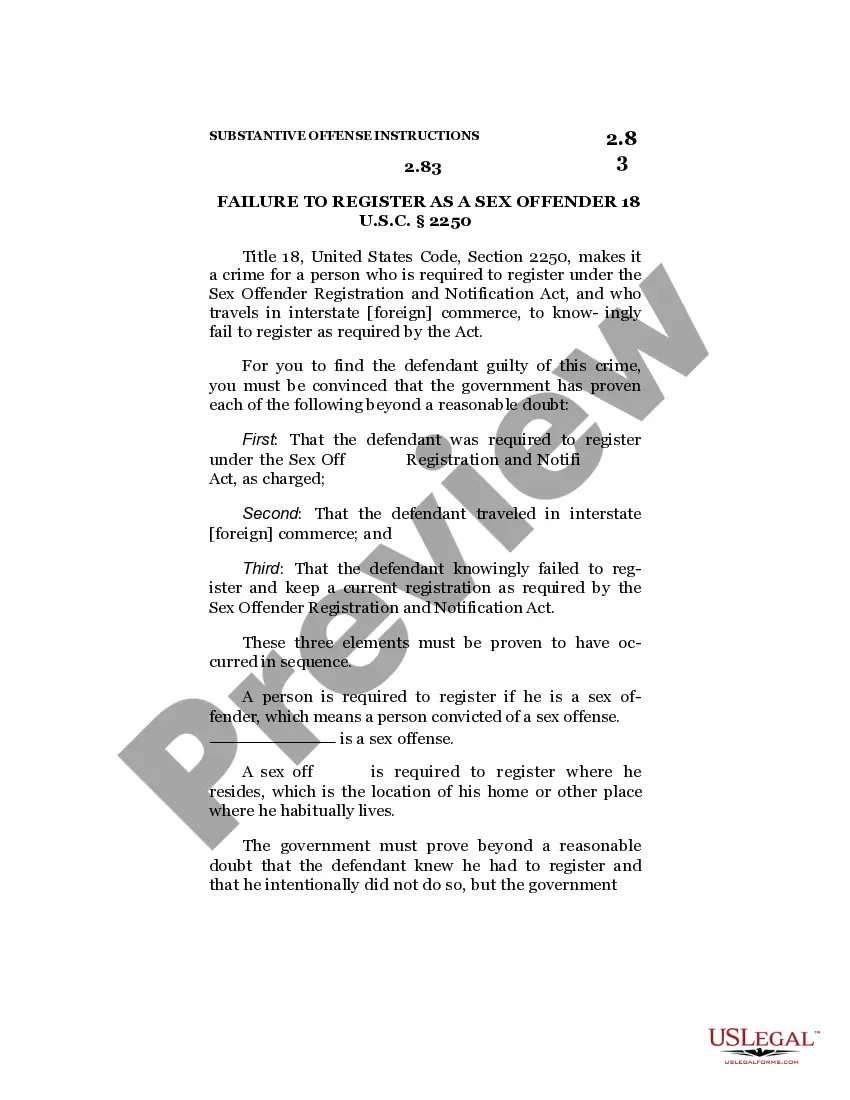
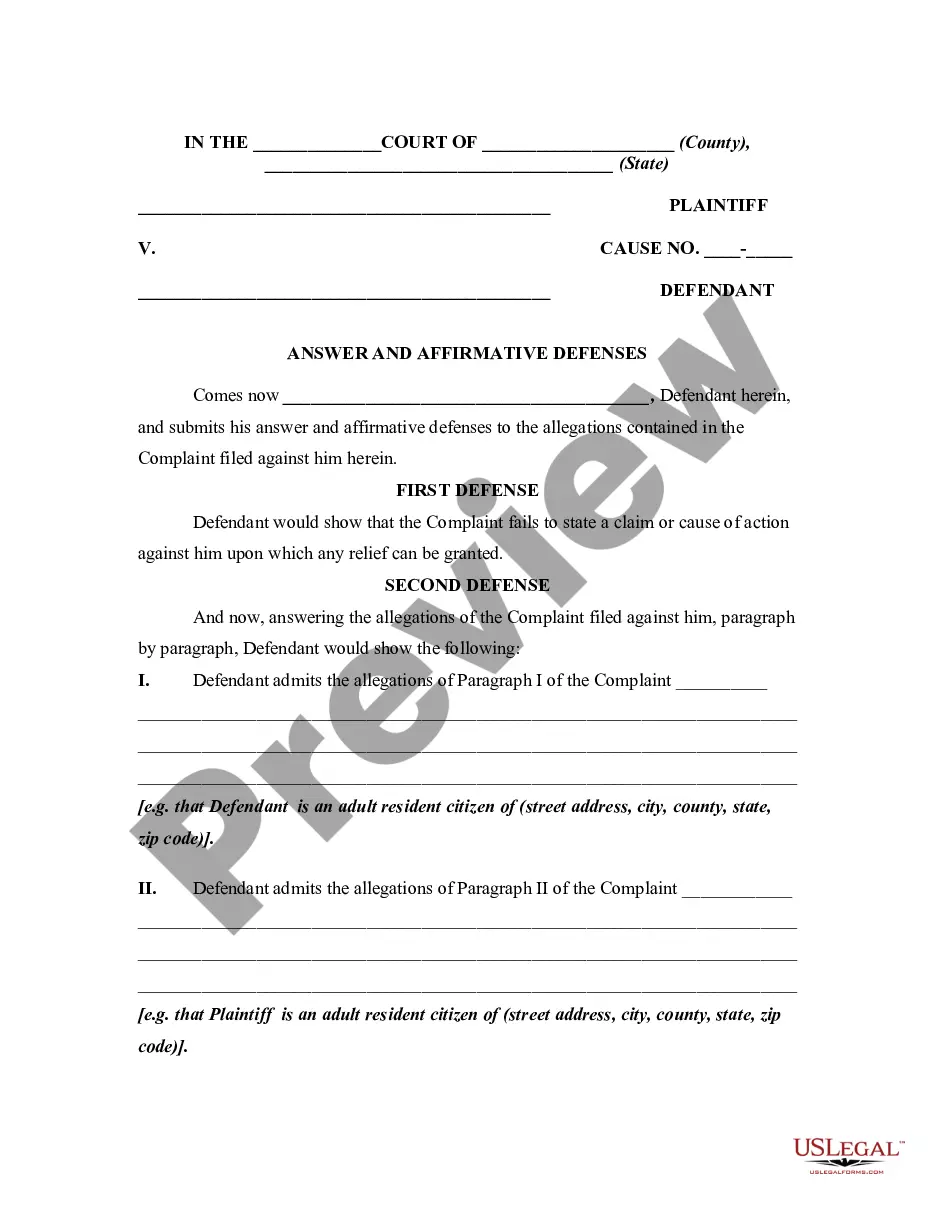
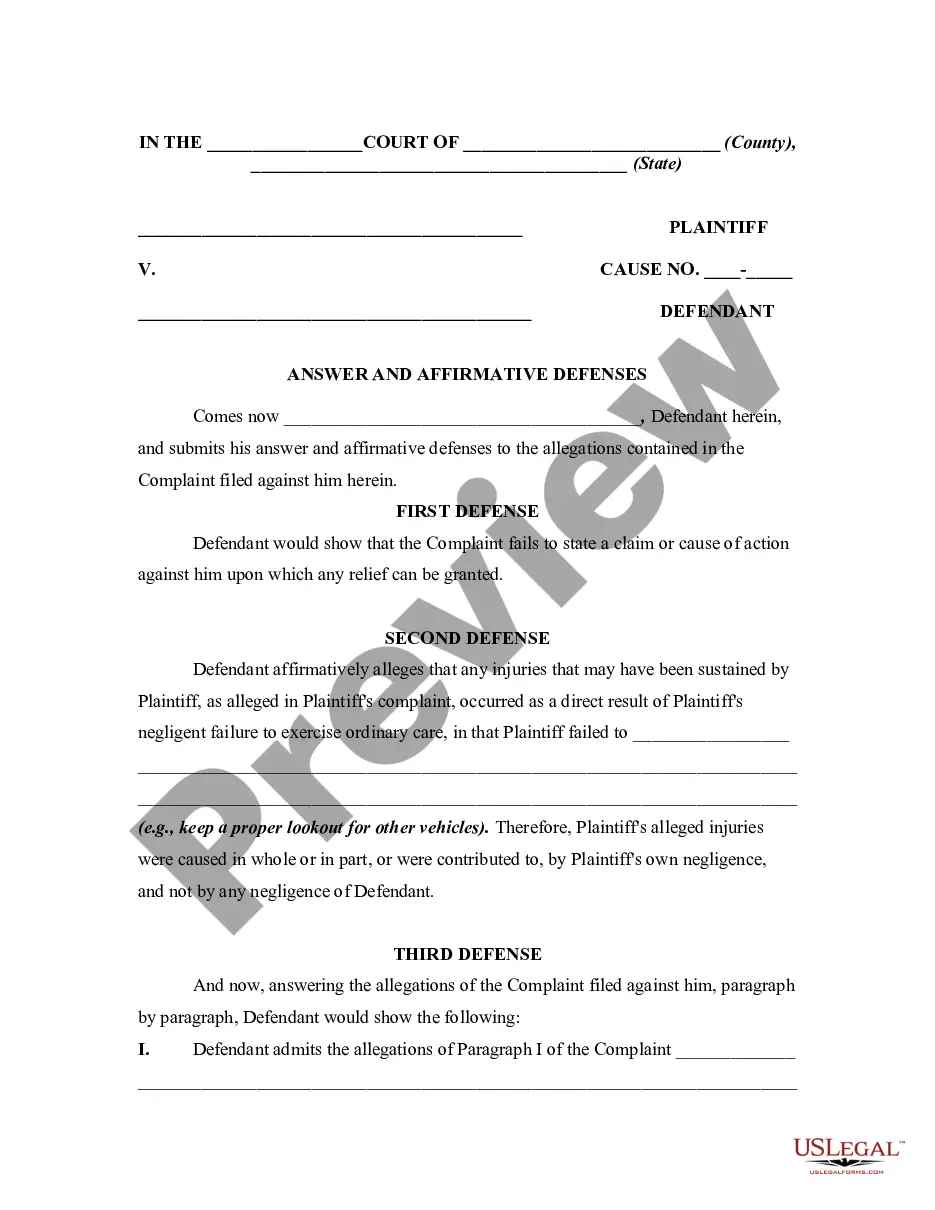
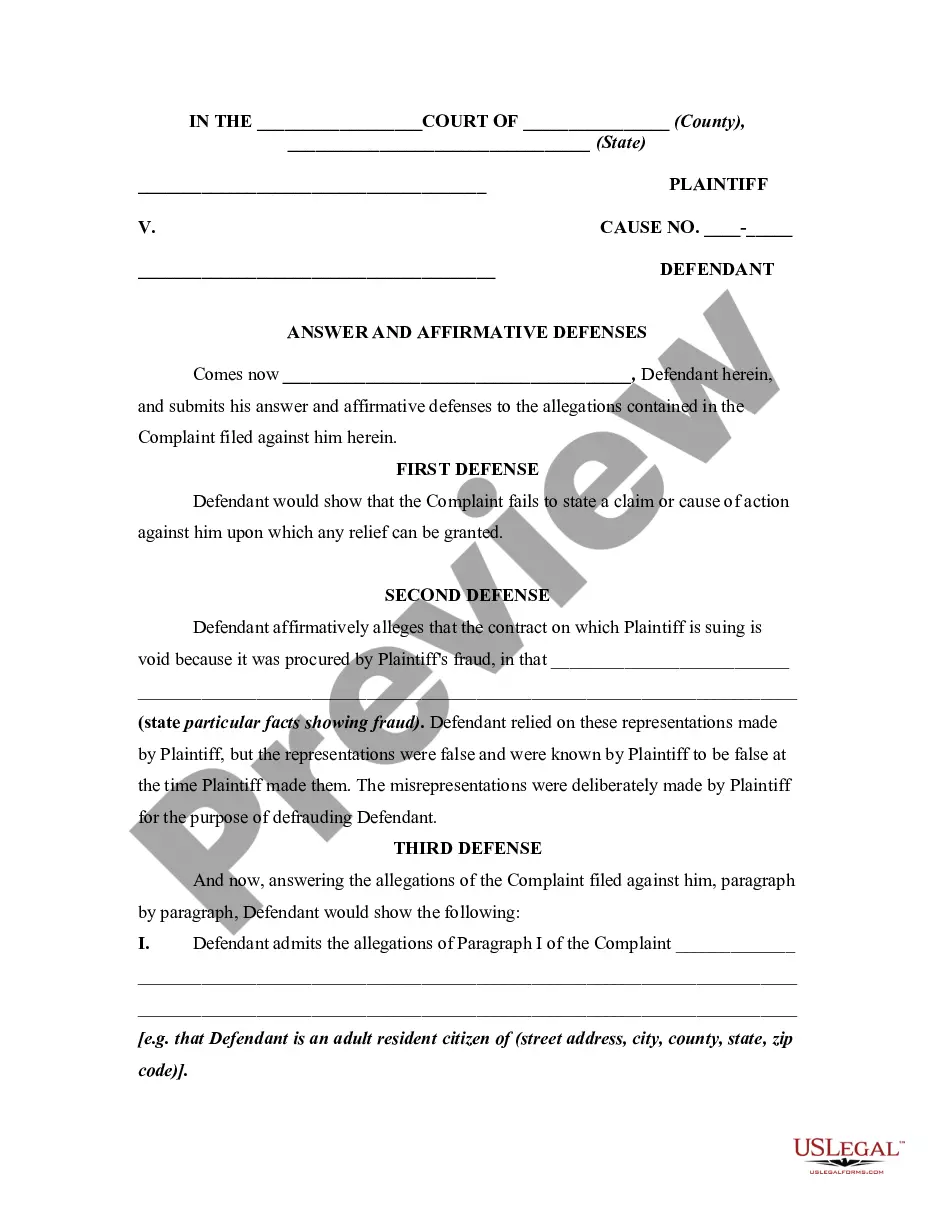
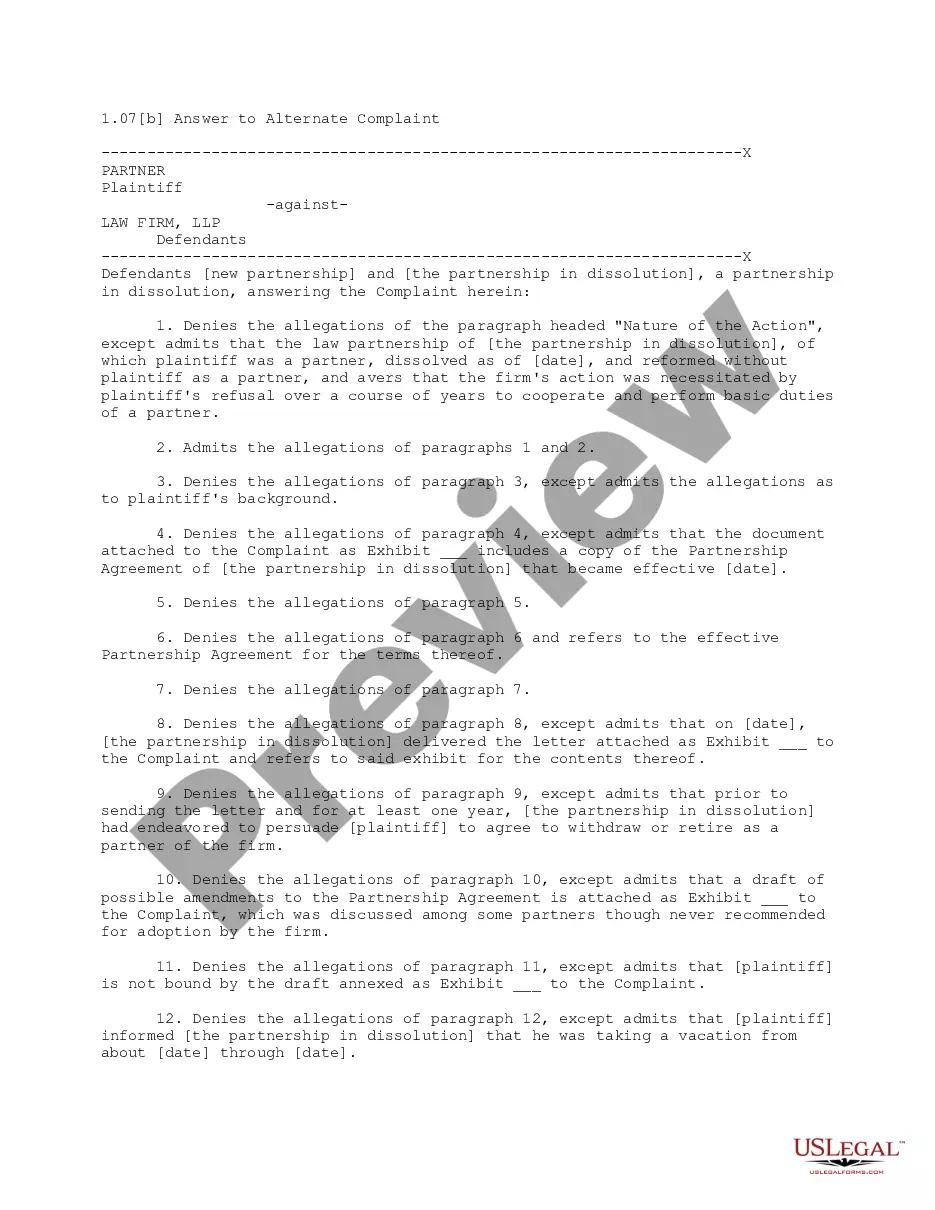
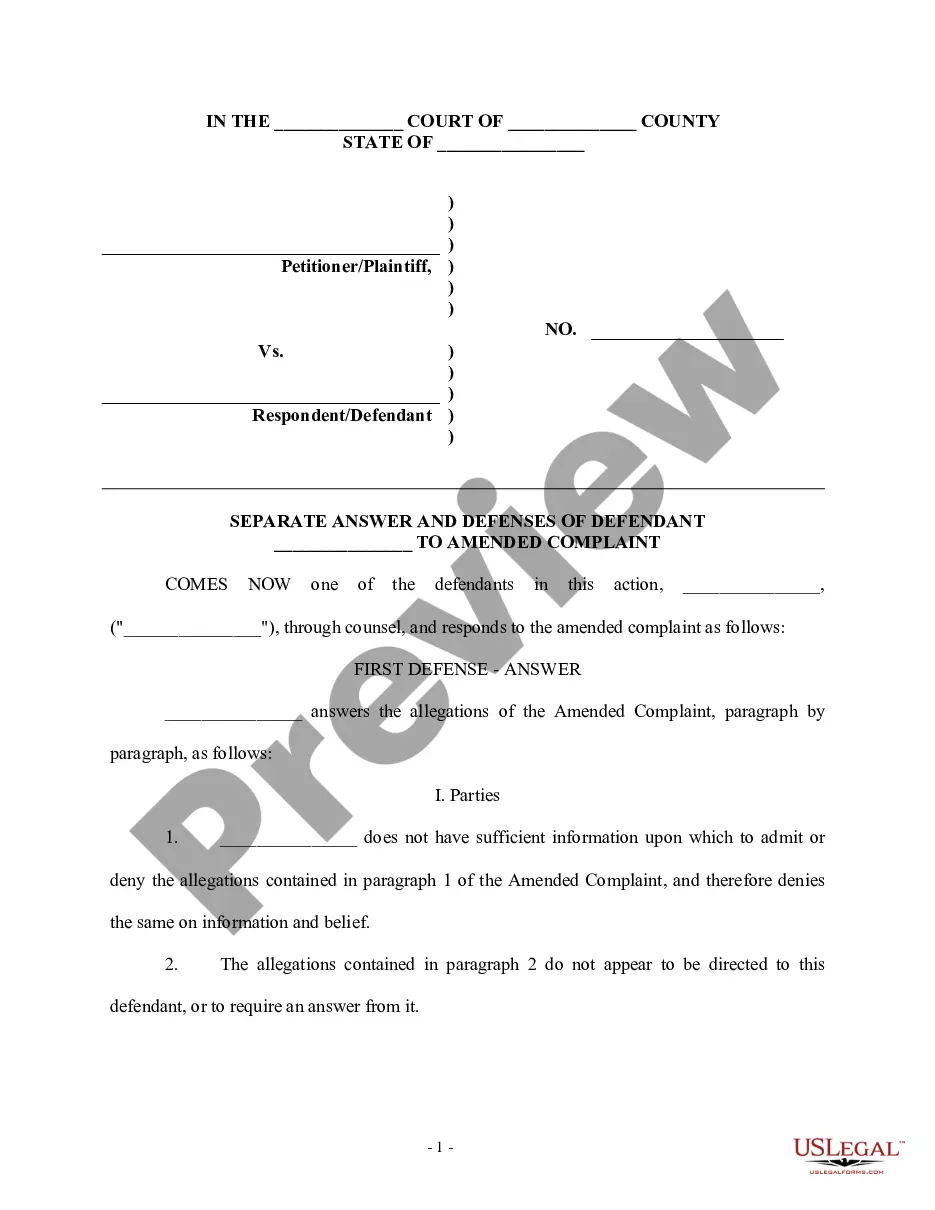
This form is a Separate Answer and Affirmative Defense to a Cross-Claim. The form provides that the cross-claim fails to state a claim upon which relief can be granted. Therefore, it is requested that the cross-claim be dismissed with prejudice, with all costs assessed against the cross-plaintiff.
Puerto Rico Separate Answer and Affirmative Defenses to Crossclaim
Instant download
Description
Free preview

Get your form ready online
Our built-in tools help you complete, sign, share, and store your documents in one place.
Built-in online Word editor
Make edits, fill in missing information, and update formatting in US Legal Forms—just like you would in MS Word.
Export easily
Download a copy, print it, send it by email, or mail it via USPS—whatever works best for your next step.
E-sign your document
Sign and collect signatures with our SignNow integration. Send to multiple recipients, set reminders, and more. Go Premium to unlock E-Sign.
Notarize online 24/7
If this form requires notarization, complete it online through a secure video call—no need to meet a notary in person or wait for an appointment.
Store your document securely
We protect your documents and personal data by following strict security and privacy standards.

Make edits, fill in missing information, and update formatting in US Legal Forms—just like you would in MS Word.

Download a copy, print it, send it by email, or mail it via USPS—whatever works best for your next step.

Sign and collect signatures with our SignNow integration. Send to multiple recipients, set reminders, and more. Go Premium to unlock E-Sign.

If this form requires notarization, complete it online through a secure video call—no need to meet a notary in person or wait for an appointment.

We protect your documents and personal data by following strict security and privacy standards.
Looking for another form?



How to fill out Separate Answer And Affirmative Defenses To Crossclaim?
US Legal Forms - one of the largest collections of valid documents in the United States - offers a range of legal document templates that you can download or print. By using the site, you can access thousands of forms for business and personal purposes, organized by categories, states, or keywords. You can find the latest versions of documents like the Puerto Rico Separate Answer and Affirmative Defenses to Crossclaim in just moments.
If you already have an account, Log In and download the Puerto Rico Separate Answer and Affirmative Defenses to Crossclaim from the US Legal Forms library. The Download button will appear on every document you view. You have access to all previously stored documents in the My documents section of your account.
To utilize US Legal Forms for the first time, here are simple steps to get you started: Make sure you have selected the correct form for your area/region. Click the Review button to check the form's content. Read the form description to ensure you have chosen the correct one. If the form does not meet your needs, use the Search box at the top of the screen to find the one that does. If you are satisfied with the form, confirm your choice by clicking the Buy now button. Then, select the payment plan you prefer and provide your information to register for an account. Process the transaction. Use your credit card or PayPal account to complete the transaction. Select the format and download the form to your device. Make modifications. Fill out, edit, and print and sign the downloaded Puerto Rico Separate Answer and Affirmative Defenses to Crossclaim.
- Every template you added to your account has no expiration date and is yours permanently.
- Therefore, if you wish to download or print another copy, simply go to the My documents section and click on the form you want.
- Access the Puerto Rico Separate Answer and Affirmative Defenses to Crossclaim with US Legal Forms, one of the most extensive collections of legal document templates.
- Utilize a multitude of professional and state-specific templates that meet your business or personal needs and requirements.
- Enjoy the convenience of having all your legal forms in one place, ready for use whenever necessary.
- Experience the ease of managing your legal documentation with US Legal Forms.
Form popularity
FAQ
A denial or failure of proof defense focuses on the elements of the crime and prevents the prosecution from meeting its burden of proof. An affirmative defense is a defense that raises an issue separate from the elements of the crime.
Contrasting with Traditional Legal Defenses In contrast, affirmative defenses, while conceding the crime, aim to contextualize the act, portraying it as legally defensible or excusable. For individuals seeking guidance or representation, consulting Chambers Law Firm can provide clarity.
What is Not An Affirmative Defense? Examples include: Failure to state a claim upon which relief can be granted is not an affirmative defense. Lack of standing is not an affirmative defense. Lack of damage.
An affirmative defense is one where the defendant admits that he or she committed the crime but that there exists a set of facts that when proven mitigates or defeats the charges against her.
When arguing an affirmative defense, a defendant must meet the ?preponderance of the evidence? burden of proof ? a much lower standard. Subsequently, the burden of proof shifts back to the prosecution who must disprove the affirmative defense raised beyond a reasonable doubt.
Self-defense, entrapment, insanity, necessity, and respondeat superior are some examples of affirmative defenses. Under the Federal Rules of Civil Procedure Rule 56, any party may make a motion for summary judgment on an affirmative defense.
A defense is an act of protecting one's own interests. In common law, a defendant may use defenses to prevent or limit liability.
If you file an Answer to the lawsuit and defend yourself in court, you can state an affirmative defense. You can deny what the plaintiff says you did without saying anything else. But you can also have affirmative defenses. You must raise it in your Answer or you may give up your right to bring it up later.