Pennsylvania Praecipe to Withdraw Claim for Equitable Distribution
Understanding this form
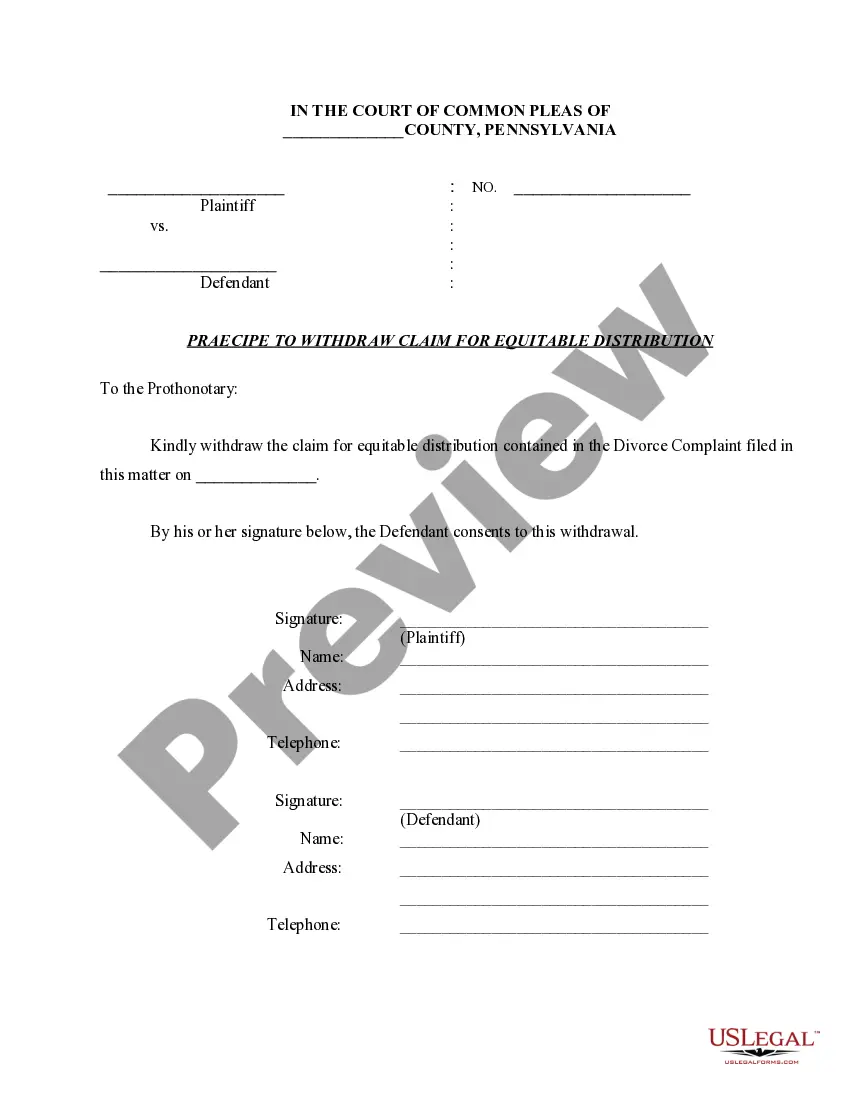
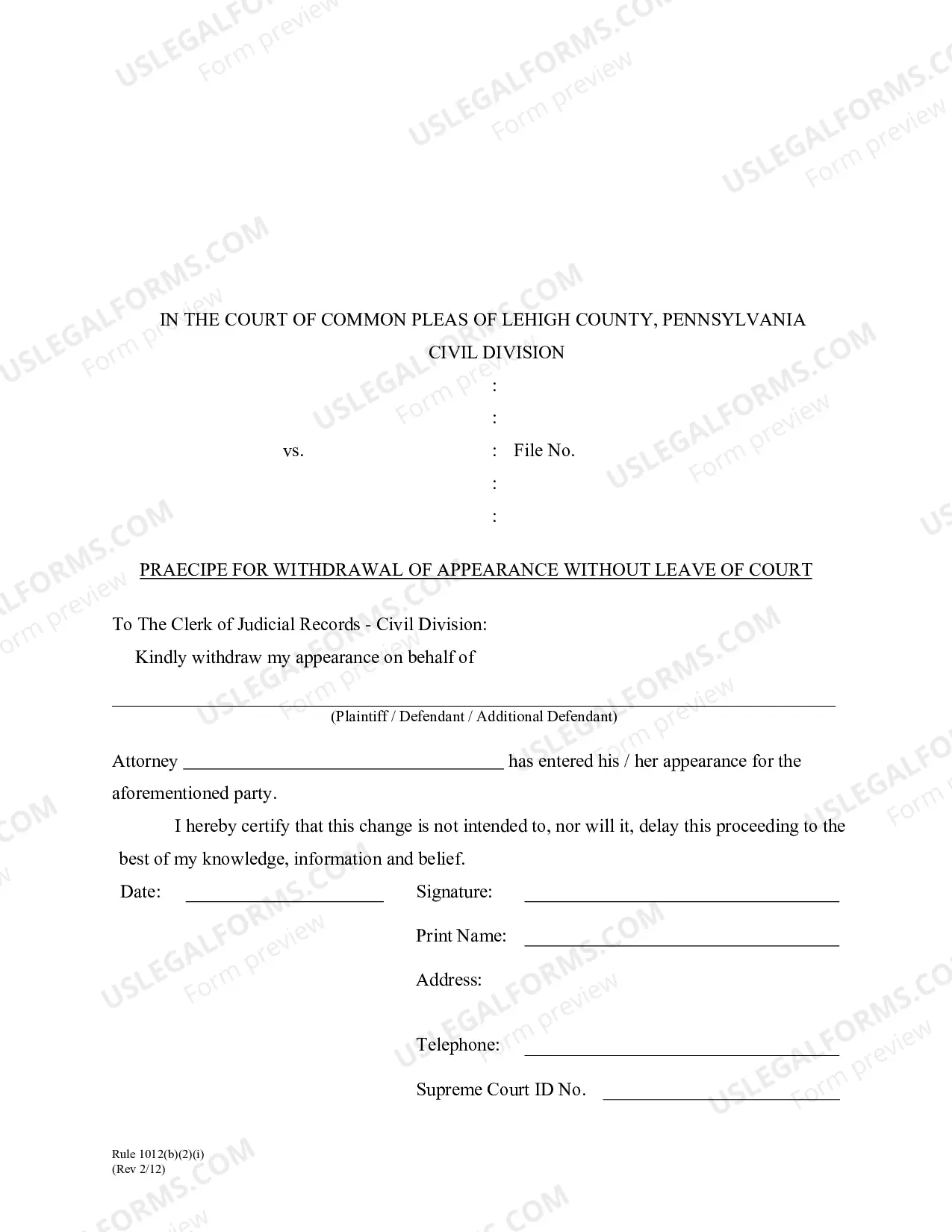
The Praecipe to Withdraw Claim for Equitable Distribution is a legal document used in Pennsylvania to formally request the court to withdraw a claim for equitable distribution made in a divorce complaint. This form is essential for individuals who no longer wish to pursue an equitable distribution of marital assets during their divorce proceedings. It differs from other forms related to divorce by specifically addressing the withdrawal of a claim, which can be an important step in resolving disputes amicably.
What’s included in this form
- Caption of the case, including court name, county, and case number.
- Section requesting the prothonotary to withdraw the claim for equitable distribution.
- Signature lines for both the plaintiff and defendant, indicating consent.
- Contact information fields for both parties, including names, addresses, and telephone numbers.

Situations where this form applies
This form is typically used in situations where a party involved in divorce proceedings wishes to withdraw their claim for equitable distribution. Reasons may include reaching a mutual agreement with the other party regarding asset division or deciding not to pursue the claim due to changes in circumstances or legal strategy.
Who needs this form
- Individuals involved in a divorce case in Pennsylvania who have filed a claim for equitable distribution.
- Parties who wish to withdraw their equitable distribution claim either voluntarily or through mutual agreement.
- Defendants who need to provide consent to the withdrawal of the claim.
Instructions for completing this form
- Identify the parties involved, including the plaintiff and defendant, and enter their names in the appropriate sections.
- Fill in the case number and the court information at the top of the form.
- Specify the date the original divorce complaint was filed.
- Have both parties sign the form to indicate their consent to the withdrawal of the claim.
- Provide the addresses and telephone numbers of both the plaintiff and defendant for communication purposes.
Does this form need to be notarized?
This form does not typically require notarization unless specified by local law. However, it is essential for both parties to sign the document to confirm their agreement. Always check with the relevant court or legal advisor for any specific requirements.
Get your form ready online
Our built-in tools help you complete, sign, share, and store your documents in one place.
Make edits, fill in missing information, and update formatting in US Legal Forms—just like you would in MS Word.
Download a copy, print it, send it by email, or mail it via USPS—whatever works best for your next step.
Sign and collect signatures with our SignNow integration. Send to multiple recipients, set reminders, and more. Go Premium to unlock E-Sign.
If this form requires notarization, complete it online through a secure video call—no need to meet a notary in person or wait for an appointment.
We protect your documents and personal data by following strict security and privacy standards.

Make edits, fill in missing information, and update formatting in US Legal Forms—just like you would in MS Word.

Download a copy, print it, send it by email, or mail it via USPS—whatever works best for your next step.

Sign and collect signatures with our SignNow integration. Send to multiple recipients, set reminders, and more. Go Premium to unlock E-Sign.

If this form requires notarization, complete it online through a secure video call—no need to meet a notary in person or wait for an appointment.

We protect your documents and personal data by following strict security and privacy standards.
Typical mistakes to avoid
- Forgetting to include signatures from both parties, which is necessary for validity.
- Not providing complete contact information, leading to potential communication issues.
- Failing to specify the date the original complaint was filed, which can cause confusion in court.
Why use this form online
- Convenient download and completion at your own pace without the need to visit a lawyer's office.
- Editability allows you to tailor the form specifically to your case needs before submitting.
- Access to professionally drafted content ensures the form meets legal standards for Pennsylvania.
Looking for another form?
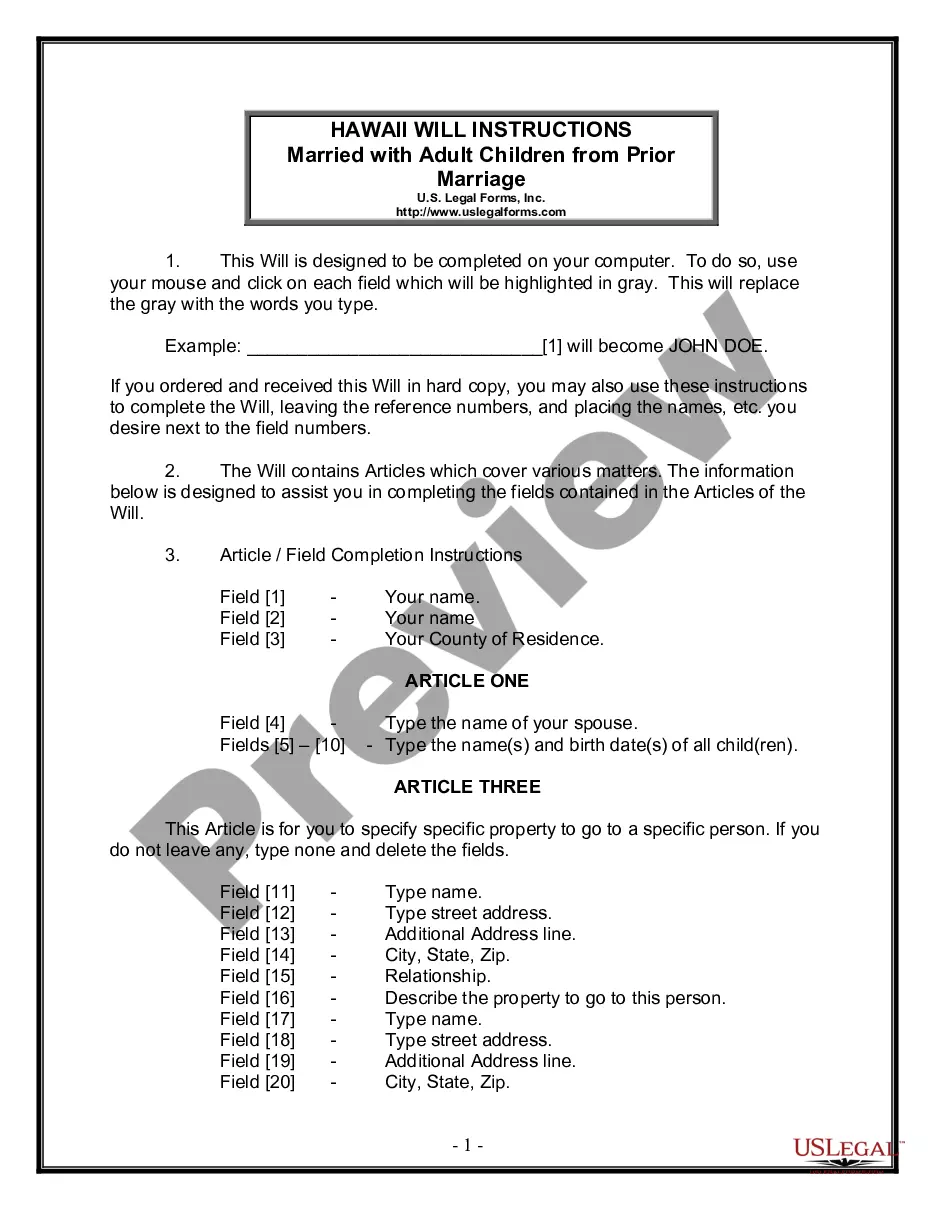
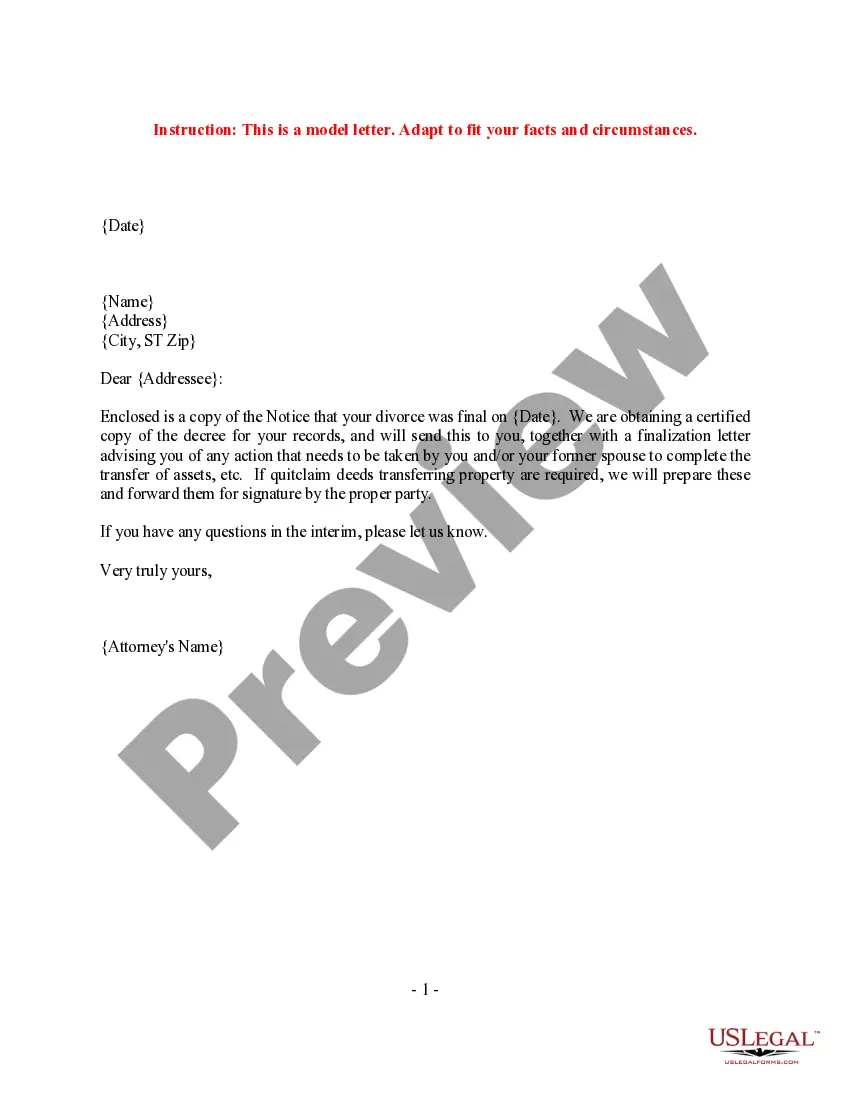
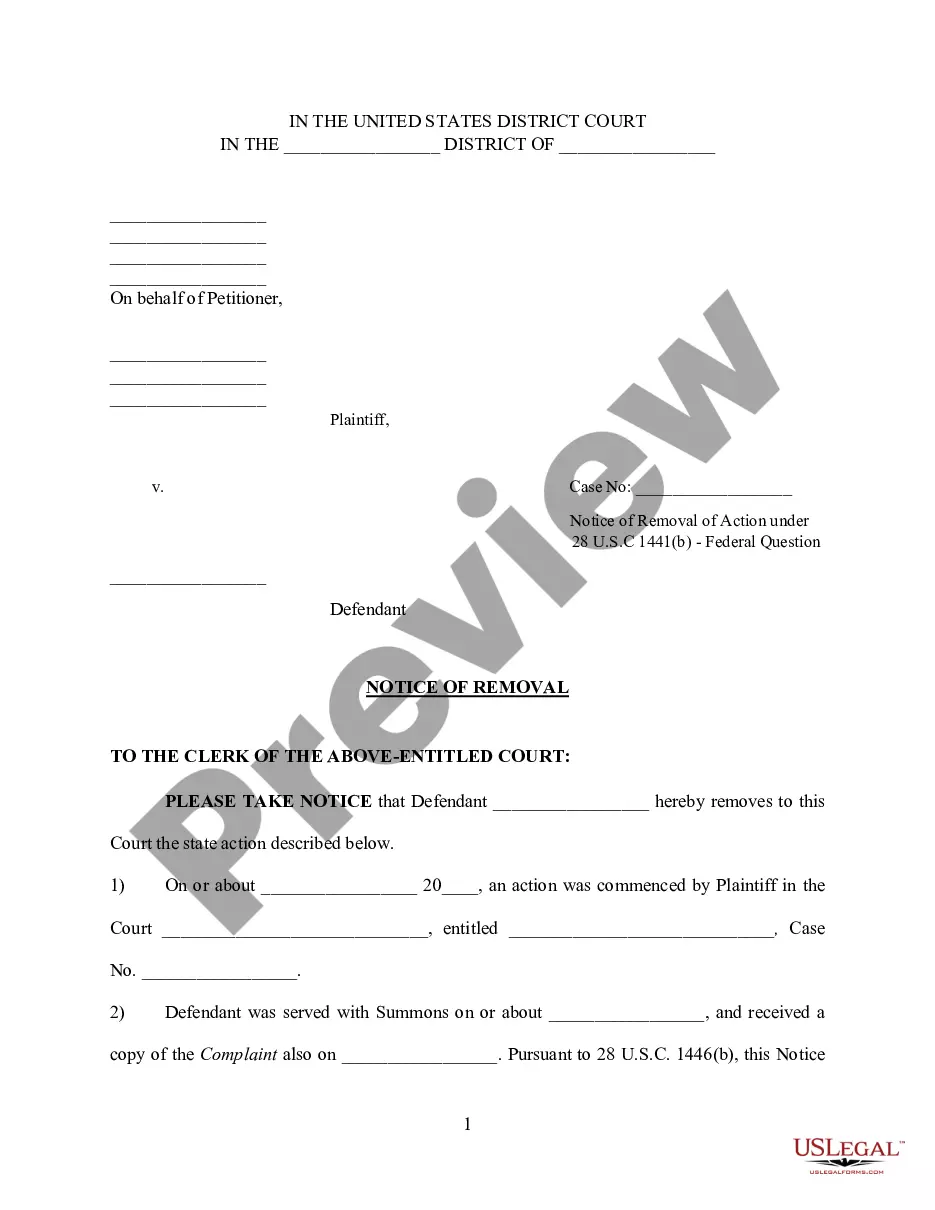
Form popularity
FAQ
What is a wife entitled to in a divorce in PA? The wife is not automatically entitled to anything that is not her direct property or assets in a divorce in PA. Alimony payments may be required based on the wife's situation and any division of property will also be determined based on other factors.
In Pennsylvania, the process of distributing assets and debts in divorce cases is defined as ?equitable distribution?. The division of marital property is based on what the court views as equitable. Furthermore, marital misconduct or fault is not taken into consideration during the equitable distribution process.
(1) A plaintiff may withdraw the complaint prior to the commencement of the hearing by filing a written notice of withdrawal with the magisterial district court.
The court will consider factors such as the length of the marriage, the division of the parties' marital property, and the parties' ages, health, earning capacities, and needs in deciding whether, in what amount, and for how long to award alimony.
Equitable Distribution may be decided by agreement between the parties in a divorce action or the court may decide if the parties cannot agree. If the court must decide, the parties must complete the required forms and documents regarding marital assets and debts.
When you file a Praecipe to Withdraw/Discontinue, you must notify all other parties to the action that you are withdrawing/discontinuing it. You must provide the Prothonotary's Office with a Certificate of Service document identifying how and when you did this. to be sure). existing court documents to get this number.
Equitable Distribution Factors in PA The duration of the marriage. Each spouses' prior marriages, if any. Each spouses' health, education, employability, income, and financial needs. Any contribution by one spouse to the other spouses training, education, or employability.
Even though Pennsylvania law does not mandate a 50/50 division of marital property, in practice, a 50/50 division is quite common. If the divorcing spouses have similar incomes from their jobs and the marital assets include a home and modest retirement accounts, the courts will often order a 50/50 division.