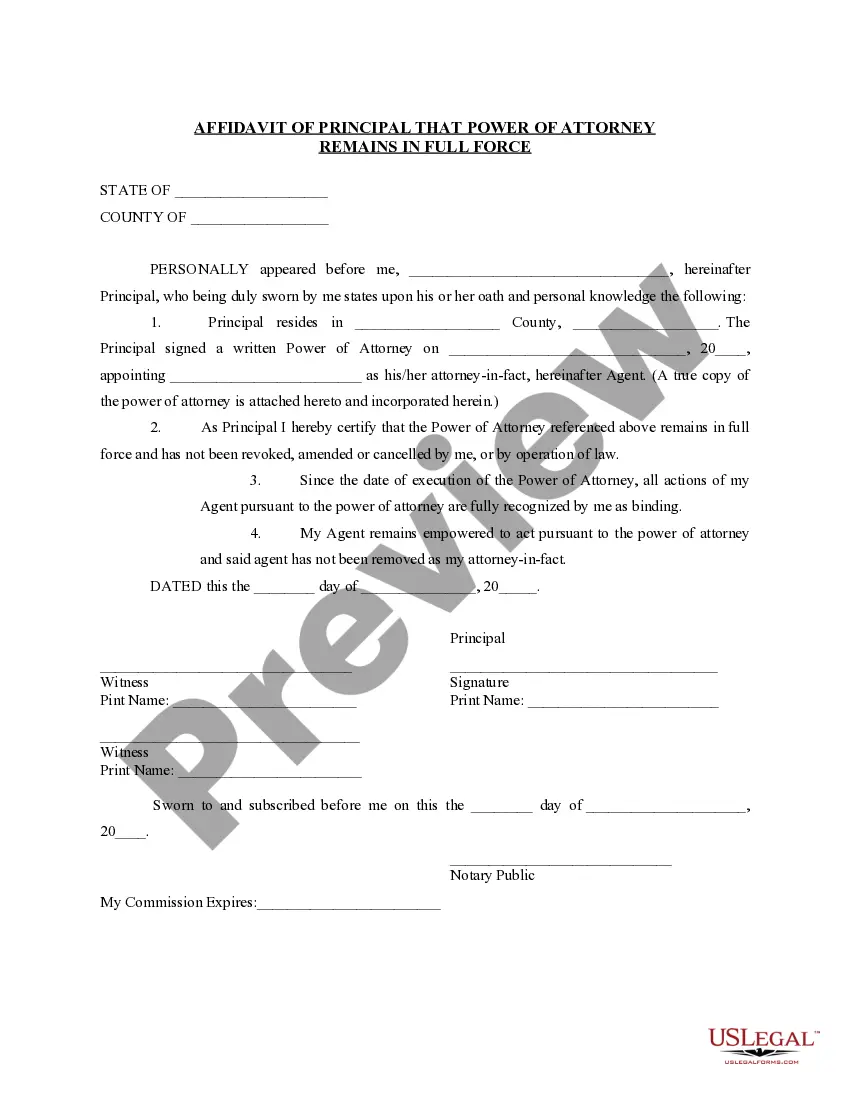
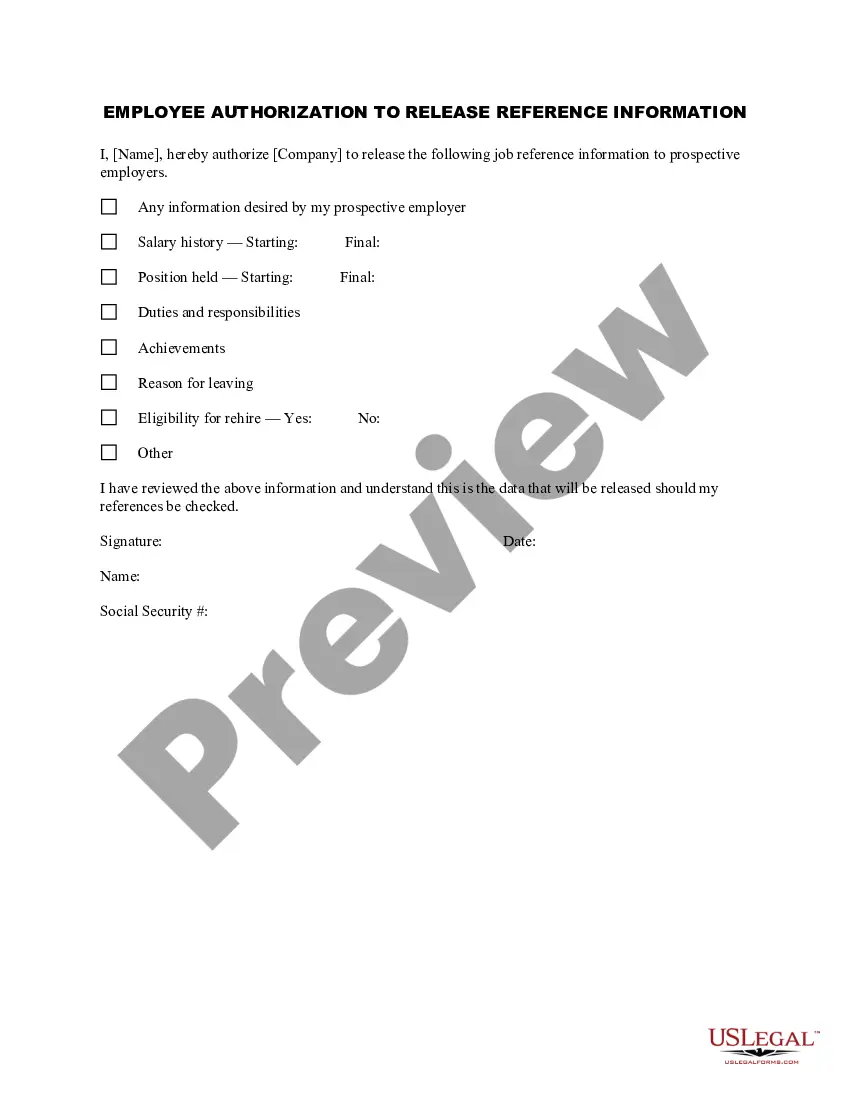
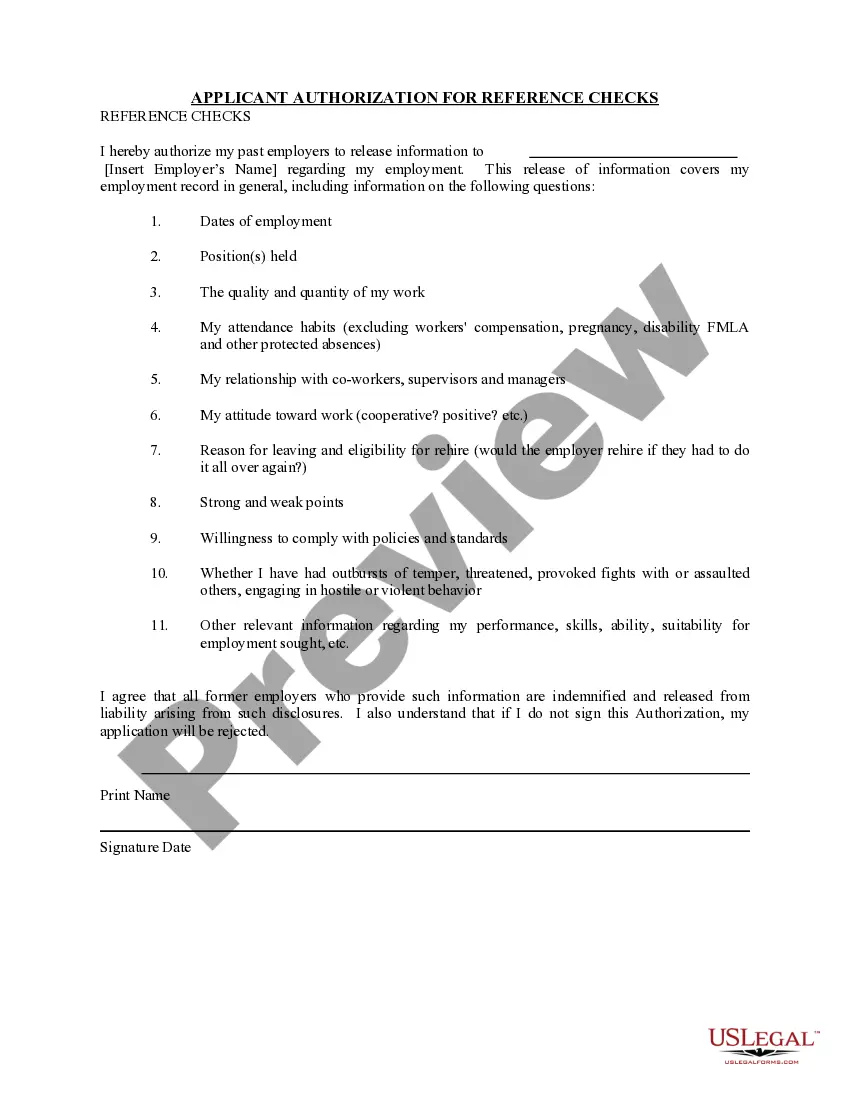
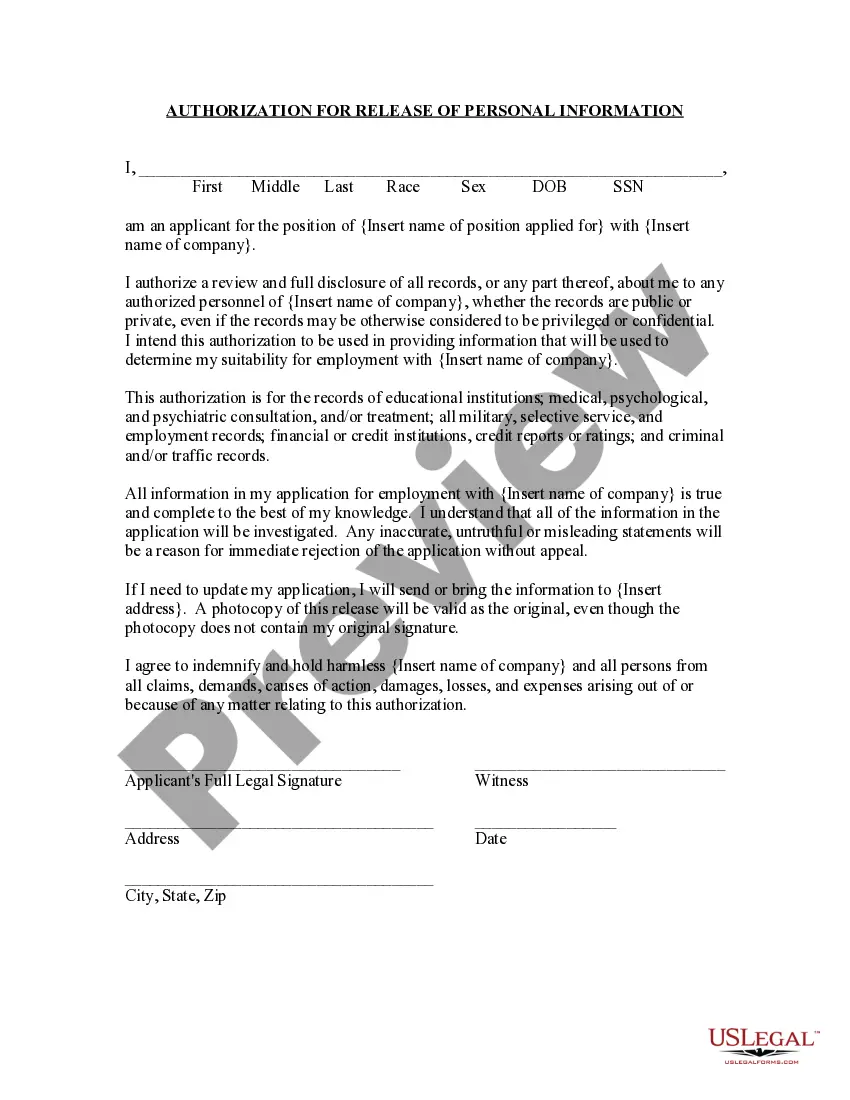
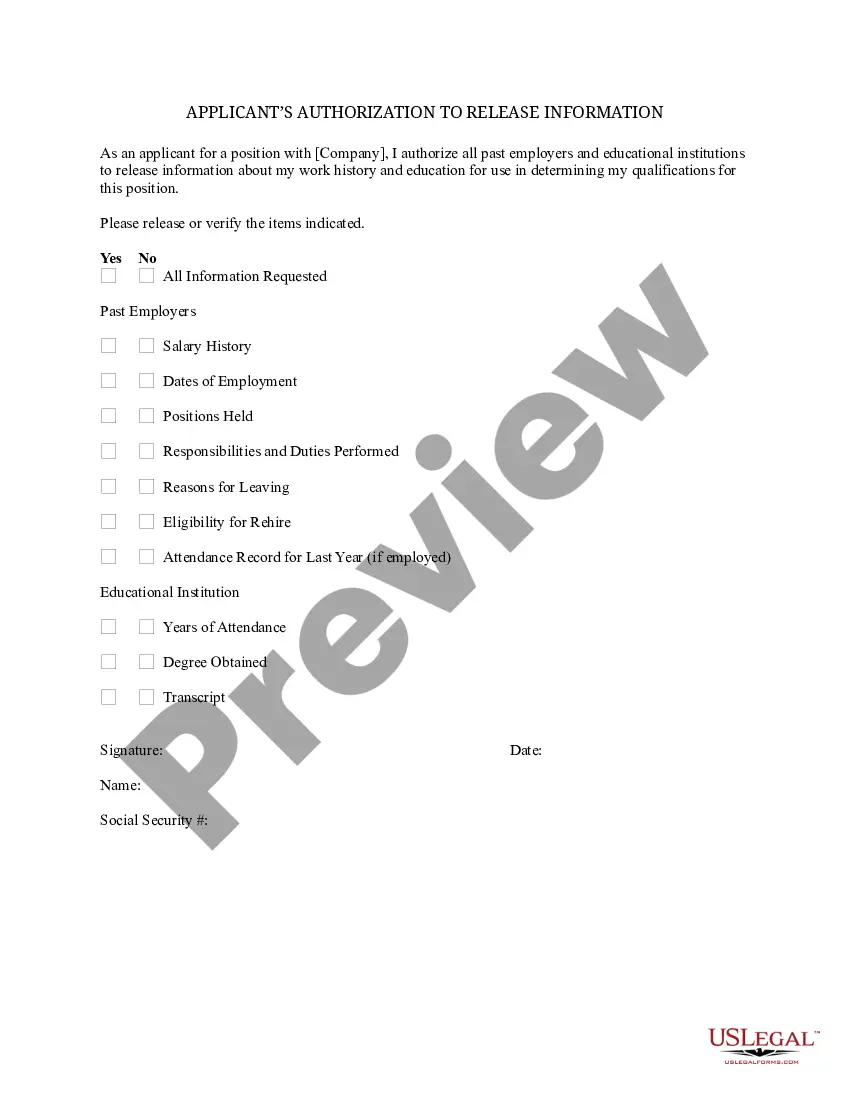
Pennsylvania Employee Authorization to Release Reference Information
Description
Get your form ready online
Our built-in tools help you complete, sign, share, and store your documents in one place.
Make edits, fill in missing information, and update formatting in US Legal Forms—just like you would in MS Word.
Download a copy, print it, send it by email, or mail it via USPS—whatever works best for your next step.
Sign and collect signatures with our SignNow integration. Send to multiple recipients, set reminders, and more. Go Premium to unlock E-Sign.
If this form requires notarization, complete it online through a secure video call—no need to meet a notary in person or wait for an appointment.
We protect your documents and personal data by following strict security and privacy standards.

Make edits, fill in missing information, and update formatting in US Legal Forms—just like you would in MS Word.

Download a copy, print it, send it by email, or mail it via USPS—whatever works best for your next step.

Sign and collect signatures with our SignNow integration. Send to multiple recipients, set reminders, and more. Go Premium to unlock E-Sign.

If this form requires notarization, complete it online through a secure video call—no need to meet a notary in person or wait for an appointment.

We protect your documents and personal data by following strict security and privacy standards.
Looking for another form?



How to fill out Employee Authorization To Release Reference Information?
You can spend hours online looking for the legal document template that meets the federal and state requirements you need.
US Legal Forms offers thousands of legal forms that have been reviewed by experts.
You can easily download or print the Pennsylvania Employee Authorization to Release Reference Information from our service.
If available, utilize the Preview button to review the document template as well. If you wish to obtain another version of your form, use the Search field to find the template that suits your needs and requirements.
- If you already possess a US Legal Forms account, you may Log In and click on the Download button.
- Next, you can fill out, edit, print, or sign the Pennsylvania Employee Authorization to Release Reference Information.
- Each legal document template you acquire is yours indefinitely.
- To obtain another copy of a purchased form, navigate to the My documents tab and click on the corresponding button.
- If you are using the US Legal Forms website for the first time, follow the basic instructions below.
- First, ensure that you have chosen the correct document template for the county/area of your preference.
- Review the form description to confirm you have selected the correct form.
Form popularity
FAQ
Yes. References should be marked "confidential" and for the attention of the addressee only.
The GDPR states that consent must be 'freely given, specific, informed and unambiguous'. This means that the data subject must be aware that they are consenting to have their data processed and should not be forced into giving consent.
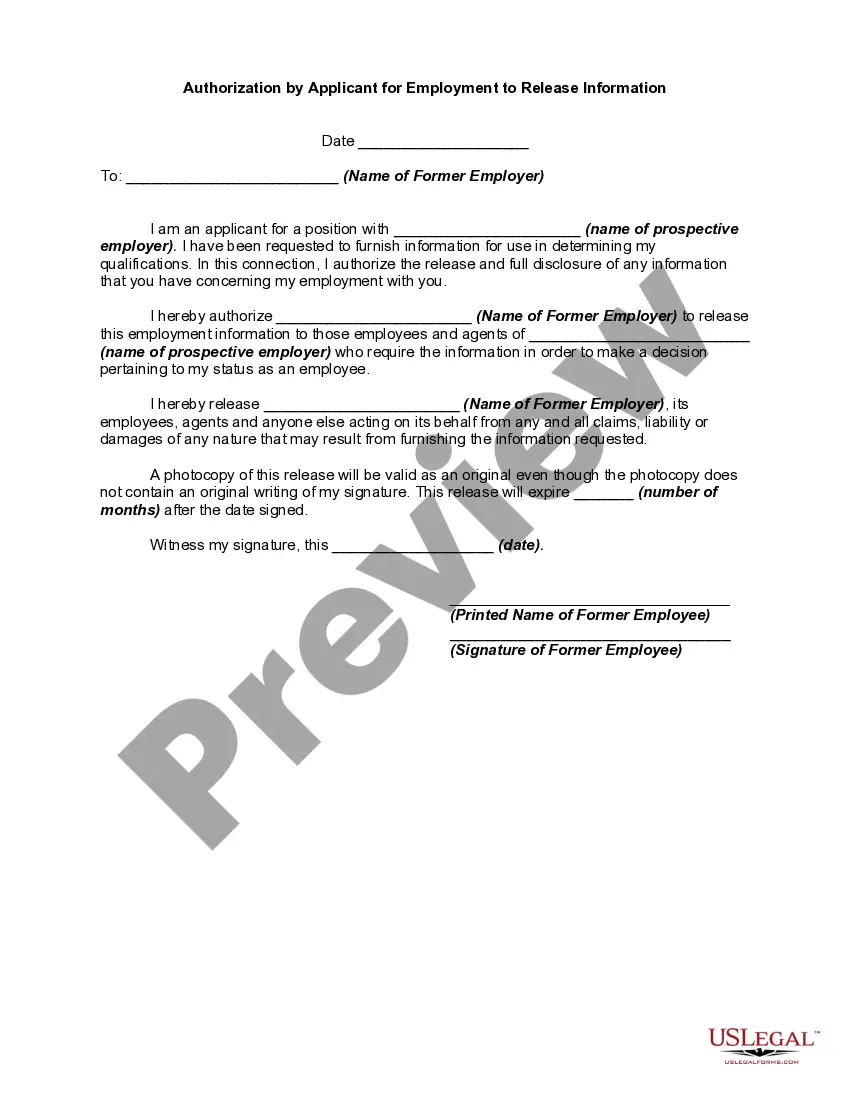
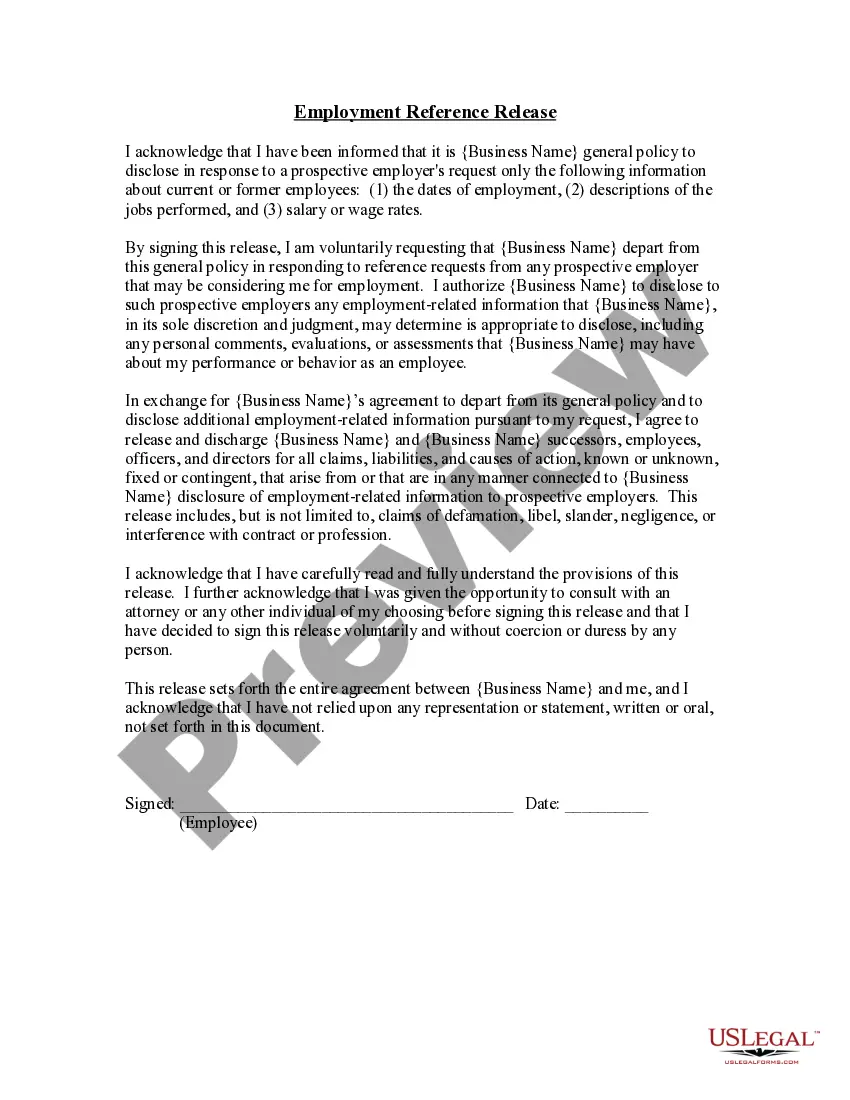
GRANTING PERMISSION TO CONTACT REFERENCES In order to obtain meaningful reference information from some employers it is useful to have a release which assures the former employer/reference that you will not pursue litigation against them based on their reference information.
An Authorization to Release Employee Information Form is a document that should be completed by an employee to allow their former employer to release their employment information to prospective employers.
Never reveal the information received from a previous employer to the applicant. This information is to be kept as confidential as the law will allow. The information received from a reference must be filed with the recruitment file, separate from employee's files.
Here are some of the questions that may be asked during a reference check:When did (name) work for your company? Could you confirm starting and ending employment dates?What was her/his position?Could I briefly review (name's) resume?Why did (name) leave the company?What was her/his starting and ending salary?
Once you start a job with a new employer, you can ask them for a copy of any reference they have been given from your previous employer. This is a right under the Data Protection Act. Your previous employer is not obliged to provide you with such a copy.
The purpose of this form is to notify you that a Consumer Report and/or an Investigative Consumer Report will be conducted on you in the course of consideration for employment or promotion.
Employment references should be marked as 'Strictly confidential - employment reference' to ensure that the exemption can be applied by sender and recipient. Care must always be taken when providing references about employees to prospective employers or recruitment agencies.
In fact, employers are legally permitted to say anything in a reference about a former employee's performance that is true, and in Pennsylvania, there is employer immunity by statute (that is, immunity from liability, not from being sued and having to respond).