Pennsylvania Motion in Limine
Description
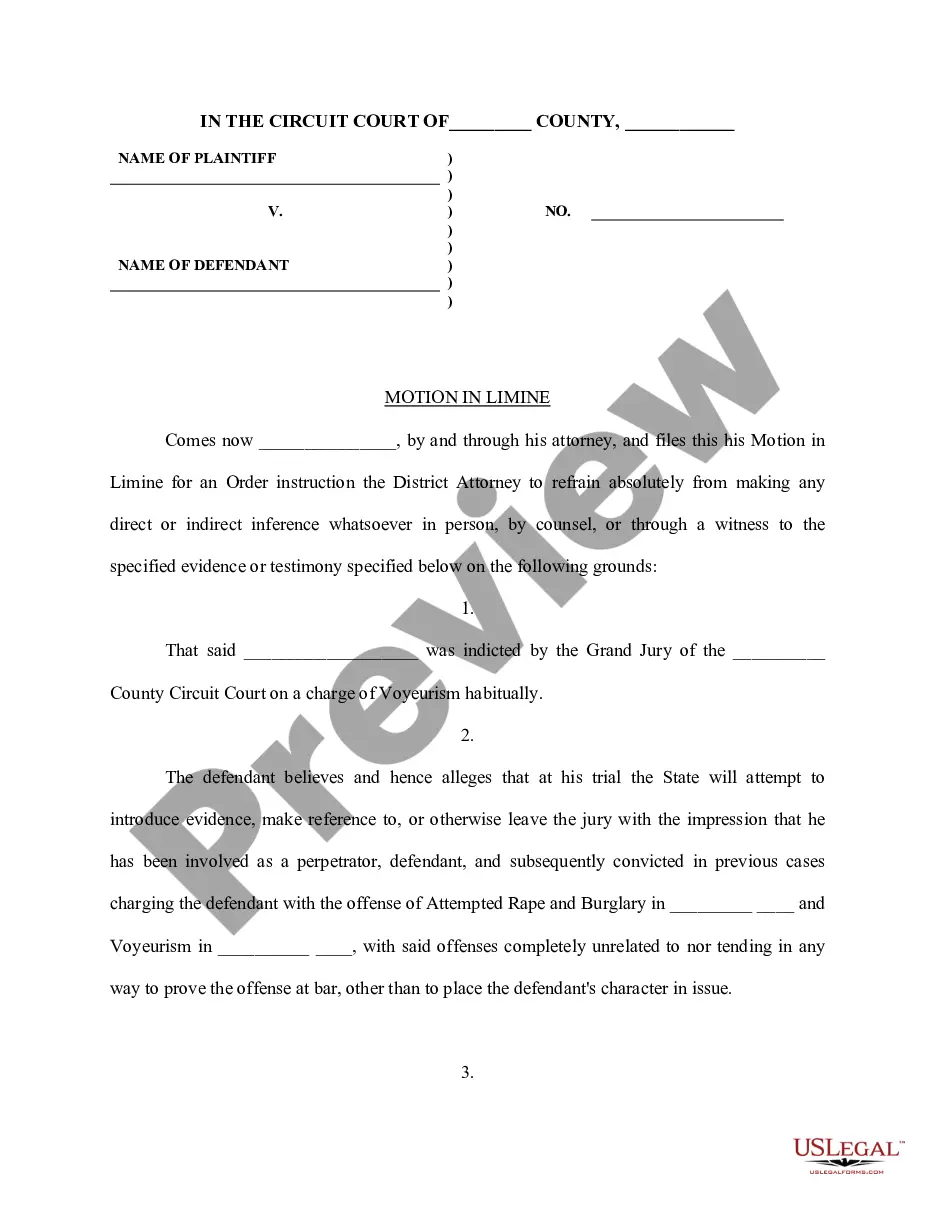
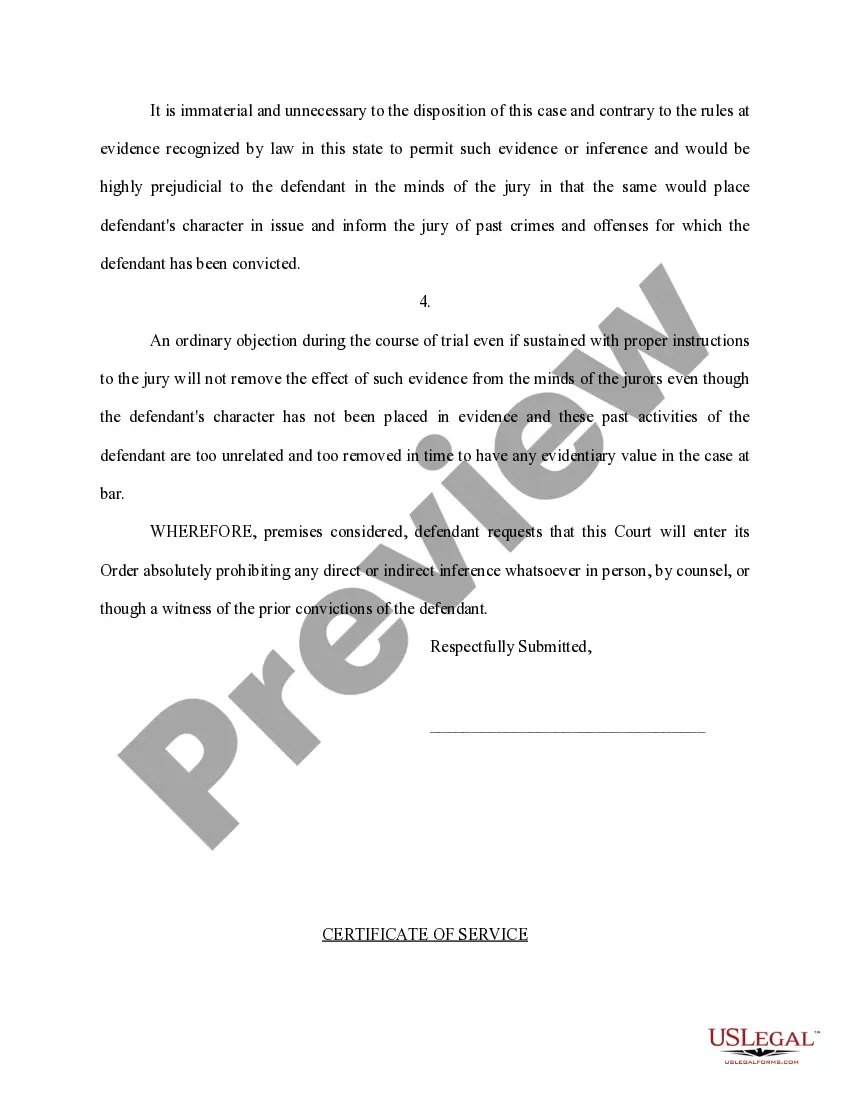
Get your form ready online
Our built-in tools help you complete, sign, share, and store your documents in one place.
Make edits, fill in missing information, and update formatting in US Legal Forms—just like you would in MS Word.
Download a copy, print it, send it by email, or mail it via USPS—whatever works best for your next step.
Sign and collect signatures with our SignNow integration. Send to multiple recipients, set reminders, and more. Go Premium to unlock E-Sign.
If this form requires notarization, complete it online through a secure video call—no need to meet a notary in person or wait for an appointment.
We protect your documents and personal data by following strict security and privacy standards.

Make edits, fill in missing information, and update formatting in US Legal Forms—just like you would in MS Word.

Download a copy, print it, send it by email, or mail it via USPS—whatever works best for your next step.

Sign and collect signatures with our SignNow integration. Send to multiple recipients, set reminders, and more. Go Premium to unlock E-Sign.

If this form requires notarization, complete it online through a secure video call—no need to meet a notary in person or wait for an appointment.

We protect your documents and personal data by following strict security and privacy standards.
Looking for another form?


How to fill out Motion In Limine?
US Legal Forms - one of the largest collections of legal documents in the United States - offers a broad selection of legal document templates that you can download or print. By using the website, you can find thousands of documents for business and personal purposes, organized by categories, states, or keywords. You can obtain the latest editions of documents like the Pennsylvania Motion in Limine in just minutes.
If you hold a monthly subscription, Log In and retrieve the Pennsylvania Motion in Limine from the US Legal Forms library. The Download button will appear on each document you view. You can access all previously saved documents within the My documents section of your account.
To use US Legal Forms for the first time, here are simple steps to get you started: Ensure you have selected the correct document for your city/county. Click the Review button to check the document's content. Read the document description to confirm that you have chosen the right document. If the document does not meet your requirements, use the Search field at the top of the page to find one that does. If you are satisfied with the document, confirm your choice by clicking the Buy now button. Then, select your preferred pricing plan and provide your details to register for an account. Process the transaction. Use your credit card or PayPal account to complete the transaction. Choose the format and download the document to your device. Make edits. Fill out, modify, print, and sign the saved Pennsylvania Motion in Limine.
- Each template you added to your account has no expiration date and is yours permanently.
- Therefore, if you wish to download or print another copy, simply go to the My documents section and click on the document you need.
- Access the Pennsylvania Motion in Limine with US Legal Forms, the most extensive library of legal document templates.
- Utilize thousands of professional and state-specific templates that meet your business or personal needs and requirements.
Form popularity
FAQ
A motion to suppress is a vital legal tool for defendants facing criminal charges in Pennsylvania. By challenging the admissibility of evidence obtained in violation of their constitutional rights, defendants can protect their rights and potentially weaken the prosecution's case.
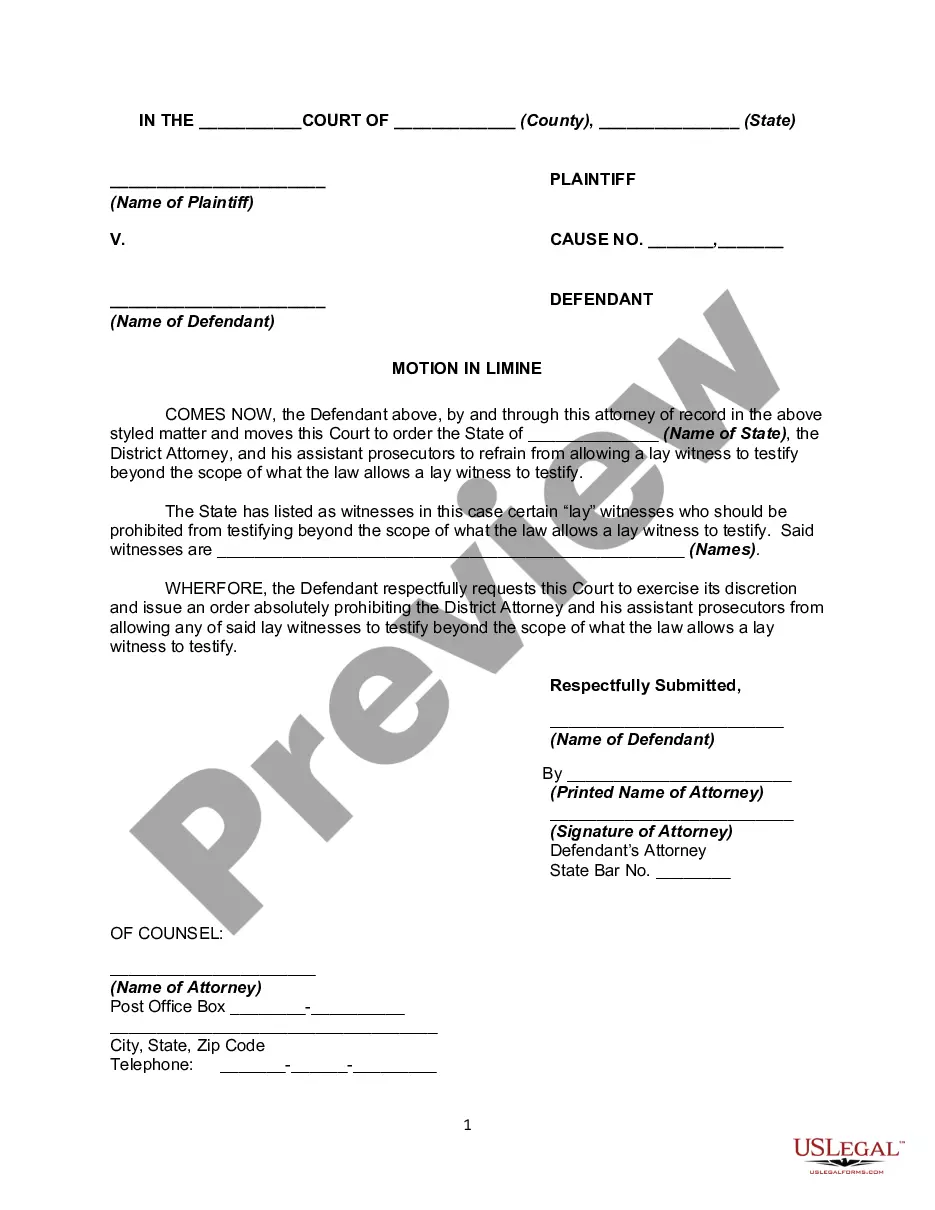
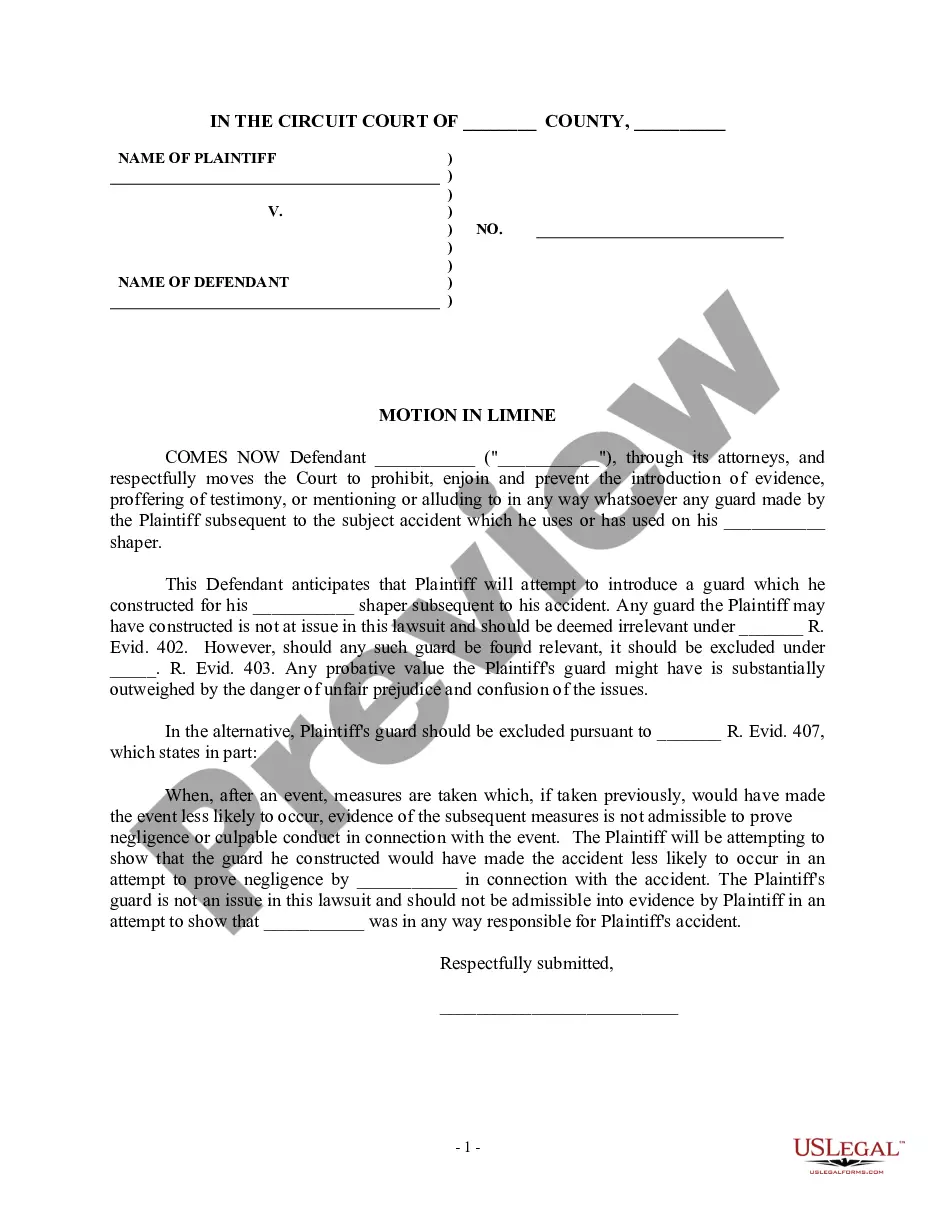
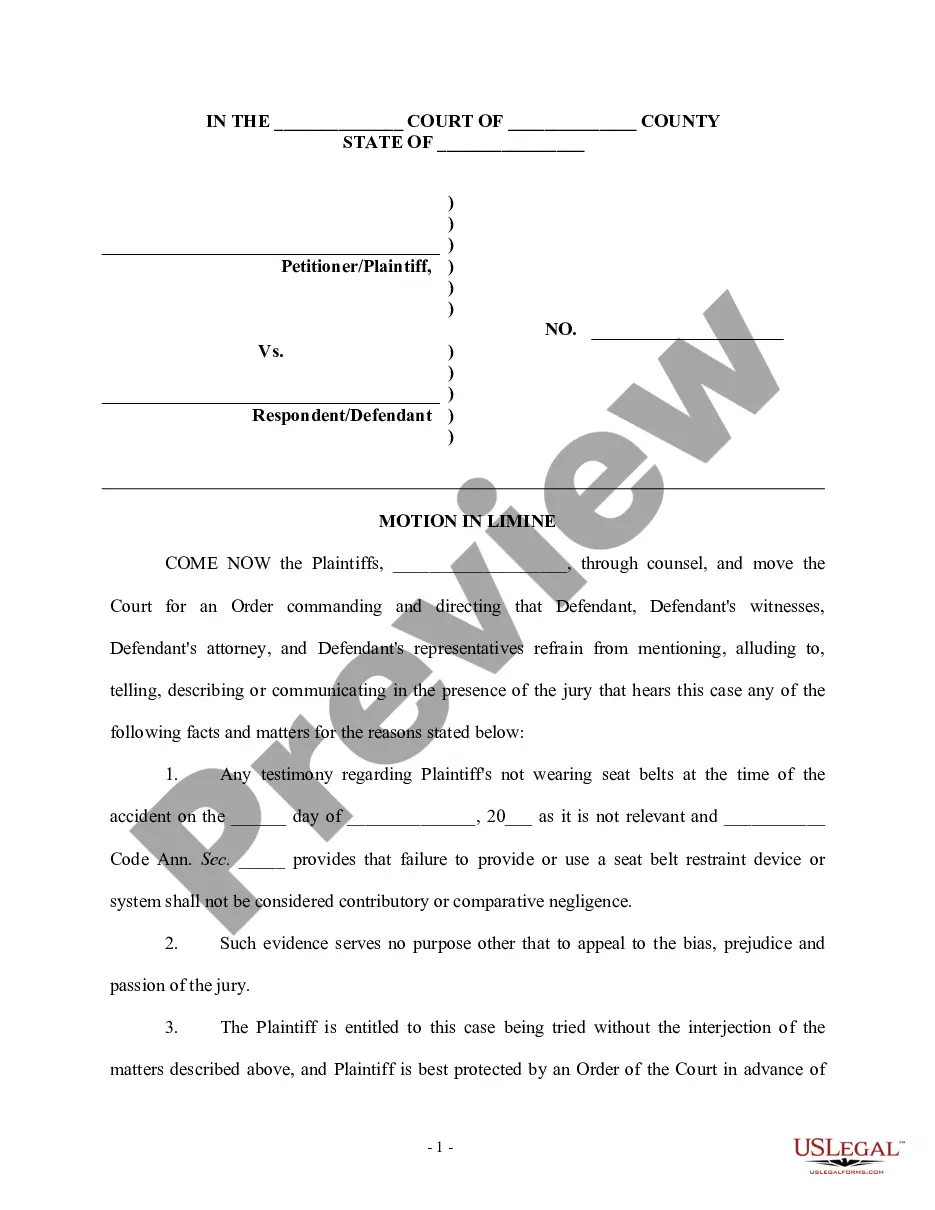
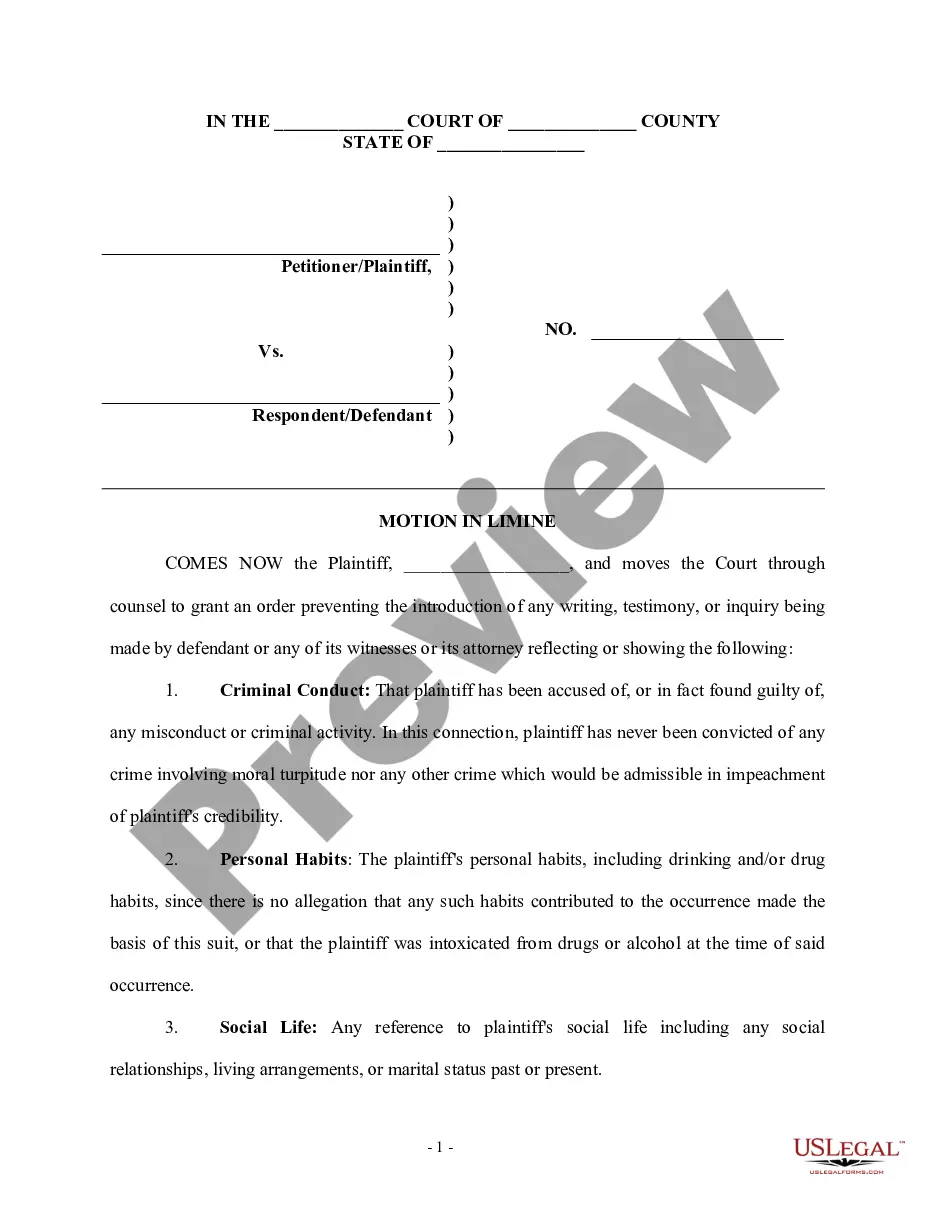
The purpose of a motion in limine is to determine whether certain evidence may be presented to the jury, in any form and at any stage. See Lapasinskas, supra, and 63 ALR 3d 311. Generally, a motion in limine is used to exclude evidence that a party believes to be irrelevant or unfairly prejudicial.
Pretrial Motion Practice in Pennsylvania Criminal Cases A motion may address issues of procedure, evidence, or testimony. Pretrial motion rules require a party to submit the request in writing, and the other side has time to respond in a written answer.
Motion for Dismissal. ([A]a) Untimely Filing of Information. (1) Upon motion and a showing that an information has not been filed within a reasonable time, the court may order dismissal of the prosecution, or in lieu thereof, make such other order as shall be appropriate in the interests of justice.
A party may claim error in a ruling to admit or exclude evidence only: (1) if the ruling admits evidence, a party, on the record: (A) makes a timely objection, motion to strike, or motion in limine ; and (B) states the specific ground, unless it was apparent from the context; or (2) if the ruling excludes evidence, a ...
Rule 576 - Filing And Service By Parties (A) The Clerk of Courts shall immediately time stamp all written motions, notices, or documents presented for filing, and shall docket and place in the criminal case file all such papers within two working days of filing.
RULE 580. DISPOSITION OF PRETRIAL MOTIONS. Unless otherwise provided in these rules, all pretrial motions shall be determined before trial. Trial shall be postponed by the court for the determination of pretrial motions, if necessary.
A Motion to Dismiss in Pennsylvania Rule 587 (234 Pa. Code §587) controls motions to dismiss in Pennsylvania. It specifically describes the procedure if you argue that the charges weren't filed in a reasonable time or the charges violate double jeopardy.