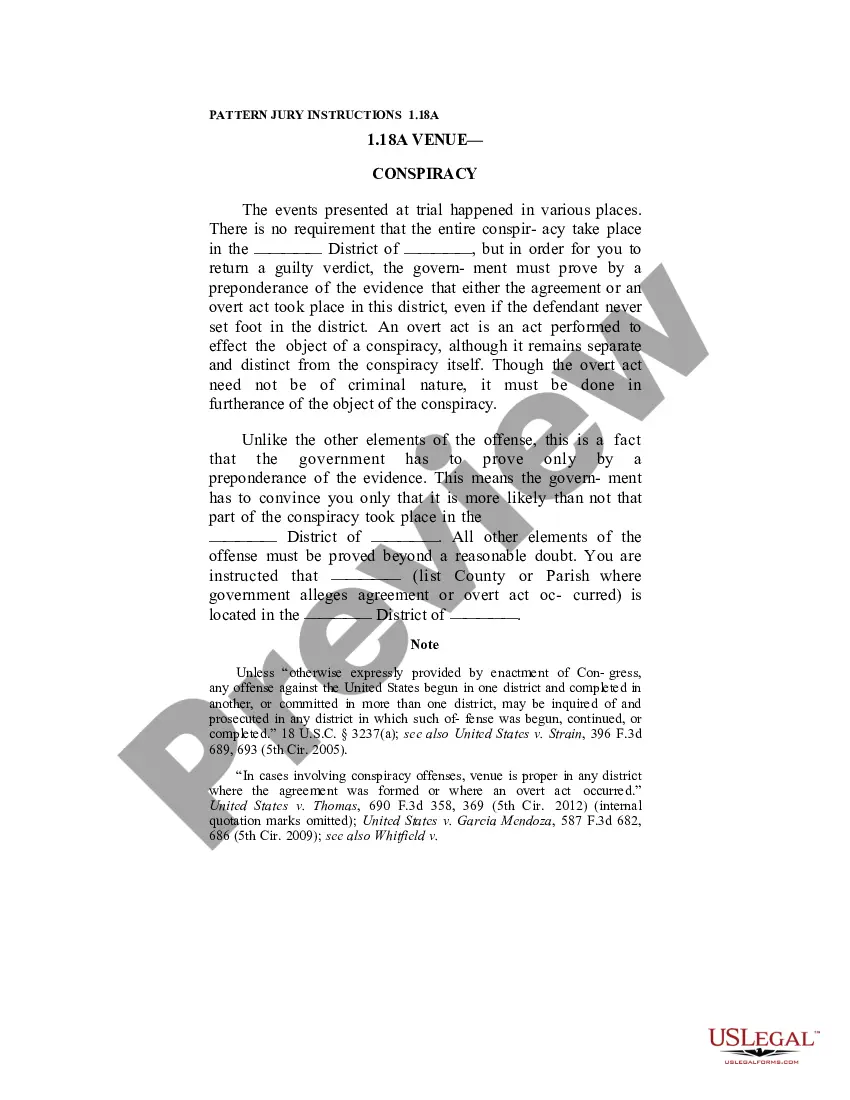
Pennsylvania Master Deed Declaration of Condominium
Description



Get your form ready online
Our built-in tools help you complete, sign, share, and store your documents in one place.
Make edits, fill in missing information, and update formatting in US Legal Forms—just like you would in MS Word.
Download a copy, print it, send it by email, or mail it via USPS—whatever works best for your next step.
Sign and collect signatures with our SignNow integration. Send to multiple recipients, set reminders, and more. Go Premium to unlock E-Sign.
If this form requires notarization, complete it online through a secure video call—no need to meet a notary in person or wait for an appointment.
We protect your documents and personal data by following strict security and privacy standards.

Make edits, fill in missing information, and update formatting in US Legal Forms—just like you would in MS Word.

Download a copy, print it, send it by email, or mail it via USPS—whatever works best for your next step.

Sign and collect signatures with our SignNow integration. Send to multiple recipients, set reminders, and more. Go Premium to unlock E-Sign.

If this form requires notarization, complete it online through a secure video call—no need to meet a notary in person or wait for an appointment.

We protect your documents and personal data by following strict security and privacy standards.
Looking for another form?
How to fill out Master Deed Declaration Of Condominium?
Selecting the appropriate legal document template can be a challenge. Clearly, there are numerous templates accessible online, but how do you find the legal form you need? Utilize the US Legal Forms website. The service offers a vast collection of templates, including the Pennsylvania Master Deed Declaration of Condominium, which can be utilized for both business and personal purposes. All forms are verified by experts and comply with federal and state requirements.
If you are already a member, sign in to your account and click the Download button to access the Pennsylvania Master Deed Declaration of Condominium. Use your account to browse through the legal forms you have previously purchased. Navigate to the My documents section of your account to obtain another copy of the document you need.
If you are a new user of US Legal Forms, here are simple instructions for you to follow: First, ensure you have selected the correct form for your city/county. You can review the form using the Preview button and read the form description to confirm it is suitable for your needs. If the form does not meet your requirements, make use of the Search field to find the appropriate form. Once you are confident the form is accurate, click the Purchase now button to acquire the form. Choose the pricing plan you prefer and enter the necessary information. Create your account and complete the purchase using your PayPal account or credit card. Select the file format and download the legal document template to your device. Finally, complete, edit, print, and sign the acquired Pennsylvania Master Deed Declaration of Condominium. US Legal Forms is the largest repository of legal documents where you can find various document templates. Utilize the service to obtain properly crafted papers that adhere to state regulations.
US Legal Forms provides a comprehensive library of legal forms for users to explore and acquire.
- Choose the right legal document template.
- Access numerous templates online.
- Verify forms by professionals.
- Navigate your account for purchased forms.
- Follow instructions for new users.
- Obtain compliant legal documents.
Form popularity
FAQ
Florida condominium law is found in Chapter 718, Florida Statutes, known and cited as the ?Condominium Act.? Chapter 718 consists of seven parts. Part I discusses the general provisions of condominium law. Part II discusses the developer's rights and obligations.
A condominium, or condo, is an individually owned residential unit in a complex or building of like units. Condo owners own their units but share common spaces, amenities, and other resources. They pay condo fees, which cover maintenance costs, amenities, and the upkeep of common spaces.
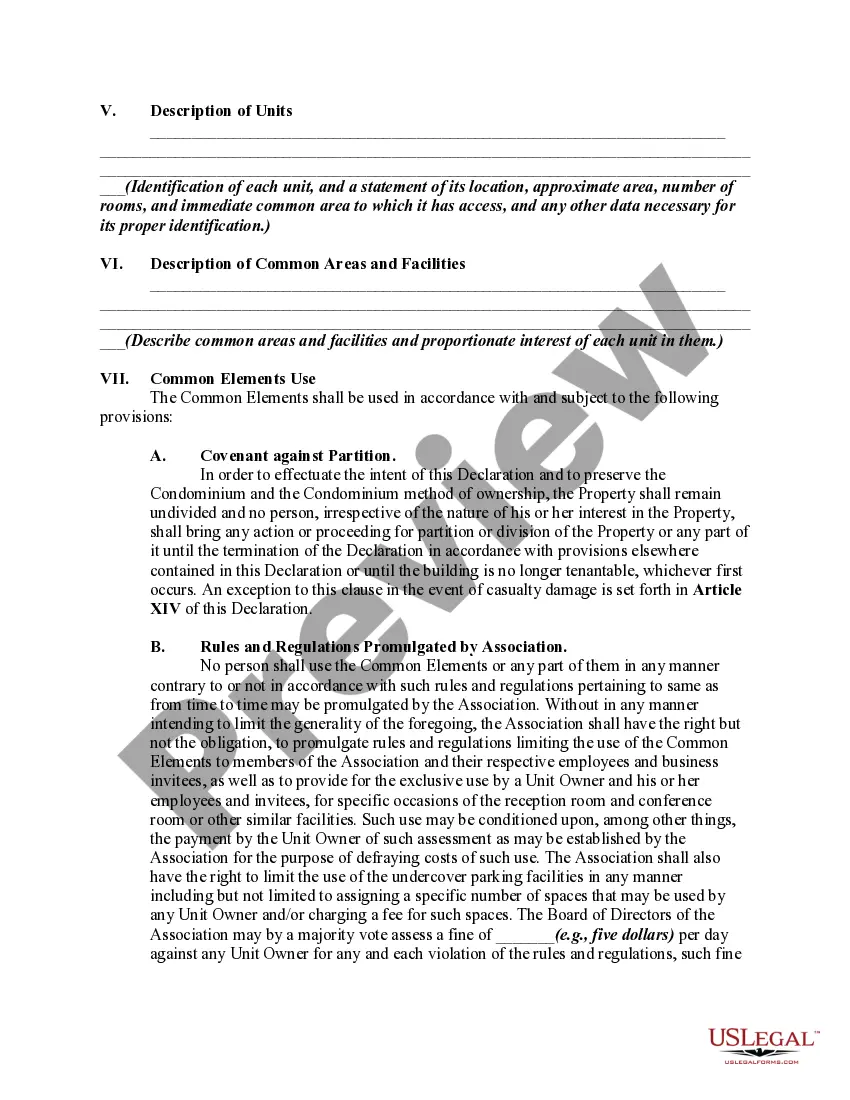
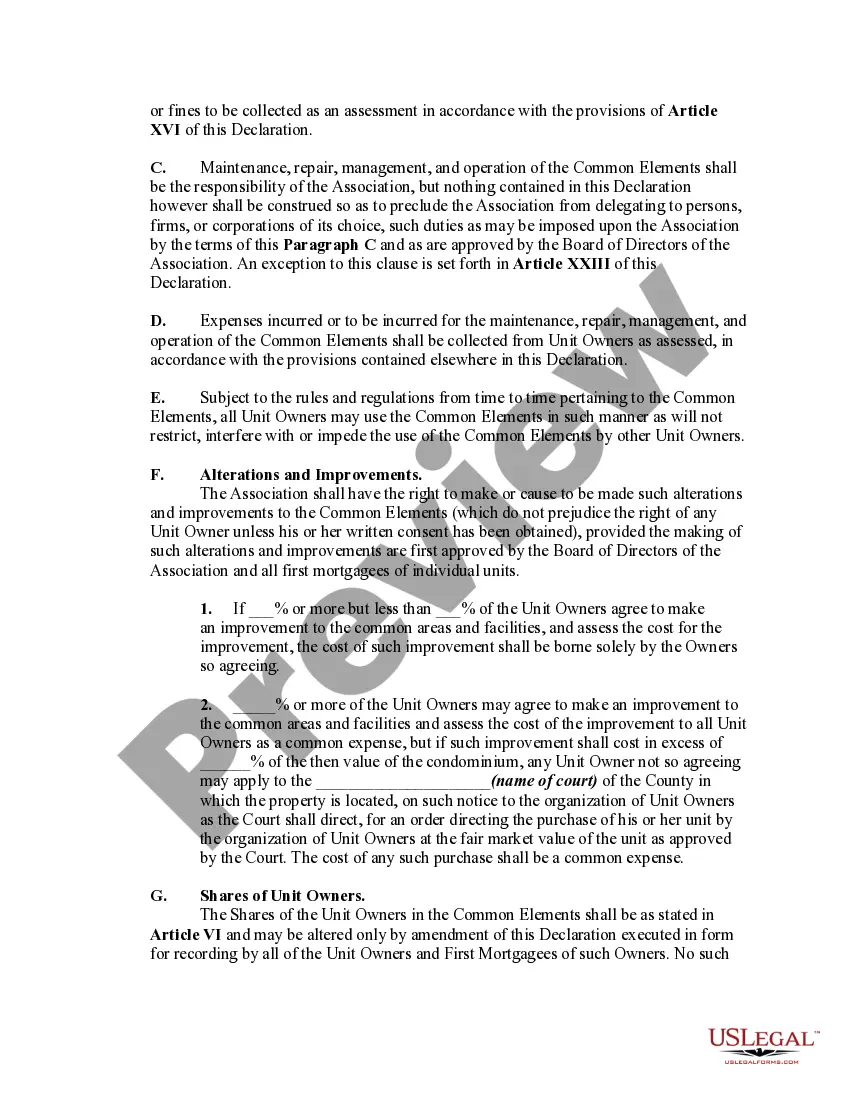
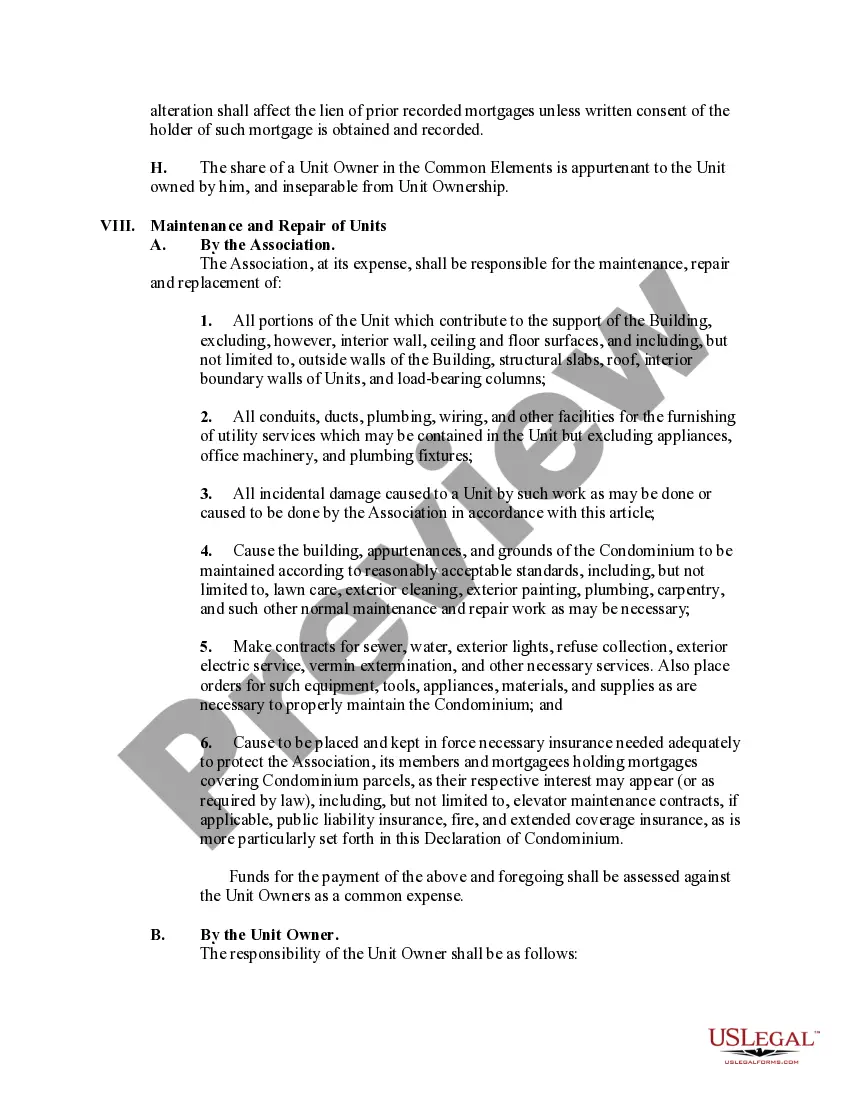
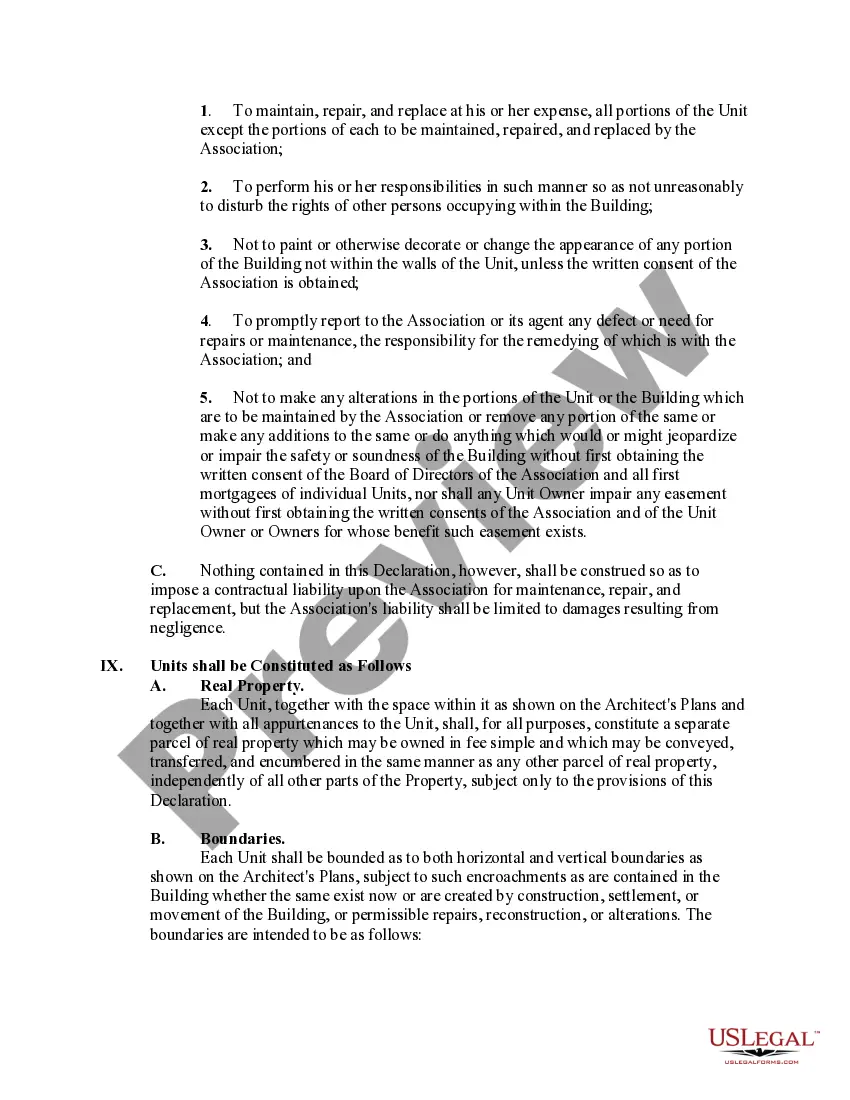
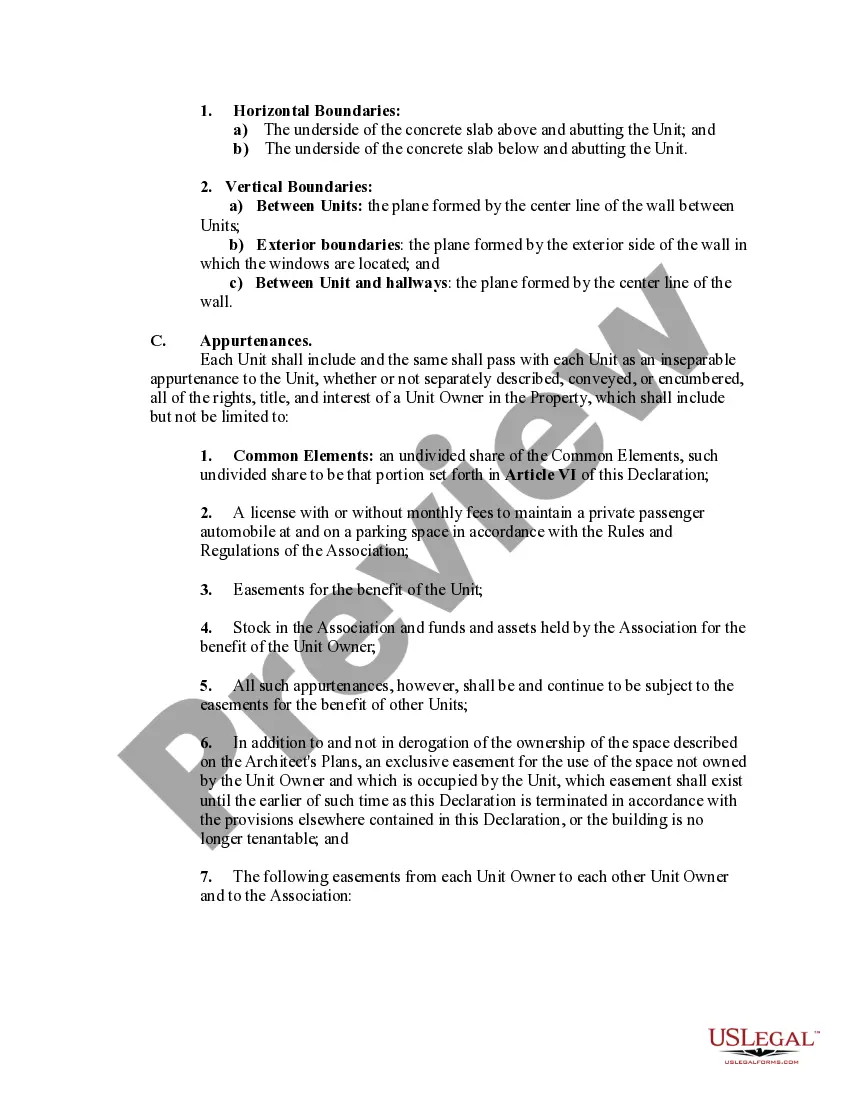
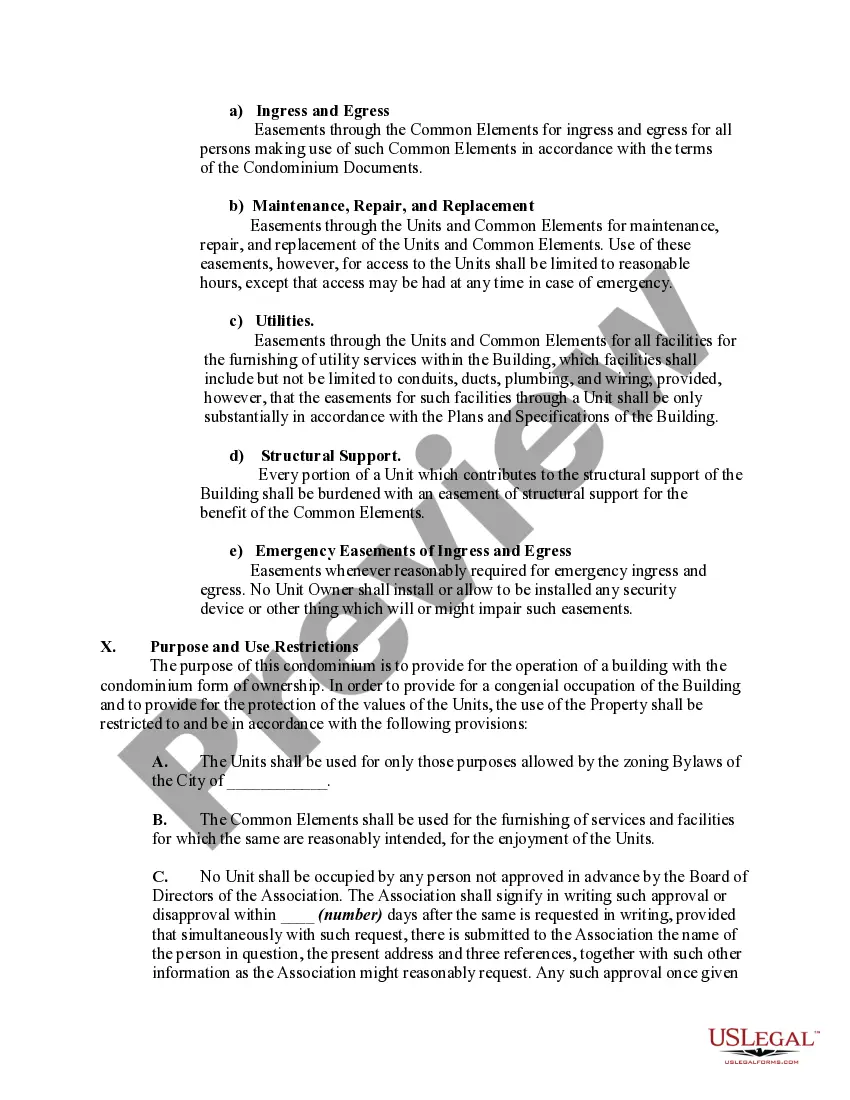
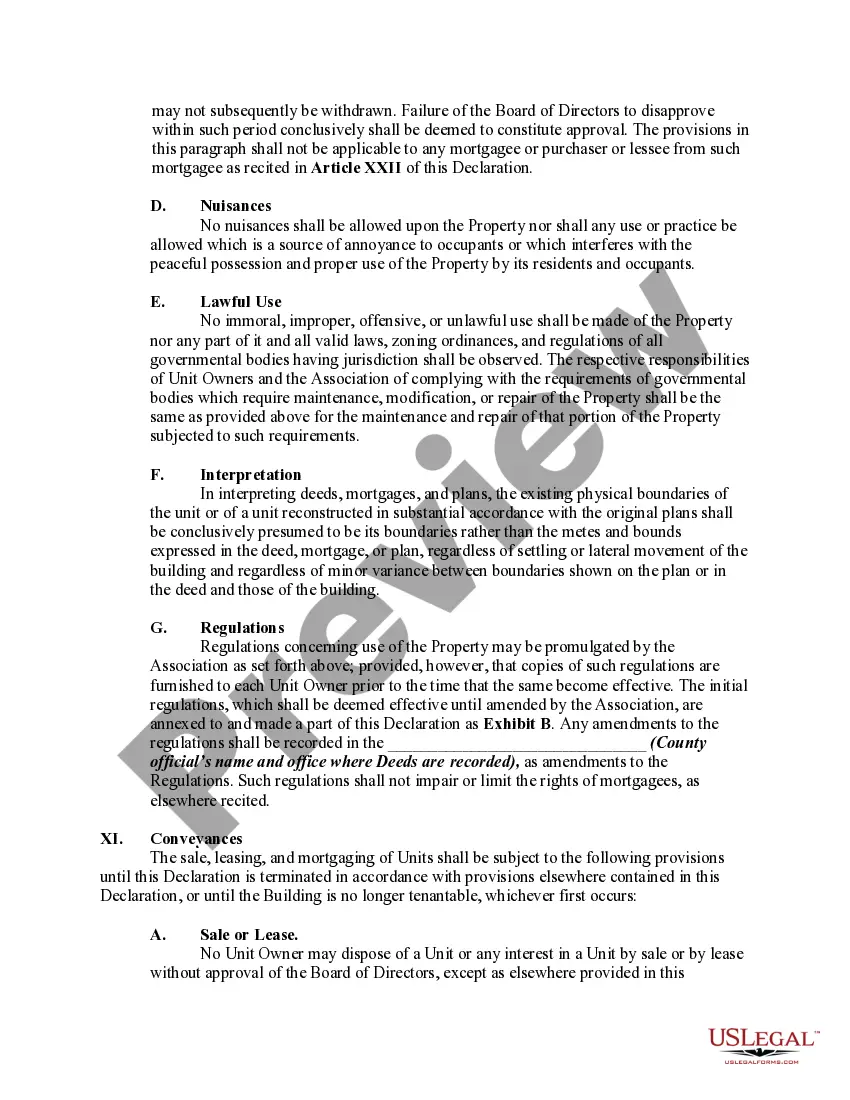
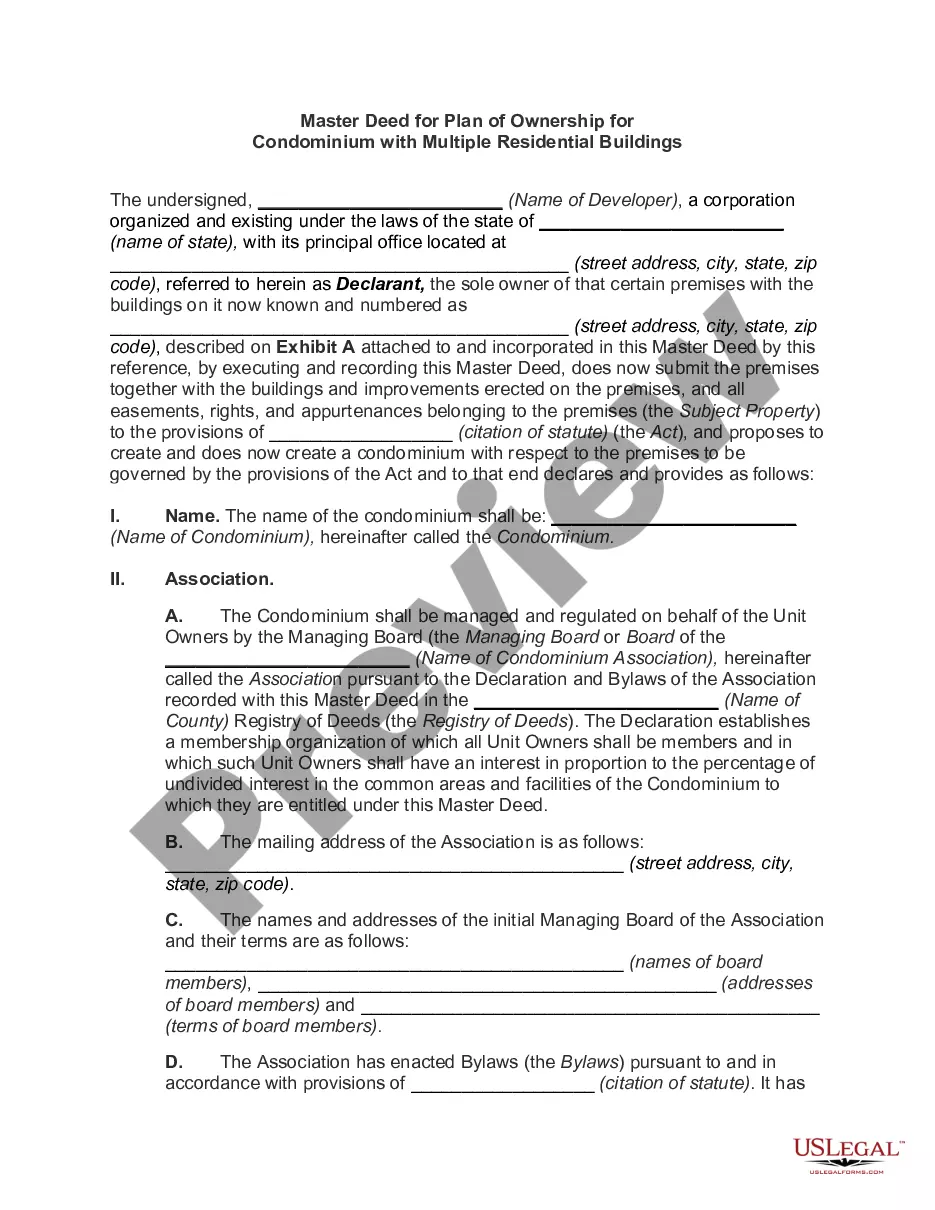
Among these documents is the master deed, which is required to establish a condominium. The master deed divides a single property into individually owned units, provides a master floor plan, defines common areas, and lists the rights and obligations of all unit owners. An individual unit deed is also required.
In a condominium, the common facilities are owned directly by the unit owners as an interest appurtenant to the units. In a planned community, the common facilities are owned by the association, and each unit owner has a membership interest in that association because they hold the title to their unit.
Condominiums in Pennsylvania are governed by the Uniform Condominium Act, 68 Pa. Stat. §§ 3101 to 3414 (the ?UCA?).
Pennsylvania Uniform Condominium Act C.S. §§ 3101 to. 3414) was adopted in 1980 to govern the formation and operation of condominiums. Prior to the UCA, condominiums in Pennsylvania were governed by the since-repealed Unit Property Act. By definition, a condominium is a form of real estate ownership.