Pennsylvania Motion to Expunge
What this document covers
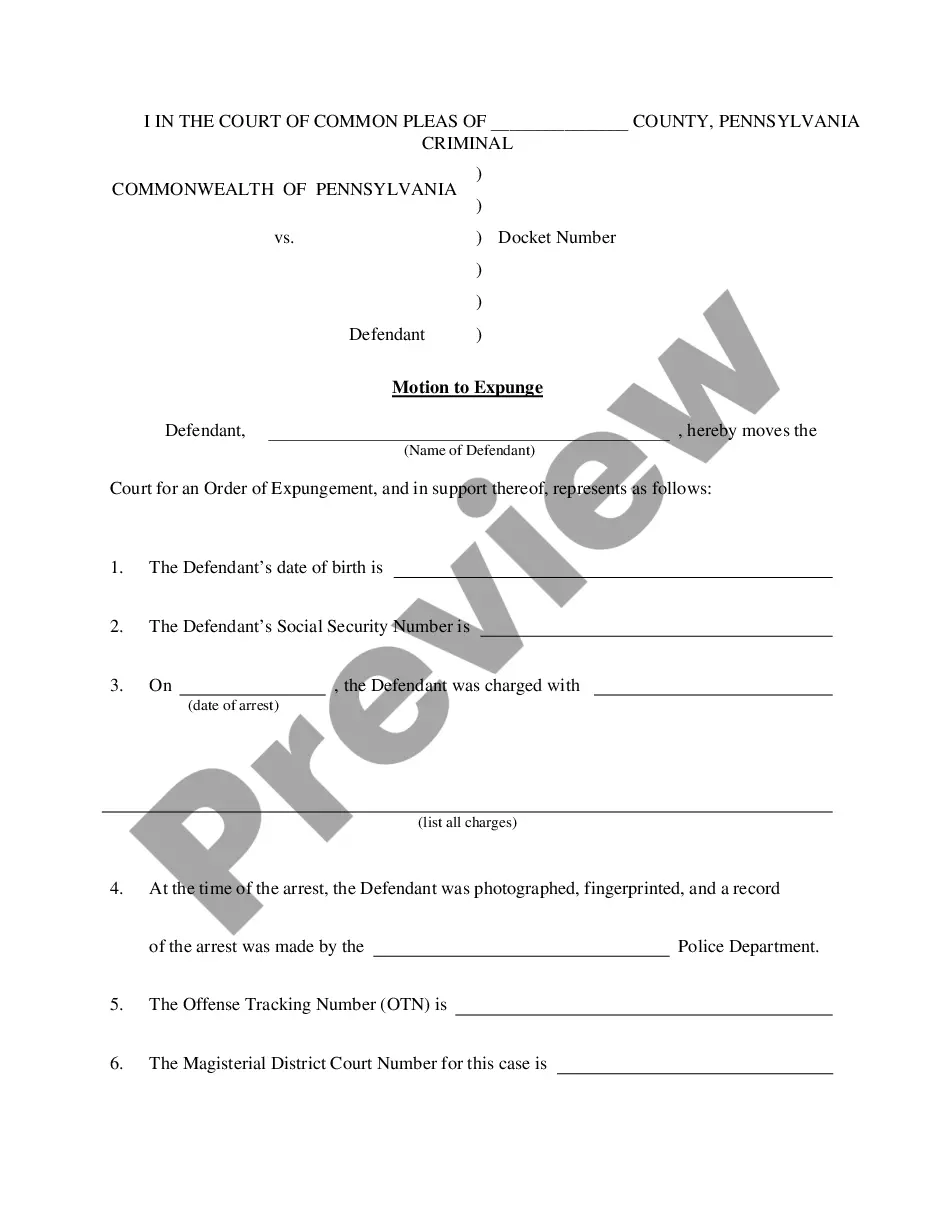
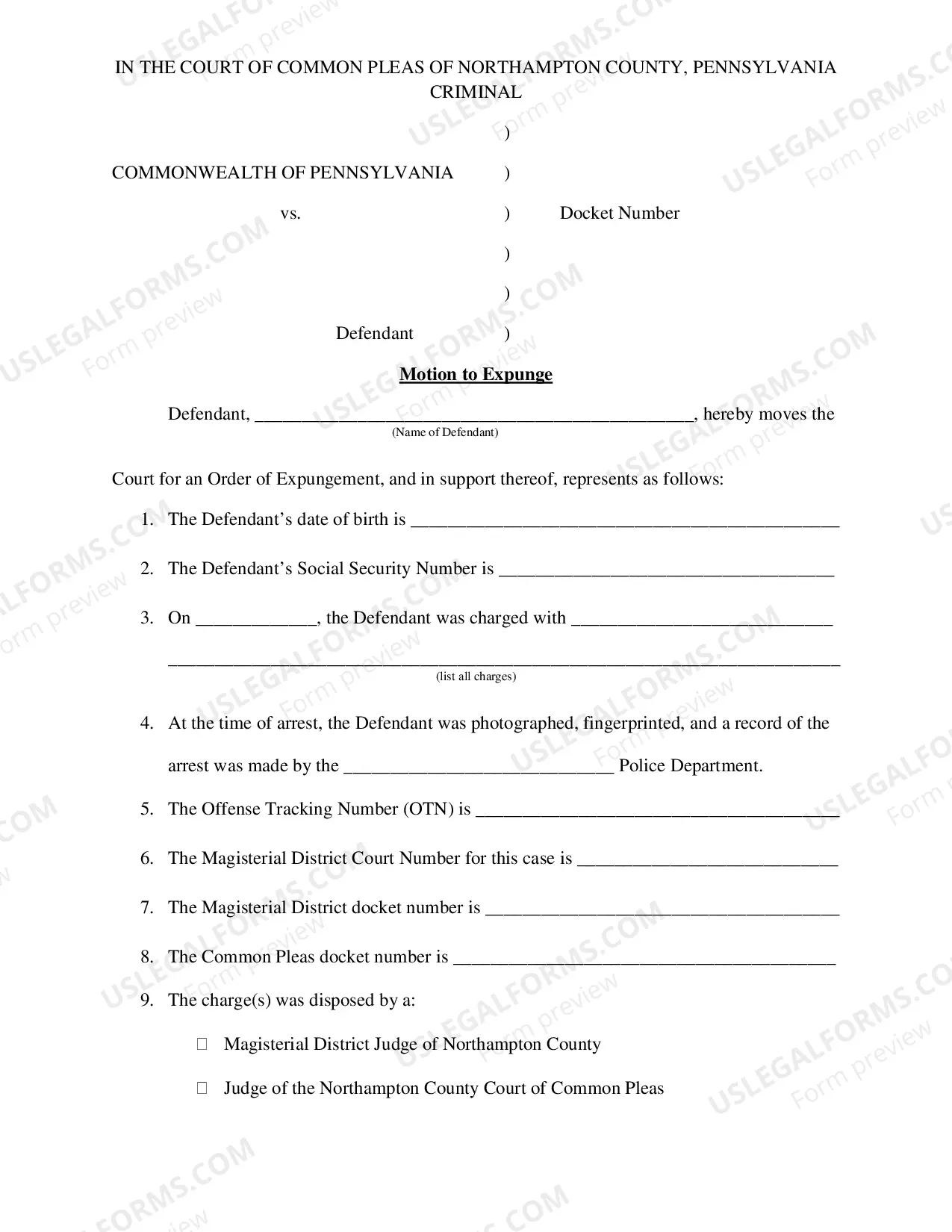
The Pennsylvania Motion to Expunge is a legal document used to request the expungement of criminal records. This form allows individuals to formally ask the court to remove certain charges from their criminal history based on specific grounds outlined in state statutes, making it distinct from general sealing or other record-altering processes.
Main sections of this form
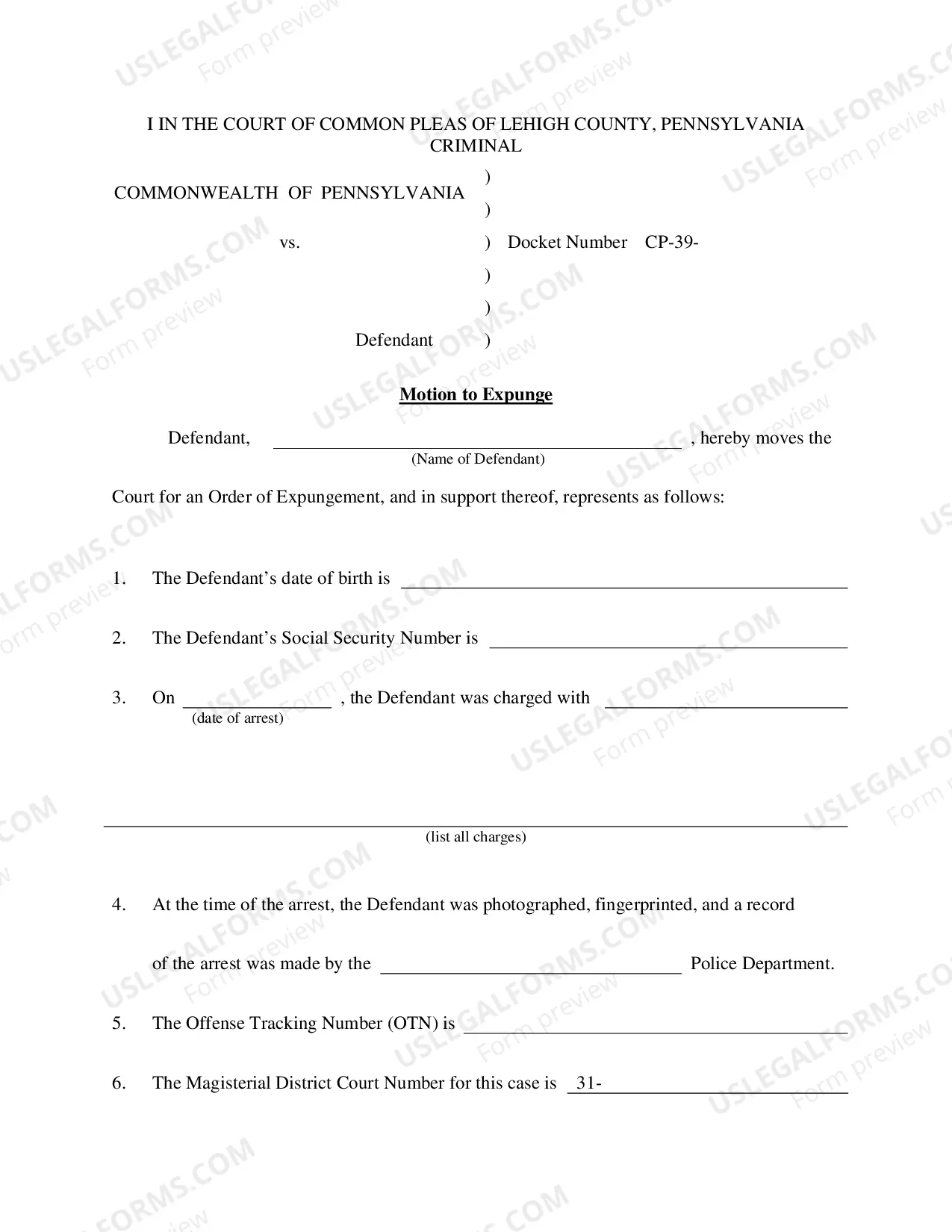
- Name and date of birth of the defendant.
- Social Security number of the defendant.
- Details about the arrest, including the date and charges.
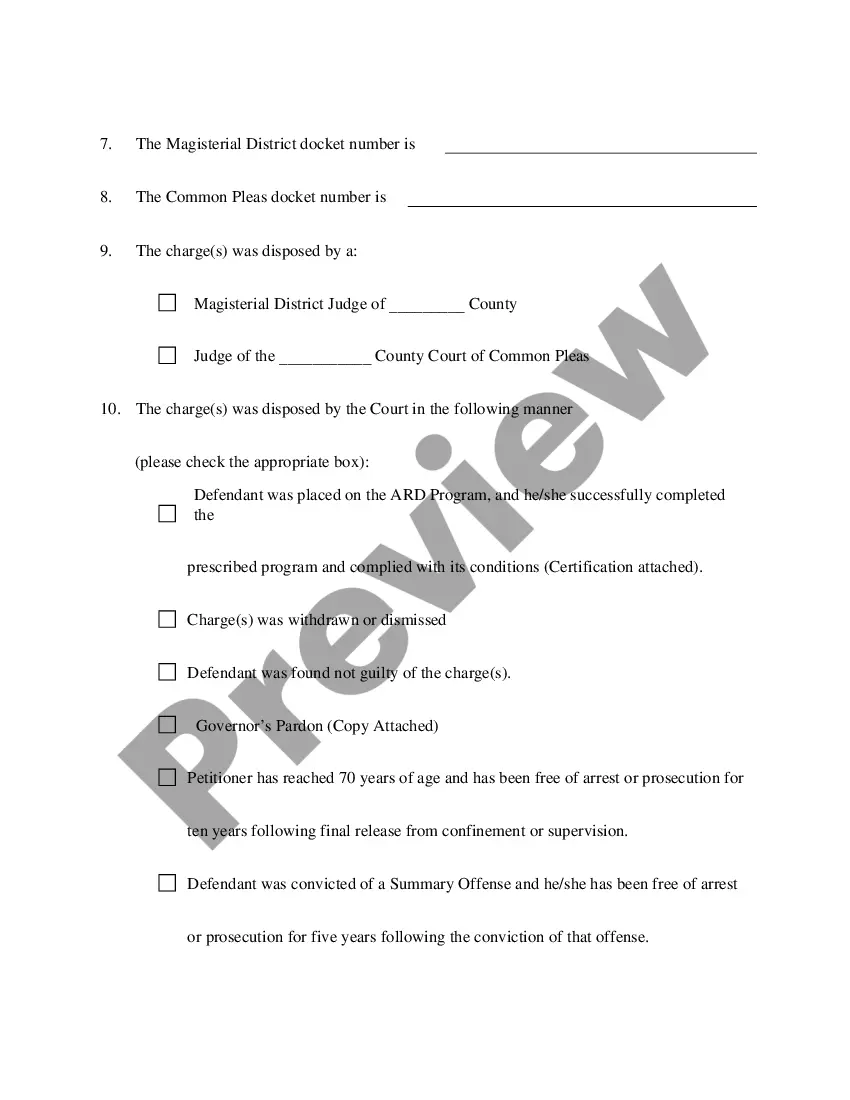
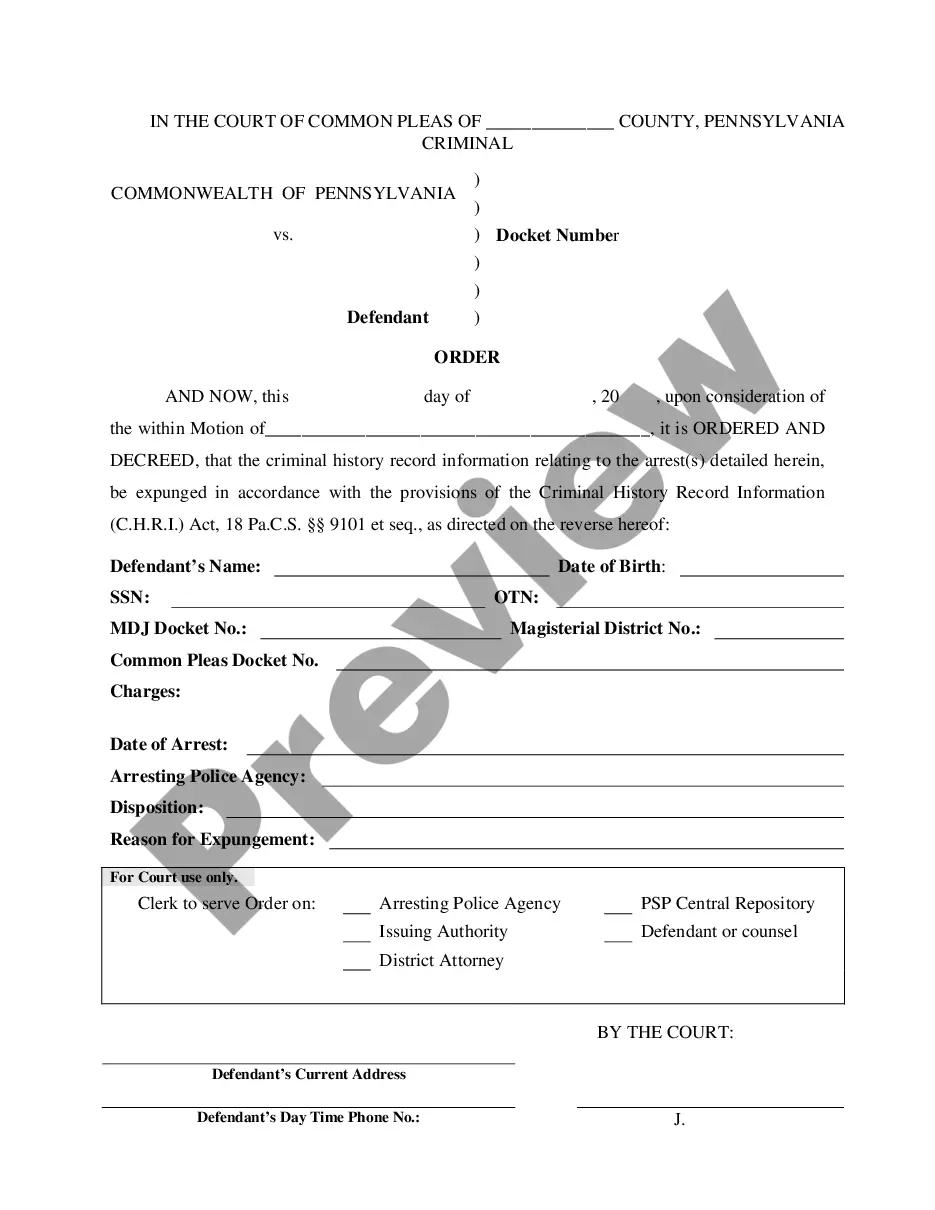
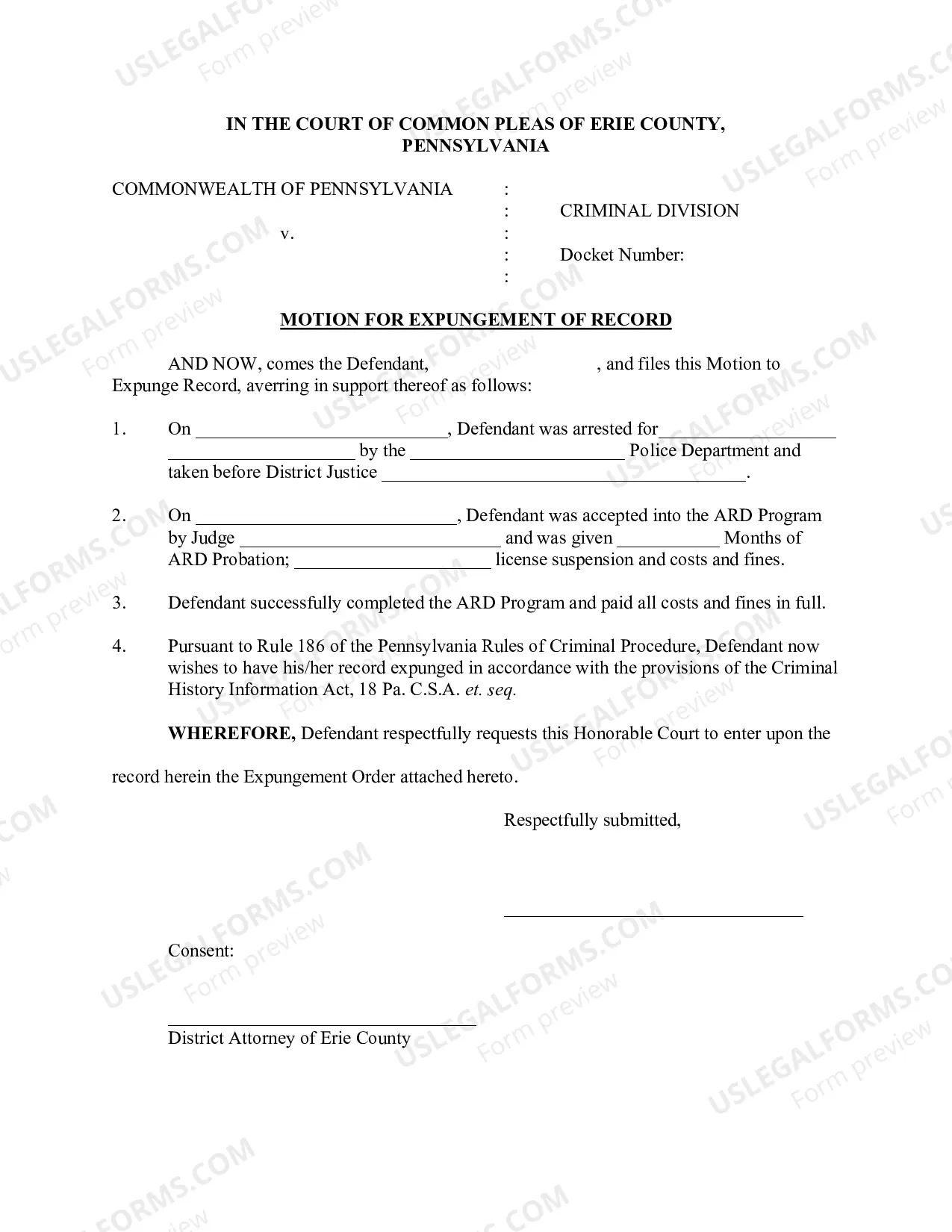
- Information on the outcome of the charges (e.g., dismissal, not guilty verdict, participation in ARD program).
- Common Pleas docket number and Magisterial District Court number.
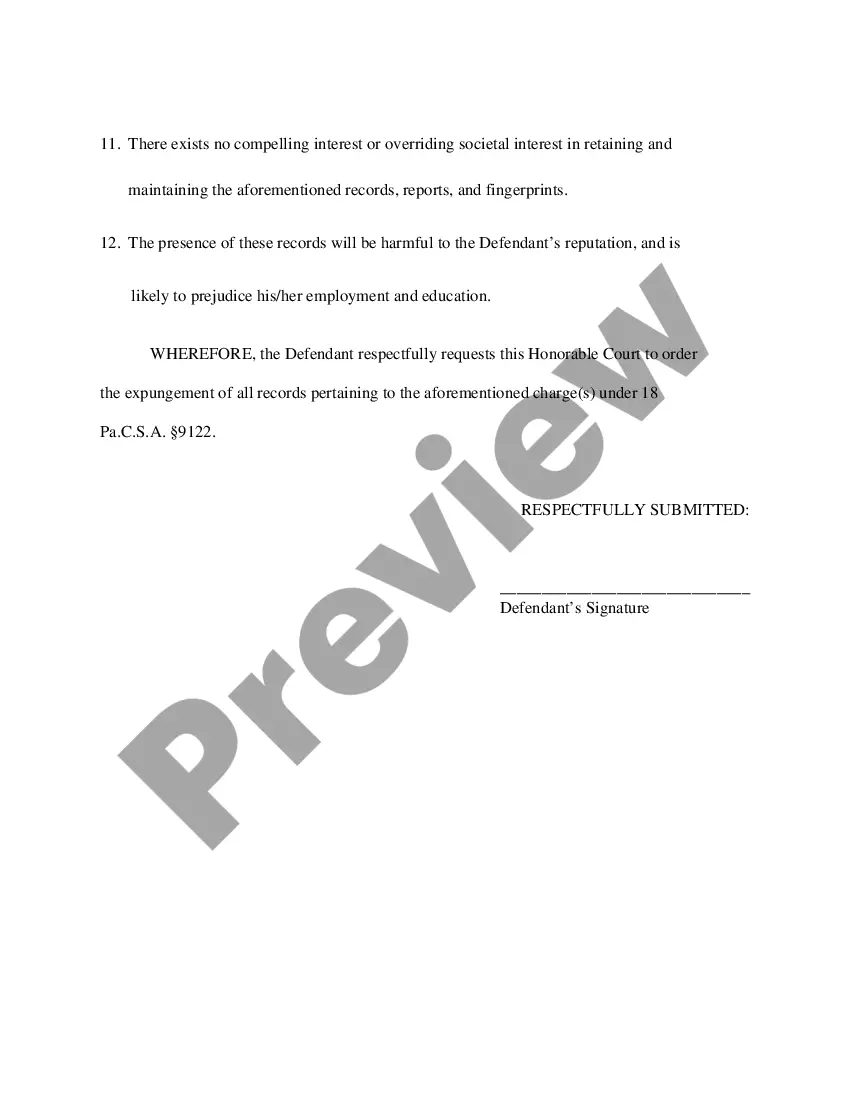
- Statement justifying the need for expungement.
When to use this document
You should use the Pennsylvania Motion to Expunge if you have been arrested, but certain charges were dismissed or you were acquitted, or if you have completed a diversion program like ARD. Additionally, you may be eligible if you have reached the age of seventy and have no further arrests for ten years, or if you were convicted of a summary offense and have been arrest-free for five years.
Who should use this form
- Individuals with criminal charges that have been dismissed or withdrawn.
- Defendants who have successfully completed an Accelerated Rehabilitative Disposition (ARD) program.
- Those who have reached seventy years of age and maintained a clean record for ten years.
- People with convictions for summary offenses who have been free from arrest for five years.
How to complete this form
- Enter your full name and date of birth at the top of the form.
- Provide your Social Security number for identification.
- Detail the arrest by entering the date and listing the charges.
- Indicate how the charges were disposed, checking the relevant box.
- Include necessary docket numbers and any related certifications.
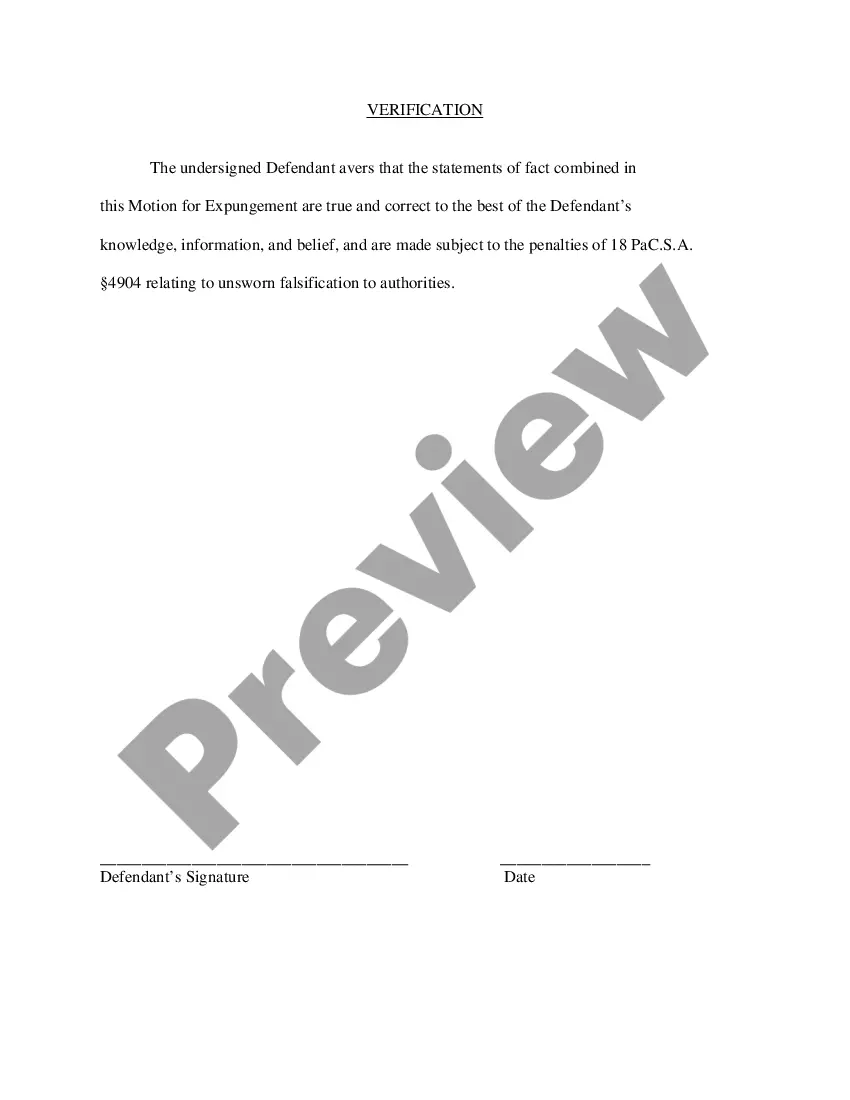
- Sign and date the verification statement at the bottom of the form.
Does this form need to be notarized?
This form does not typically require notarization unless specified by local law. Ensure to check any local court requirements before submission to verify if notarization is necessary for your specific case.
Get your form ready online
Our built-in tools help you complete, sign, share, and store your documents in one place.
Make edits, fill in missing information, and update formatting in US Legal Forms—just like you would in MS Word.
Download a copy, print it, send it by email, or mail it via USPS—whatever works best for your next step.
Sign and collect signatures with our SignNow integration. Send to multiple recipients, set reminders, and more. Go Premium to unlock E-Sign.
If this form requires notarization, complete it online through a secure video call—no need to meet a notary in person or wait for an appointment.
We protect your documents and personal data by following strict security and privacy standards.

Make edits, fill in missing information, and update formatting in US Legal Forms—just like you would in MS Word.

Download a copy, print it, send it by email, or mail it via USPS—whatever works best for your next step.

Sign and collect signatures with our SignNow integration. Send to multiple recipients, set reminders, and more. Go Premium to unlock E-Sign.

If this form requires notarization, complete it online through a secure video call—no need to meet a notary in person or wait for an appointment.

We protect your documents and personal data by following strict security and privacy standards.
Typical mistakes to avoid
- Failing to provide complete or accurate information about arrest details.
- Not including supporting documents or certifications when required.
- Leaving sections of the form blank, which may cause delays.
- Not signing the form before submitting it to the court.
Why use this form online
- Convenience of completing the form from home at your own pace.
- Access to digital templates that can be easily edited and saved.
- Confidence in using forms that are drafted by licensed attorneys, ensuring legal compliance.
Looking for another form?
Form popularity
FAQ
When filing an expungement, a petition and order must be submitted, along with a PA State Police background check. These forms can be found on the Administrative Office of the Pennsylvania Court (AOPC) website. There is a $167 filing fee associated with all expungement petitions.
Pennsylvania has expungement laws that help people who received a summary offense, Accelerated Rehabilitative Disposition (ARD) or had an arrest that did not lead to a conviction. Expungement usually takes about 4 to 6 months. Attorneys typically charge between $700 to to $1000 to expunge your record.
You can take a free Pennsylvania expungement test at RecordGone.com to see if you are eligible for expungement. If your offense was a summary offense (minor offenses such as underage drinking, highway obstruction, and retail theft), you may be eligible to expunge your criminal record.
Always begin the letter with a formal greeting, such as "Dear Judge...", before composing the rest of the letter. Then, write the first paragraph of your letter by explaining why you are writing, what charge you wish to have expunged, and a short description of why you feel it should be expunged.
The expanded list of offenses that are now eligible to be expunged includes substance-related offenses such as DUI's and controlled substance and drug paraphernalia possession, as well as 2nd-degree misdemeanors such as larceny, identity theft, and reckless endangerment.
When filing an expungement, a petition and order must be submitted, along with a PA State Police background check. These forms can be found on the Administrative Office of the Pennsylvania Court (AOPC) website. There is a $167 filing fee associated with all expungement petitions.