Pennsylvania Marital Domestic Separation and Property Settlement Agreement Minor Children no Joint Property or Debts effective Immediately
Understanding this form
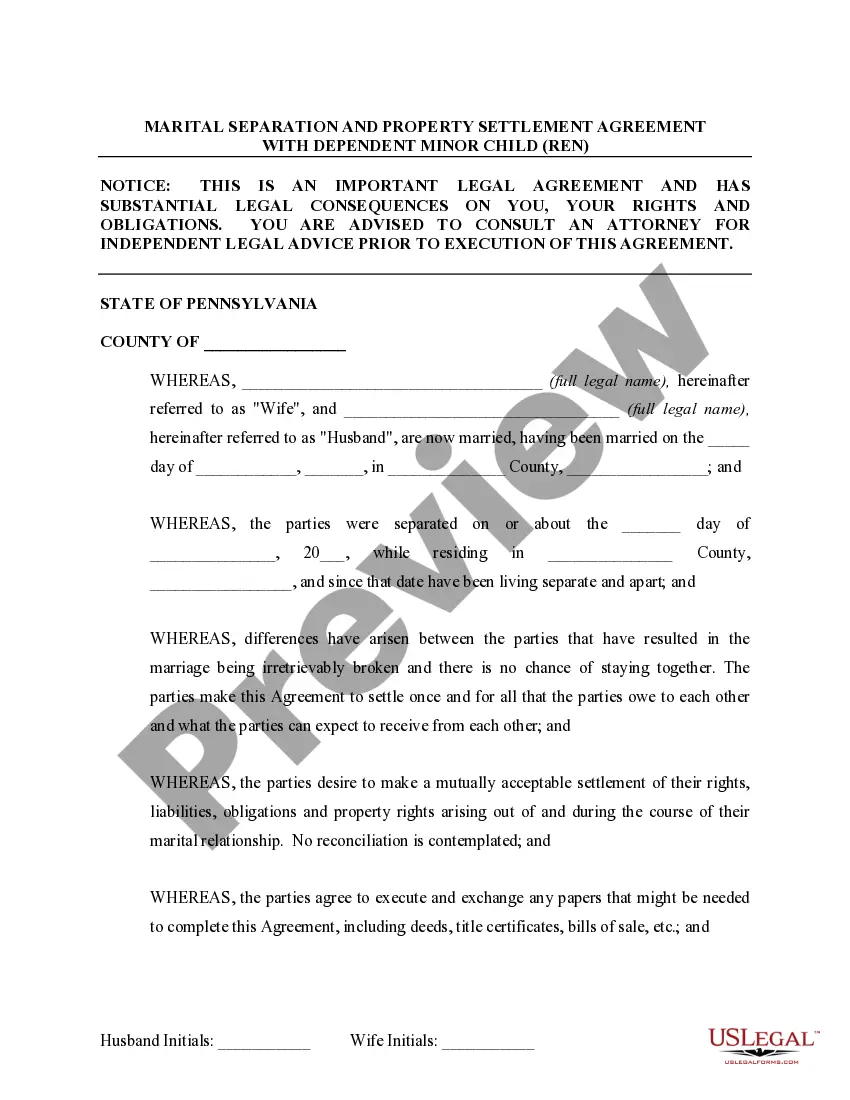
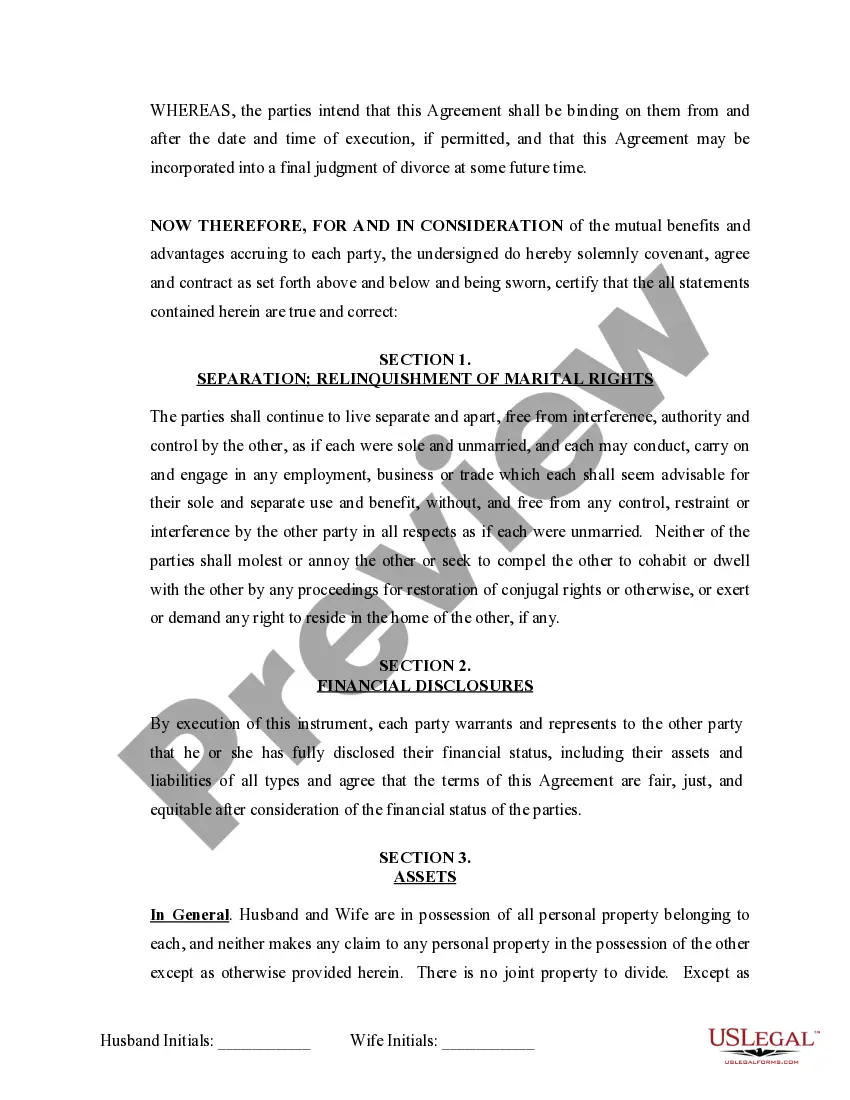
The Marital Domestic Separation and Property Settlement Agreement is a legal document designed for married couples with minor children who wish to separate without joint property or debts. This form outlines the terms of separation, including child custody, visitation rights, child support, and any alimony provisions. Unlike other separation agreements, this form is specifically tailored for situations where the parties do not share joint property or financial obligations, making it an efficient tool for facilitating immediate separation while ensuring the well-being of children involved.
Form components explained
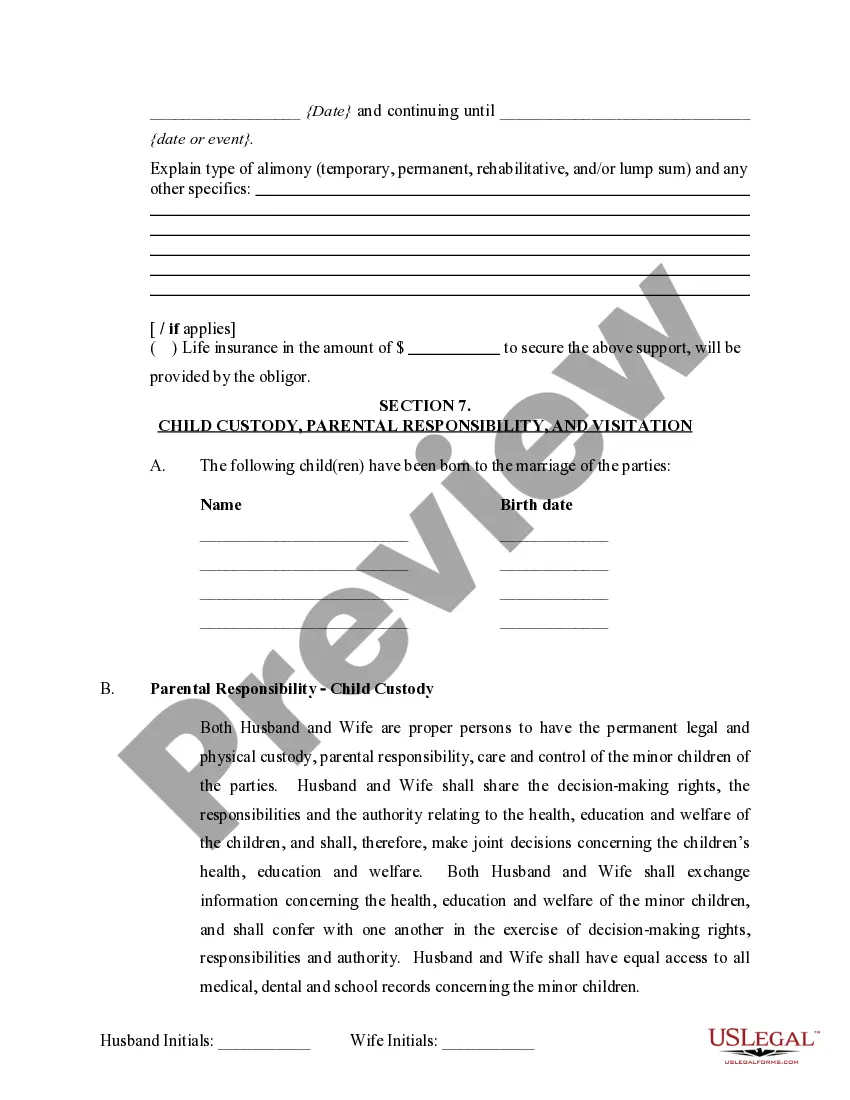
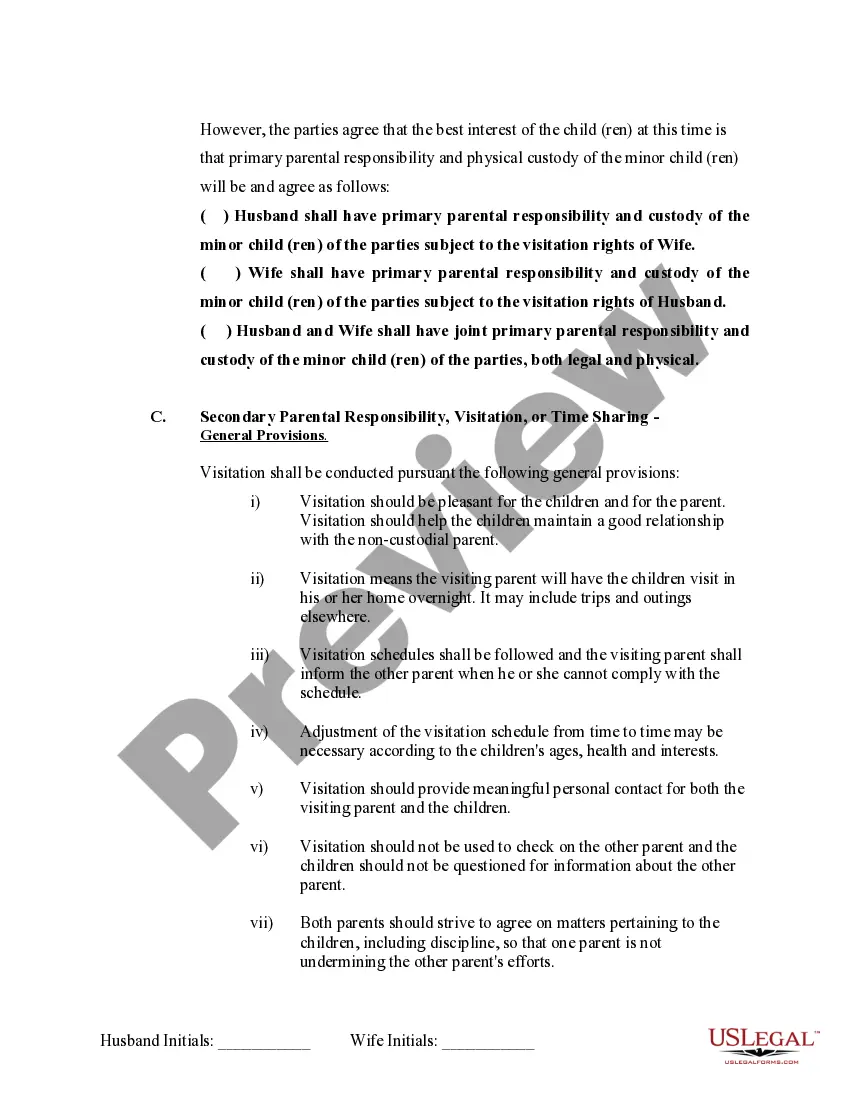
- Custody arrangements for minor children
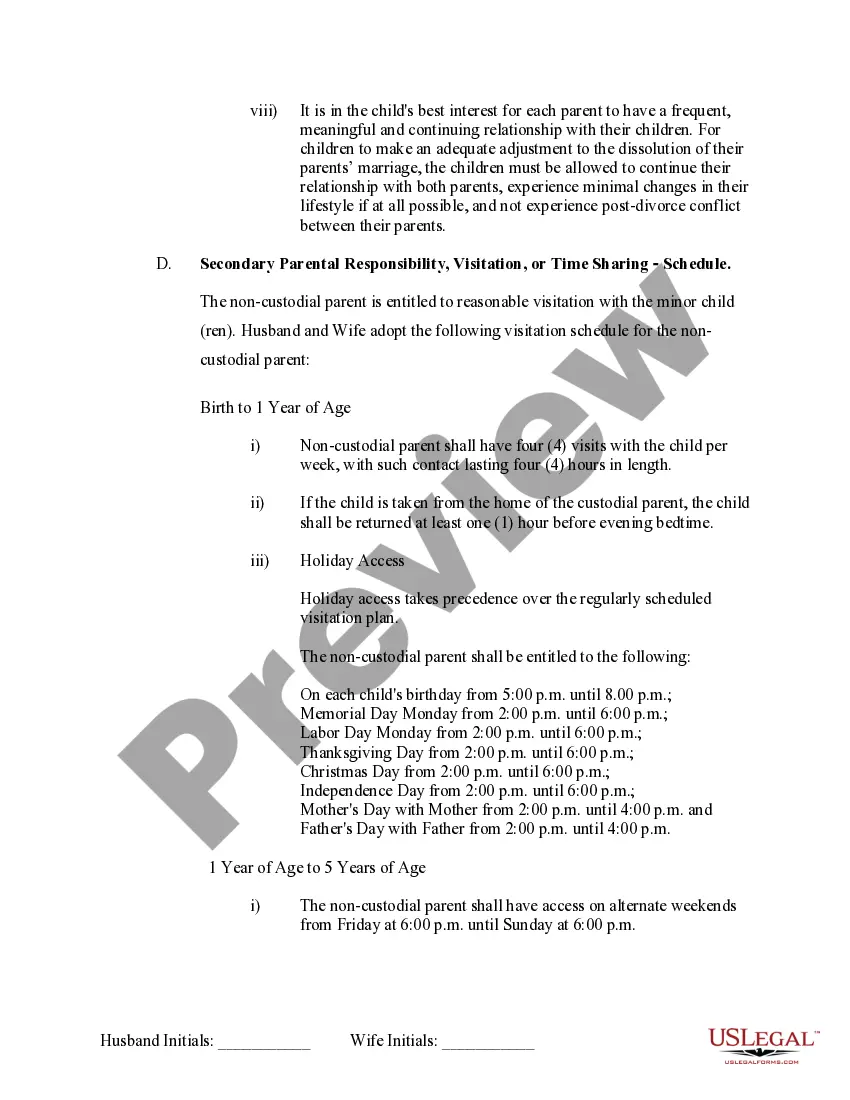
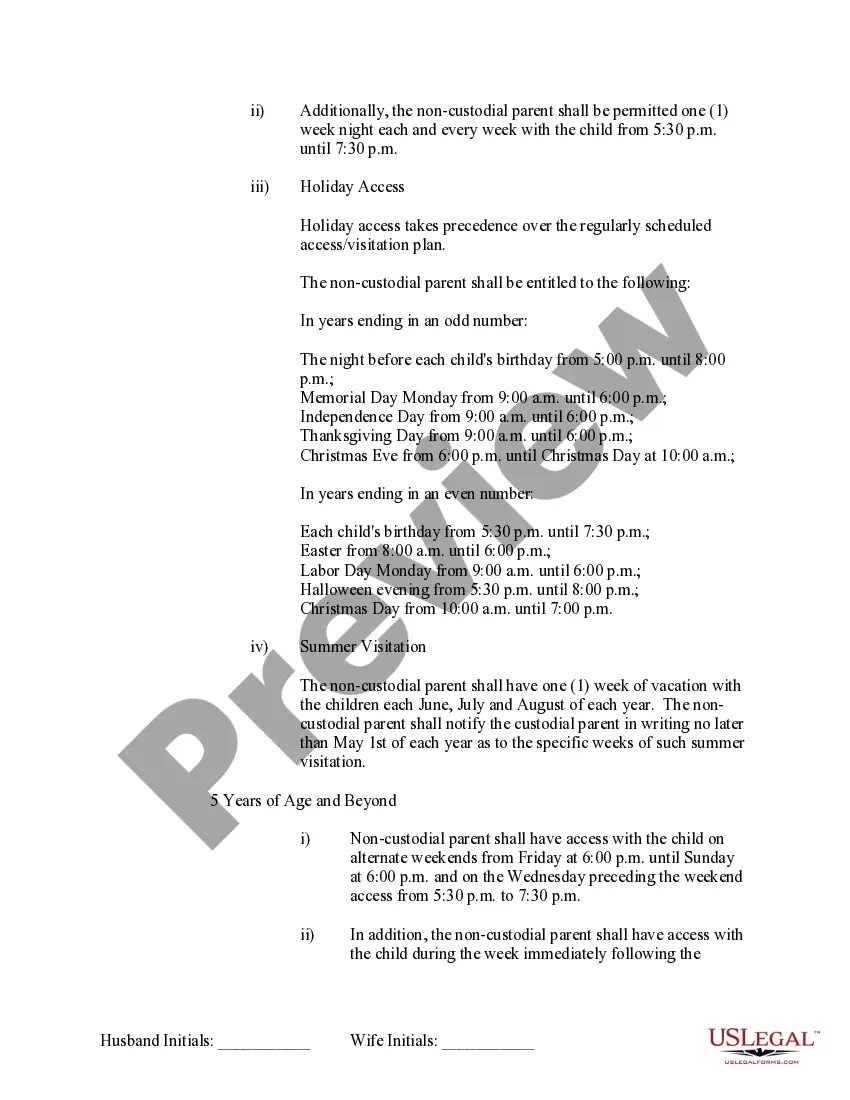
- Visitation rights and schedules for both parents
- Child support obligations and amounts
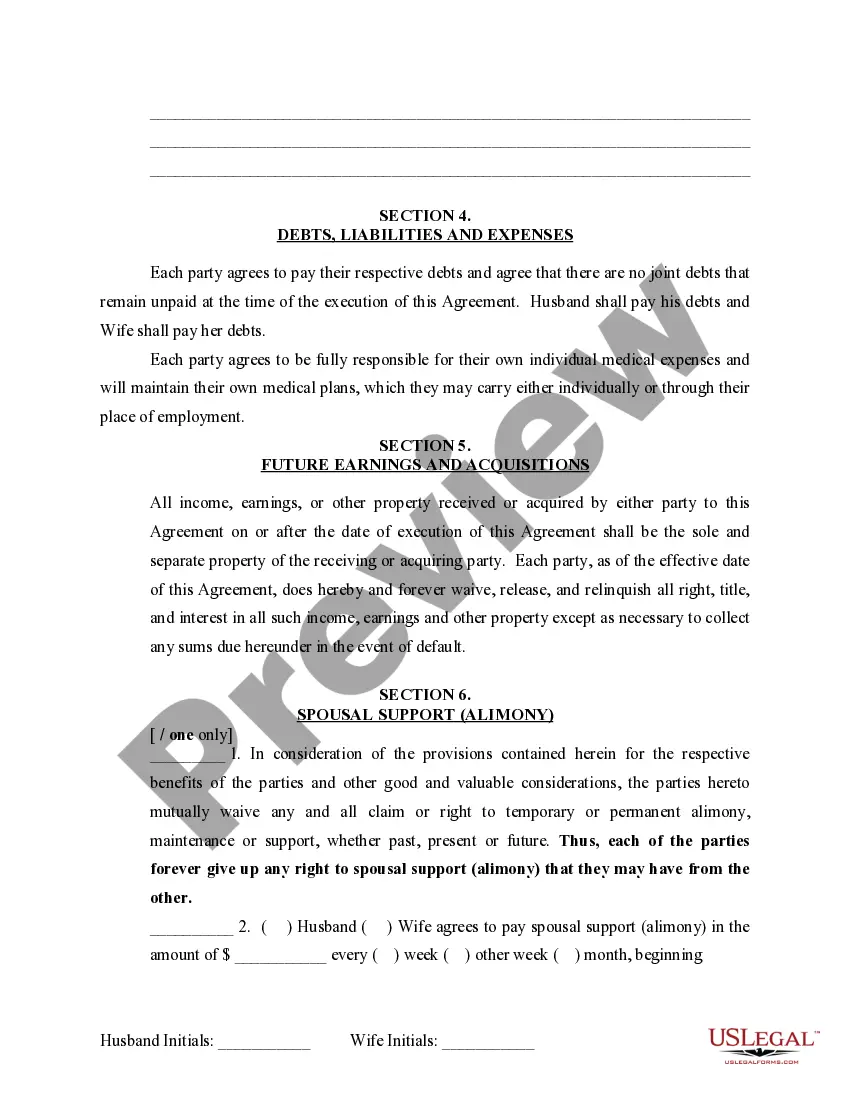
- Alimony payment terms if applicable
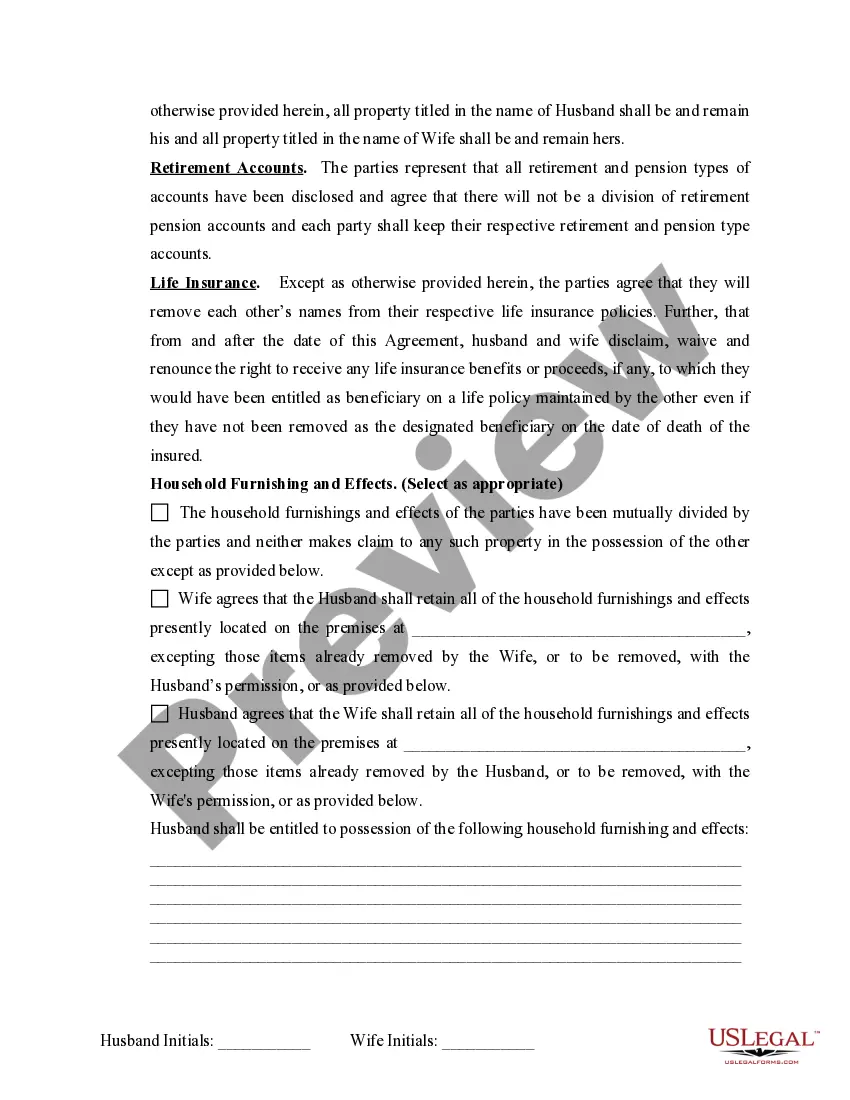
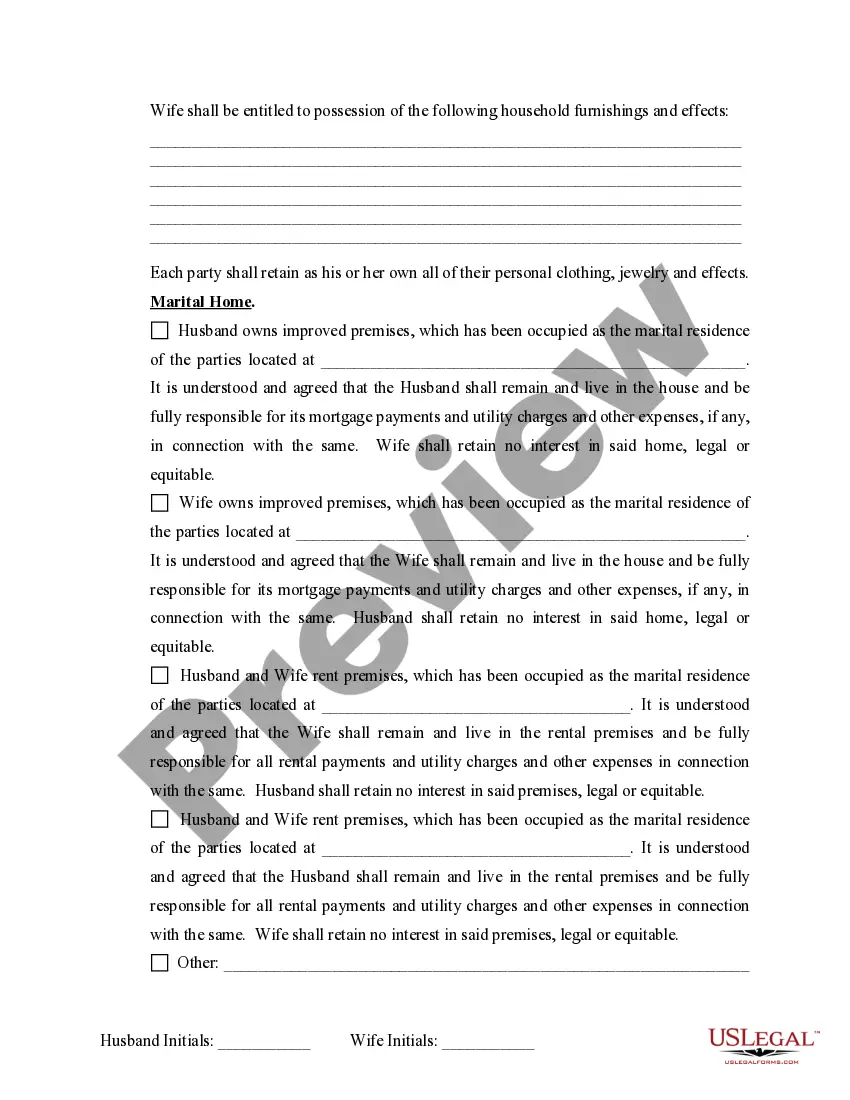
- Division of assets and debts clarification
- Provisions for legal consultations

Situations where this form applies
This form should be utilized when a married couple decides to separate and needs a clear framework for their mutual rights and responsibilities concerning their minor children. It is particularly suited for situations where the couple wishes to have the agreement take effect immediately and where there is no shared property or financial obligations to consider.
Who should use this form
- Couples legally married and seeking an immediate separation
- Parents of minor children who need to establish custody and support arrangements
- Parties without joint property or debts that need to define financial responsibilities
- Individuals who are comfortable with their separation terms and prefer a clear legal framework
Instructions for completing this form
- Identify the full legal names of both parties and their current addresses.
- Detail the arrangements regarding the custody and visitation of minor children.
- Specify the monthly child support amount and any alimony agreements.
- Have both parties sign the agreement in the presence of a notary public.
- Ensure each party receives a signed copy of the final document for their records.
Does this document require notarization?
Yes, this form must be notarized to be legally valid. Notarization helps to ensure that both parties have signed the document willingly and understand its terms. US Legal Forms offers integrated online notarization services, available 24/7, making it secure and convenient to complete the notarization process from home.
Get your form ready online
Our built-in tools help you complete, sign, share, and store your documents in one place.
Make edits, fill in missing information, and update formatting in US Legal Forms—just like you would in MS Word.
Download a copy, print it, send it by email, or mail it via USPS—whatever works best for your next step.
Sign and collect signatures with our SignNow integration. Send to multiple recipients, set reminders, and more. Go Premium to unlock E-Sign.
If this form requires notarization, complete it online through a secure video call—no need to meet a notary in person or wait for an appointment.
We protect your documents and personal data by following strict security and privacy standards.

Make edits, fill in missing information, and update formatting in US Legal Forms—just like you would in MS Word.

Download a copy, print it, send it by email, or mail it via USPS—whatever works best for your next step.

Sign and collect signatures with our SignNow integration. Send to multiple recipients, set reminders, and more. Go Premium to unlock E-Sign.

If this form requires notarization, complete it online through a secure video call—no need to meet a notary in person or wait for an appointment.

We protect your documents and personal data by following strict security and privacy standards.
Common mistakes
- Failing to provide complete and accurate financial disclosures.
- Not having the agreement notarized, which may affect its legal standing.
- Overlooking the necessity for both signatures on the document.
- Not clearly defining custody and visitation schedules, leading to future disputes.
Advantages of online completion
- Convenient access to legal documents without the need to visit a lawyer's office.
- Editable templates allow for customization to fit unique family situations.
- Instant download enables immediate use and filing.
- Drafted by licensed attorneys, ensuring legal accuracy and compliance.
Looking for another form?
Form popularity
FAQ
Buying a home while legally married but separated from your former spouse is certainly possible, but there's some extra documentation needed and things to be aware of. First, your lender is going to require your legal separation agreement. If you have a property settlement agreement, they'll need that as well.
Though the term non-marital property often refers to any personal or real property owned prior to, and brought into the marriage, it can also refer to things such as inheritances and gifts made to only one spouse.
Unlike in community property states such as California, where marital property is divide equally (i.e. 50% 50%), in Pennsylvania marital property is divided equitably. This type of division is fairly based on the circumstances of the parties.
Rights to Property after Separation: When You're Married and Getting a Divorce. The benefit of getting married is that, in the event of a divorce or separation, you are entitled to a share of the property.The right to stay in your home unless a court order excludes it.
Marital property includes all property that was acquired during the marriage, regardless of how it is titled (in whose name it is). Gifts from one spouse to another are marital property if they were purchased with marital funds.
Assets acquired during the marriage and any acquired post separation are included in the one pool. Because the value of an asset of one or both of the parties may have risen or fallen quite significantly between separation and the trial date, a court must examine any changes carefully.
Marital property refers generally to all of the property acquired by either or both spouses during the marriage. Separate property refers to any property the spouses acquired separately before the marriage or after separation (or in some states after divorce).
California law also provides that property spouses acquire before a divorce, but after the date of separation, is separate property.There is a strong presumption under California divorce law that the assets a couple accumulates during the marriage are community property, meaning owned equally by the spouses.
Generally, inheritances are not subject to equitable distribution because, by law, inheritances are not considered marital property. Instead, inheritances are treated as separate property belonging to the person who received the inheritance, and therefore may not be divided between the parties in a divorce.