Pennsylvania Guaranty Attachment to Lease for Guarantor or Cosigner
Understanding this form
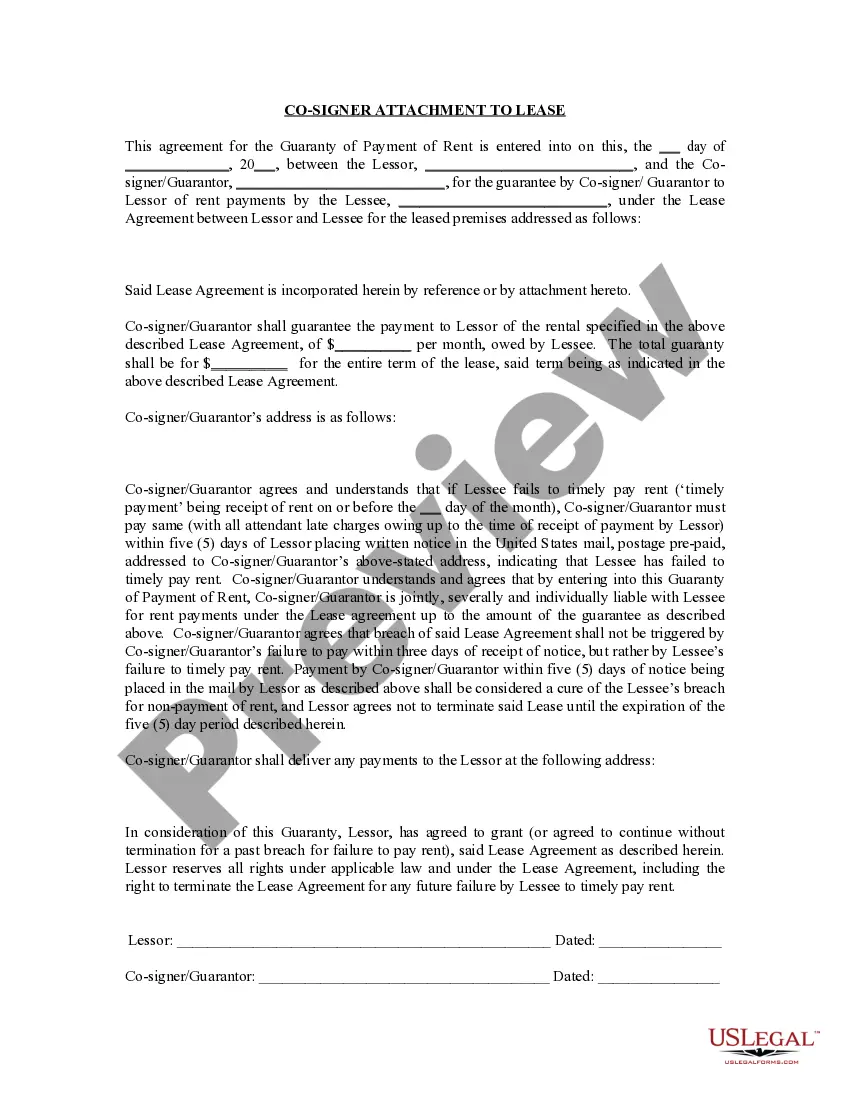
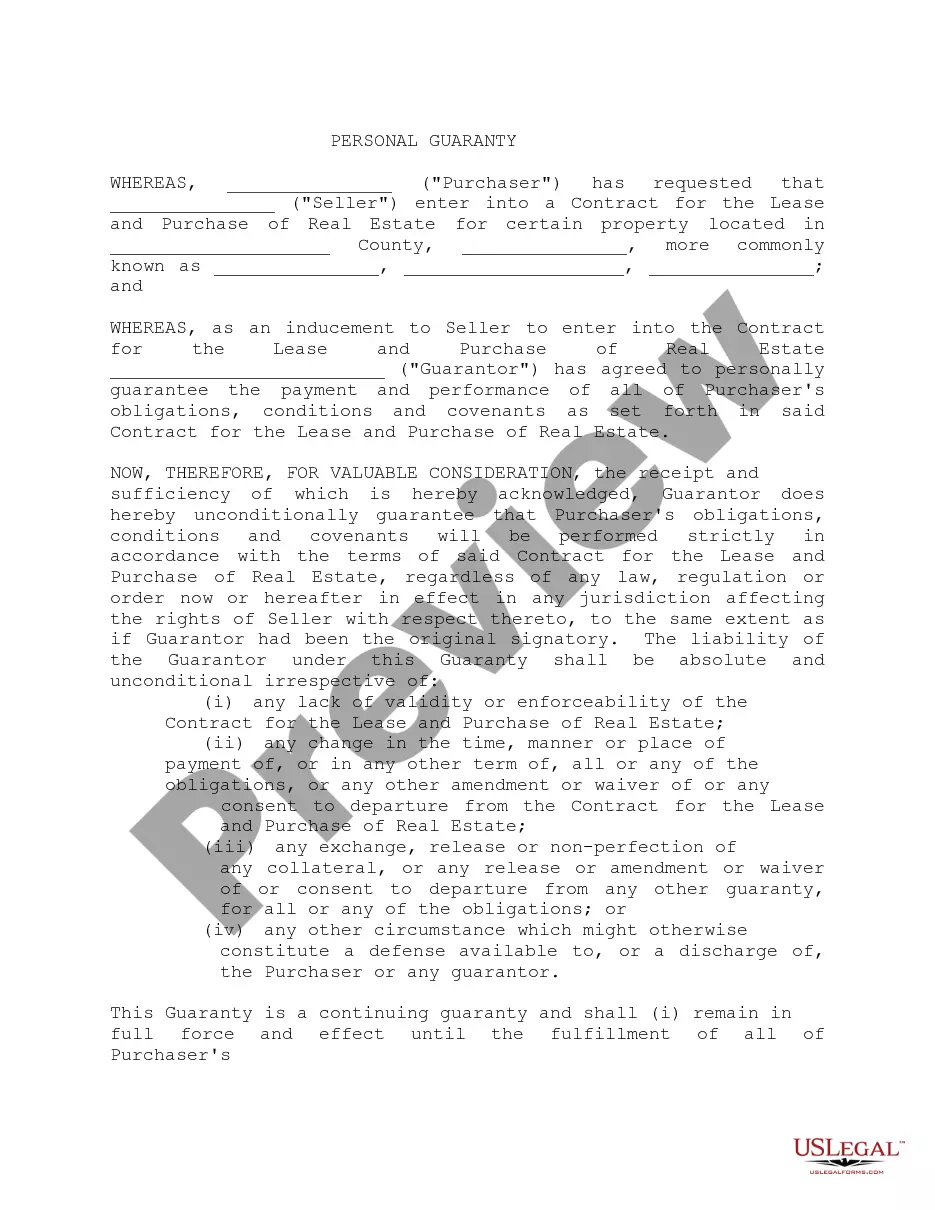
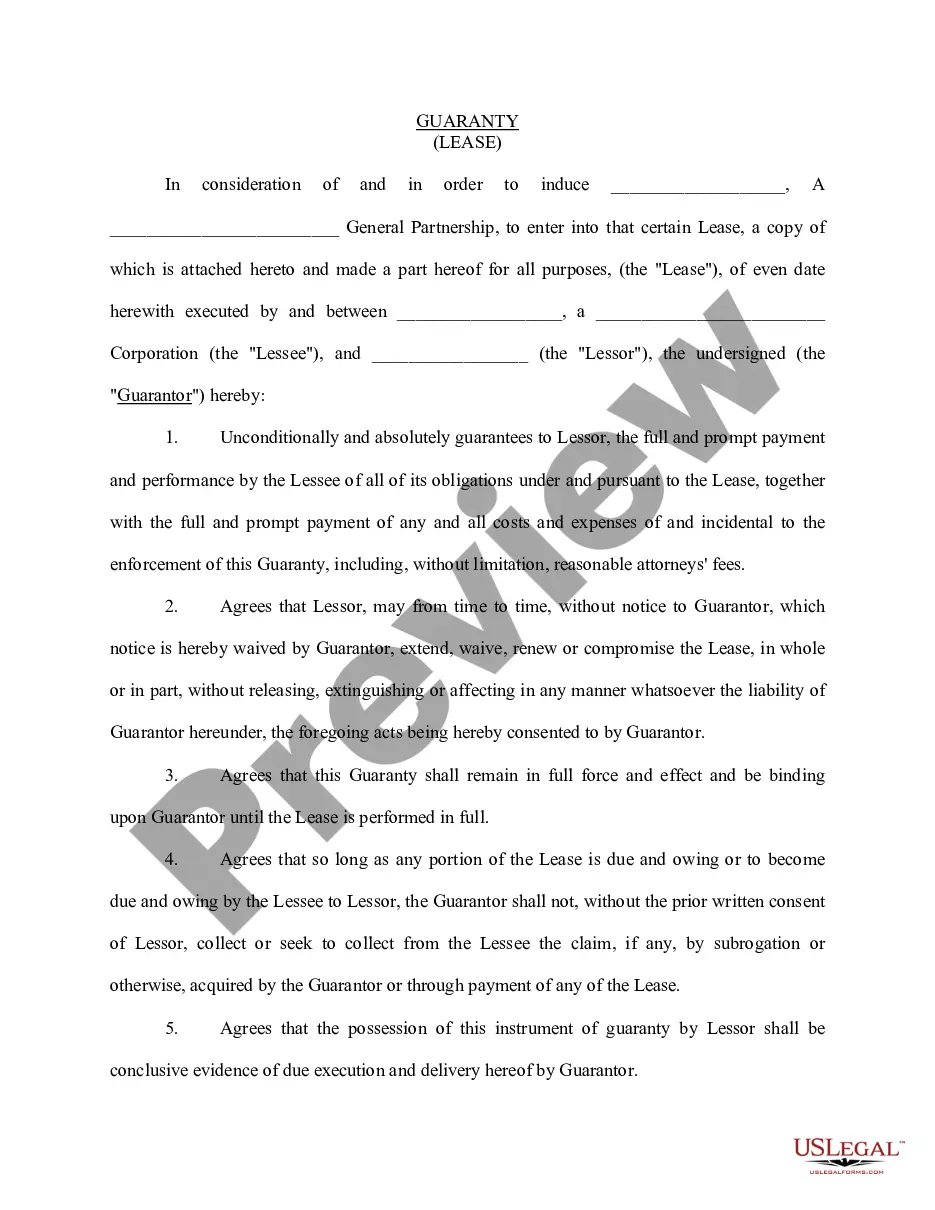
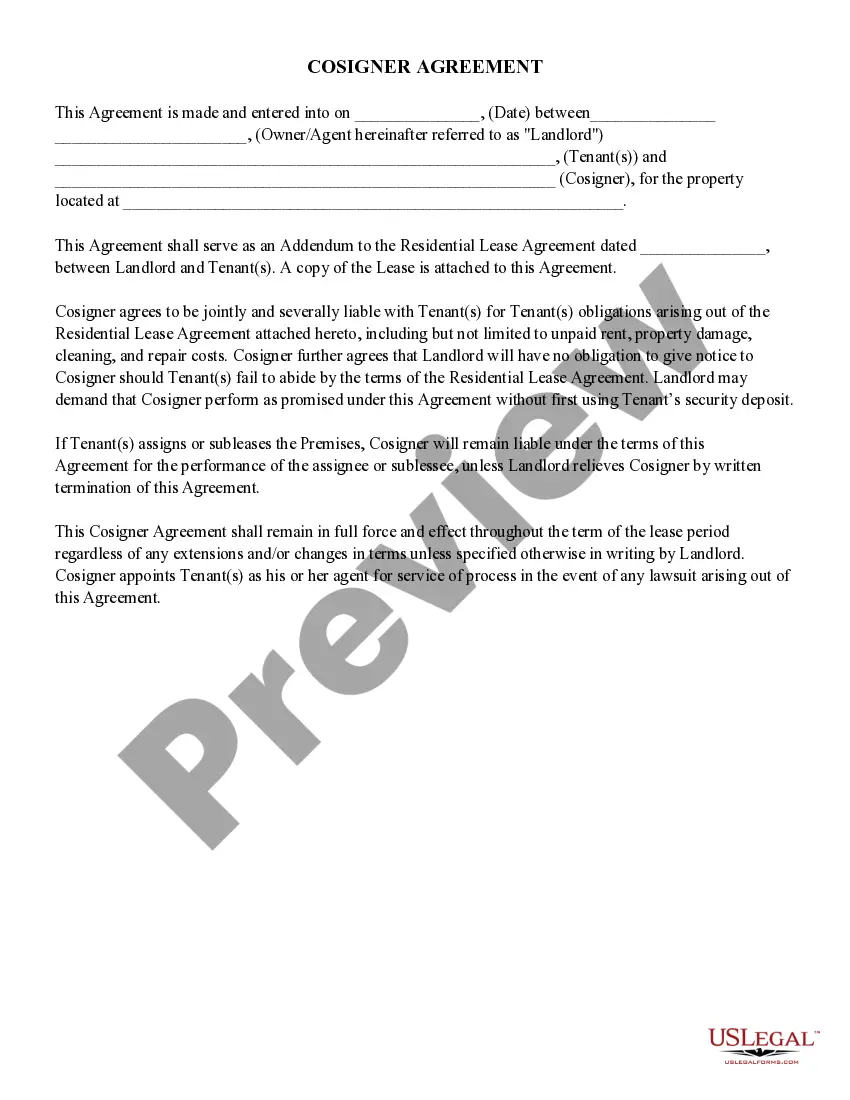
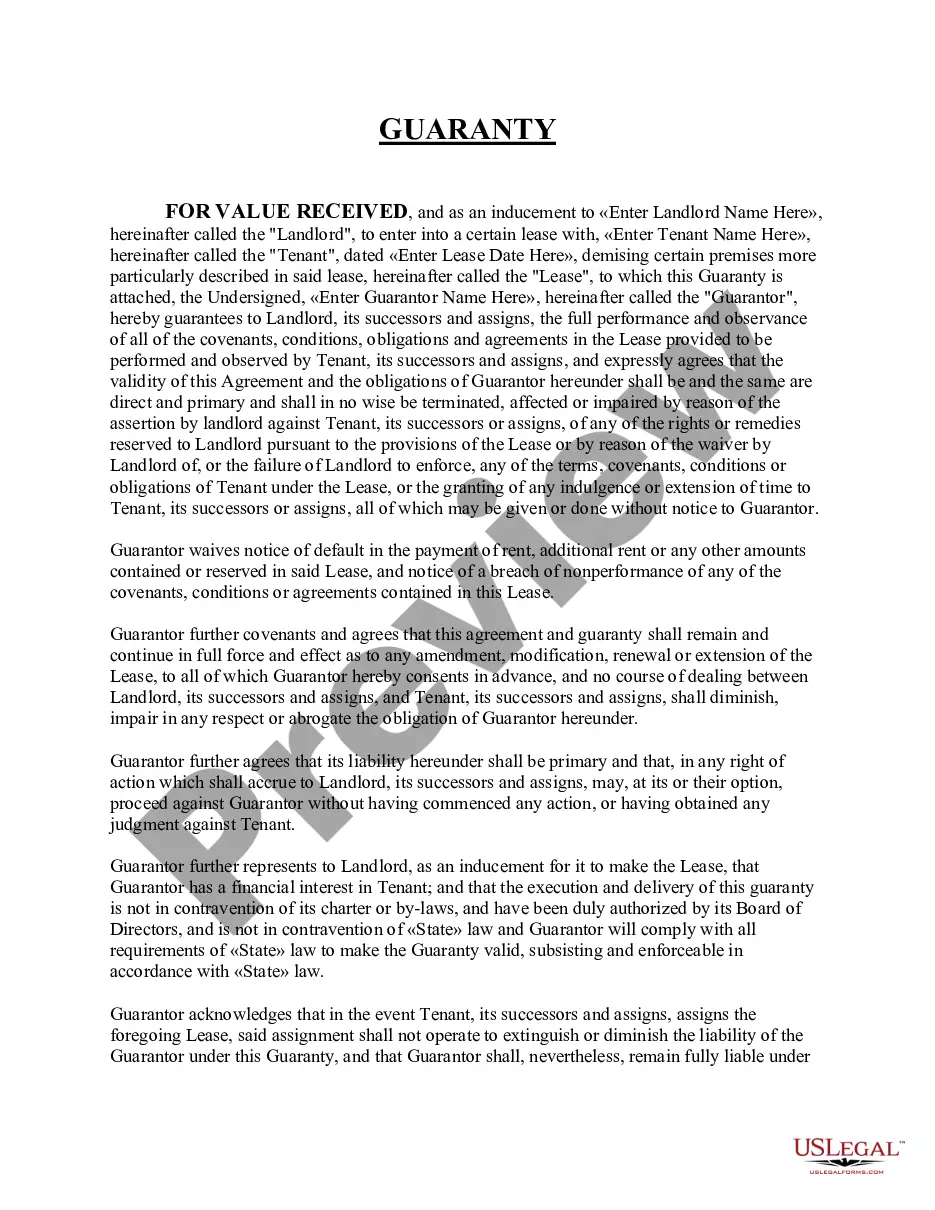
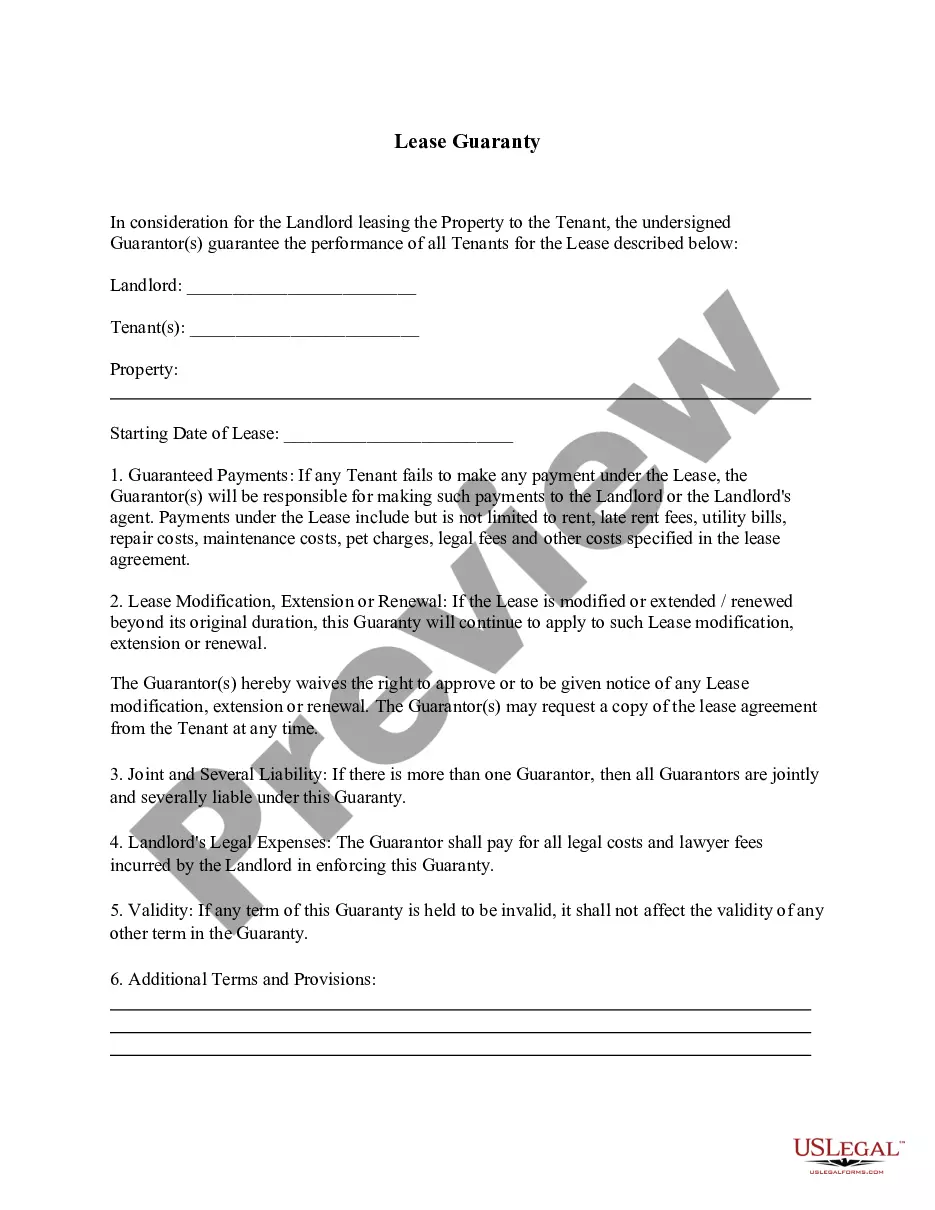
The Guaranty Attachment to Lease for Guarantor or Cosigner is a legal document in which a third party agrees to co-sign a lease. This guarantor promises to cover any unpaid rent if the tenant fails to make payments. Unlike a regular lease, this attachment serves to protect the landlord by ensuring that the rent is guaranteed by someone other than the tenant, providing an extra layer of security for the lease agreement.
Form components explained
- Guarantor's name and address: Identifies the third party responsible for the guarantee.
- Lessor information: Details about the landlord or property owner.
- Signature and date sections: Formalizes the agreement by requiring signatures from both the guarantor and the lessor.
- Terms of the guarantee: Outlines the specific obligations of the guarantor under the lease.
When to use this document
This form is useful in scenarios where a tenant may not have sufficient credit history or income to qualify for a lease on their own. Landlords often require a guarantor to ensure that rent will be paid, particularly in residential leases. It is also applicable in commercial leases when a business may lack the financial backing required by the landlord.
Who needs this form
This form is intended for:
- Landlords who want an additional security measure for rental agreements.
- Tenants lacking a solid financial profile who need a guarantor to secure a lease.
- Individuals (guarantors) willing to take on financial responsibility for a tenant's lease obligations.
Completing this form step by step
- Identify the parties: Fill in the names of the tenant, lessor, and guarantor.
- Specify the property: Include the address of the rental property subject to the lease.
- Read the terms: Ensure the obligations of the guarantor are clear and understood.
- Sign and date: Both the guarantor and lessor must sign and date the document to make it valid.
- Keep a copy: Store a signed copy for your records once completed.
Notarization requirements for this form
This form does not typically require notarization unless specified by local law. It is always recommended to check state regulations to confirm any specific requirements.
Get your form ready online
Our built-in tools help you complete, sign, share, and store your documents in one place.
Make edits, fill in missing information, and update formatting in US Legal Forms—just like you would in MS Word.
Download a copy, print it, send it by email, or mail it via USPS—whatever works best for your next step.
Sign and collect signatures with our SignNow integration. Send to multiple recipients, set reminders, and more. Go Premium to unlock E-Sign.
If this form requires notarization, complete it online through a secure video call—no need to meet a notary in person or wait for an appointment.
We protect your documents and personal data by following strict security and privacy standards.

Make edits, fill in missing information, and update formatting in US Legal Forms—just like you would in MS Word.

Download a copy, print it, send it by email, or mail it via USPS—whatever works best for your next step.

Sign and collect signatures with our SignNow integration. Send to multiple recipients, set reminders, and more. Go Premium to unlock E-Sign.

If this form requires notarization, complete it online through a secure video call—no need to meet a notary in person or wait for an appointment.

We protect your documents and personal data by following strict security and privacy standards.
Common mistakes to avoid
- Not fully understanding the financial obligations assumed by the guarantor.
- Failing to include all necessary information about the property or parties involved.
- Neglecting to obtain signatures, rendering the agreement unenforceable.
Why complete this form online
- Convenience: Easily fill out and download the form from anywhere.
- Editability: Make necessary adjustments to tailor the form to specific circumstances.
- Reliability: Forms are drafted by licensed attorneys, ensuring legal compliance and clarity.
- A guaranty is a legally enforceable contract that outlines the obligations of the guarantor.
- Landlords can enforce the guaranty by pursuing the guarantor for unpaid rent after attempting to collect from the tenant.
Key takeaways
- The Guaranty Attachment to Lease protects landlords by ensuring rent payment through a cosigner.
- Understanding the key components is critical for both guarantors and tenants.
- Follow all steps carefully to complete the form, as mistakes can lead to legal complications.
Looking for another form?

Form popularity
FAQ
In other situations, it may be a short amendment or secondary contract. The guarantor usually receives a full copy of the entire lease agreement, since he or she will be responsible for its conditions, just as you are as the primary leaseholder.
Co-signers have equal responsibility for payment of monthly rental costs, while a guarantor is generally sought for payment only when the primary signer is unable to make the rental payment.
According to Nolo, a cosigner is a person designated to make the rental payments if the tenant does not pay. They sign their name to the lease agreement and are held fully responsible for rent if the tenant stops paying rent.
The cosigner, simply by signing on to the debt, is liable for the debt without the creditor needing to to take any additional actions. The guarantor is only liable for the debt after the creditor has exhausted all other options of collections from the original borrower.
A lease guaranty is a separate contract under which a third party guarantor agrees to meet the obligations of the Tenant to the Landlord.If the Tenant fails to pay rent, the Landlord can recover the arrears from the guarantor, usually before seeking damages from Tenant.
The Basics: A Co-signor is part owner of the property, may or may not live in the property and is responsible for the debt repayment. A Guarantor is responsible for the debt repayment if the borrower (applicant) is unable to pay but has no benefits of owning any part of the property.
Guarantors sign the lease and are responsible for the payments under the law, but they don't occupy the apartment nor are they entitled to occupy it.
A co-signer, on the other hand, will usually have their name on the title of the home or automobile. Guarantors are usually liable for default only when the lender has done everything possible to get the primary borrower to make the payments.
The guarantor signs the lease with the tenant and stands as reassurance to the property manager or landlord that rent will be paid if you (the tenant) default on payment. A guarantor is not always necessary, but there are circumstances when renters rely on them to be approved for an apartment.