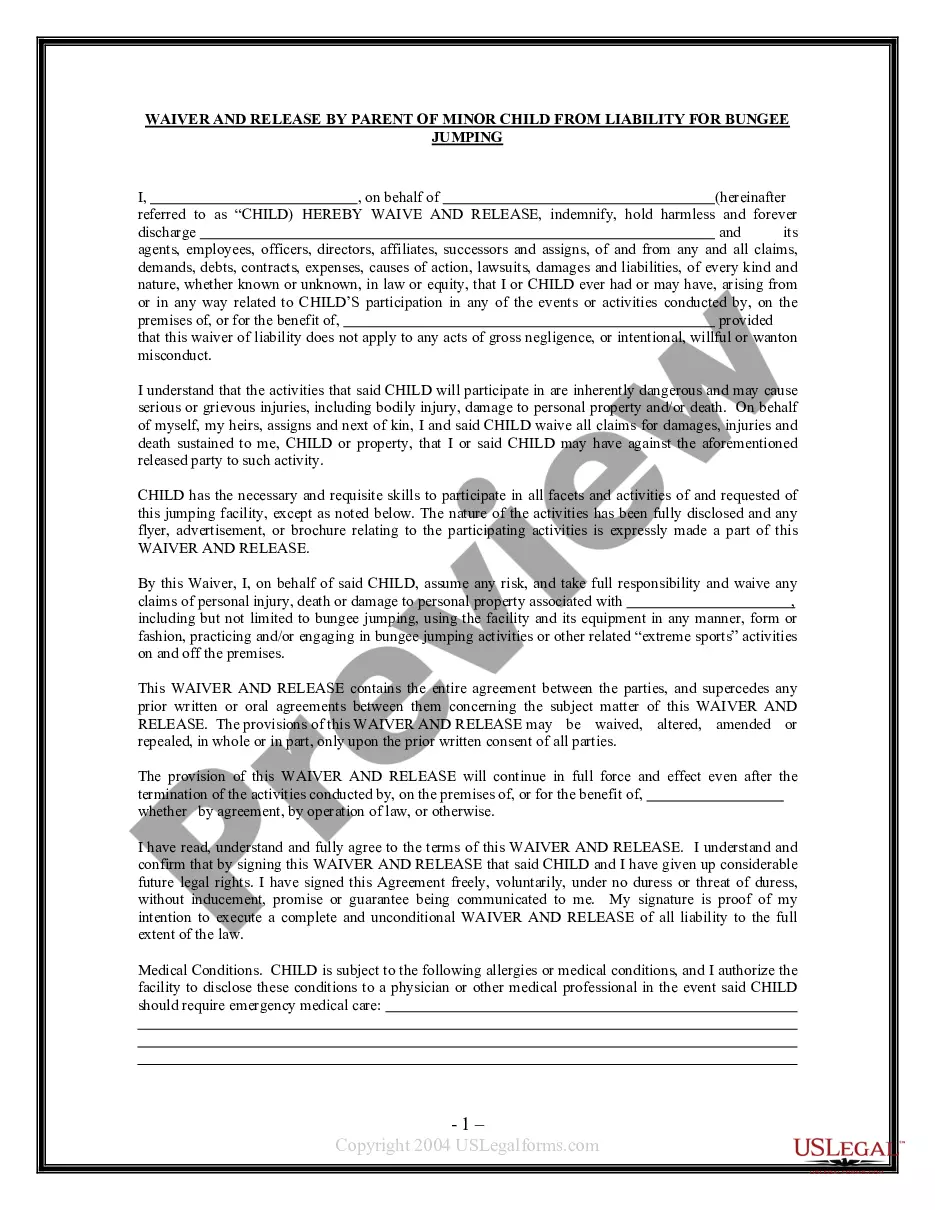
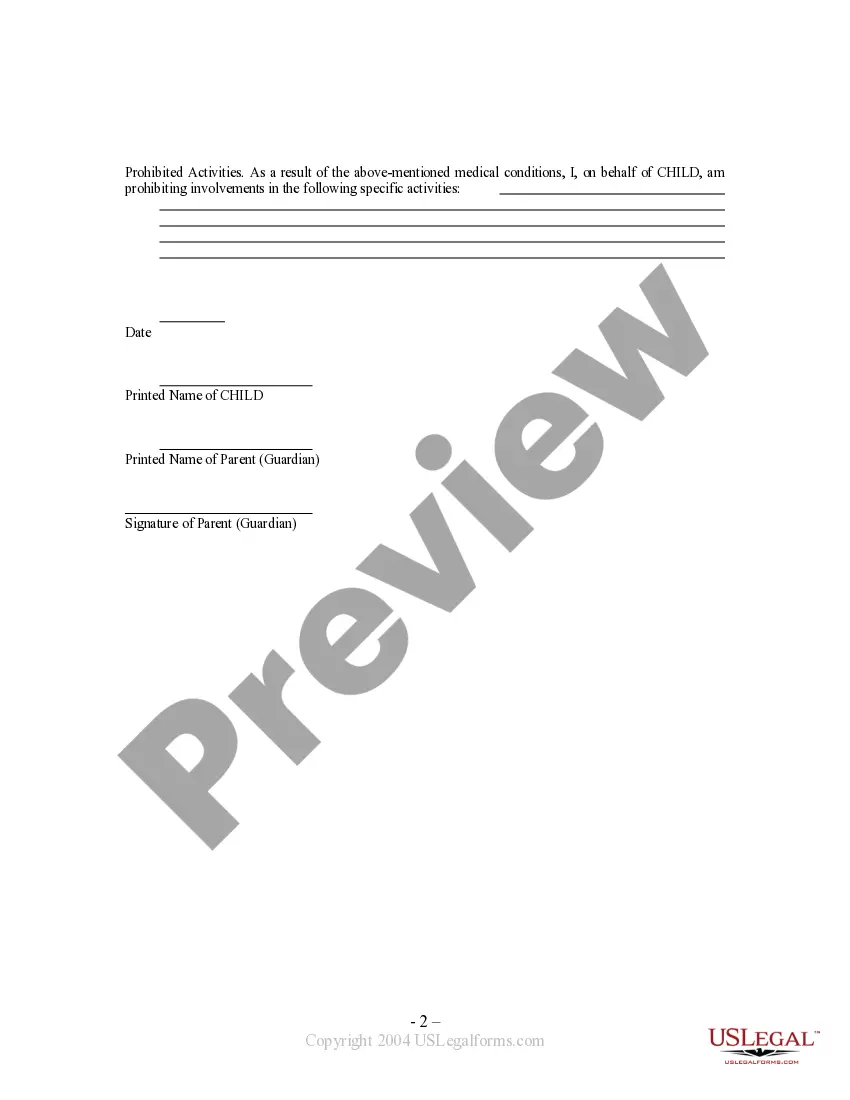
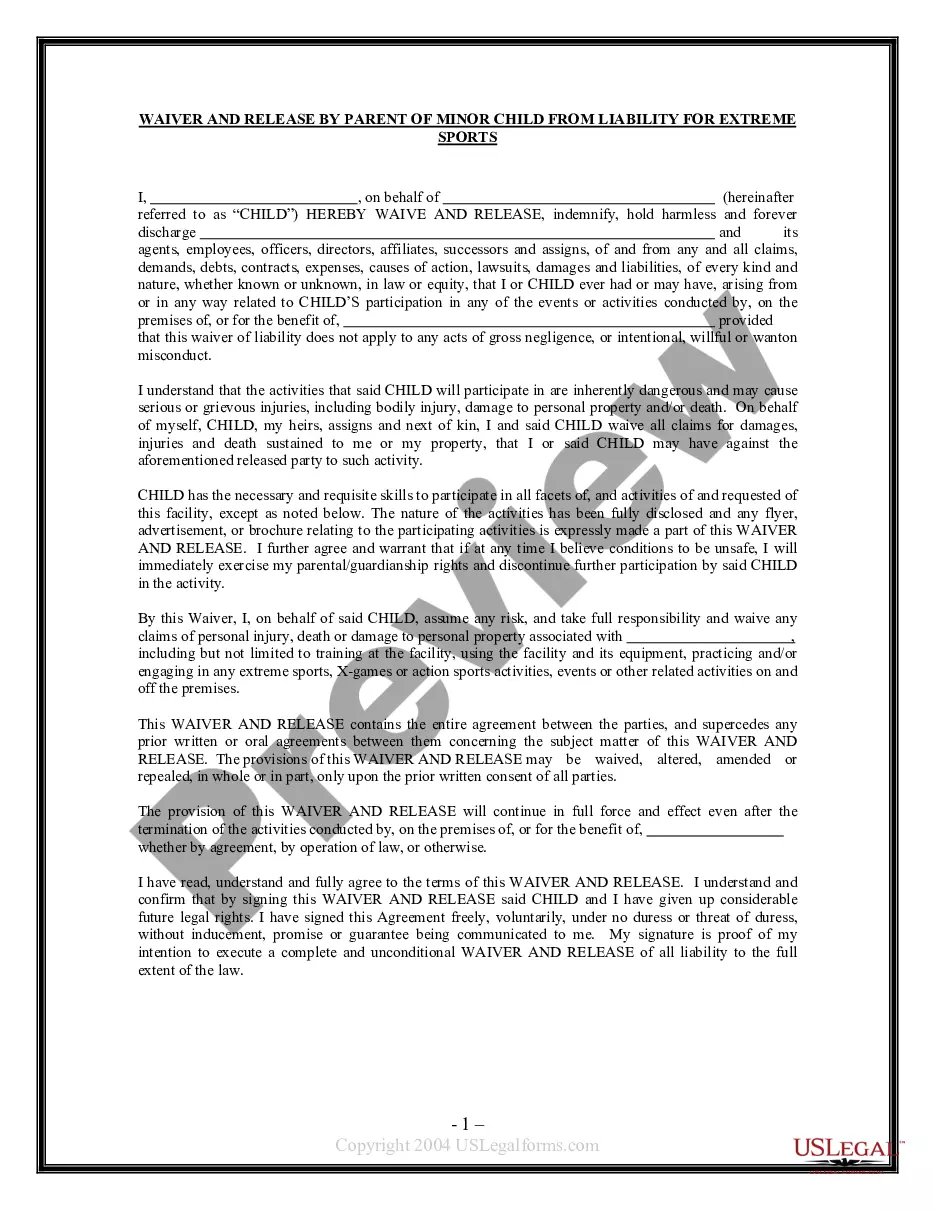
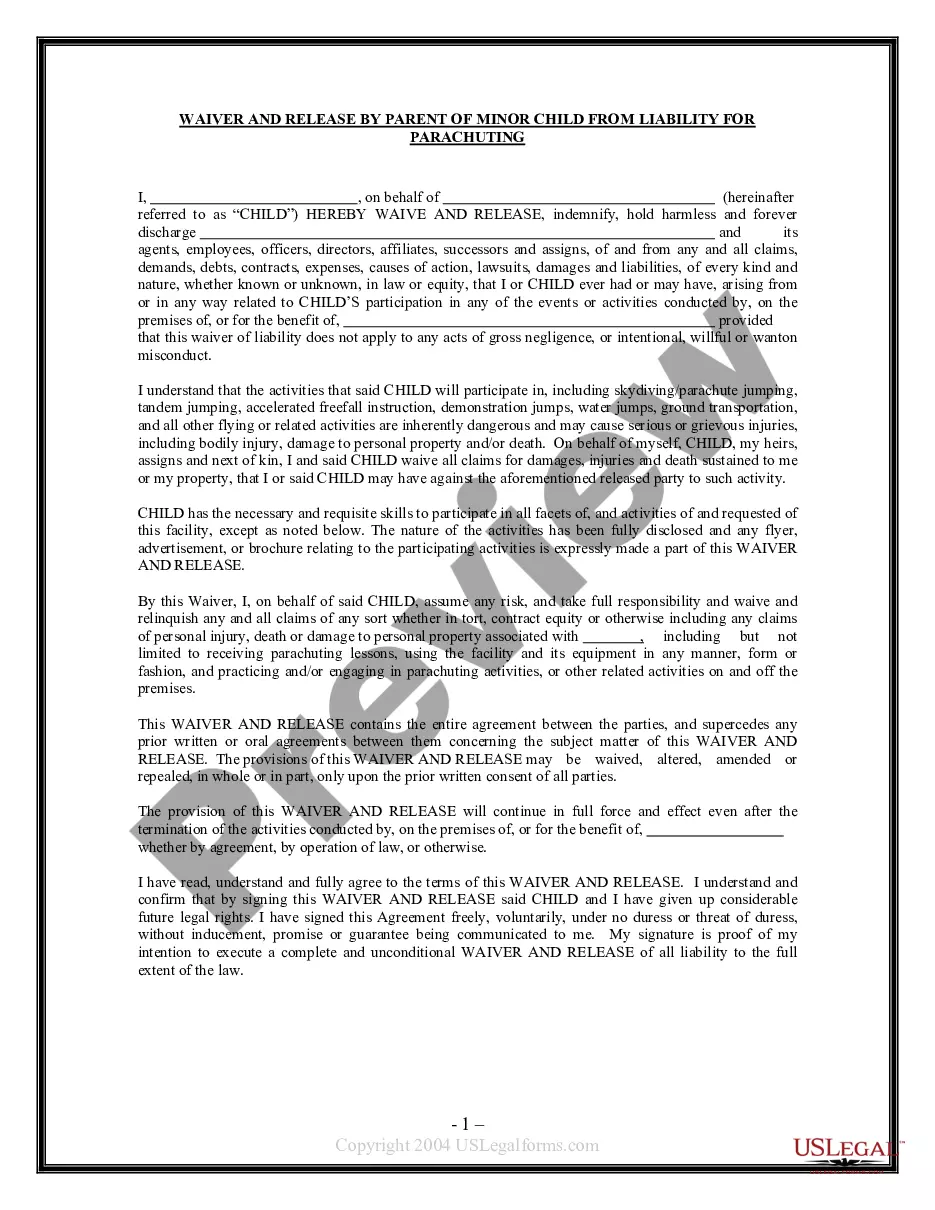
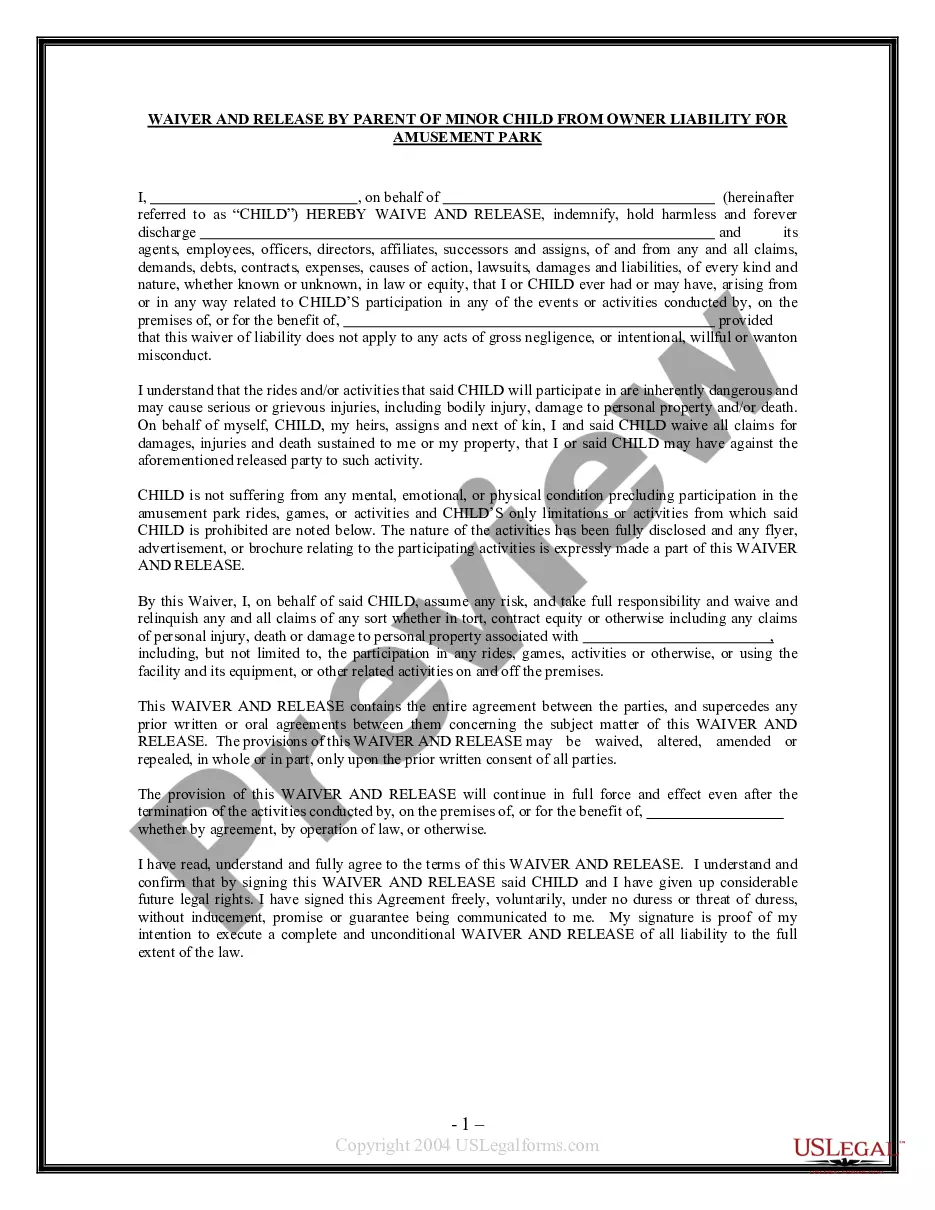
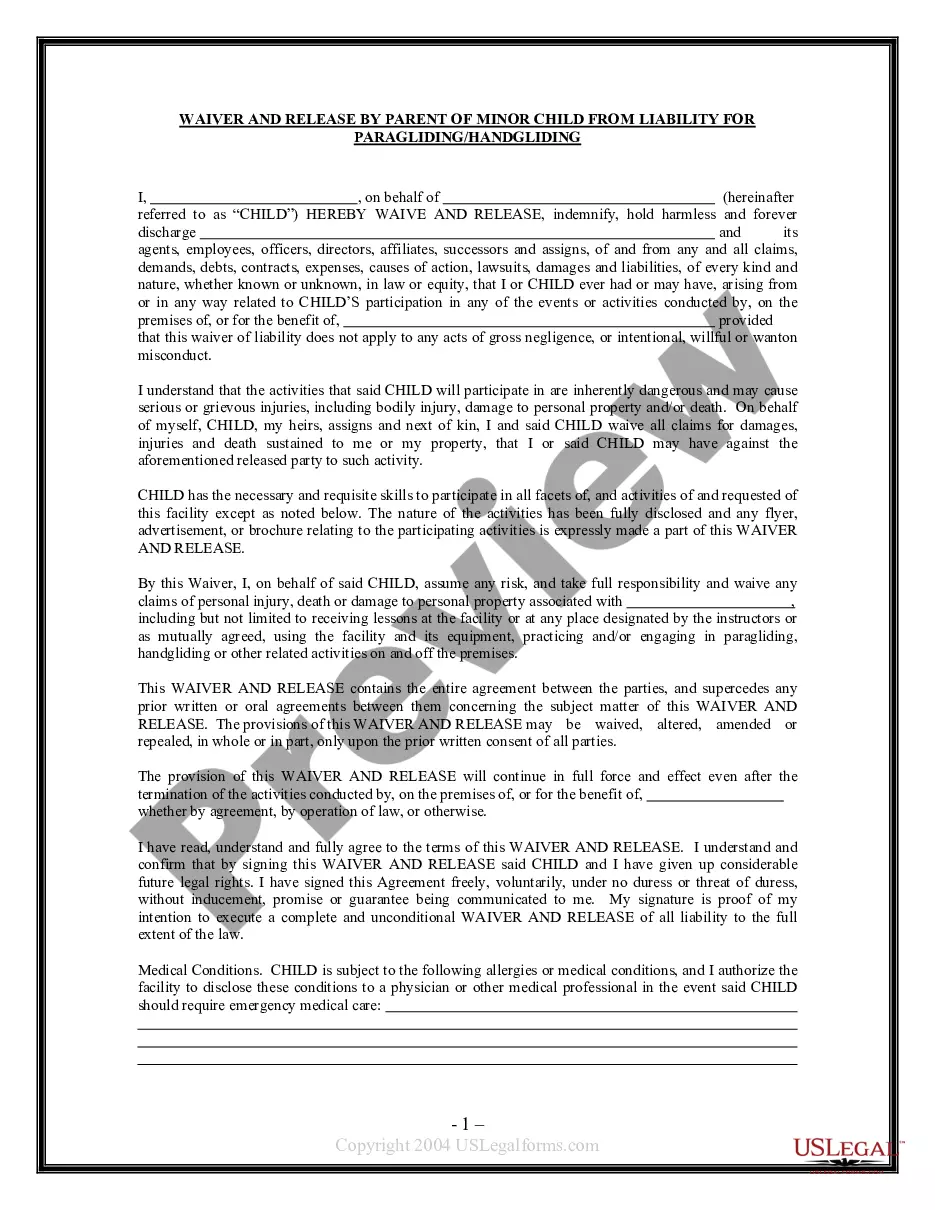
This form allows a parent or guardian to release a bungee jumping facility from liability for injuries which may be incurred by a minor child while on the premises, taking part in activities, etc.
Oregon Waiver and Release From Liability For Minor Child for Bungee Jumping
Category:
State:
Multi-State
Control #:
US-WAV-04M
Format:
Word;
Rich Text
Instant download
Description
Free preview

How to fill out Waiver And Release From Liability For Minor Child For Bungee Jumping?
US Legal Forms - one of the largest collections of legal documents in the country - offers a broad selection of legal form templates you can purchase or print.
By utilizing the website, you can access thousands of forms for business and personal use, organized by categories, states, or keywords. You can find the most recent versions of documents like the Oregon Waiver and Release From Liability For Minor Child for Bungee Jumping in moments.
If you have a monthly membership, Log In and obtain the Oregon Waiver and Release From Liability For Minor Child for Bungee Jumping from the US Legal Forms collection. The Download button will appear on every form you view. You can access all previously downloaded forms in the My documents section of your account.
Process the payment. Use your credit card or PayPal account to complete the transaction.
Choose the format and download the form to your device. Edit. Fill out, modify, and print and sign the downloaded Oregon Waiver and Release From Liability For Minor Child for Bungee Jumping. Each format you added to your account has no expiration date and is yours permanently. Thus, to download or print another copy, simply navigate to the My documents section and click on the form you desire. Gain access to the Oregon Waiver and Release From Liability For Minor Child for Bungee Jumping with US Legal Forms, the most extensive collection of legal form templates. Utilize thousands of professional and state-specific templates that fulfill your business or personal requirements and specifications.
- Make sure you have selected the correct form for your area/region.
- Click the Preview button to review the form's details.
- Examine the form information to confirm that you have selected the right document.
- If the form does not meet your needs, use the Search box at the top of the screen to find one that does.
- If you are satisfied with the form, confirm your choice by clicking the Acquire now button.
- Then, select the pricing plan you prefer and provide your details to register for an account.
Form popularity
FAQ
Signatures from minors are generally not legally binding due to their limited capacity to contract. This means that if a minor signs a waiver, it may not hold up in court. However, by using the Oregon Waiver and Release From Liability For Minor Child for Bungee Jumping, parents can provide consent, making the waiver effective and enforceable on behalf of their child.
A hold harmless agreement for youth sports is a legal document that protects organizations from liability in case of injuries or accidents. This type of agreement ensures that parents acknowledge the risks involved in participating in sports activities. The Oregon Waiver and Release From Liability For Minor Child for Bungee Jumping serves a similar purpose, helping to shield bungee jumping operators from legal claims arising from participation.
Waivers signed by minors are typically not considered legally binding. This is because minors do not have the legal authority to enter into contracts. However, the Oregon Waiver and Release From Liability For Minor Child for Bungee Jumping provides a mechanism for parents to accept the liability on behalf of their child, making the waiver more effective in protecting the service provider.
Generally, waivers are not enforceable against minors, as they lack the legal capacity to enter into contracts. However, the Oregon Waiver and Release From Liability For Minor Child for Bungee Jumping allows parents or guardians to sign on behalf of their children, which can strengthen the waiver's enforceability. This means that while minors cannot be held to the waiver, parents can take responsibility for any risks involved.
Yes, waiver forms can be legally binding if they meet certain legal requirements. In the case of the Oregon Waiver and Release From Liability For Minor Child for Bungee Jumping, the form must clearly outline the risks involved and be signed by a parent or guardian. It is important to ensure that the language is clear and unambiguous, which helps in reinforcing the waiver's enforceability.
A liability waiver, or release of liability, is a legal document that a company or organization has you sign in order to protect them from being sued in the event that you are injured.
The liability waiver should contain a descriptive title. It should also include the business contact information and that of the participant, which is left out for filling on the actual date of the event. The prints should be large enough to be read easily by the participant. The recommended font is Roman 12.
As tempting as it may be, you should never write your own liability waiver. Unless you're a fully qualified lawyer with experience in this area, it's likely that you'll omit critical language that puts your business at risk for lawsuits.
How to Write(1) Calendar Date Of Document. Record the date when this release is filled out and completed.(2) Releasor Name.(3) Releasor Address.(4) Releasee Name.(5) Releasee Address.(6) Event Or Actions Being Indemnified.(7) No Payment By Releasee.(8) Required Payment For Release.More items...?
A waiver can't just be drafted on a blank word document. You will have to make necessary adjustments to the font before you begin. The fonts should be set to Roman 12 so that the document is easily readable. You may then use bold to highlight the most essential information.