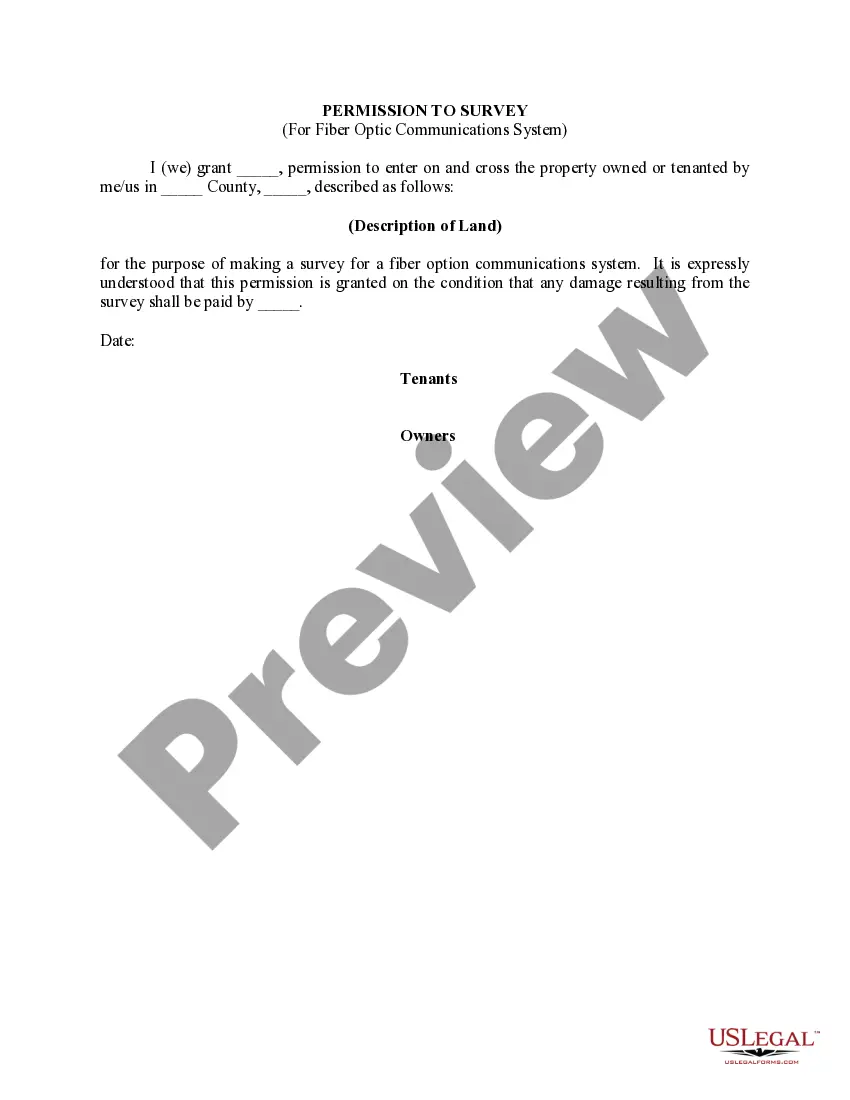
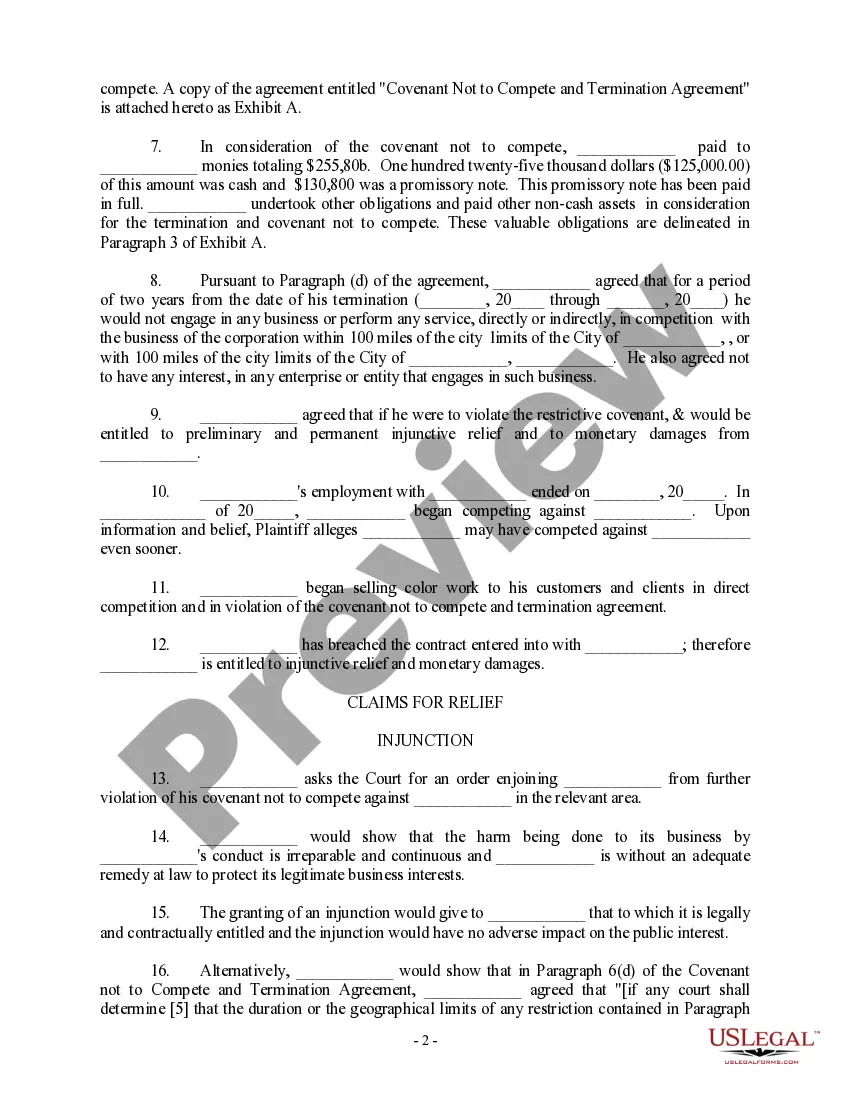
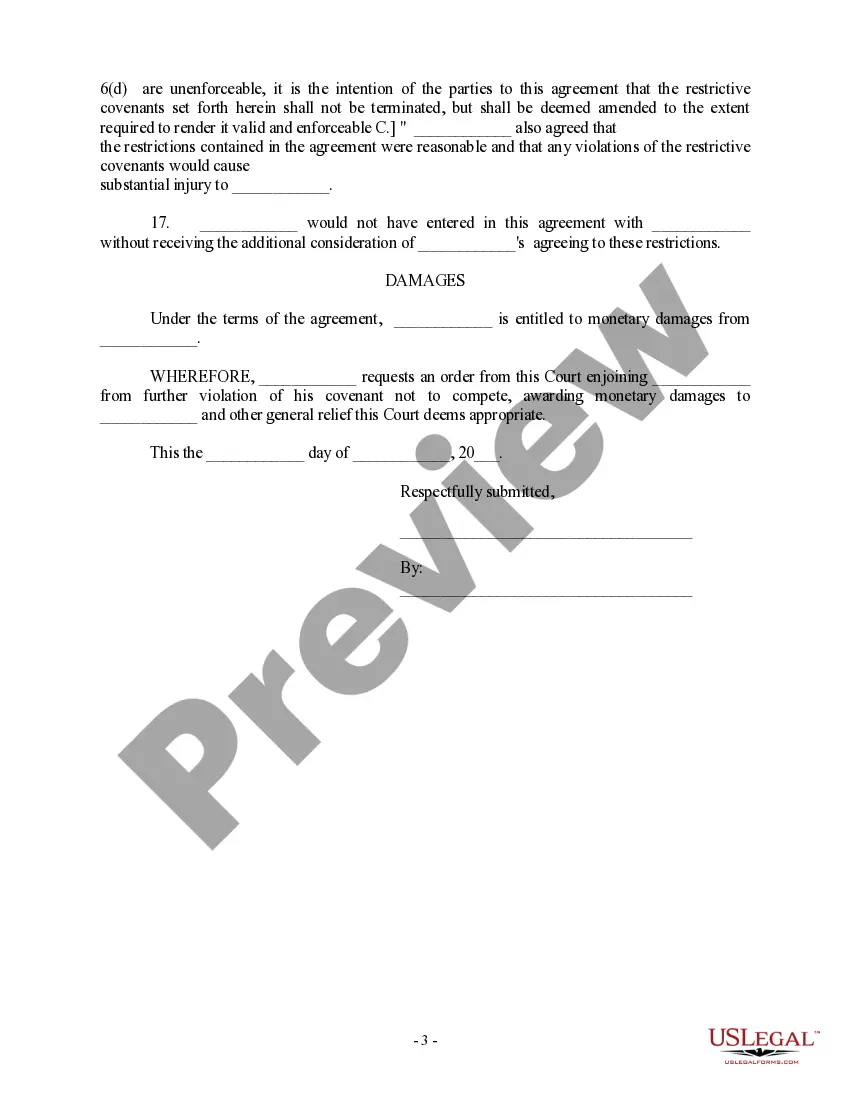
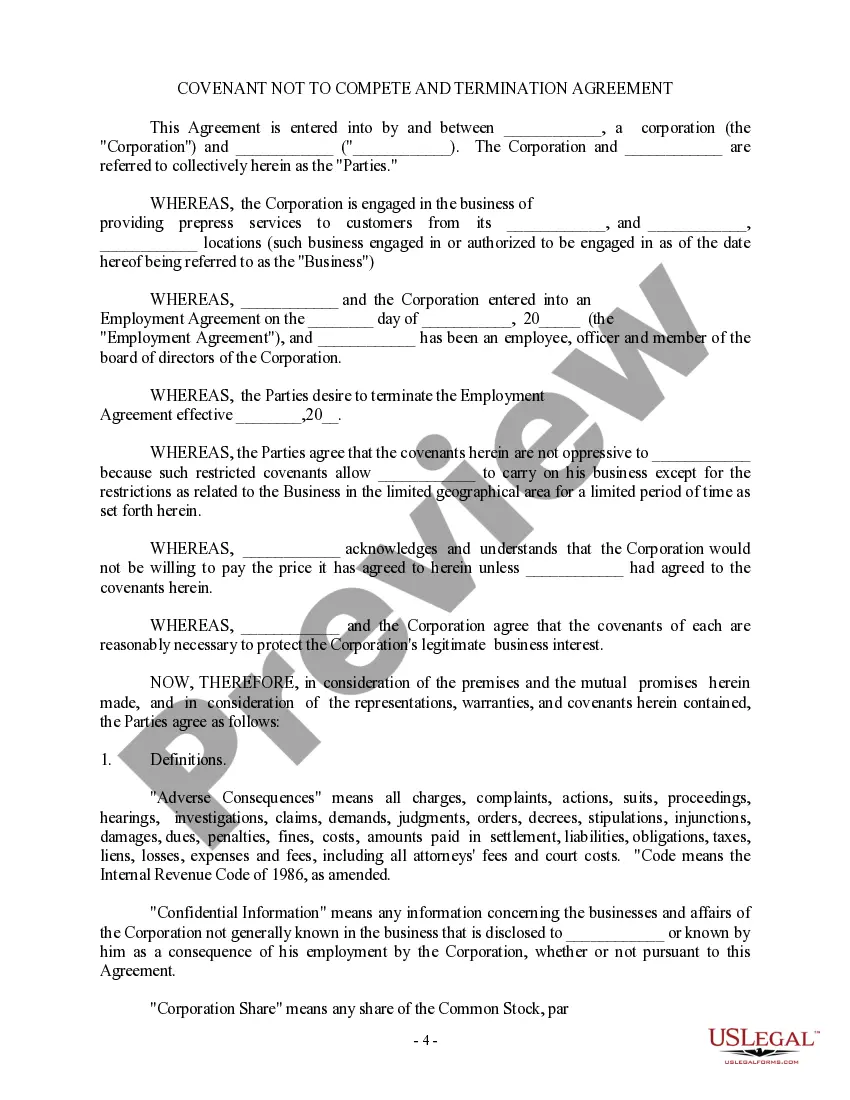
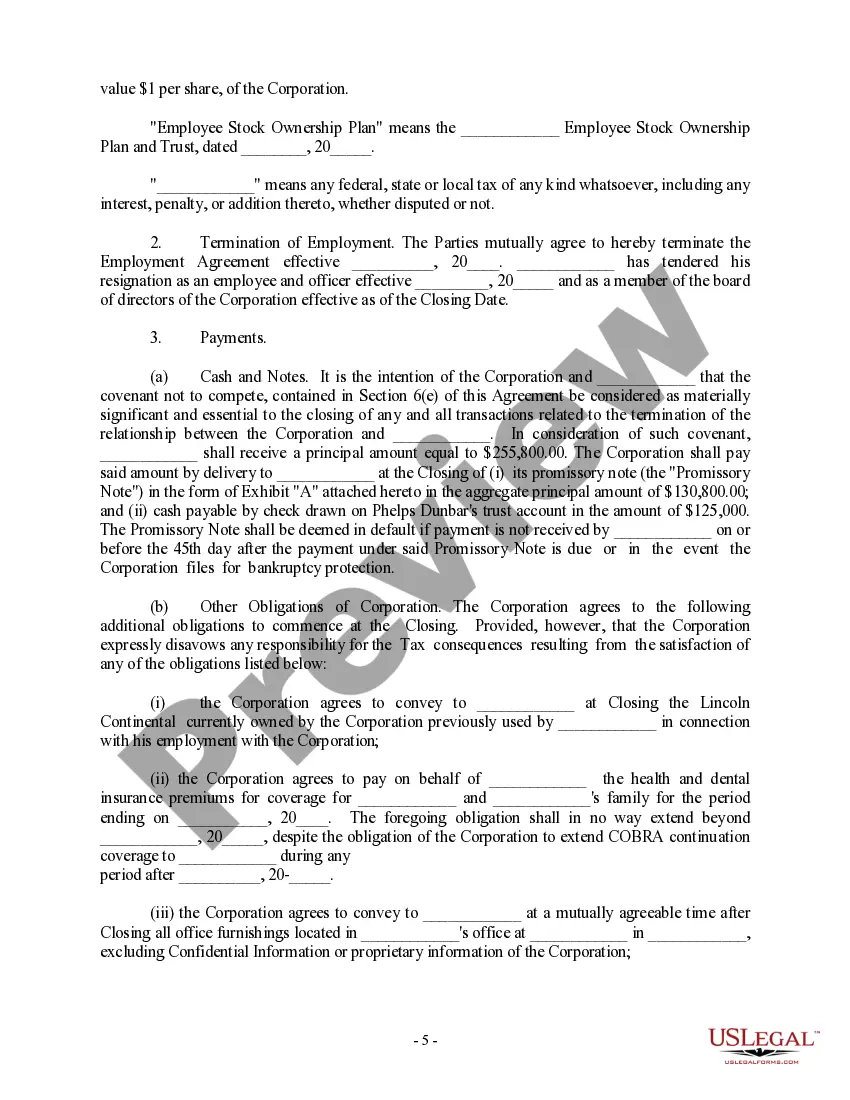
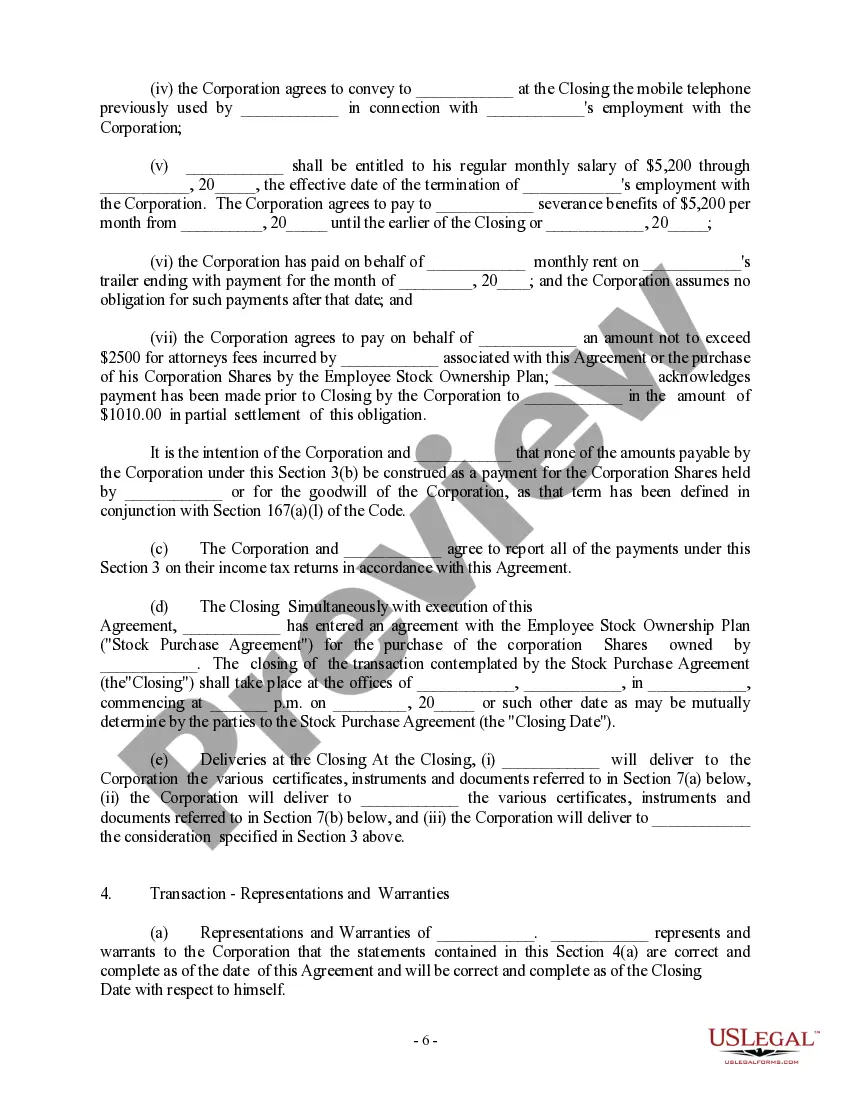
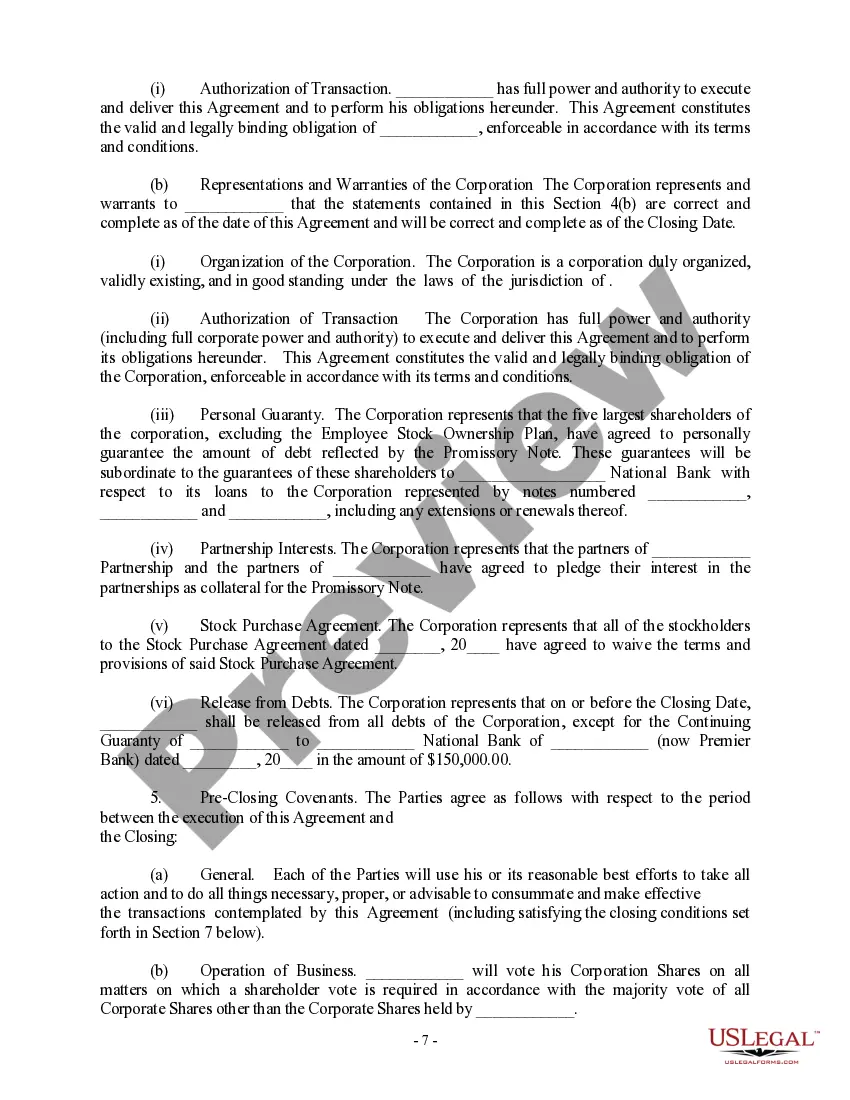
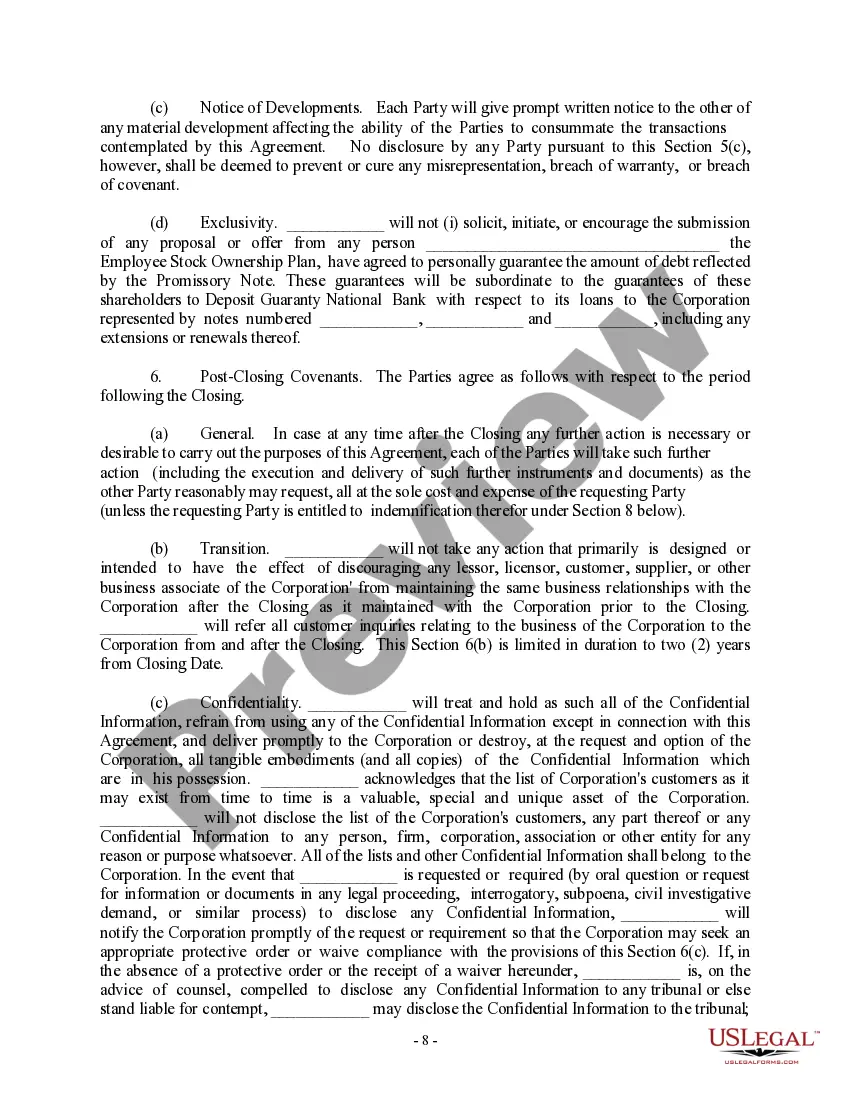
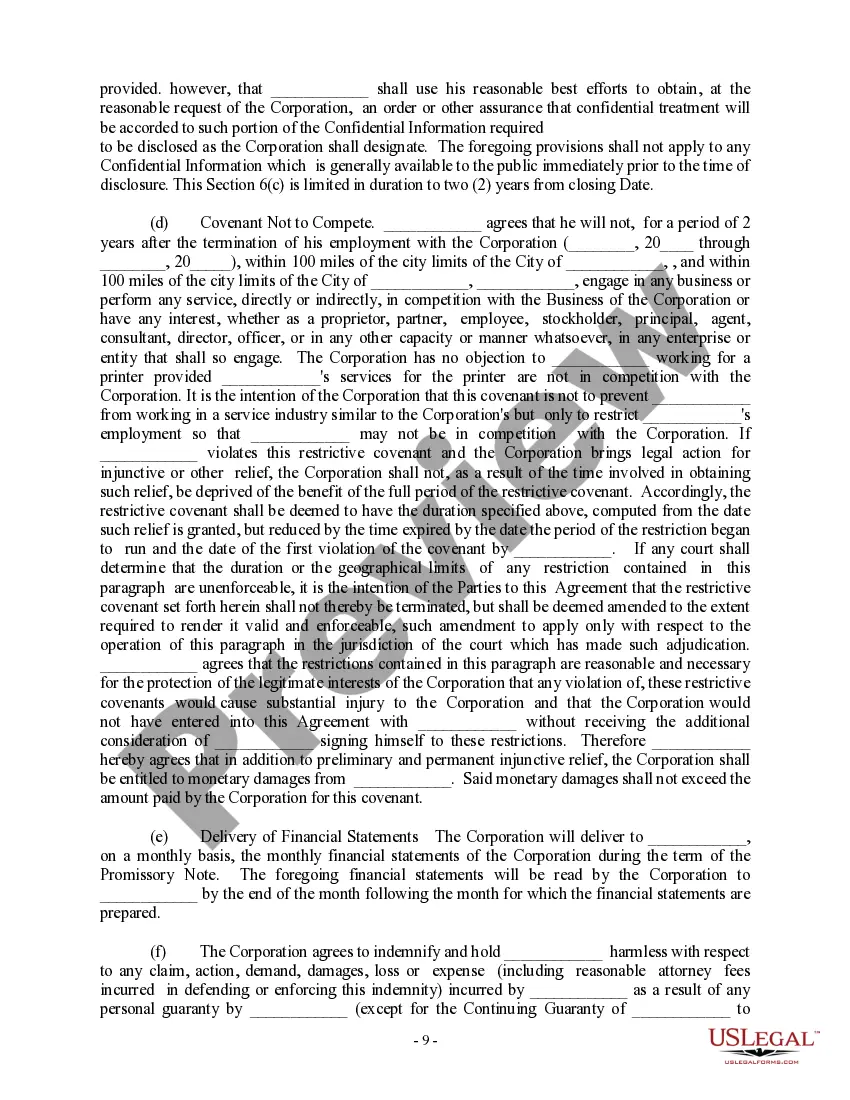
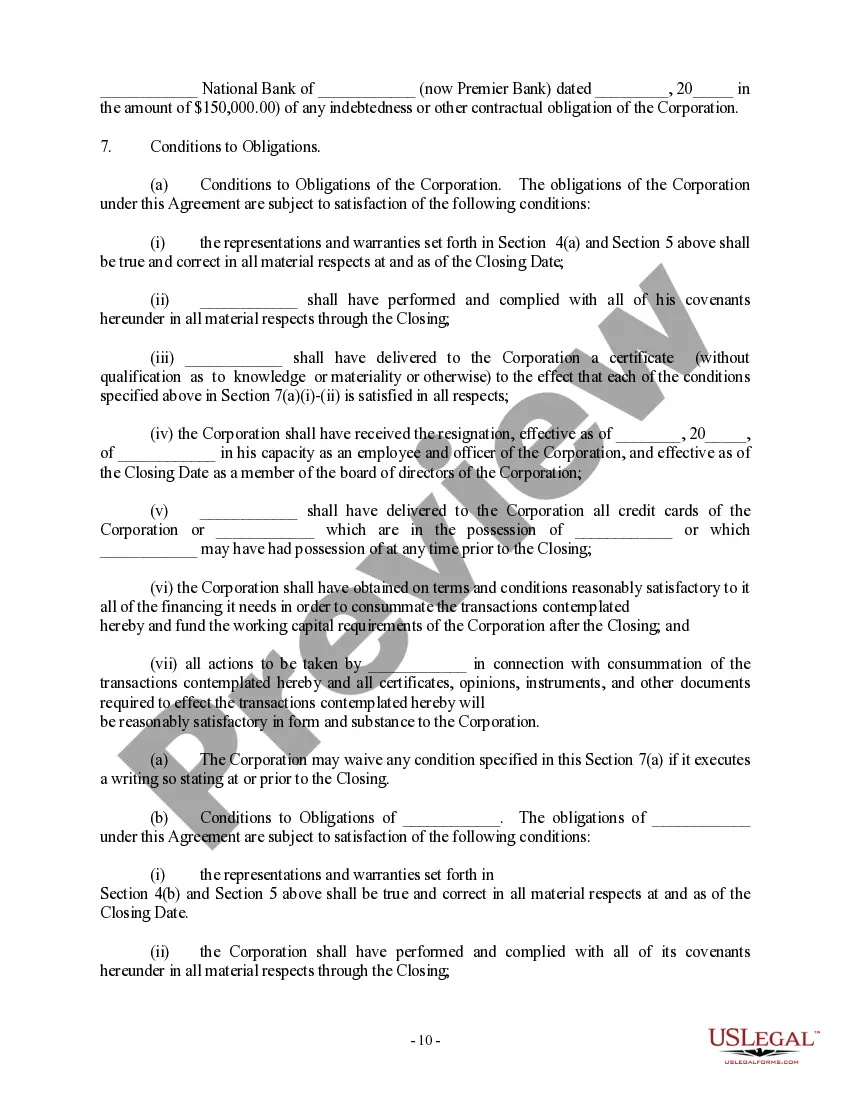
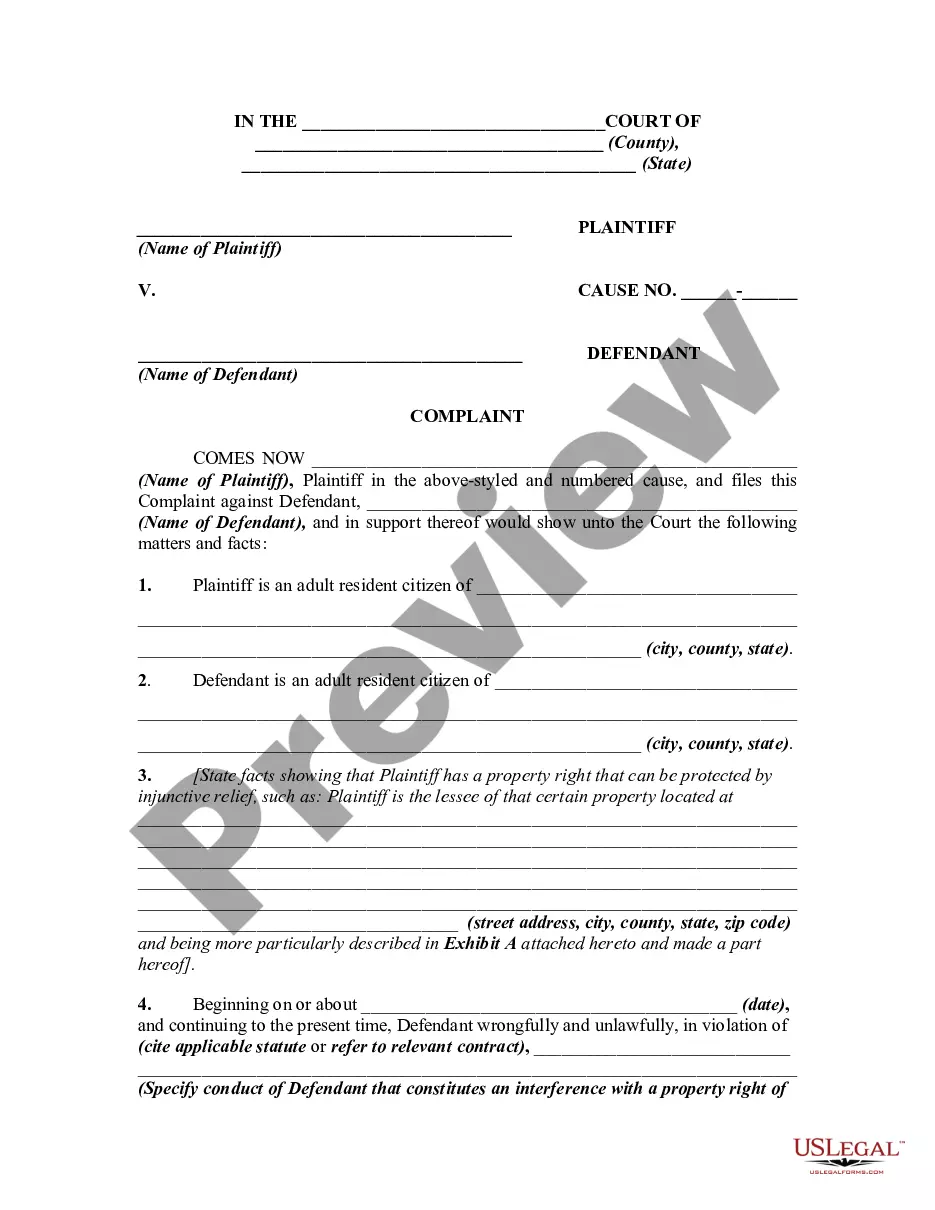
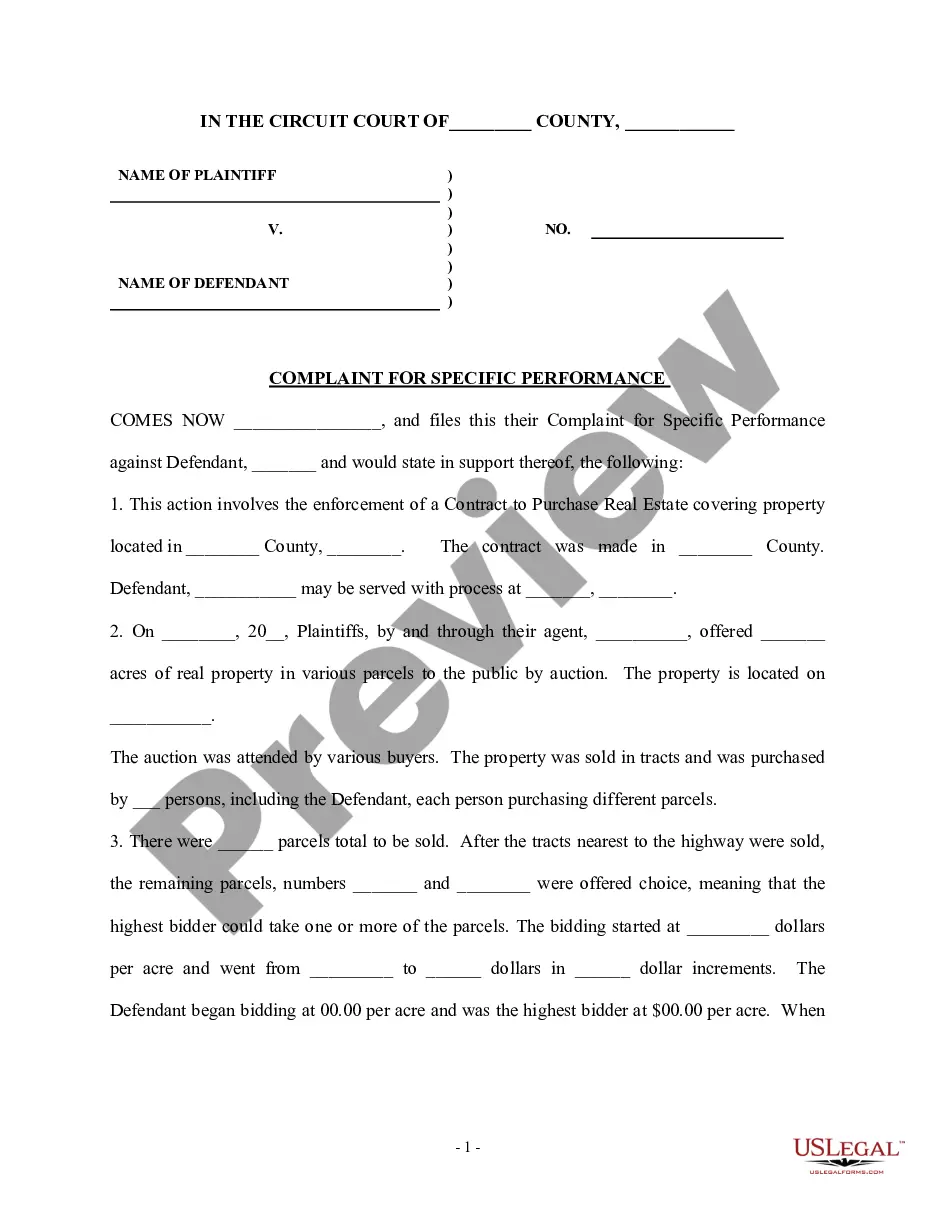
This form is a Complaint for an Injunction and Other Relief. The plaintiff asked the court to issue an order enjoining the defendant from further violation of a covenant not to compete in the relevant area. The plaintiff also requests that damages be paid to him/her to compensate for the violation of the covenant.
Oregon Complaint for Injunction - Covenant not to compete
Category:
State:
Multi-State
Control #:
US-CMP-10058
Format:
Word;
Rich Text
Instant download
Description
Free preview




Get your form ready online
Our built-in tools help you complete, sign, share, and store your documents in one place.
Built-in online Word editor
Make edits, fill in missing information, and update formatting in US Legal Forms—just like you would in MS Word.
Export easily
Download a copy, print it, send it by email, or mail it via USPS—whatever works best for your next step.
E-sign your document
Sign and collect signatures with our SignNow integration. Send to multiple recipients, set reminders, and more. Go Premium to unlock E-Sign.
Notarize online 24/7
If this form requires notarization, complete it online through a secure video call—no need to meet a notary in person or wait for an appointment.
Store your document securely
We protect your documents and personal data by following strict security and privacy standards.

Make edits, fill in missing information, and update formatting in US Legal Forms—just like you would in MS Word.

Download a copy, print it, send it by email, or mail it via USPS—whatever works best for your next step.

Sign and collect signatures with our SignNow integration. Send to multiple recipients, set reminders, and more. Go Premium to unlock E-Sign.

If this form requires notarization, complete it online through a secure video call—no need to meet a notary in person or wait for an appointment.

We protect your documents and personal data by following strict security and privacy standards.
Looking for another form?


How to fill out Complaint For Injunction - Covenant Not To Compete?
Are you currently in a place that you require paperwork for both organization or personal uses nearly every day time? There are plenty of authorized papers layouts available on the Internet, but getting types you can trust is not simple. US Legal Forms delivers a large number of kind layouts, like the Oregon Complaint for Injunction - Covenant not to compete, that are published to fulfill federal and state needs.
Should you be previously familiar with US Legal Forms web site and get a free account, simply log in. Following that, you can obtain the Oregon Complaint for Injunction - Covenant not to compete web template.
Unless you come with an accounts and wish to begin to use US Legal Forms, follow these steps:
- Get the kind you require and ensure it is for that correct metropolis/state.
- Make use of the Review key to review the shape.
- Look at the description to actually have selected the appropriate kind.
- In the event the kind is not what you`re seeking, utilize the Research area to obtain the kind that fits your needs and needs.
- Whenever you obtain the correct kind, click on Buy now.
- Choose the costs plan you need, fill out the specified info to create your bank account, and purchase your order utilizing your PayPal or credit card.
- Pick a hassle-free data file formatting and obtain your backup.
Find each of the papers layouts you possess bought in the My Forms menus. You can get a further backup of Oregon Complaint for Injunction - Covenant not to compete anytime, if possible. Just click the essential kind to obtain or printing the papers web template.
Use US Legal Forms, the most extensive variety of authorized forms, to conserve time as well as steer clear of faults. The service delivers expertly created authorized papers layouts that you can use for a variety of uses. Make a free account on US Legal Forms and commence creating your way of life a little easier.
Form popularity
FAQ
Specificity: A non-compete agreement must be specific about the activities it prohibits. Additionally, the covenant must clearly articulate what activities are considered competing and those activities must be substantially similar or related to the work the employee performed for the employer.
The term of a noncompetition agreement may not exceed 12 months from the date of the employee's termination. The remainder of a term of a noncompetition agreement in excess of 12 months is void and may not be enforced by a court of this state.
California law bars covenants not to compete in nearly all circumstances.
Although governed by individual state laws, common factors include whether the employer has a legitimate interest to protect; whether the geographic scope prevents the worker from making a living; the length of restriction; whether the agreement prevents workers from doing different work from what they are doing; and ...
California law bars covenants not to compete in nearly all circumstances. In Edwards v. Arthur Anderson, the California Supreme Court determined that the law should be read strictly, and not only void the ?unreasonable? noncompete clause, but all noncompete clauses other than those explicitly allowed in the code.
Covenants not to compete are frequently enforced where the former employer's "confidential information" may be used or disclosed unless the employee is restrained from competing.
The agreement is not enforceable because the time period it covers is too long. The period considered reasonable varies by state but typically ranges from 6 months to two years. Longer agreements will likely be found invalid. The territory covered by the agreement is too large.