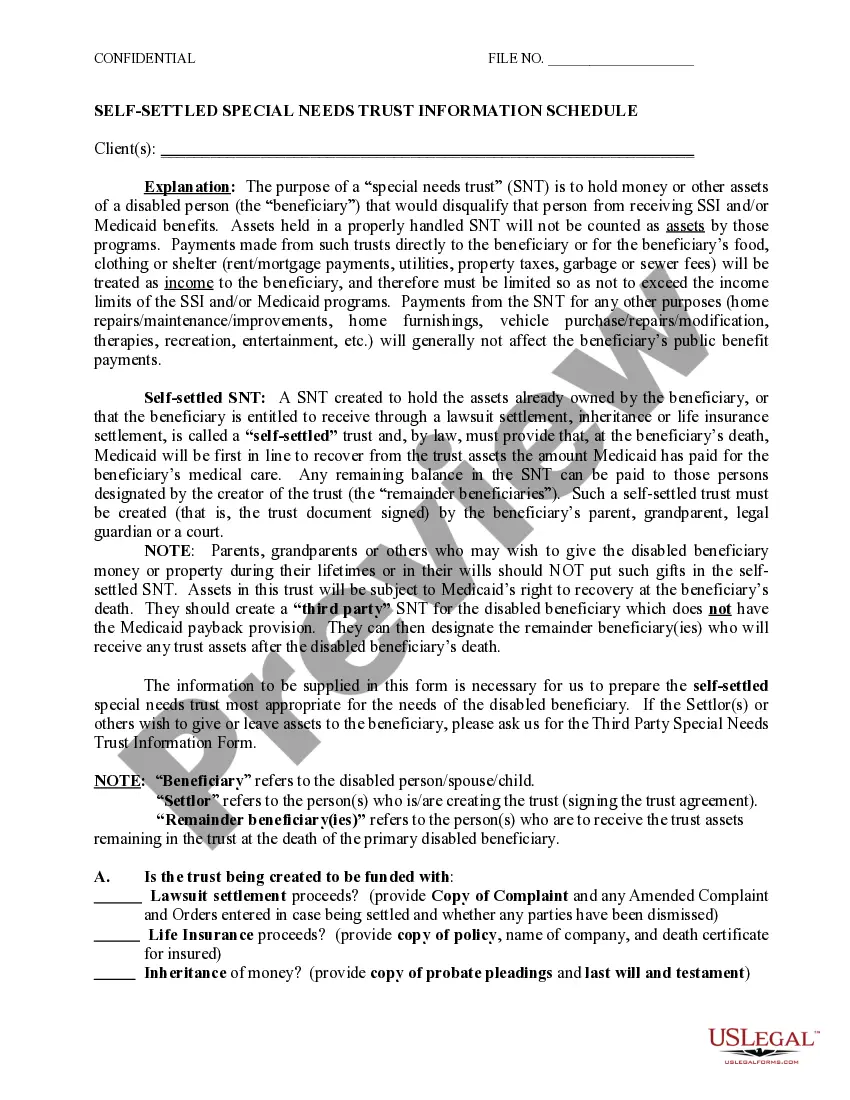
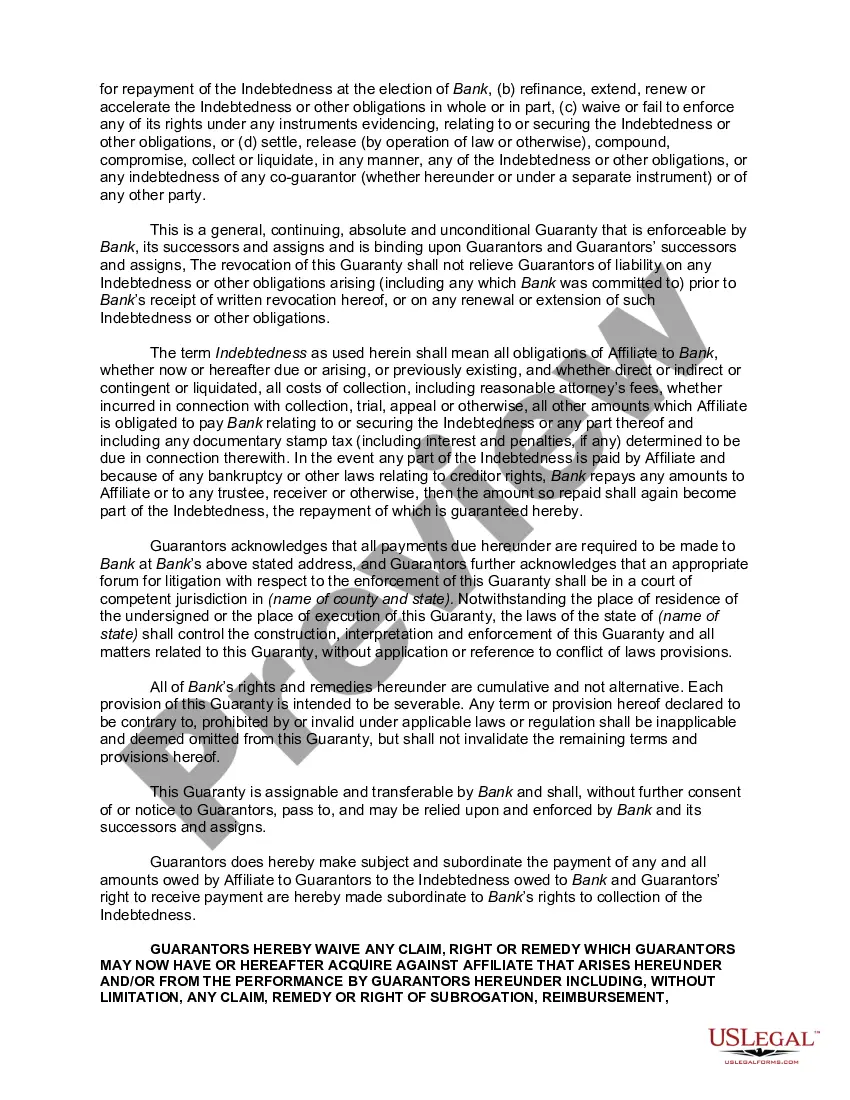
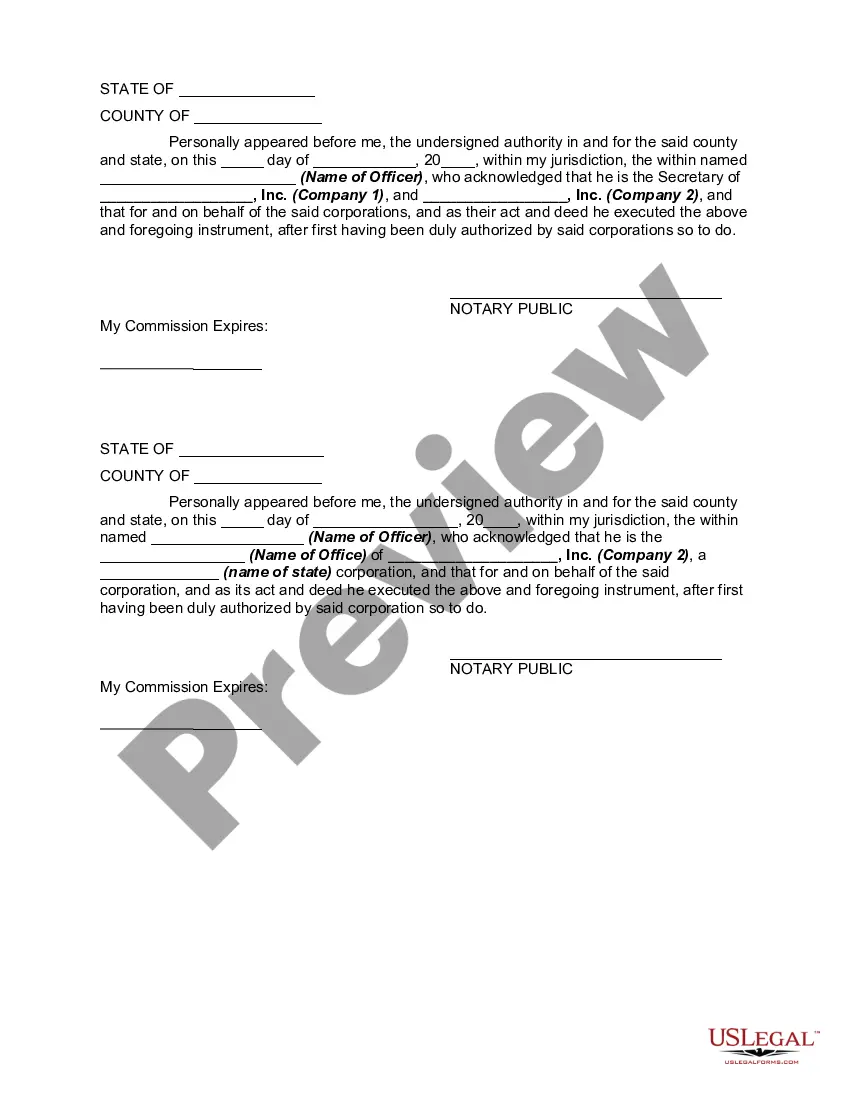
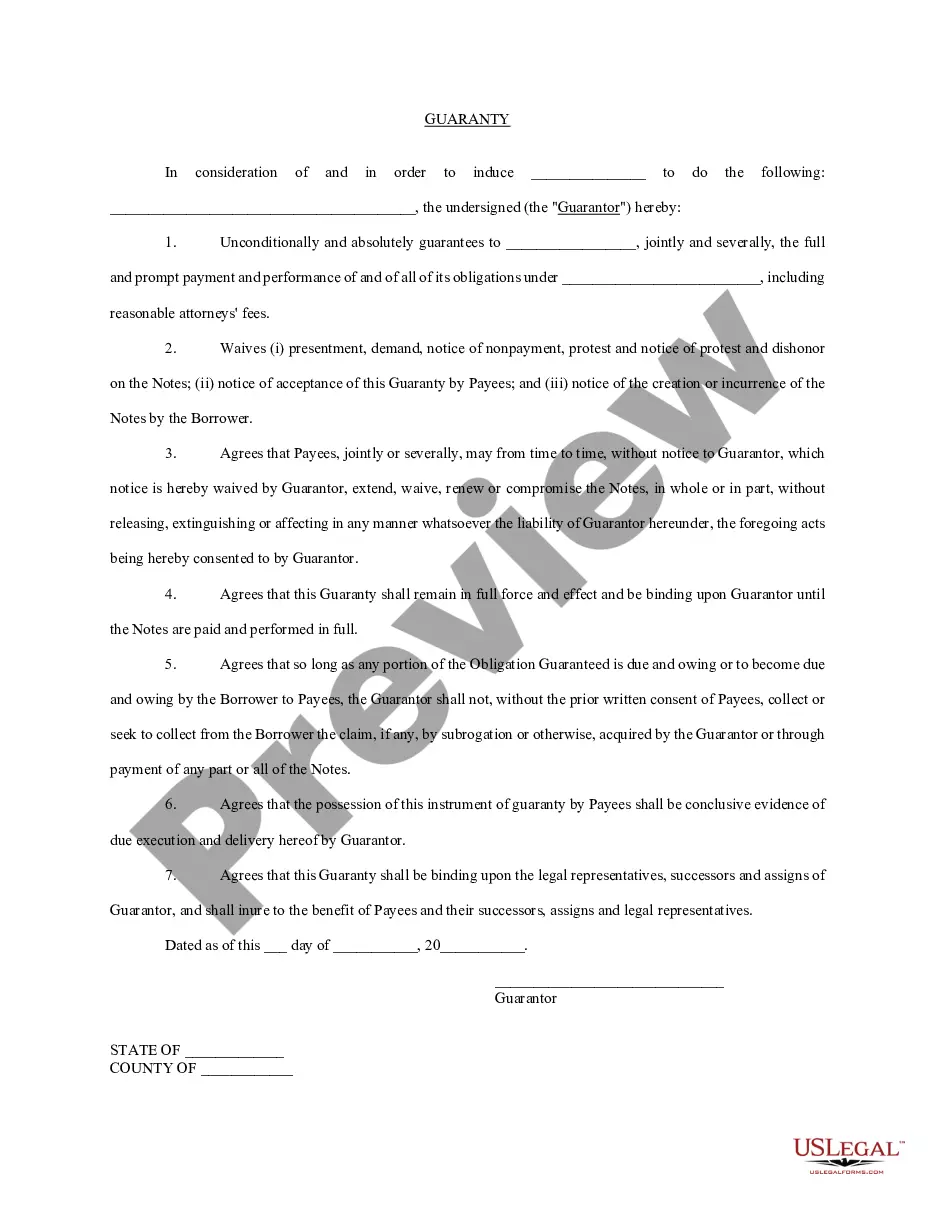
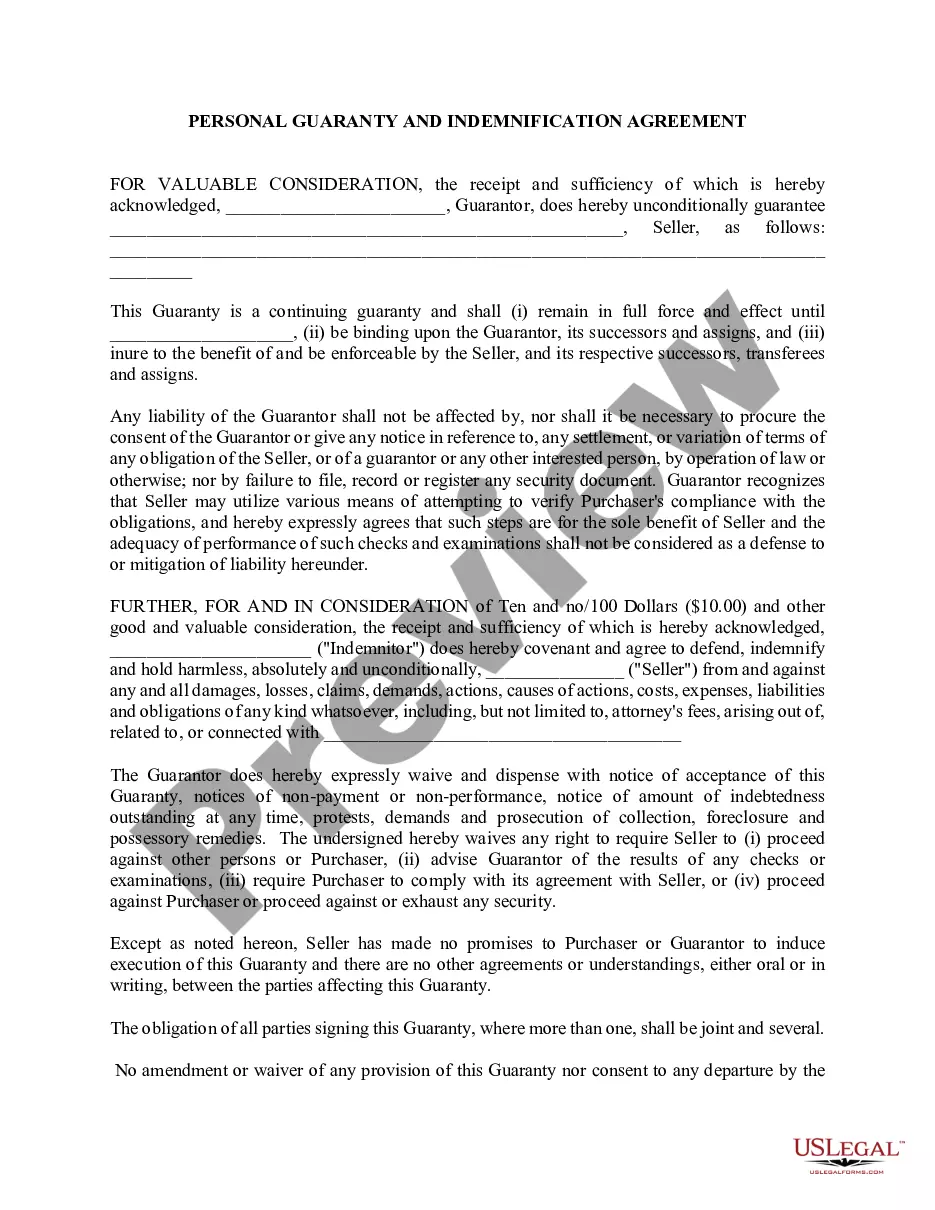
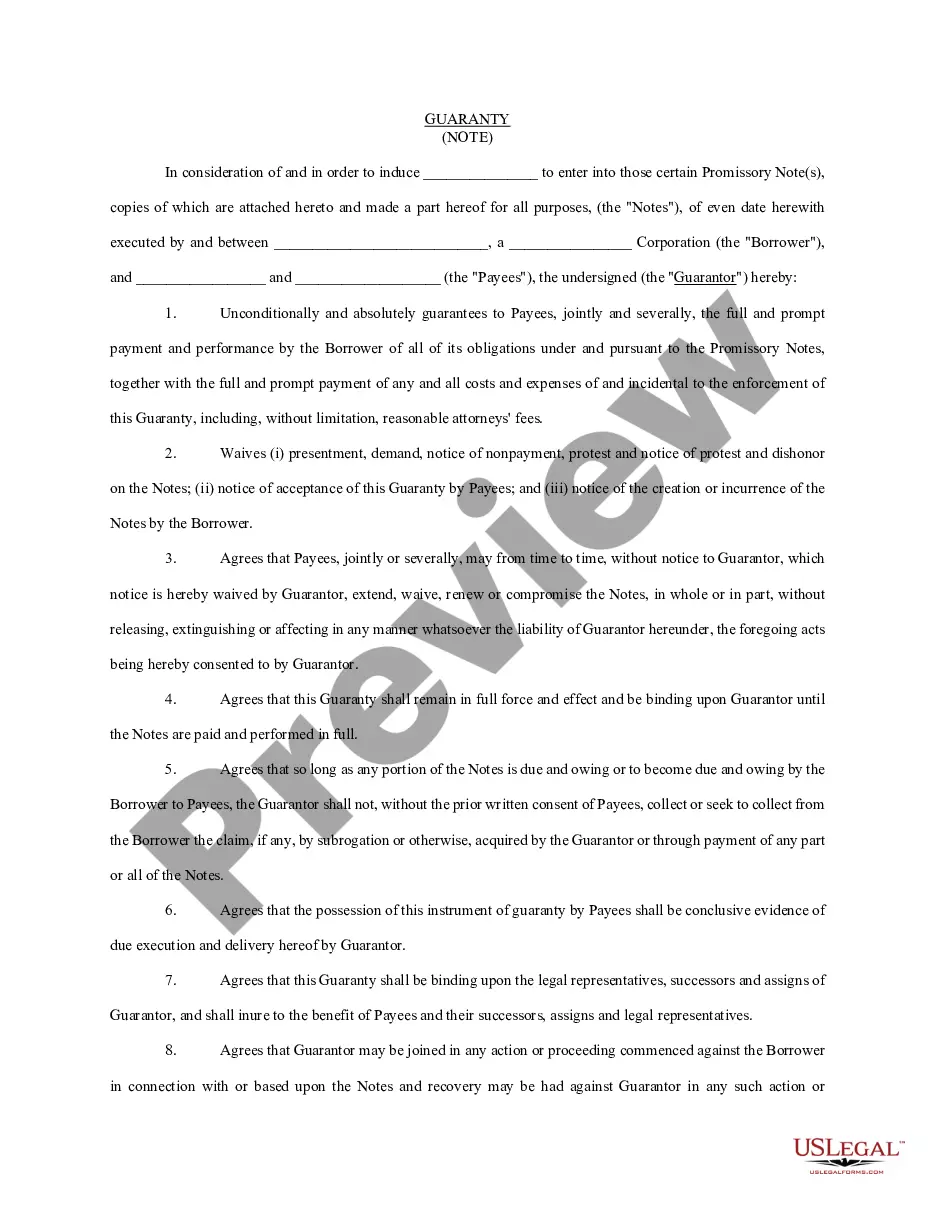
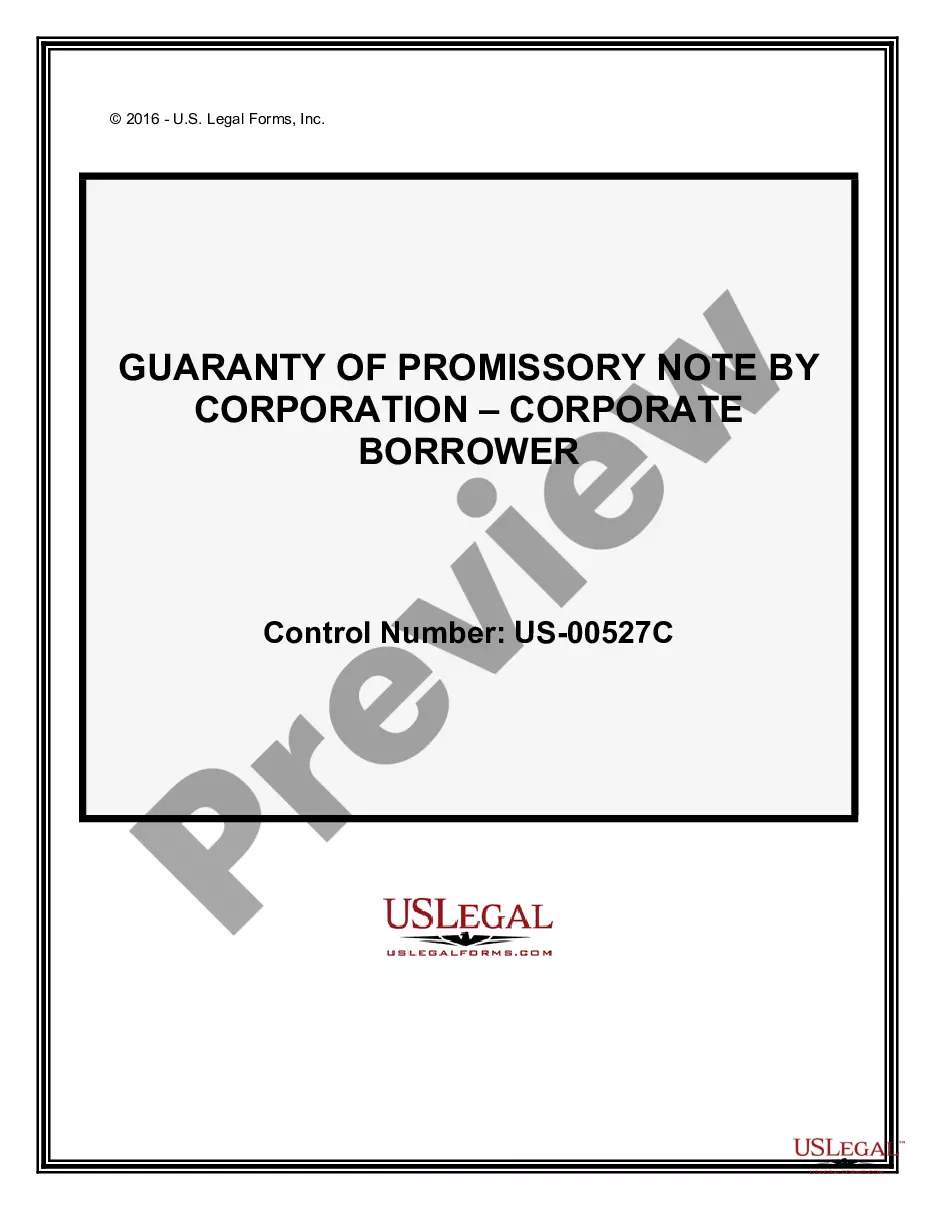
In this guaranty, two corporations guarantee the debt of an affiliate corporation.
Oregon Cross Corporate Guaranty Agreement
Instant download
Description
Free preview
Get your form ready online
Our built-in tools help you complete, sign, share, and store your documents in one place.
Built-in online Word editor
Make edits, fill in missing information, and update formatting in US Legal Forms—just like you would in MS Word.
Export easily
Download a copy, print it, send it by email, or mail it via USPS—whatever works best for your next step.
E-sign your document
Sign and collect signatures with our SignNow integration. Send to multiple recipients, set reminders, and more. Go Premium to unlock E-Sign.
Notarize online 24/7
If this form requires notarization, complete it online through a secure video call—no need to meet a notary in person or wait for an appointment.
Store your document securely
We protect your documents and personal data by following strict security and privacy standards.

Make edits, fill in missing information, and update formatting in US Legal Forms—just like you would in MS Word.

Download a copy, print it, send it by email, or mail it via USPS—whatever works best for your next step.

Sign and collect signatures with our SignNow integration. Send to multiple recipients, set reminders, and more. Go Premium to unlock E-Sign.

If this form requires notarization, complete it online through a secure video call—no need to meet a notary in person or wait for an appointment.

We protect your documents and personal data by following strict security and privacy standards.
Looking for another form?




How to fill out Cross Corporate Guaranty Agreement?
You can invest several hours online searching for the sanctioned document template that meets the federal and state regulations you require.
US Legal Forms offers an extensive selection of sanctioned forms that are reviewed by experts.
You can obtain or print the Oregon Cross Corporate Guaranty Agreement from our platform.
To find another version of the document, use the Search field to locate the template that suits your needs and requirements. Once you have identified the template you want, click Download now to continue.
- If you have a US Legal Forms account, you may sign in and then click the Download button.
- Then, you can complete, edit, print, or sign the Oregon Cross Corporate Guaranty Agreement.
- Each sanctioned document template you download is yours indefinitely.
- To receive another copy of a purchased document, go to the My documents tab and click the corresponding button.
- If you are visiting the US Legal Forms website for the first time, follow the simple guidelines below.
- First, ensure that you have chosen the correct document template for the state/town you select.
- Review the document description to make sure you have selected the correct document.
Form popularity
FAQ
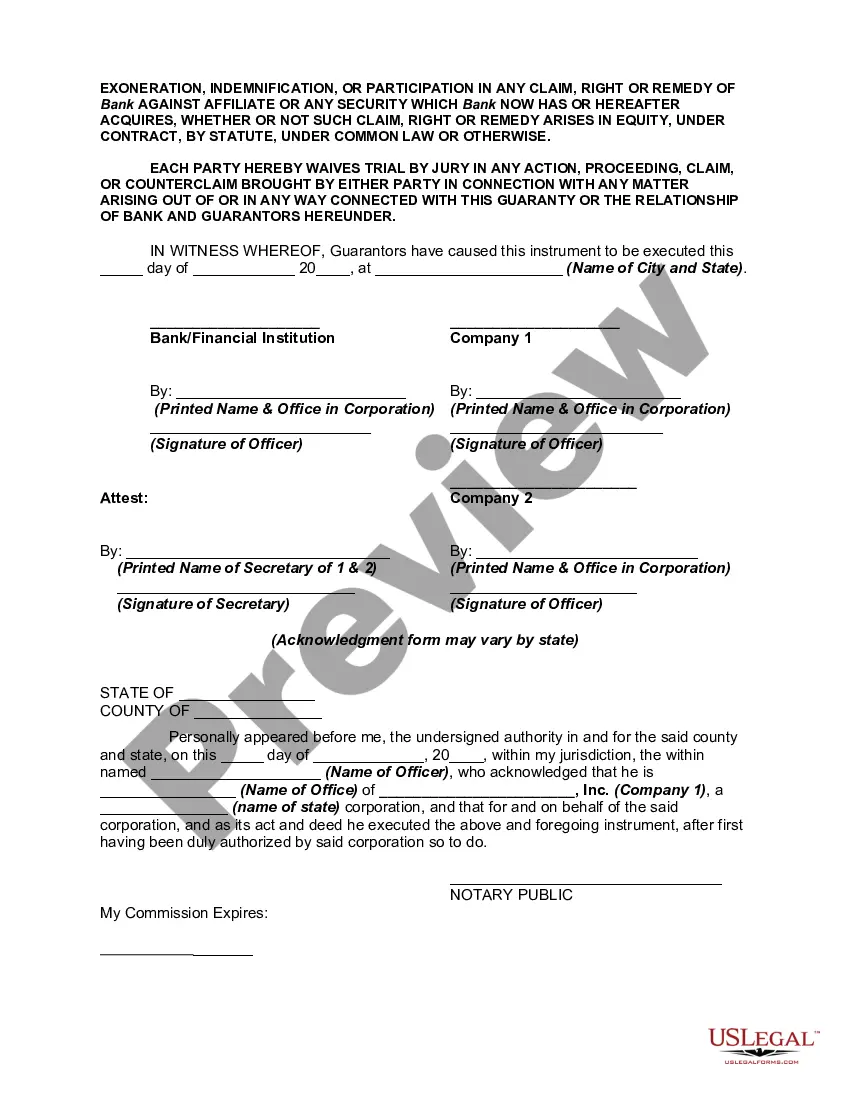
A pledge agreement requires signatures from the pledgor, the person offering the asset, and often the pledgee, the party receiving the guarantee. This process is similar to that of an Oregon Cross Corporate Guaranty Agreement, where both parties need clarity on their roles. It’s important to have an attorney review the agreement to ensure compliance with all legal requirements.
A guaranty must be signed by the guarantor, which may be an individual or a corporation pledging to take on responsibility for another party's obligations. In the context of the Oregon Cross Corporate Guaranty Agreement, the signing process is vital to ensure that the terms are legally enforceable. Having the right individuals sign secures the interests of all parties involved.
Yes, a company can issue a guarantee for another company's obligations, which is often the essence of an Oregon Cross Corporate Guaranty Agreement. This arrangement can enhance the borrowing capacity of the guaranteed company by leveraging the financial strength of the guarantor. It creates a safety net for creditors, emphasizing the importance of careful contract drafting.
A letter of guarantee often requires signatures from authorized representatives of the guaranteeing entity. This includes individuals who hold positions, such as a corporate officer, who have the authority to legally bind the entity. In the case of an Oregon Cross Corporate Guaranty Agreement, it’s crucial to ensure that the signatory understands the obligations being guaranteed.
In the context of an Oregon Cross Corporate Guaranty Agreement, typically, the guarantor or company that commits to guarantee the obligations of another party signs the agreement. This provides assurance to the creditor that they can rely on the guarantor's financial strength. Therefore, both parties involved should carefully review the agreement before signing, ensuring all terms are clear.
The purpose of the contract of guarantee is to formalize the agreement between the creditor and the guarantor, documenting the conditions under which the guarantor will take on the financial responsibility of the debtor. This contract provides clarity, minimizes misunderstandings, and enforces legal obligations. An Oregon Cross Corporate Guaranty Agreement exemplifies this practice, allowing businesses to manage their financial risks effectively.
The guaranty clause within a legal agreement explicitly outlines the terms under which the guarantor agrees to cover the debtor's obligations. This clause is essential for clarifying the roles and responsibilities of each party involved, ensuring all parties understand their commitments. In an Oregon Cross Corporate Guaranty Agreement, a well-defined guaranty clause strengthens the security of the financial arrangement.
The purpose of a guarantee agreement is to provide a safety net for creditors by ensuring that debts will be repaid, even if the primary borrower cannot fulfill their obligations. This legal arrangement bolsters financial confidence and facilitates smoother transactions. In the context of an Oregon Cross Corporate Guaranty Agreement, it enhances the collective strength of businesses involved, easing access to loans and credit.
A cross corporate guarantee refers to an arrangement where multiple companies provide guarantees for each other's debts. This is particularly useful in business groups or partnerships to share risk and secure financing. An Oregon Cross Corporate Guaranty Agreement exemplifies this strategy, allowing interconnected entities to bolster their borrowing capacity while minimizing individual exposure.
In a contract of guaranty, there are typically three key parties: the creditor, the principal debtor, and the guarantor. The creditor extends credit to the principal debtor, while the guarantor agrees to assume responsibility for the debt if the principal debtor defaults. This relationship is foundational in an Oregon Cross Corporate Guaranty Agreement, ensuring that the creditor has a reliable backup for repayment.