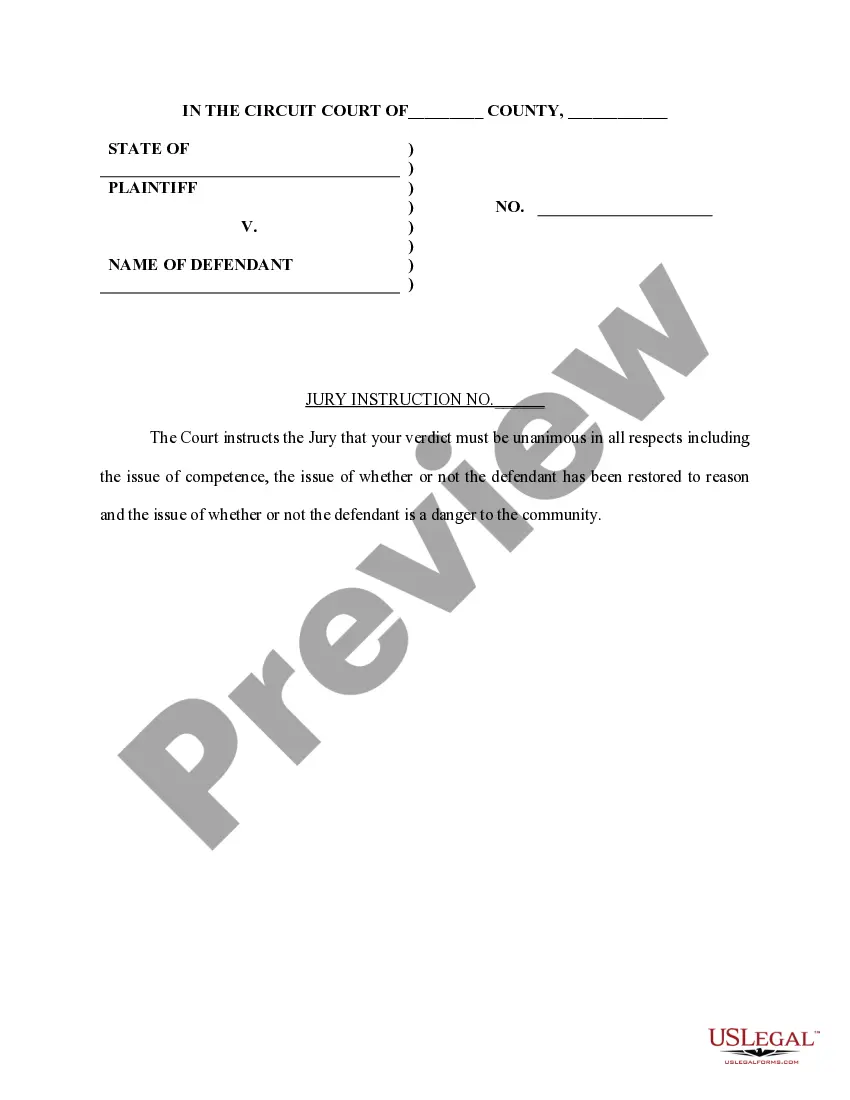
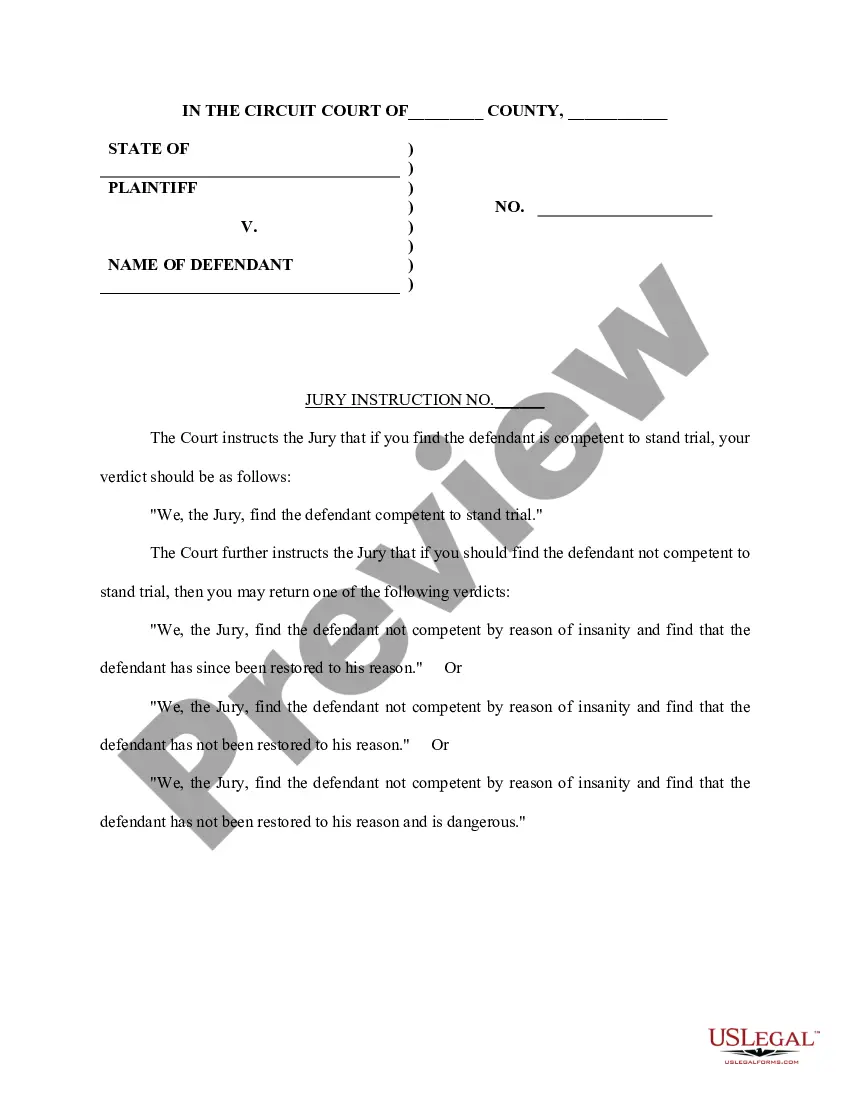
Oregon Competence - Unanimous Verdict
Description
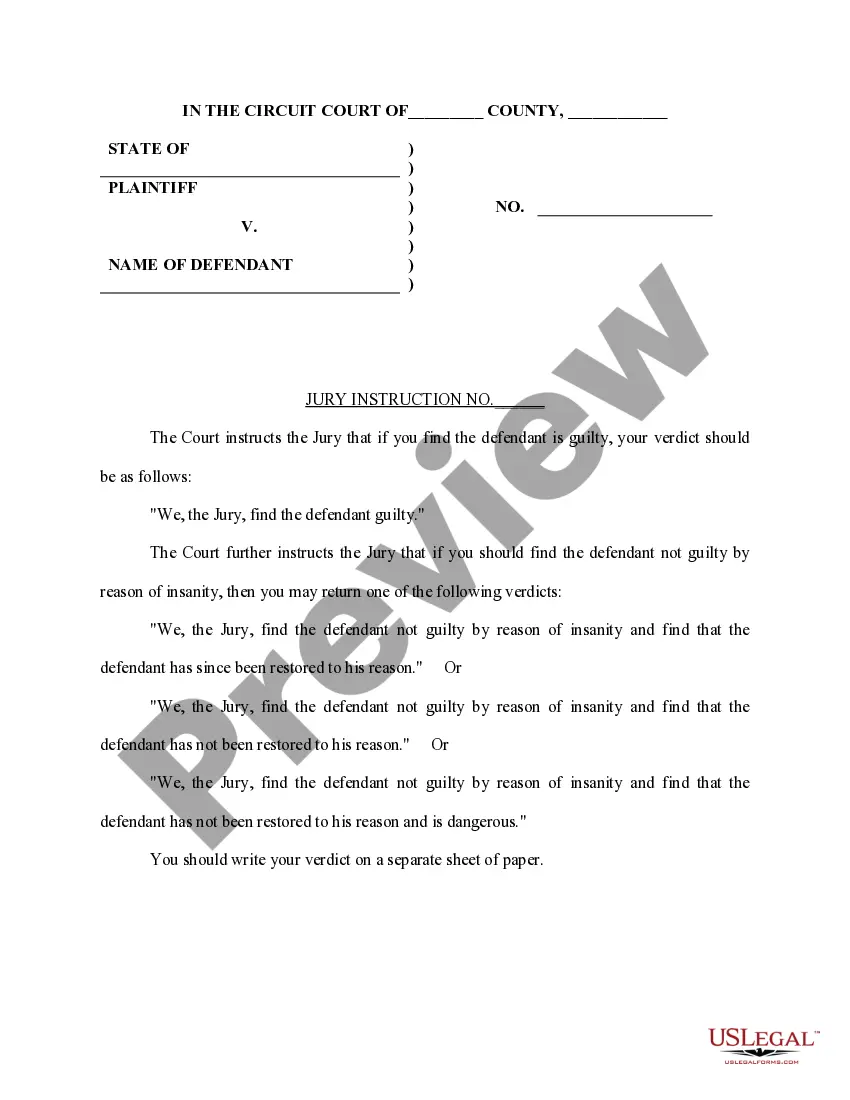
How to fill out Competence - Unanimous Verdict?
You can spend hours online searching for the legal document template that meets the state and federal criteria you require. US Legal Forms offers thousands of legal documents that have been vetted by experts.
It is easy to obtain or print the Oregon Competence - Unanimous Verdict from the service. If you already have a US Legal Forms account, you can Log In and select the Download option. After that, you can complete, edit, print, or sign the Oregon Competence - Unanimous Verdict. Every legal document template you acquire is yours permanently.
To retrieve another copy of a purchased document, visit the My documents tab and click the corresponding option. If you are using the US Legal Forms website for the first time, follow these simple instructions: First, ensure that you have chosen the correct document template for the state/city of your choice. Review the document details to confirm you have selected the right form. If available, utilize the Review option to examine the document template as well.
- If you wish to find another version of the document, use the Search section to locate the template that fulfills your needs and requirements.
- Once you have identified the template you desire, click Get now to continue.
- Select the pricing plan you prefer, enter your credentials, and register for an account on US Legal Forms.
- Complete the payment process. You can use your credit card or PayPal account to purchase the legal document.
- Choose the format of your document and download it to your device.
- Make modifications to your document if necessary. You can complete, edit, and sign and print the Oregon Competence - Unanimous Verdict.
- Download and print thousands of document templates using the US Legal Forms website, which offers the largest collection of legal forms. Utilize professional and state-specific templates to address your business or personal needs.
Form popularity
FAQ
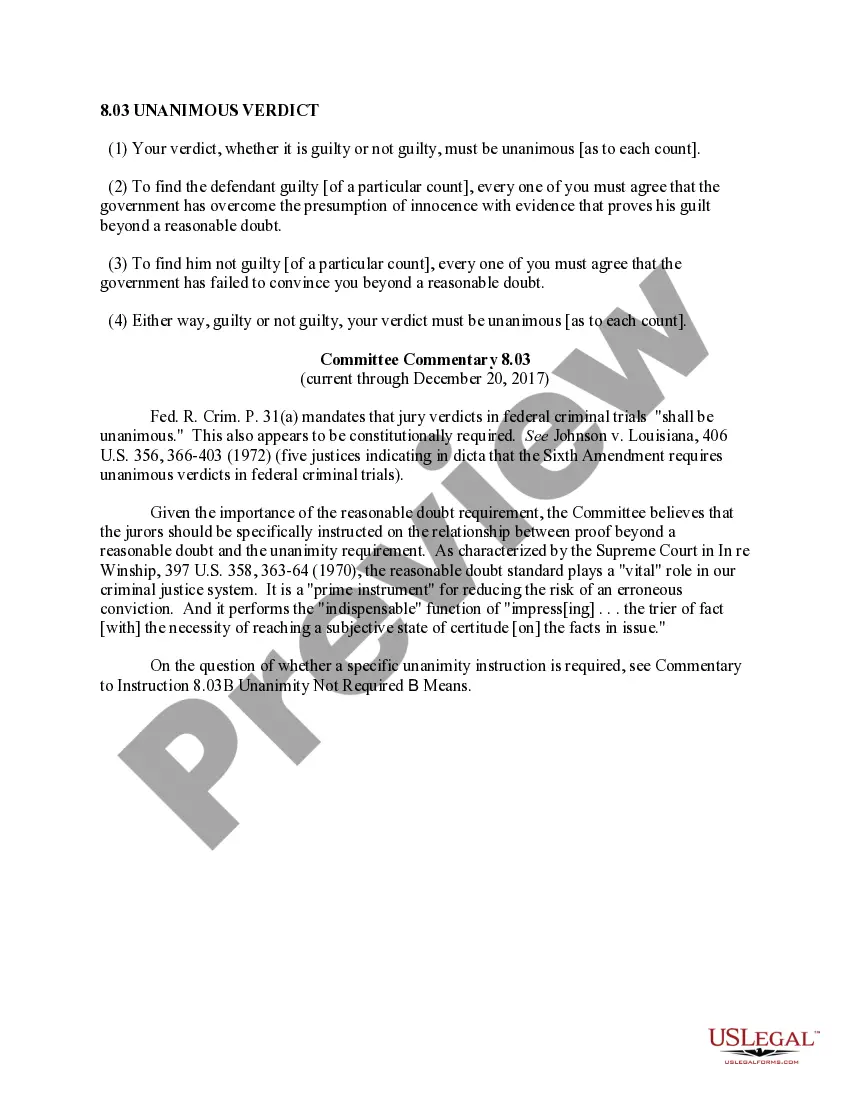
In the federal system, whether the trial is criminal or civil, the jury must reach a unanimous verdict.
United States, 333 U.S. 740, 748 (1948) ( Unanimity in jury verdicts is required where the Sixth and Seventh Amendments apply. In criminal cases this requirement of unanimity extends to all issues?character or degree of the crime, guilt and punishment?which are left to the jury. ); Maxwell v.
The U.S. Supreme Court acknowledged in Ramos that Oregon voters' adoption of a constitutional amendment in 1934 that permitted conviction by a nonunanimous jury can ?be traced to the rise of the Ku Klux Klan and efforts to dilute the influence of racial and ethnic and religious minorities on Oregon juries.?
The vast majority of states require that a criminal defendant be convicted at trial by a unanimous jury verdict. Only two states have had laws to the contrary, Louisiana and Oregon.
That change to the state constitution made Oregon one of only two states (the other is Louisiana) that allowed non-unanimous jury convictions in criminal felony cases. All other states and the federal government require that jury verdicts be unanimous in such cases.
Majority opinions. In a 6?3 decision, the Court reversed the decision against Ramos and ruled that the unanimity of a jury vote for conviction mandated by the Sixth Amendment for serious crimes must also be an incorporated right against the states, overturning Apodaca v. Oregon.
When a six-person jury is used in Oregon, all six jurors must agree on the verdict. When a twelve-person jury is used in Oregon, typically only ten of the twelve jurors must agree on the verdict (however, a unanimous verdict is required in capital murder cases).
The Oregon Supreme Court has ruled that people convicted by nonunanimous juries have the right to a new trial. Before the U.S. Supreme Court overturned the practice of convicting defendants with less than a unanimous jury, Oregon and Louisiana were the only states that allowed it.