Oregon Advance Directive for Health Care
Understanding this form
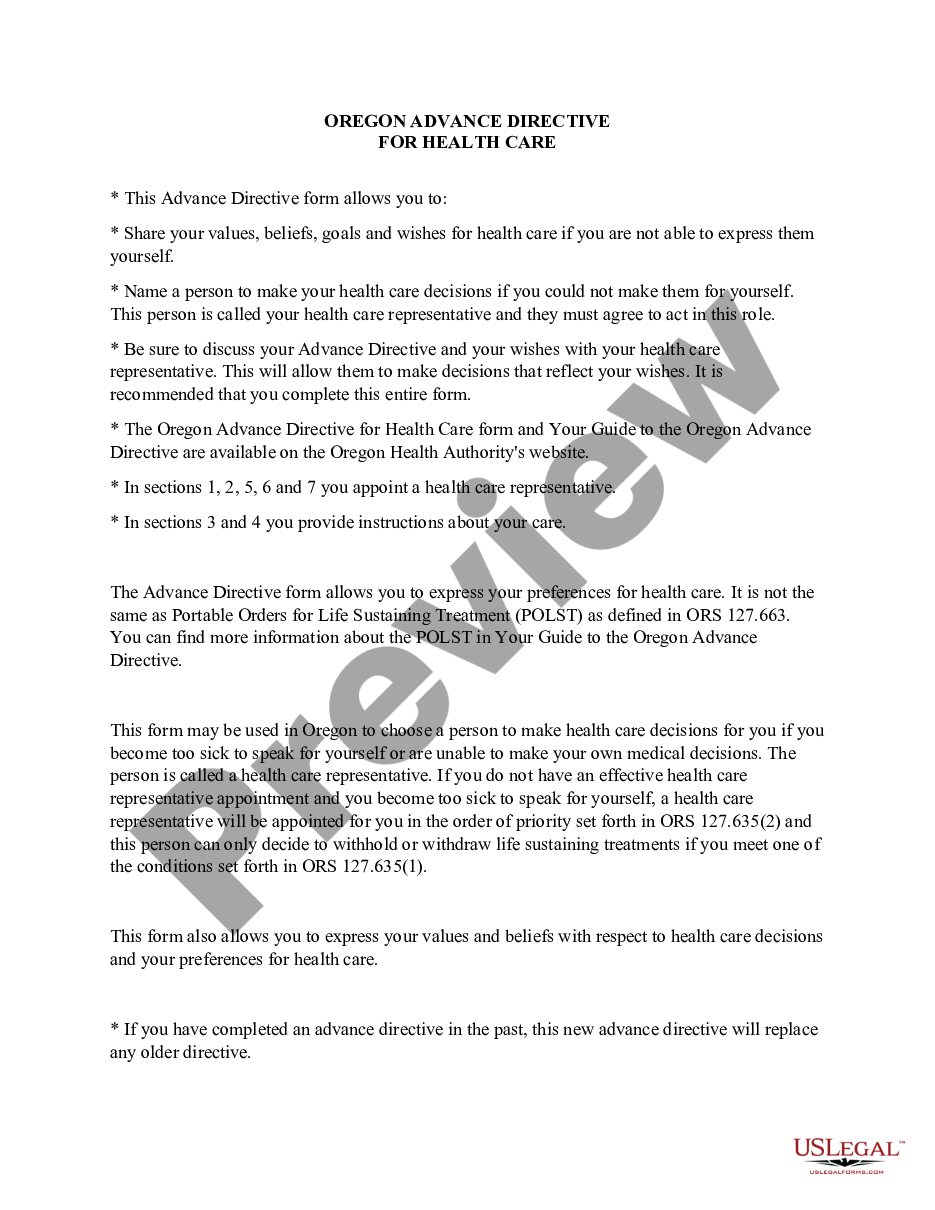
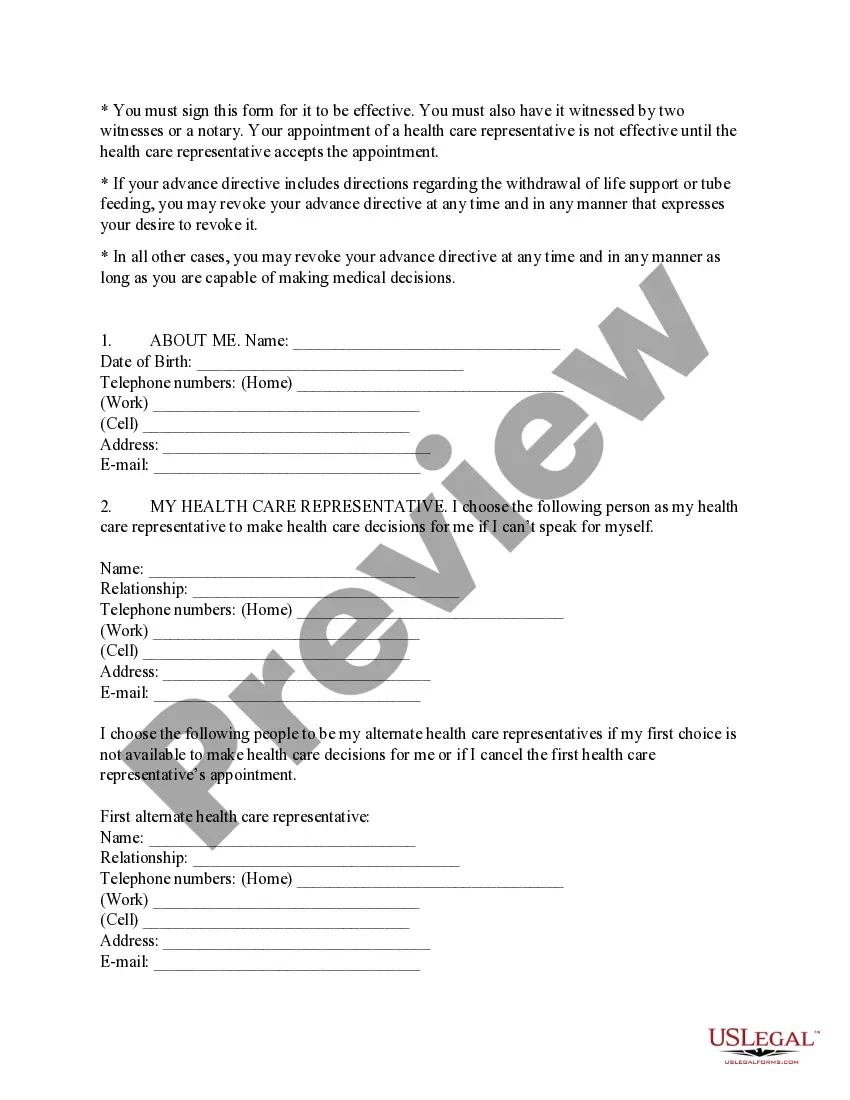
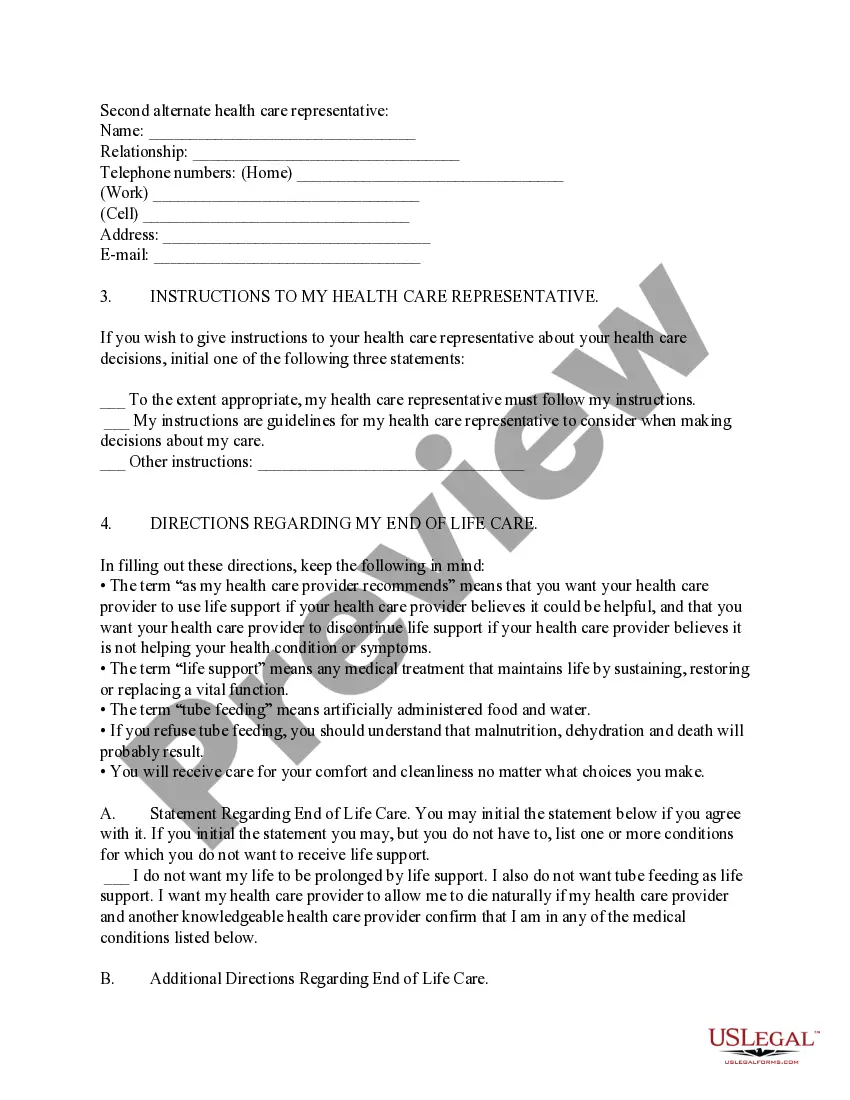
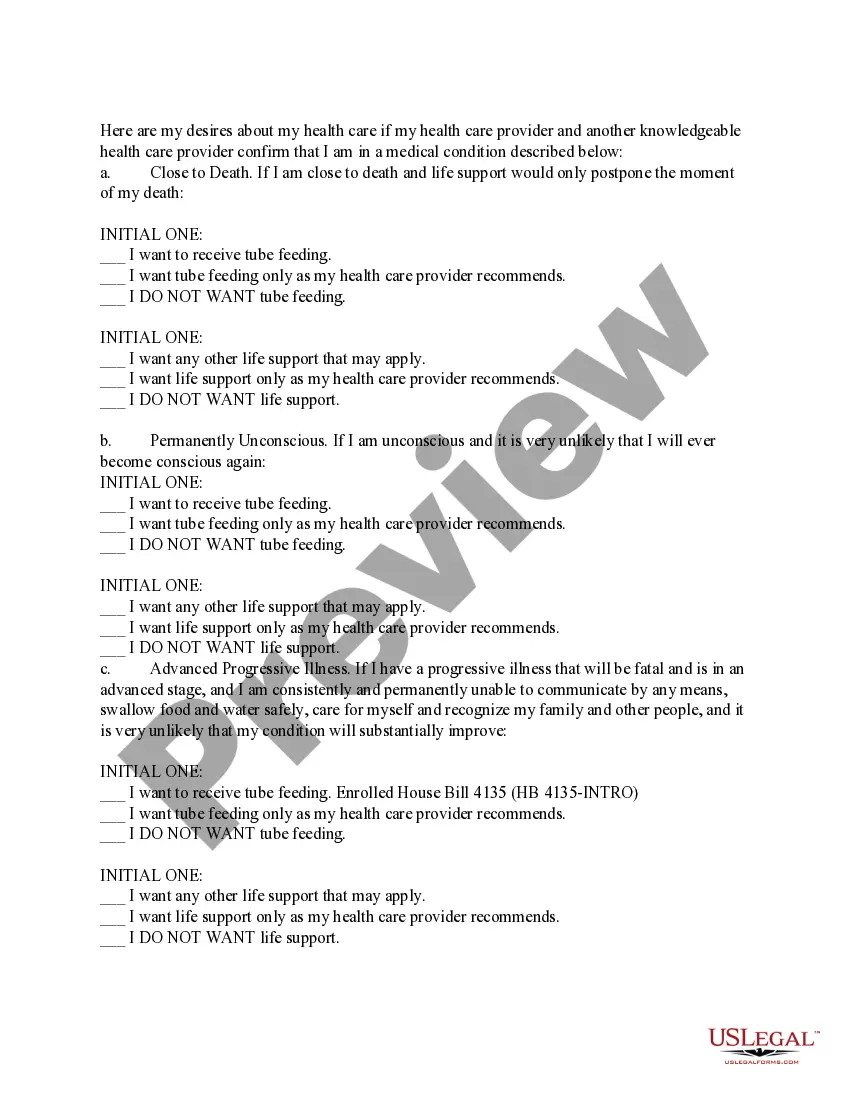
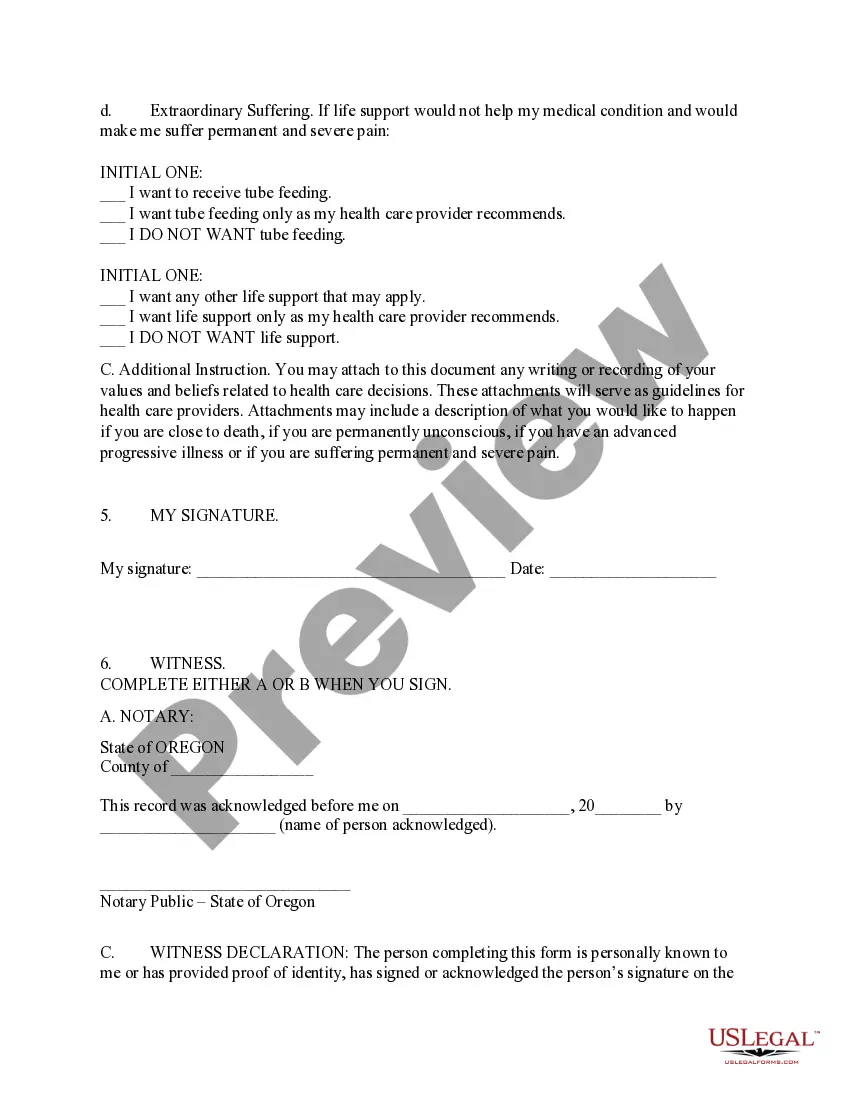
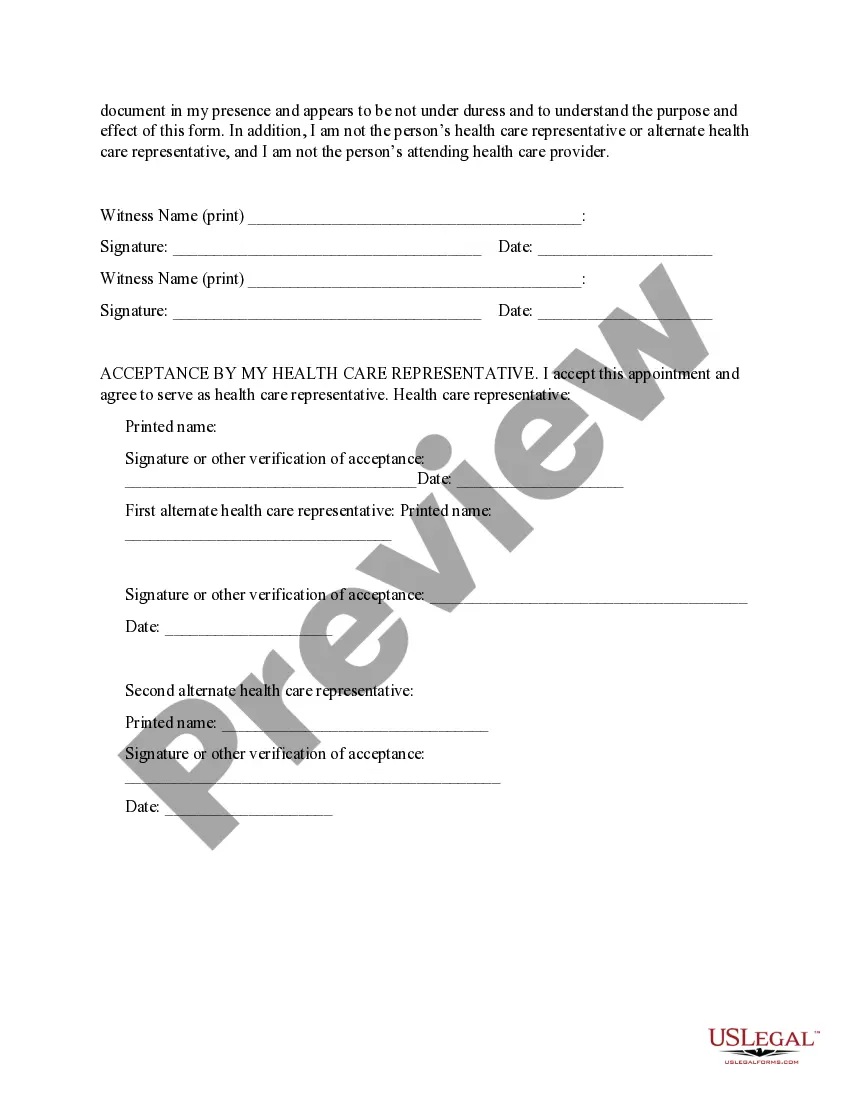
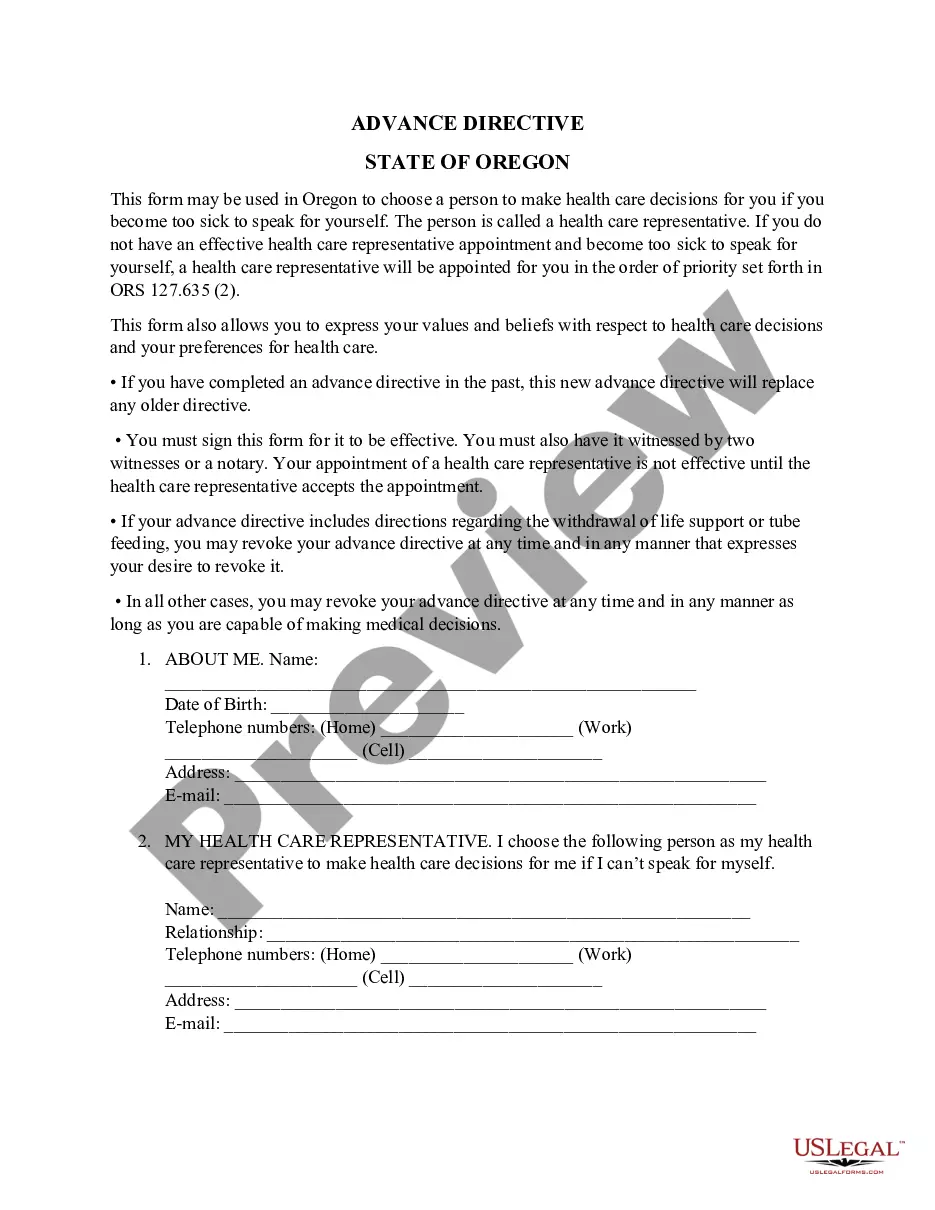
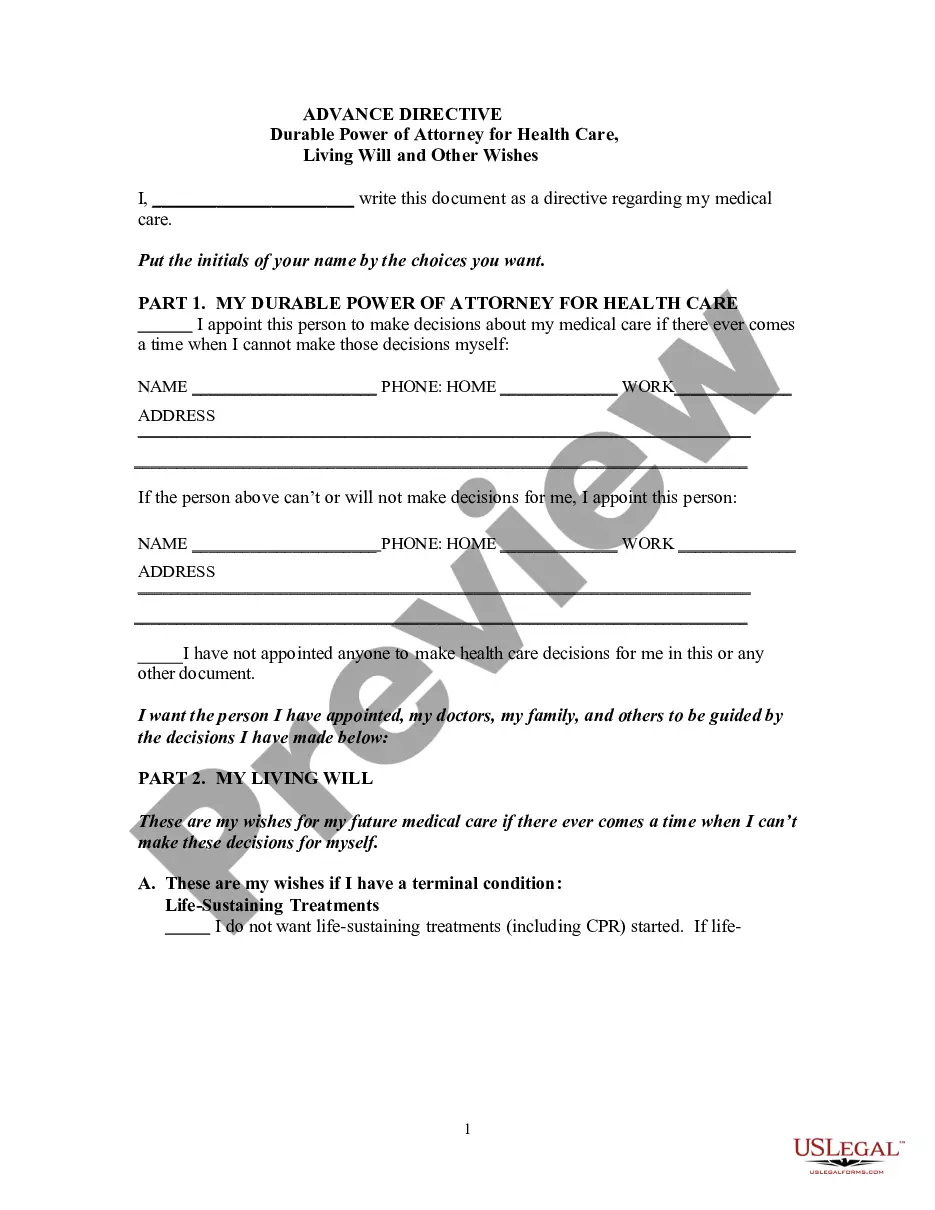
The Oregon Advance Directive for Health Care is a legal document that allows individuals to specify their healthcare decisions, particularly in situations involving terminal illness. This form not only appoints an agent to make medical decisions but also outlines an individual's wishes regarding life-ending medications, affirming their autonomy in end-of-life care. It is crucial for documenting the authority of an agent under a power of attorney, setting it apart from more general health directives.
Main sections of this form
- Personal information: Name and medical condition of the individual completing the form.
- Request for medication to end life: Clear statement requesting humane and dignified medication.
- Family notification: Options for whether family members have been informed about the decision.
- Witness declaration: A section for witnesses to attest to the signing process under specific conditions.
- Revocation clause: Explanation of the individual's right to rescind the request at any time.
When to use this document
This form is applicable for individuals diagnosed with a terminal illness who wish to make clear their medical treatment preferences regarding end-of-life care. It is especially relevant when a patient wants to ensure that their wishes are honored, particularly if they wish to prevent unnecessary suffering and have the option for medical assistance in dying.
Intended users of this form
- Individuals over the age of 18 who are of sound mind.
- Patients suffering from terminal illnesses who wish to dictate their end-of-life care.
- Those who want to designate a healthcare agent to make decisions on their behalf.
Completing this form step by step
- Enter your name and identify your medical condition, ensuring it is acknowledged by your attending physician.
- Clearly state your request regarding medication for ending your life in a humane manner.
- Choose one of the options regarding family notification and mark it clearly.
- Sign and date the document in the presence of witnesses.
- Have two witnesses sign the declaration, confirming that you meet the necessary criteria.
Does this document require notarization?
This form does not typically require notarization unless specified by local law. It is, however, important to ensure that all witnesses meet the required qualifications to validate the document.
Get your form ready online
Our built-in tools help you complete, sign, share, and store your documents in one place.
Make edits, fill in missing information, and update formatting in US Legal Forms—just like you would in MS Word.
Download a copy, print it, send it by email, or mail it via USPS—whatever works best for your next step.
Sign and collect signatures with our SignNow integration. Send to multiple recipients, set reminders, and more. Go Premium to unlock E-Sign.
If this form requires notarization, complete it online through a secure video call—no need to meet a notary in person or wait for an appointment.
We protect your documents and personal data by following strict security and privacy standards.

Make edits, fill in missing information, and update formatting in US Legal Forms—just like you would in MS Word.

Download a copy, print it, send it by email, or mail it via USPS—whatever works best for your next step.

Sign and collect signatures with our SignNow integration. Send to multiple recipients, set reminders, and more. Go Premium to unlock E-Sign.

If this form requires notarization, complete it online through a secure video call—no need to meet a notary in person or wait for an appointment.

We protect your documents and personal data by following strict security and privacy standards.
Typical mistakes to avoid
- Failing to have two qualified witnesses sign the form.
- Not specifying the medical conditions adequately.
- Overlooking the right to rescind the request at any time.
- Not discussing the decisions with family if required, which may lead to disputes.
Benefits of using this form online
- Convenience: Access and complete the form any time and from anywhere.
- Editability: Easily modify your information as your circumstances change.
- Reliability: Form templates are drafted by licensed attorneys, ensuring legal compliance.
Legal use & context
- This form is recognized under Oregon state law as a valid advance directive.
- Provides a legal framework for emergency situations where medical decisions must be made.
- Ensures that healthcare providers comply with the documented wishes of the patient.
What to keep in mind
- The Oregon Advance Directive for Health Care is crucial for making personal health care decisions.
- It grants power to an agent and outlines the patient's end-of-life preferences.
- Be clear and specific when detailing medical treatment wishes to avoid confusion.
Looking for another form?


Form popularity
FAQ
Statutory declarations don't have to be notarized. Yes they do, that is the very legal definition of a "statutory declaration". It must be done in front of a person who is authorized to administer oaths (like a lawyer or notary), so that person will need to stamp or sign the document.
You can get blank Statutory Declaration Forms for NSW matters on the Department of Communities and Justice website. If you are making the declaration for a Commonwealth matter or Commonwealth Government department, Commonwealth statutory declaration forms are available at the Commonwealth Attorney General's website.
We charge £10 to administer oaths, take affidavits and statutory declarations. You must attend our office with your photo ID i.e. driving licence or passport.
Section 2 of a statutory declaration is where you write your statement. You can type your statement, or use a pen. You should not use a pencil because information could be erased.
A statutory declaration is a legal document defined under the law of certain Commonwealth nations.Statutory declarations are commonly used to allow a person to declare something to be true for the purposes of satisfying some legal requirement or regulation when no other evidence is available.
A statutory declaration is an important legal document and must therefore be verified. It will usually have to be administered by a commissioner for oaths, a solicitor, or a notary public.
A statutory declaration is a legal document that contains a written statement about something that is true. It must be witnessed by an approved person.
Your full name. your address. your occupation. a statement that you "do solemnly and sincerely declare" the things you say are true.
Justice of the Peace. police officer. court registrar. bank manager. medical practitioner. dentist.