Oregon Affidavit of Service - Personal Service
Understanding this form
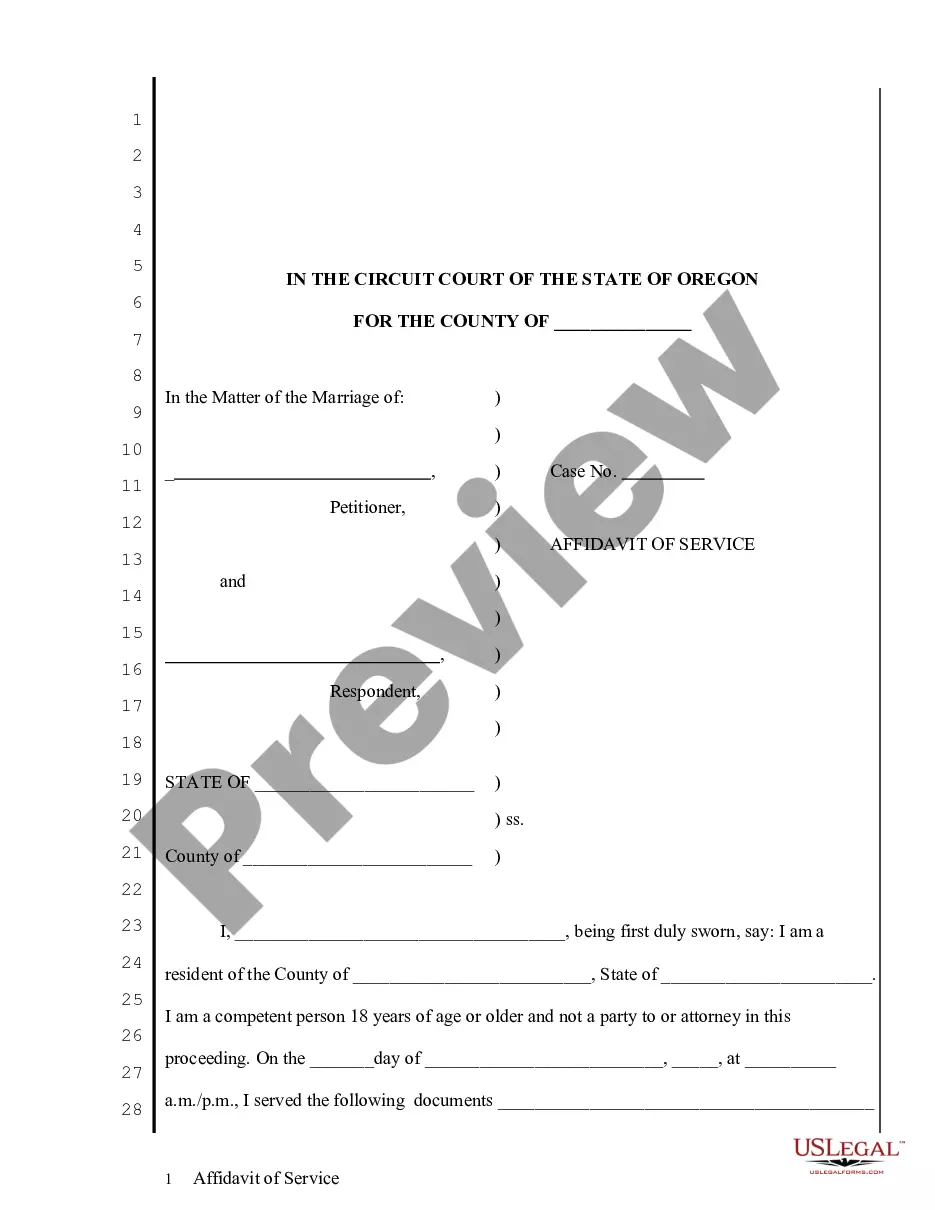
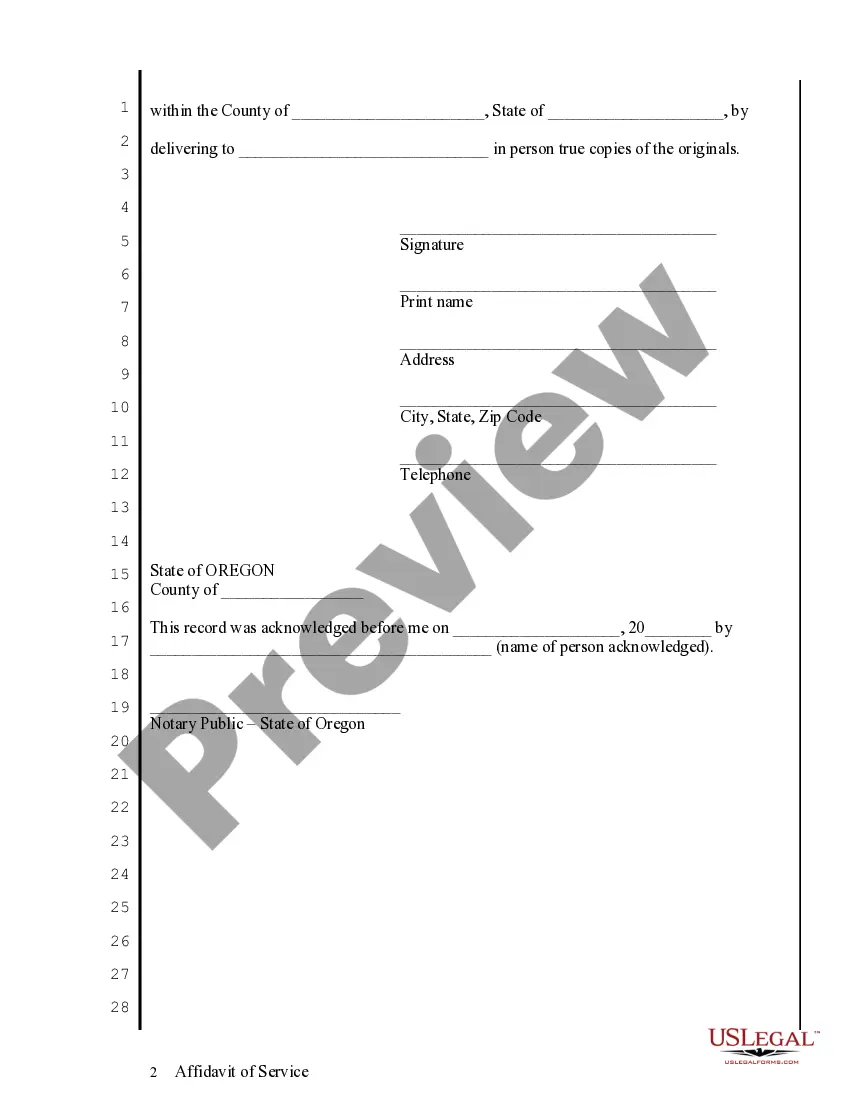
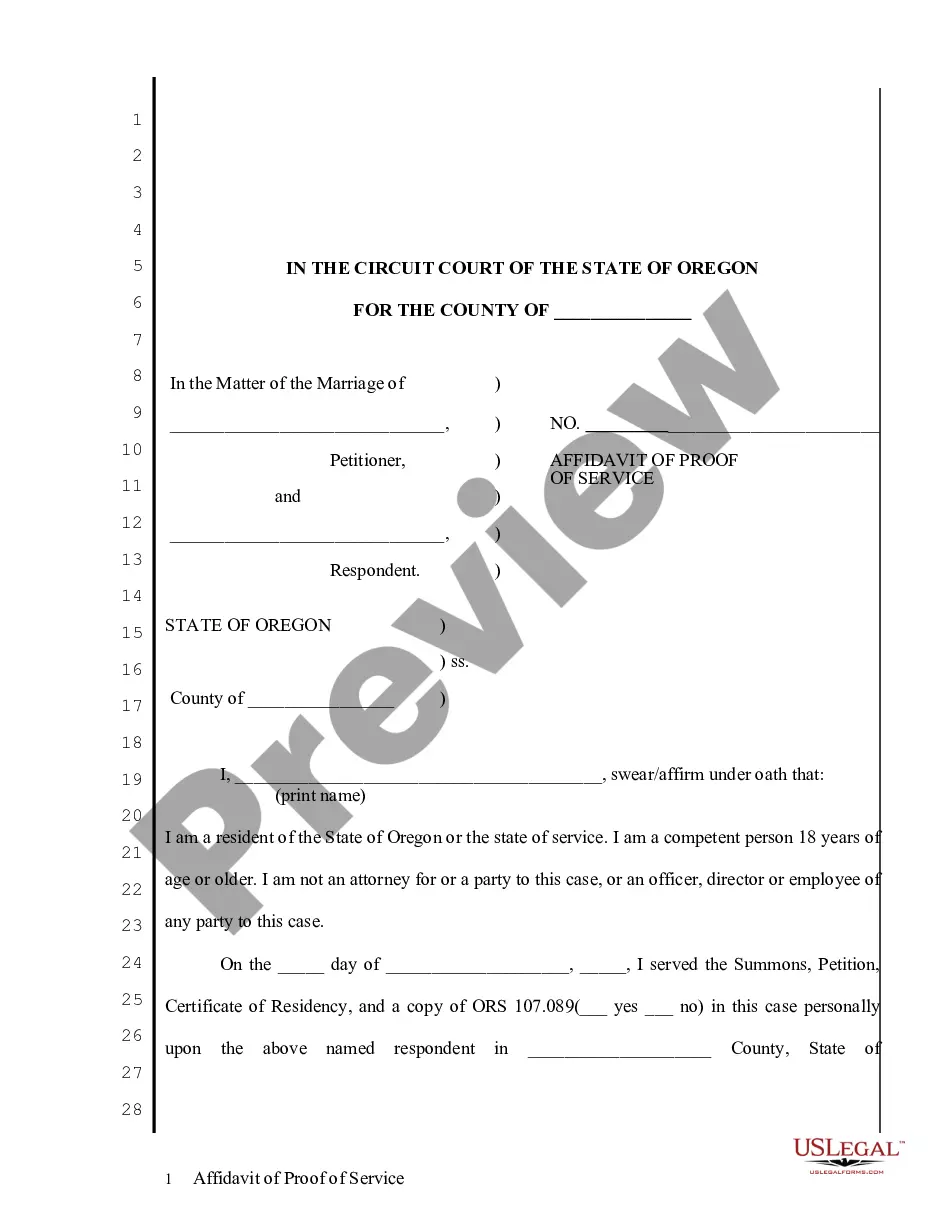
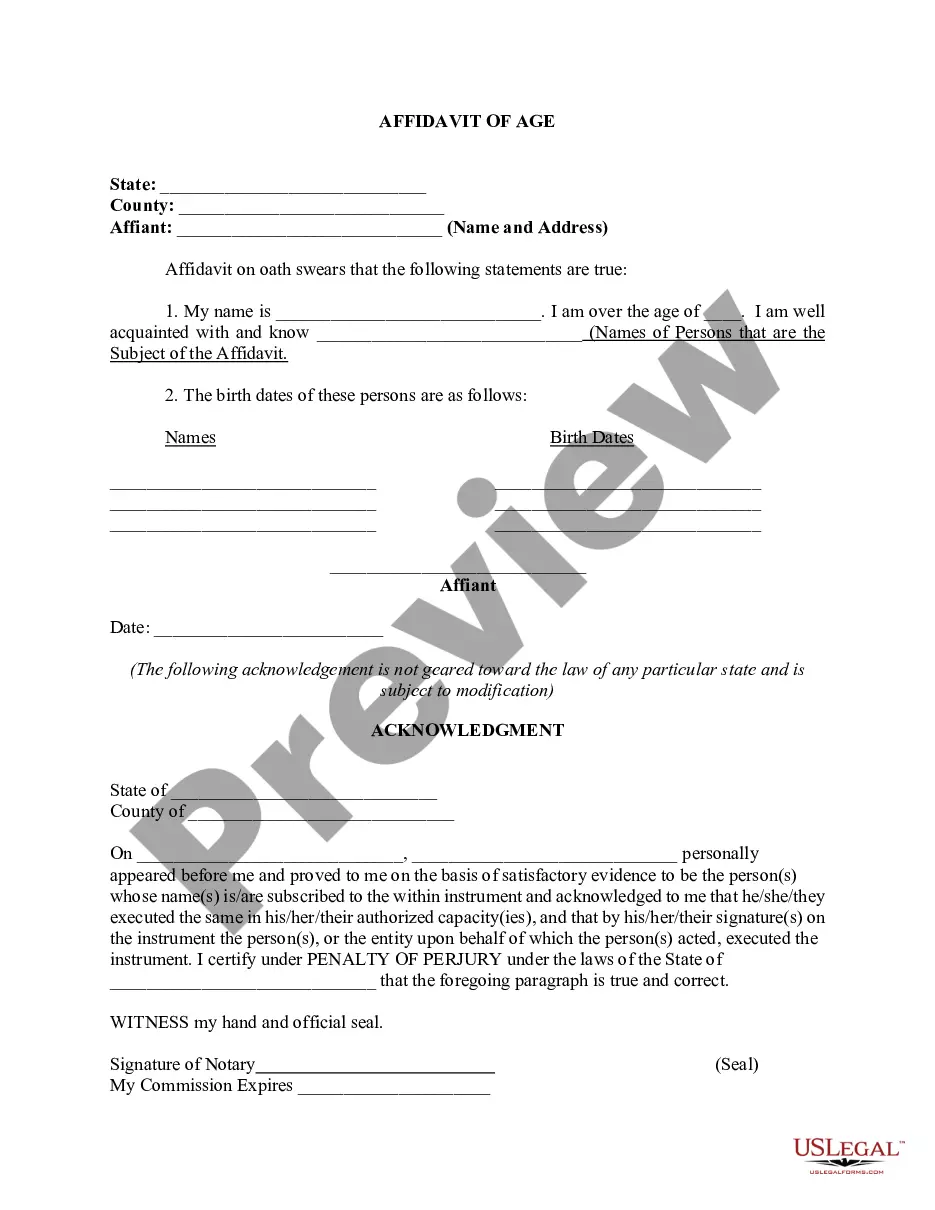
The Affidavit of Service - Personal Service is a legal document used to confirm that specific legal documents have been personally delivered to a party involved in a domestic litigation case in Oregon. Unlike other affidavits, this form specifically certifies the direct delivery of documents, making it crucial for ensuring that the respondent is adequately informed about legal proceedings affecting them.
Form components explained
- Petitioner and Respondent Information: Sections to fill in the names of the parties involved in the case.
- Service Details: A section to specify the date, time, and location of service, as well as the documents served.
- Signature and Notary Public Section: Spaces for the server's signature and a notary public or court clerk's verification.
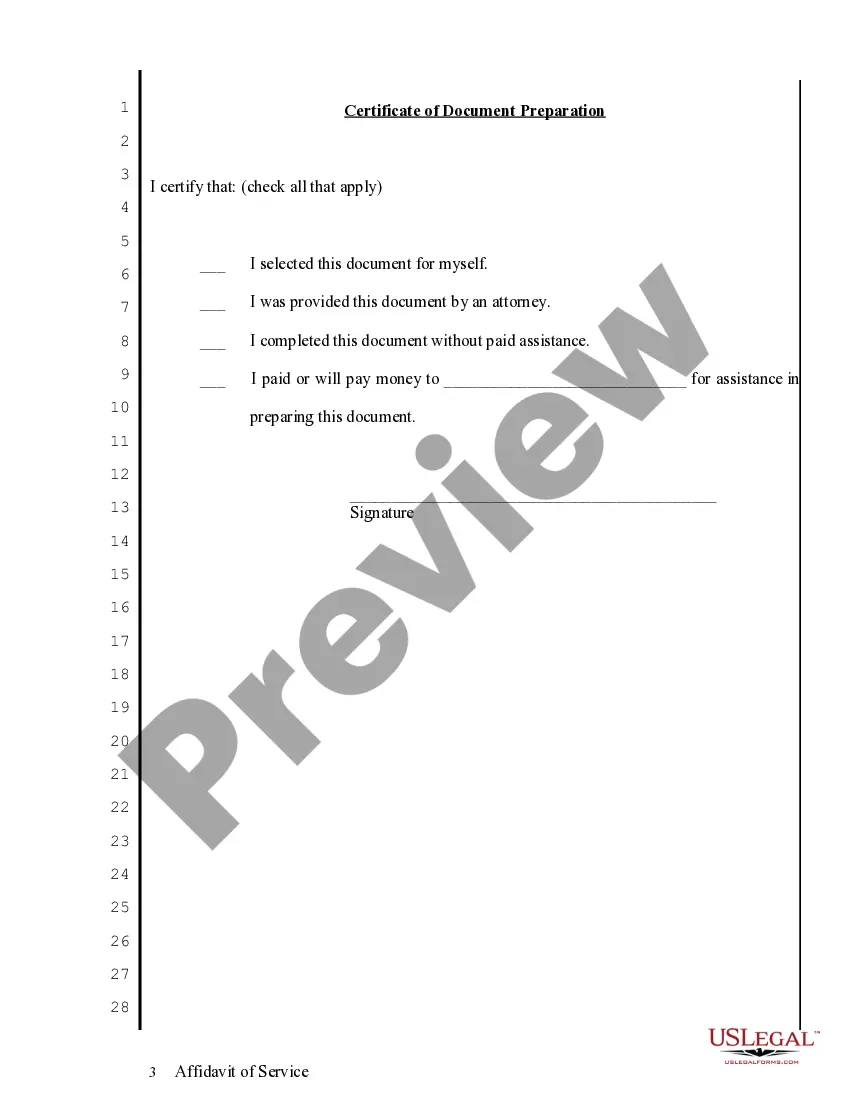
- Certificate of Document Preparation: A declaration regarding how the form was prepared and whether legal assistance was obtained.

Common use cases
This form is essential when a legal party has served documents, such as divorce papers or child custody filings, directly to another party involved in a domestic case. It should be completed and filed with the court to prove that the service was properly executed, which is a requirement for advancing with legal proceedings.
Who can use this document
This form is intended for:
- Individuals involved in a domestic litigation case in Oregon.
- Process servers or third parties who are authorized to deliver legal documents.
- Legal representatives preparing documentation for clients.
Instructions for completing this form
- Identify the parties: Fill in the names of the petitioner and respondent at the top of the form.
- Provide service details: Enter the date, time, and location where the documents were delivered.
- Document the service: Specify the legal documents served and to whom they were delivered.
- Sign the affidavit: The person delivering the documents must sign and provide their printed name and contact information.
- Get it notarized: Ensure a notary public or court clerk verifies the signature to validate the affidavit.
Is notarization required?
Notarization is required for this form to take effect. Our online notarization service, powered by Notarize, lets you verify and sign documents remotely through an encrypted video session, available 24/7.
Get your form ready online
Our built-in tools help you complete, sign, share, and store your documents in one place.
Make edits, fill in missing information, and update formatting in US Legal Forms—just like you would in MS Word.
Download a copy, print it, send it by email, or mail it via USPS—whatever works best for your next step.
Sign and collect signatures with our SignNow integration. Send to multiple recipients, set reminders, and more. Go Premium to unlock E-Sign.
If this form requires notarization, complete it online through a secure video call—no need to meet a notary in person or wait for an appointment.
We protect your documents and personal data by following strict security and privacy standards.

Make edits, fill in missing information, and update formatting in US Legal Forms—just like you would in MS Word.

Download a copy, print it, send it by email, or mail it via USPS—whatever works best for your next step.

Sign and collect signatures with our SignNow integration. Send to multiple recipients, set reminders, and more. Go Premium to unlock E-Sign.

If this form requires notarization, complete it online through a secure video call—no need to meet a notary in person or wait for an appointment.

We protect your documents and personal data by following strict security and privacy standards.
Common mistakes to avoid
- Failing to provide accurate details of the service date and time.
- Not including all required signatures, especially the notary's.
- Submitting the form without confirming the service details match the served documents.
Benefits of completing this form online
- Easy access to fillable and editable templates that can be completed at your convenience.
- Reliable legal forms crafted by licensed attorneys to meet state-specific requirements.
- The ability to save, print, and download the completed affidavit at any time.
What to keep in mind
- The Affidavit of Service is crucial for confirming the delivery of legal documents in Oregon domestic cases.
- It requires notarization for legal validity.
- Careful attention must be paid to filling in all required information accurately.
Looking for another form?
Form popularity
FAQ
There are multiple reasons for being served papers. You could be getting a subpoena to testify in court. You might also have access to documents that could be considered evidence. You may not be thrilled by either of those options, but they're usually preferable to getting sued.
In the majority of states, you can serve papers by sending them to the defendant via certified mail with a return receipt requested. In some states, service by certified (or registered) mail is one among several ways you may serve papers.
Generally, process servers make at least three attempts to serve somebody. These attempts are normally made at different times of day and on different days to maximize our chance of serving the papers.
If the other party is willing to accept service, the filing party may simply mail or hand-deliver a copy of the Summons, petition/complaint, and other documents to the Defendant / Respondent, along with a form called an Acceptance of Service. In family law matters, the Acceptance of Service form is available on the
Tell the server to: Give the papers to a responsible adult where the Defendant lives, or to someone in charge where the Defendant works. Say, These are court papers. Then, mail (first-class) a copy of the papers to the Defendant at the same address where s/he left the papers.
It is only after the fact that those documents had been placed into circulation that the underlying proof of service would be ripe to be signed. Because at that time the service would have been completed. So, every court document you send to opposing counsel should have an UNSIGNED proof of service.
Skaar. Be sure to search the court websites for Superior Court, State Court and Magistrate Court. Usually a case would be pending in the County where service is attempted (i.e., at your mother's address), however, sometimes things are served over county lines. So you should check any other counties where you have lived
When the party that has to be served lives out of state, papers can usually be served by sending a copy of the paperwork to be served to that party by first-class mail, postage prepaid, and return receipt requested. The person who mails the papers must be at least 18 and NOT a party to the case.
It's not illegal to avoid being served with a process, but it is rarely advantageous. In some cases, it can result in court orders and decisions being made without your knowledge, and it always results in longer and more expensive litigations.