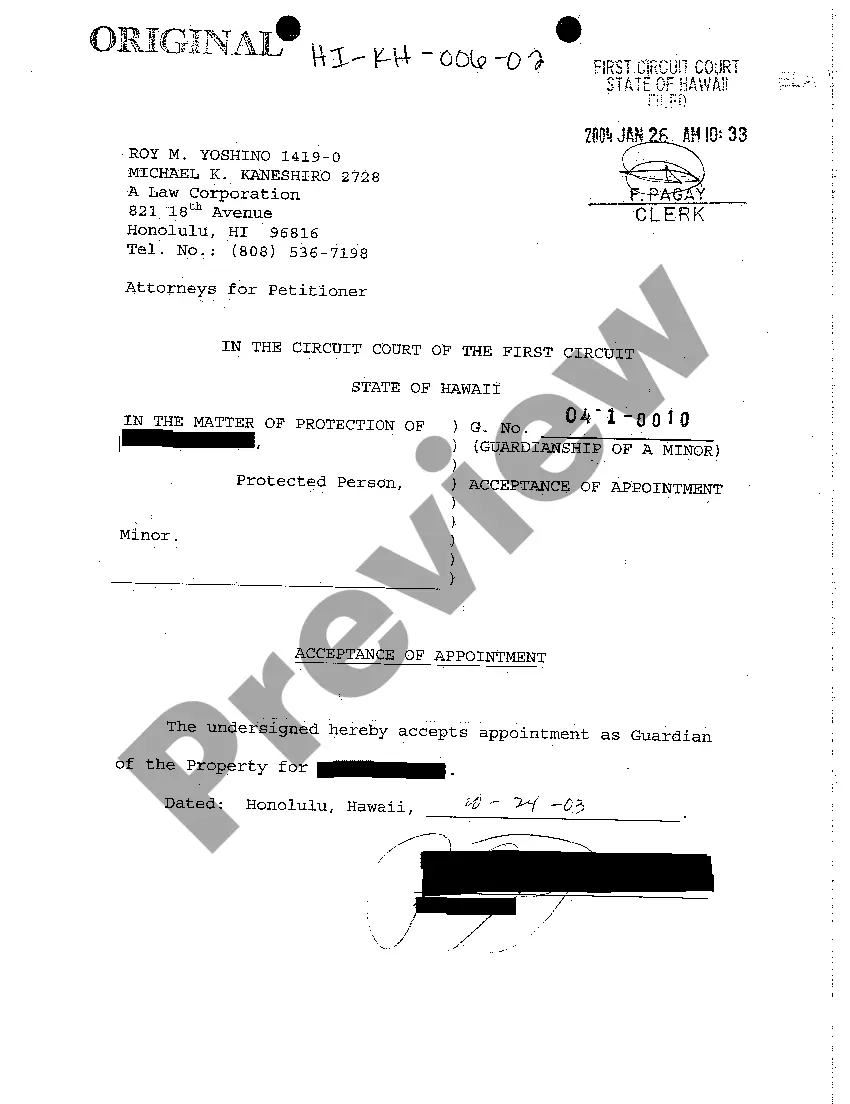
Oregon Acceptance of Service regarding Petitions and Summons
Understanding this form
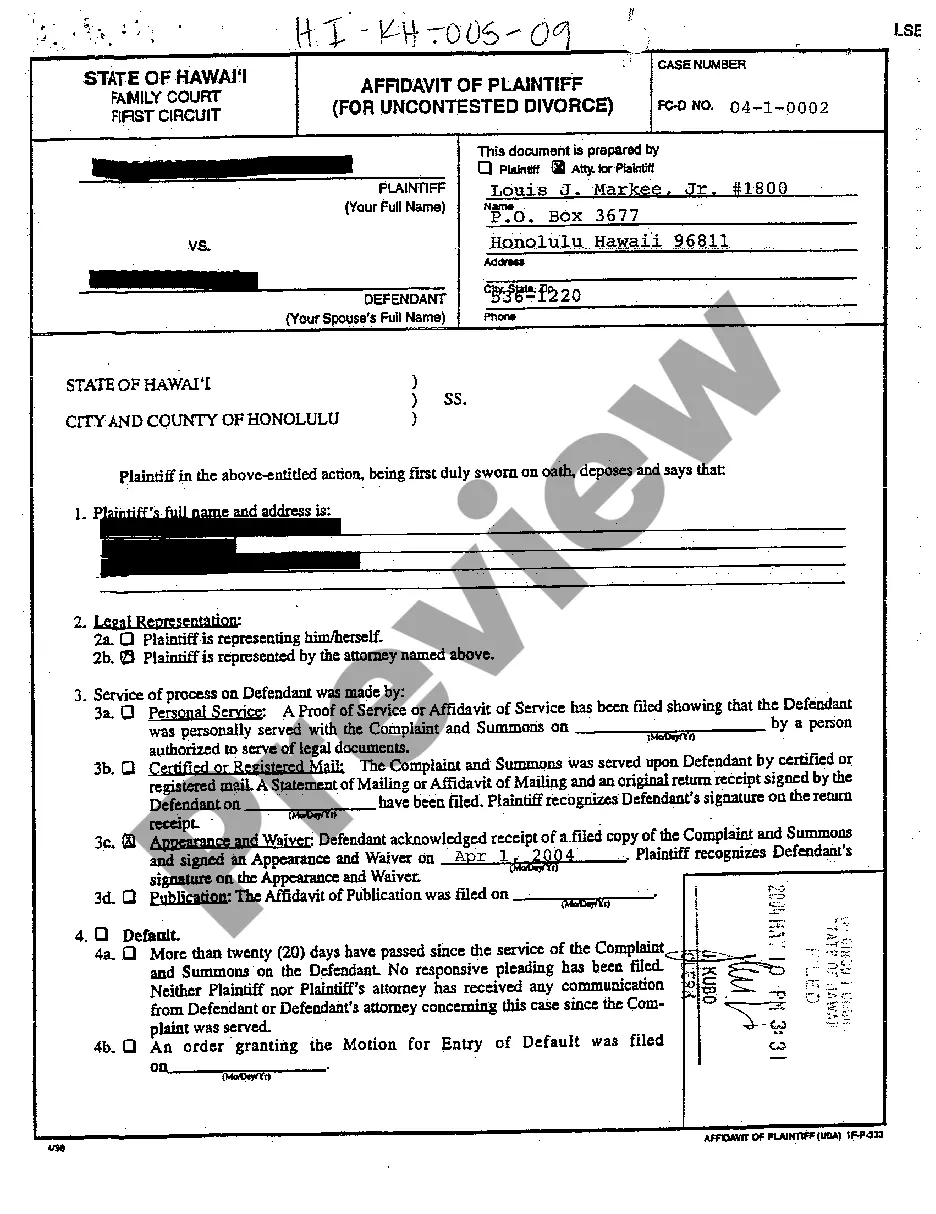
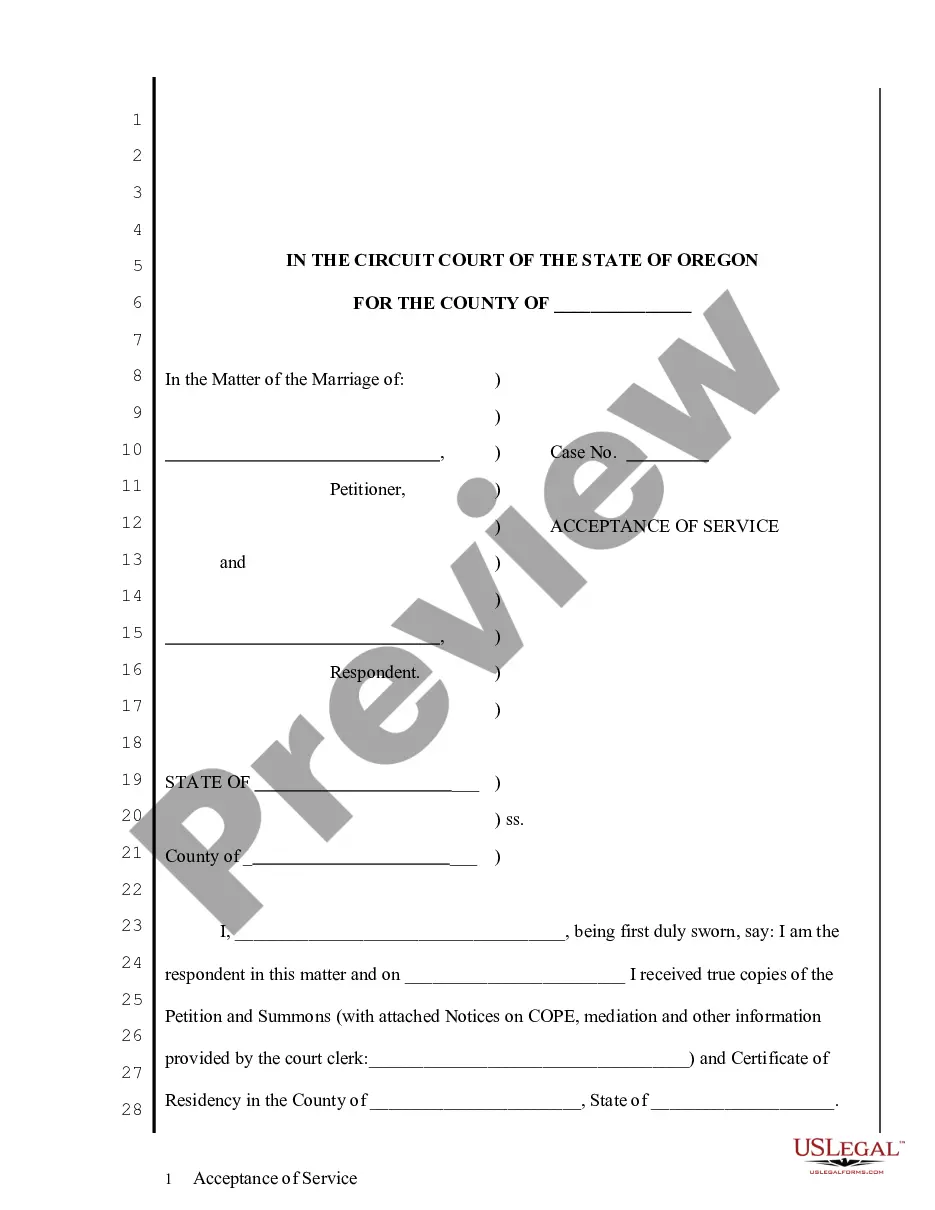
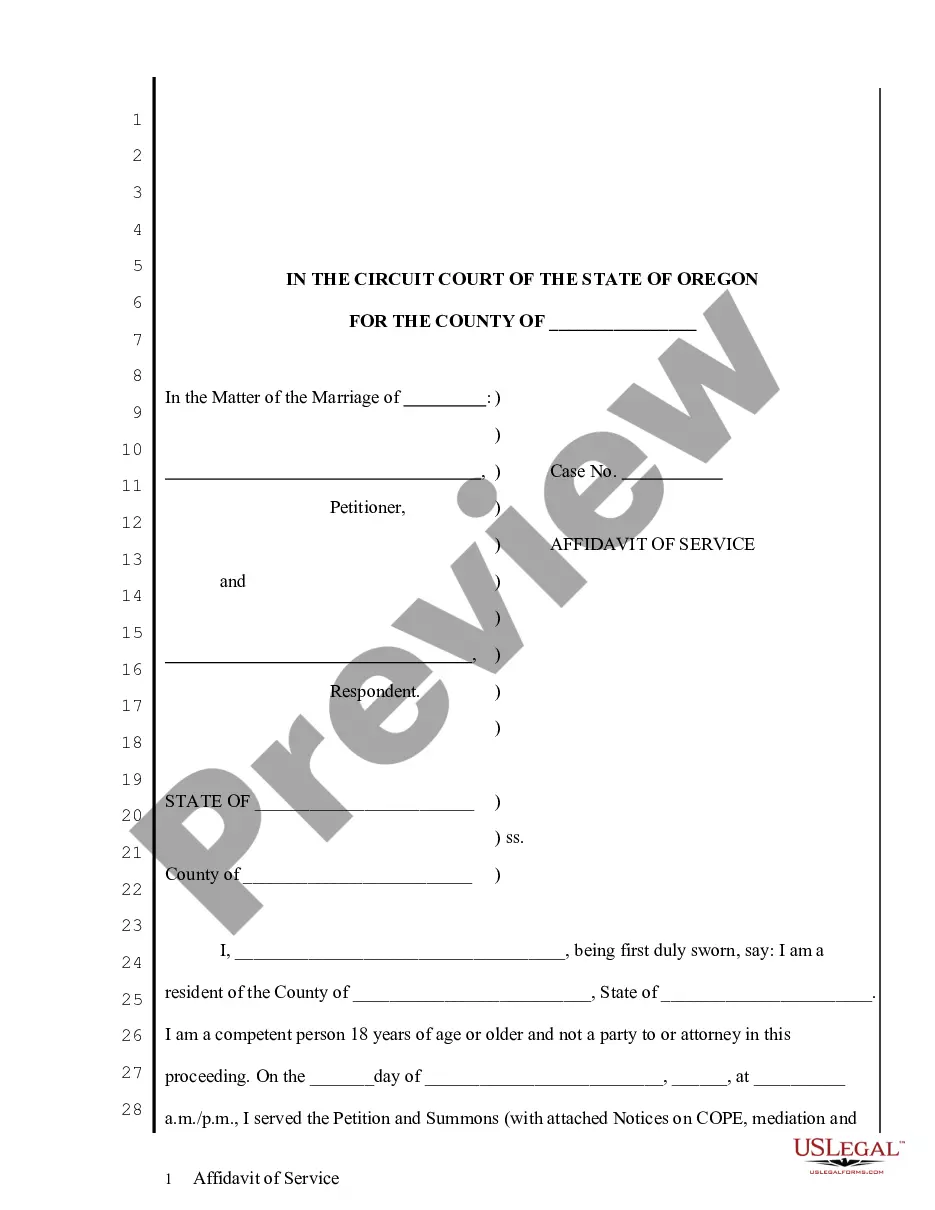
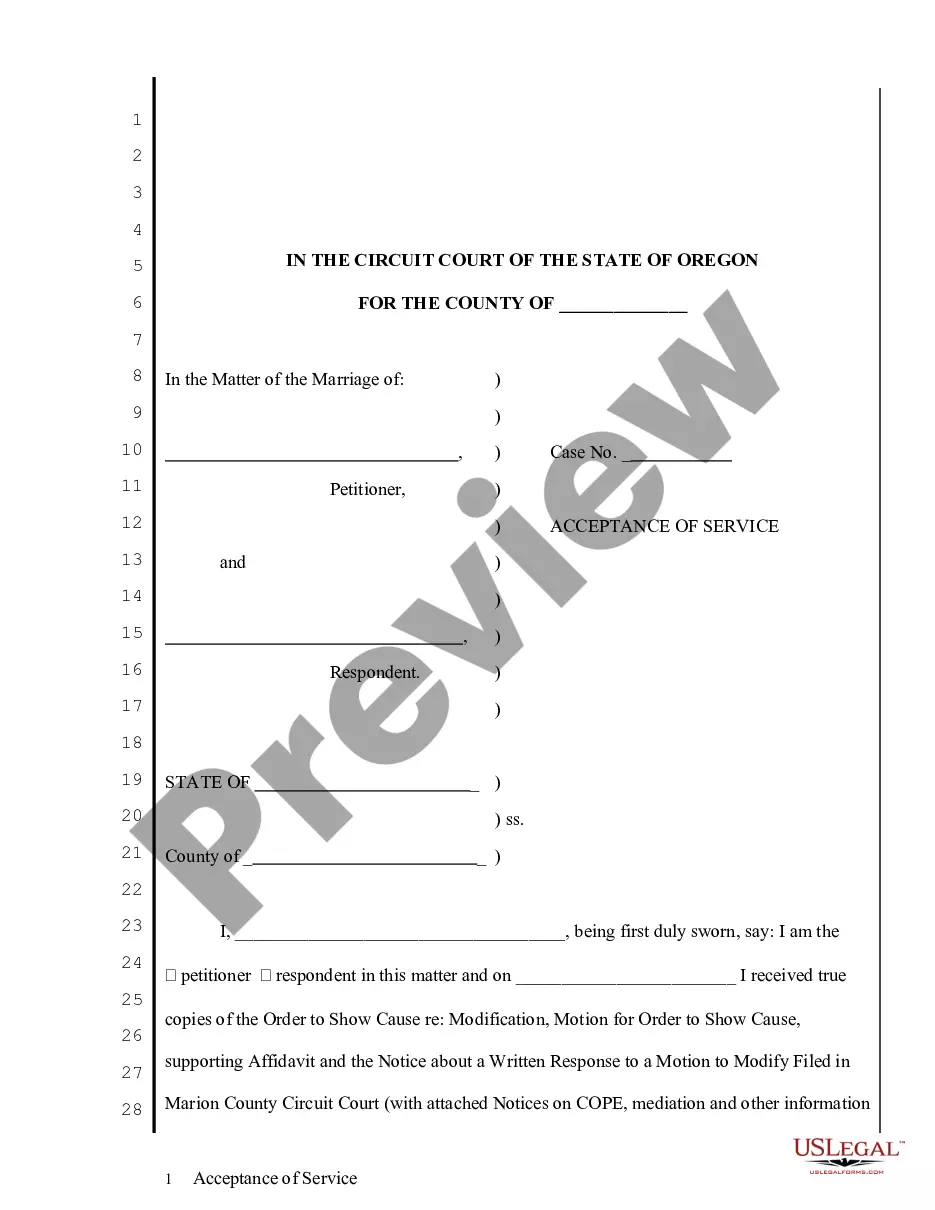
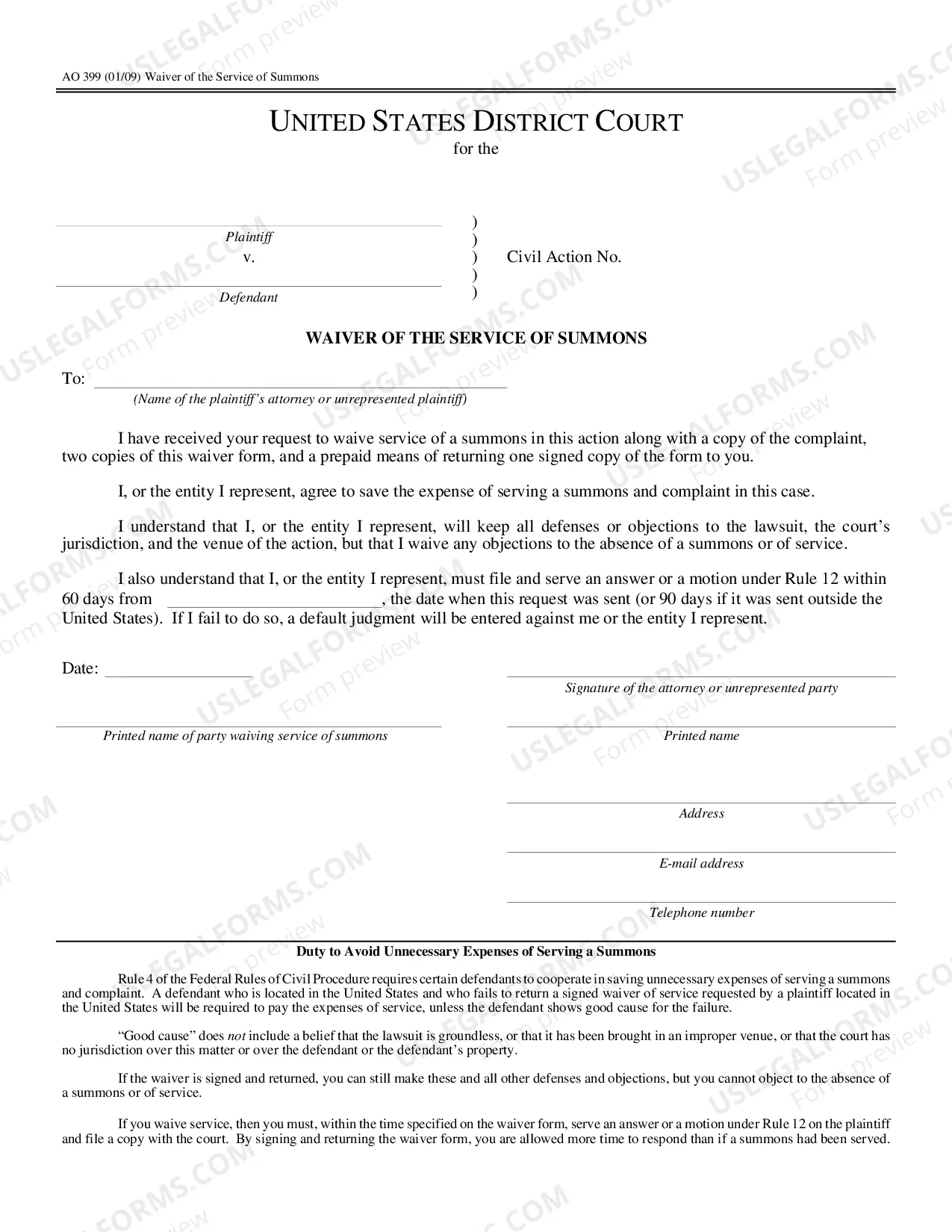
The Acceptance of Service regarding Petitions and Summons is a legal form used in Oregon domestic litigation. This form allows the respondent to acknowledge receipt of legal documents, specifically the petition and summons, filed in a marriage dissolution case. Unlike other forms of response, this form confirms that the respondent has been officially served and is aware of the proceedings against them, thus fulfilling a critical procedural requirement in the legal process.
Key parts of this document
- Identification of the court and parties involved in the case.
- Declaration of receipt of the Petition and Summons, including notices and residence certificate.
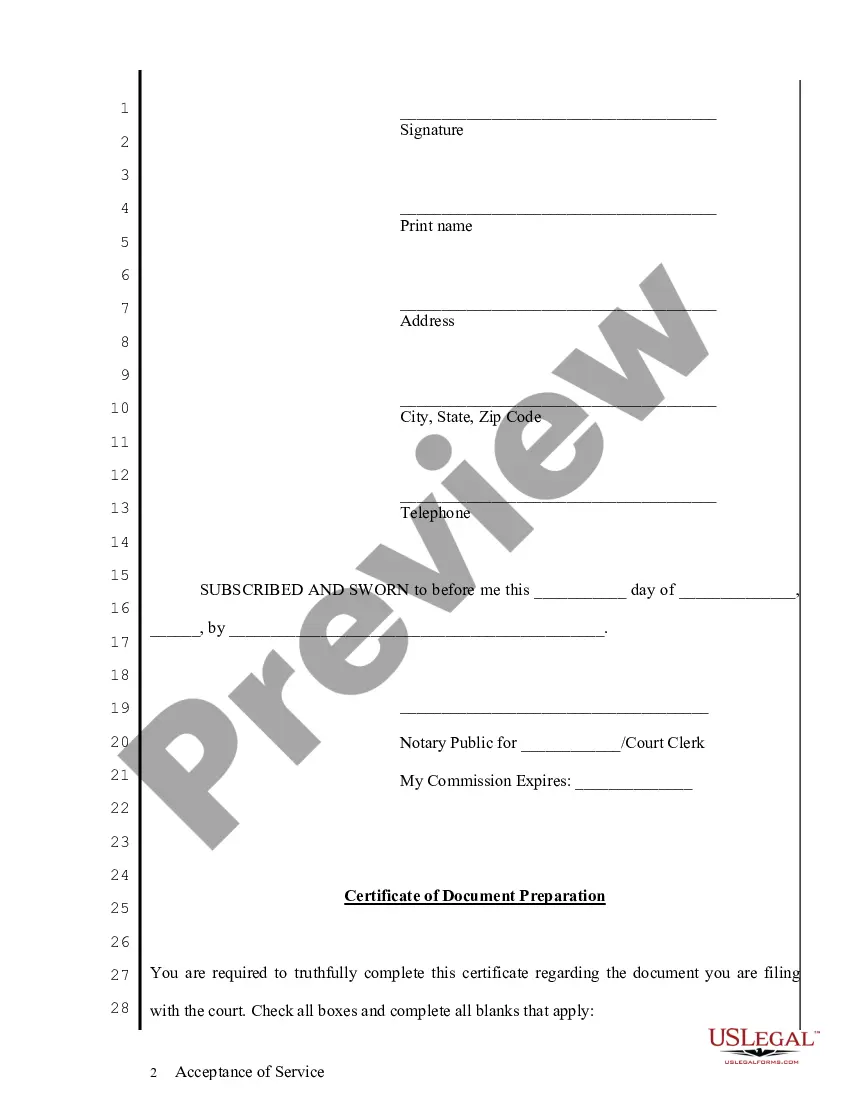
- Signature and printed name of the respondent.
- Contact information of the respondent, including address and telephone number.
- Notarization section for the signature to confirm authenticity.
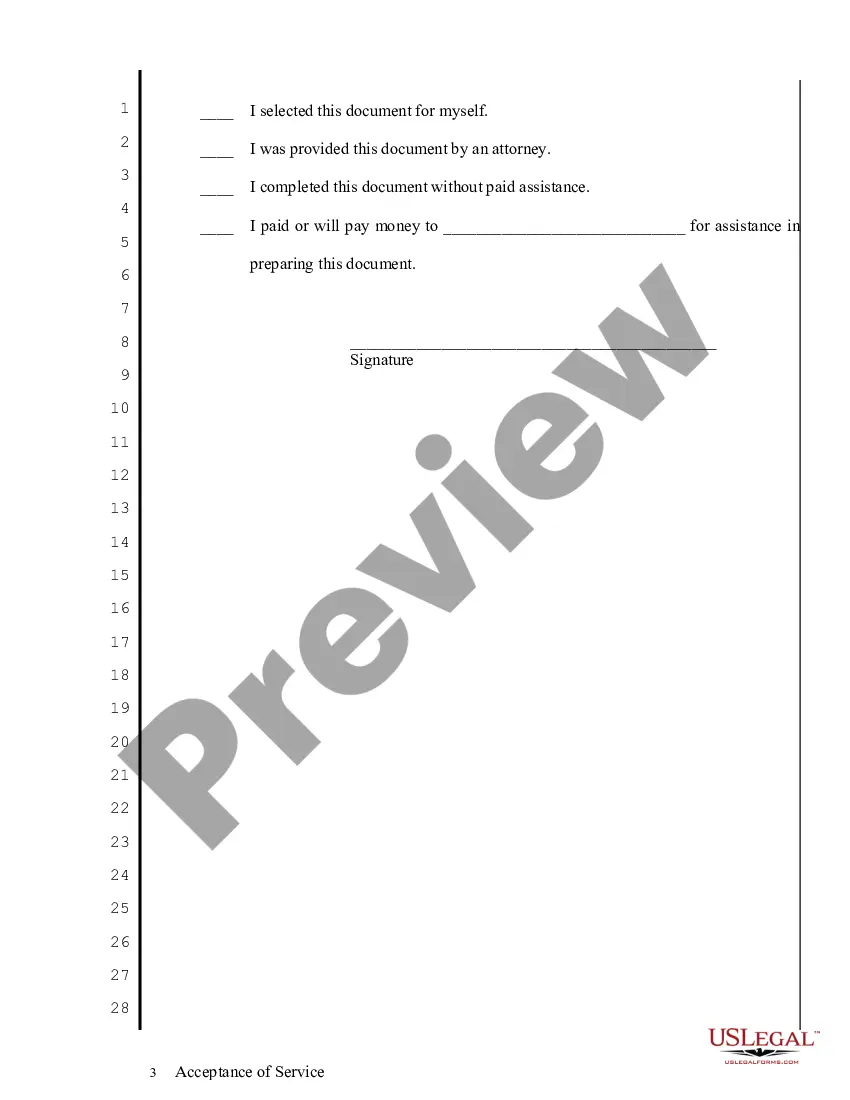
- Certificate of Document Preparation to disclose how the form was completed.
When to use this document
You should use the Acceptance of Service when you, as the respondent, have received the Petition and Summons for a divorce or legal separation. This form is essential to confirm your awareness of the legal actions and provides a means to show the court that you have been properly notified. Additionally, it may be necessary if you wish to expedite the proceedings by acknowledging service rather than contesting it.
Who can use this document
- Individuals who are respondents in domestic litigation cases in Oregon.
- Those who have been served with a Petition and Summons for divorce or legal separation.
- Anyone needing to formally acknowledge receipt of legal documents related to marital dissolution.
Instructions for completing this form
- Identify the Circuit Court, county, and the case number at the top of the form.
- Clearly state your name as the respondent in the designated section.
- Enter the date the Petition and Summons were received.
- Provide your contact information, including your address and telephone number.
- Sign the form in the presence of a notary public or court clerk.
- Complete the Certificate of Document Preparation by indicating how the form was completed.
Does this document require notarization?
This form must be notarized to be legally valid. US Legal Forms provides secure online notarization powered by Notarize, allowing you to complete the process through a verified video call.
Get your form ready online
Our built-in tools help you complete, sign, share, and store your documents in one place.
Make edits, fill in missing information, and update formatting in US Legal Forms—just like you would in MS Word.
Download a copy, print it, send it by email, or mail it via USPS—whatever works best for your next step.
Sign and collect signatures with our SignNow integration. Send to multiple recipients, set reminders, and more. Go Premium to unlock E-Sign.
If this form requires notarization, complete it online through a secure video call—no need to meet a notary in person or wait for an appointment.
We protect your documents and personal data by following strict security and privacy standards.

Make edits, fill in missing information, and update formatting in US Legal Forms—just like you would in MS Word.

Download a copy, print it, send it by email, or mail it via USPS—whatever works best for your next step.

Sign and collect signatures with our SignNow integration. Send to multiple recipients, set reminders, and more. Go Premium to unlock E-Sign.

If this form requires notarization, complete it online through a secure video call—no need to meet a notary in person or wait for an appointment.

We protect your documents and personal data by following strict security and privacy standards.
Common mistakes
- Failing to sign the form or have it notarized where required.
- Incorrectly filling out your contact information.
- Not including the correct date of receipt for the legal documents.
- Providing incomplete information on the Certificate of Document Preparation.
Why complete this form online
- Convenient access to the form from anywhere, allowing you to complete it on your schedule.
- Editability features that enable you to fill in your information easily.
- Guaranteed reliability and accuracy as the form is drafted by licensed attorneys.
Looking for another form?
Form popularity
FAQ
If the other party is willing to accept service, the filing party may simply mail or hand-deliver a copy of the Summons, petition/complaint, and other documents to the Defendant / Respondent, along with a form called an Acceptance of Service. In family law matters, the Acceptance of Service form is available on the
Read the summons and make sure you know the date you must answer by. Read the complaint carefully. Write your answer. Sign and date the answer. Make copies for the plaintiff and yourself. Mail a copy to the plaintiff. File your answer with the court by the date on the summons.
Tell the server to: Give the papers to a responsible adult where the Defendant lives, or to someone in charge where the Defendant works. Say, These are court papers. Then, mail (first-class) a copy of the papers to the Defendant at the same address where s/he left the papers.
Review the Paperwork. The first thing you need to do when you are served is find out why. Check for a Deadline and Court Date. Typically, you will have a certain amount of time to reply after you have been served. Figure Out What Kind of Notice You've Been Give. Obey the Order. Call an Attorney.
Provide the name of the court at the top of the Answer. You can find the information on the summons. List the name of the plaintiff on the left side. Write the case number on the right side of the Answer. Address the Judge and discuss your side of the case. Ask the judge to dismiss the case.
In the majority of states, you can serve papers by sending them to the defendant via certified mail with a return receipt requested. In some states, service by certified (or registered) mail is one among several ways you may serve papers.
Provide the name of the court at the top of the Answer. You can find the information on the summons. List the name of the plaintiff on the left side. Write the case number on the right side of the Answer. Address the Judge and discuss your side of the case. Ask the judge to dismiss the case.
You can file an answer or a general denial. Filing an answer. You can file a motion In certain situations, you can respond to the lawsuit by filing a motion (a request) that usually tells the court that the plaintiff made a mistake in the lawsuit. Talk to a lawyer!
You can file an answer or a general denial. Filing an answer. You can file a motion In certain situations, you can respond to the lawsuit by filing a motion (a request) that usually tells the court that the plaintiff made a mistake in the lawsuit. Talk to a lawyer!