Oregon Certificate of Residency
What this document covers
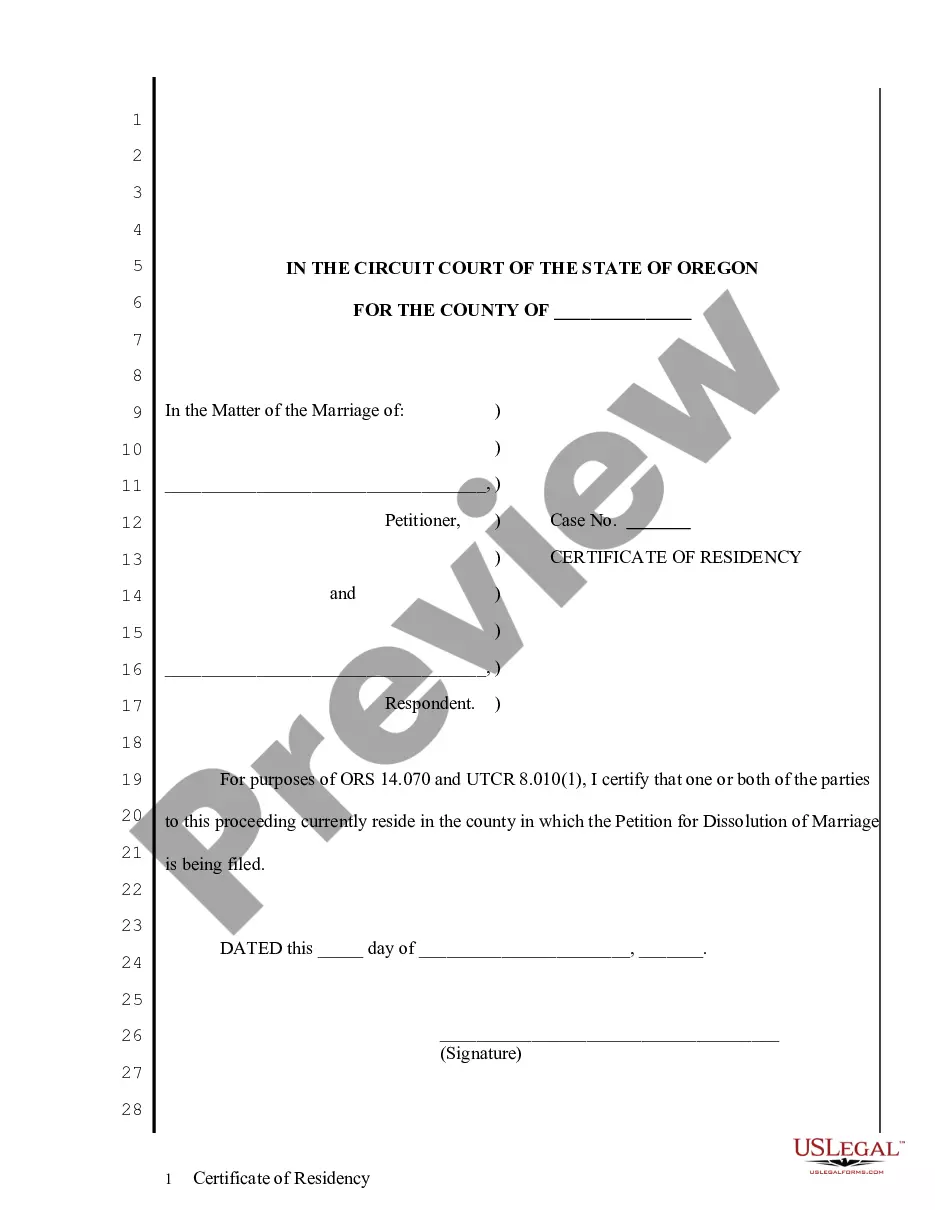
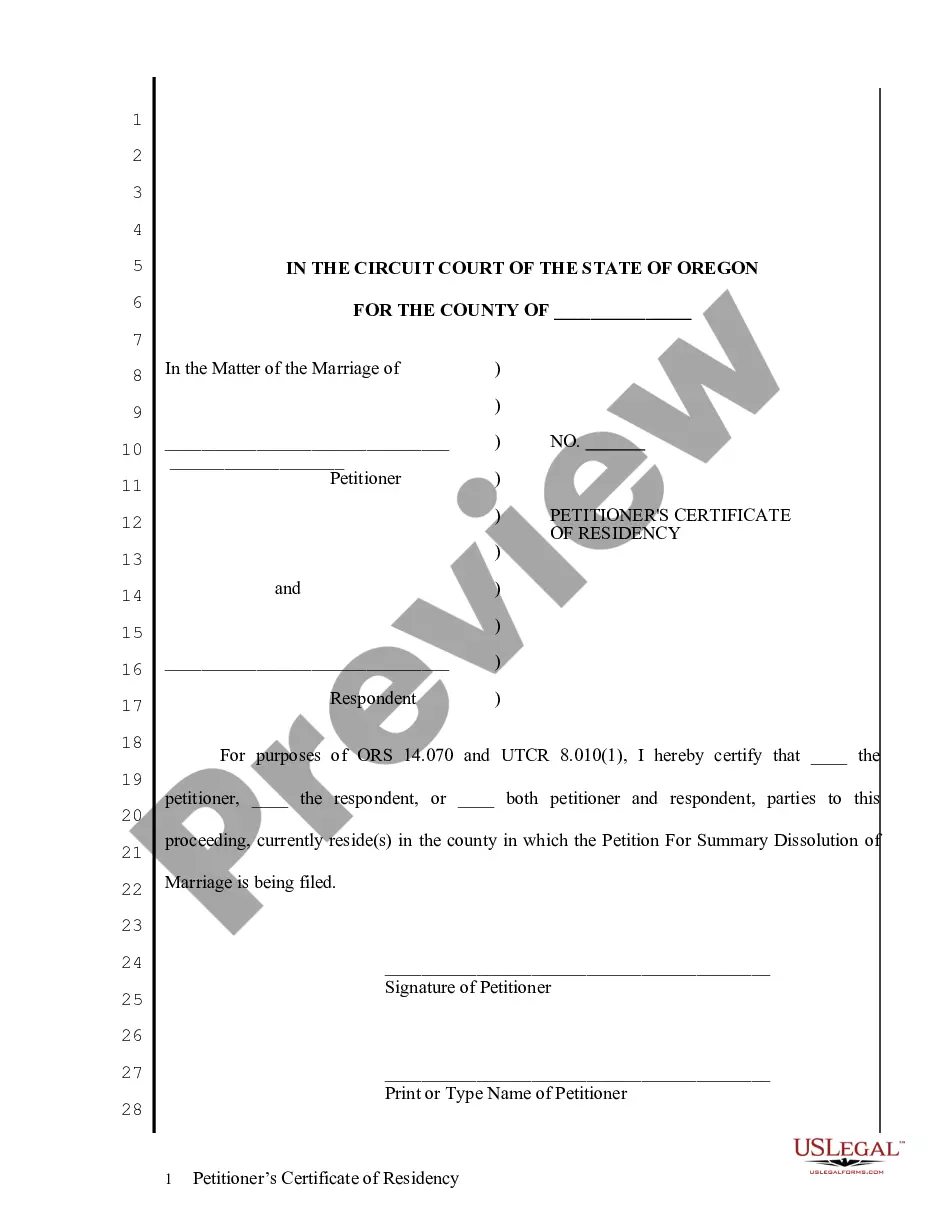
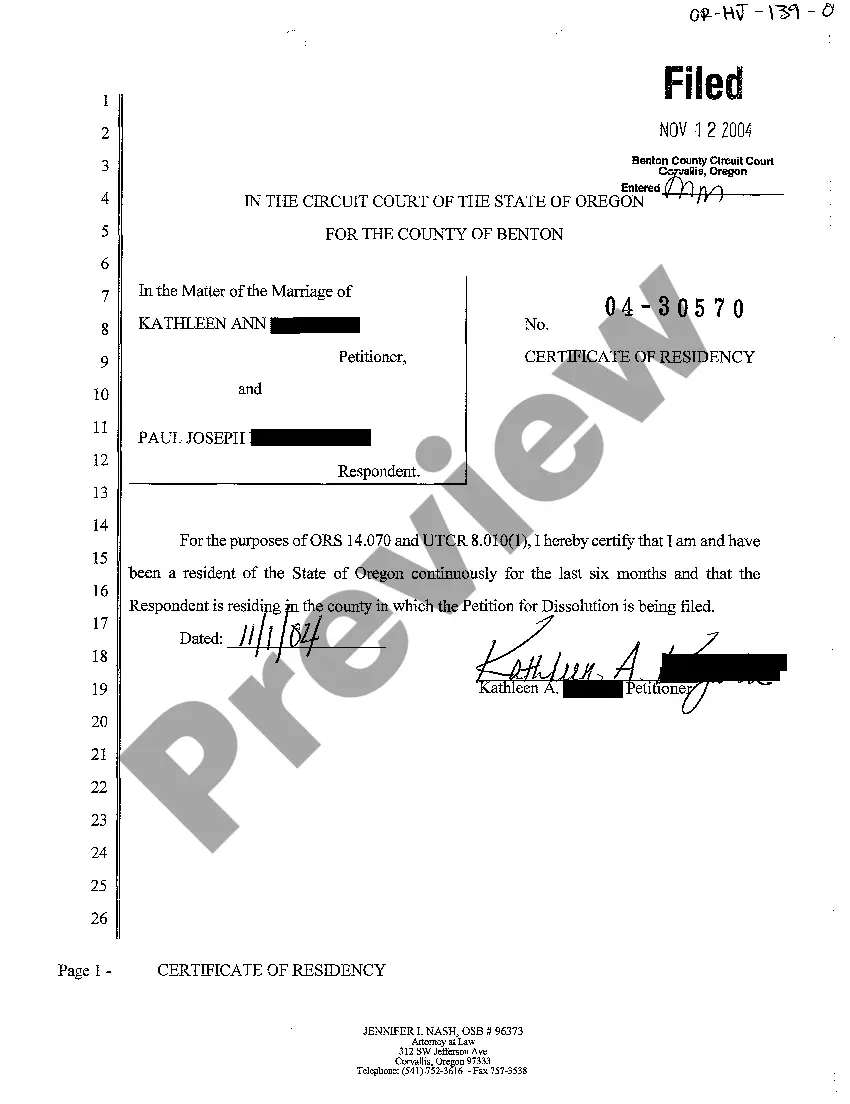
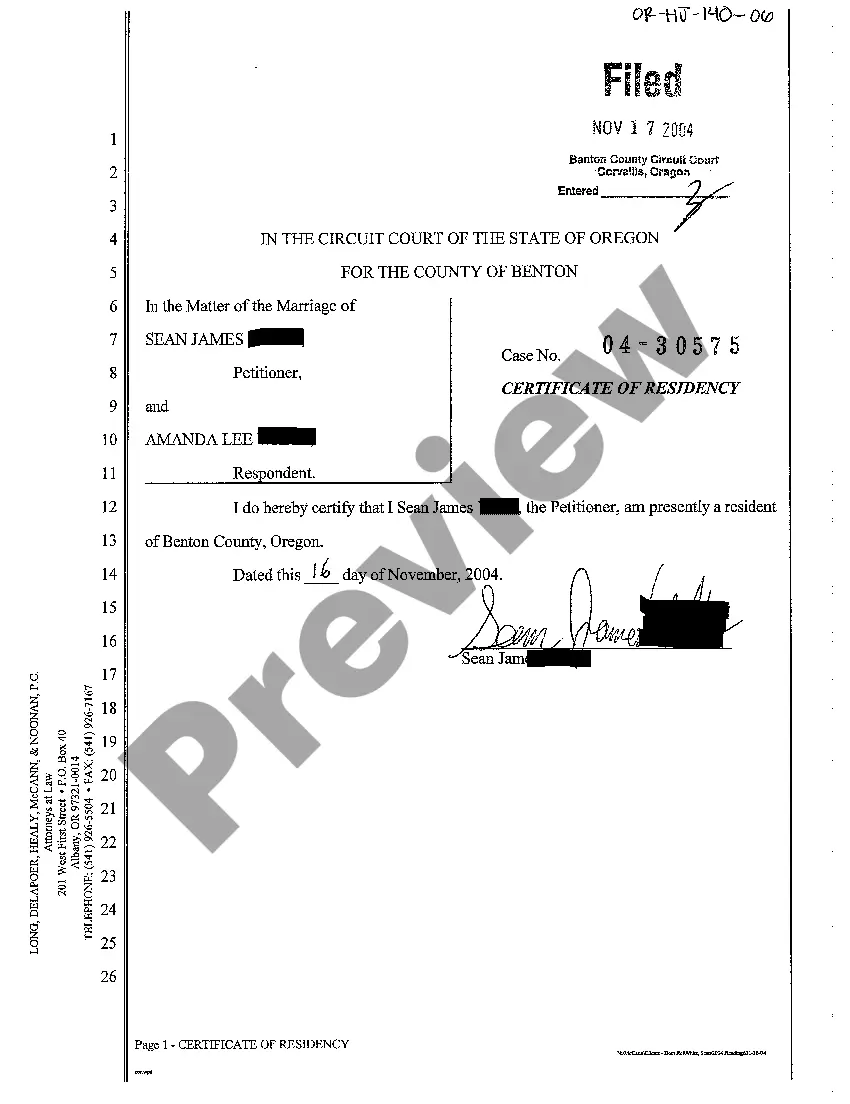
The Certificate of Residency is a legal document used in domestic litigation within Oregon. It certifies that one or both parties involved in a marriage dissolution case reside in the county where the petition is filed. This form is crucial to confirm jurisdiction and differentiate it from other forms related to divorce proceedings.
What’s included in this form
- Header indicating the Circuit Court of Oregon and the relevant county.
- Parties involved: Names of the petitioner and the respondent.
- Certification statement confirming residency as per Oregon law.
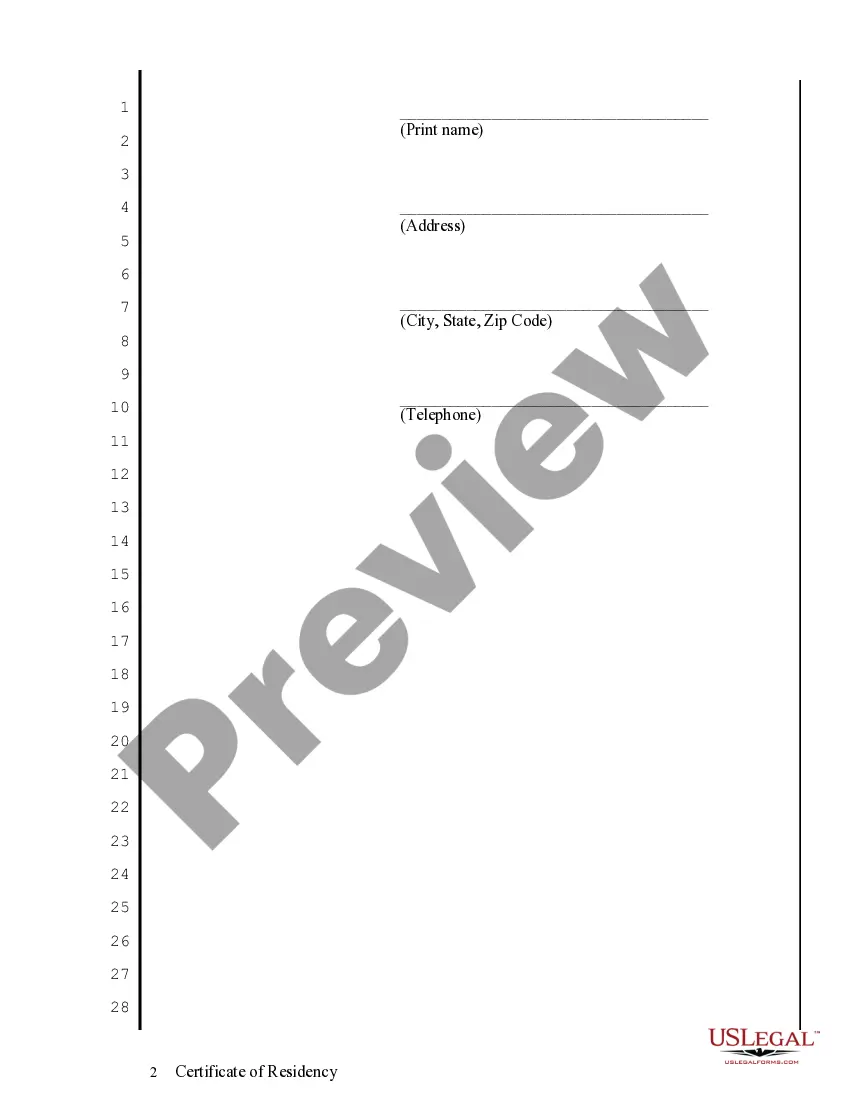
- Signature line for the certifying party, including printed name, address, and contact information.
- Date of certification.

Common use cases
This form should be used when filing a Petition for Dissolution of Marriage in Oregon. It is necessary to establish that at least one of the parties resides in the county of filing, which is a requirement for the court to have jurisdiction over the case.
Who needs this form
- Individuals filing for divorce in Oregon.
- Either party involved in a marriage dissolution proceeding.
- Those representing themselves in domestic litigation without an attorney.
How to complete this form
- Identify the relevant county in which the court case is filed.
- Fill in the names of both the petitioner and respondent.
- Sign the form to certify residency, making sure the signature is dated.
- Provide your printed name, complete address, and telephone number as the certifying party.
Is notarization required?
Notarization is generally not required for this form. However, certain states or situations might demand it. You can complete notarization online through US Legal Forms, powered by Notarize, using a verified video call available anytime.
Get your form ready online
Our built-in tools help you complete, sign, share, and store your documents in one place.
Make edits, fill in missing information, and update formatting in US Legal Forms—just like you would in MS Word.
Download a copy, print it, send it by email, or mail it via USPS—whatever works best for your next step.
Sign and collect signatures with our SignNow integration. Send to multiple recipients, set reminders, and more. Go Premium to unlock E-Sign.
If this form requires notarization, complete it online through a secure video call—no need to meet a notary in person or wait for an appointment.
We protect your documents and personal data by following strict security and privacy standards.

Make edits, fill in missing information, and update formatting in US Legal Forms—just like you would in MS Word.

Download a copy, print it, send it by email, or mail it via USPS—whatever works best for your next step.

Sign and collect signatures with our SignNow integration. Send to multiple recipients, set reminders, and more. Go Premium to unlock E-Sign.

If this form requires notarization, complete it online through a secure video call—no need to meet a notary in person or wait for an appointment.

We protect your documents and personal data by following strict security and privacy standards.
Mistakes to watch out for
- Not providing the correct county of residency.
- Failing to date the form before submission.
- Leaving the signature section uncompleted.
- Using a different version of the form not compliant with Oregon law.
Benefits of completing this form online
- Instant access to a downloadable template for convenience.
- Edit the form easily to include specific information required.
- Ensure compliance with current Oregon legal standards.
Main things to remember
- The Certificate of Residency is essential for establishing jurisdiction in Oregon divorce proceedings.
- It must include accurate residency information for the involved parties.
- Completing the form correctly can help avoid delays in the divorce process.
Looking for another form?

Form popularity
FAQ
Generally, you need to establish a physical presence in the state, an intent to stay there and financial independence. Then you need to prove those things to your college or university. Physical presence: Most states require you to live in the state for at least a full year before establishing residency.
Find a new place to live in the new state. Establish domicile. Change your mailing address and forward your mail. Change your address with utility providers. Change IRS address. Register to vote. Get a new driver's license. File taxes in your new state.
Government-issued photo ID.Residential lease/property deed.Utility bill.Letter from the government/court (marriage license, divorce, government aid)Bank statement.Driver's license/learner's permit.Car registration.Notarized affidavit of residency.
Typical factors states use to determine residency. Often, a major determinant of an individual's status as a resident for income tax purposes is whether he or she is domiciled or maintains an abode in the state and are present" in the state for 183 days or more (one-half of the tax year).
By statute, an individual is a resident of Oregon under two scenarios. A. An individual who is domiciled in Oregon, unless he a) does not have a permanent place of abode in Oregon; b) maintains a permanent place of abode in a place other than Oregon, and c) spends less than 31 days of a taxable year in Oregon.
To qualify as an Oregon resident (for tuition purposes), one must live in Oregon for 12 consecutive months while taking eight credits or fewer per term while demonstrating that they are in the state for a primary purpose other than education (such as working, volunteering, or other purposes).
If you reside in Oregon, and need to provide proof that you are a resident of or domiciled in Oregon, a true copy of your Oregon permanent or part-year income tax return filed with the Oregon Department of Revenue for the previous tax year is acceptable proof with this form.
An individual can at any one time have but one domicile. If an individual has acquired a domicile at one place (i.e. California), he retains that domicile until he acquires another elsewhere.