Oregon Stipulated General Judgment of Dissolution of Marriage and Money Award
What is this form?
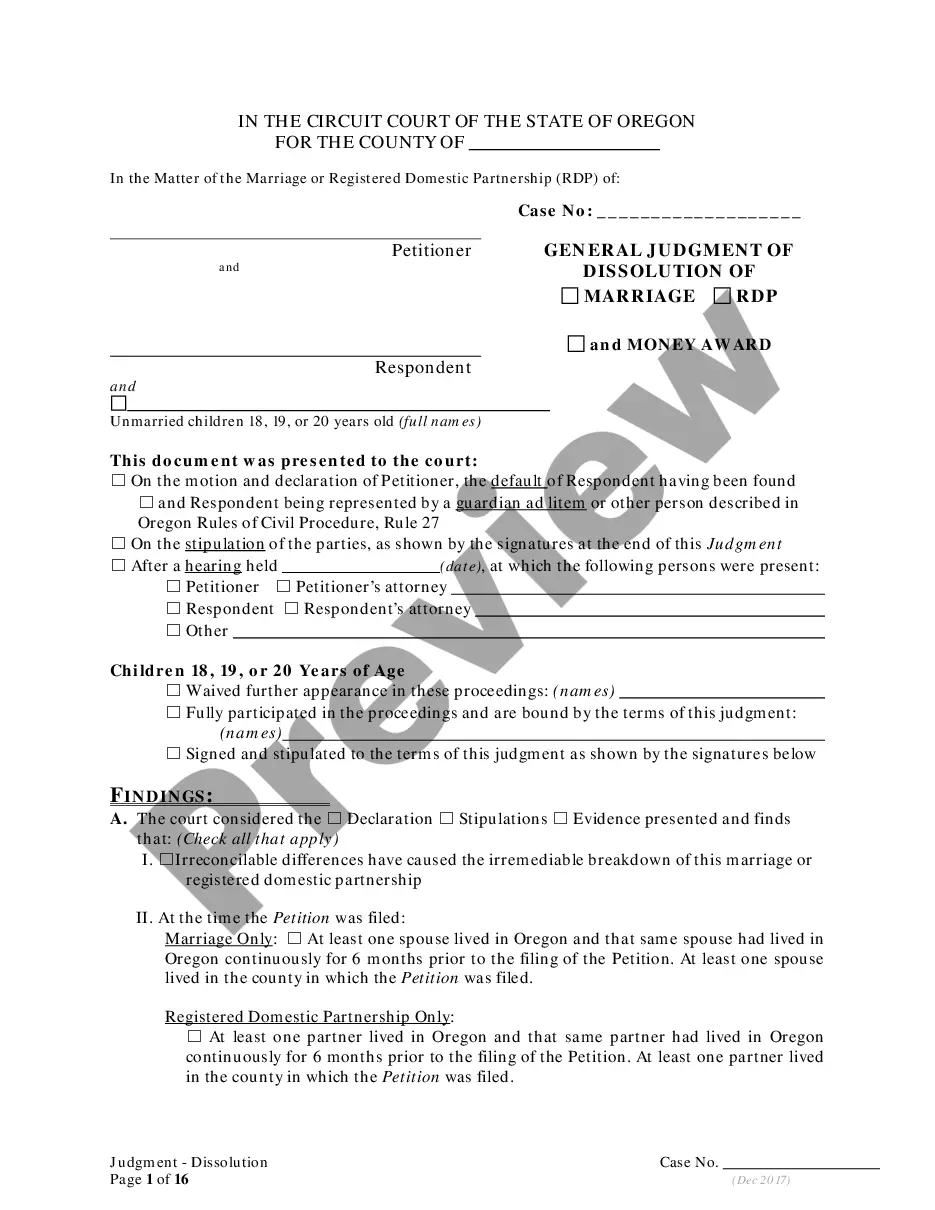
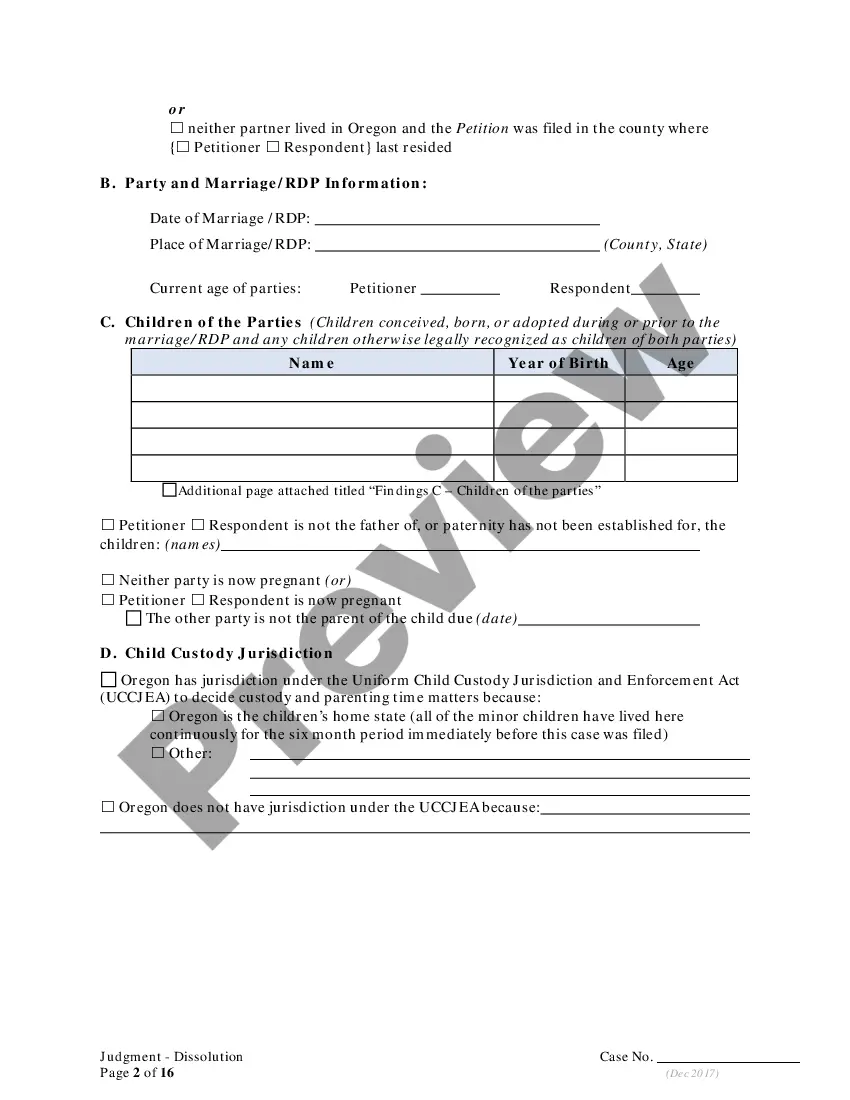
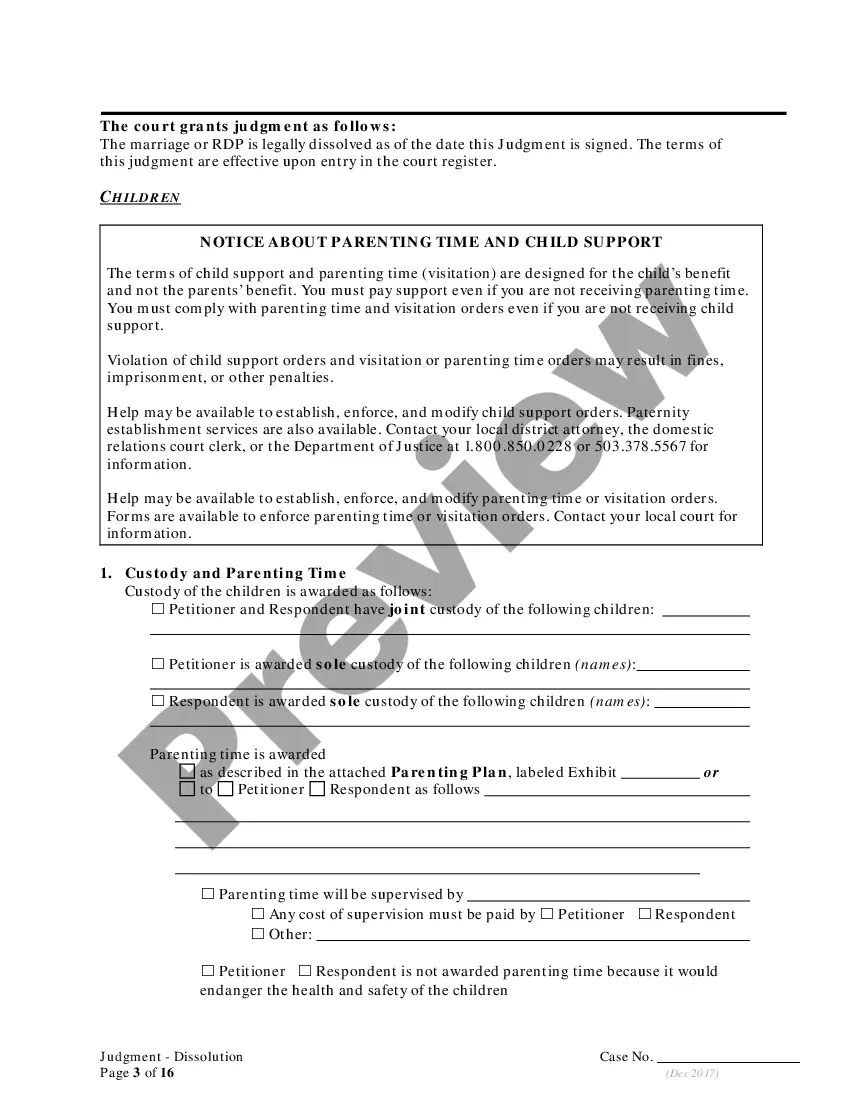
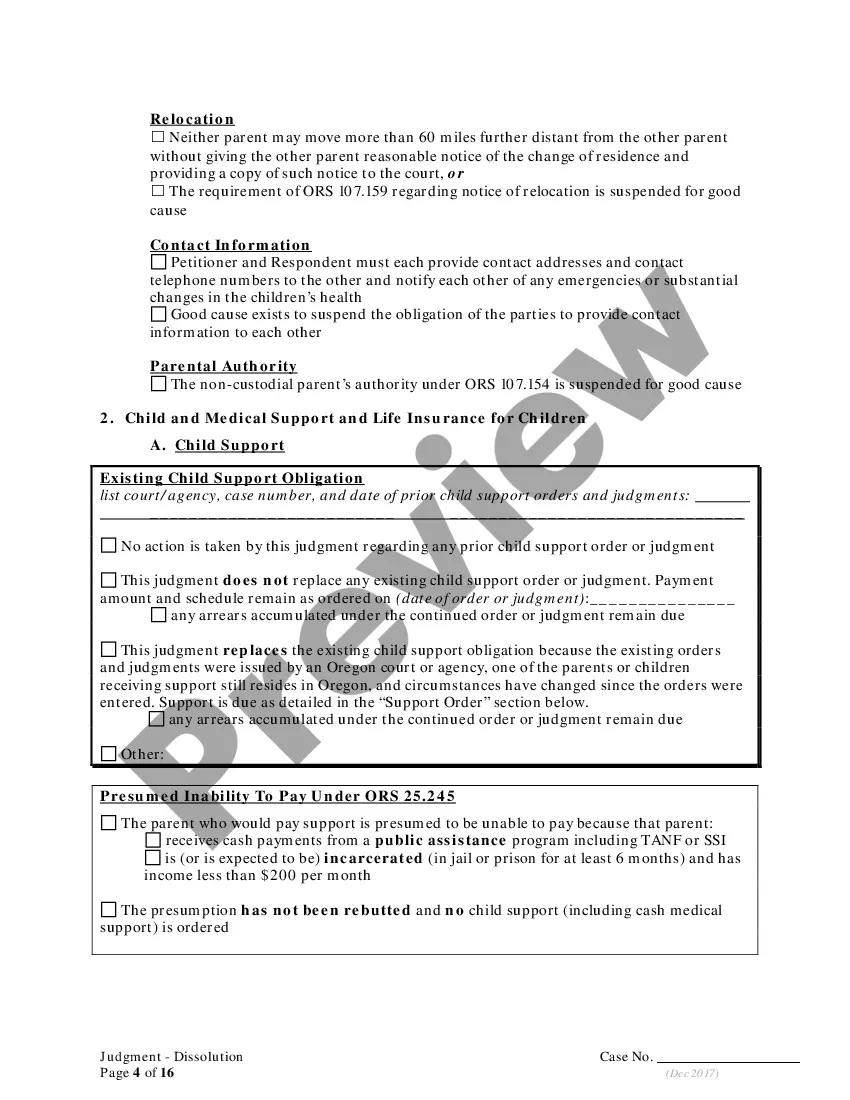
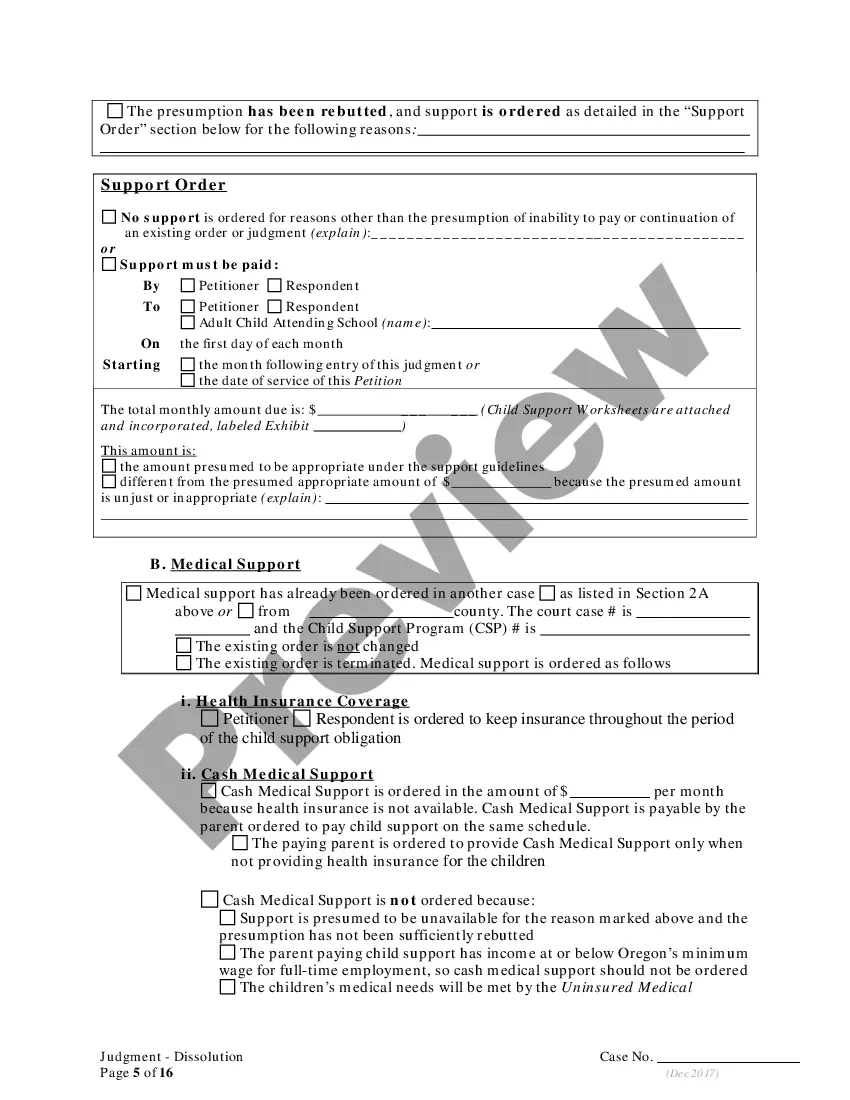
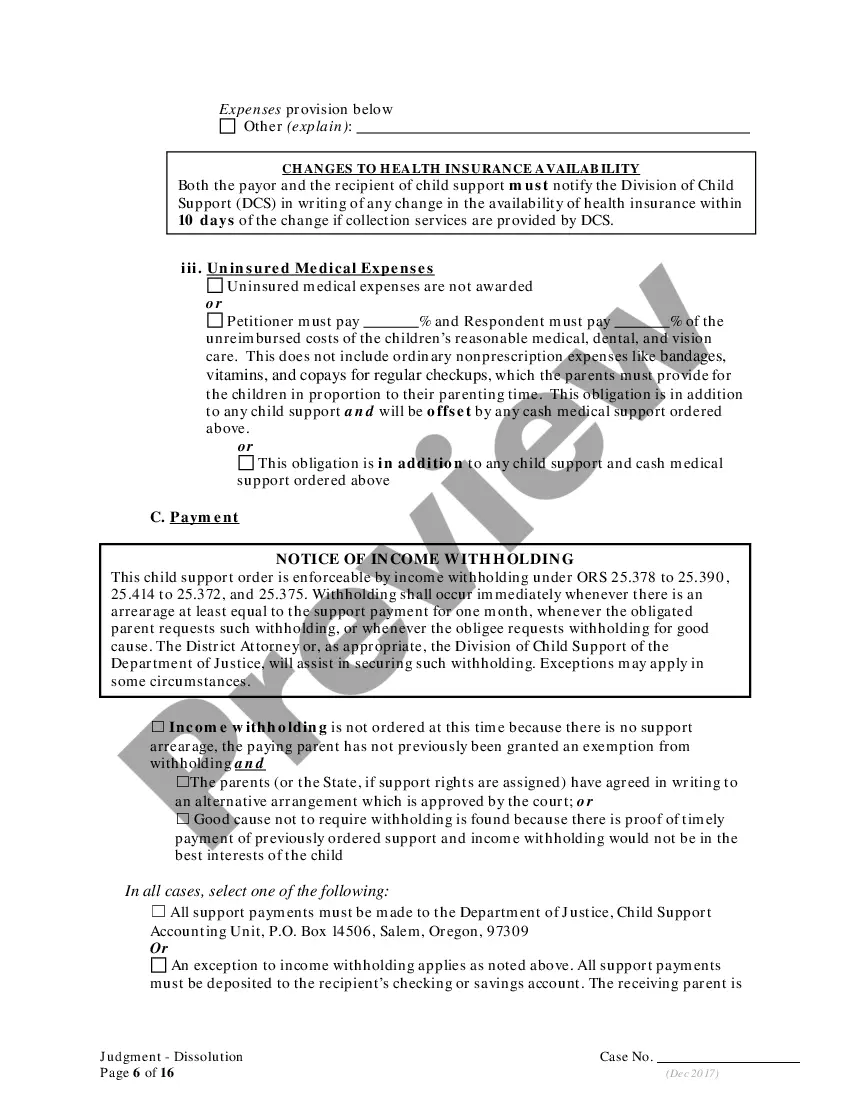
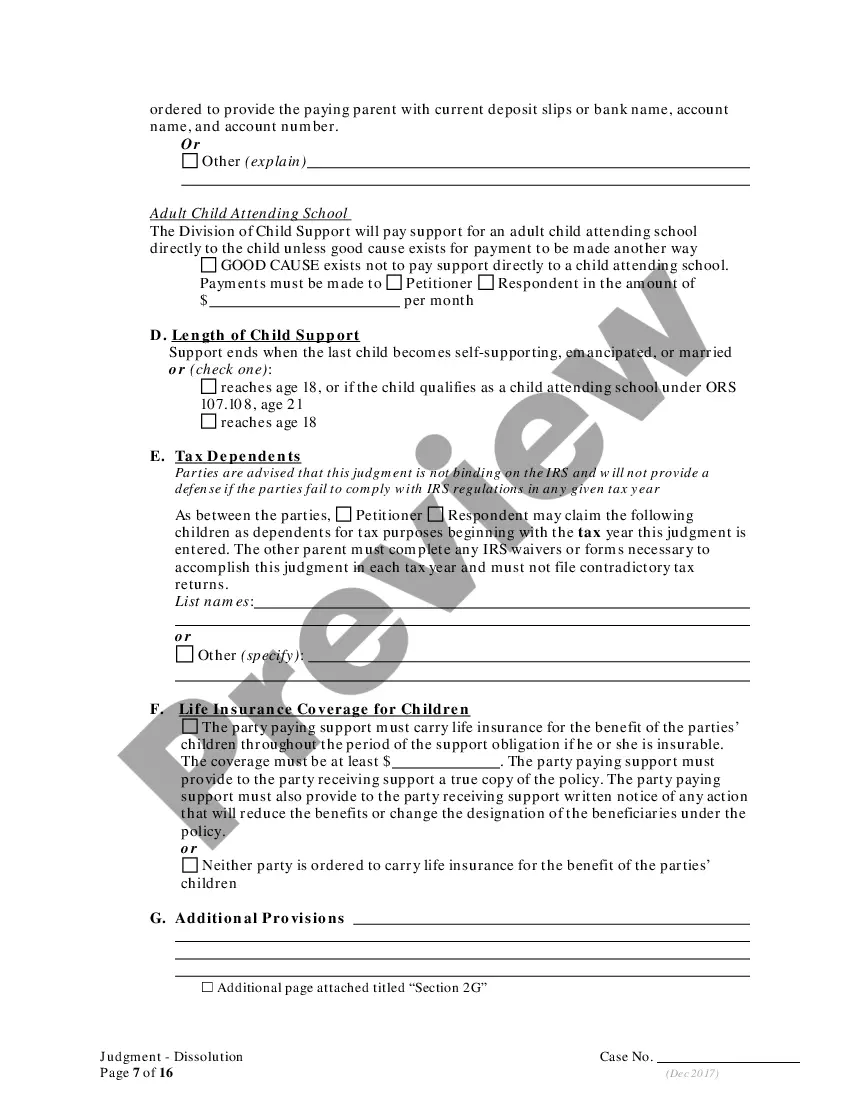
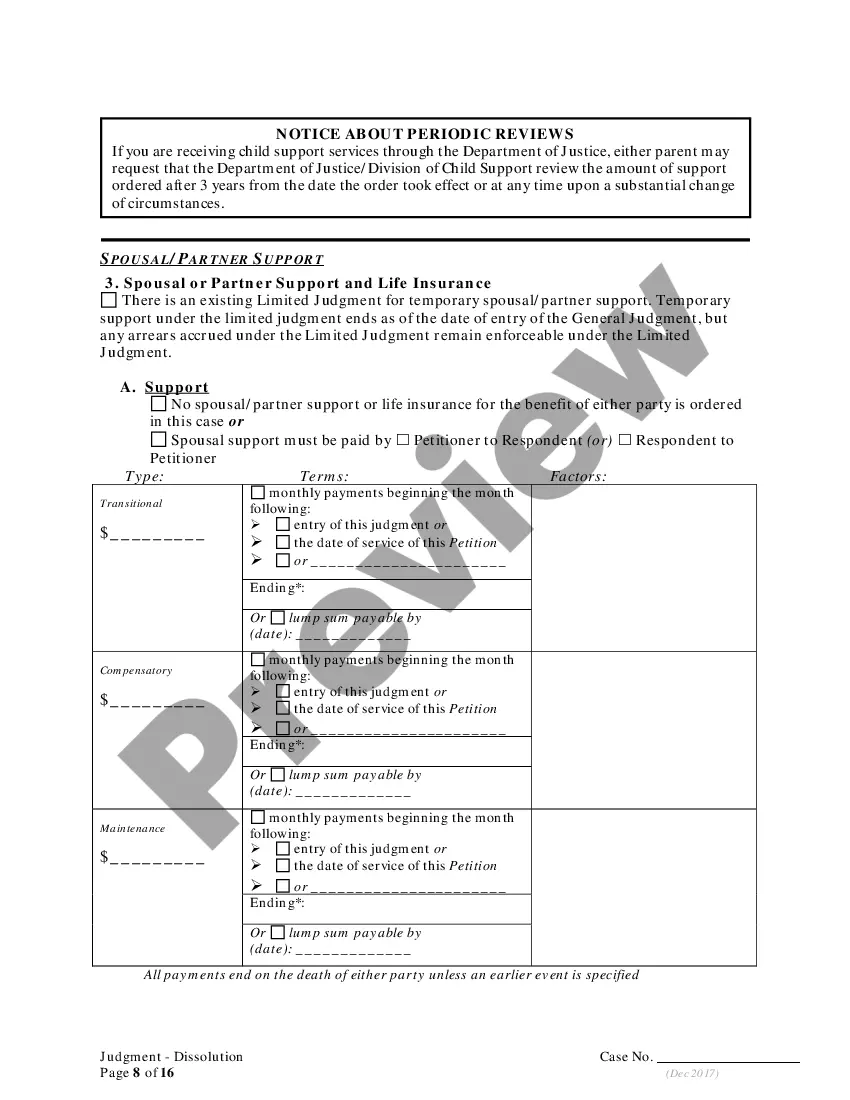
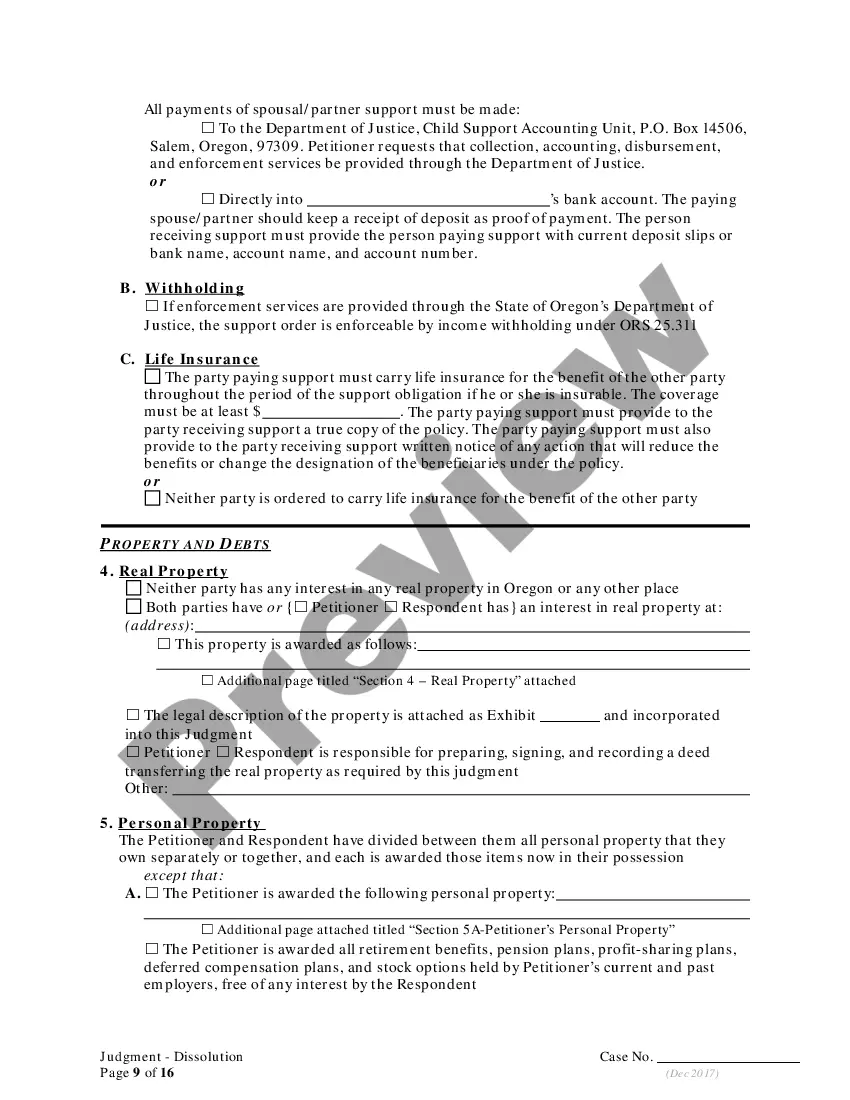
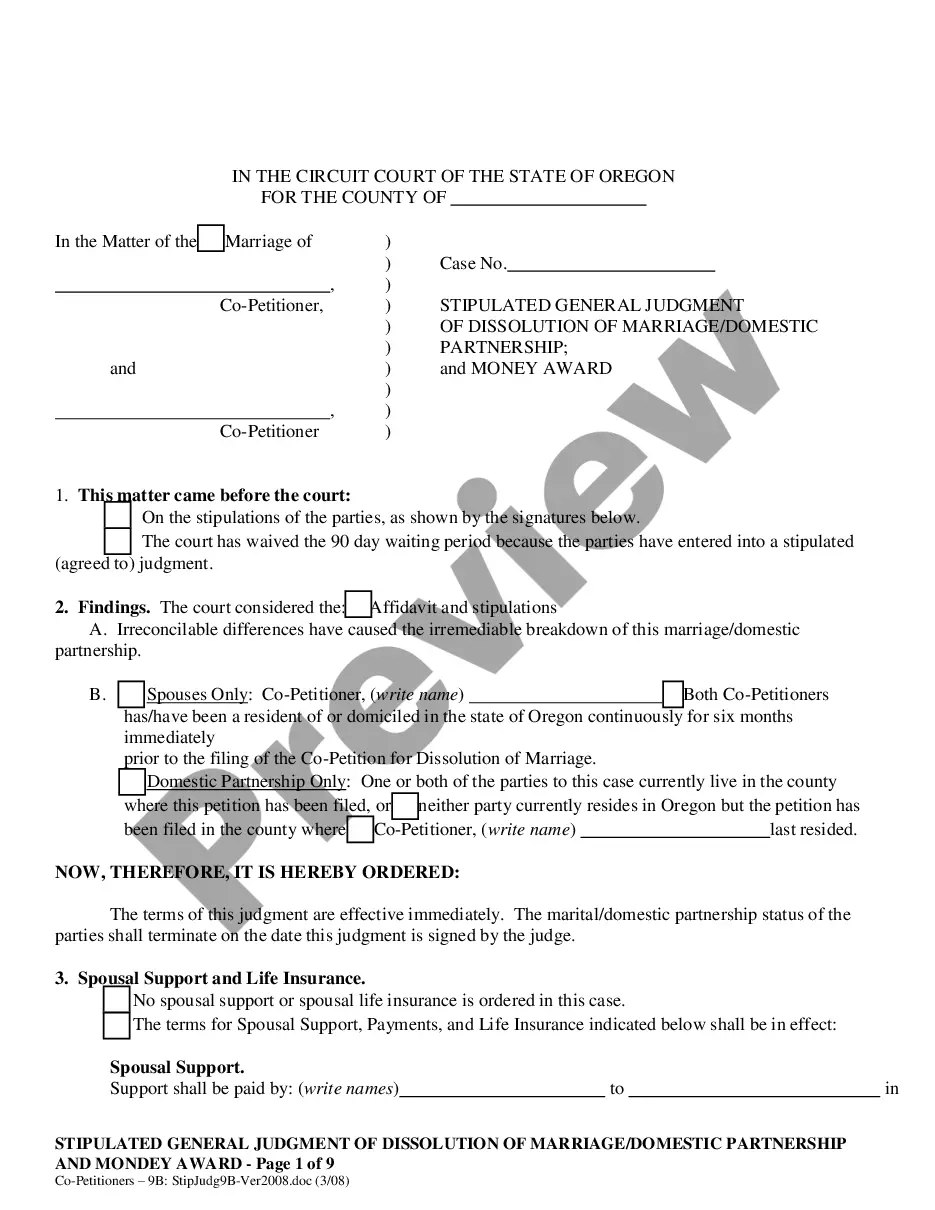
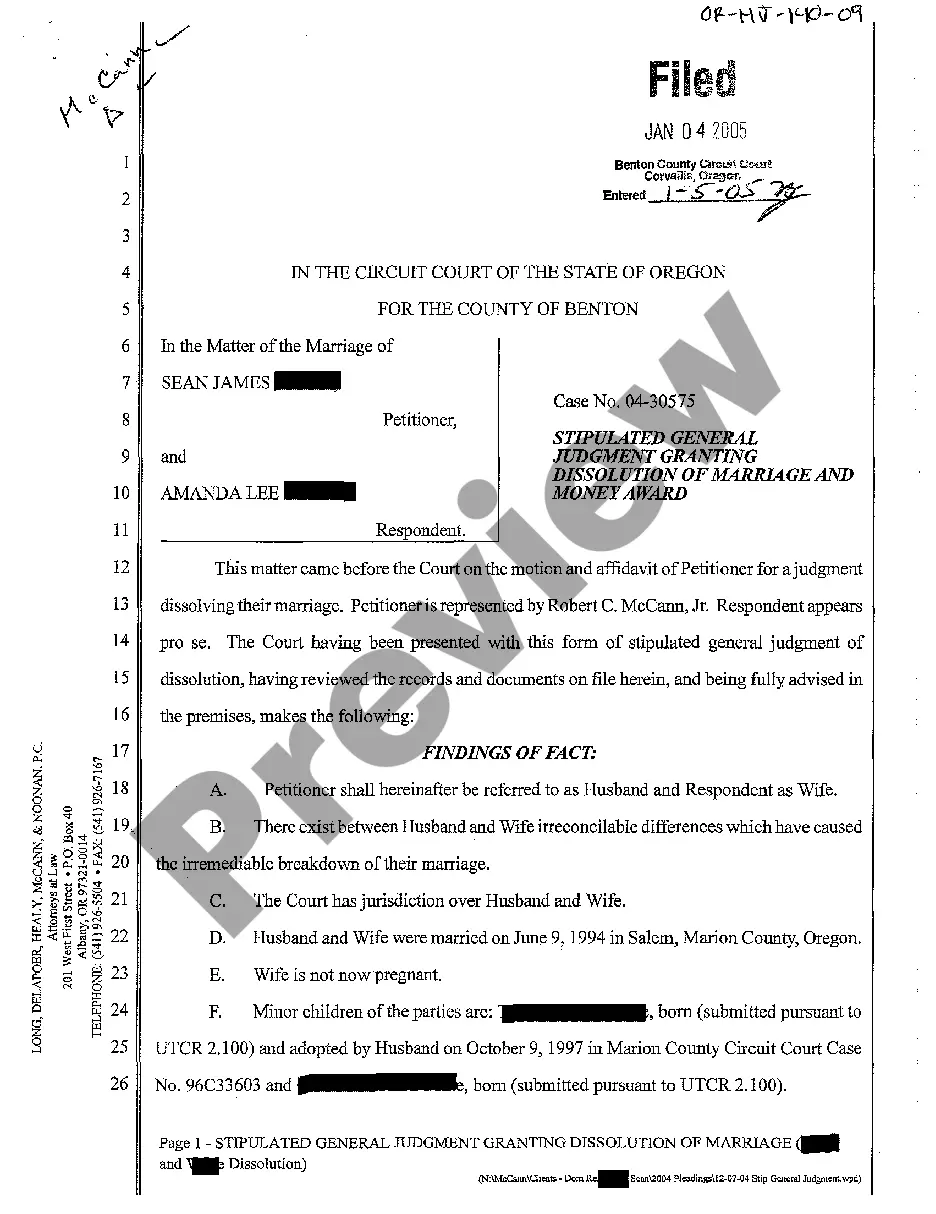
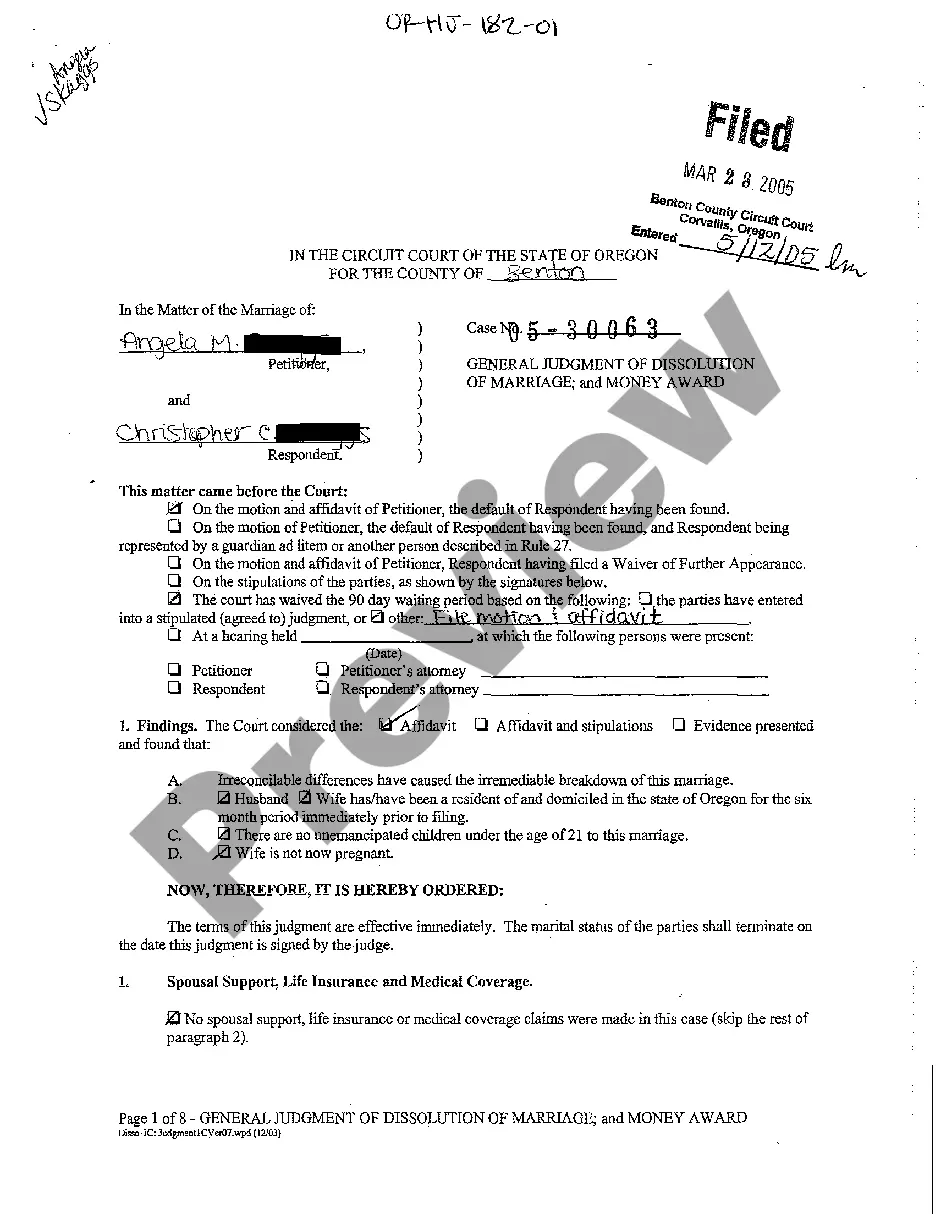
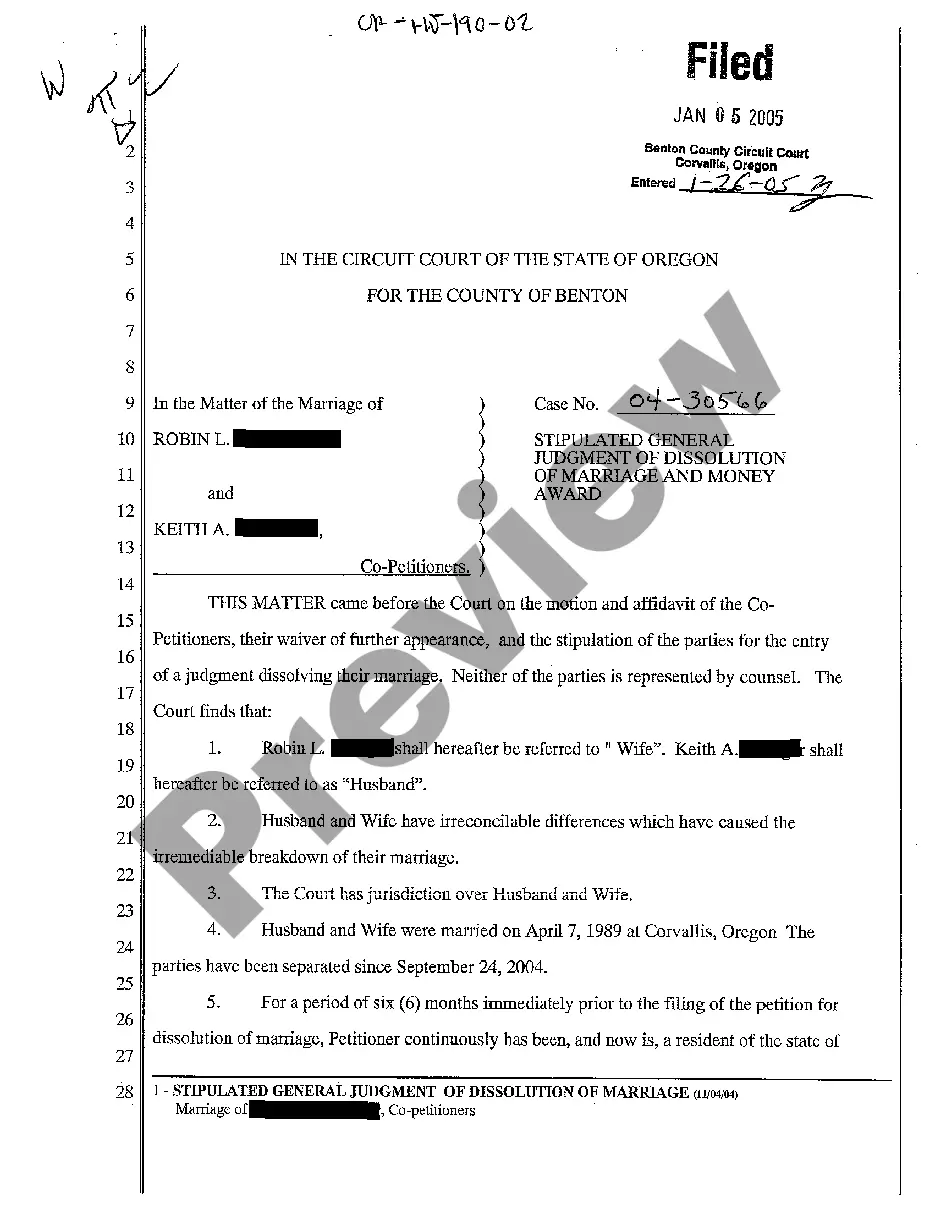
The Stipulated General Judgment of Dissolution of Marriage and Money Award is a legal document used in the State of Oregon for couples who have decided to dissolve their marriage. This form is specifically designed for co-petitioners with children involved, allowing them to stipulate their agreements on matters such as child custody, support, and the division of property. Unlike a contested divorce, this form requires that both parties agree on the terms, making it a more streamlined process for all involved.
Key parts of this document
- Identification of the petitioner and respondent, along with their children.
- Declaration of irreconcilable differences causing the marriage dissolution.
- Details about custody and parenting time arrangements.
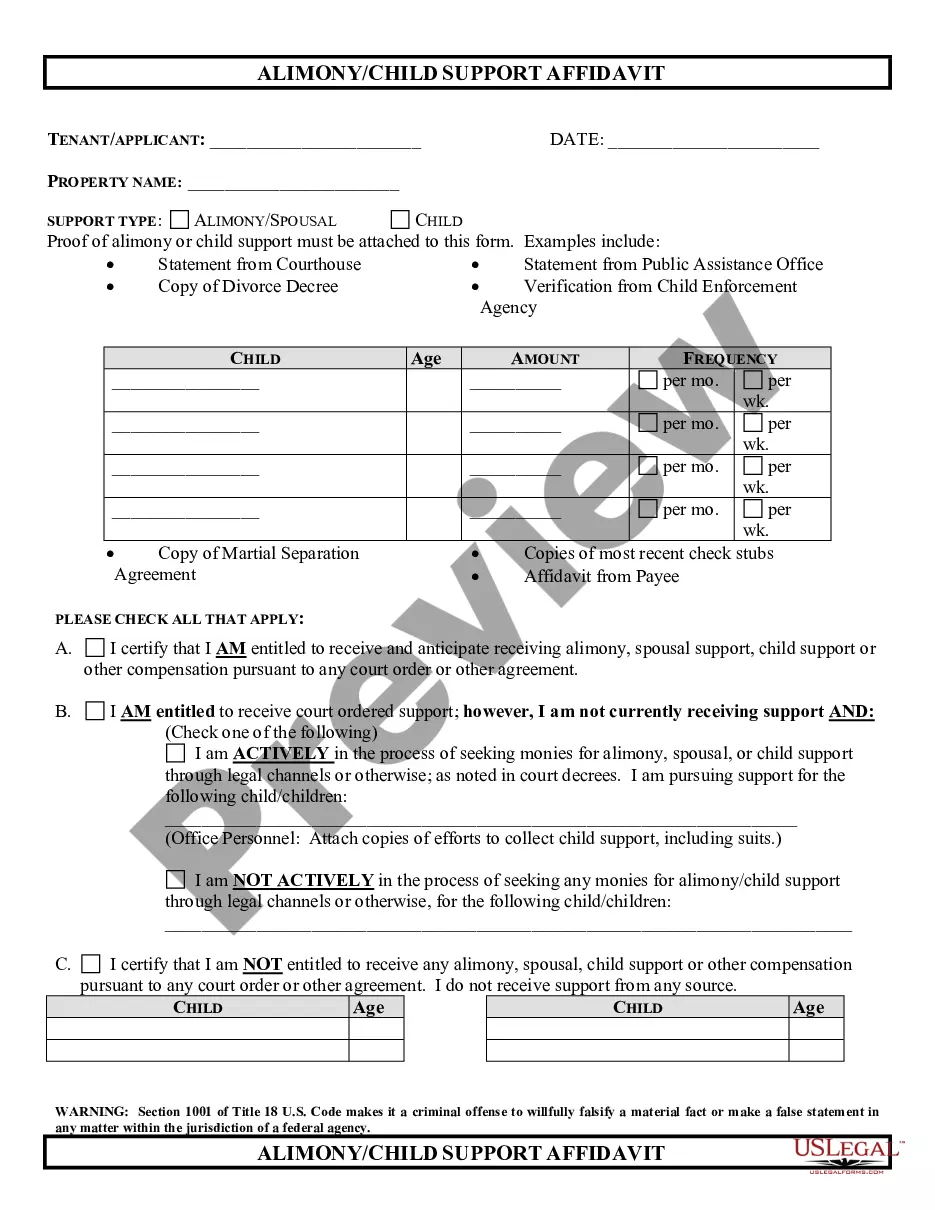
- Financial obligations including child support and spousal support terms.
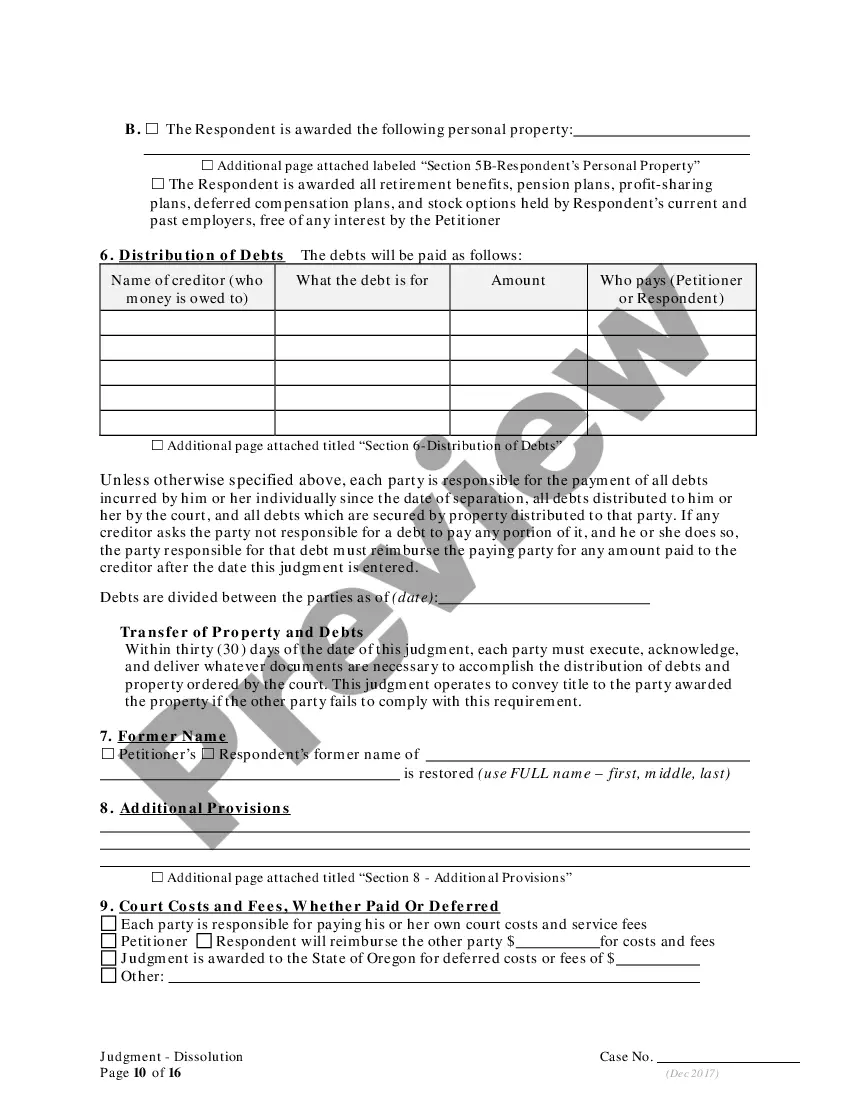
- Distribution of property and debts accumulated during the marriage.
- Restoration of any former names if applicable.

Common use cases
This form should be used when both parties in a marriage or registered domestic partnership agree on the terms for dissolution and wish to legally formalize their separation. It is particularly applicable when there are minor children involved or when financial matters need to be resolved amicably.
Who should use this form
- Couples in Oregon seeking a mutual dissolution of marriage.
- Co-petitioners who have children together and need to establish custody and support arrangements.
- Individuals who desire a simplified process without contesting the divorce terms.
Steps to complete this form
- Identify the parties involved by entering the names of the petitioner and respondent.
- Provide the case number and state the details of the marriage, including the date and location.
- Detail the custody arrangement for children, specifying joint or sole custody and parenting time.
- Fill in financial obligations such as child support and any spousal support required.
- Complete sections for property and debt distribution, ensuring all assets are accounted for.
- Sign and date the form to finalize the stipulated agreement.
Notarization guidance
This form does not typically require notarization unless specified by local law. It is advisable to check with your local courthouse or legal advisor to ensure compliance with any specific requirements for your situation.
Get your form ready online
Our built-in tools help you complete, sign, share, and store your documents in one place.
Make edits, fill in missing information, and update formatting in US Legal Forms—just like you would in MS Word.
Download a copy, print it, send it by email, or mail it via USPS—whatever works best for your next step.
Sign and collect signatures with our SignNow integration. Send to multiple recipients, set reminders, and more. Go Premium to unlock E-Sign.
If this form requires notarization, complete it online through a secure video call—no need to meet a notary in person or wait for an appointment.
We protect your documents and personal data by following strict security and privacy standards.

Make edits, fill in missing information, and update formatting in US Legal Forms—just like you would in MS Word.

Download a copy, print it, send it by email, or mail it via USPS—whatever works best for your next step.

Sign and collect signatures with our SignNow integration. Send to multiple recipients, set reminders, and more. Go Premium to unlock E-Sign.

If this form requires notarization, complete it online through a secure video call—no need to meet a notary in person or wait for an appointment.

We protect your documents and personal data by following strict security and privacy standards.
Avoid these common issues
- Failing to include all assets and debts in the property division section.
- Not agreeing on a clear parenting plan for custody and visitation.
- Omitting signatures from all parties involved, including necessary witnesses.
- Leaving sections blank, which may delay the approval of the judgment.
- Misunderstanding the terms of spousal and child support calculations.
Advantages of online completion
- Convenient access to legal form templates 24/7.
- Edit and personalize the form easily to suit your specific situation.
- Reliable and accurate templates drafted by licensed attorneys in compliance with Oregon law.
- Reduced time and costs associated with legal consultations and filings.
Legal use & context
- Once signed and submitted, the judgment is enforceable by the court as per Oregon law.
- This form can provide legal protection and clarity on obligations regarding child support and custody.
- Filing this document aids in preventing future disputes by clearly outlining agreements made by both parties.
Main things to remember
- The Stipulated General Judgment of Dissolution of Marriage and Money Award is essential for amicable divorce proceedings in Oregon.
- Both parties must agree on the terms outlined in this form to ensure a smooth resolution.
- Make sure all sections are filled out completely to avoid delays or complications.
Glossary of terms
- Petitioner: The person who initiates the dissolution process.
- Respondent: The other party involved in the dissolution.
- Custody: The legal right to make decisions about a child's upbringing.
- Support: Financial assistance provided by one parent to the other for the care of their child.
Looking for another form?
Form popularity
FAQ
Christ will publicly judge all people by the testimony of their faith the good works of the righteous in evidence of their faith, and the evil works of the wicked in evidence of their unbelief.
General judgment is the Christian theological concept of a judgment of the dead.It is generally contrasted with a particular judgment right after death. It is related closely to Judgment Day and often is just another phrase for the Last Judgment or Final Judgement.
1. judgment of dismissal - a judgment disposing of the matter without a trial.
WHAT IS A DISMISSED CASE? A dismissed criminal case is one in which you were not convicted. When a criminal charge is dismissed, you are not guilty and the case is concluded.
Particular judgment, according to Christian eschatology, is the divine judgment that a departed person undergoes immediately after death, in contradistinction to the general judgment (or Last Judgment) of all people at the end of the world.
How long does a judgment lien last in Oregon? A judgment lien in Oregon will remain attached to the debtor's property (even if the property changes hands) for ten years.
There are four kinds of judgments in civil cases, namely: 1. When the facts are admitted by the parties, but the law is disputed; as in case of judgment upon demurrer; 2. When the law is admitted, but the facts are disputed; as in, case of judgment upon a verdict; 3.
Oregon judgments expire after 10 years from the date of entry by a court, unless a creditor (i.e., you or your attorney) files a certificate within that 10 year time period to have enforcement of the judgment extended for another 10 years.
Noun. 1. judgment of dismissal - a judgment disposing of the matter without a trial. dismissal, judgement of dismissal. judicial decision, judgment, judgement - (law) the determination by a court of competent jurisdiction on matters submitted to it.