Oregon Grant Deed from a Trust to an Individual
Understanding this form
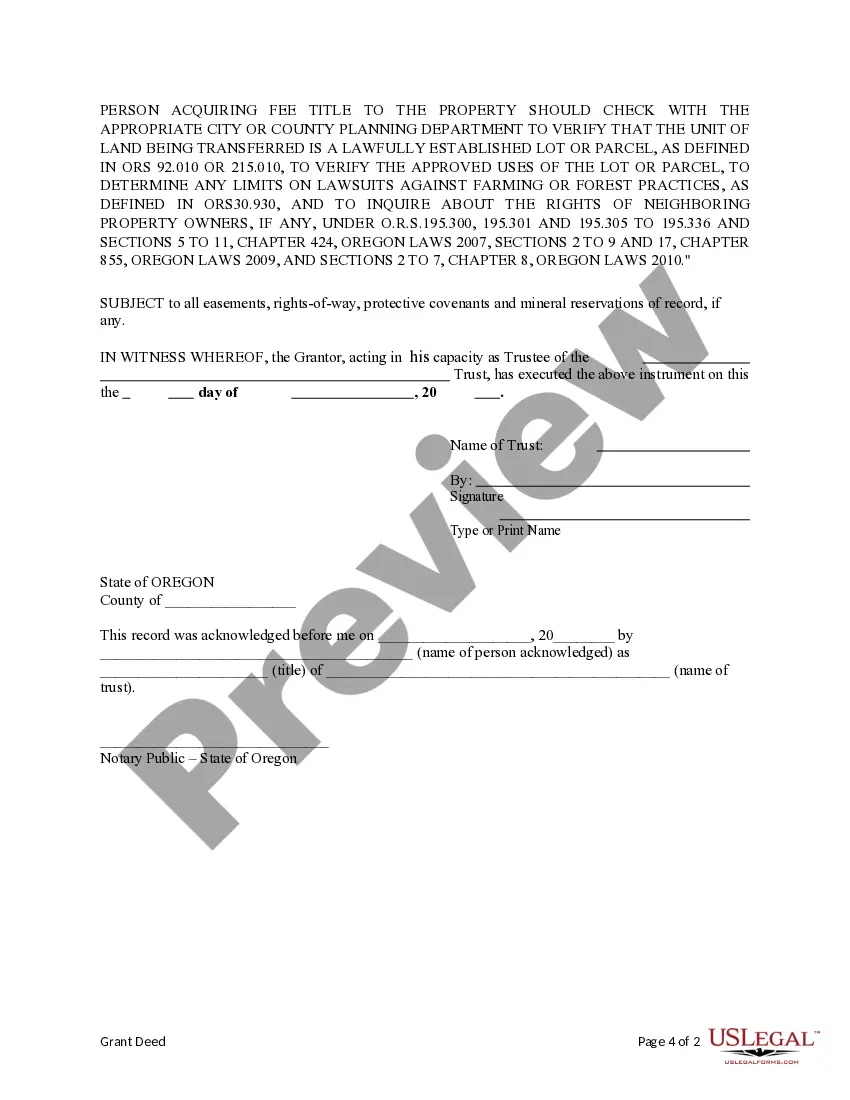
The Grant Deed from a Trust to an Individual is a legal document that facilitates the transfer of property ownership from a trust (the grantor) to an individual (the grantee). This deed ensures compliance with state statutory laws and distinguishes itself from other forms of property transfer by specifically identifying a trust as the selling entity. It is a vital tool for estate planning and property management.
Key components of this form
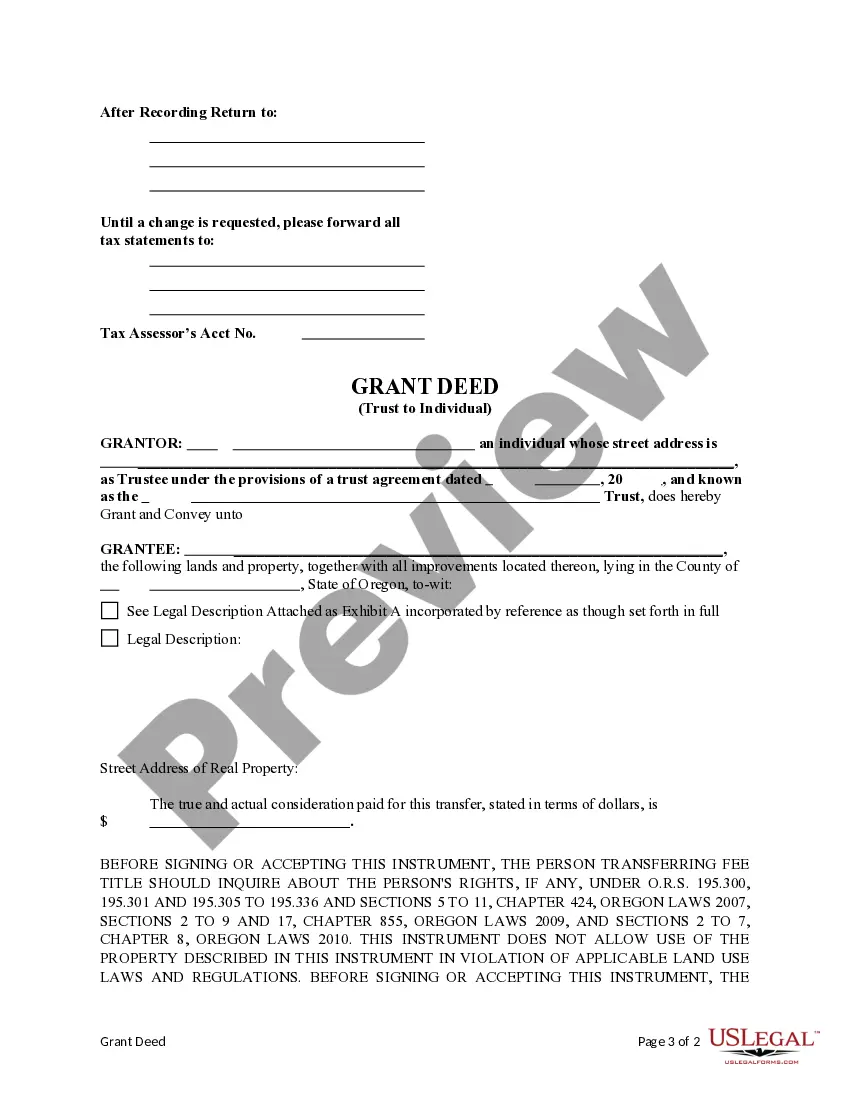
- Identification of the grantor as the trust and the grantee as the individual receiving the property.
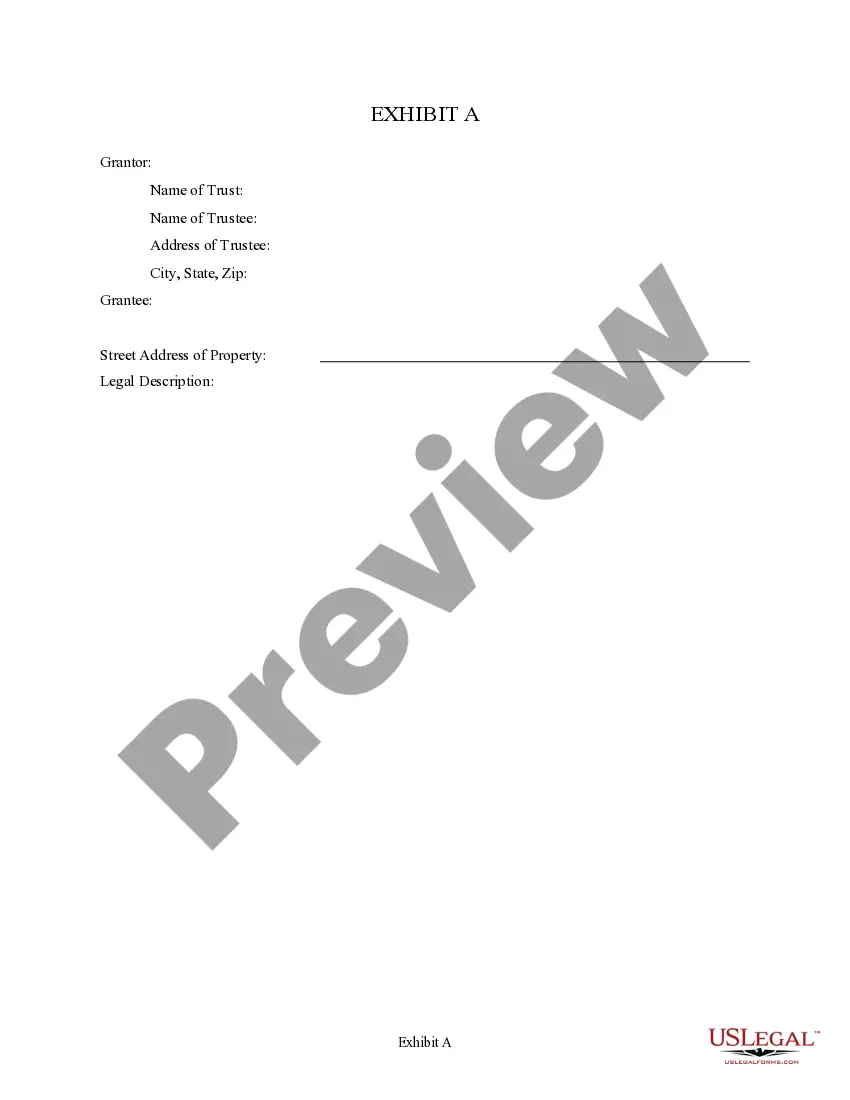
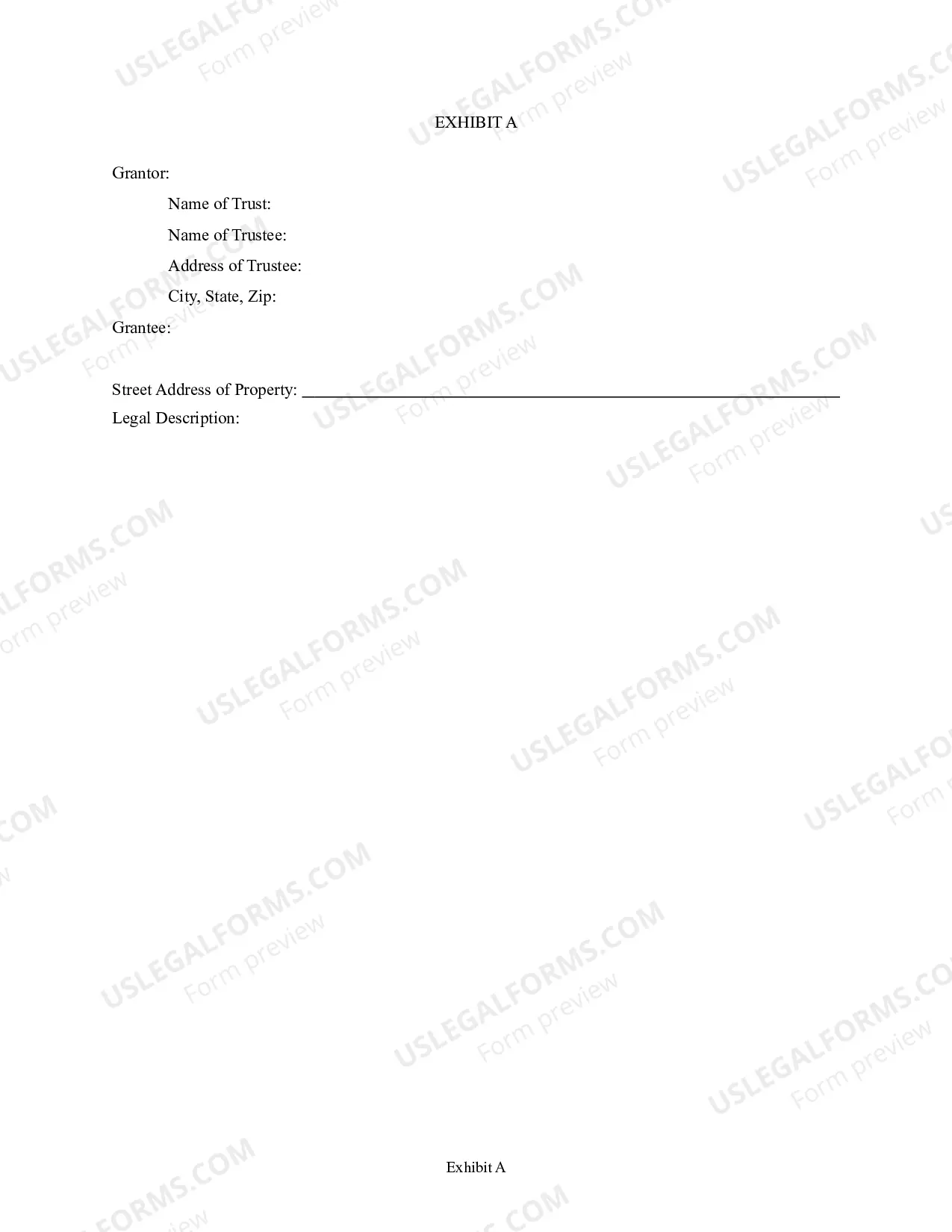
- Legal description of the property being transferred.
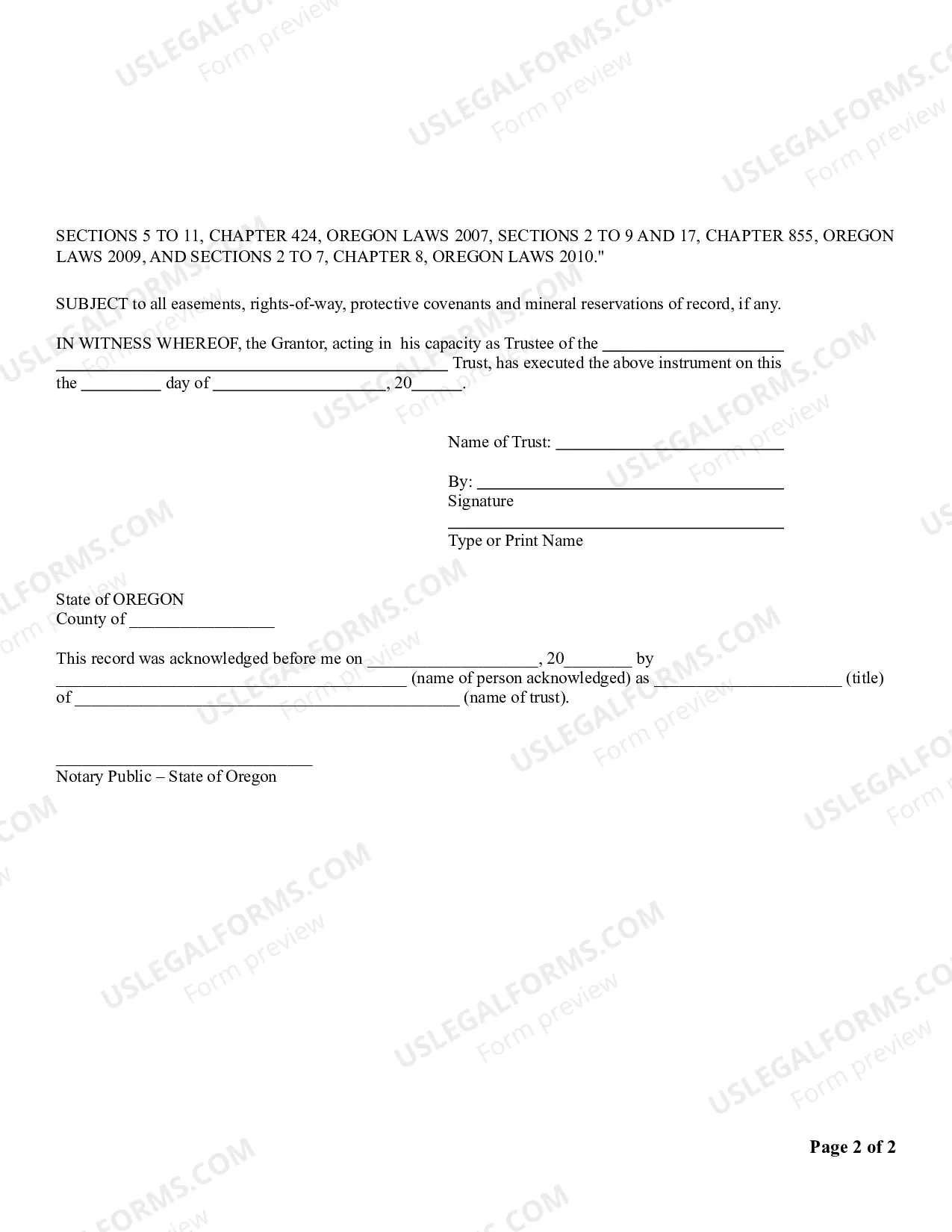
- Specific statements regarding the transfer of ownership and any existing easements or rights.
- Signatures of the authorized representatives of the trust, if applicable.
- Notary acknowledgment section to validate the deed.




Situations where this form applies
This form is typically used when a property held in a trust needs to be transferred to a specific individual. For example, after the death of the trust's creator, successor trustees may use this deed to assign ownership to beneficiaries. Additionally, this form can be utilized when an individual wishes to take sole ownership of a property that has previously been held in a trust arrangement.
Intended users of this form
This form is suitable for:
- Trustees managing property within a trust.
- Individuals who are the beneficiaries of a trust.
- Real estate attorneys or professionals assisting clients with property transfers from trusts.
- Anyone responsible for updating property ownership records after a trust distribution.
Instructions for completing this form
- Identify the parties involved - specify the trust as the grantor and the individual as the grantee.
- Provide a legal description of the property to be transferred.
- Complete the date of transfer and any necessary statements regarding existing rights on the property.
- Include signatures from the trust's representatives, if applicable.
- Secure notary acknowledgment in accordance with local requirements.
Notarization requirements for this form
To make this form legally binding, it must be notarized. Our online notarization service, powered by Notarize, lets you verify and sign documents remotely through an encrypted video session.
Get your form ready online
Our built-in tools help you complete, sign, share, and store your documents in one place.
Make edits, fill in missing information, and update formatting in US Legal Forms—just like you would in MS Word.
Download a copy, print it, send it by email, or mail it via USPS—whatever works best for your next step.
Sign and collect signatures with our SignNow integration. Send to multiple recipients, set reminders, and more. Go Premium to unlock E-Sign.
If this form requires notarization, complete it online through a secure video call—no need to meet a notary in person or wait for an appointment.
We protect your documents and personal data by following strict security and privacy standards.

Make edits, fill in missing information, and update formatting in US Legal Forms—just like you would in MS Word.

Download a copy, print it, send it by email, or mail it via USPS—whatever works best for your next step.

Sign and collect signatures with our SignNow integration. Send to multiple recipients, set reminders, and more. Go Premium to unlock E-Sign.

If this form requires notarization, complete it online through a secure video call—no need to meet a notary in person or wait for an appointment.

We protect your documents and personal data by following strict security and privacy standards.
Avoid these common issues
- Failing to provide a complete legal description of the property.
- Not obtaining necessary signatures from appropriate trust representatives.
- Omitting the notary acknowledgment, if required by state law.
- Using an outdated version of the form that may not comply with current laws.
Why complete this form online
- Convenient downloadable format for quick access.
- Editability allows for customization according to specific needs.
- Compliance with legal standards ensures validity.
- Availability of guidance for completion to reduce errors.
Looking for another form?

Form popularity
FAQ
A quitclaim deed can be used to transfer property from a trust, but a Special Warranty Deed seems to be a more common way to do this.
In the context of a California mortgage transaction, a trust deed also transfer ownership. Only this time, the title is being placed in the hands of a third-party trustee, who holds the property on behalf of the lender and the homeowner-borrower until the mortgage is paid.
California Property TaxesTransferring real property to yourself as trustee of your own revocable living trust -- or back to yourself -- does not trigger a reassessment for property tax purposes. (Cal. Rev. & Tax Code § 62(d).)
Some owners are put off using solicitors duke to the deed of trust cost. Individuals can write out their own, and use someone else as a witness. However, this may have errors or not be a legally binding document. The investment of getting a deed of trust when buying a property is often worth it in the long term.
When you're ready to transfer trust real estate to the beneficiary who is named in the trust document to receive it, you'll need to prepare, sign, and record a deed. That's the document that transfers title to the property from you, the trustee, to the new owner.
Party information: names and addresses of the trustor(s), trustee(s), beneficiary(ies), and guarantor(s) (if applicable) Property details: full address of the property and its legal description (which can be obtained from the County Recorder's Office)
Locate the deed that's in trust. Use the proper deed. Check with your title insurance company and lender. Prepare a new deed. Sign in the presence of a notary. Record the deed in the county clerk's office.
Print a grant deed from an online source. Sign the document in the presence of a notary public. Take the deed to the recorder's office in the county where the property is located.