Oregon Quitclaim Deed - Trust to an Individual
What this document covers
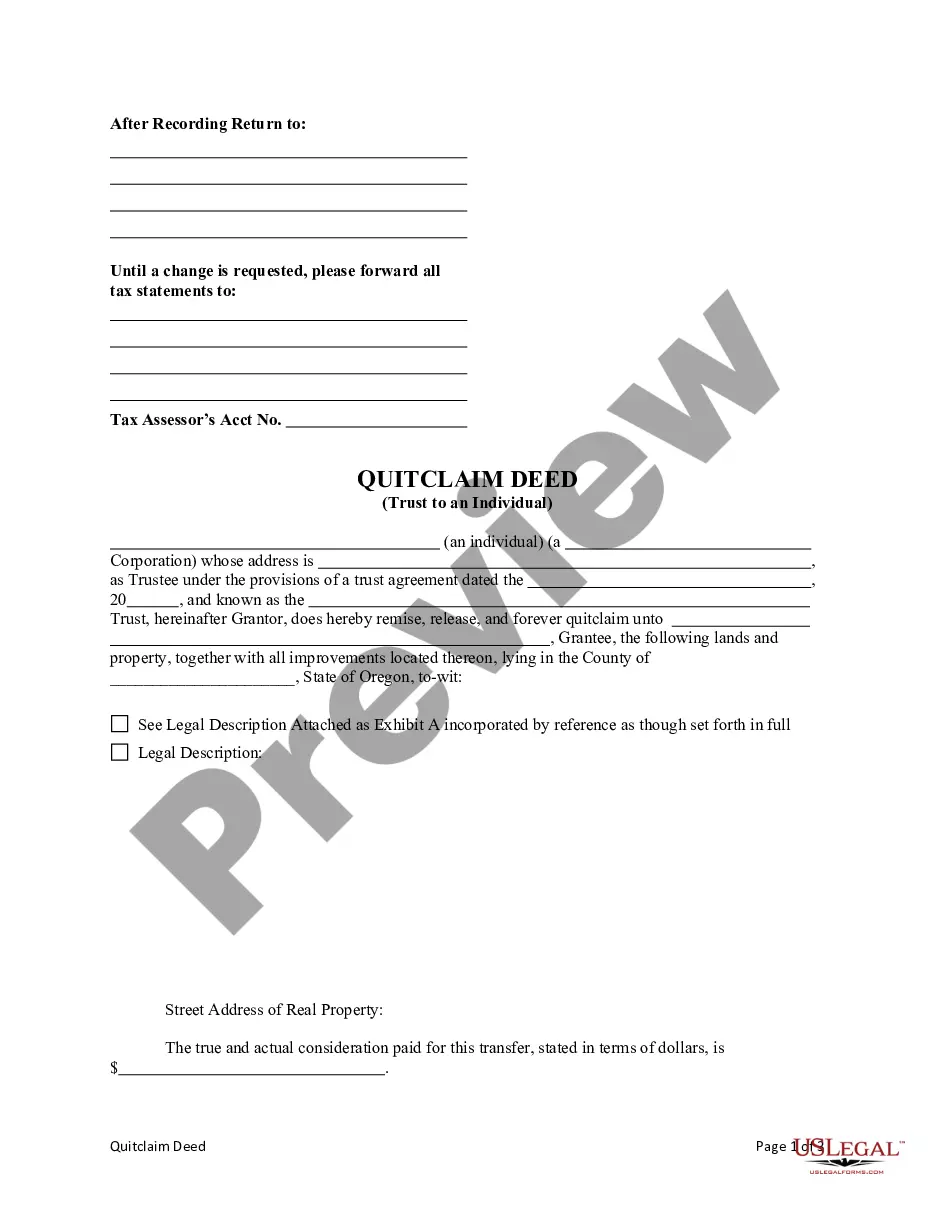
The Quitclaim Deed - Trust to an Individual is a legal document that allows a trustee of a trust to transfer property directly to an individual. This transfer conveys any interest the trust holds in a property to the individual without any warranties. Unlike other types of deeds, a quitclaim deed makes no promises regarding the title; it simply transfers the property as is. This form is particularly useful in situations where the trust wishes to distribute property to a beneficiary or another party without involving lengthy legal processes.
Form components explained
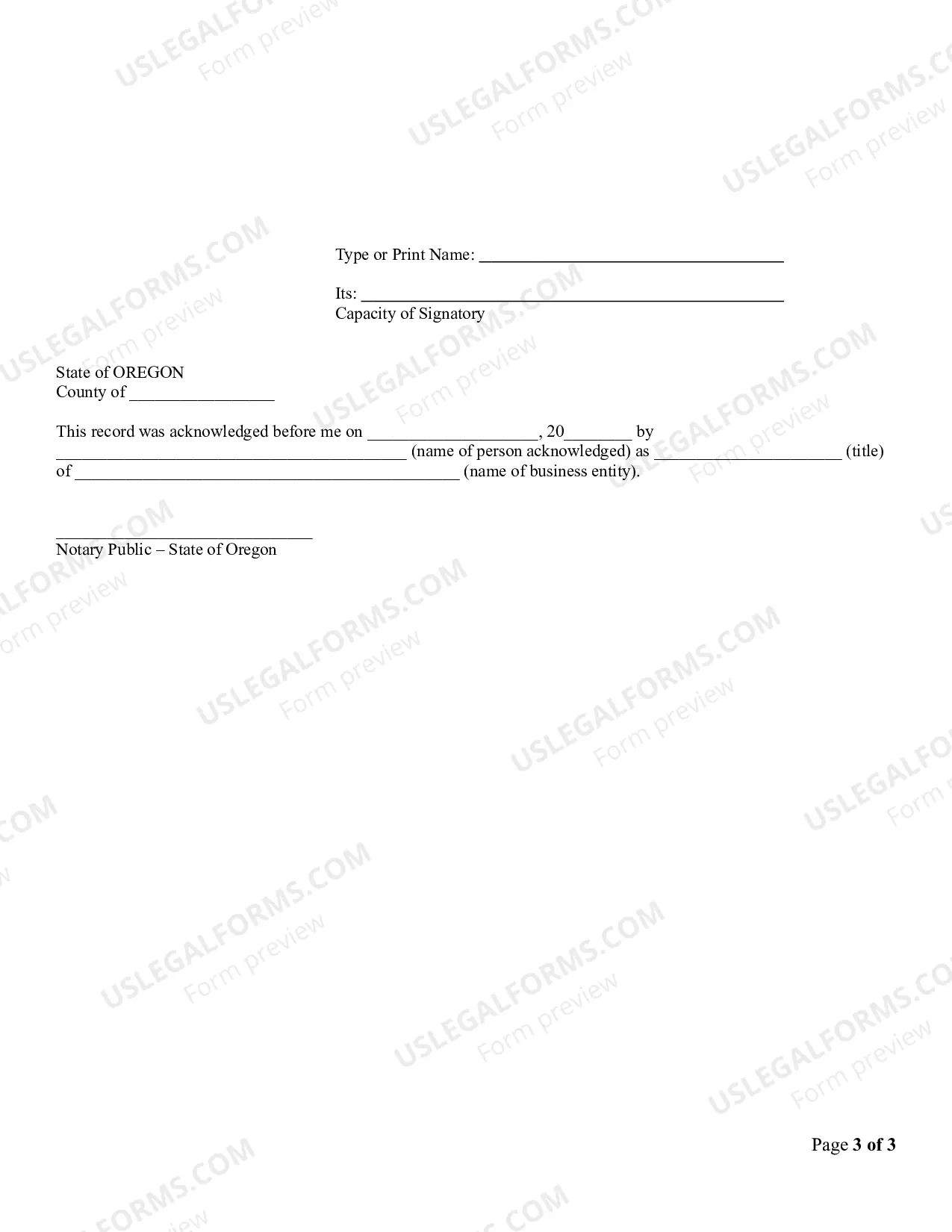
- Grantor details: Name and address of the trust acting as the grantor.
- Grantee details: Name and address of the individual receiving the property.
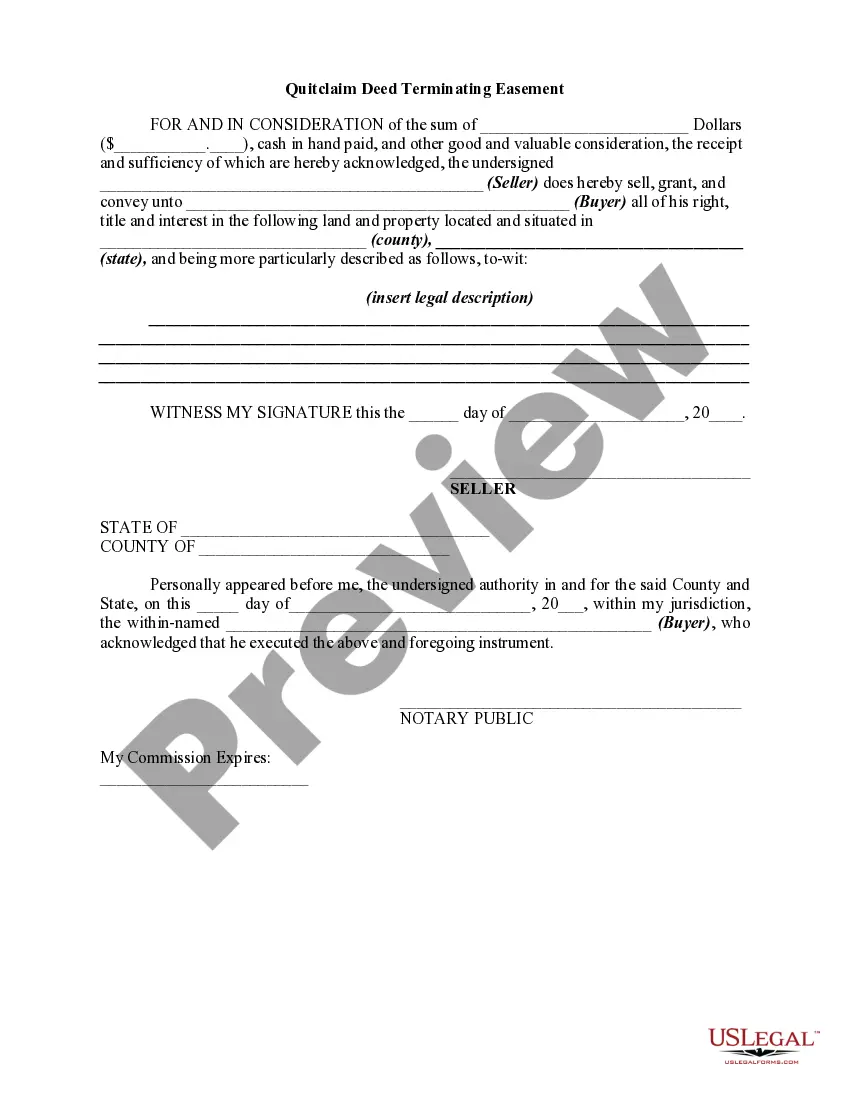
- Legal property description: A detailed description of the property being transferred.
- Statement of intent: A declaration stating the grantor's intention to convey the property.
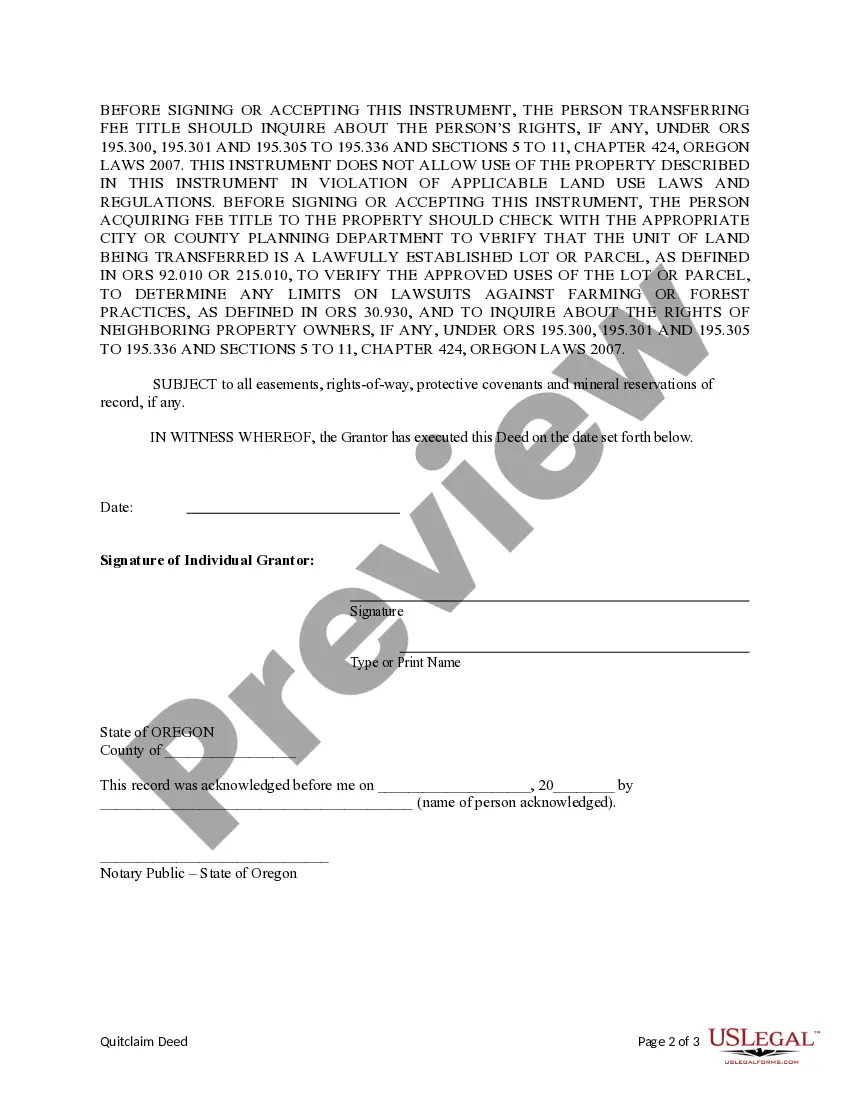
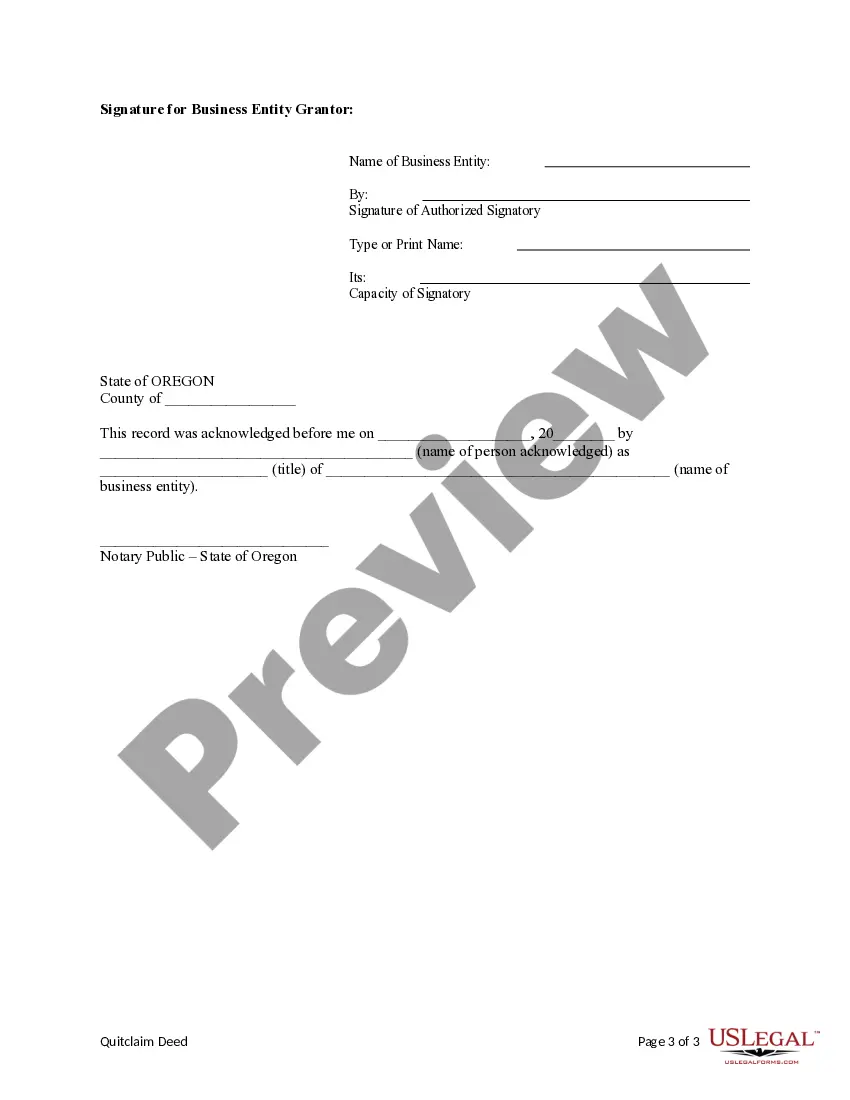
- Signatures: Required signatures of the grantor or authorized trustee and witness, if applicable.






Situations where this form applies
This form should be used when a trust needs to transfer ownership of a property to an individual without warranty. Common scenarios include transferring a family home to a child or beneficiary, reassigning property after a trustâs dissolution, or rectifying property titles held in trust. It is especially suitable in informal transactions where the parties know each other and do not require a formal guarantee of title.
Who this form is for
This form is intended for:
- Trustees of a trust who are authorized to transfer property.
- Individuals who are receiving property from a trust.
- Estate planners and attorneys working on property transfers for clients.
Instructions for completing this form
- Identify the parties: Enter the names and addresses of the trust (grantor) and the individual (grantee).
- Specify the property: Provide a clear legal description of the property being transferred.
- Complete the statement of intent: Clearly state that the trust is conveying the property to the individual.
- Obtain necessary signatures: Ensure that the appropriate party signs the document.
- Check for witness requirements: Verify if a witness signature is required in your state.
Does this form need to be notarized?
This form does not typically require notarization unless specified by local law. However, it is advisable to have the document notarized to enhance its legal standing and to provide an extra layer of protection in property transactions.
Get your form ready online
Our built-in tools help you complete, sign, share, and store your documents in one place.
Make edits, fill in missing information, and update formatting in US Legal Forms—just like you would in MS Word.
Download a copy, print it, send it by email, or mail it via USPS—whatever works best for your next step.
Sign and collect signatures with our SignNow integration. Send to multiple recipients, set reminders, and more. Go Premium to unlock E-Sign.
If this form requires notarization, complete it online through a secure video call—no need to meet a notary in person or wait for an appointment.
We protect your documents and personal data by following strict security and privacy standards.

Make edits, fill in missing information, and update formatting in US Legal Forms—just like you would in MS Word.

Download a copy, print it, send it by email, or mail it via USPS—whatever works best for your next step.

Sign and collect signatures with our SignNow integration. Send to multiple recipients, set reminders, and more. Go Premium to unlock E-Sign.

If this form requires notarization, complete it online through a secure video call—no need to meet a notary in person or wait for an appointment.

We protect your documents and personal data by following strict security and privacy standards.
Typical mistakes to avoid
- Failing to provide a complete legal description of the property.
- Not obtaining all necessary signatures before filing the document.
- Neglecting to check state-specific filing and witnessing requirements.
Benefits of completing this form online
- Convenient: Download and complete the form at your own pace.
- Editability: Customize the form as needed to fit your specific situation.
- Reliable: Ensure that the form complies with current legal standards.
Looking for another form?
Form popularity
FAQ
Locate the deed that's in trust. Use the proper deed. Check with your title insurance company and lender. Prepare a new deed. Sign in the presence of a notary. Record the deed in the county clerk's office.
In the context of a California mortgage transaction, a trust deed also transfer ownership. Only this time, the title is being placed in the hands of a third-party trustee, who holds the property on behalf of the lender and the homeowner-borrower until the mortgage is paid.
Yes, you can use a Quitclaim Deed to transfer a gift of property to someone. You must still include consideration when filing your Quitclaim Deed with the County Recorder's Office to show that title has been transferred, so you would use $10.00 as the consideration for the property.
Quitclaim deeds are most often used to transfer property between family members. Examples include when an owner gets married and wants to add a spouse's name to the title or deed, or when the owners get divorced and one spouse's name is removed from the title or deed.
A quitclaim deed can be used to transfer property from a trust, but a Special Warranty Deed seems to be a more common way to do this.
When you're ready to transfer trust real estate to the beneficiary who is named in the trust document to receive it, you'll need to prepare, sign, and record a deed. That's the document that transfers title to the property from you, the trustee, to the new owner.
Unless the trust document expressly authorizes it, a trustee generally cannot: Use trust funds to loan money to himself or herself. Buy or sell trust property to himself or herself.