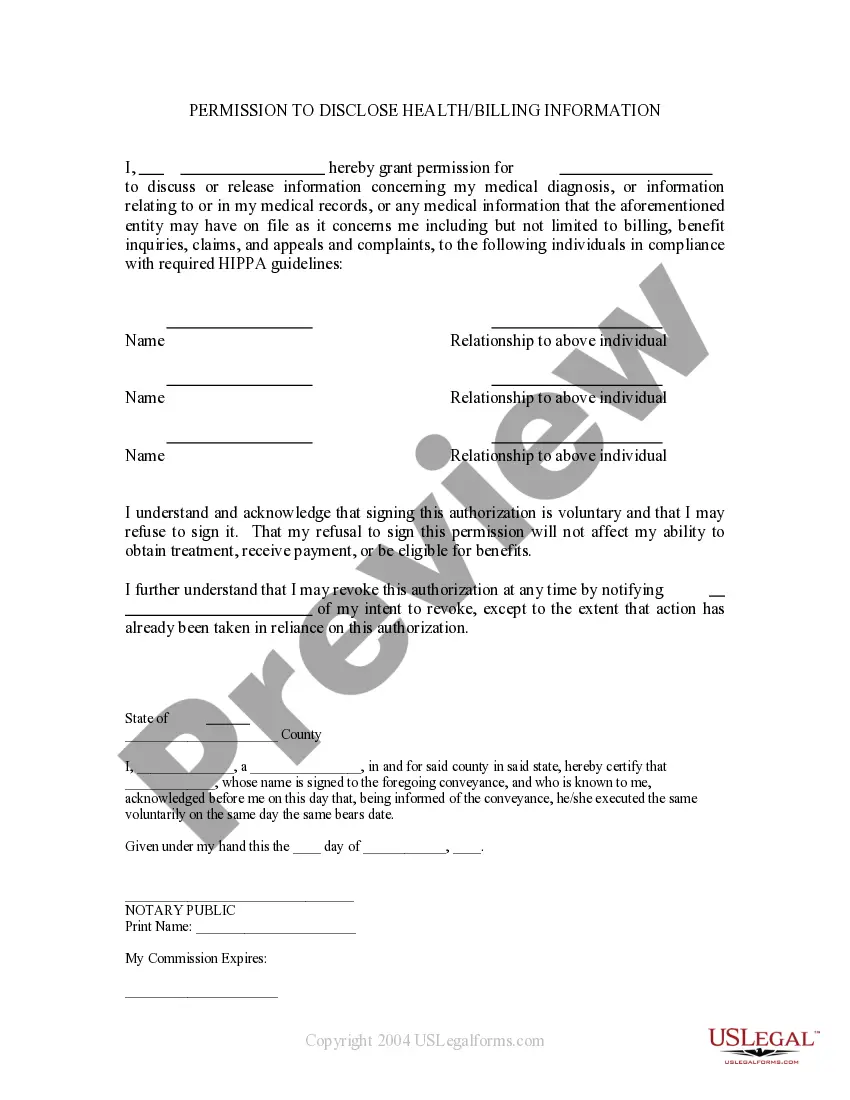
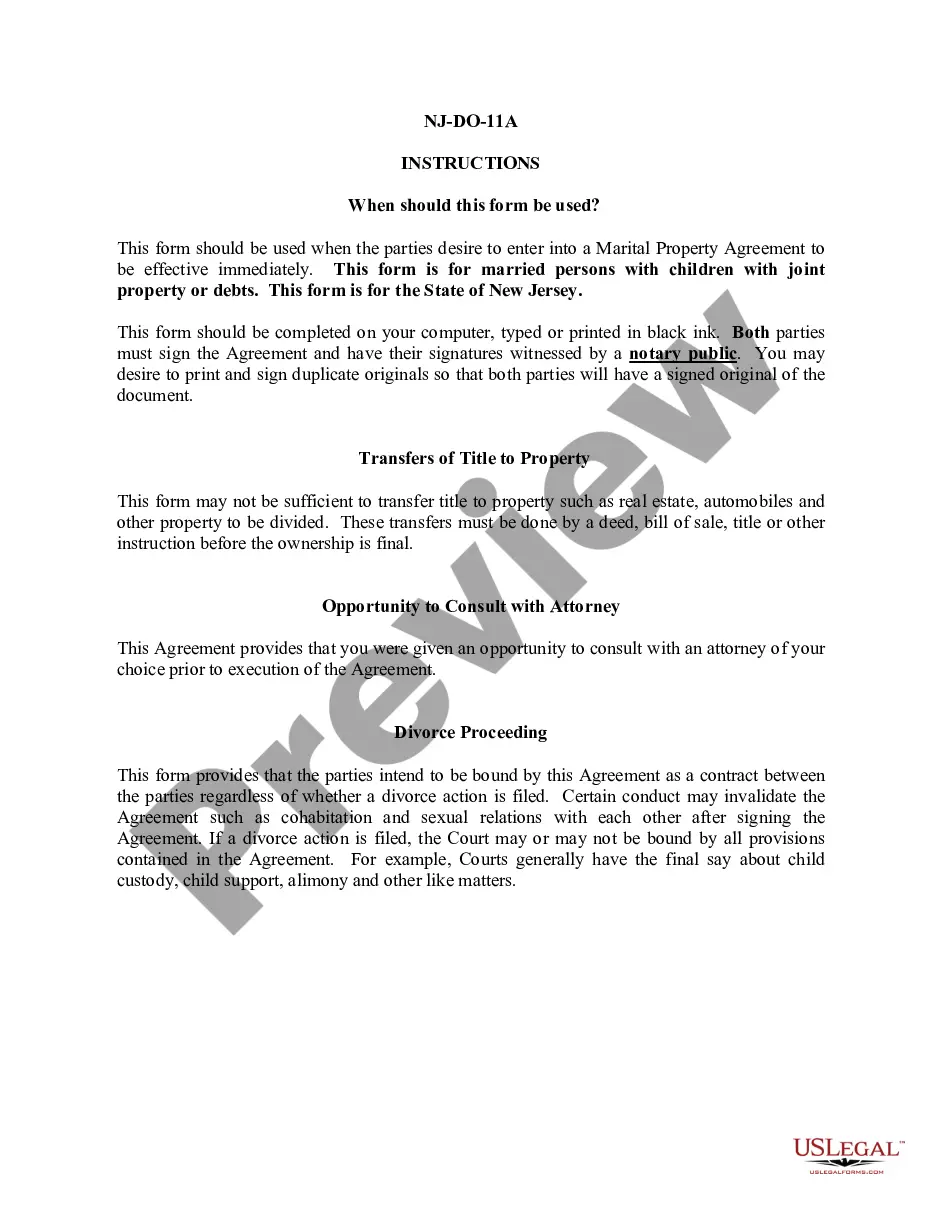
This is a form signed by an individual who wants to grant permission for a health care provider or hospital to release their medical records and/or billing information to another individual other than the patient as is required by the Health Insurance Portability and Accountability Act (HIPPA).
Oklahoma Permission To Disclose Health Billing Information
Instant download
Description
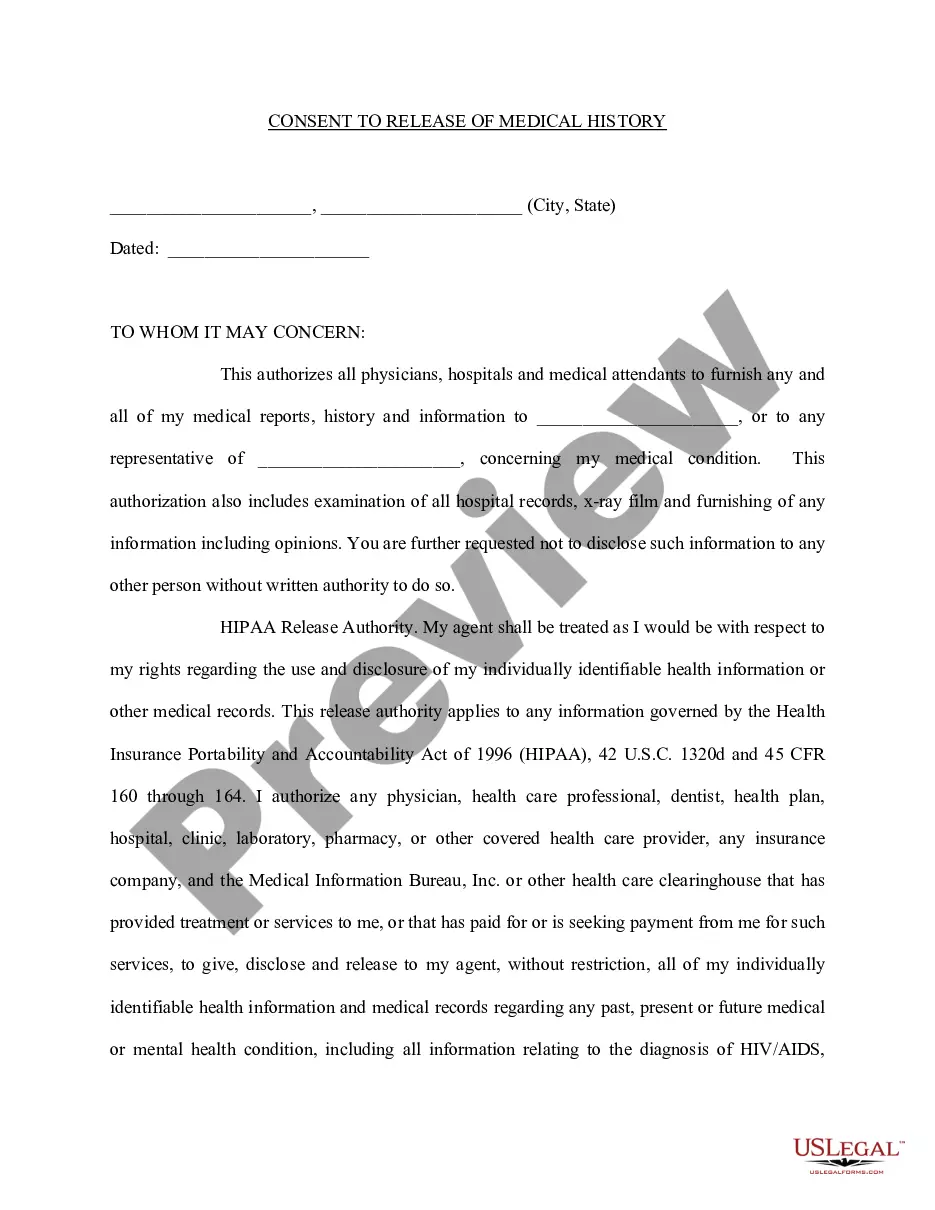
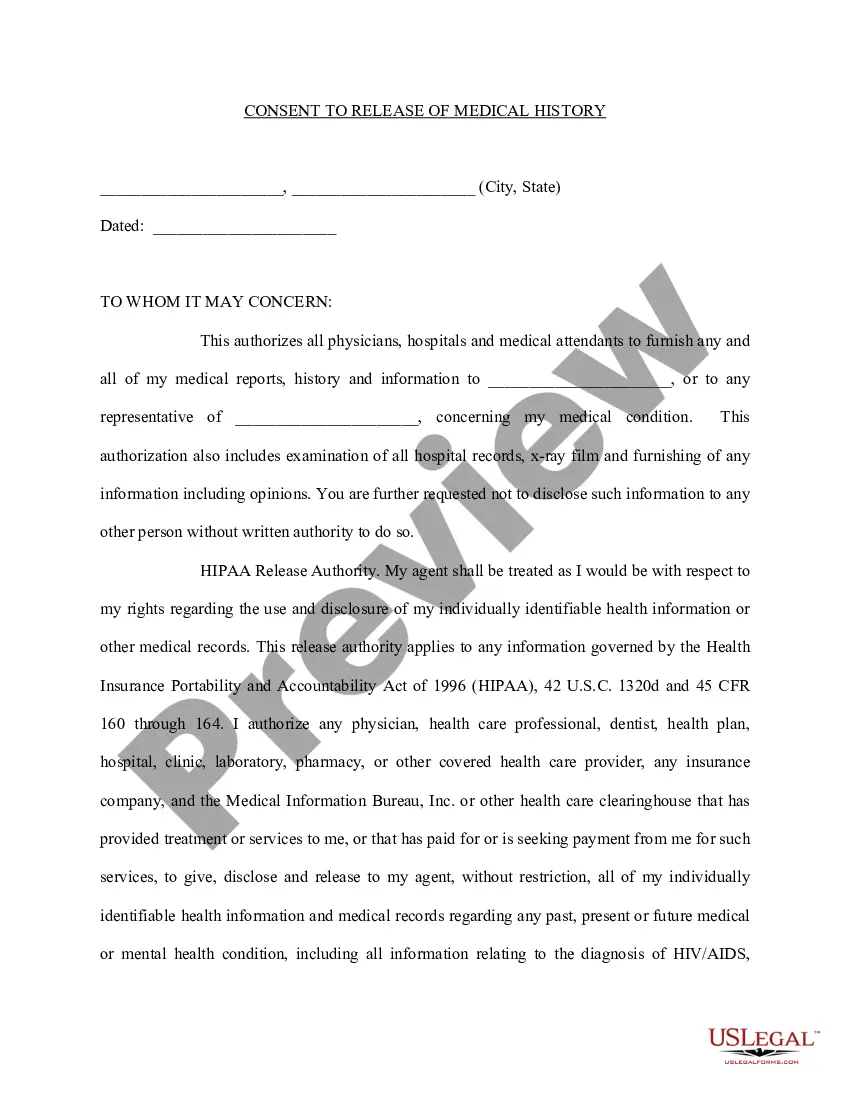
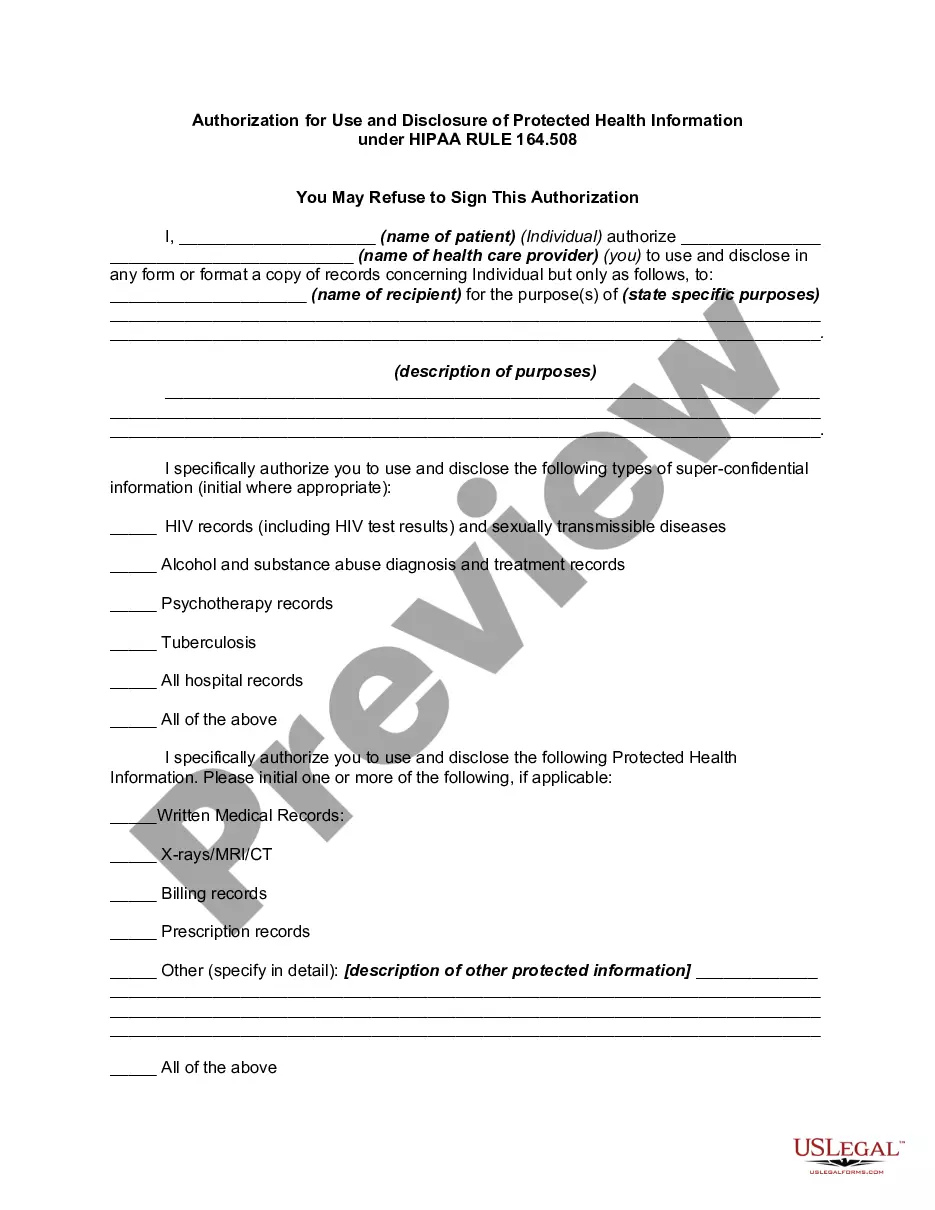
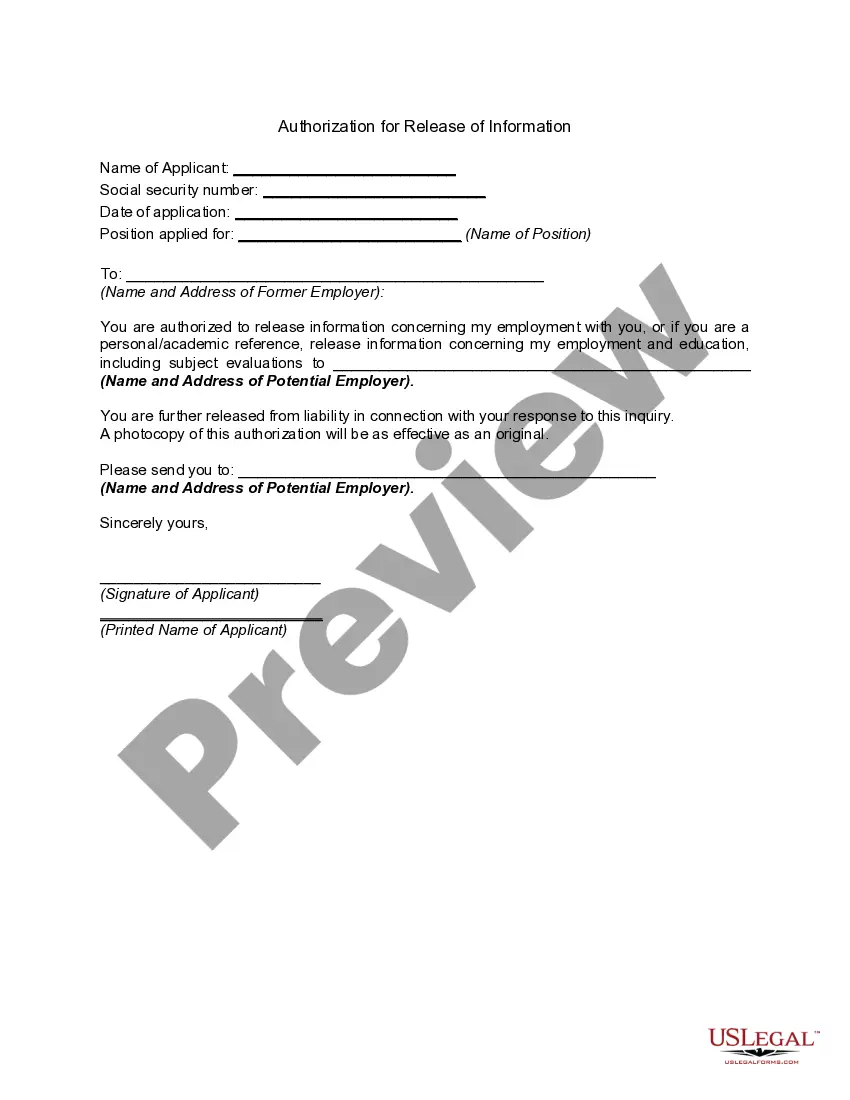
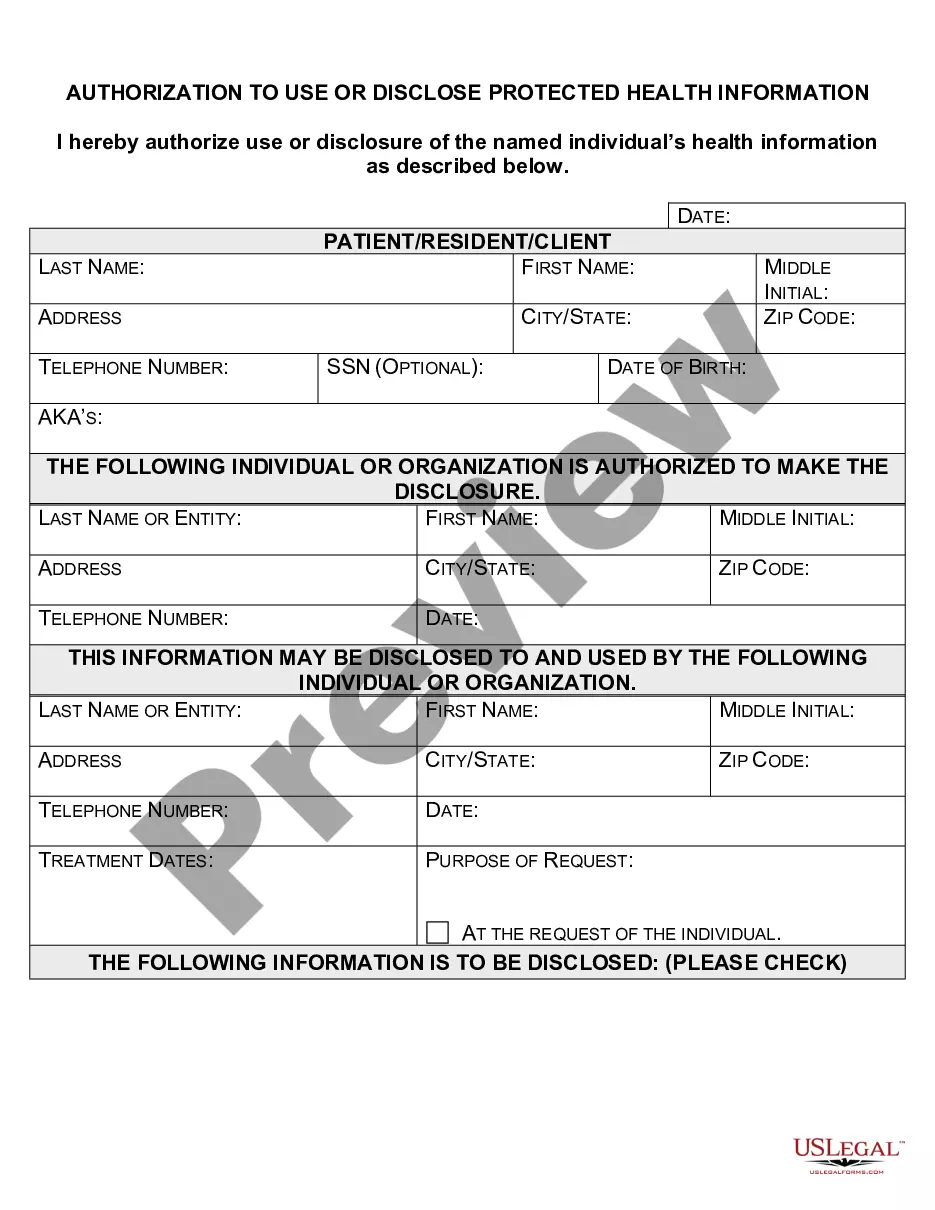

How to fill out Permission To Disclose Health Billing Information?
If you need to finalize, obtain, or print legal document templates, utilize US Legal Forms, the premier selection of legal forms available online.
Utilize the site's straightforward and user-friendly search to find the documents you need.
A range of templates for business and personal purposes are organized by categories and jurisdictions, or keywords.
Step 4. Once you have found the form you need, click the Buy now button. Choose the payment plan you prefer and enter your information to register for an account.
Step 5. Complete the transaction. You can use your credit card or PayPal account to finalize the transaction.
- Use US Legal Forms to locate the Oklahoma Permission To Disclose Health Billing Information with just a few clicks.
- If you are already a US Legal Forms user, Log In to your account and then click the Download button to obtain the Oklahoma Permission To Disclose Health Billing Information.
- You can also access forms you previously downloaded from the My documents tab of your account.
- If you are using US Legal Forms for the first time, follow the steps outlined below.
- Step 1. Make sure you have selected the form for the correct city/state.
- Step 2. Use the Review option to examine the form's content. Remember to read through the details.
- Step 3. If you are not satisfied with the form, use the Search field at the top of the screen to find other versions of the legal form template.
Form popularity
FAQ
An authorization to disclose health information is a formal document that allows a healthcare provider to share a person's medical records with others. This document specifies what information can be shared, who it can be shared with, and for what purpose. In Oklahoma, understanding the nuances of the Oklahoma Permission To Disclose Health Billing Information helps ensure that you meet all legal requirements. Using platforms like uslegalforms can simplify the process by providing templates and guidance tailored to your needs.
You must obtain authorization to disclose health information when the information is protected under the Health Insurance Portability and Accountability Act (HIPAA). Specifically, if the data includes identifiable health billing details, such as those related to treatment or payment, you need the individual's consent. This ensures compliance with regulations and protects the privacy of the individual. Understanding the Oklahoma Permission To Disclose Health Billing Information is crucial for maintaining trust and legal compliance.
HIPAA is the acronym for the Health Insurance Portability and Accountability Act of 1996, and the term is also frequently used to mean the many regulations, which have been published since 1996 under that law.
Disclose and Disclosure means the release of, transfer of, provision of, access to, or divulging in any manner, of Protected Health Information outside of Mayo or to persons other than its workforce members.
Health information such as diagnoses, treatment information, medical test results, and prescription information are considered protected health information under HIPAA, as are national identification numbers and demographic information such as birth dates, gender, ethnicity, and contact and emergency contact
The Privacy Rule excludes from protected health information employment records that a covered entity maintains in its capacity as an employer and education and certain other records subject to, or defined in, the Family Educational Rights and Privacy Act, 20 U.S.C. §1232g. De-Identified Health Information.
PHI is health information in any form, including physical records, electronic records, or spoken information. Therefore, PHI includes health records, health histories, lab test results, and medical bills. Essentially, all health information is considered PHI when it includes individual identifiers.
When a patient is not present or cannot agree or object because of some incapacity or emergency, a health care provider may share relevant information about the patient with family, friends, or others involved in the patient's care or payment for care if the health care provider determines, based on professional
This form is used to release your protected health information as required by federal and state privacy laws. Your authorization allows the Health Plan (your health insurance carrier or HMO) to release your protected health information to a person or organization that you choose.
What is not considered as PHI? Please note that not all personally identifiable information is considered PHI. For example, employment records of a covered entity that are not linked to medical records. Similarly, health data that is not shared with a covered entity or is personally identifiable doesn't count as PHI.