Health Care Proxy - Oklahoma Do Not Resuscitate form - DNR - Statutory form
Understanding this form
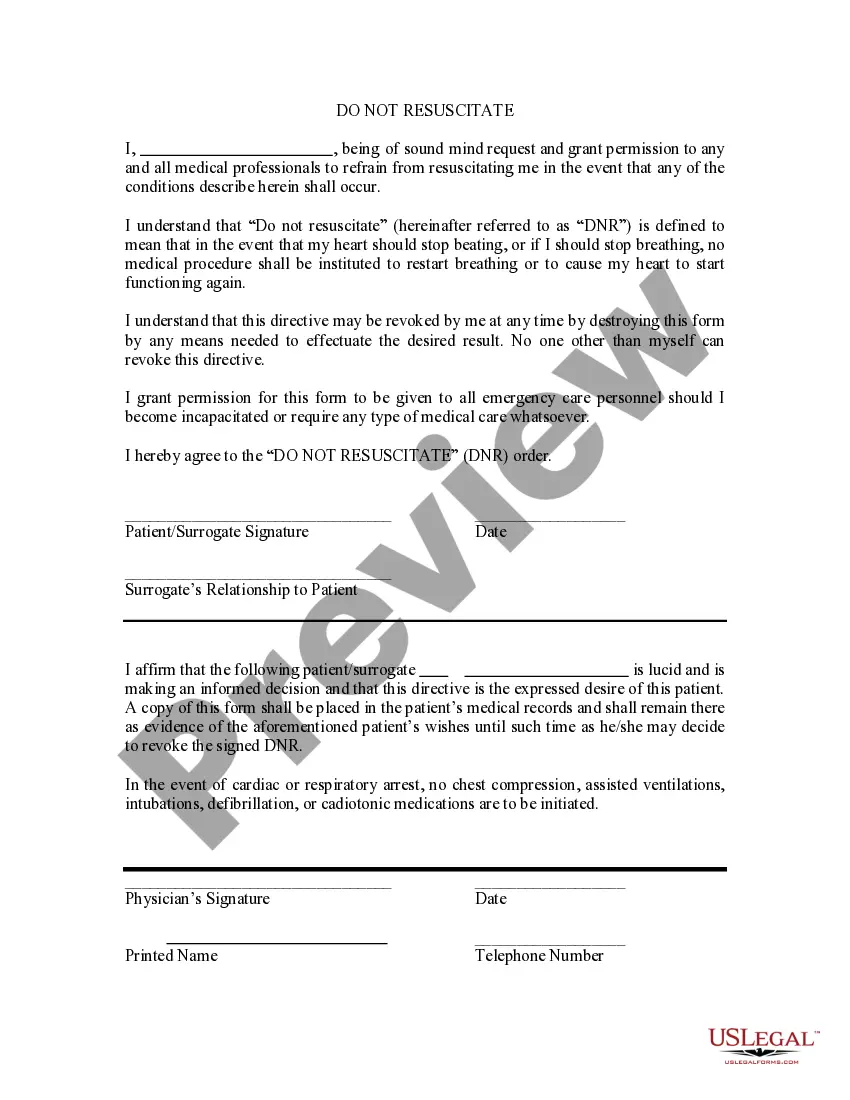
The Oklahoma Do Not Resuscitate (DNR) form is a statutory document that allows individuals to explicitly state their wishes regarding medical resuscitation efforts. This form ensures that if a person's heart stops beating or they stop breathing, emergency medical personnel will not attempt to restore cardiac or respiratory function. It is distinct from advance directives, as it specifically pertains to the decision to forego resuscitation efforts in critical situations.


When this form is needed
Use this form when you wish to clearly communicate your desire not to receive resuscitation in the event of cardiac or respiratory arrest. It is particularly relevant for individuals with terminal illnesses, severe health conditions, or those who prefer not to endure invasive life-saving measures that may not align with their end-of-life wishes.
Intended users of this form
This form is suitable for:
- Adults who have made a conscious decision regarding their resuscitation preferences.
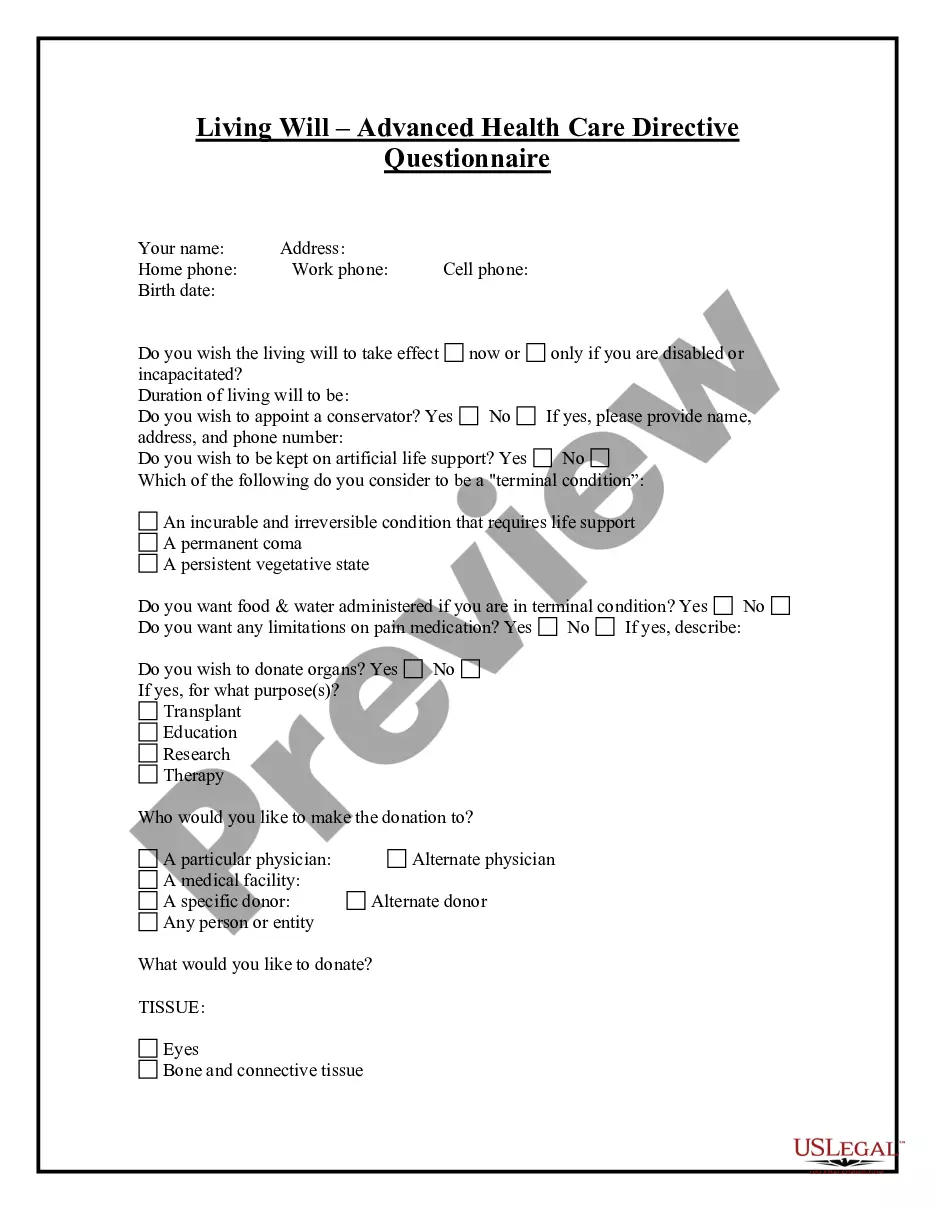
- Individuals diagnosed with terminal or severe medical conditions.
- Those planning for end-of-life care and want their wishes respected in an emergency.
How to complete this form
- Fill in your full name at the beginning of the document.
- Select the specific health care preferences related to resuscitation.
- Sign and date the form to indicate your consent and understanding.
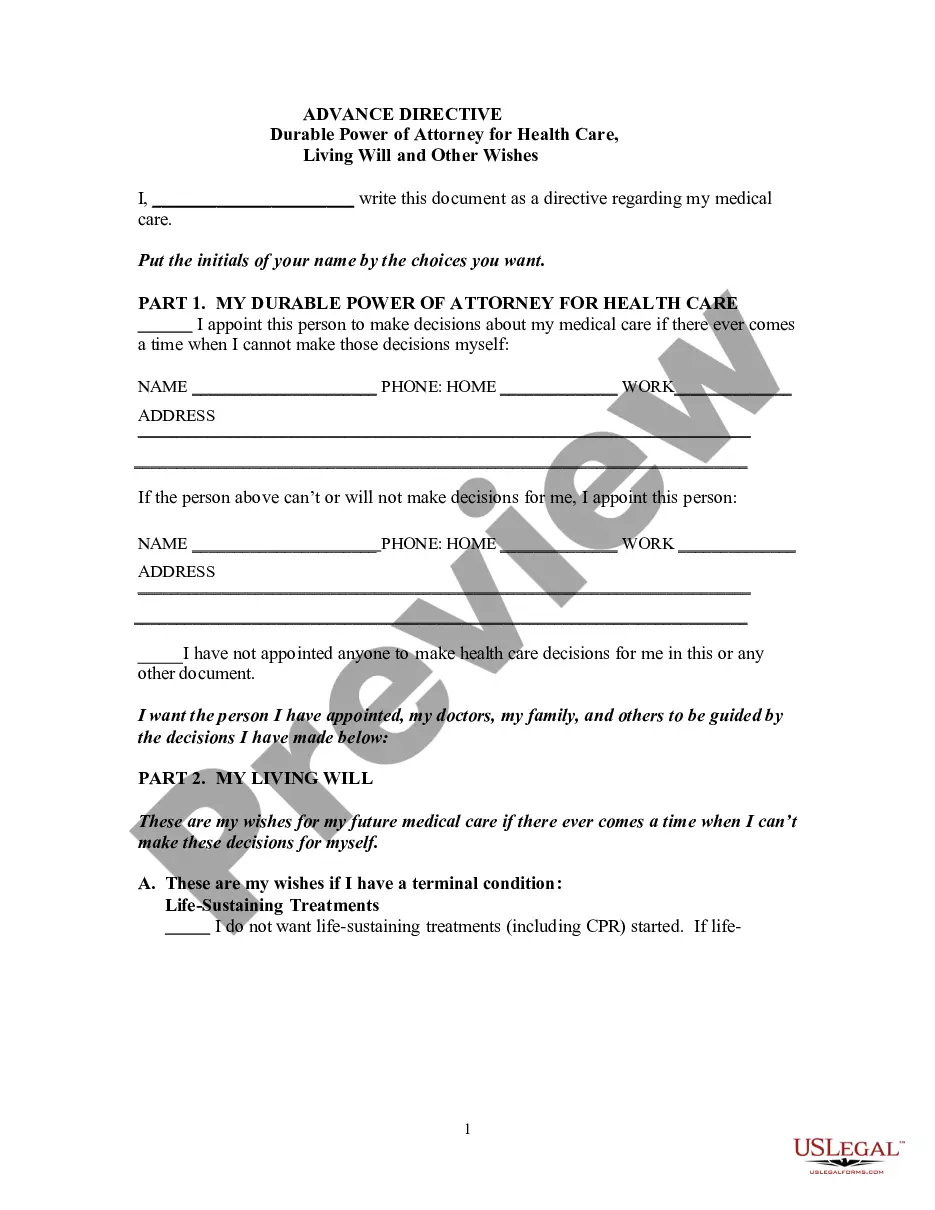
- If appointing a representative, include their name and signature.
- Have the form witnessed as required by the state law.
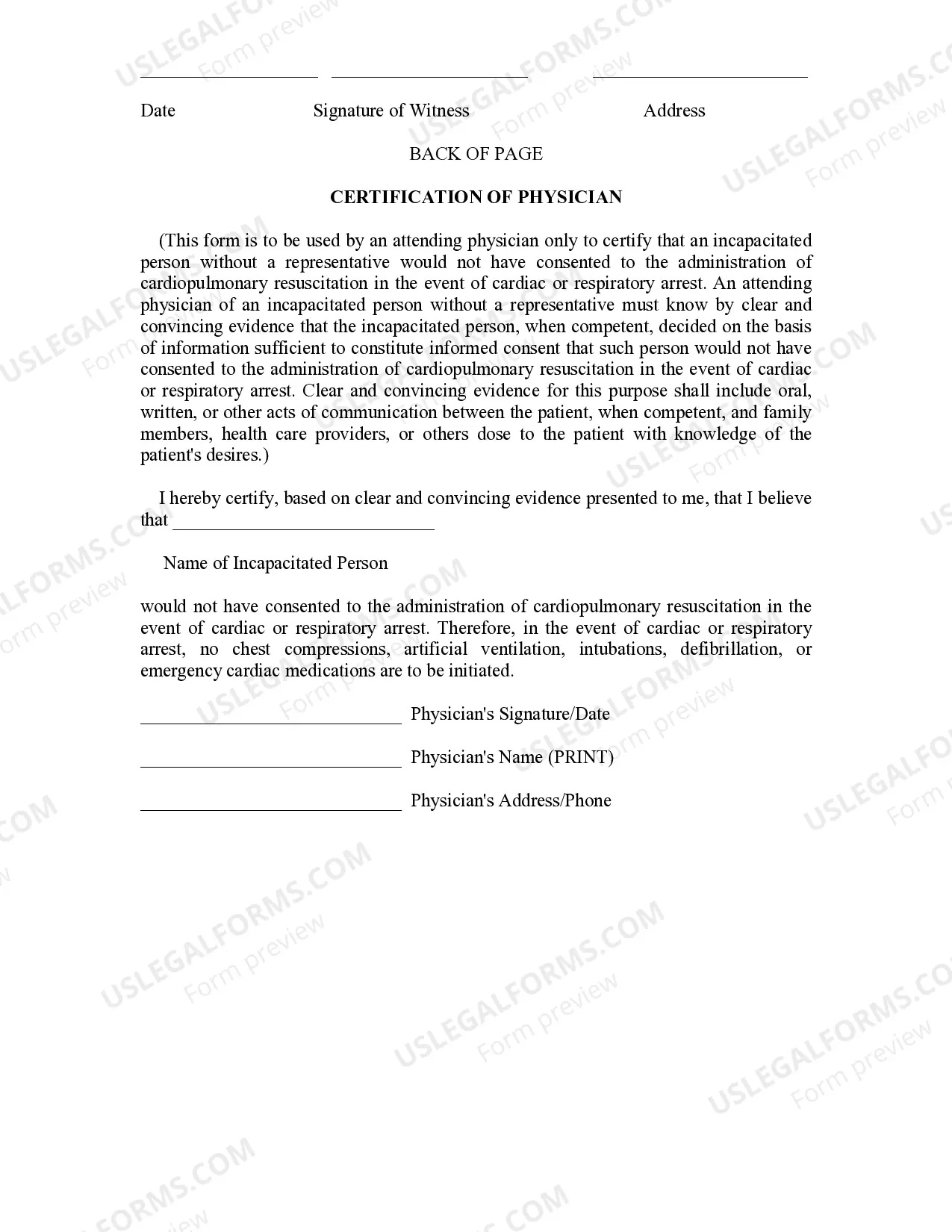
- Ensure the attending physician certifies the form if applicable.
Notarization guidance
This form does not typically require notarization to be legally valid. However, some jurisdictions or document types may still require it. US Legal Forms provides secure online notarization powered by Notarize, available 24/7 for added convenience.
Typical mistakes to avoid
- Failing to sign and date the form, which invalidates your preferences.
- Not having the required witnesses present during signing.
- Not informing healthcare providers about the existence of the DNR order.
- Misunderstanding the distinction between a DNR order and other health care directives.
Why complete this form online
- Convenient access to a legally validated DNR template tailored for Oklahoma.
- Ability to customize the form quickly to suit individual needs.
- Immediate download for use, ensuring that urgent medical decisions can be addressed promptly.


Form popularity
FAQ
The American Heart Association in 2005 moved from the traditional do not resuscitate (DNR) terminology to do not attempt resuscitation (DNAR). DNAR reduces the implication that resuscitation is likely and creates a better emotional environment to explain what the order means.
A Do Not Attempt Resuscitation form is a document issued and signed by a doctor, which tells your medical team not to attempt cardiopulmonary resuscitation (CPR).It's not a legally binding document.
DNR stands for Do Not Resuscitate and tells health care providers and emergency medical personnel not to do CPR on your older adult if they stop breathing or if their heart stops beating. The DNR is only a decision about CPR (cardiopulmonary resuscitation).
A do-not-resuscitate order (DNR) is a legally binding physician's order stating that no steps will be taken to restart a patient's heart or restore breathing if the patient experiences cardiac arrest or respiratory arrest.
A do-not-resuscitate (DNR) order placed in a person's medical record by a doctor informs the medical staff that cardiopulmonary resuscitation (CPR) should not be attempted.
The DNR order is valid immediately after it is signed by the patient and two (2) witnesses who are eighteen (18) years of age or older and who are not named in the patient's will. Required to Sign Patient (or representative), physician and two (2) witnesses.
The doctors should have considered the individual, their health and what is in their best interests. This is a medical decision about whether resuscitation would be successful and how much additional harm it would cause the person.
It is legal but it may not be ethical, said Craig Klugman, a professor of bioethics at DePaul University in Chicago. It is done out of fear of harming patients and the liability. He notes that several medical associations have concluded that asking patients to sign blanket DNR overrides is not appropriate.
Do Not Resuscitate (DNR)/Do Not Attempt Resuscitation (DNAR) is defined as the withholding of cardiopulmonary resuscitation (CPR) in the event of a patient's sudden cardiopulmonary arrest.