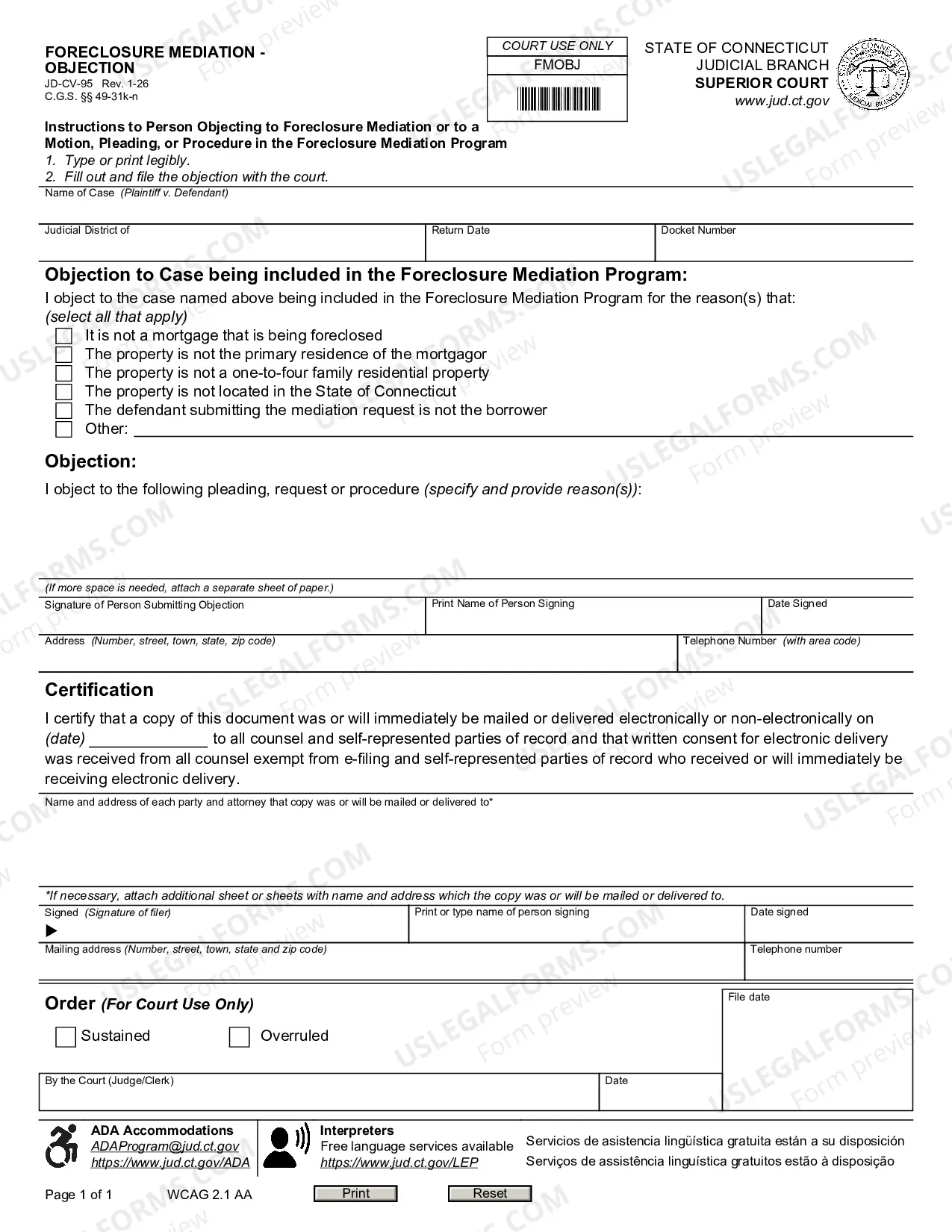
Oklahoma Notice of Option for Recording
Overview of this form
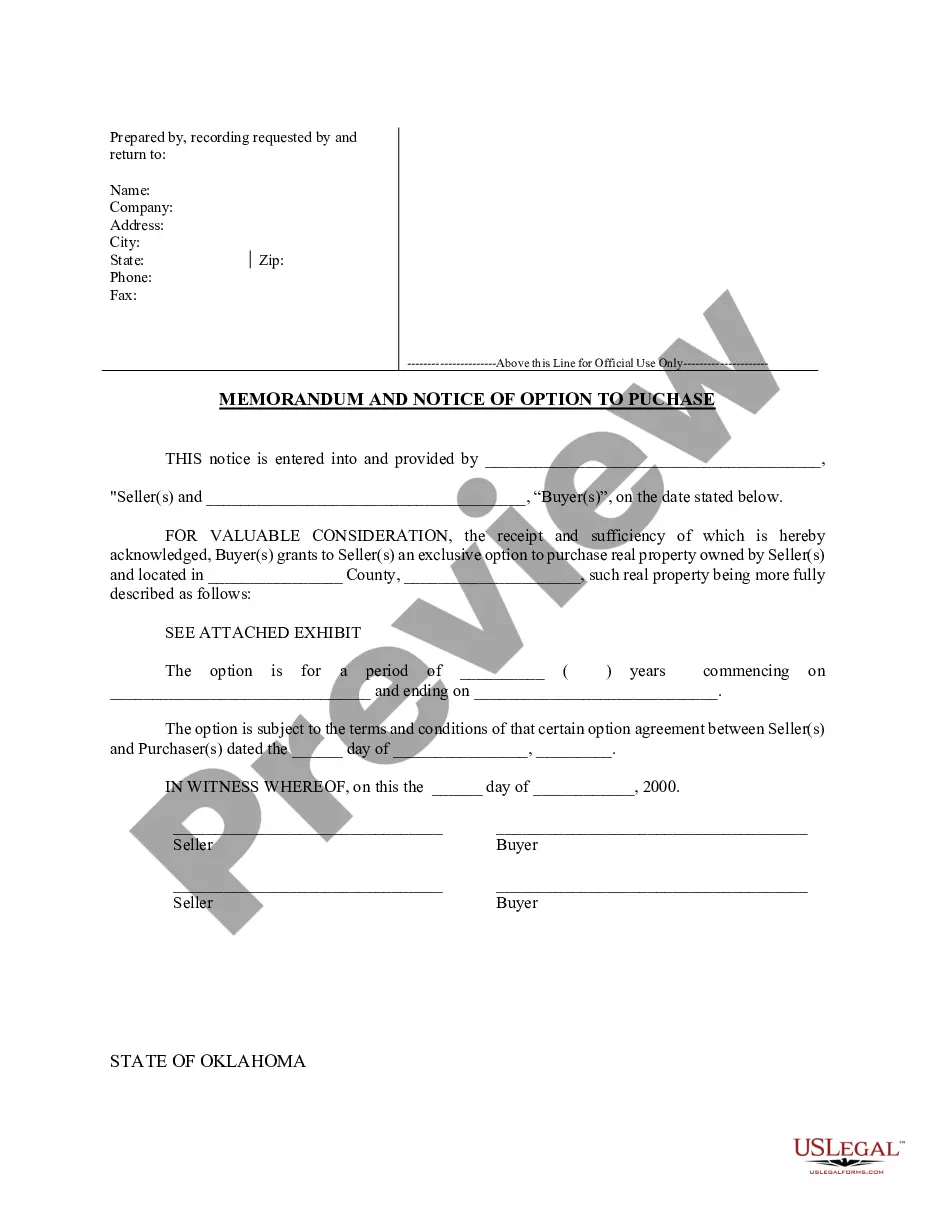
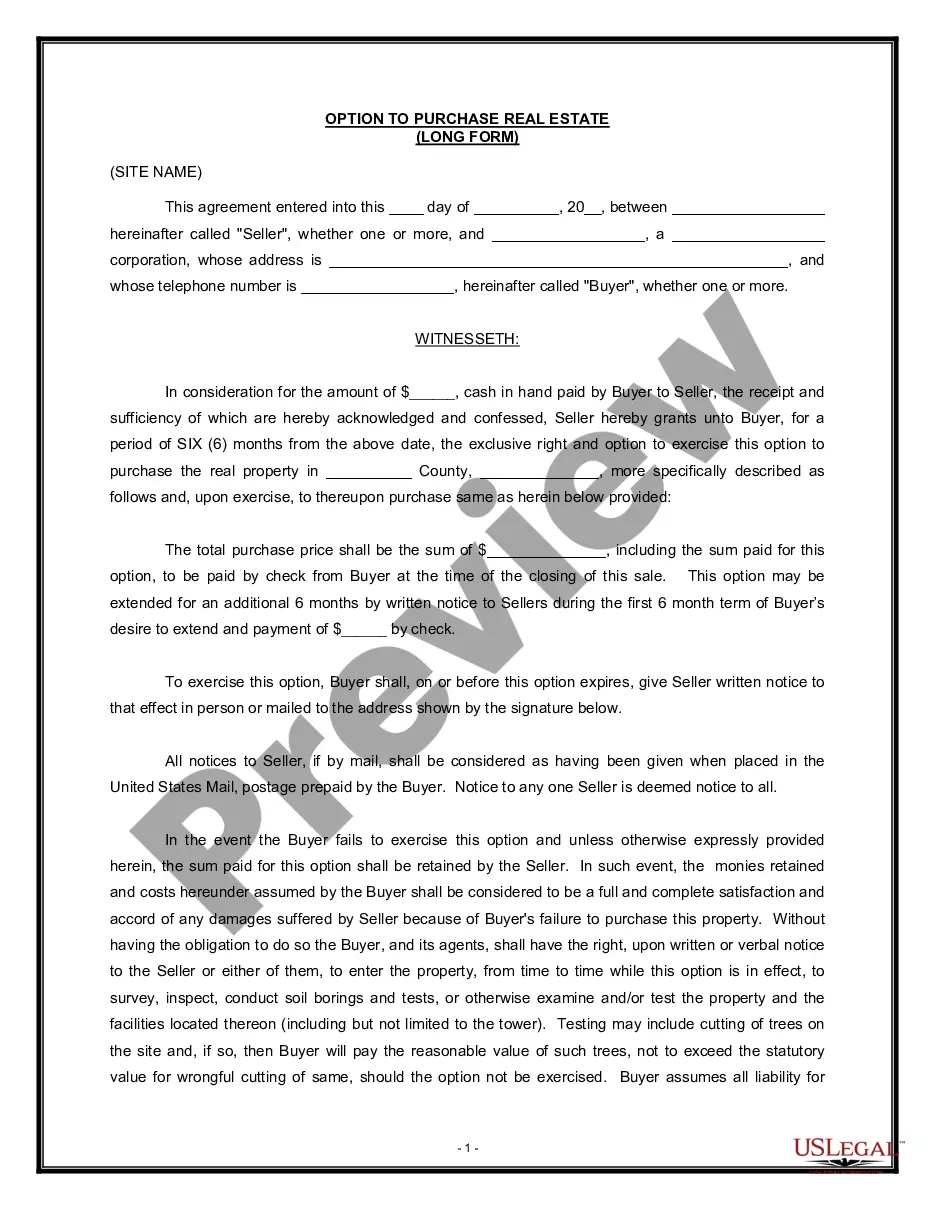
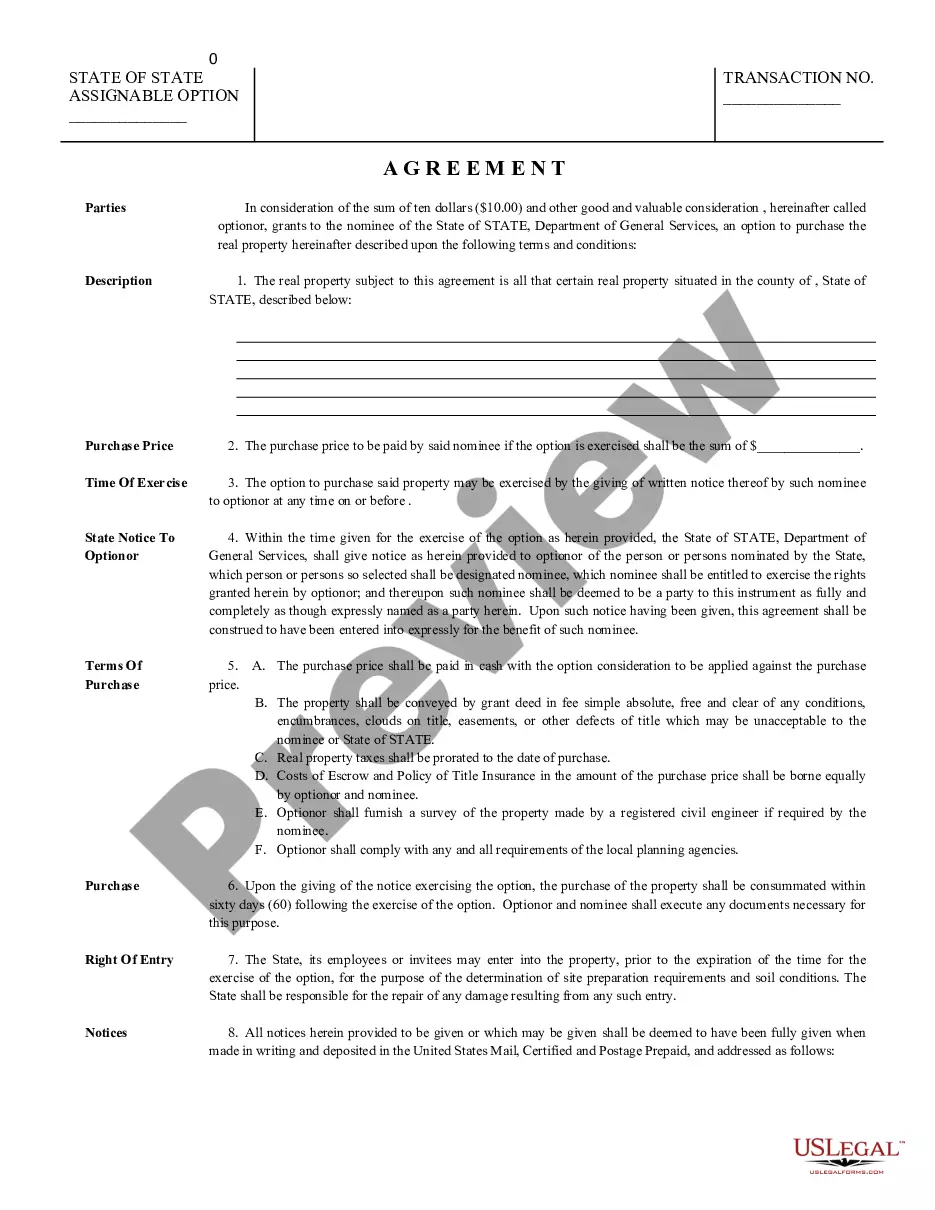
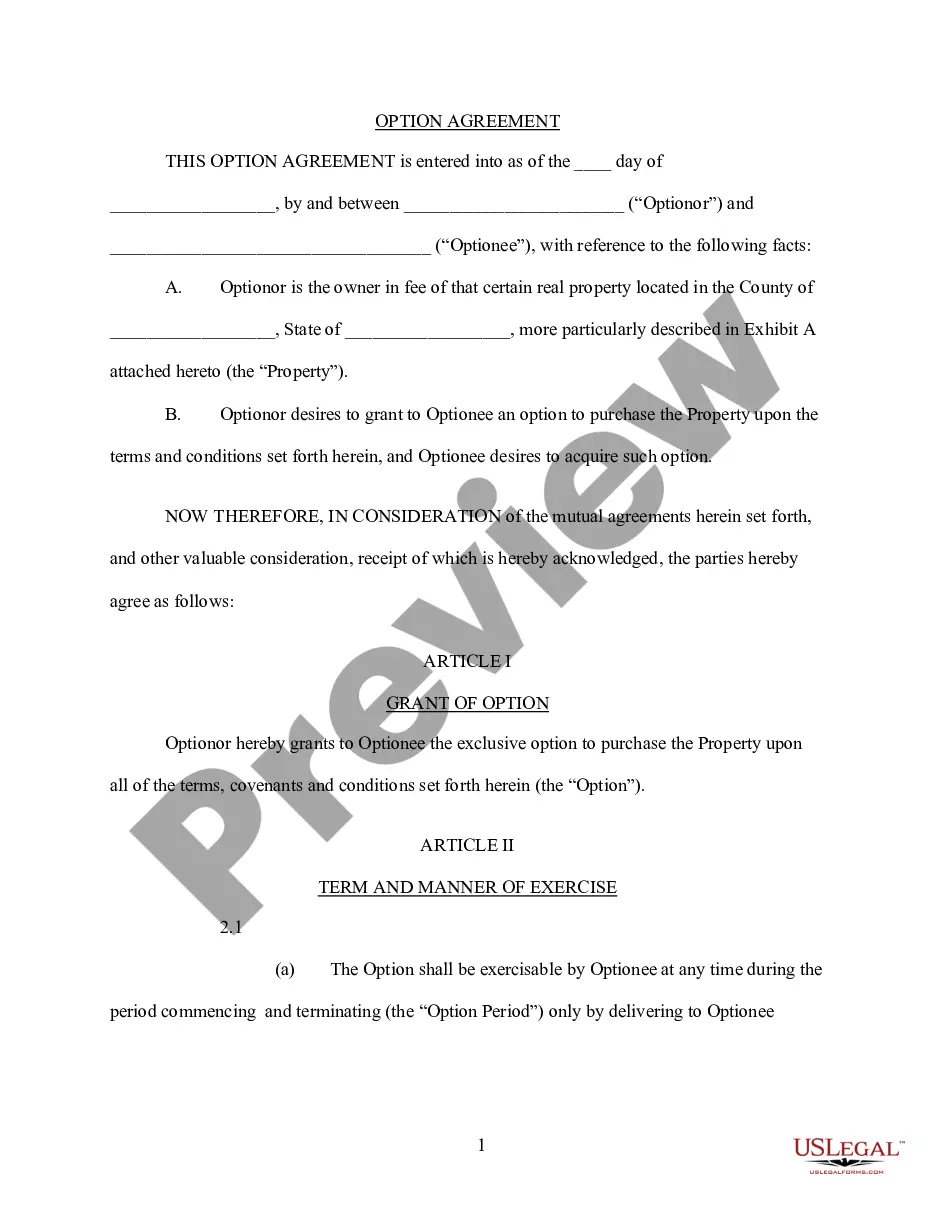
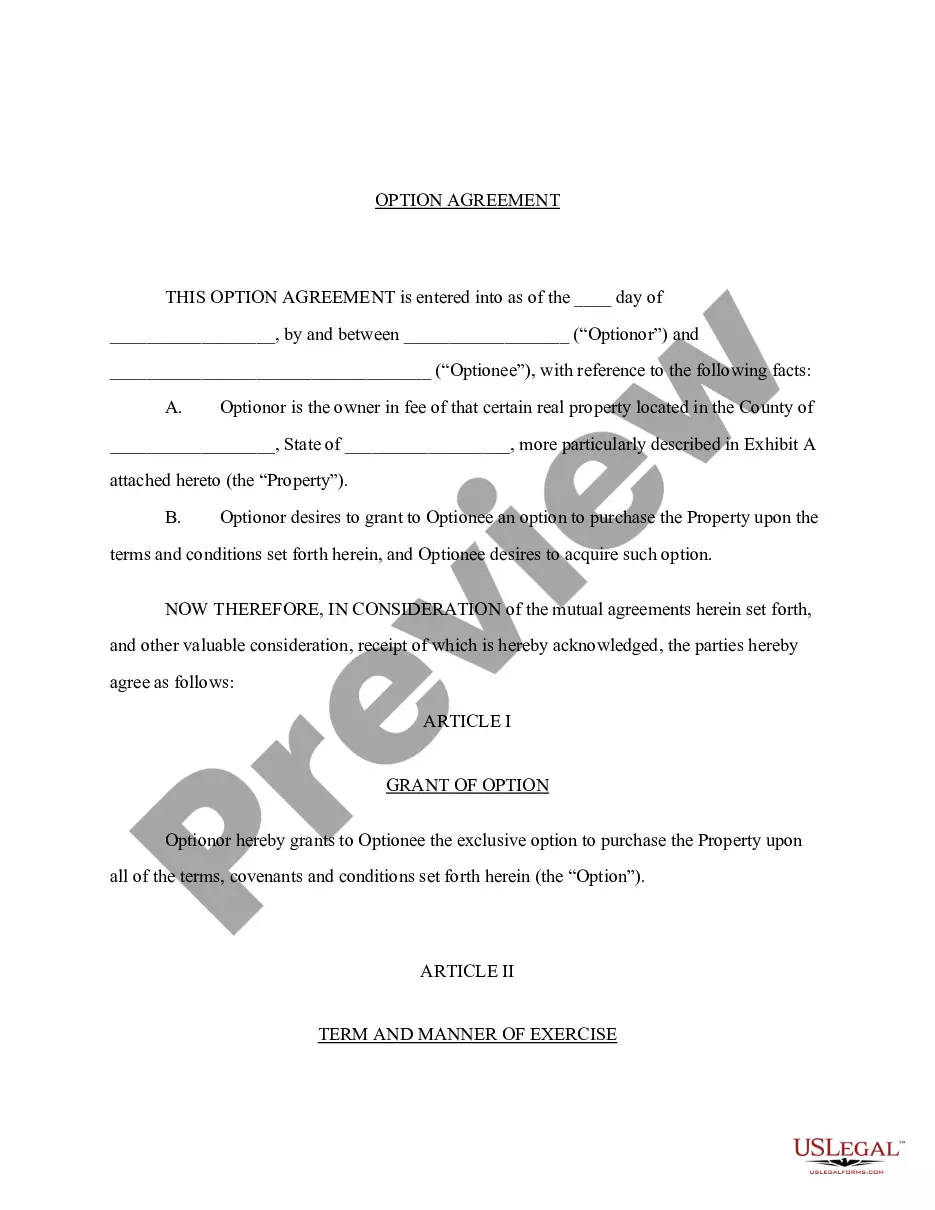
The Notice of Option for Recording is a legal document that serves as a memorandum to inform interested parties that an option to purchase real estate exists. This form is used instead of recording the entire option agreement, simplifying the process of notifying other parties while maintaining the necessary legal protections for the seller and buyer involved in the transaction.
Form components explained
- Prepared by, recording requested by, and return address section.
- Identification of the Seller(s) and Buyer(s).
- Details of the property, including county and property description.
- Duration of the option period, specifying start and end dates.
- Reference to the original option agreement.
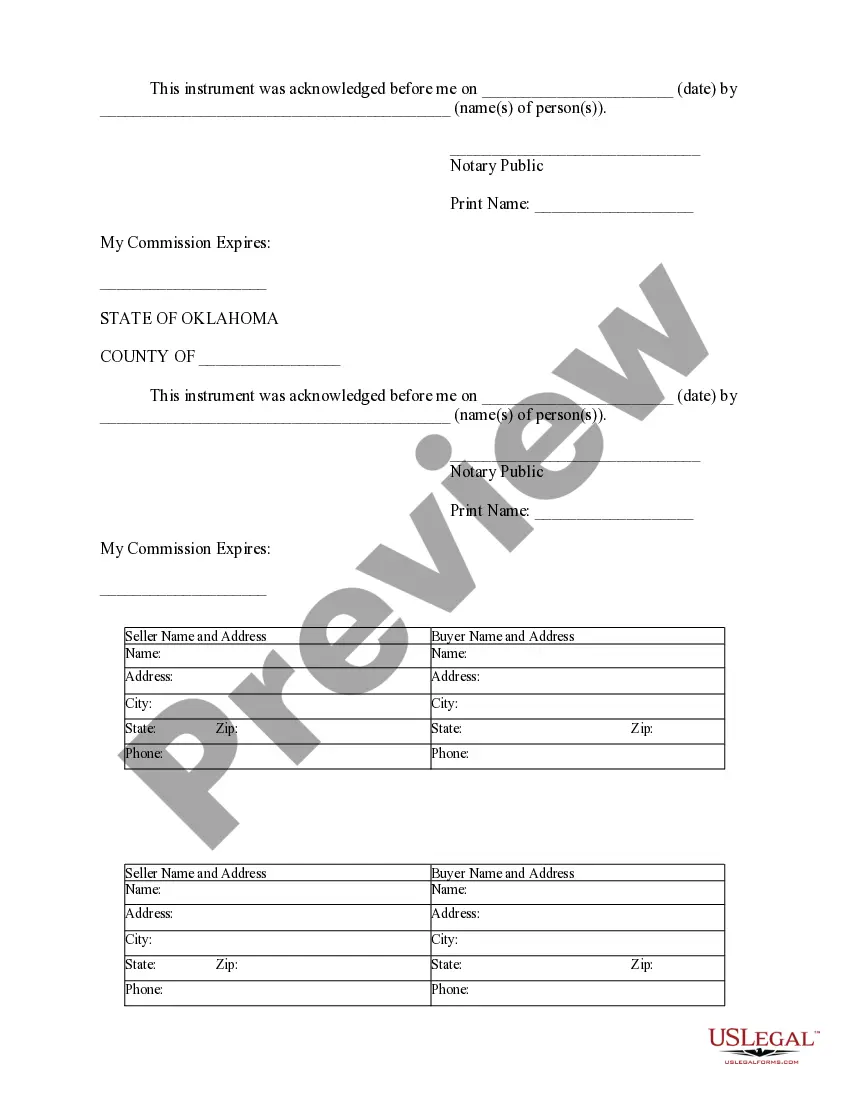
- Notarial acknowledgment section for legal validation.

When to use this document
This form is used when a buyer and seller have entered into an option agreement for real estate, allowing the buyer a specified timeframe to consider purchasing the property. It is essential in situations where the seller wants to provide official notice of the option without disclosing the entire agreement, which can be crucial for both marketing and legal transparency.
Who needs this form
- Real estate sellers looking to formally document options to purchase property.
- Buyers who have negotiated an exclusive option to purchase real estate.
- Real estate agents or attorneys supporting clients in property transactions.
How to complete this form
- Identify the parties by entering the names of the Seller(s) and Buyer(s).
- Specify the property details, including the county and a description of the property.
- Enter the duration of the option period, including the start and end dates.
- Reference the original option agreement by noting its date.
- Ensure all parties sign and date the document in the designated areas.
Notarization guidance
This form must be notarized to be legally valid. A notary public can verify the identities of the parties involved, which is essential for the enforceability of the Notice of Option for Recording. US Legal Forms offers integrated online notarization, available 24/7, ensuring secure video calls and legal equivalence without the need for travel.
Get your form ready online
Our built-in tools help you complete, sign, share, and store your documents in one place.
Make edits, fill in missing information, and update formatting in US Legal Forms—just like you would in MS Word.
Download a copy, print it, send it by email, or mail it via USPS—whatever works best for your next step.
Sign and collect signatures with our SignNow integration. Send to multiple recipients, set reminders, and more. Go Premium to unlock E-Sign.
If this form requires notarization, complete it online through a secure video call—no need to meet a notary in person or wait for an appointment.
We protect your documents and personal data by following strict security and privacy standards.

Make edits, fill in missing information, and update formatting in US Legal Forms—just like you would in MS Word.

Download a copy, print it, send it by email, or mail it via USPS—whatever works best for your next step.

Sign and collect signatures with our SignNow integration. Send to multiple recipients, set reminders, and more. Go Premium to unlock E-Sign.

If this form requires notarization, complete it online through a secure video call—no need to meet a notary in person or wait for an appointment.

We protect your documents and personal data by following strict security and privacy standards.
Avoid these common issues
- Failing to correctly identify all parties involved in the transaction.
- Not specifying the exact property details, which can lead to legal disputes.
- Leaving out the expiration date of the option period.
- Omitting signatures or notarization, if required.
Why complete this form online
- Convenient access to legal templates anytime, ensuring you can prepare documents at your own pace.
- Editable formats that allow customization to your specific needs without legal jargon.
- Reliable templates drafted by licensed attorneys for peace of mind.
Looking for another form?
Form popularity
FAQ
TheLaw.com Law Dictionary & Black's Law Dictionary 2nd Ed. Publicly taking note or acknowledging the claim of another person with regard to real estate, such as the filing and recording of a deed.
Race statutes are extremely rare because it is generally viewed as unfair to protect a party who had actual notice of a prior conveyance. Currently, Delaware, North Carolina, and Louisiana are the only jurisdictions where a race statute is in effect.
1. C Explanation: Recording an instrument provides constructive notice to the public of the interest set forth in the recorded instrument. 2. A Explanation: A corporate seal may be added where a corporation is grantor, in order to indicate that the person who signed had authority to sign on behalf of the corporation.
Title deeds do not have to be recorded. Recording is filing them in the county recorder's office and if recorded, the title deed acts as defacto notice to all third parties as to ownership in the property.
There are three basic kinds of statutory schemes in recording acts: race, notice, and race/notice. Even though a recording act does not require recordation, the law does create strong incentive for a buyer to record.
A recording act that gives priority of title to the party that records a claim first, even if the party had notice of an earlier unrecorded claim on the same property. See Notice statute and Race-notice statute.
A recording act that gives priority of title to the party that records first, but only if the party also lacked notice of prior unrecorded claims on the same property. See Notice statute and Race statute. PROPERTY. property & real estate law. wex definitions.
The purpose of recording a document is to provide a traceable chain of title to the property (chain of title is evidence that a piece of property has validly passed down through the years from one owner to the next).
Oklahoma is considered a "race-notice" jurisdiction, meaning that a subsequent purchaser for value (i.e. a subsequent bona fide purchaser) has a superior claim over a prior purchaser of the same interest if the subsequent purchaser (1) records before the prior purchaser and (2) at the time of the conveyance, the