Oklahoma Forest Products Sale Contract - Timber
About this form
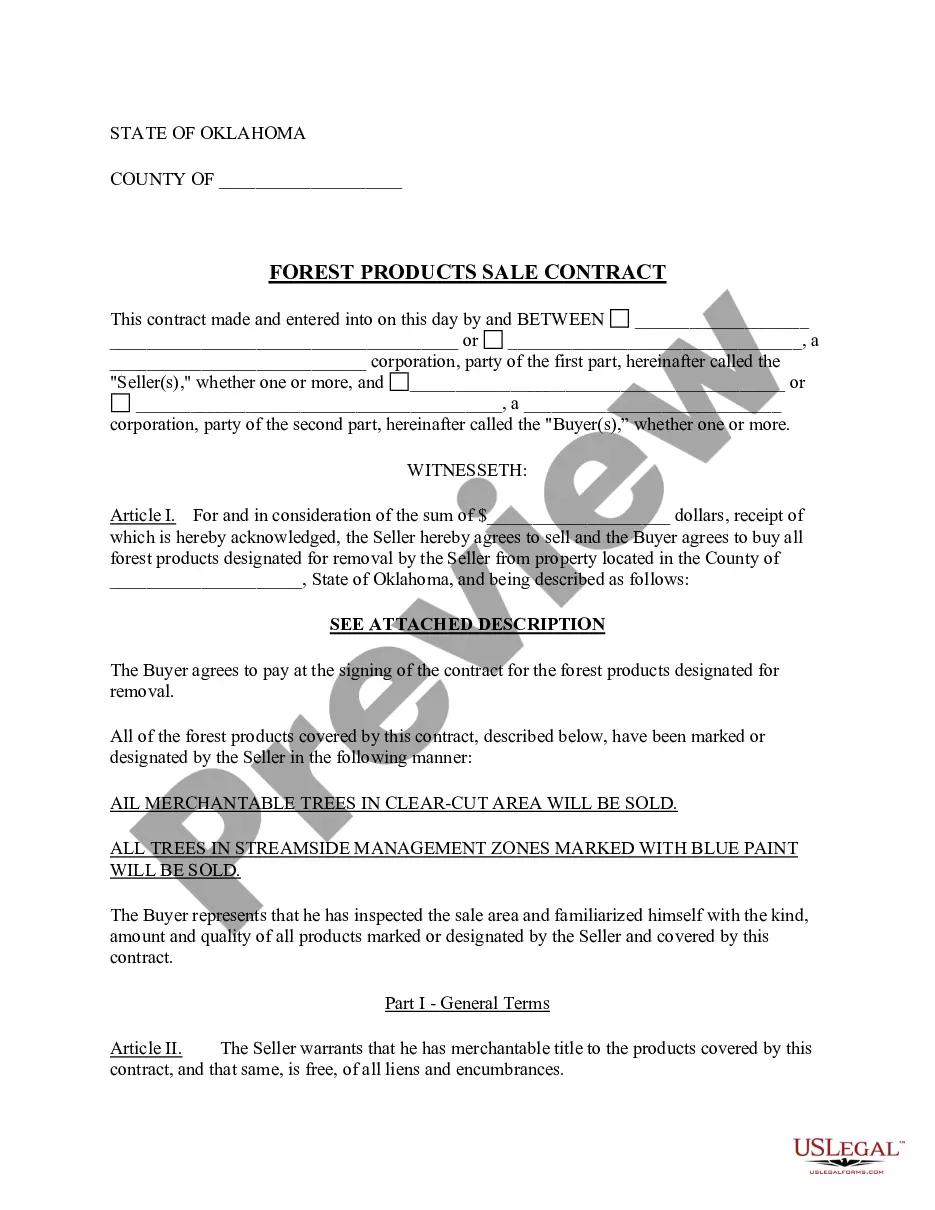
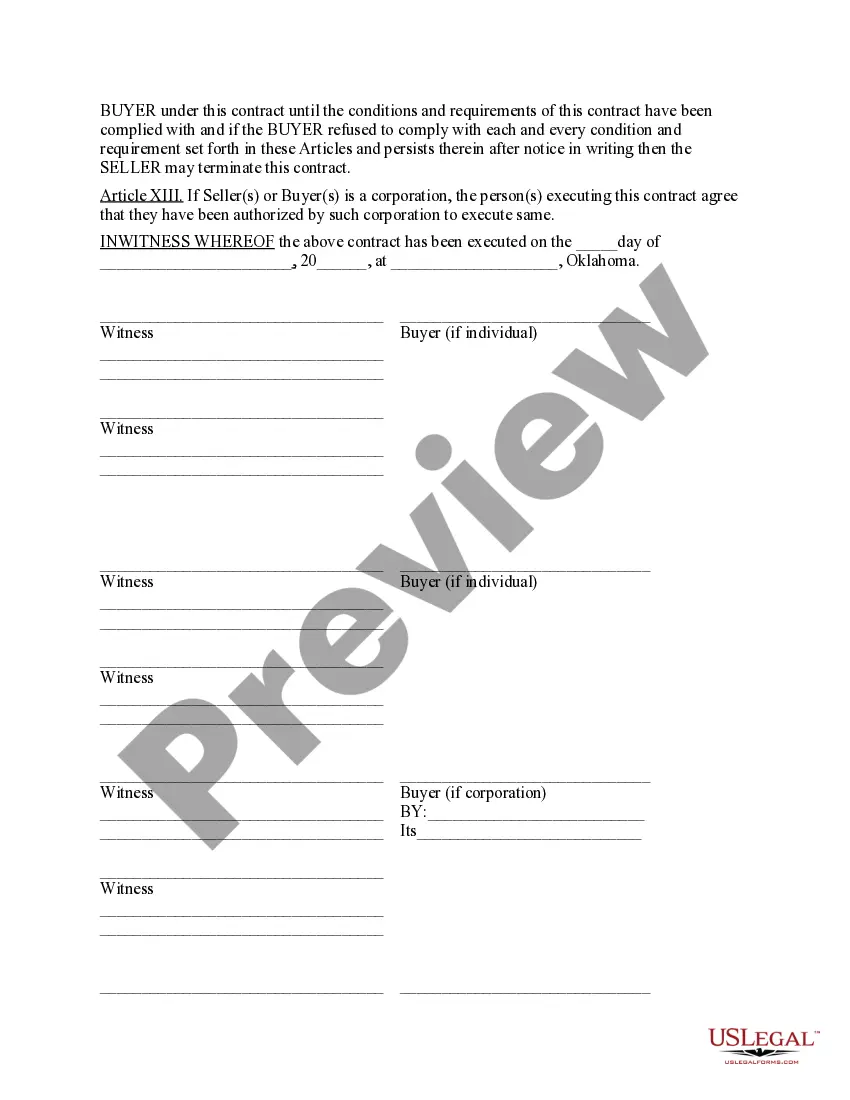
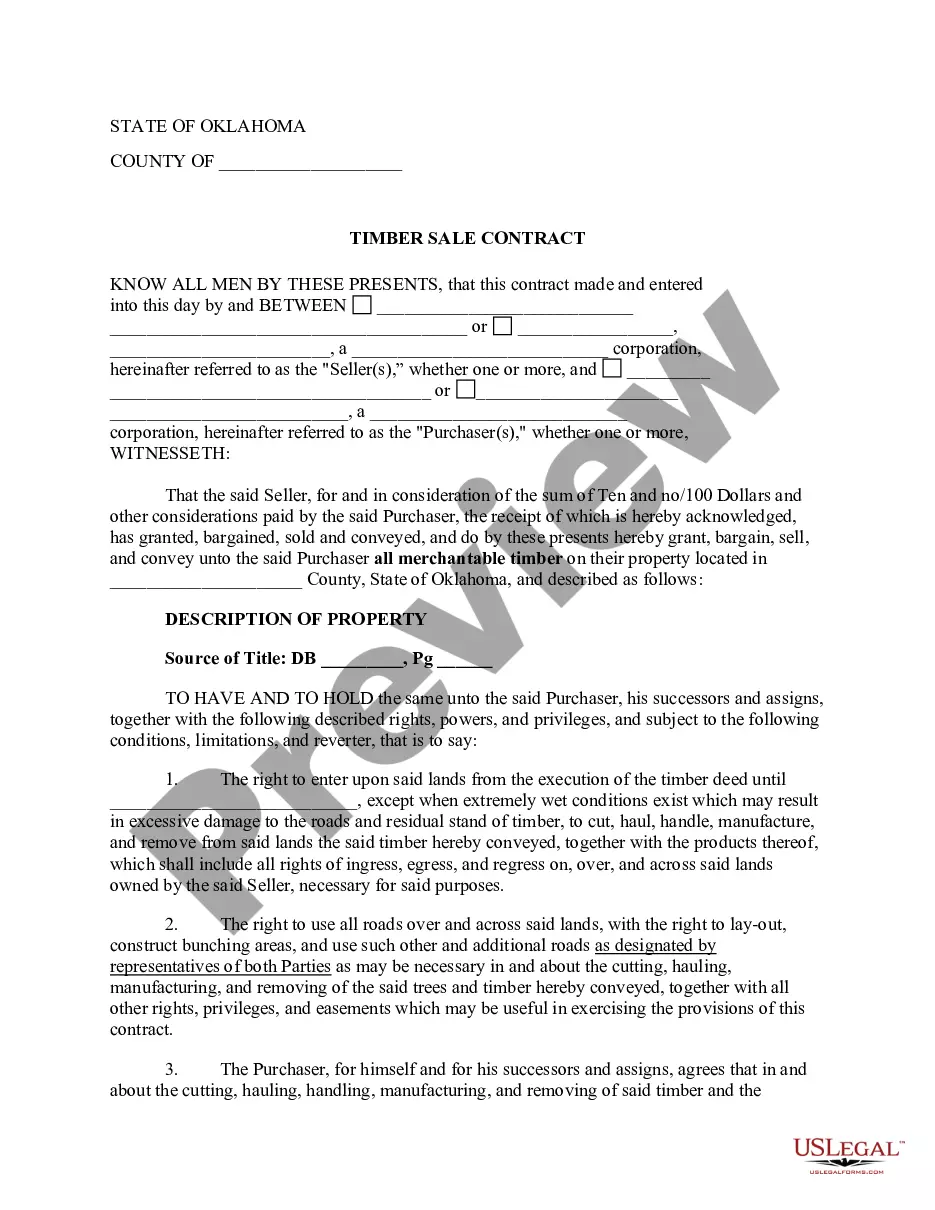
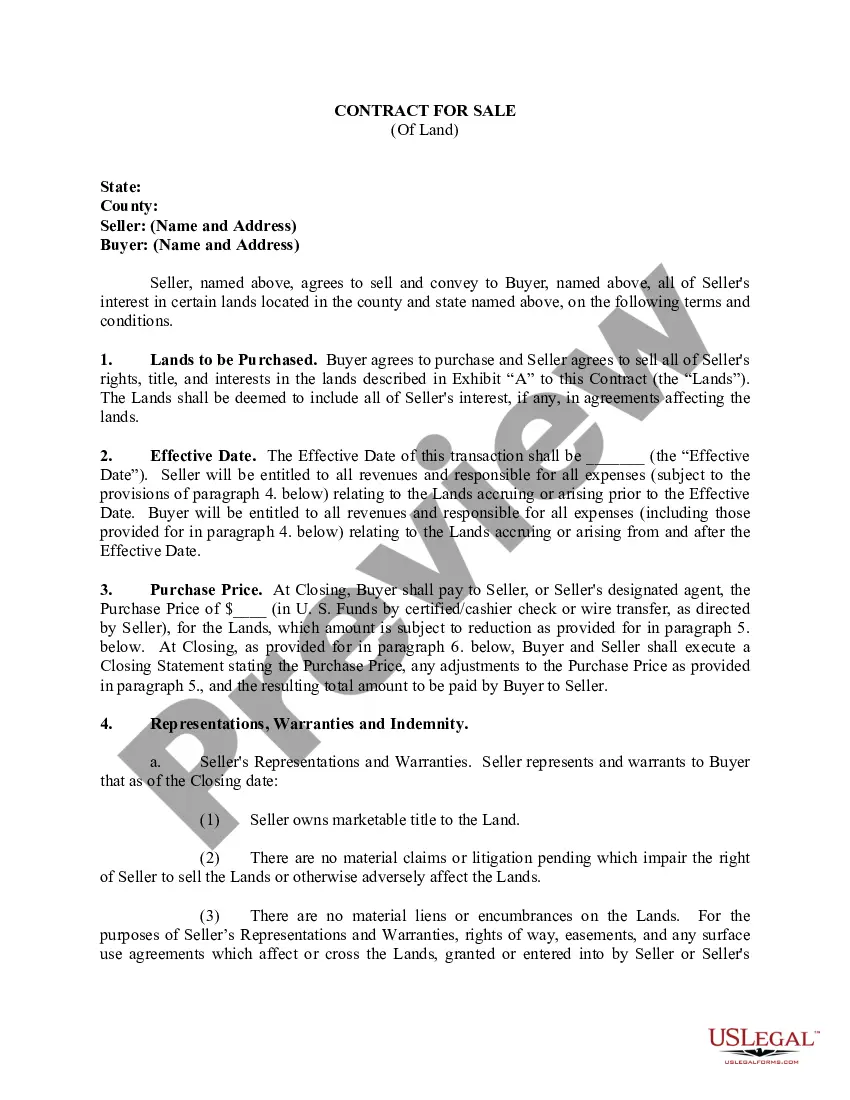
The Forest Products Sale Contract - Timber is a legal document that outlines the agreement between a seller and buyer for the sale of timber. This contract specifies the terms of the sale, including payment, the types of timber being sold, and the buyer's right to access the seller's property for timber removal. Unlike general sales agreements, this form focuses specifically on forest products, making it suitable for transactions involving timber only.
Main sections of this form
- Parties involved: Identifies the seller and buyer, including their legal status (individual or corporation).
- Consideration: States the total payment for the designated timber.
- Description of timber: Details the specific forest products included in the sale.
- Rights of ingress and egress: Grants the buyer access to the seller's land for timber removal.
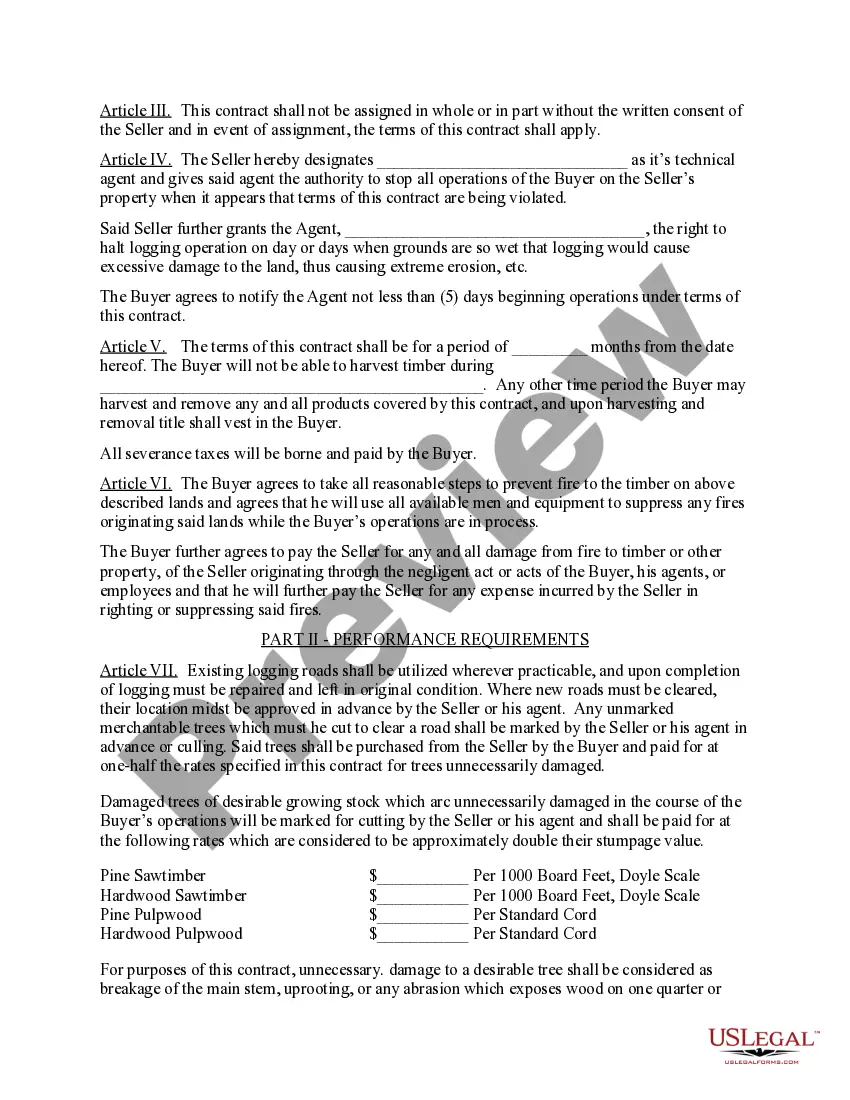
- Warranties: The seller's assurance of ownership and that the timber is free from liens.
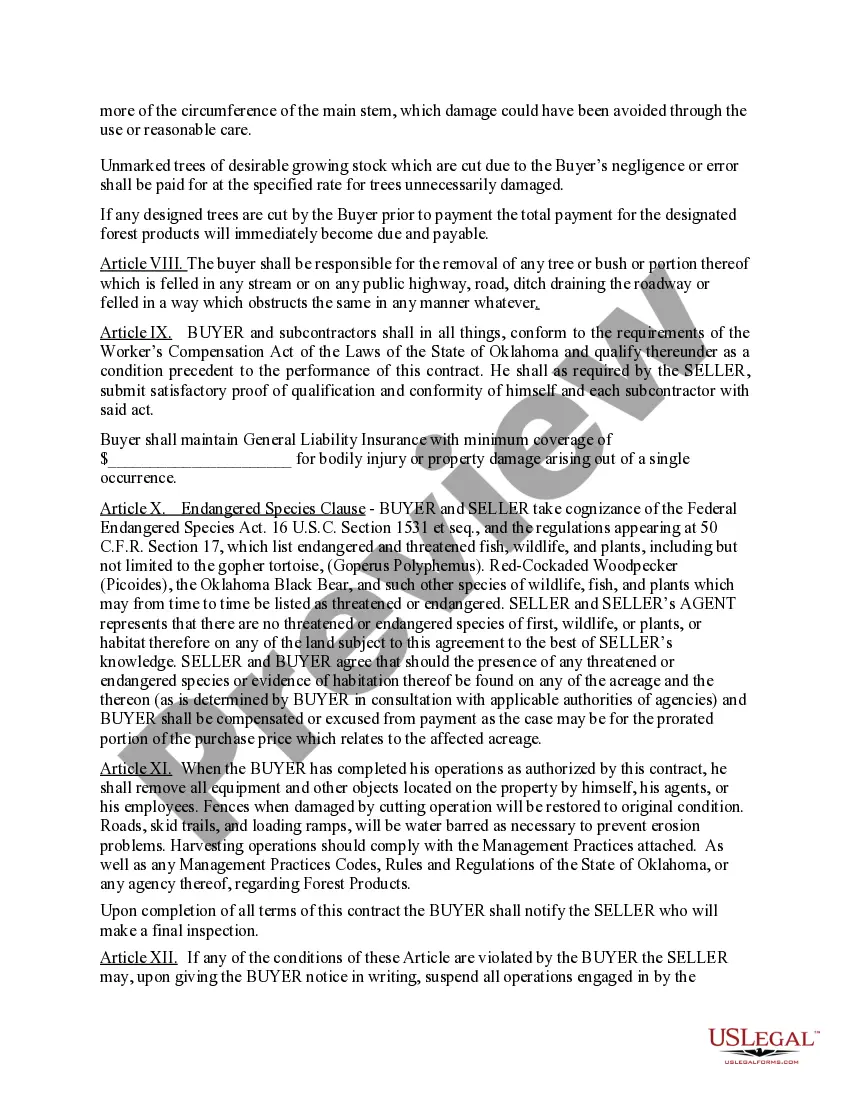
- Fire prevention and responsibilities: Outlines the buyer's obligations to prevent damage from fires and maintain the land.
When to use this form
This form is appropriate when a landowner wishes to sell timber from their property. It is ideal for situations where the buyer needs to harvest the timber, specifying the terms of access and payment, as well as legal obligations for land management and environmental protection. This contract can help protect both parties by clearly laying out the responsibilities involved in the timber sale.
Who should use this form
- Landowners (sellers) looking to sell their timber.
- Individuals or corporations interested in buying timber for logging or other purposes.
- Forestry professionals managing timber sales.
Completing this form step by step
- Identify the parties: Enter the full names and legal status of the buyer and seller.
- Specify the property: Include detailed descriptions of the property from which timber will be harvested.
- Enter payment details: State the amount the buyer will pay for the timber.
- Outline timber conditions: Describe the types of timber and any conditions regarding their removal.
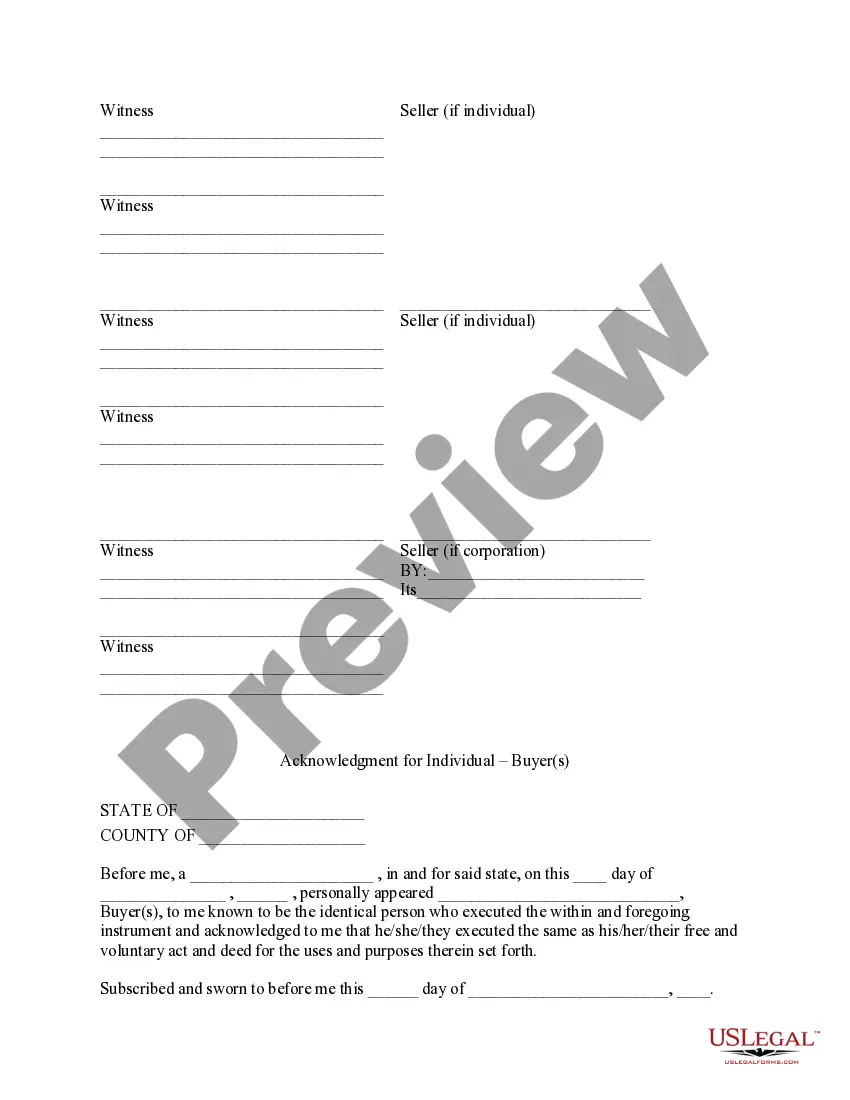
- Sign and date the contract: Ensure all parties sign and date the document for it to be legally binding.
Notarization requirements for this form
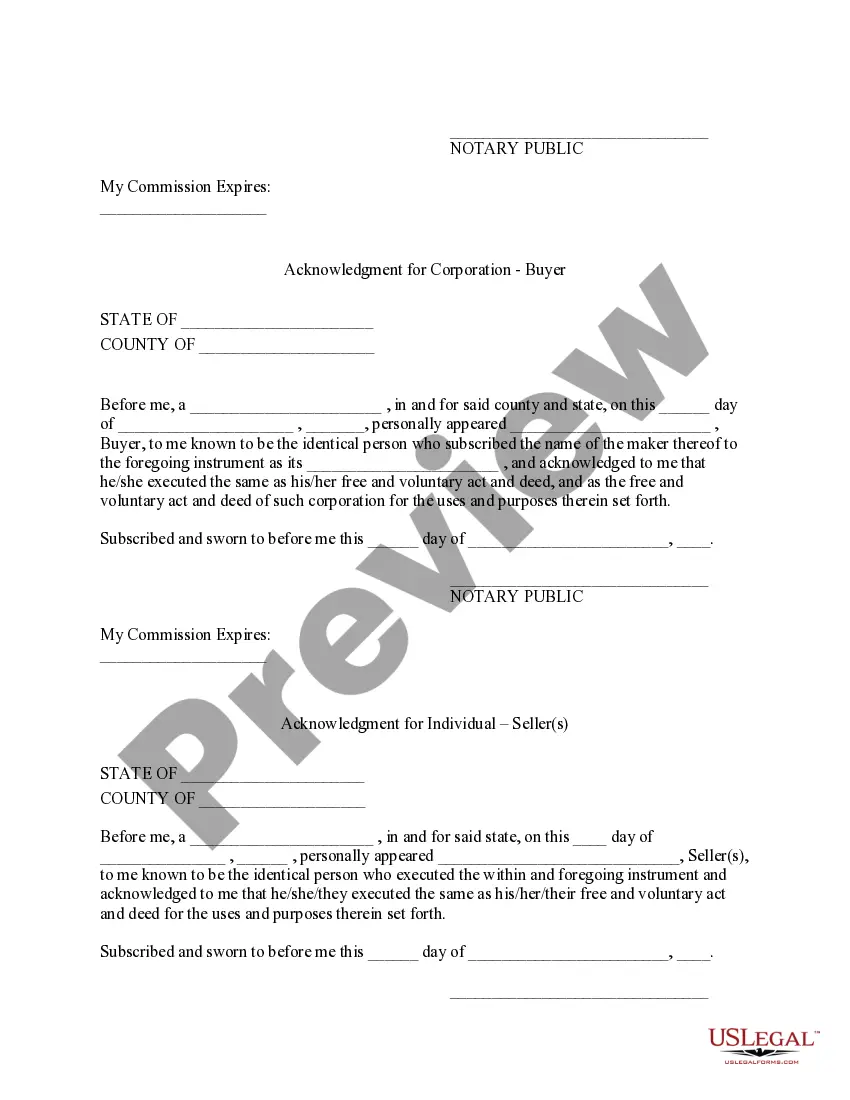
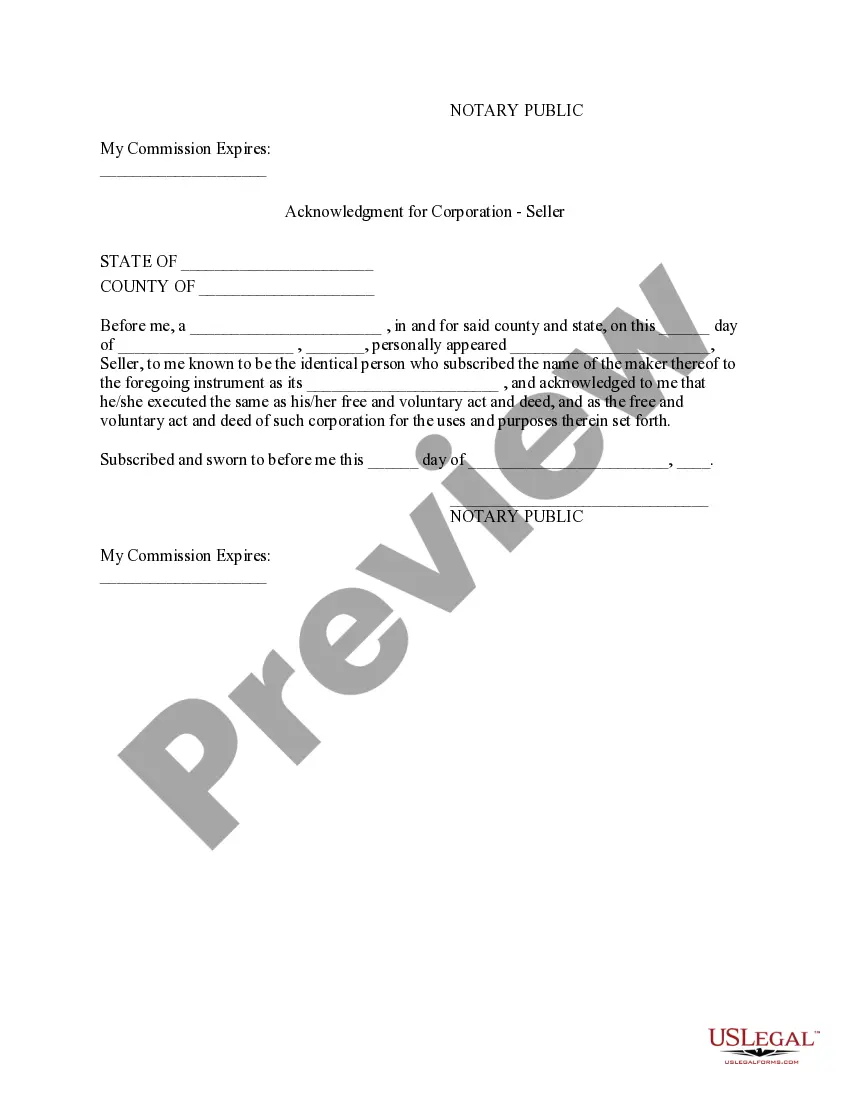
Notarization is required for this form to take effect. Our online notarization service, powered by Notarize, lets you verify and sign documents remotely through an encrypted video session, available 24/7.
Get your form ready online
Our built-in tools help you complete, sign, share, and store your documents in one place.
Make edits, fill in missing information, and update formatting in US Legal Forms—just like you would in MS Word.
Download a copy, print it, send it by email, or mail it via USPS—whatever works best for your next step.
Sign and collect signatures with our SignNow integration. Send to multiple recipients, set reminders, and more. Go Premium to unlock E-Sign.
If this form requires notarization, complete it online through a secure video call—no need to meet a notary in person or wait for an appointment.
We protect your documents and personal data by following strict security and privacy standards.

Make edits, fill in missing information, and update formatting in US Legal Forms—just like you would in MS Word.

Download a copy, print it, send it by email, or mail it via USPS—whatever works best for your next step.

Sign and collect signatures with our SignNow integration. Send to multiple recipients, set reminders, and more. Go Premium to unlock E-Sign.

If this form requires notarization, complete it online through a secure video call—no need to meet a notary in person or wait for an appointment.

We protect your documents and personal data by following strict security and privacy standards.
Common mistakes to avoid
- Not clearly defining the specific timber to be sold, leading to disputes later.
- Failing to initial or sign all required sections of the contract.
- Ineffectively detailing ingress and egress rights, which can cause access issues for the buyer.
- Omitting to verify the seller's ownership and rights to sell the timber.
Benefits of completing this form online
- Convenience: Easily fill out and download from your device at any time.
- Editability: Make necessary changes quickly before finalizing.
- Reliability: Forms are drafted by licensed attorneys, ensuring legal accuracy and enforceability.
Main things to remember
- The Forest Products Sale Contract - Timber is essential for formalizing timber sales.
- Clear terms help protect the rights and responsibilities of both buyers and sellers.
- This contract is designed specifically for the state of Oklahoma, ensuring compliance with local laws.
- Professional online forms enhance ease of use and legal reliability.
Looking for another form?
Form popularity
FAQ
To estimate the value of your timber, take the volume, divided by 1,000, and multiply it by the price quoted in your states standing timber stumpage report.
Step 1: Get helP. Step 2: Get a plaN. Step 3: Get to know your timber. Step 4: Set your limits. Step 5: Find your buyers. Step 6: Start selling. Step 7: Put it in writing. Step 8: Check in on harvest day.
The two basic ways to sell timber are either as stumpage (standing timber) or as logs or other finished products. Each way has its pros and cons. Log sales involve harvesting and processing your own timber and then selling the finished products that come from it: veneer, sawtimber, pulpwood, etc.
The average stumpage price is $300/MBF, or $1,800 per acre total value.
Depending on the type of trees and the market when the timber is sold, you could earn $500 to $2000 per acre (at $1500, you would be looking at $60 per year in income if you were to annualize it over 25 years).
As a guide timber harvesting costs are commonly between $20 and $40 per cubic metre depending on the type of machinery used, the type of the logs and the site conditions. Harvesting costs are generally lower for large plantations of large diameter logs on easy accessible country.
The more mature trees you have, the more likely it is that your timber is ready for harvest. To estimate the value of your timber, take the volume, divided by 1,000, and multiply it by the price quoted in your states standing timber stumpage report.
Timber prices are negotiated between the seller and the buyer based on the relationship between supply and demand factors.
It's generally much easier to sell trees in a woodlot harvest, where many trees are sold and harvested at the same time. To cut down your tree, a timber buyer must bring in laborers, a log truck, skidder, loader, and other equipment. The buyer must cut the logs and haul them to the mill to sell.