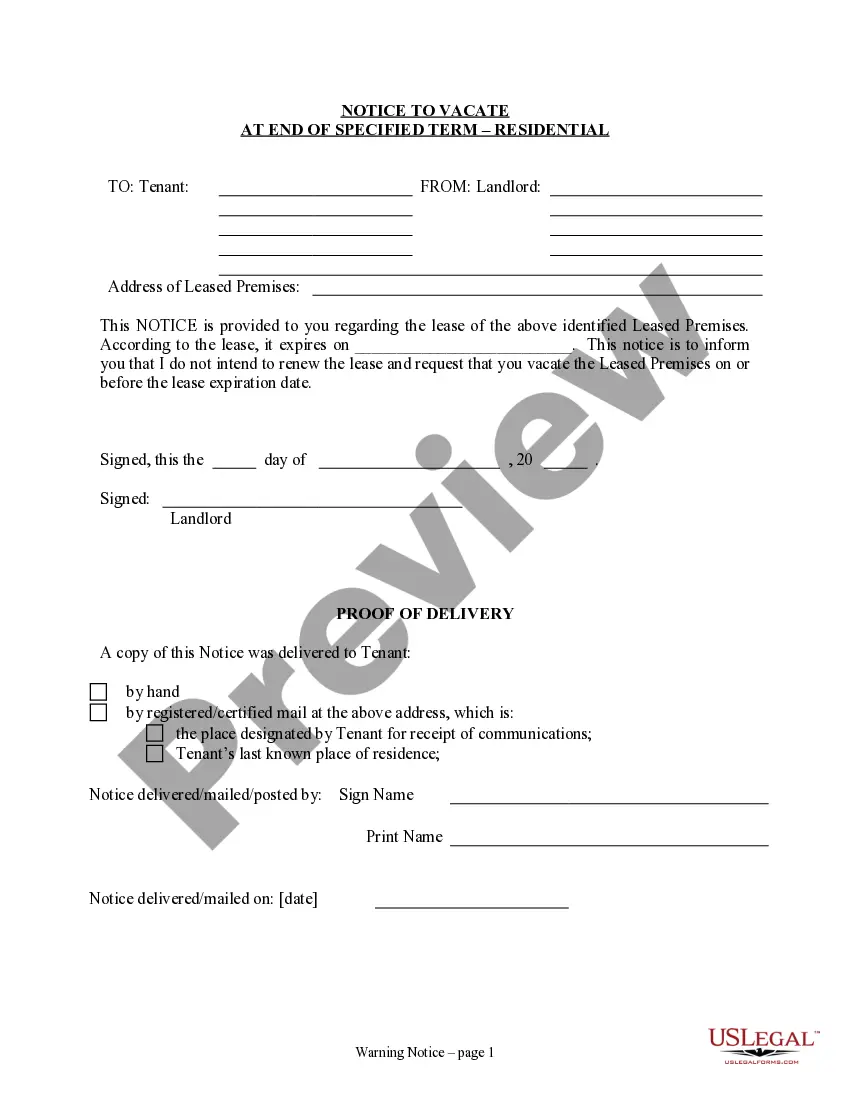
Oklahoma Notice of Intent Not to Renew at End of Specified Term from Landlord to Tenant for Residential Property
Description
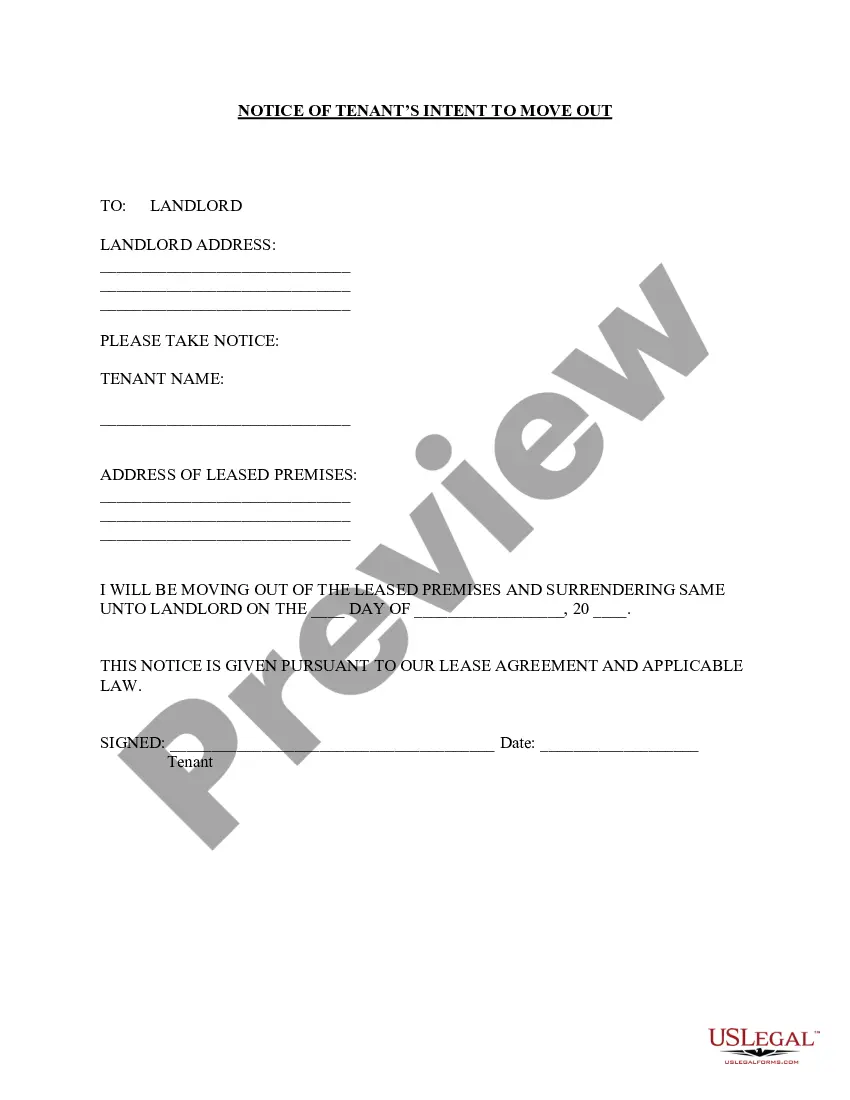




How to fill out Oklahoma Notice Of Intent Not To Renew At End Of Specified Term From Landlord To Tenant For Residential Property?
In terms of filling out Oklahoma Notice of Intent Not to Renew at End of Specified Term from Landlord to Tenant for Residential Property, you almost certainly think about a long process that involves choosing a appropriate sample among countless similar ones and then being forced to pay an attorney to fill it out to suit your needs. Generally speaking, that’s a slow and expensive choice. Use US Legal Forms and pick out the state-specific template within just clicks.
For those who have a subscription, just log in and click Download to get the Oklahoma Notice of Intent Not to Renew at End of Specified Term from Landlord to Tenant for Residential Property template.
In the event you don’t have an account yet but want one, follow the point-by-point guide below:
- Be sure the document you’re getting is valid in your state (or the state it’s needed in).
- Do this by reading through the form’s description and also by visiting the Preview option (if readily available) to see the form’s content.
- Click Buy Now.
- Pick the appropriate plan for your financial budget.
- Sign up to an account and select how you would like to pay out: by PayPal or by credit card.
- Save the document in .pdf or .docx format.
- Get the record on the device or in your My Forms folder.
Skilled legal professionals draw up our templates to ensure after downloading, you don't have to worry about editing content material outside of your personal info or your business’s info. Be a part of US Legal Forms and receive your Oklahoma Notice of Intent Not to Renew at End of Specified Term from Landlord to Tenant for Residential Property document now.
Form popularity
FAQ
The Tenant Consistently Fails To Pay Rent or Pays Late. A tenant that cannot fulfill their obligation to pay rent on time may face non-renewal. Property Damage or Violations of Policy. Selling or Renovating the Property. Discrimination or Retaliation Are Unlawful.
A termination notice has to give the tenant 14 clear days before the tenant has to leave the residential premises. The day the notice is served on the tenant and the day the tenant moves out do not count as part of the 14 days.
At-will tenancy is subject to the will of both the tenant and the landlord (hence the name). In other words, the tenant can choose to leave and stop paying rent at any time, and the landlord can choose to stop accepting rent and ask the tenant to leave at any time.
Depending on your state's laws, you may be entitled to remain in your apartment or rental home on a month-to-month basis after your lease expires, even if your landlord wants you out. If the landlord doesn't accept your decision, he'll have to go to court to evict you.
Explain the Situation Tell your tenant in straightforward terms what the problem is, and explain that they cannot stay on the property any longer. Describe the Consequences Calmly explain that they will be evicted with necessary court orders if they remain on the property.
Can An Apartment Refuse To Renew A Lease? In most states, it is up to the property owner and manager to determine whether or not they want to extend their lease agreement with a tenant. If they do not want to continue to rent to that tenant for some reason, it is within their rights to do so.
A landlord can simply give you a written notice to move, allowing you 30 days (60 days if you've lived in the rental a year or more) as required by California law and specifying the date on which your tenancy will end.
While some jurisdictions may have provisions that allow consumers to change their minds with no consequences, generally there is no cooling-off period for leasing real property. Once the landlord and tenant sign a lease and a copy is delivered to the both parties, it becomes a valid contract.
A holdover tenant is a tenant who stays in the rental unit after the lease expires. If the tenant continues to pay rent, the tenancy essentially becomes a month-to-month tenancy. A holdover tenant is legally allowed to stay in the rental unit as long as the landlord takes no action to remove them.