Ohio Codicil to Will Form for Amending Your Will - Will Changes or Amendments
About this form
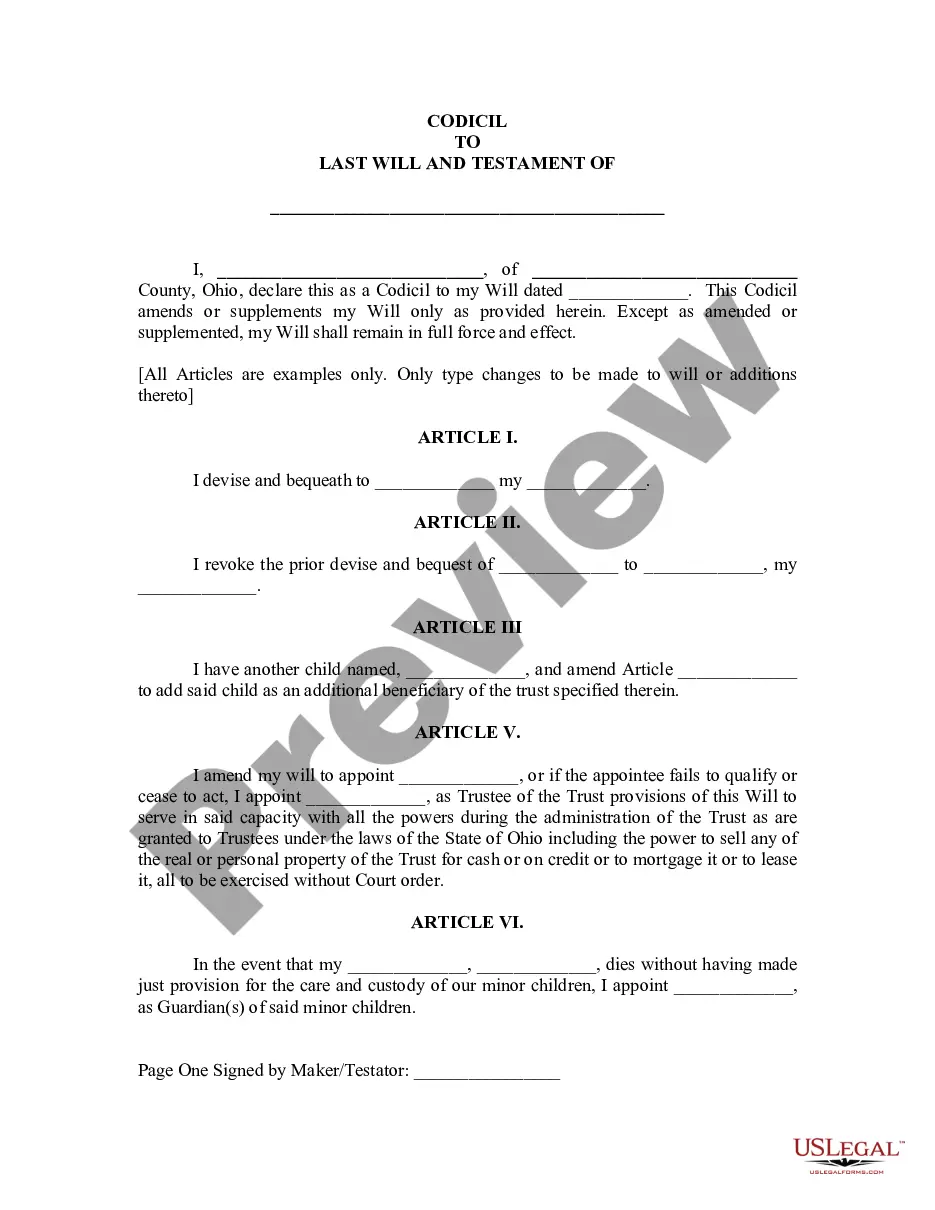
The Codicil to Will Form allows individuals to make specific changes or amendments to an existing will without drafting an entirely new document. This form serves the purpose of modifying specific provisions while ensuring that the original will remains valid except for the changes made by the codicil. It includes essential requirements for execution and attestation as mandated by Ohio law.
Main sections of this form
- Declaration as a Codicil to a previously dated Will.
- Provisions for amending or supplementing the original Will.
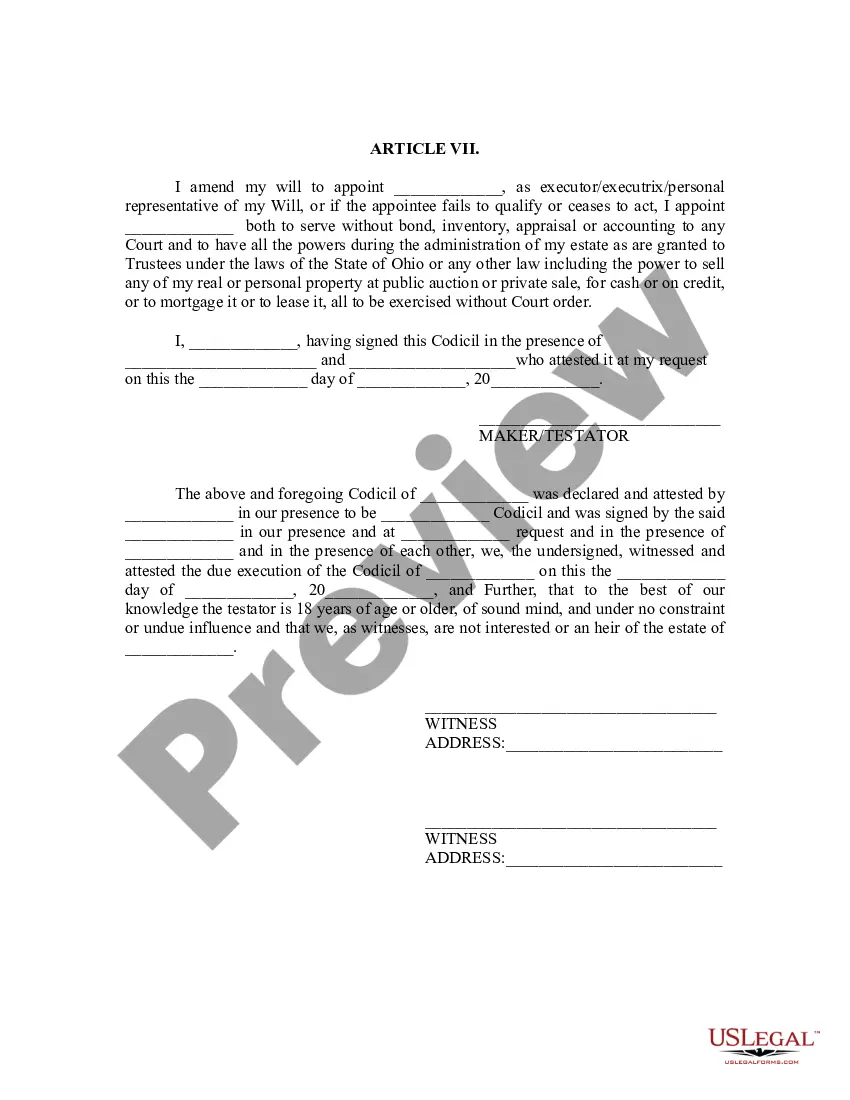
- Articles for specific changes, including bequests and appointment of beneficiaries.
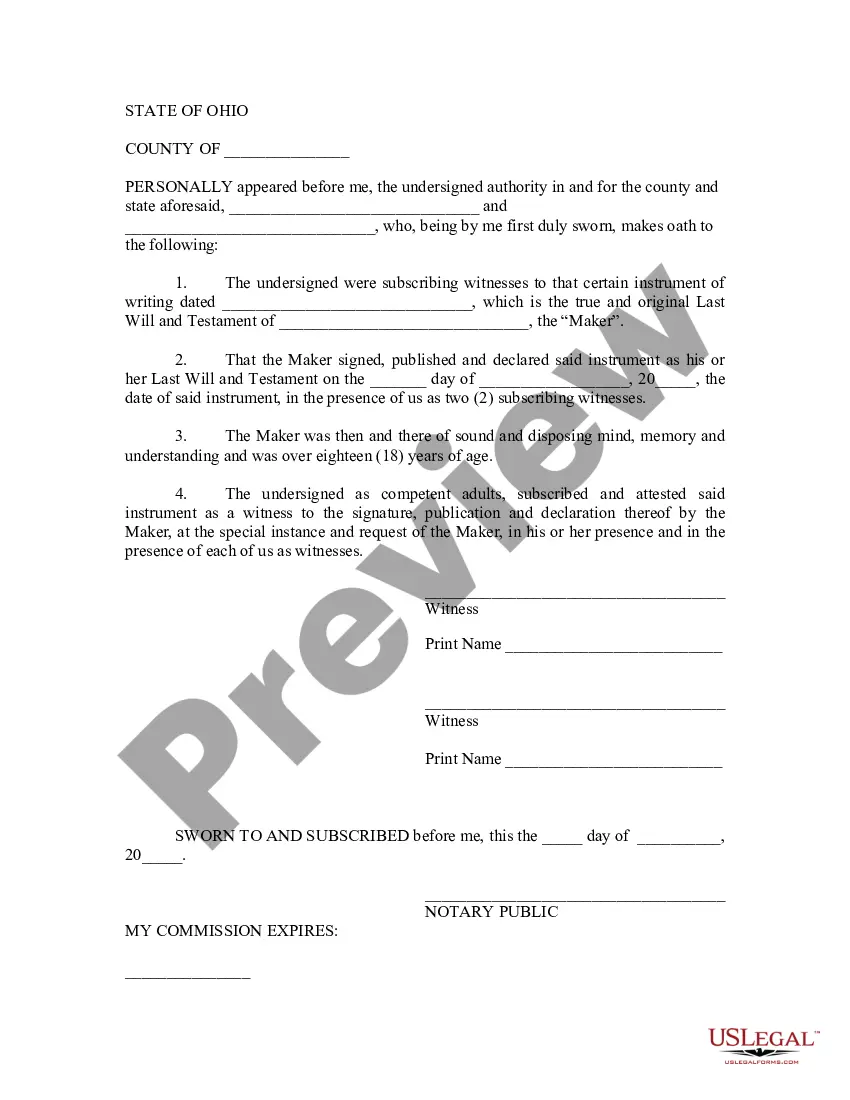
- Requirements for signing and notarizing the document.
- Choice of witnesses and their requirements for attestation.

When to use this document
This form is useful in various situations, including but not limited to: adding new beneficiaries, changing existing bequests, appointing new executors, or modifying trustee provisions. If you experience significant life changes such as marriage, divorce, or the birth of a child, a codicil allows you to update your wishes without the need for a full will revision.
Who needs this form
- Individuals with an existing will who wish to make minor adjustments.
- People experiencing significant life changes affecting their estate plans.
- Those who want to ensure their will accurately reflects their current intentions.
Completing this form step by step
- Begin by entering your name and information about your county.
- Specify the date of your original will to provide context for the codicil.
- Make the necessary amendments by filling in the sections outlined in the articles, being clear about your intentions.
- Sign the document in the presence of two witnesses who will also need to sign it.
- Consider having the document notarized for additional legal validation.
Notarization requirements for this form
Yes, this form must be notarized to be legally valid. Notarization helps ensure the authenticity of the signatures and the testator's capacity at the time of signing. US Legal Forms offers integrated online notarization for your convenience, available 24/7 through secure video calls.
Get your form ready online
Our built-in tools help you complete, sign, share, and store your documents in one place.
Make edits, fill in missing information, and update formatting in US Legal Forms—just like you would in MS Word.
Download a copy, print it, send it by email, or mail it via USPS—whatever works best for your next step.
Sign and collect signatures with our SignNow integration. Send to multiple recipients, set reminders, and more. Go Premium to unlock E-Sign.
If this form requires notarization, complete it online through a secure video call—no need to meet a notary in person or wait for an appointment.
We protect your documents and personal data by following strict security and privacy standards.

Make edits, fill in missing information, and update formatting in US Legal Forms—just like you would in MS Word.

Download a copy, print it, send it by email, or mail it via USPS—whatever works best for your next step.

Sign and collect signatures with our SignNow integration. Send to multiple recipients, set reminders, and more. Go Premium to unlock E-Sign.

If this form requires notarization, complete it online through a secure video call—no need to meet a notary in person or wait for an appointment.

We protect your documents and personal data by following strict security and privacy standards.
Common mistakes
- Failing to specify which sections of the will are being amended.
- Not following the required signing process with witnesses and notarization.
- Completing the form without the proper legal capacity or understanding of total estate context.
Why complete this form online
- Convenient access to a legally compliant template that saves time.
- Editability allows you to customize language to fit your specific needs.
- Downloadable format enables quick and easy storage or printing for signatures.
Main things to remember
- This Codicil to Will Form allows for straightforward amendments to an existing will.
- It maintains the validity of prior bequests while allowing specified changes.
- Proper execution with witnesses and notarization is crucial for legality.
Looking for another form?



Form popularity
FAQ
If you want to make some minor changes to your Will, you can do so without writing an entirely new Will. You do, however, need to write a formal document. You should not simply scratch out certain parts of your Will and write in your changes. This is usually not legal.
You cannot amend your will after it's been signed and witnessed. The only way you can change a will is by making an official alteration called a codicil. You must sign a codicil and get it witnessed in the same way as witnessing a will. There's no limit on how many codicils you can add to a will.
Legislation. Once a will has been signed, there can be no alteration by crossing out or writing in new clauses. Changes to the document will have no effect.
You can either make a codicil to your existing will or make a new will. Both require your signature and the signatures of two witnesses. If you have only a few small changes, making a codicil is a functional option.You can have a lawyer write your codicil for you, or you can make one yourself.
What is a codicil to a will? A codicil is a short, additional document typically one or two pages used to make minor changes, amendments or alterations to an existing will. To be legally valid the codicil document must be signed and executed in front of witnesses in the same way as for a will.
Making changes to your will You cannot amend your will after it's been signed and witnessed. The only way you can change a will is by making an official alteration called a codicil. You must sign a codicil and get it witnessed in the same way as witnessing a will.
To make the document legally binding, you will need to have it notarized. The original trust document was notarized and any amendments to that document must also be notarized.At that point, your amendment will become part of the revocable trust.
Identify the section and content you want to change. The first step in amending your will is to review it. Type up the changes. Take the time to type up the codicil. Sign and date the codicil. Store your codicil in a safe place.