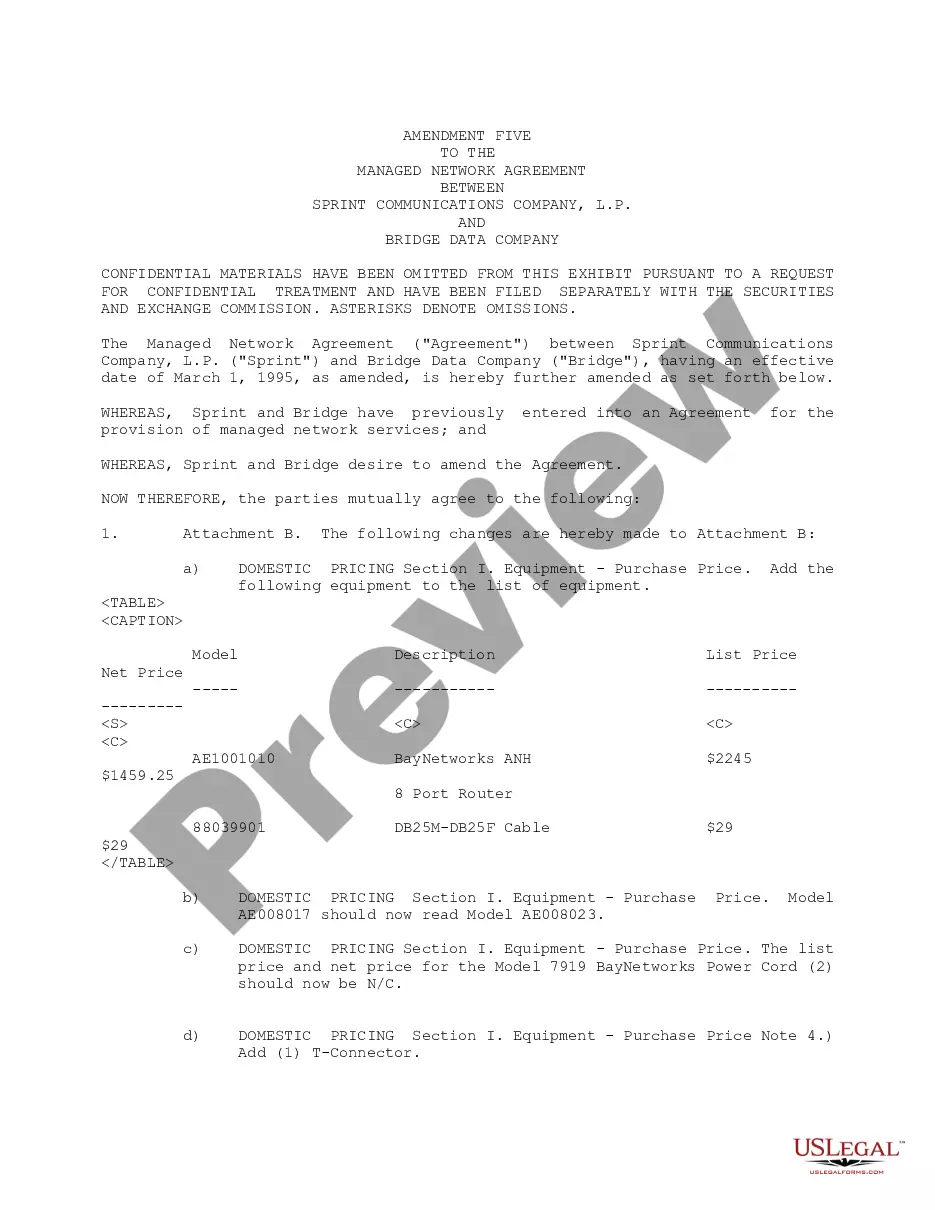
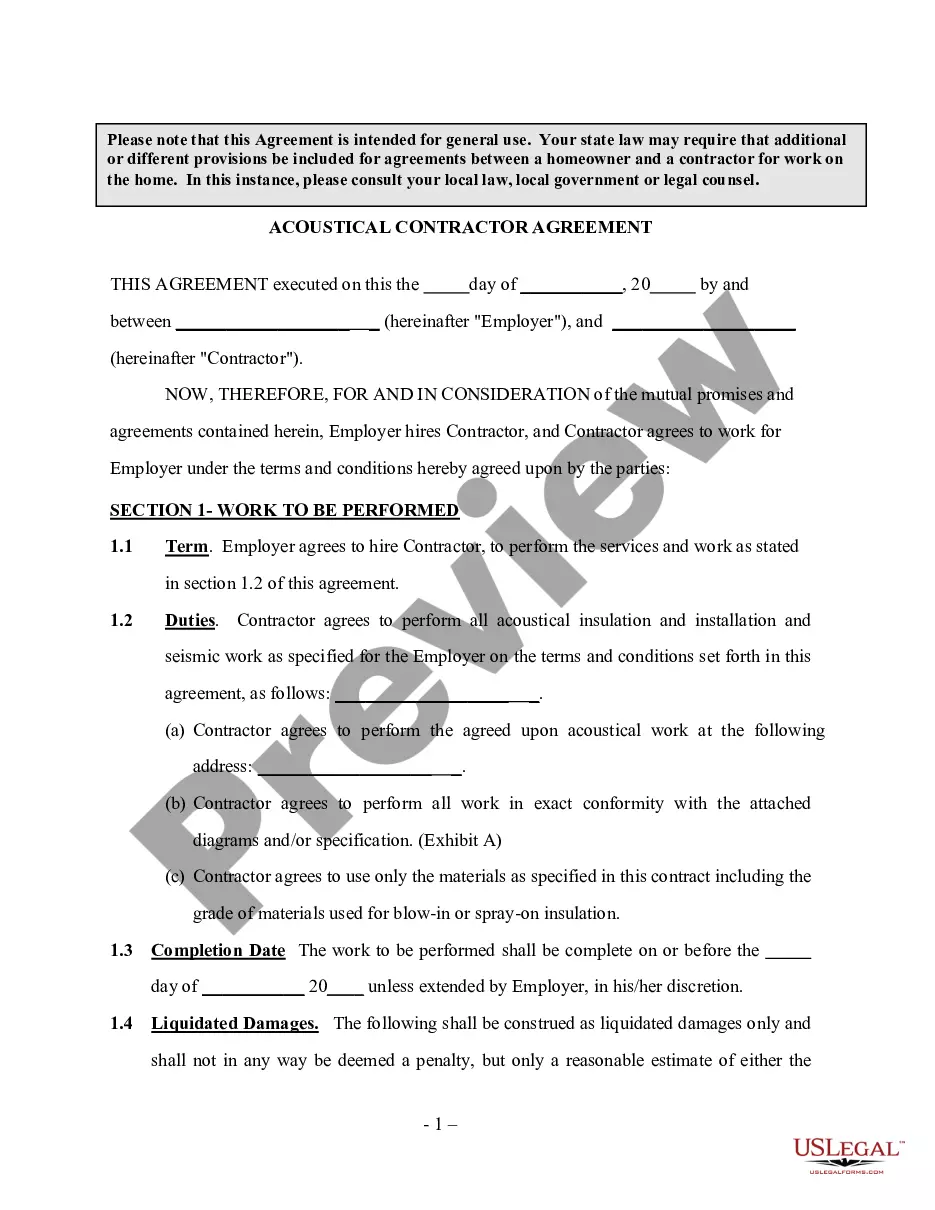
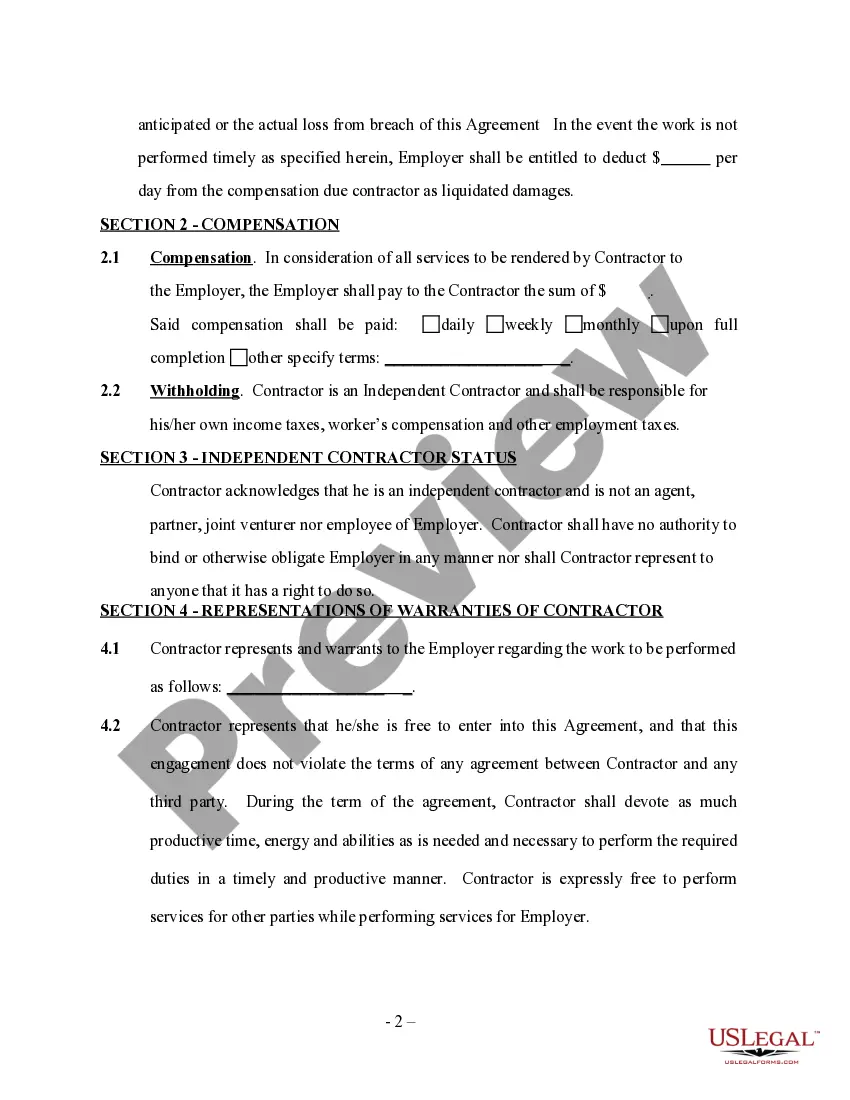
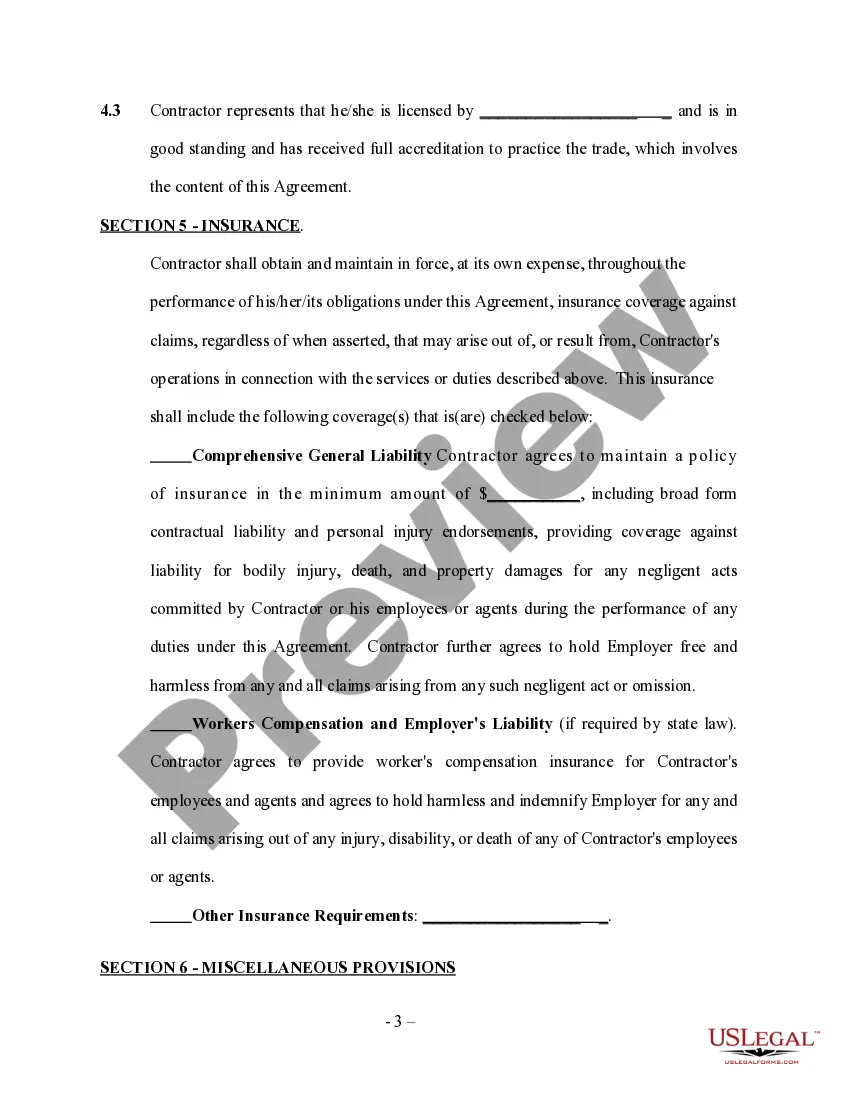
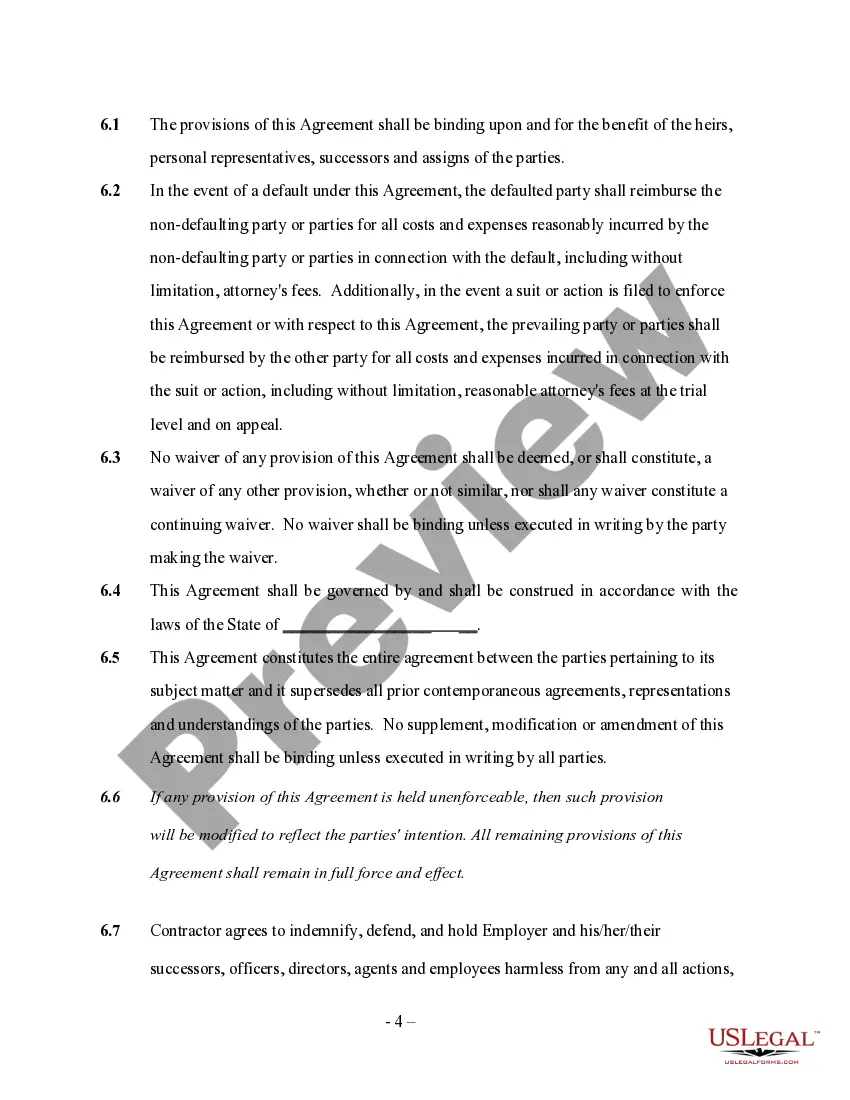
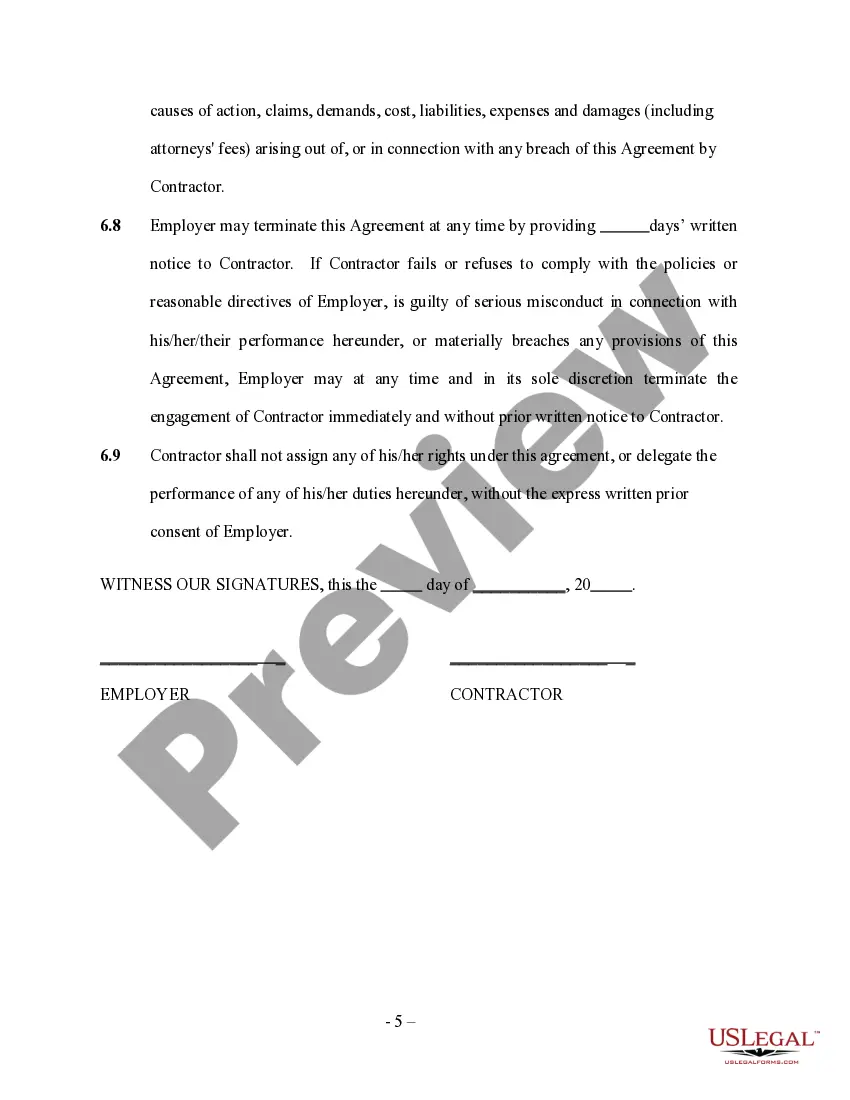
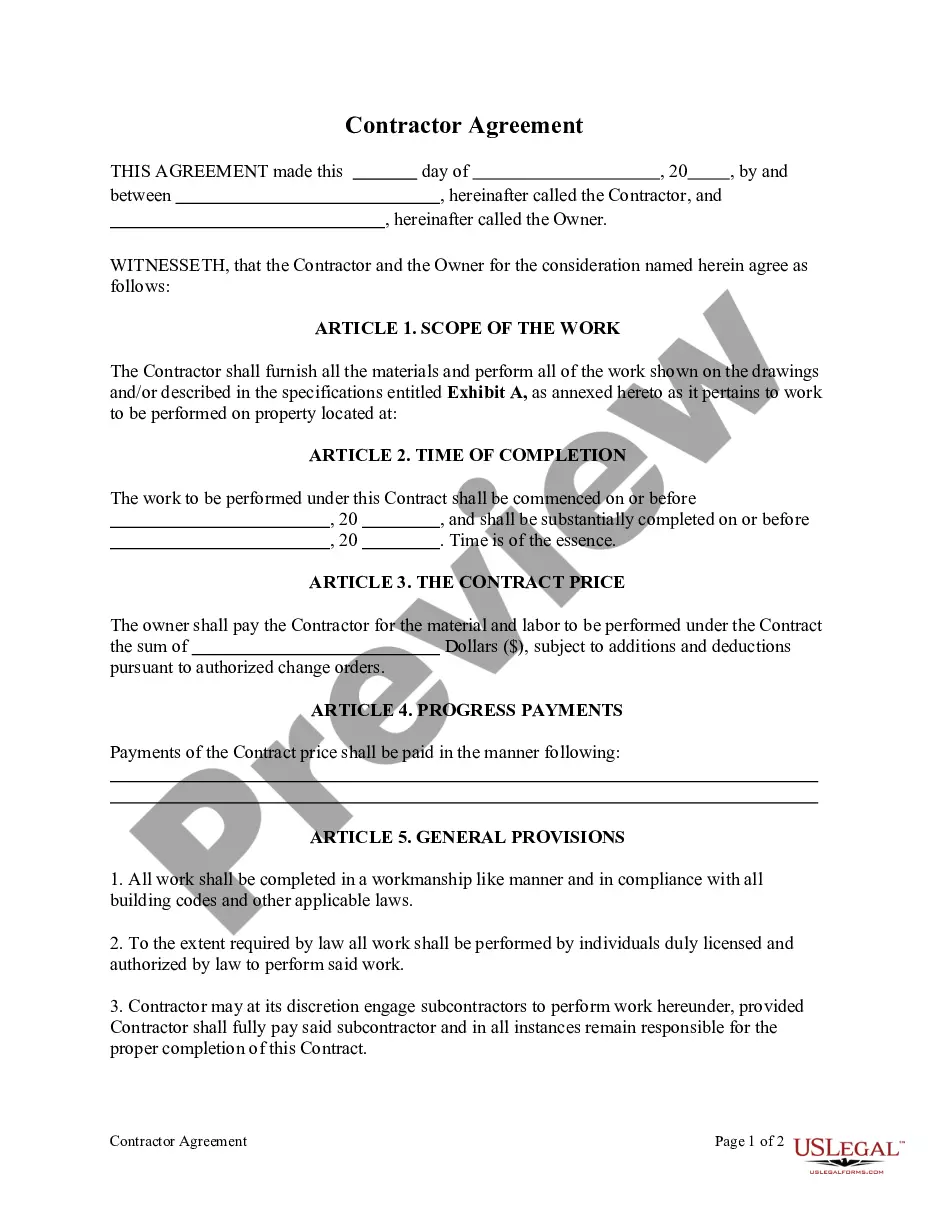
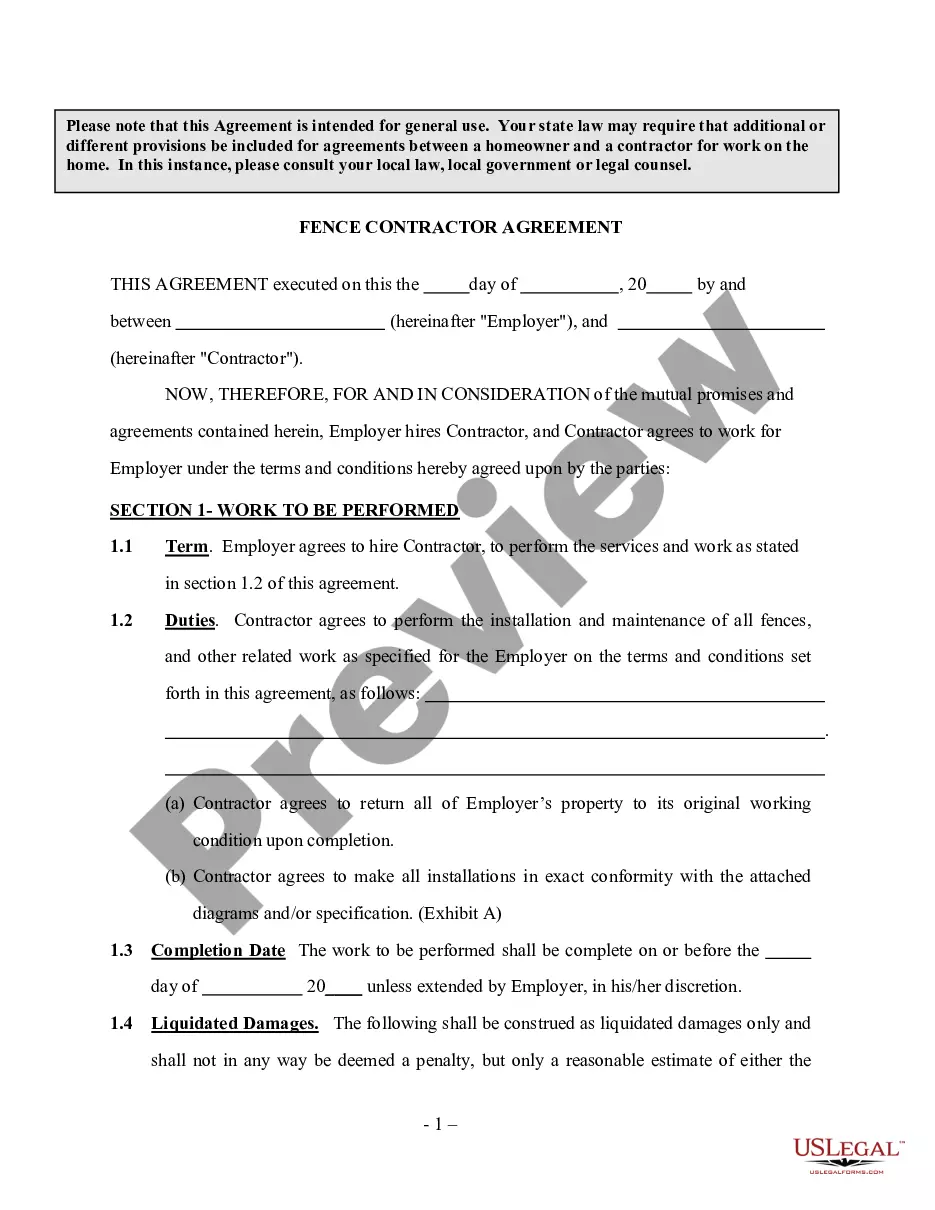
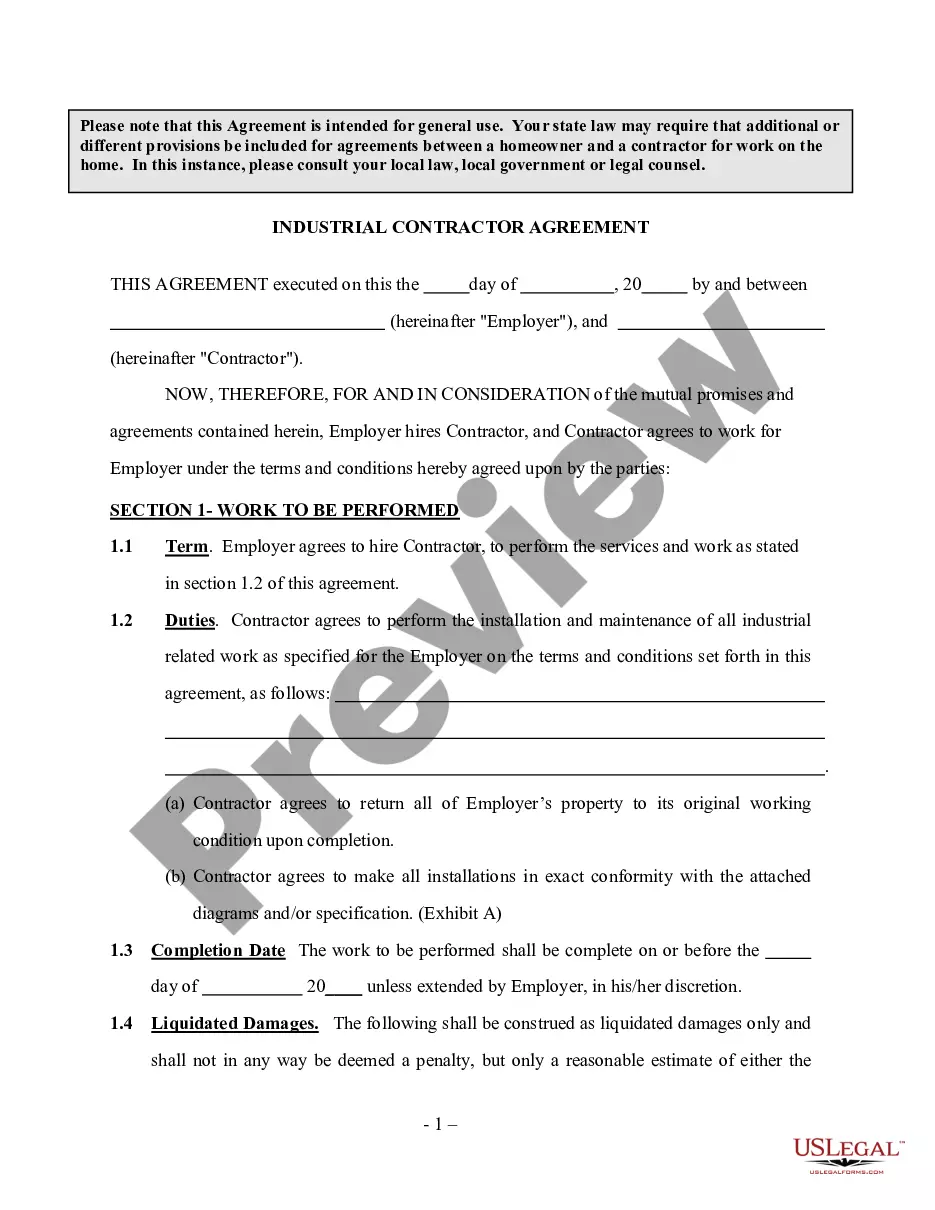
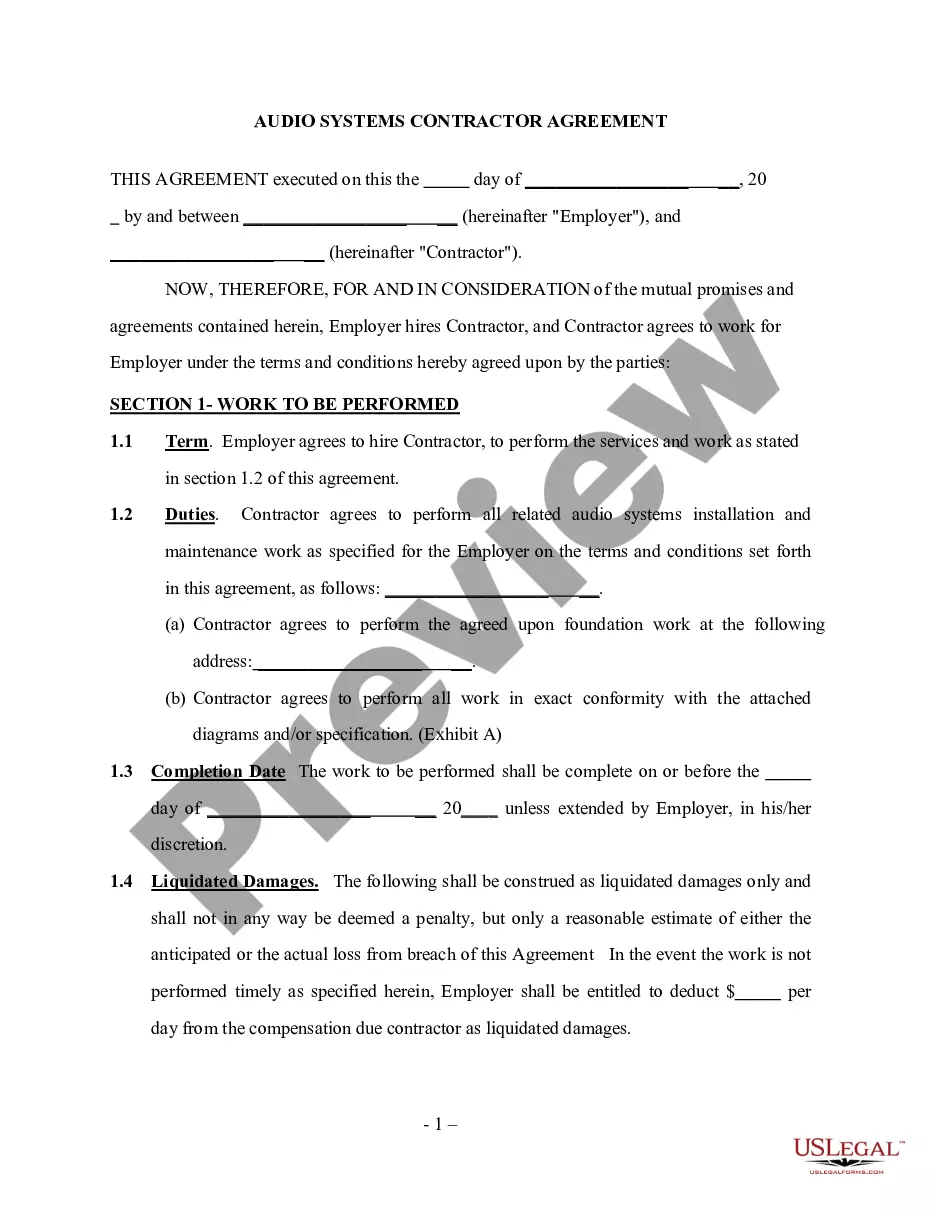
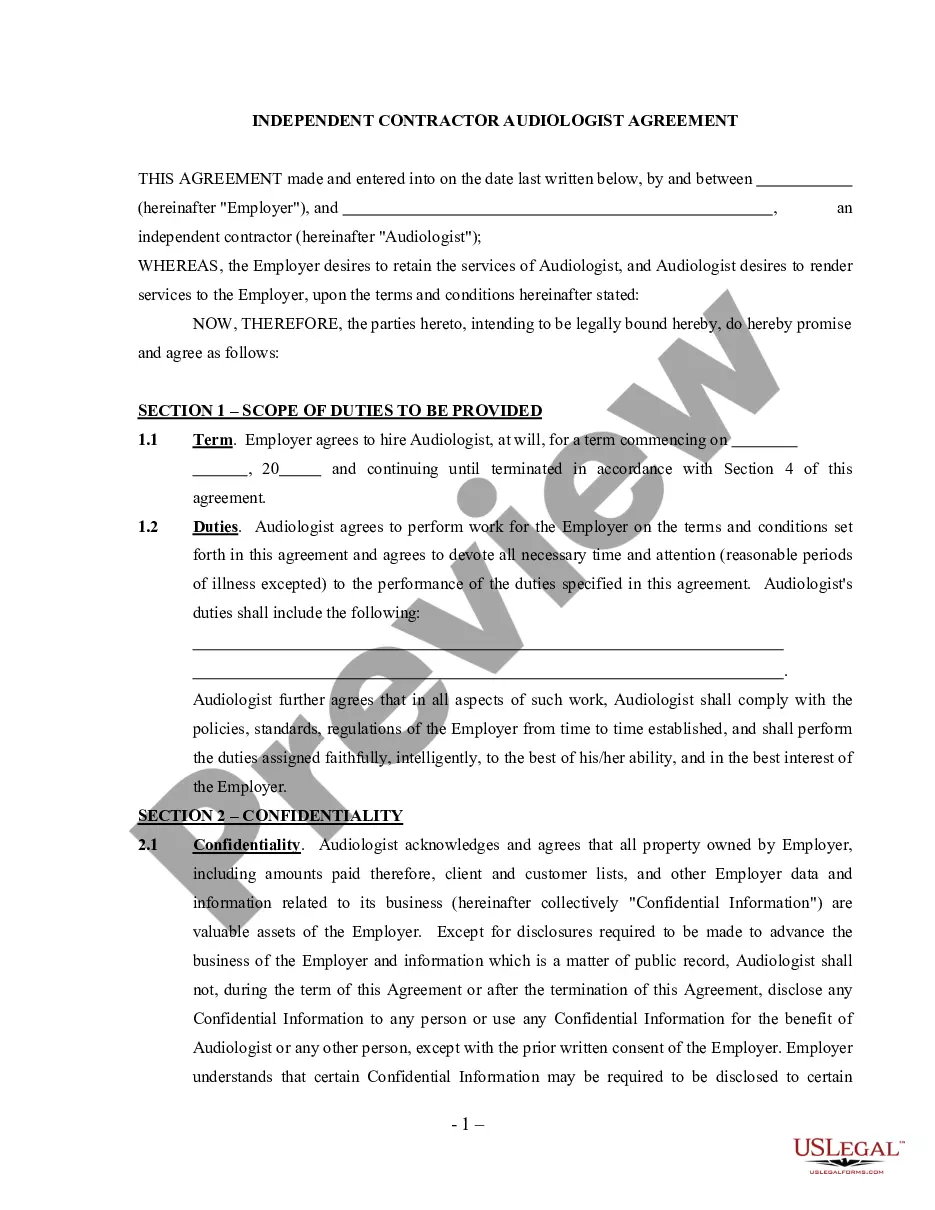
Employer contracts with an independent contractor to provide an acoustical area or building as specified and agreed upon in the contract. Please note that this Agreement is intended for general use. Your state law may require that additional or different provisions be included for agreements between a homeowner and a contractor for work on the home. In this instance, please consult your local law, local government or legal counsel.
Ohio Acoustical Contractor Agreement - Self-Employed
State:
Multi-State
Control #:
US-INDC-115
Format:
Word;
Rich Text
Instant download
Description
Free preview
Get your form ready online
Our built-in tools help you complete, sign, share, and store your documents in one place.
Built-in online Word editor
Make edits, fill in missing information, and update formatting in US Legal Forms—just like you would in MS Word.
Export easily
Download a copy, print it, send it by email, or mail it via USPS—whatever works best for your next step.
E-sign your document
Sign and collect signatures with our SignNow integration. Send to multiple recipients, set reminders, and more. Go Premium to unlock E-Sign.
Notarize online 24/7
If this form requires notarization, complete it online through a secure video call—no need to meet a notary in person or wait for an appointment.
Store your document securely
We protect your documents and personal data by following strict security and privacy standards.

Make edits, fill in missing information, and update formatting in US Legal Forms—just like you would in MS Word.

Download a copy, print it, send it by email, or mail it via USPS—whatever works best for your next step.

Sign and collect signatures with our SignNow integration. Send to multiple recipients, set reminders, and more. Go Premium to unlock E-Sign.

If this form requires notarization, complete it online through a secure video call—no need to meet a notary in person or wait for an appointment.

We protect your documents and personal data by following strict security and privacy standards.
Looking for another form?







How to fill out Acoustical Contractor Agreement - Self-Employed?
If you need to obtain, acquire, or create approved document templates, utilize US Legal Forms, the leading selection of legal forms available online.
Make use of the website's simple and user-friendly search feature to find the documents you need.
A variety of templates for business and personal purposes are categorized by types and states, or keywords.
Once you have found the form you need, click the Get now button. Choose your preferred pricing plan and enter your details to register for an account.
Process the payment. You can use your Visa or Mastercard or PayPal account to complete the transaction. Step 6. Select the format of the legal form and download it to your device. Step 7. Complete, modify, and print or sign the Ohio Acoustical Contractor Agreement - Self-Employed. Every legal document template you obtain is yours indefinitely. You will have access to each form you acquired within your account. Click on the My documents section and select a form to print or download again. Be proactive and obtain, and print the Ohio Acoustical Contractor Agreement - Self-Employed with US Legal Forms. There are thousands of professional and state-specific forms available for your business or personal needs.
- Use US Legal Forms to access the Ohio Acoustical Contractor Agreement - Self-Employed with just a few clicks.
- If you are already a US Legal Forms user, Log In to your account and click the Acquire button to download the Ohio Acoustical Contractor Agreement - Self-Employed.
- You can also retrieve forms you previously obtained from the My documents tab of your account.
- If you're using US Legal Forms for the first time, follow the instructions below.
- Ensure you have selected the form for the correct city/state.
- Use the Preview option to review the form's content. Don't forget to read the details.
- If you are not satisfied with the form, use the Search field at the top of the screen to find other versions of the legal form template.
Form popularity
FAQ
To write an independent contractor agreement, begin with a title and the parties' names, followed by a clear description of the services. Include payment terms, liability clauses, and dispute resolution methods. For an Ohio Acoustical Contractor Agreement - Self-Employed, it's important to specify any applicable state laws or regulations. Using US Legal Forms can help simplify the drafting process with professional templates to guide you.
Filling out an independent contractor form requires you to provide information about the work being done and the parties involved. You should also state the payment details and the timeline of the project. When it comes to an Ohio Acoustical Contractor Agreement - Self-Employed, be sure to include any special acoustical duties or obligations that relate to your work. Tools like US Legal Forms offer guidance to ensure you complete the form accurately.
Writing a self-employed contract involves detailing the services you will offer, the payment structure, and the duration of the contract. Make sure to include cancellation terms and confidentiality clauses where necessary. If you are focusing on an Ohio Acoustical Contractor Agreement - Self-Employed, document any specific acoustical requirements or standards you need to adhere to. Using US Legal Forms can streamline this process with ready-made templates.
To fill out an independent contractor agreement, start by including basic information such as your name, the contractor's name, and the scope of work. Clearly outline the terms of payment, deadlines, and project expectations. For specifics related to an Ohio Acoustical Contractor Agreement - Self-Employed, ensure you define any required licenses and terms that comply with local laws. For convenience, consider using platforms like US Legal Forms to access templates.
In Ohio, a contract becomes legally binding when it includes an offer, acceptance, and consideration from both parties. Additionally, both parties must have the legal capacity to enter into a contract and the agreement must have a lawful purpose. Written contracts, like the Ohio Acoustical Contractor Agreement - Self-Employed, provide clarity and can prevent misunderstandings. Remember, platforms such as US Legal Forms can guide you in crafting a compliant and enforceable agreement.
To create an independent contractor agreement, start by outlining the scope of work that you expect from the contractor. Next, include details about payment terms, deadlines, and specific responsibilities. It is also important to state the relationship between parties clearly, ensuring that both understand the terms. Utilizing a platform like US Legal Forms can simplify this process, providing templates specifically designed for an Ohio Acoustical Contractor Agreement - Self-Employed.
Both terms have their place, but 'self-employed' generally encompasses a broader range of individuals than 'independent contractor.' While all independent contractors are self-employed, not all self-employed individuals are independent contractors. Understanding this distinction is helpful, especially when drafting an Ohio Acoustical Contractor Agreement - Self-Employed, to convey the right position clearly.
Receiving a 1099 form typically indicates that you are self-employed. This form is used by clients to report payments made to non-employee contractors. If you're working under an Ohio Acoustical Contractor Agreement - Self-Employed and receiving a 1099, it confirms your status as a self-employed individual.
Someone is classified as self-employed if they run their own business and are responsible for their profit or loss. This includes independent contractors and freelancers who provide services to clients without being tied to a single employer. In the case of an Ohio Acoustical Contractor Agreement - Self-Employed, being self-employed offers flexibility and independence in managing work.
Yes, in Ohio, certain types of work require a license for independent contractors. Depending on your specific trade or services offered, you may need to obtain licenses or permits. It's essential to ensure compliance with local regulations when preparing an Ohio Acoustical Contractor Agreement - Self-Employed to avoid any legal issues.