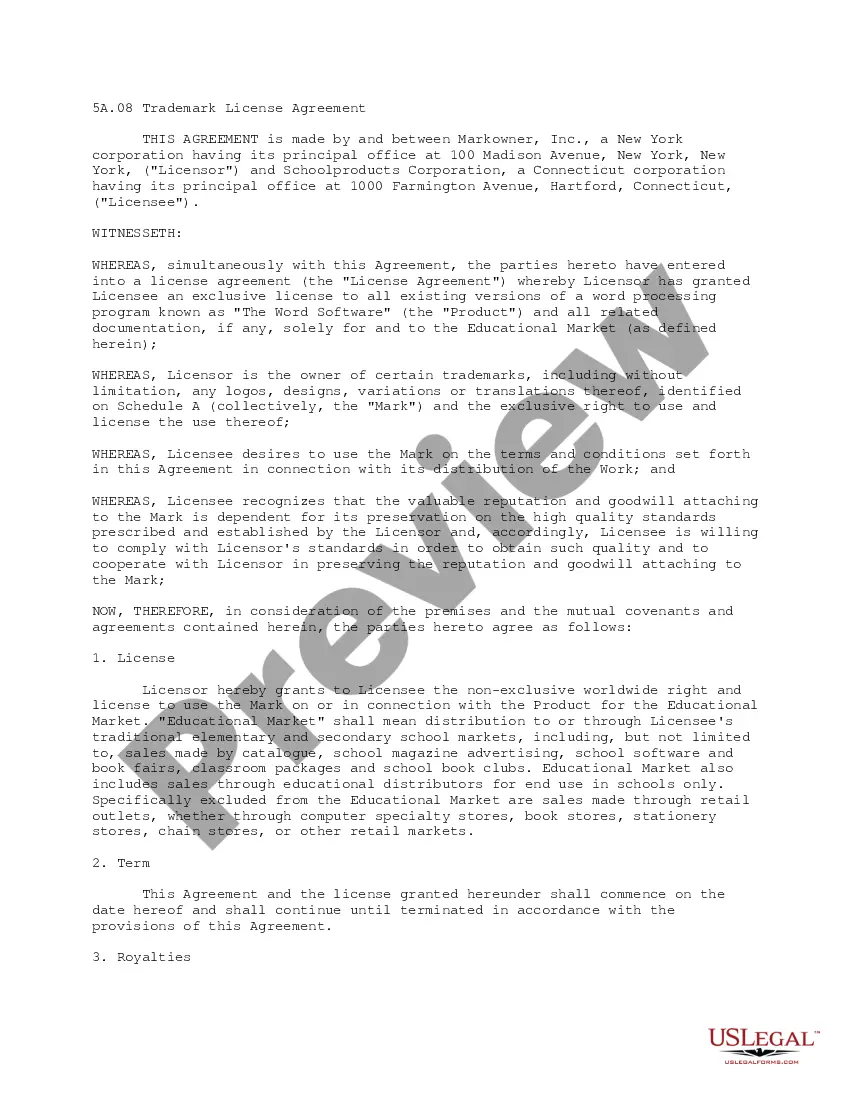
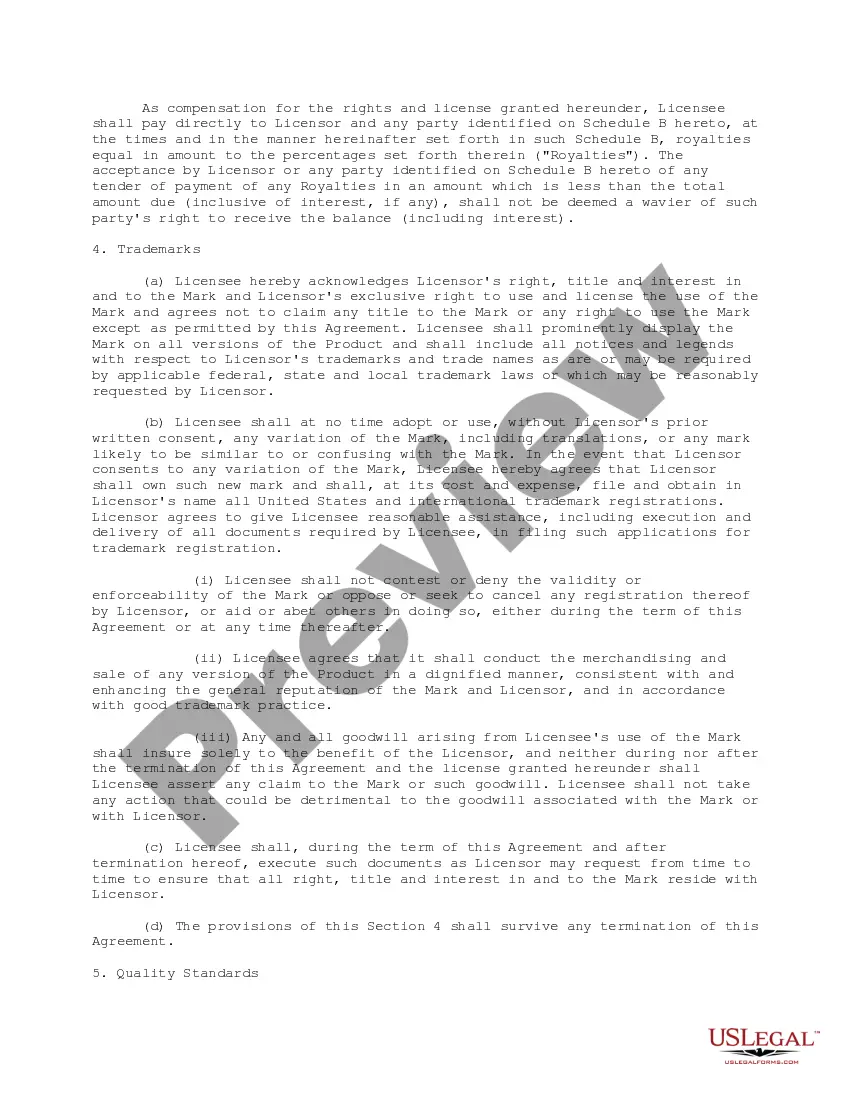
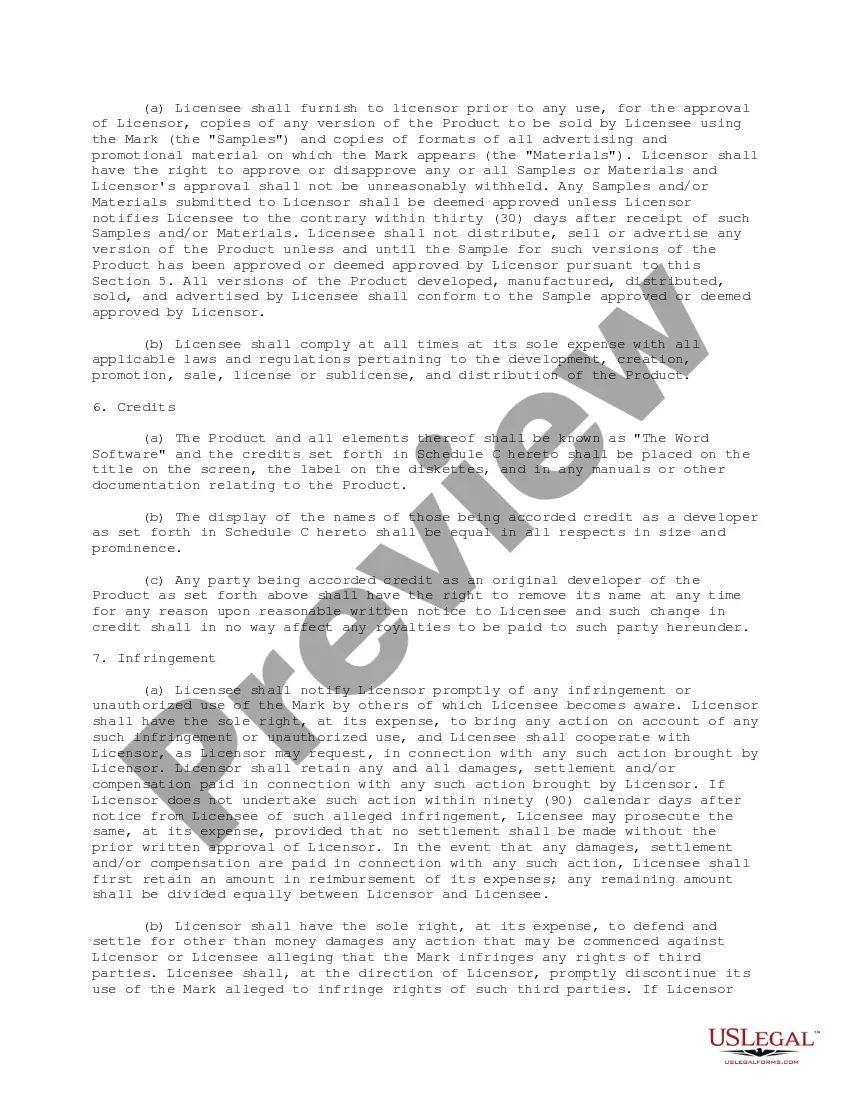
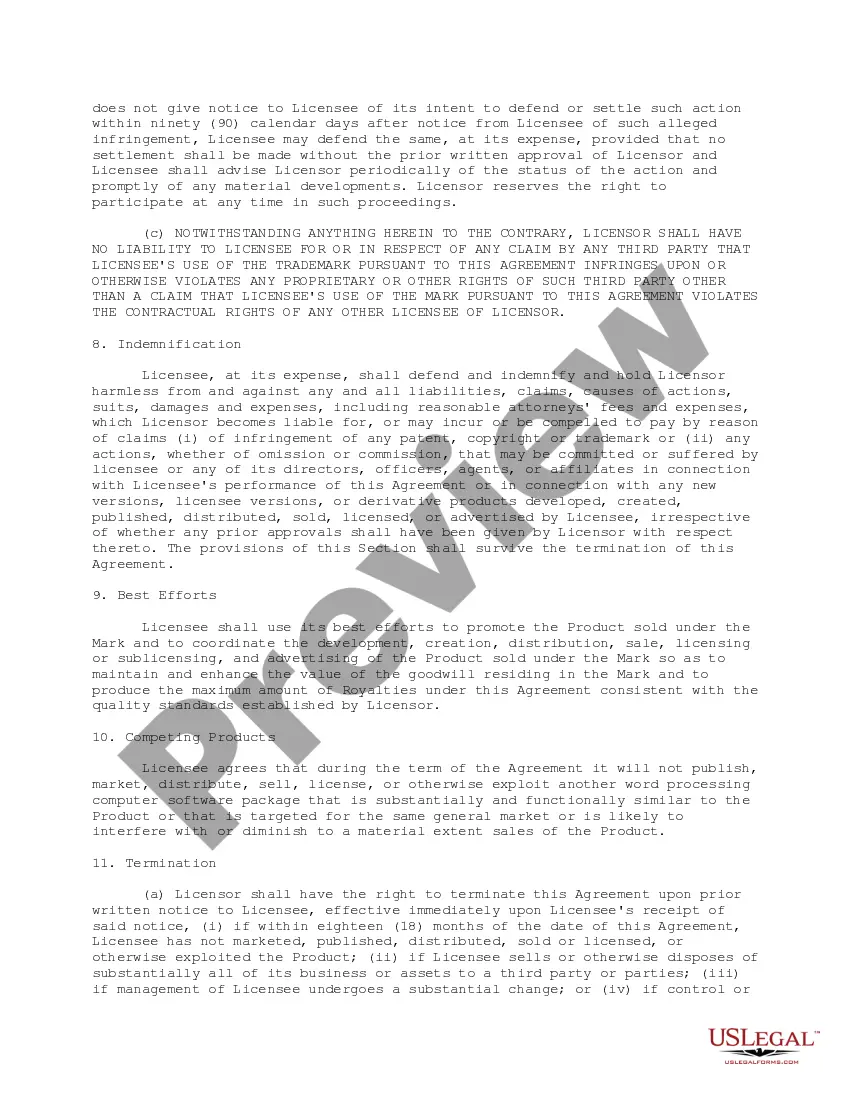
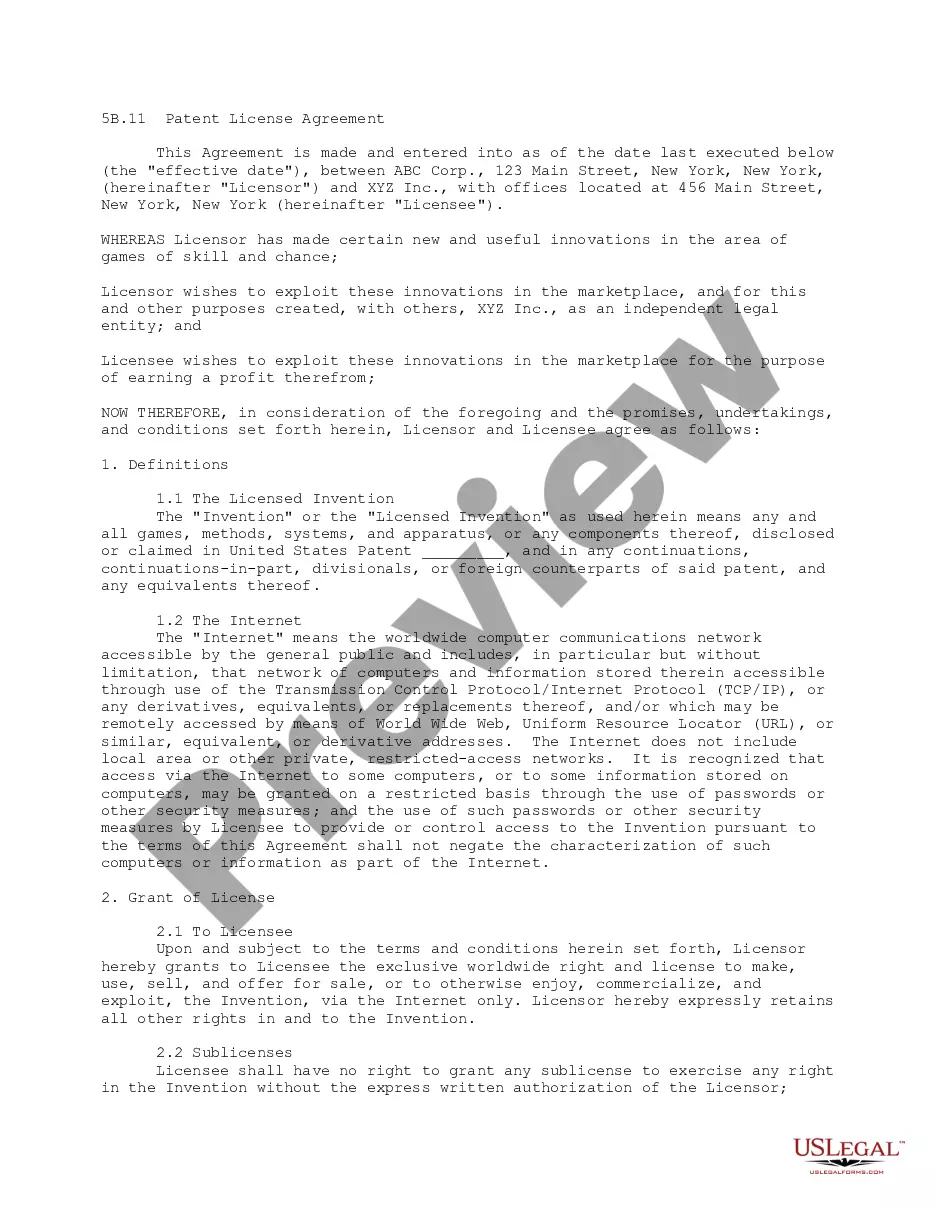
This agreement is used when a Licensor wishes to give the Licensee an exclusive license to all existing versions of a software program and all related documentation, if any, solely for a specific purpose.
Ohio Trademark License Agreement
State:
Multi-State
Control #:
US-CP5A08
Format:
Word;
PDF;
Rich Text
Instant download
Description
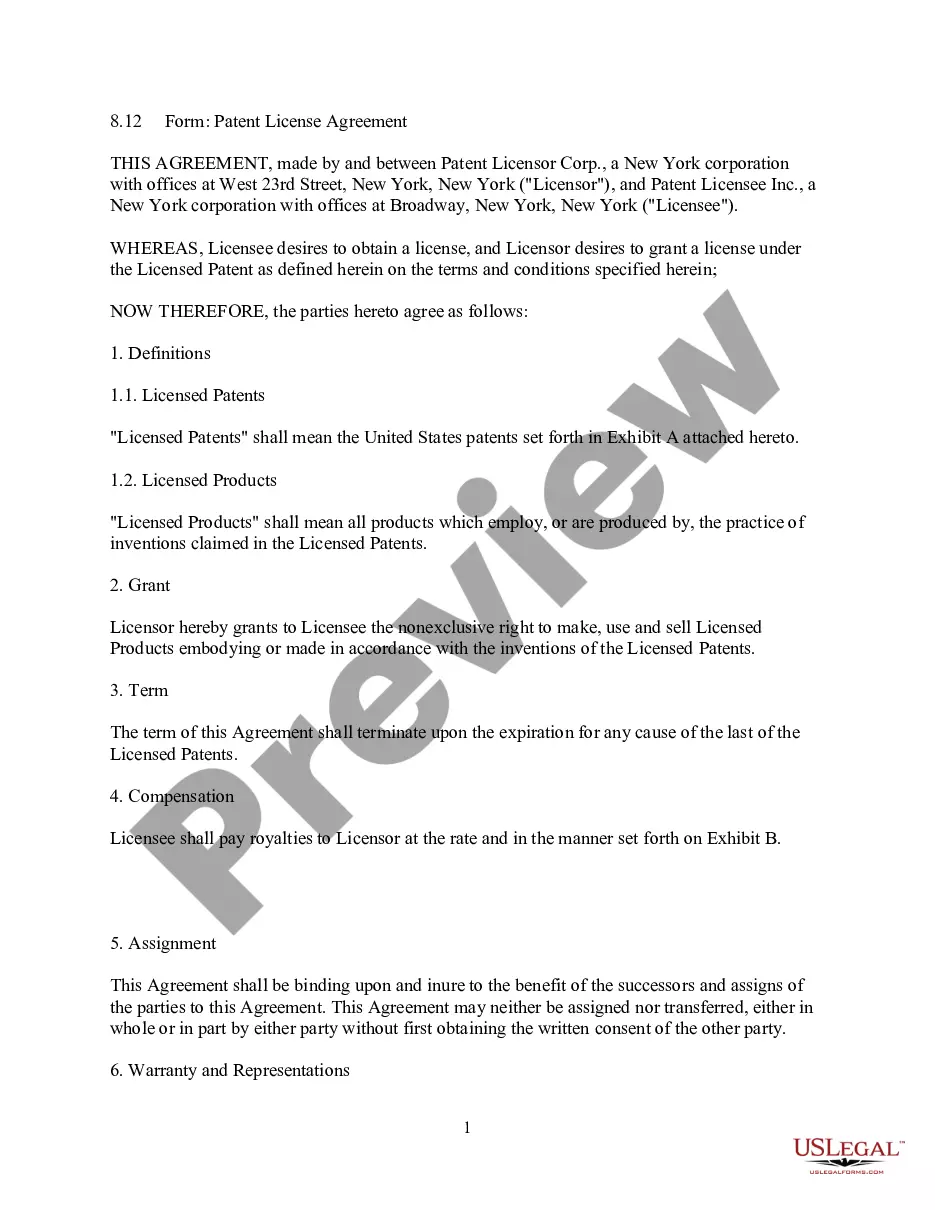
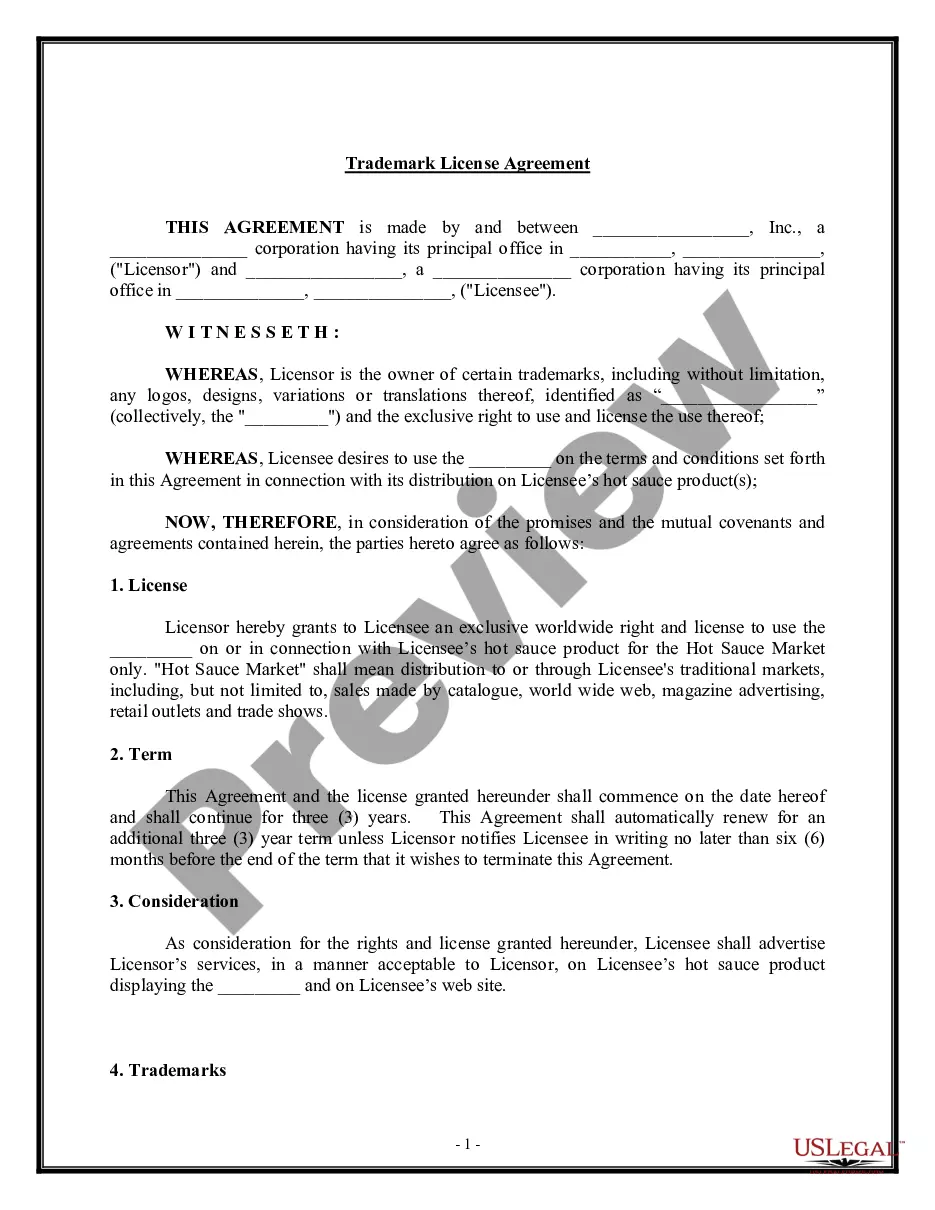
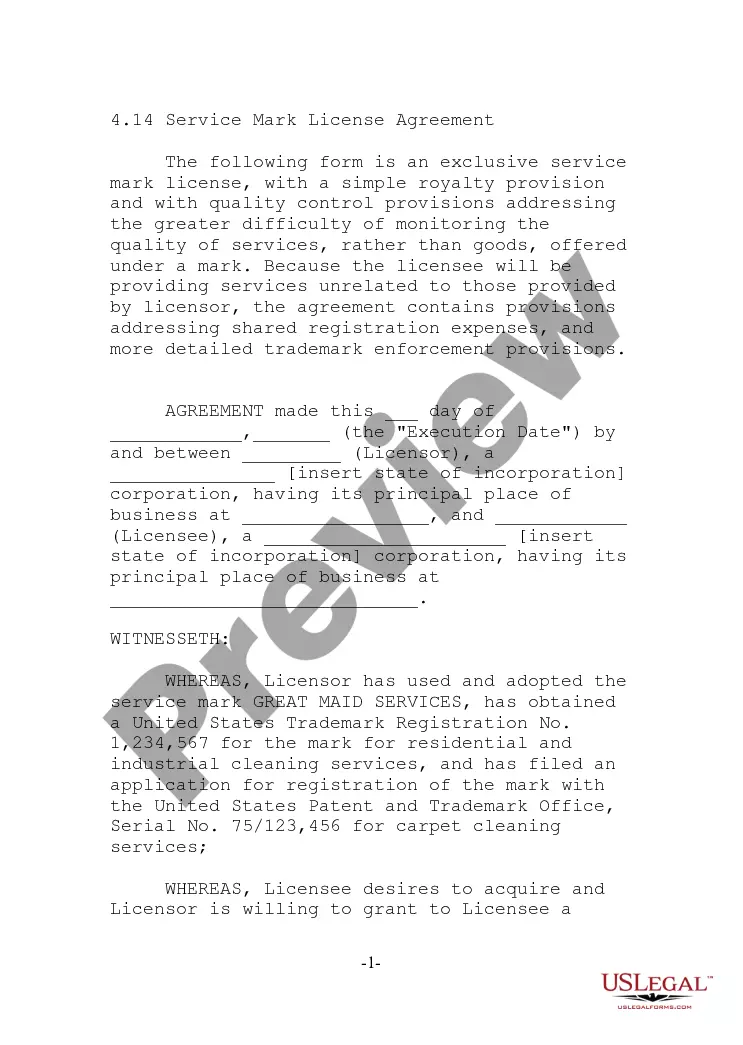
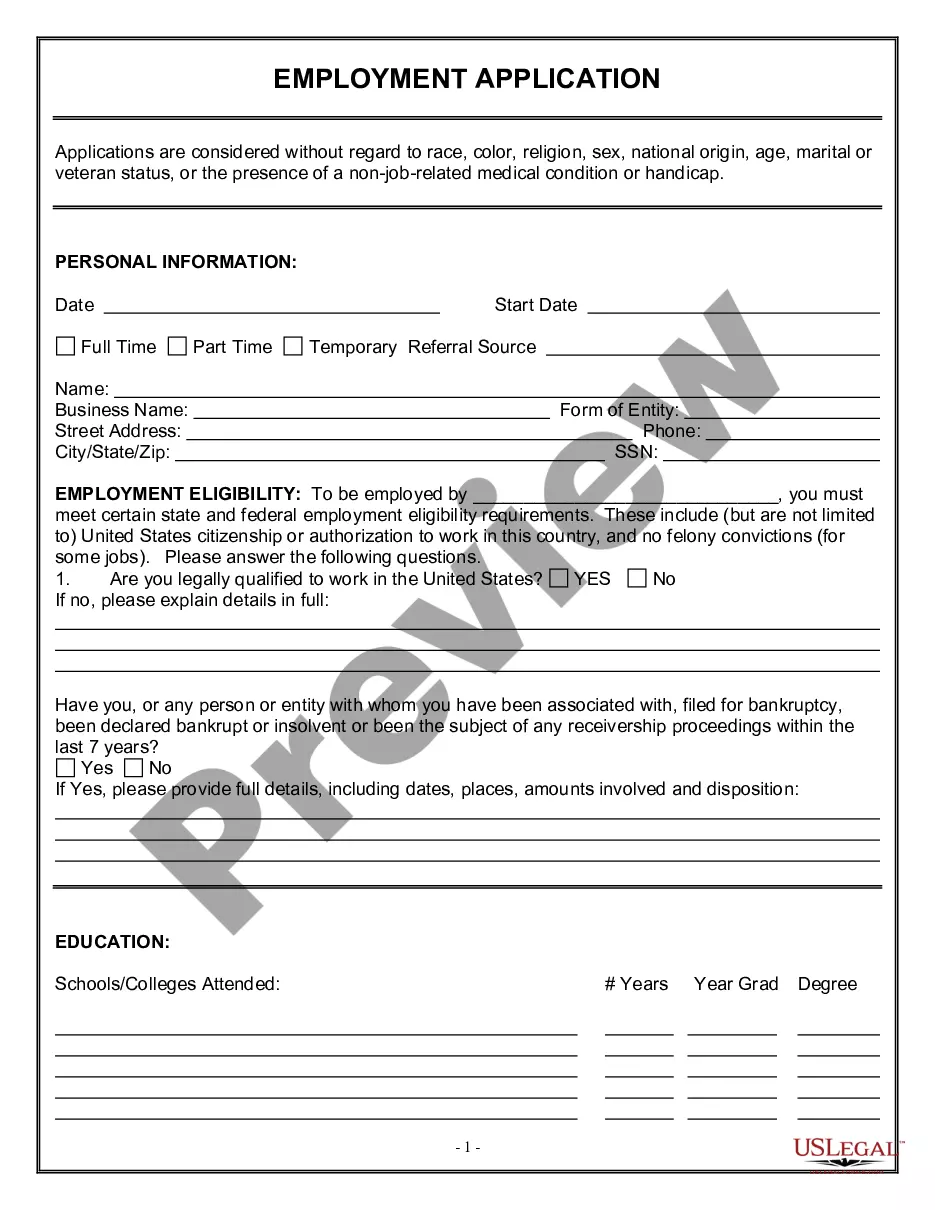
Free preview

Get your form ready online
Our built-in tools help you complete, sign, share, and store your documents in one place.
Built-in online Word editor
Make edits, fill in missing information, and update formatting in US Legal Forms—just like you would in MS Word.
Export easily
Download a copy, print it, send it by email, or mail it via USPS—whatever works best for your next step.
E-sign your document
Sign and collect signatures with our SignNow integration. Send to multiple recipients, set reminders, and more. Go Premium to unlock E-Sign.
Notarize online 24/7
If this form requires notarization, complete it online through a secure video call—no need to meet a notary in person or wait for an appointment.
Store your document securely
We protect your documents and personal data by following strict security and privacy standards.

Make edits, fill in missing information, and update formatting in US Legal Forms—just like you would in MS Word.

Download a copy, print it, send it by email, or mail it via USPS—whatever works best for your next step.

Sign and collect signatures with our SignNow integration. Send to multiple recipients, set reminders, and more. Go Premium to unlock E-Sign.

If this form requires notarization, complete it online through a secure video call—no need to meet a notary in person or wait for an appointment.

We protect your documents and personal data by following strict security and privacy standards.
Looking for another form?


How to fill out Trademark License Agreement?
If you wish to aggregate, acquire, or reproduce legal document templates, utilize US Legal Forms, the largest collection of legal forms available online.
Utilize the website's simple and user-friendly search feature to locate the documents you require.
A range of templates for business and personal use are categorized by types and states, or keywords.
Step 4. After locating the form you need, click the Get now button. Choose the pricing plan you prefer and provide your details to register for an account.
Step 5. Process the transaction. You can use your credit card or PayPal account to complete the payment.
- Use US Legal Forms to obtain the Ohio Trademark License Agreement in just a few clicks.
- If you are already a US Legal Forms user, Log In to your account and click the Download button to access the Ohio Trademark License Agreement.
- You can also access forms you previously downloaded from the My documents section of your account.
- If you're using US Legal Forms for the first time, follow the instructions below.
- Step 1. Ensure you have selected the form for the correct area/state.
- Step 2. Use the Review option to examine the form's content. Make sure to review the description.
- Step 3. If you are not satisfied with the form, use the Search bar at the top of the screen to find alternative versions of the legal form template.
Form popularity
FAQ
University Departments can request to use university marks on merchandise (apparel and non-apparel) by completing and submitting a Department Request Form for approval. Trademark & Licensing Services will assist departments in the process of registering University Trademarks when requested.
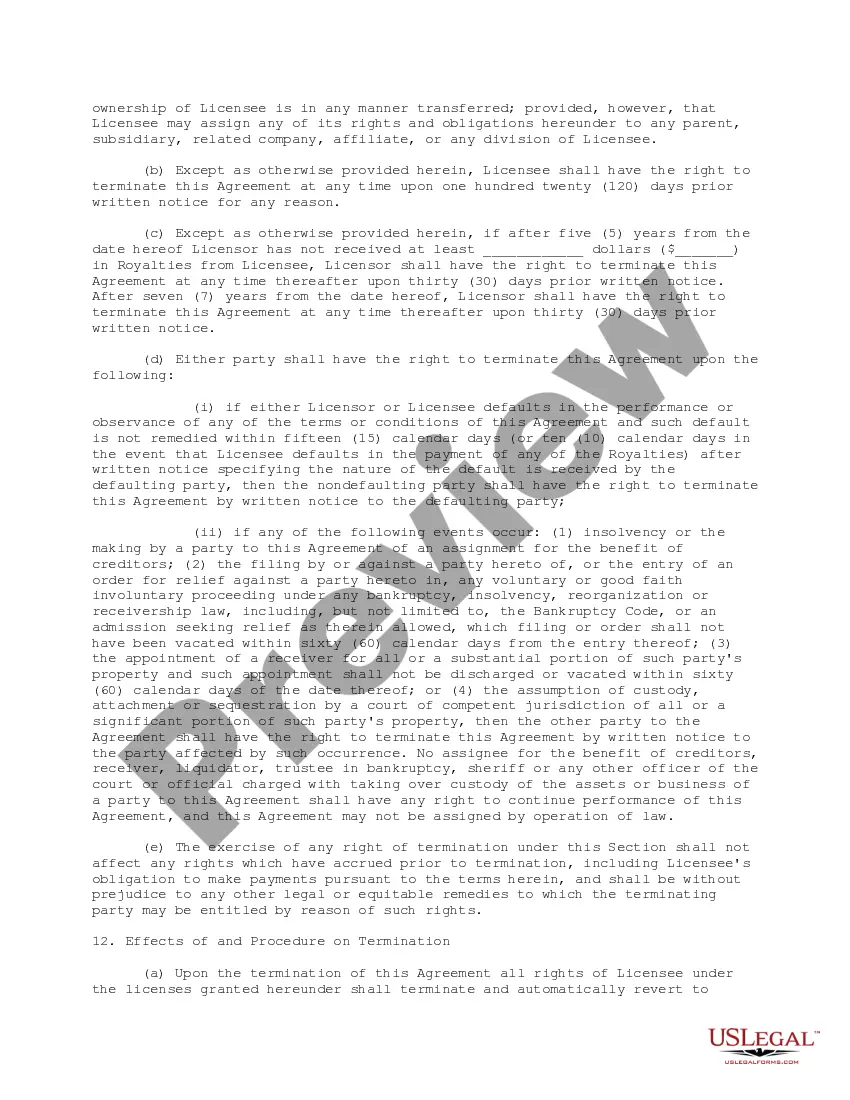
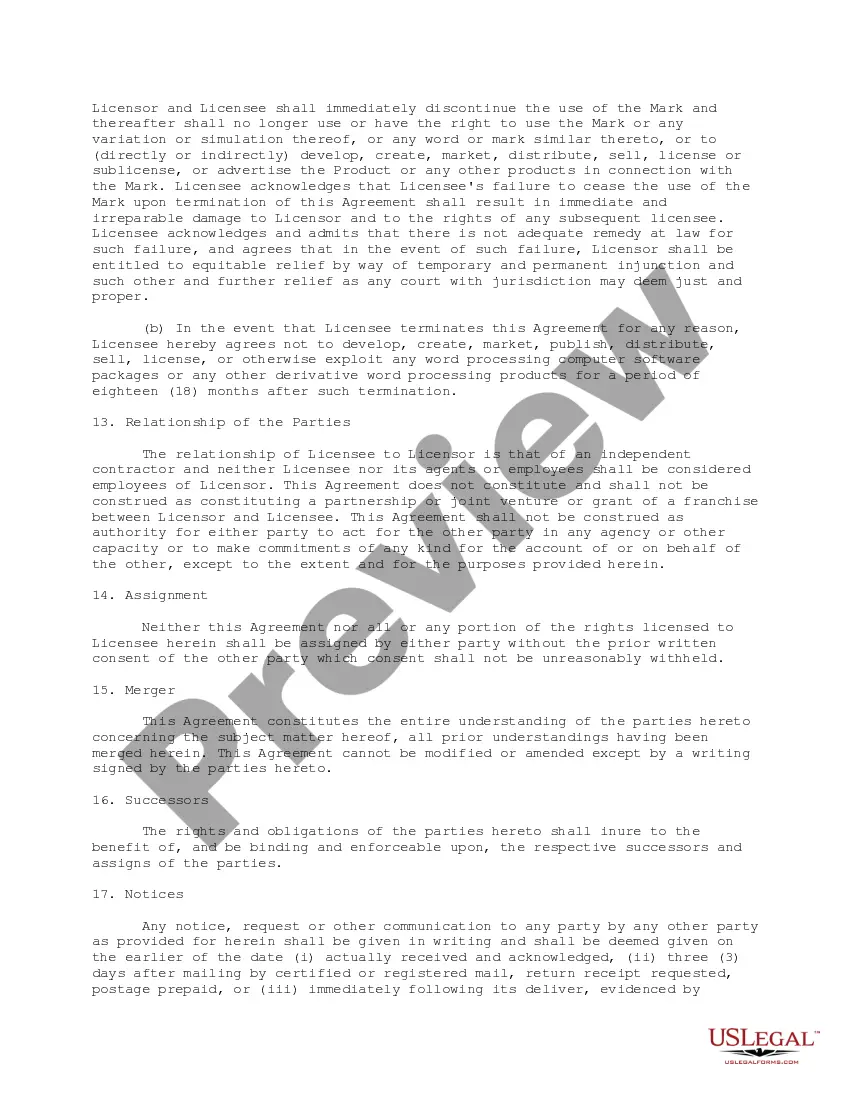
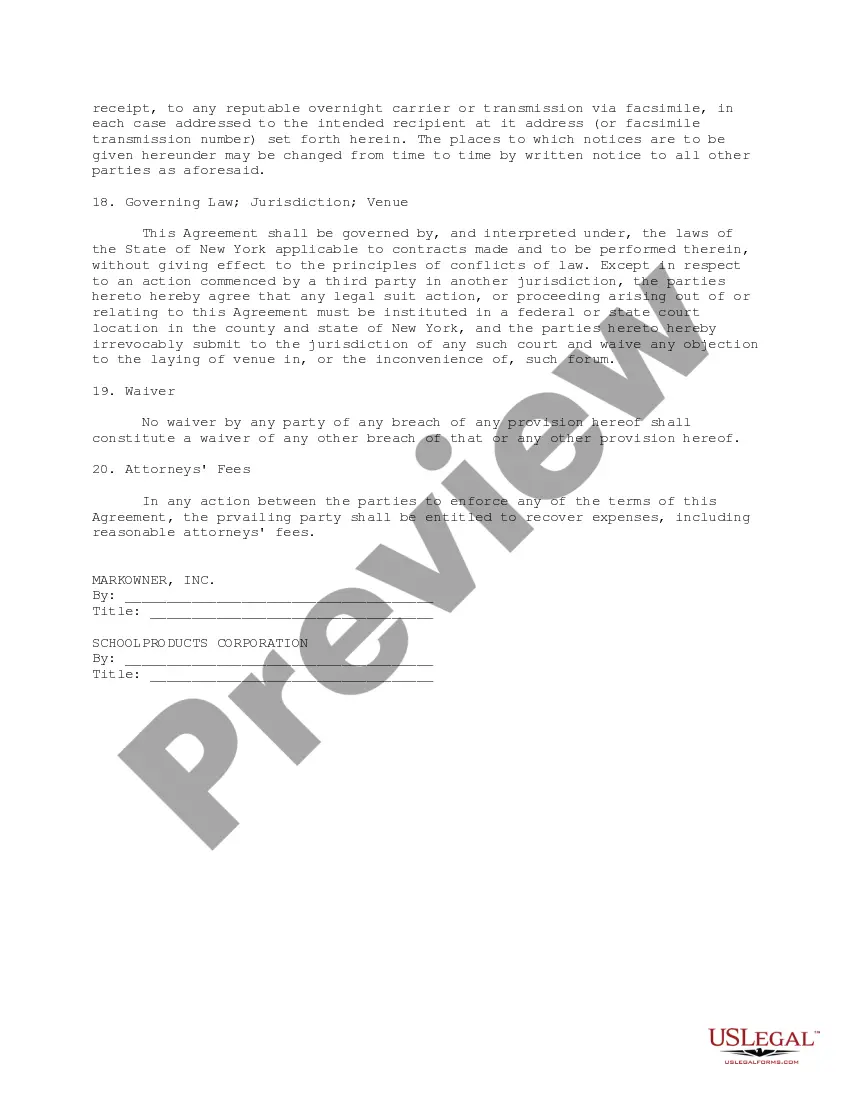
A trademark licensing agreement is a legal contract between a trademark owner and another party that have agreed to use the trademark on preapproved terms decided between the contracting parties.
A licensed mark is a trademark that a franchisee, or other licensee, has obtained the right to display for a certain period of time. The licensee doesn't own the trademark, but the trademark owner has granted him the right to display the trademark for a limited time, and subject to certain conditions.
It is permissible to license an unregistered Trade mark. Permitted use without recordal of Registered User is permissible under the Trade Marks Act 1999, which came into force on September 15, 2003.
It is permissible to license an unregistered Trade mark. Permitted use without recordal of Registered User is permissible under the Trade Marks Act 1999, which came into force on September 15, 2003.
A trademark licence is an agreement between a trademark owner (the licensor) and another entity (the licensee) in which the licensor permits the licensee to use its trademark for commercial purposes.
Exclusive license allows a licensor to share intellectual property with a licensee for a specific period of time that usually binds the licensor to not share the property with anyone else.
Trademark licensing is an agreement in which a registered trademark owner, the licensor, grants another party, the licensee, permission to make and distribute products or services under that trademark.
A licensing agreement allows one party (the licensee) to use and/or earn revenue from the property of the owner (the licensor). Licensing agreements generate revenues, called royalties, earned by a company for allowing its copyrighted or patented material to be used by another company.